

ACID RAIN
PREPARED BY: AKASH WAGHANI
CONTENTS
• What is Acid Rain?
• How is it caused?
• The effects of Acid Rain
• The preventions
What is Acid Rain?
• Acid rain describes any form of precipitation
with high levels of nitric and sulfuric acids. It
can also occur in the form of snow, fog, and
tiny bits of dry material that settle to Earth.
• Unpolluted rain would have a pH value of
between 5 and 6. When the air becomes
more polluted with nitrogen oxides and
sulphur dioxide the acidity can increase to a
pH value of 4. Some rain has even been
recorded as being pH2.
How is it caused?
• Rotting vegetation and erupting volcanoes release
some chemicals that can cause acid rain, but most
acid rain falls because of human activities. The
biggest culprit is the burning of fossil fuels by coal-
burning power plants, factories, and automobiles.
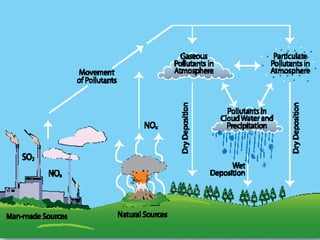
• When humans burn fossil fuels, sulfur dioxide (SO2)
and nitrogen oxides (NOx) are released into the
atmosphere. These chemical gases react with water,
oxygen, and other substances to form mild solutions
of sulfuric and nitric acid. Winds may spread these
acidic solutions across the atmosphere and over
hundreds of miles. When acid rain reaches Earth, it
flows across the surface in runoff water, enters water
systems, and sinks into the soil.
The effects of Acid Rain
• Acid rain can be carried great distances in
the atmosphere, not just between
countries but also from continent to
continent. The rain sometimes falls many
miles from the source of pollution but
wherever it falls it can have a serious
effect on soil, trees, buildings and water.
Effects on Aquatic Environment
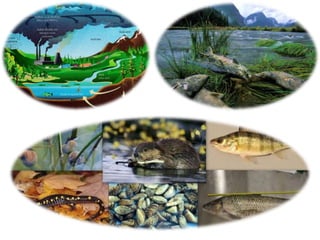
• Acid rain has many ecological effects, but none is
greater than its impact on lakes, streams,
wetlands, and other aquatic environments. Acid
rain makes waters acidic and causes them to
absorb the aluminum that makes its way from
soil into lakes and streams. This combination
makes waters toxic to crayfish, clams, fish, and
other aquatic animals.
• Some species can tolerate acidic waters better
than others. However, in an interconnected
ecosystem, what impacts some species
eventually impacts many more throughout the
food chain—including non-aquatic species such
as birds.
Effects on Forest
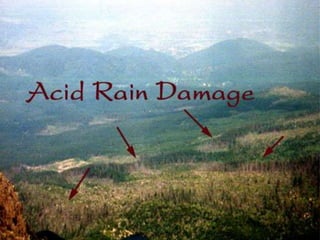
• It is thought that acid rain can cause trees to grow
more slowly or even to die but scientists have found
that it is not the only cause. The same amount of acid
rain seems to have more effect in some areas than it
does in others.
• As acid rain falls on a forest it trickles through the
leaves of the trees and runs down into the soil below.
Some of it finds its way into streams and then on into
rivers and lakes. Some types of soil can help to
neutralise the acid - they have what is called a
"buffering capacity".
• Other soils are already slightly acidic and these are
particularly susceptible to the effects of acid rain.
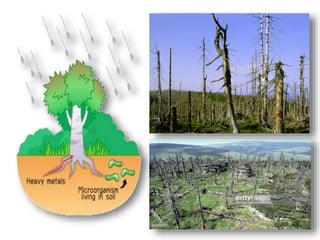
• Acid rain can effect trees in several different ways, it
may:
• • dissolve and wash away the nutrients and minerals
in the soil
which help the trees to grow.
• • cause the release of harmful substances such as
aluminium into the soil.
• • wear away the waxy protective coating of leaves,
damaging them
and preventing them from being able to
photosynthesise properly.
• A combination of these effects weakens the trees
which means that they can be more easily attacked by
diseases and insects or injured by bad weather. It is
not just trees that are affected by acid rain, other
plants may also suffer.
Effects on Buildings
• Every type of material will become eroded
sooner or later by the effects of the climate.
Water, wind, ice and snow all help in the
erosion process but unfortunately, acid rain
can help to make this natural process even
quicker. Statues, buildings, vehicles, pipes
and cables can all suffer. The worst affected
are things made from limestone or
sandstone as these types of rock are
particularly susceptible and can be affected
by air pollution in gaseous form as well as by
acid rain
Preventions
• The only way to fight acid rain is by curbing the
release of the pollutants that cause it. This means
burning fewer fossil fuels. Many governments have
tried to curb emissions by cleaning up industry
smokestacks and promoting alternative fuel sources.
These efforts have met with mixed results. But even
if acid rain could be stopped today, it would still take
many years for its harmful effects to disappear.
• Individuals can also help prevent acid rain by
conserving energy. The less electricity people use in
their homes, the fewer chemicals power plants will
emit. Vehicles are also major fossil fuel users, so
drivers can reduce emissions by using public
transportation, carpooling, biking, or simply walking
wherever possible.

Acid rain

  • 1.
  • 2.
    CONTENTS • What isAcid Rain? • How is it caused? • The effects of Acid Rain • The preventions
  • 3.
    What is AcidRain? • Acid rain describes any form of precipitation with high levels of nitric and sulfuric acids. It can also occur in the form of snow, fog, and tiny bits of dry material that settle to Earth. • Unpolluted rain would have a pH value of between 5 and 6. When the air becomes more polluted with nitrogen oxides and sulphur dioxide the acidity can increase to a pH value of 4. Some rain has even been recorded as being pH2.
  • 4.
    How is itcaused? • Rotting vegetation and erupting volcanoes release some chemicals that can cause acid rain, but most acid rain falls because of human activities. The biggest culprit is the burning of fossil fuels by coal- burning power plants, factories, and automobiles. • When humans burn fossil fuels, sulfur dioxide (SO2) and nitrogen oxides (NOx) are released into the atmosphere. These chemical gases react with water, oxygen, and other substances to form mild solutions of sulfuric and nitric acid. Winds may spread these acidic solutions across the atmosphere and over hundreds of miles. When acid rain reaches Earth, it flows across the surface in runoff water, enters water systems, and sinks into the soil.
  • 6.
    The effects ofAcid Rain • Acid rain can be carried great distances in the atmosphere, not just between countries but also from continent to continent. The rain sometimes falls many miles from the source of pollution but wherever it falls it can have a serious effect on soil, trees, buildings and water.
  • 7.
    Effects on AquaticEnvironment • Acid rain has many ecological effects, but none is greater than its impact on lakes, streams, wetlands, and other aquatic environments. Acid rain makes waters acidic and causes them to absorb the aluminum that makes its way from soil into lakes and streams. This combination makes waters toxic to crayfish, clams, fish, and other aquatic animals. • Some species can tolerate acidic waters better than others. However, in an interconnected ecosystem, what impacts some species eventually impacts many more throughout the food chain—including non-aquatic species such as birds.
  • 9.
    Effects on Forest •It is thought that acid rain can cause trees to grow more slowly or even to die but scientists have found that it is not the only cause. The same amount of acid rain seems to have more effect in some areas than it does in others. • As acid rain falls on a forest it trickles through the leaves of the trees and runs down into the soil below. Some of it finds its way into streams and then on into rivers and lakes. Some types of soil can help to neutralise the acid - they have what is called a "buffering capacity". • Other soils are already slightly acidic and these are particularly susceptible to the effects of acid rain.
  • 10.
    • Acid raincan effect trees in several different ways, it may: • • dissolve and wash away the nutrients and minerals in the soil which help the trees to grow. • • cause the release of harmful substances such as aluminium into the soil. • • wear away the waxy protective coating of leaves, damaging them and preventing them from being able to photosynthesise properly. • A combination of these effects weakens the trees which means that they can be more easily attacked by diseases and insects or injured by bad weather. It is not just trees that are affected by acid rain, other plants may also suffer.
  • 13.
    Effects on Buildings •Every type of material will become eroded sooner or later by the effects of the climate. Water, wind, ice and snow all help in the erosion process but unfortunately, acid rain can help to make this natural process even quicker. Statues, buildings, vehicles, pipes and cables can all suffer. The worst affected are things made from limestone or sandstone as these types of rock are particularly susceptible and can be affected by air pollution in gaseous form as well as by acid rain
  • 15.
    Preventions • The onlyway to fight acid rain is by curbing the release of the pollutants that cause it. This means burning fewer fossil fuels. Many governments have tried to curb emissions by cleaning up industry smokestacks and promoting alternative fuel sources. These efforts have met with mixed results. But even if acid rain could be stopped today, it would still take many years for its harmful effects to disappear. • Individuals can also help prevent acid rain by conserving energy. The less electricity people use in their homes, the fewer chemicals power plants will emit. Vehicles are also major fossil fuel users, so drivers can reduce emissions by using public transportation, carpooling, biking, or simply walking wherever possible.