Acid Rain
Introduction to acid rain
Normal rain water is always slightly acidic because CO2
present in atmosphere. get dissolved in it form carbonic
acid. Normal acidity of rain water is 5.6
H2O (l) + CO2 (g) H2CO3 (aq)
Because of SO2 & NO2 gases as pollutants in atmosphere.
The pH of rain is further lowered to as 2.4 & this type of
Precipitation is called as ACID RAIN.
Acid rain is combination of H2SO4, HNO3 and HCl is third
History
 Since industrial revolution, emissions of SO2 &
NO2 in atmosphere have increased.
 In 1852 ROBERT ANGUS SMITH was first to
show relation b/w acid rain & atmosphere
pollution in Manchester (England)
 Term acid rain was generated by SMITH in 1972.
 Problem of acid rain has not only increased with
population & industrial growth but has become
widespread.
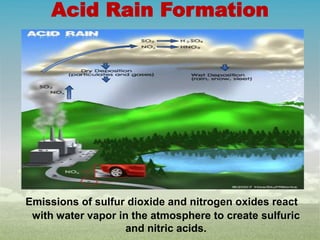
Acid Rain Formation
Emissions of sulfur dioxide and nitrogen oxides react
with water vapor in the atmosphere to create sulfuric
and nitric acids.
Causes Of Acid Rain
 NATURAL CAUSES:-
Volcanic emissions.
 Biological processes.
Lightning.
 ANTHROPOGENIC CAUSES:-
Factories (industrialization)
Motor vehicles, automobile exhaust.
Coal based power plants.
Domestic fires.
Smelters.
Measurement of acid rain
Acid rain is measured through pH tests that determine the
concentration of hydrogen ions in a liter of fluid. The pH
(potential for hydrogen) scale is used to measure acidity or
alkalinity. It runs from 0 to 14. (The greater the concentration of
hydrogen ions and the lower the pH number, the more acidic a
substance is; the lower the concentration of hydrogen ions and the
higher the pH number, the more alkaline—or basic—a substance
is.) So a pH greater than 7 indicates an alkaline substance while a
pH less than 7 indicates an acidic substance
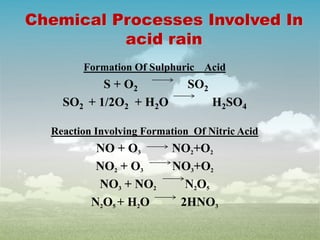
Chemical Processes Involved In
acid rain
Formation Of Sulphuric Acid
S + O2 SO2
SO2 + 1/2O2 + H2O H2SO4
Reaction Involving Formation Of Nitric Acid
NO + O3 NO2+O2
NO2 + O3 NO3+O2
NO3 + NO2 N2O5
N2O5 + H2O 2HNO3
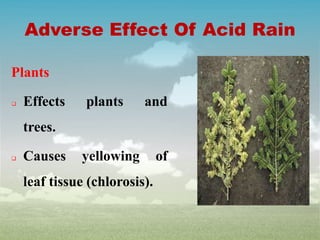
Adverse Effect Of Acid Rain
Plants
 Effects plants and
trees.
 Causes yellowing of
leaf tissue (chlorosis).
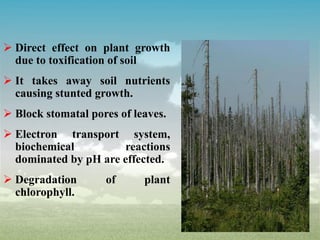
 Direct effect on plant growth
due to toxification of soil
 It takes away soil nutrients
causing stunted growth.
 Block stomatal pores of leaves.
 Electron transport system,
biochemical reactions
dominated by pH are effected.
 Degradation of plant
chlorophyll.
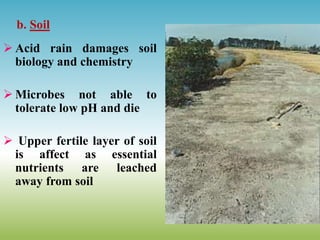
b. Soil
 Acid rain damages soil
biology and chemistry
 Microbes not able to
tolerate low pH and die
 Upper fertile layer of soil
is affect as essential
nutrients are leached
away from soil
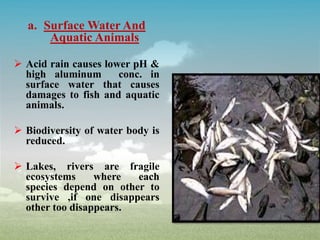
a. Surface Water And
Aquatic Animals
 Acid rain causes lower pH &
high aluminum conc. in
surface water that causes
damages to fish and aquatic
animals.
 Biodiversity of water body is
reduced.
 Lakes, rivers are fragile
ecosystems where each
species depend on other to
survive ,if one disappears
other too disappears.
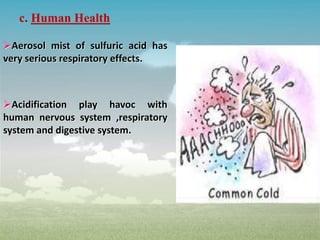
c. Human Health
Aerosol mist of sulfuric acid has
very serious respiratory effects.
Acidification play havoc with
human nervous system ,respiratory
system and digestive system.
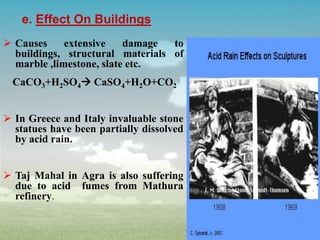
e. Effect On Buildings
 Causes extensive damage to
buildings, structural materials of
marble ,limestone, slate etc.
CaCO3+H2SO4 CaSO4+H2O+CO2
 In Greece and Italy invaluable stone
statues have been partially dissolved
by acid rain.
 Taj Mahal in Agra is also suffering
due to acid fumes from Mathura
refinery.
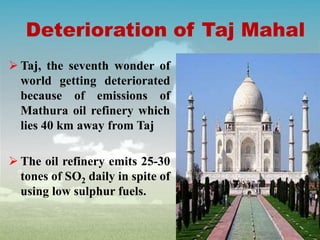
Deterioration of Taj Mahal
 Taj, the seventh wonder of
world getting deteriorated
because of emissions of
Mathura oil refinery which
lies 40 km away from Taj
 The oil refinery emits 25-30
tones of SO2 daily in spite of
using low sulphur fuels.
• Clean combustion technologies
• Using pollution control equipments
• Replacement of coal by natural gas or renewable energy resources
• Liming of lakes and soils
• Formulate the policy framework for reduction of sulfur dioxide and
other acid rain causing gas emissions.
• Support a set of subproject that promote cleaner production, reduce
acid rain and air pollution, improve the environment.
Control measures
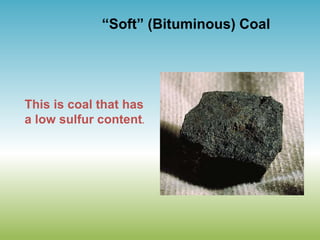
“Soft” (Bituminous) Coal
This is coal that has
a low sulfur content.
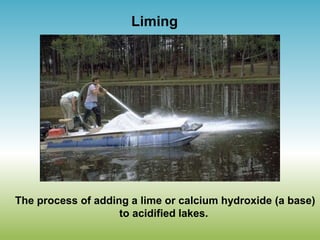
Liming
The process of adding a lime or calcium hydroxide (a base)
to acidified lakes.
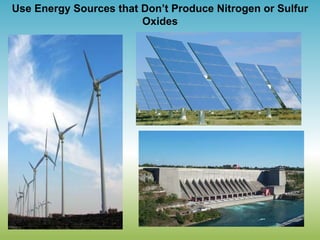
Use Energy Sources that Don’t Produce Nitrogen or Sulfur
Oxides
THANK YOU

acid rain ppt.pptx

  • 1.
  • 2.
    Introduction to acidrain Normal rain water is always slightly acidic because CO2 present in atmosphere. get dissolved in it form carbonic acid. Normal acidity of rain water is 5.6 H2O (l) + CO2 (g) H2CO3 (aq) Because of SO2 & NO2 gases as pollutants in atmosphere. The pH of rain is further lowered to as 2.4 & this type of Precipitation is called as ACID RAIN. Acid rain is combination of H2SO4, HNO3 and HCl is third
  • 3.
    History  Since industrialrevolution, emissions of SO2 & NO2 in atmosphere have increased.  In 1852 ROBERT ANGUS SMITH was first to show relation b/w acid rain & atmosphere pollution in Manchester (England)  Term acid rain was generated by SMITH in 1972.  Problem of acid rain has not only increased with population & industrial growth but has become widespread.
  • 4.
    Acid Rain Formation Emissionsof sulfur dioxide and nitrogen oxides react with water vapor in the atmosphere to create sulfuric and nitric acids.
  • 5.
    Causes Of AcidRain  NATURAL CAUSES:- Volcanic emissions.  Biological processes. Lightning.  ANTHROPOGENIC CAUSES:- Factories (industrialization) Motor vehicles, automobile exhaust. Coal based power plants. Domestic fires. Smelters.
  • 6.
    Measurement of acidrain Acid rain is measured through pH tests that determine the concentration of hydrogen ions in a liter of fluid. The pH (potential for hydrogen) scale is used to measure acidity or alkalinity. It runs from 0 to 14. (The greater the concentration of hydrogen ions and the lower the pH number, the more acidic a substance is; the lower the concentration of hydrogen ions and the higher the pH number, the more alkaline—or basic—a substance is.) So a pH greater than 7 indicates an alkaline substance while a pH less than 7 indicates an acidic substance
  • 7.
    Chemical Processes InvolvedIn acid rain Formation Of Sulphuric Acid S + O2 SO2 SO2 + 1/2O2 + H2O H2SO4 Reaction Involving Formation Of Nitric Acid NO + O3 NO2+O2 NO2 + O3 NO3+O2 NO3 + NO2 N2O5 N2O5 + H2O 2HNO3
  • 8.
    Adverse Effect OfAcid Rain Plants  Effects plants and trees.  Causes yellowing of leaf tissue (chlorosis).
  • 9.
     Direct effecton plant growth due to toxification of soil  It takes away soil nutrients causing stunted growth.  Block stomatal pores of leaves.  Electron transport system, biochemical reactions dominated by pH are effected.  Degradation of plant chlorophyll.
  • 10.
    b. Soil  Acidrain damages soil biology and chemistry  Microbes not able to tolerate low pH and die  Upper fertile layer of soil is affect as essential nutrients are leached away from soil
  • 11.
    a. Surface WaterAnd Aquatic Animals  Acid rain causes lower pH & high aluminum conc. in surface water that causes damages to fish and aquatic animals.  Biodiversity of water body is reduced.  Lakes, rivers are fragile ecosystems where each species depend on other to survive ,if one disappears other too disappears.
  • 12.
    c. Human Health Aerosolmist of sulfuric acid has very serious respiratory effects. Acidification play havoc with human nervous system ,respiratory system and digestive system.
  • 13.
    e. Effect OnBuildings  Causes extensive damage to buildings, structural materials of marble ,limestone, slate etc. CaCO3+H2SO4 CaSO4+H2O+CO2  In Greece and Italy invaluable stone statues have been partially dissolved by acid rain.  Taj Mahal in Agra is also suffering due to acid fumes from Mathura refinery.
  • 14.
    Deterioration of TajMahal  Taj, the seventh wonder of world getting deteriorated because of emissions of Mathura oil refinery which lies 40 km away from Taj  The oil refinery emits 25-30 tones of SO2 daily in spite of using low sulphur fuels.
  • 15.
    • Clean combustiontechnologies • Using pollution control equipments • Replacement of coal by natural gas or renewable energy resources • Liming of lakes and soils • Formulate the policy framework for reduction of sulfur dioxide and other acid rain causing gas emissions. • Support a set of subproject that promote cleaner production, reduce acid rain and air pollution, improve the environment. Control measures
  • 16.
    “Soft” (Bituminous) Coal Thisis coal that has a low sulfur content.
  • 17.
    Liming The process ofadding a lime or calcium hydroxide (a base) to acidified lakes.
  • 18.
    Use Energy Sourcesthat Don’t Produce Nitrogen or Sulfur Oxides
  • 19.