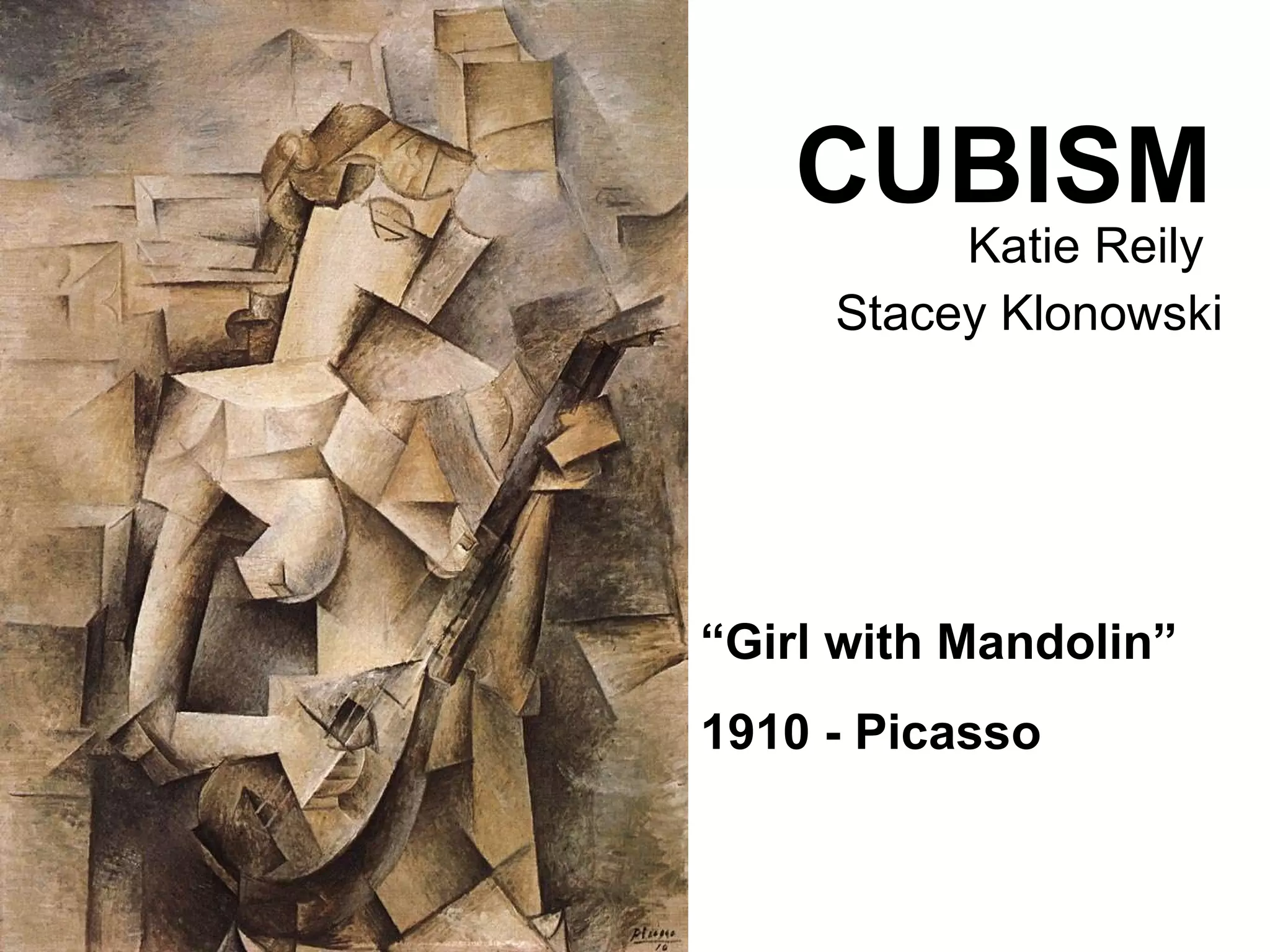
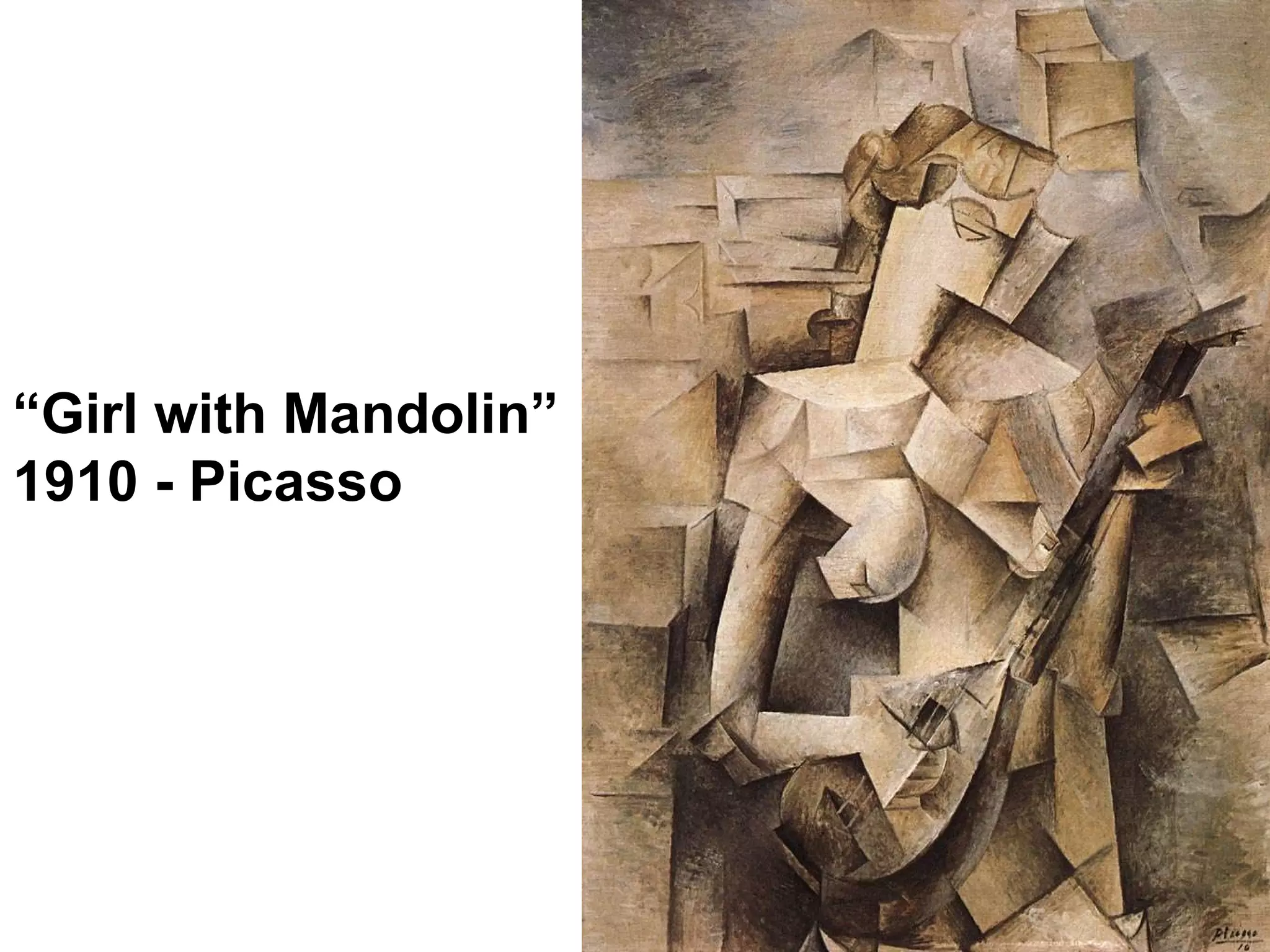
CUBISM   Katie Reily    Stacey Klonowski “ Girl with Mandolin” 1910 - Picasso
Science and Art Science was rapidly changing Old notions of matter, time, and space are shattered Albert Einstein, Max Planck, and Neils Bohr introduced a new theory of the atom Bohr introduced Quantum theory Everything is broken down into a “quanta” of energy. Einstein introduced Special Theory of Relativity Changed three dimensional space
What is Cubism? First abstract art style Used simple shapes Ignored color in beginning Lacks elements of light, atmosphere, and space Gave depth and richness to painting Overlapping Fragments Reality of objects in space, reality of flat painted surface
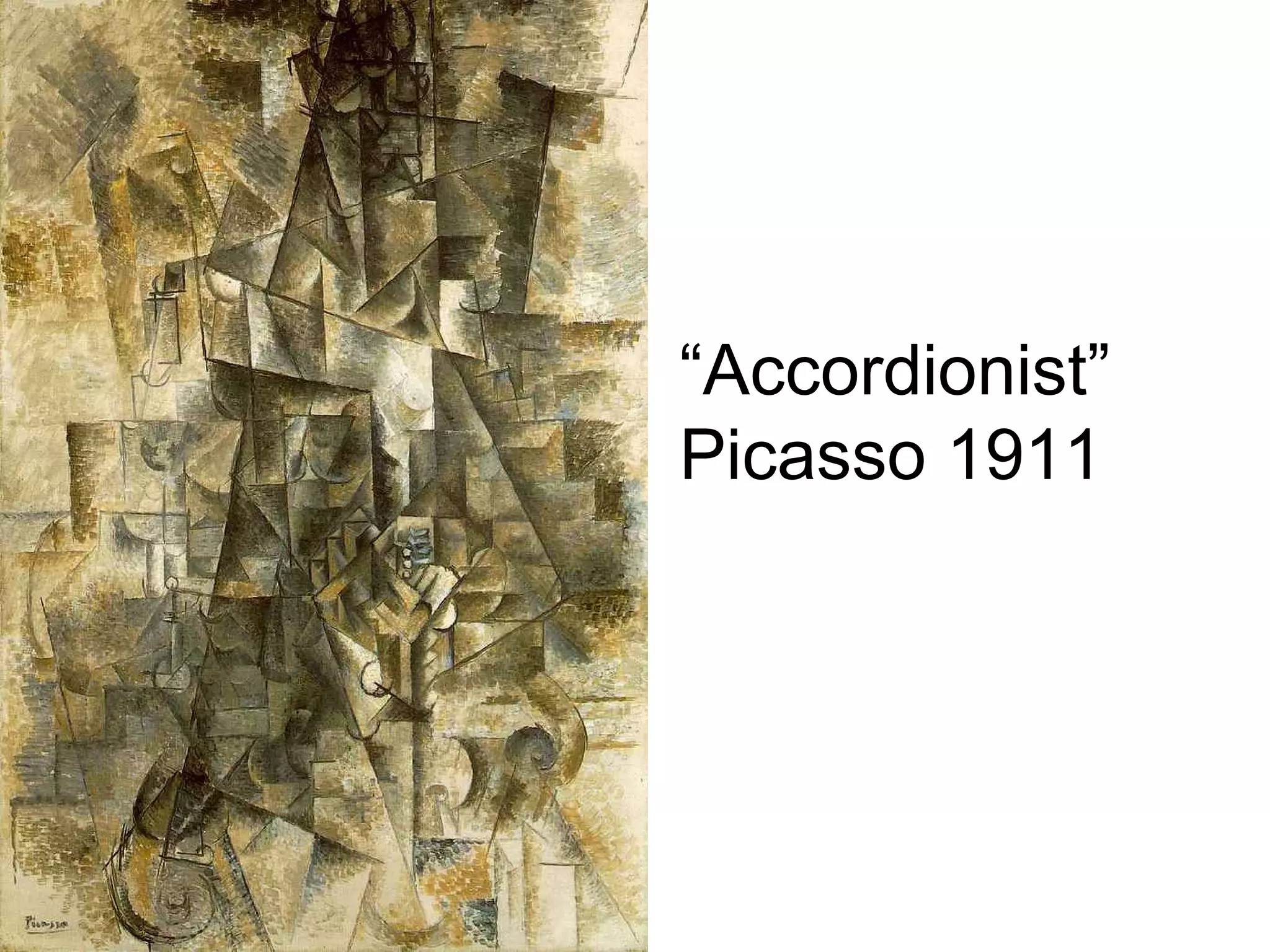
“ Accordionist” Picasso 1911
What is Cubism…? Continued Disregard physical laws of nature. Spatial relationships without traditional perspective Light and shade not used to convey depth Figures broken down into jagged planes of color Figures broken down into more than one location in space. Two major phases:  analytical and synthetic
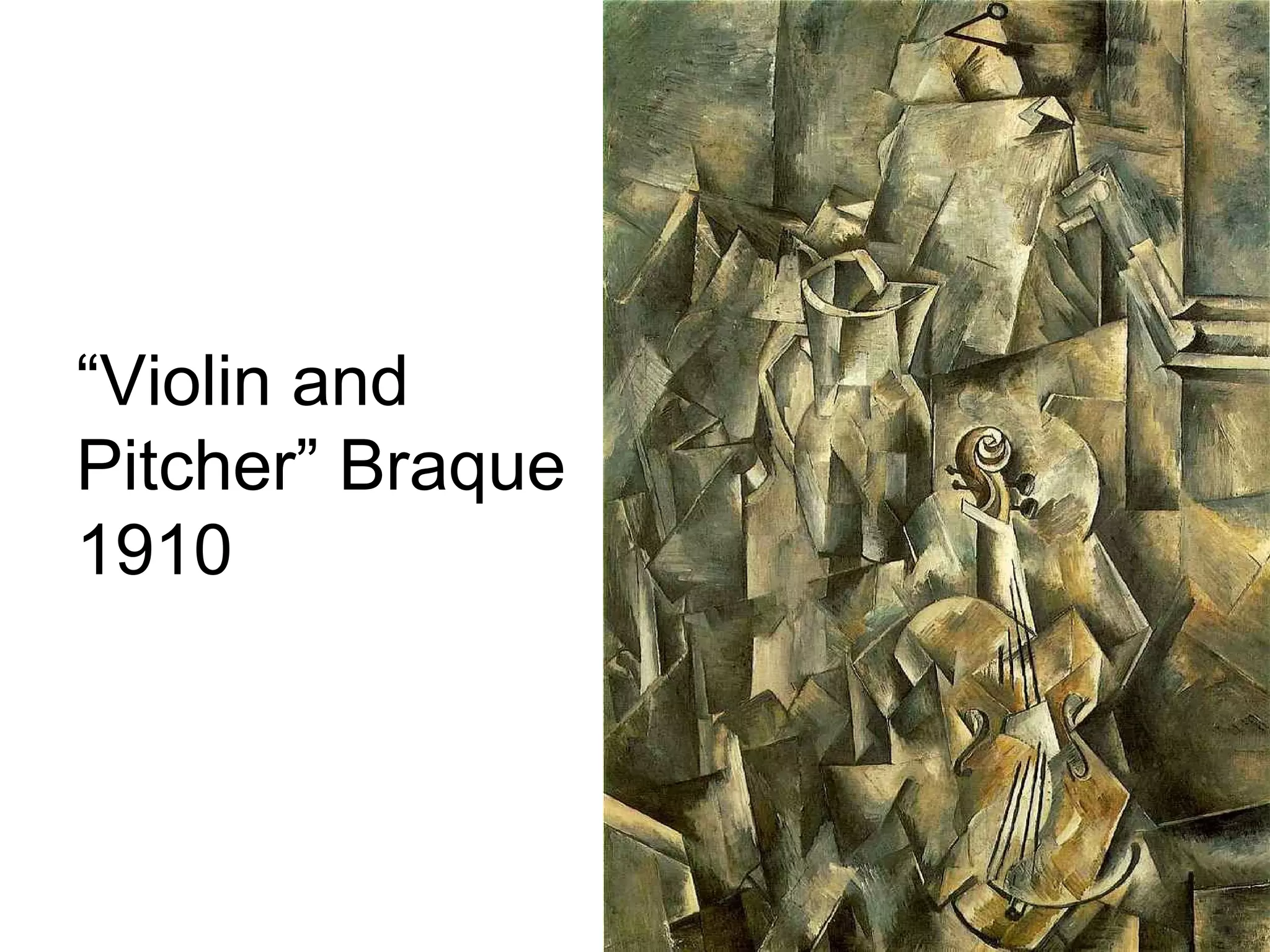
“ Violin and Pitcher” Braque 1910
How did Cubism get its name? Cubism got its name from remarks from the painter Henri Matisse and critic Louis Vauxcelles. They saw Braque’s work "Houses at L'Estaque" and mocked it saying “everything is broken down into cubes.”
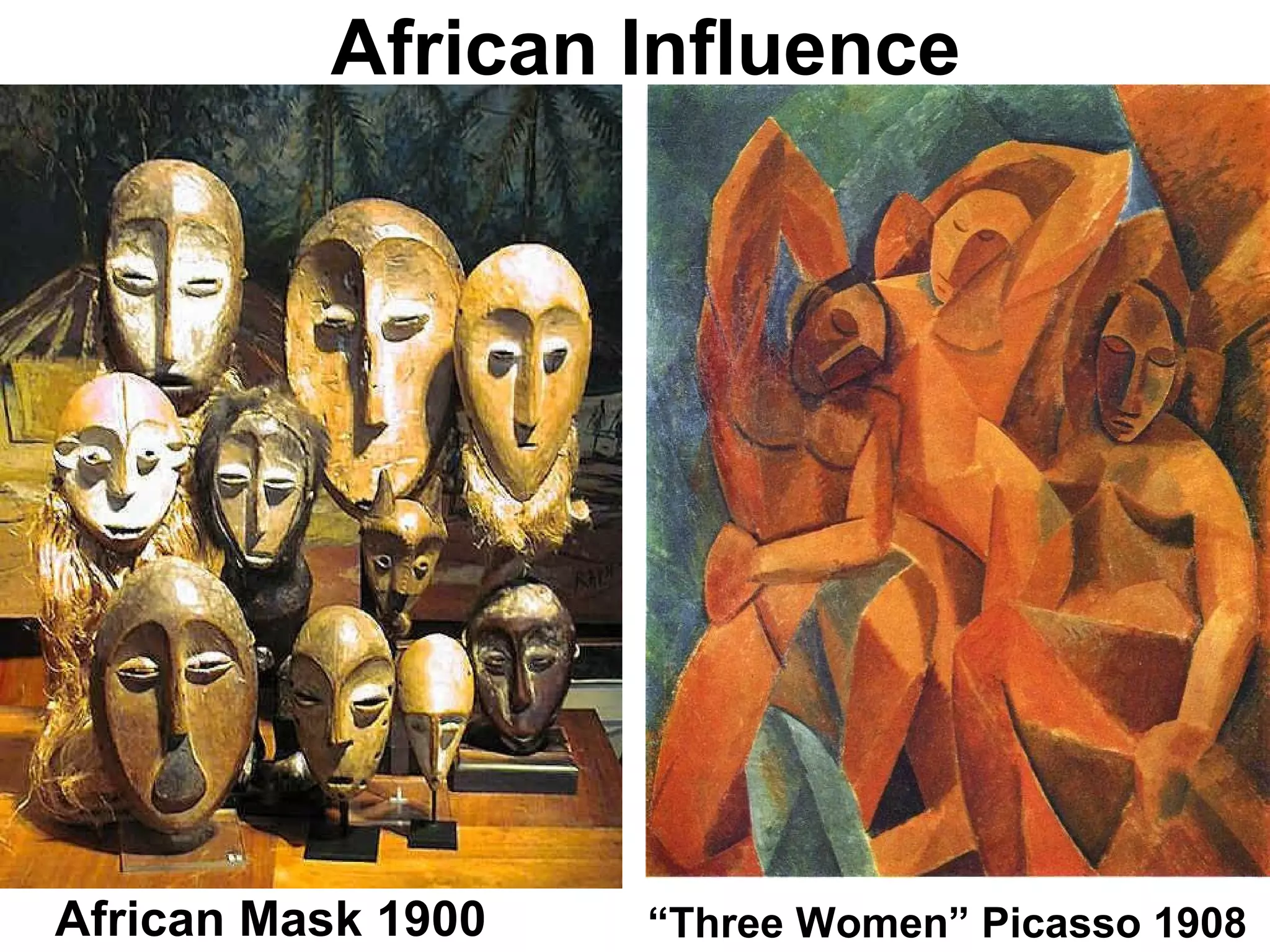
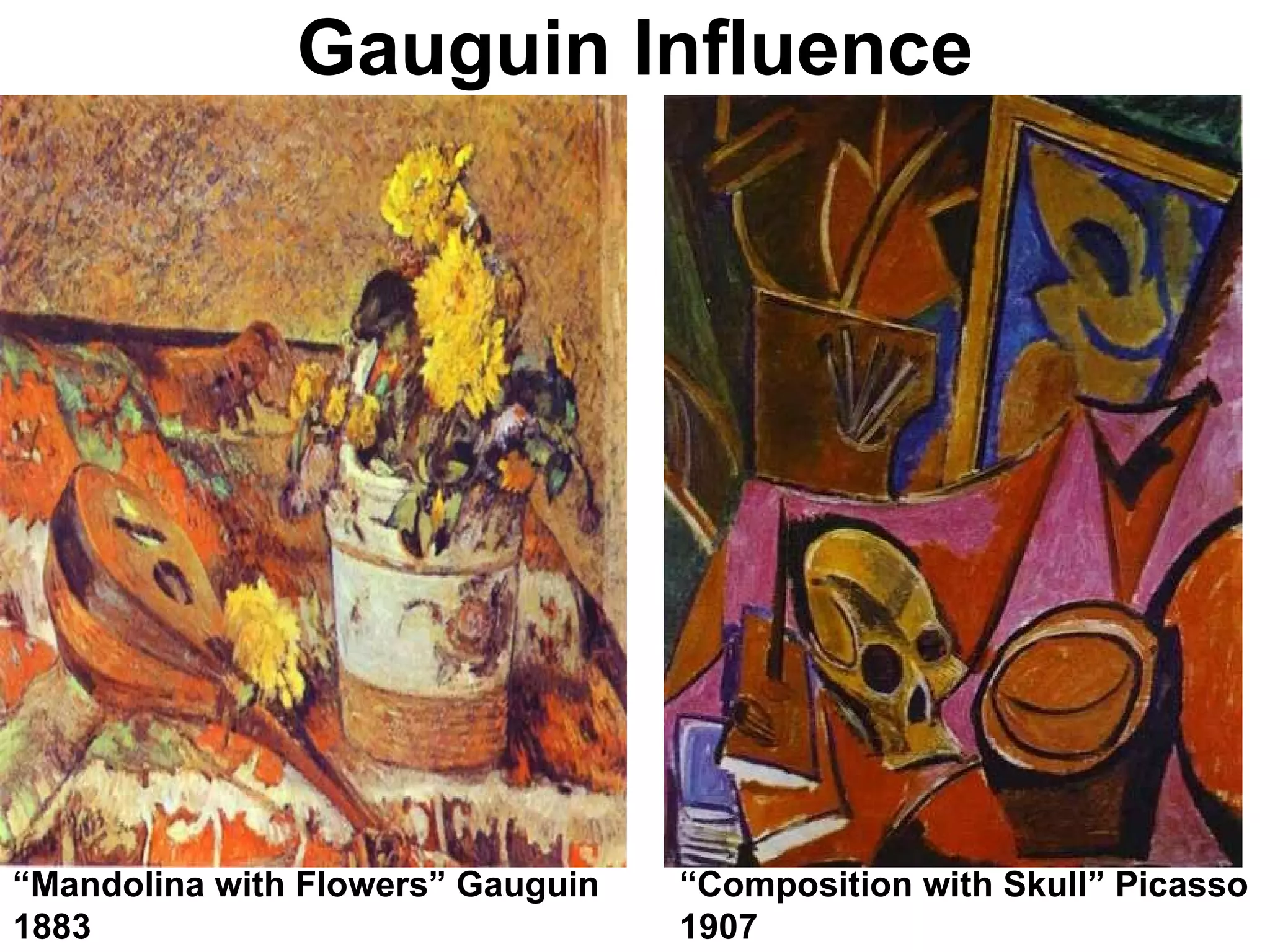
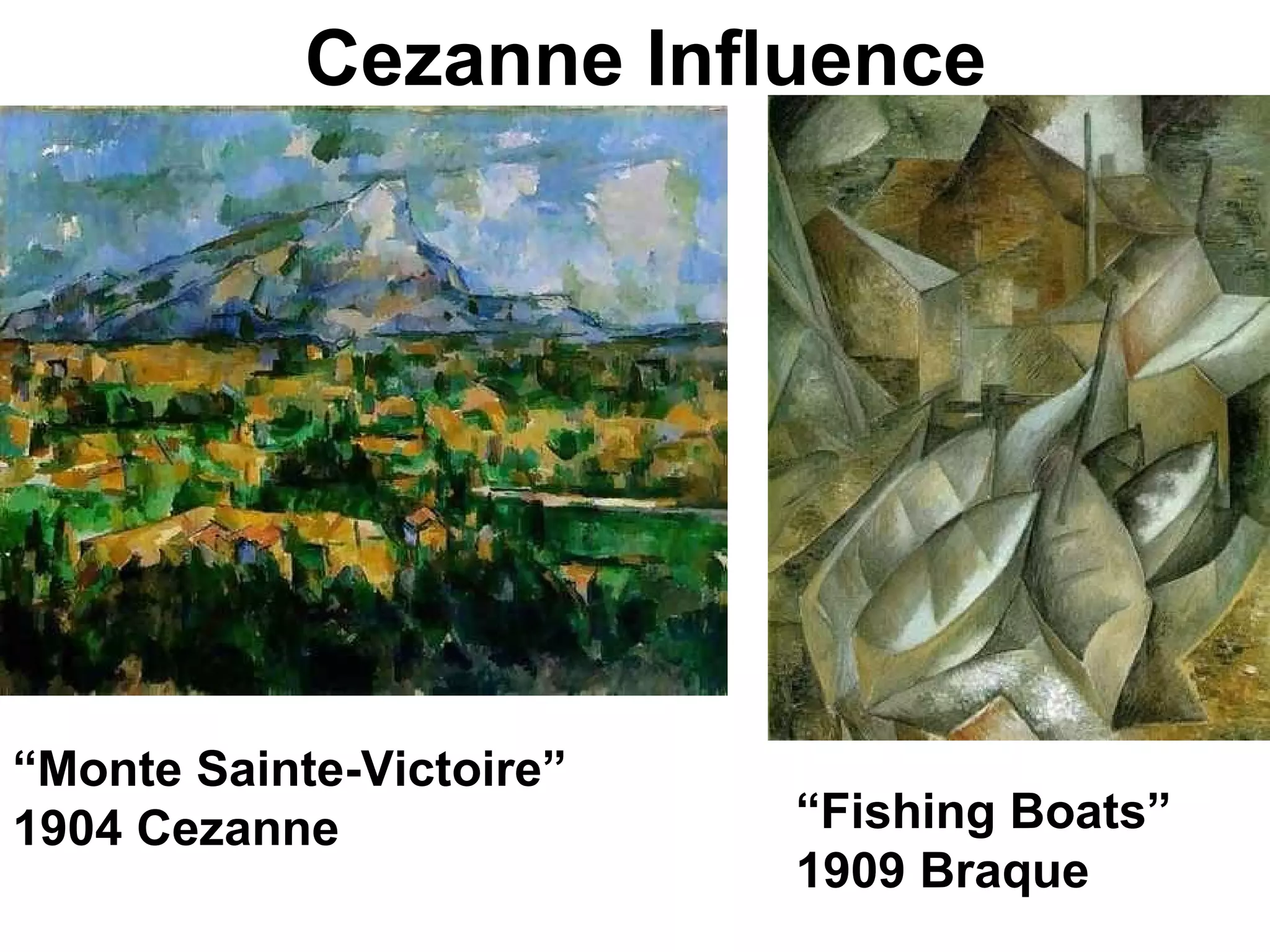
Cubism Influence Post Impressionism – Gauguin – greatly influence Pablo Picasso Impressionist – Cezanne – greatly influenced George Braque African Influence – greatly influenced Picasso’s early works Direct reaction to Fauvism
African Influence African Mask 1900 “ Three Women” Picasso 1908
Gauguin Influence “ Mandolina with Flowers” Gauguin 1883 “ Composition with Skull” Picasso 1907
Cezanne Influence “ Monte Sainte-Victoire” 1904 Cezanne “ Fishing Boats” 1909 Braque
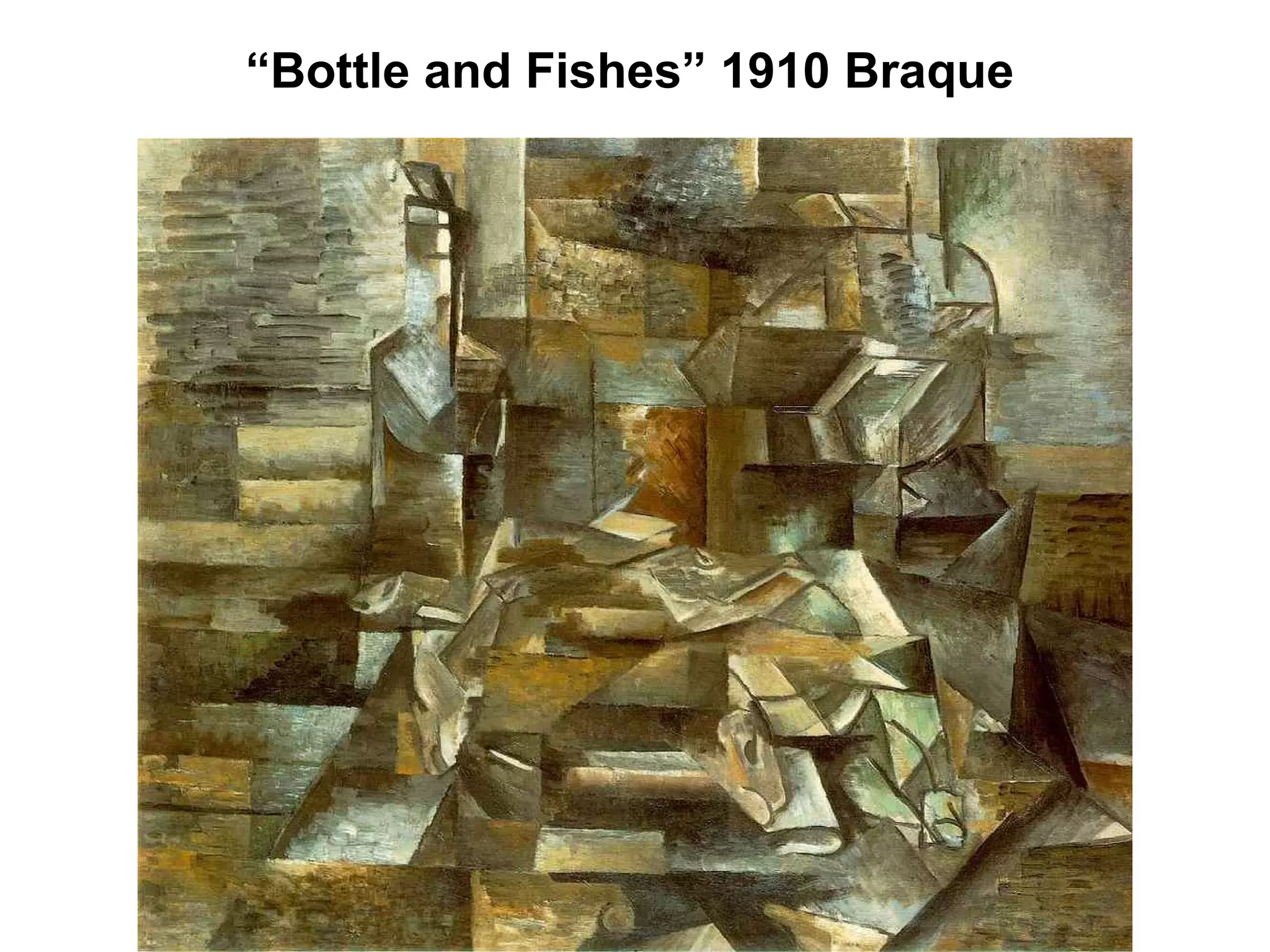
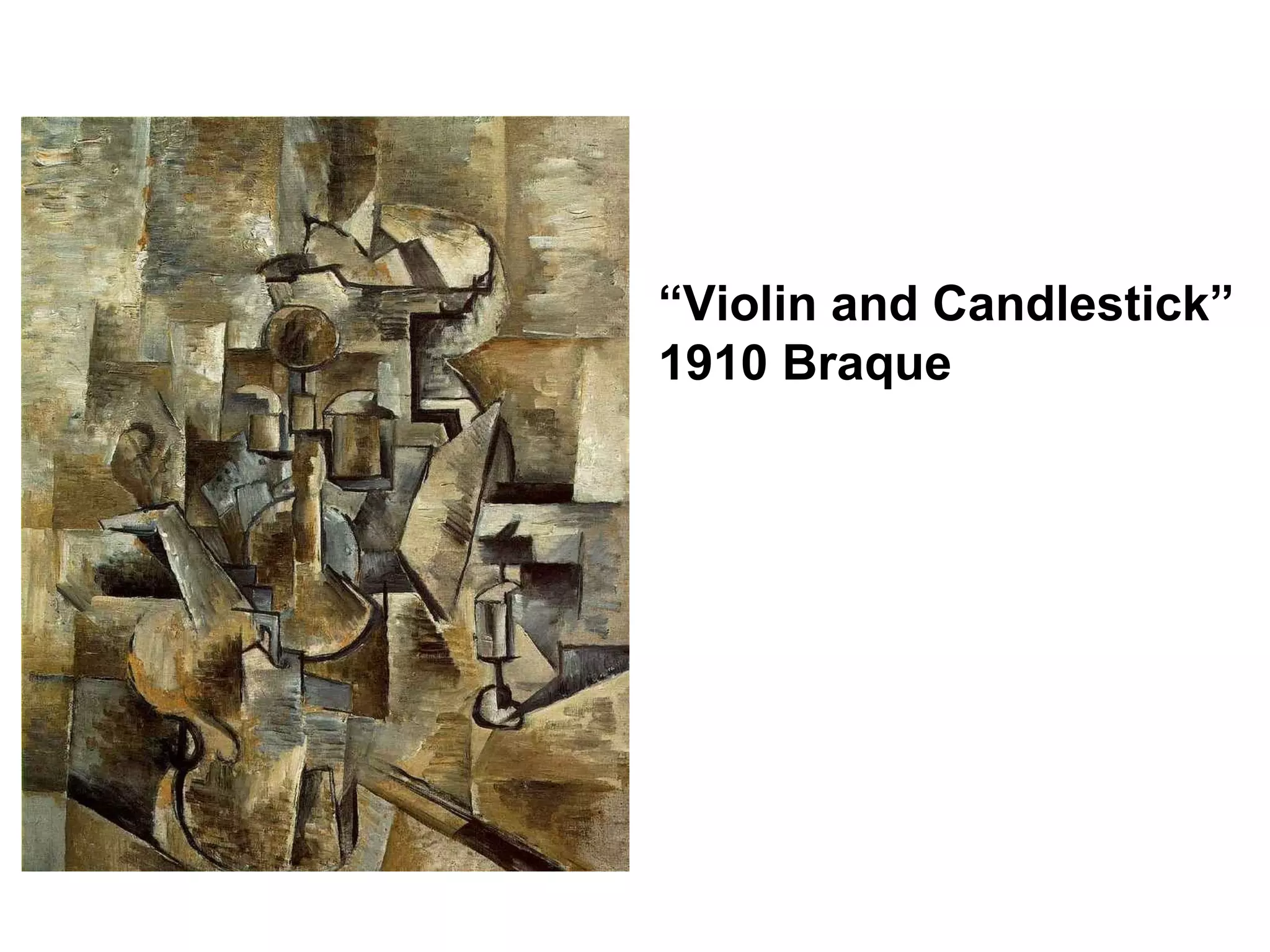
Analytic Cubism (1909-1911) First Cubism phase Monochromatic colors (tans, browns, grays, creams, greens, blues) Based on reducing natural forms to basic geometrical parts. Focused more on intellect than emotion
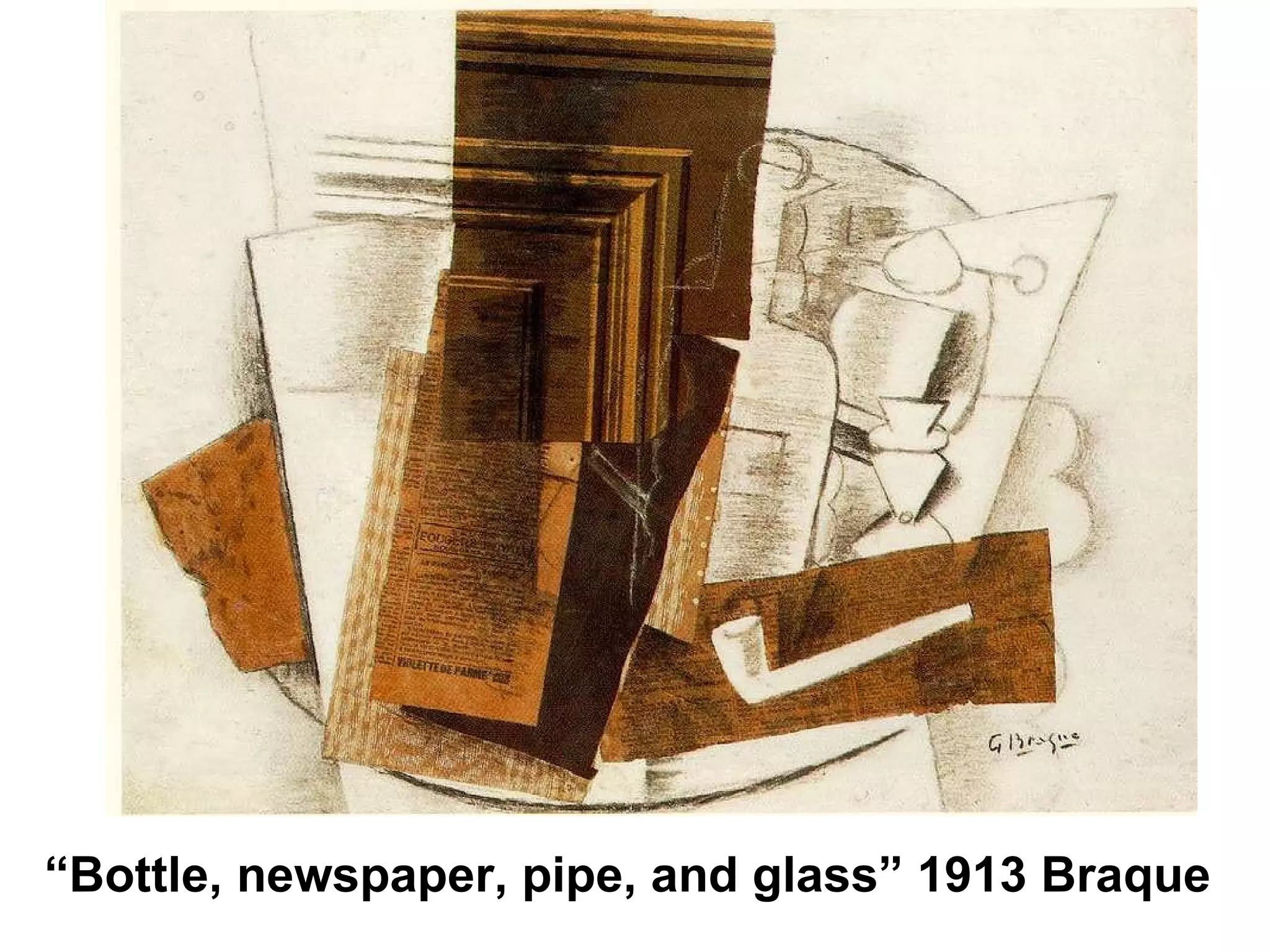
Synthetic Cubism (1912-1919) Grew out of analytical Wider use of color Wider use of materials Papier Colle introduced Type of collage Appealing and easier to interpret Less intricate Added substances like sand to paint to make it appear thicker
Analytic vs. Synthetic Based on intellect Monochromatic color palette Reduce object to basic geometric shapes Linear construction Less intricate More color More appealing Collage Objects less recognizable Less shading Added substance to paint
Pablo Picasso (1881-1973) Spanish painter and sculptor Took the sculpture approach which lead to creation of Cubism Stated forms and volumes in basic simplicity
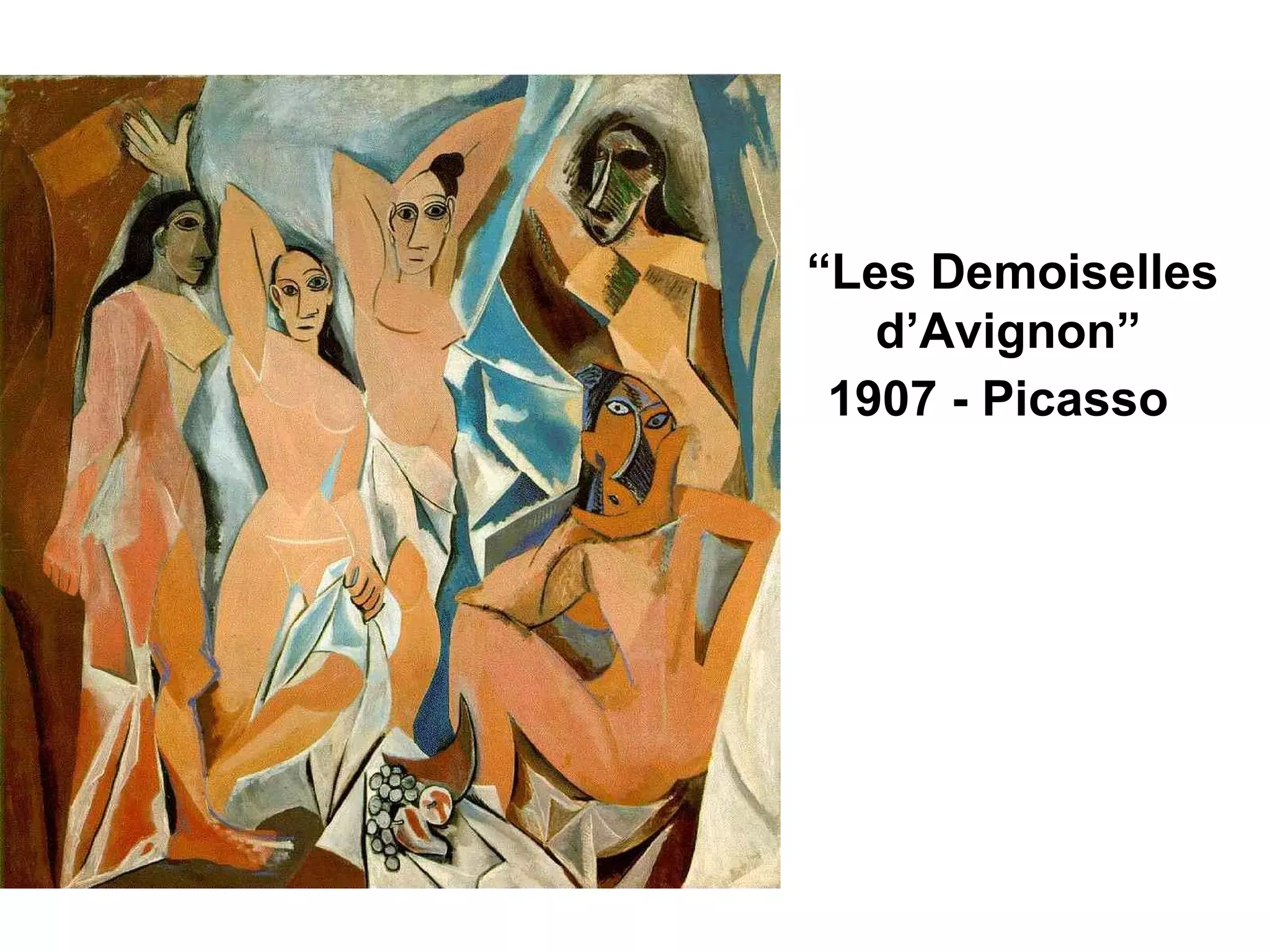
1907 - Picasso “ Les Demoiselles  d’Avignon”
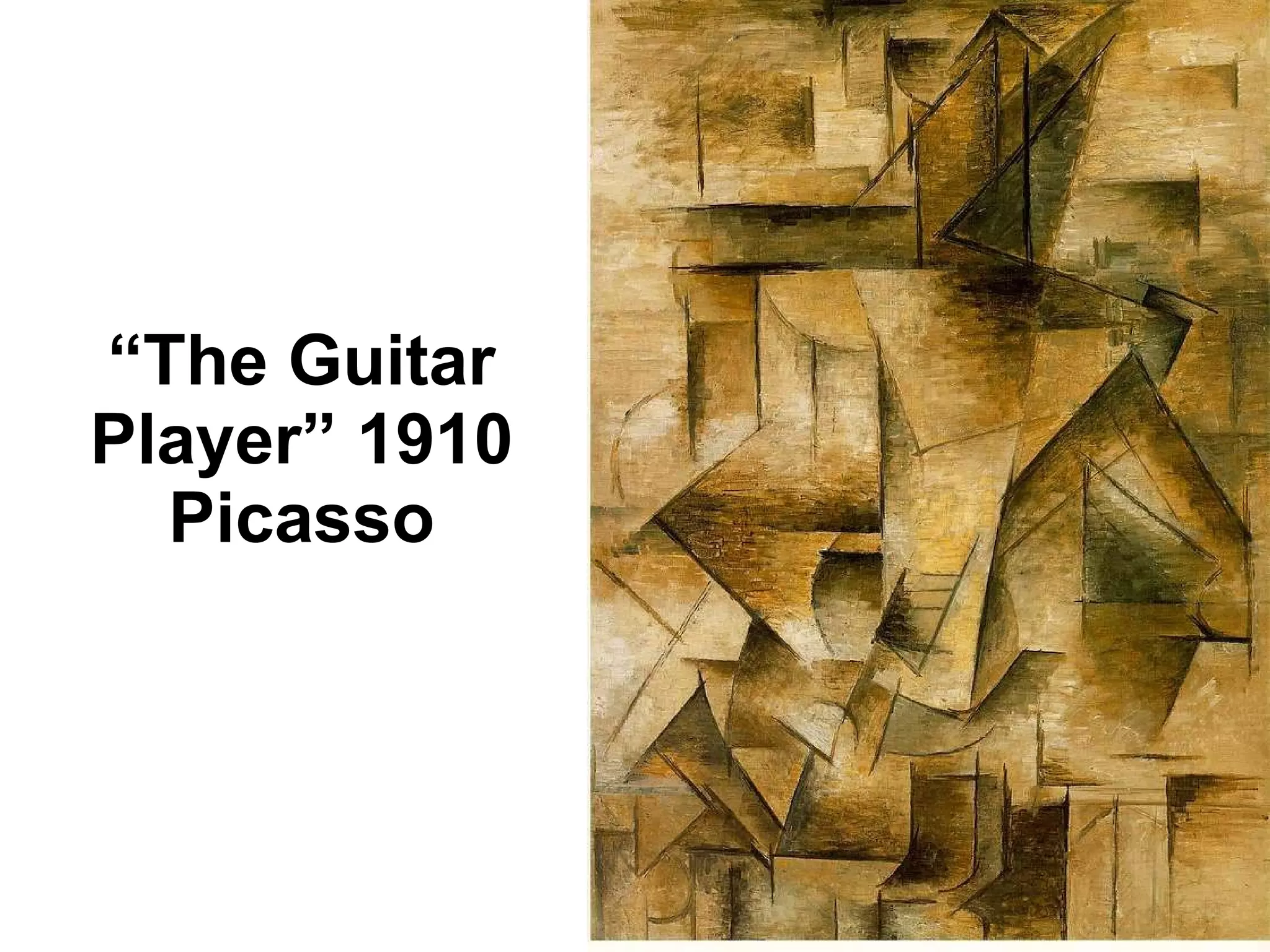
“ The Guitar Player” 1910 Picasso
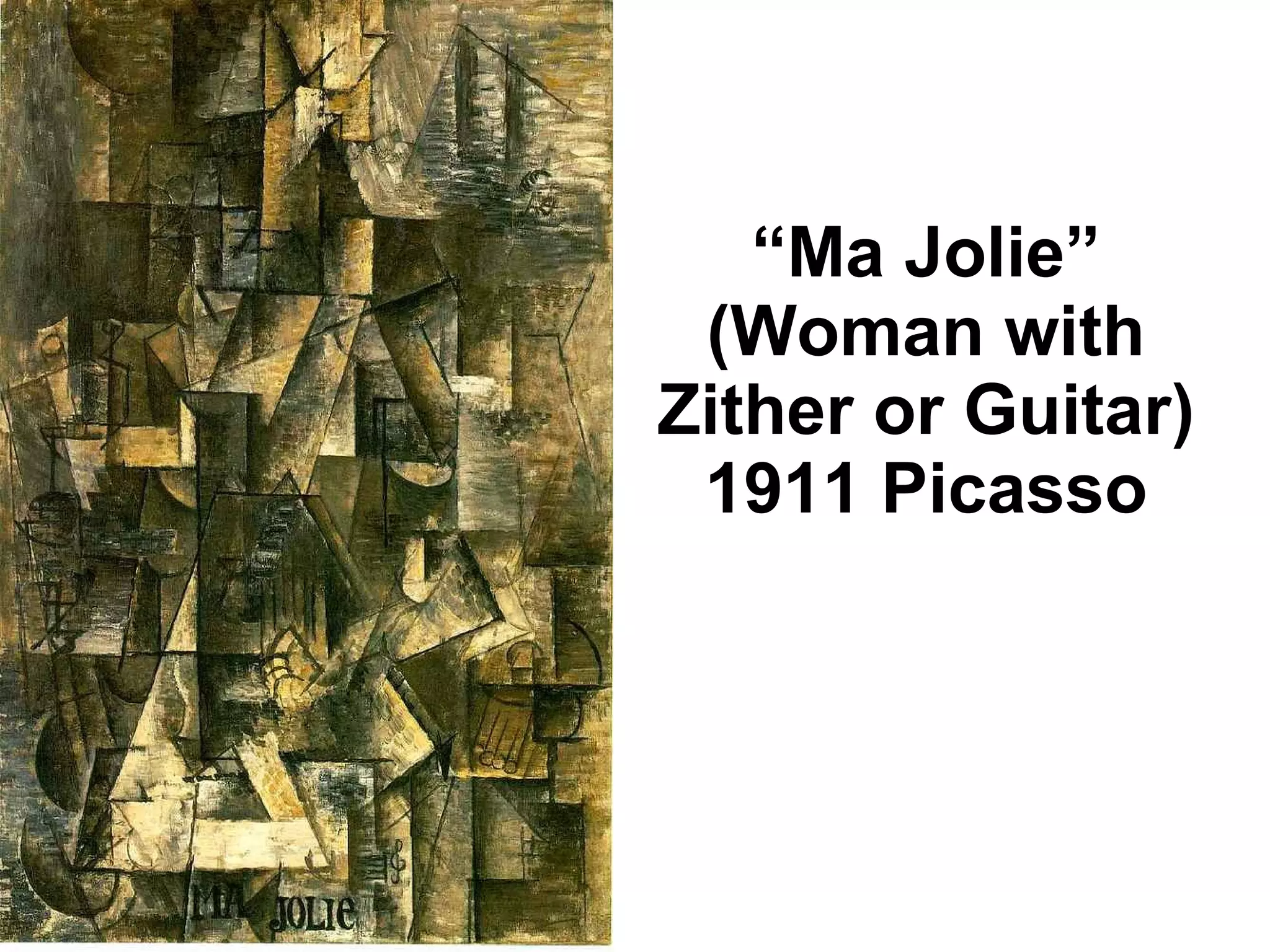
“ Ma Jolie” (Woman with Zither or Guitar) 1911 Picasso
“ Girl with Mandolin” 1910 - Picasso
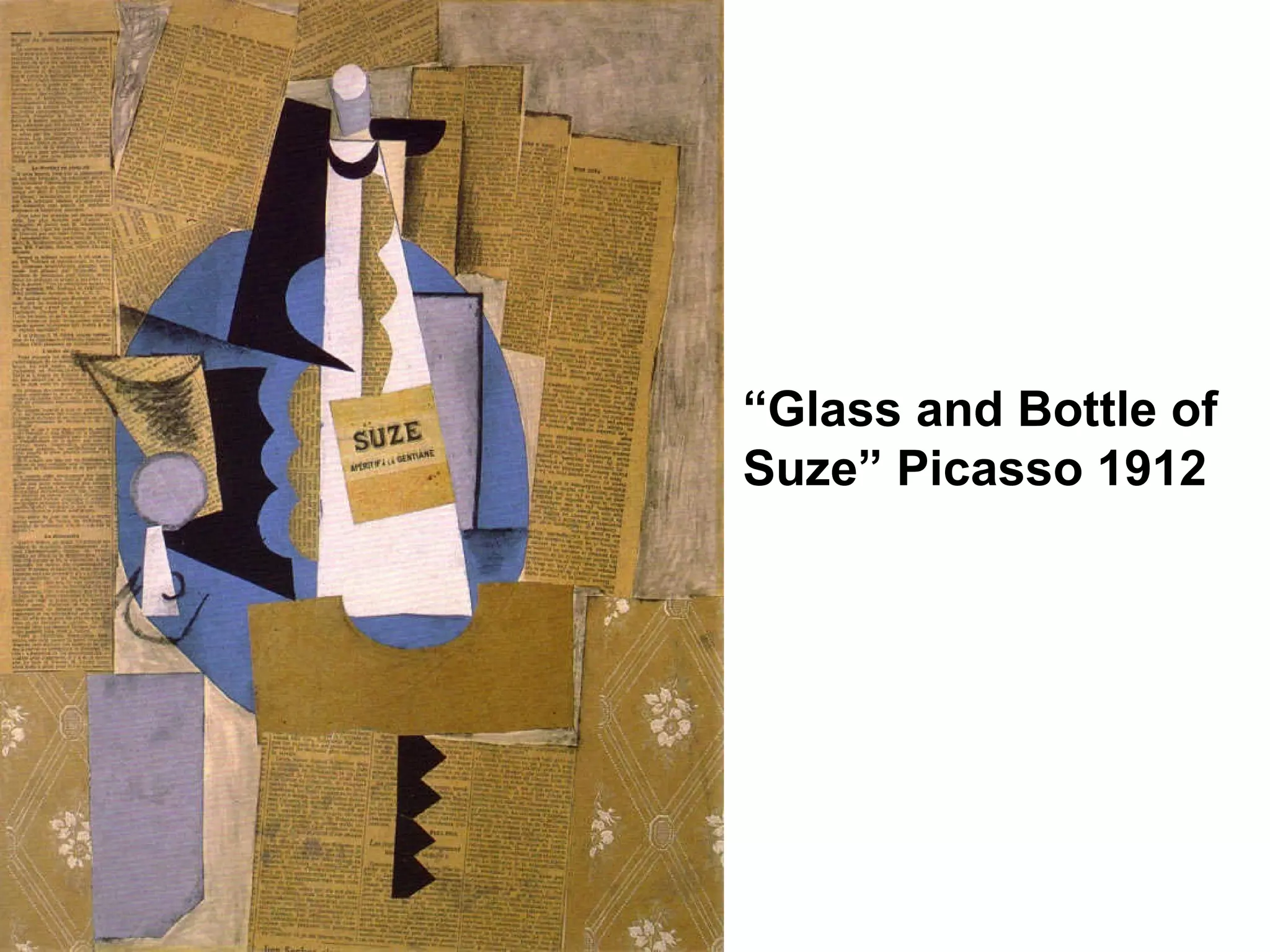
“ Glass and Bottle of Suze” Picasso 1912
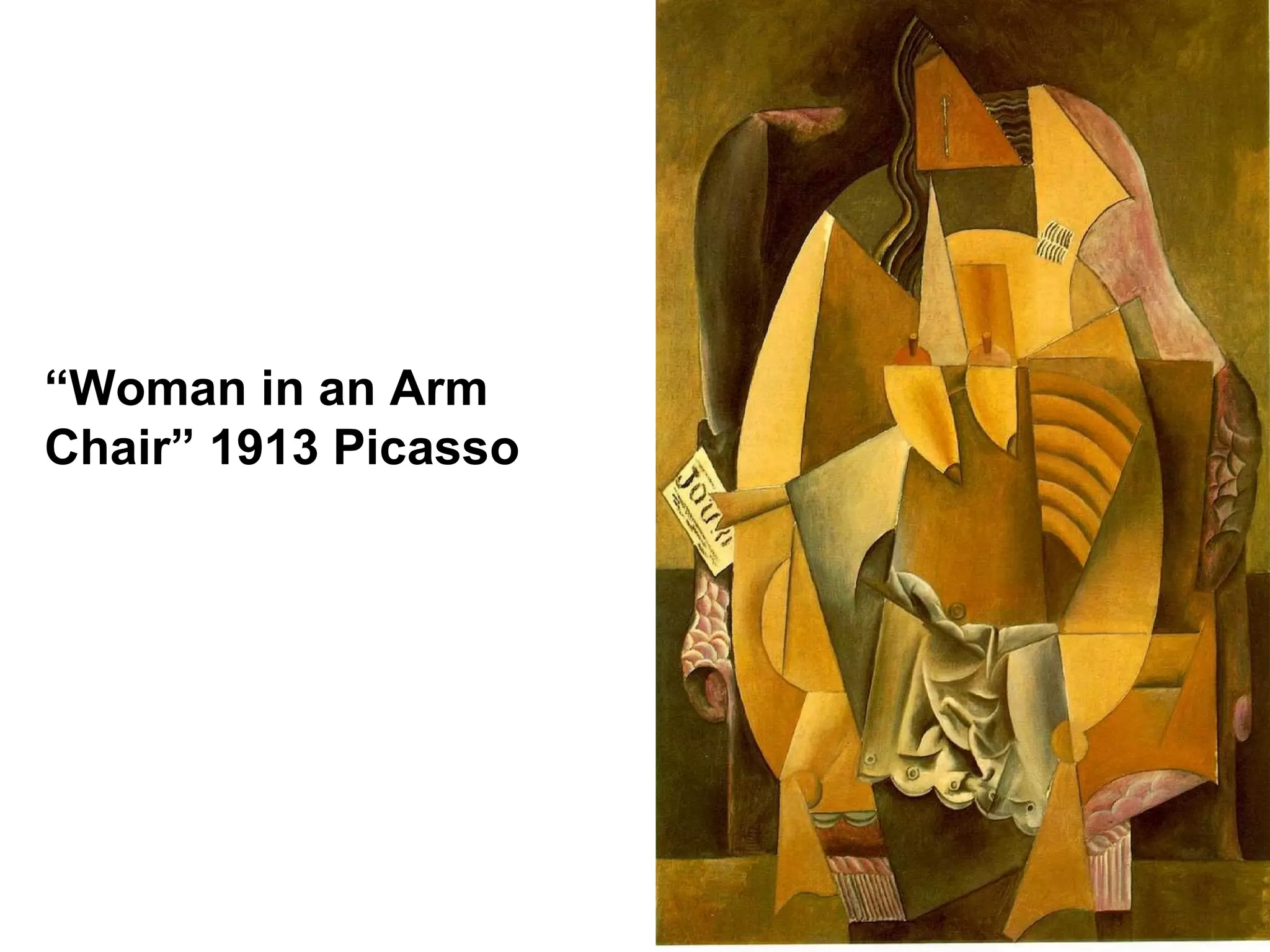
“ Woman in an Arm Chair” 1913 Picasso
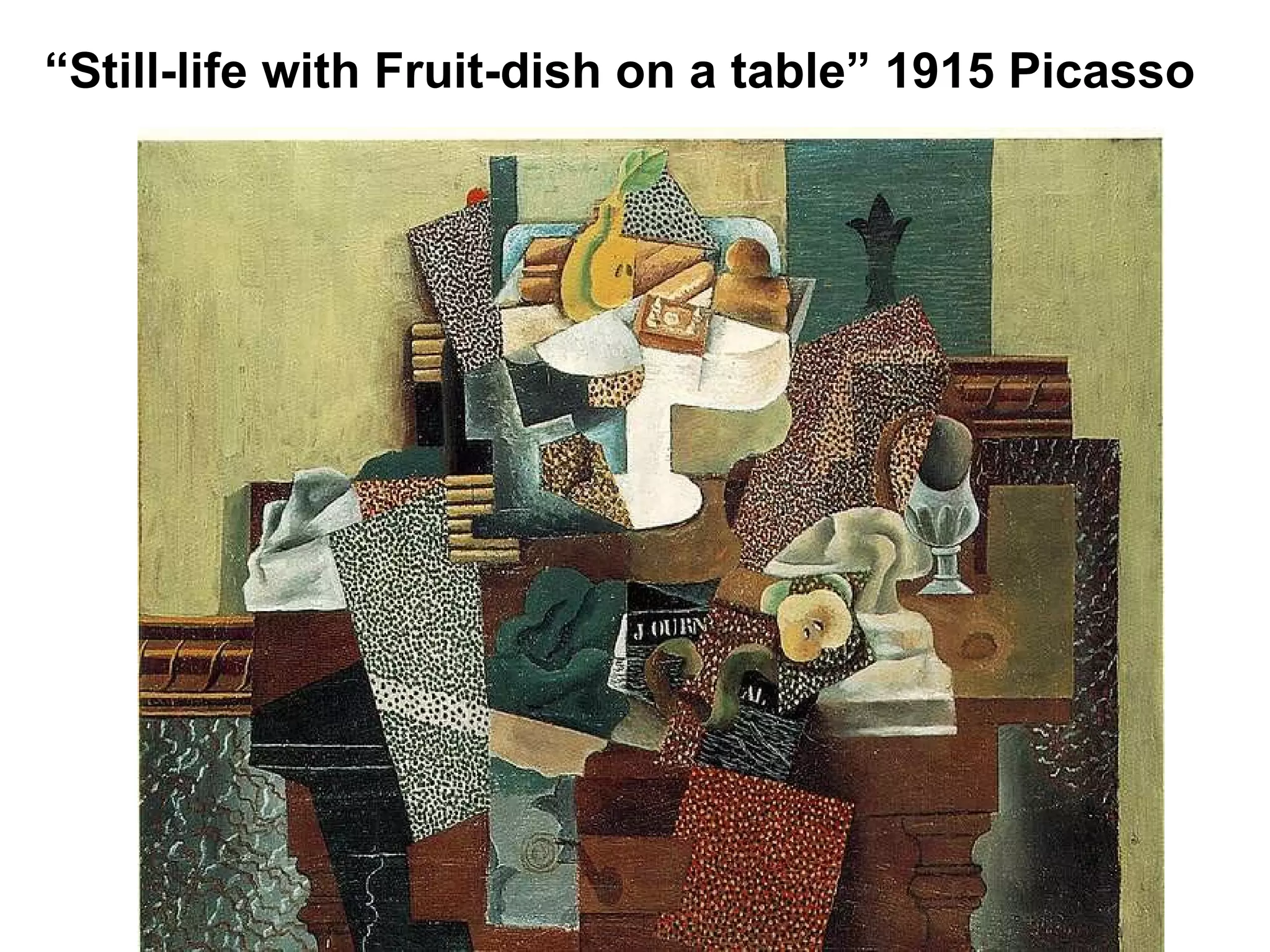
“ Still-life with Fruit-dish on a table” 1915 Picasso
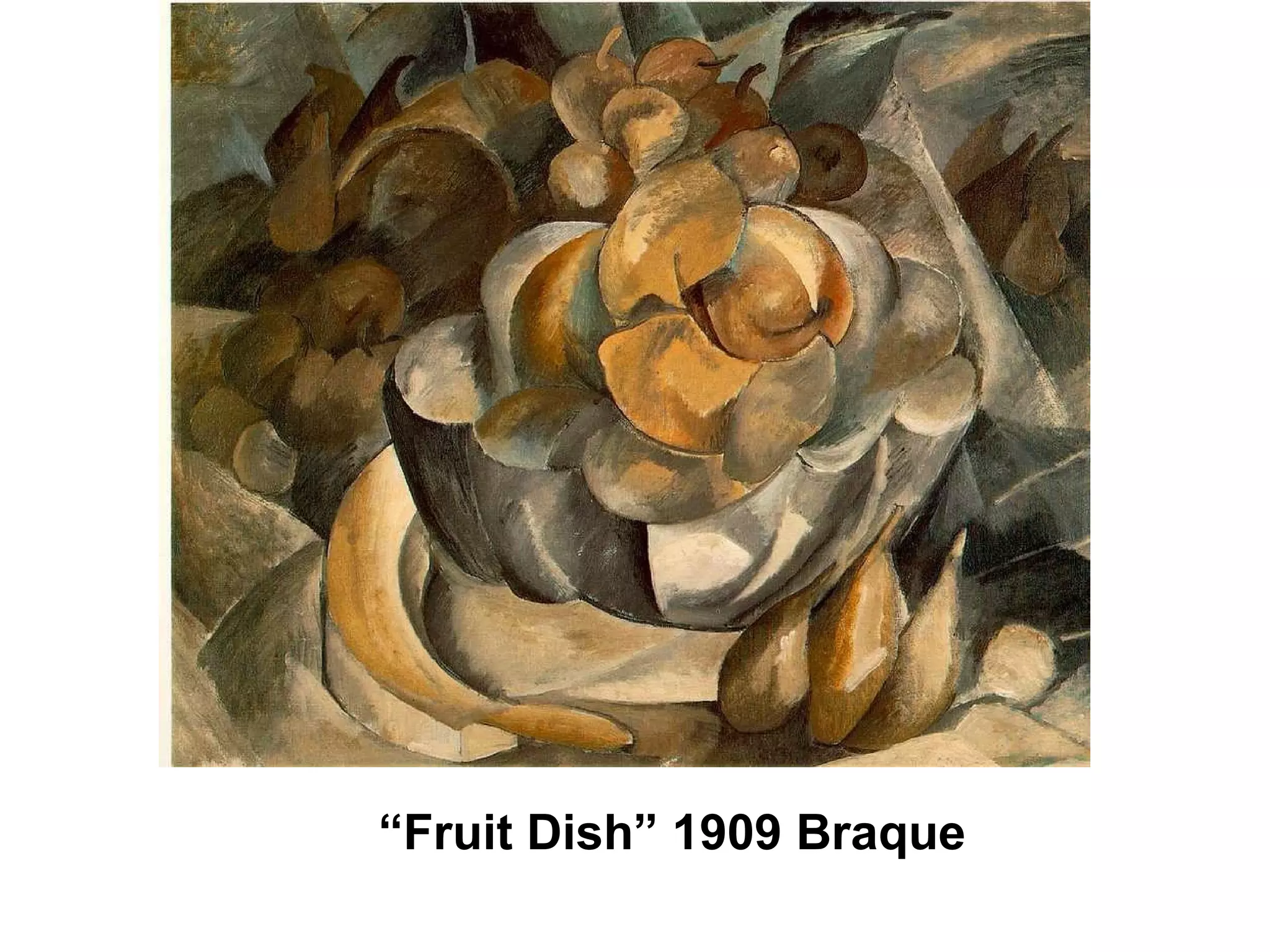
George Braque (1882-1963) French painter Saw solid reality of objects Impressionist, Fauvist, then Cubist Painted mainly scenery Introduced faux bois. (The appearance of stenciling in his paintings)
“ Fruit Dish” 1909 Braque
“ Bottle and Fishes” 1910 Braque
“ Violin and Candlestick” 1910 Braque
“ Bottle, newspaper, pipe, and glass” 1913 Braque
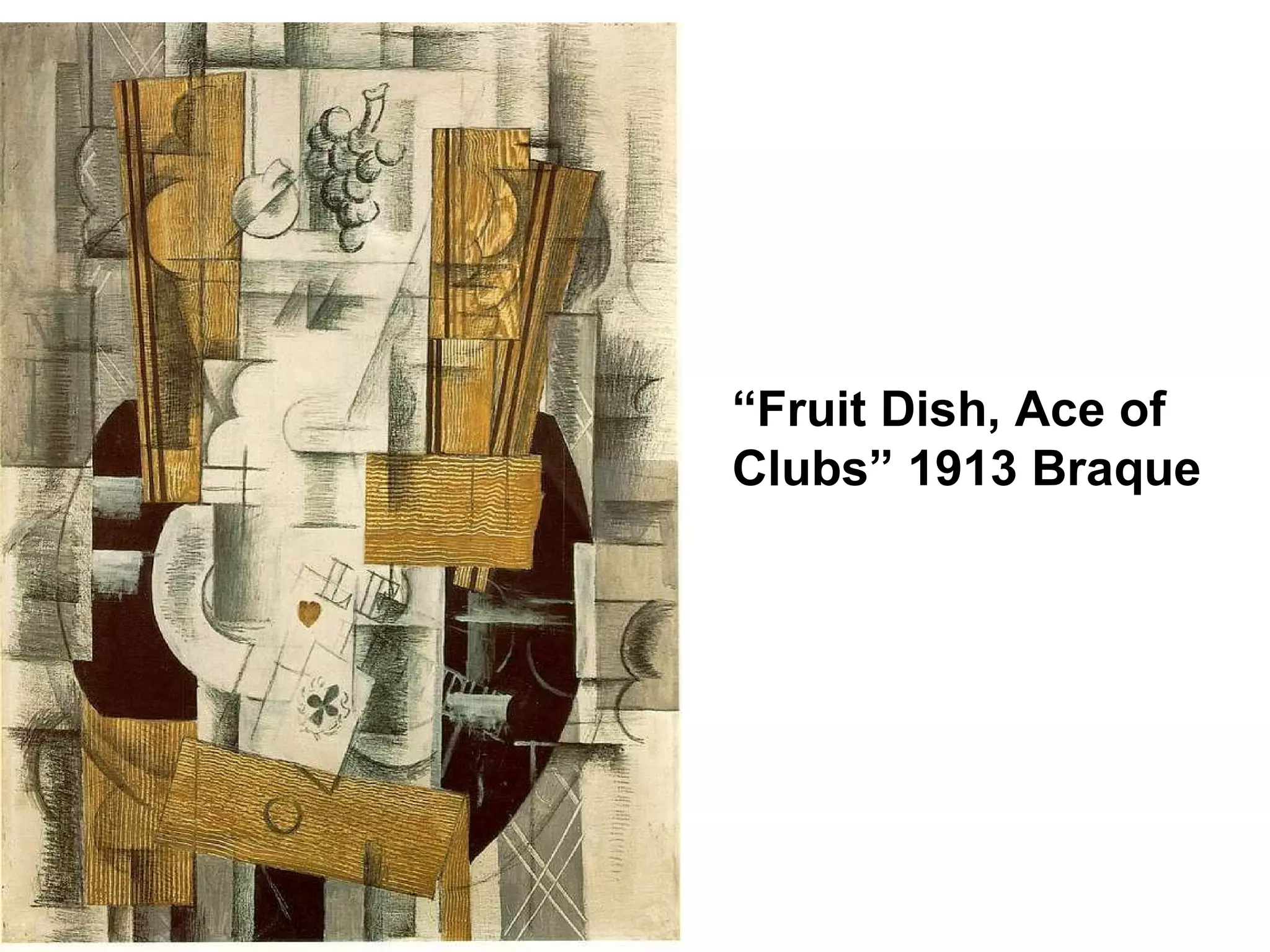
“ Fruit Dish, Ace of Clubs” 1913 Braque
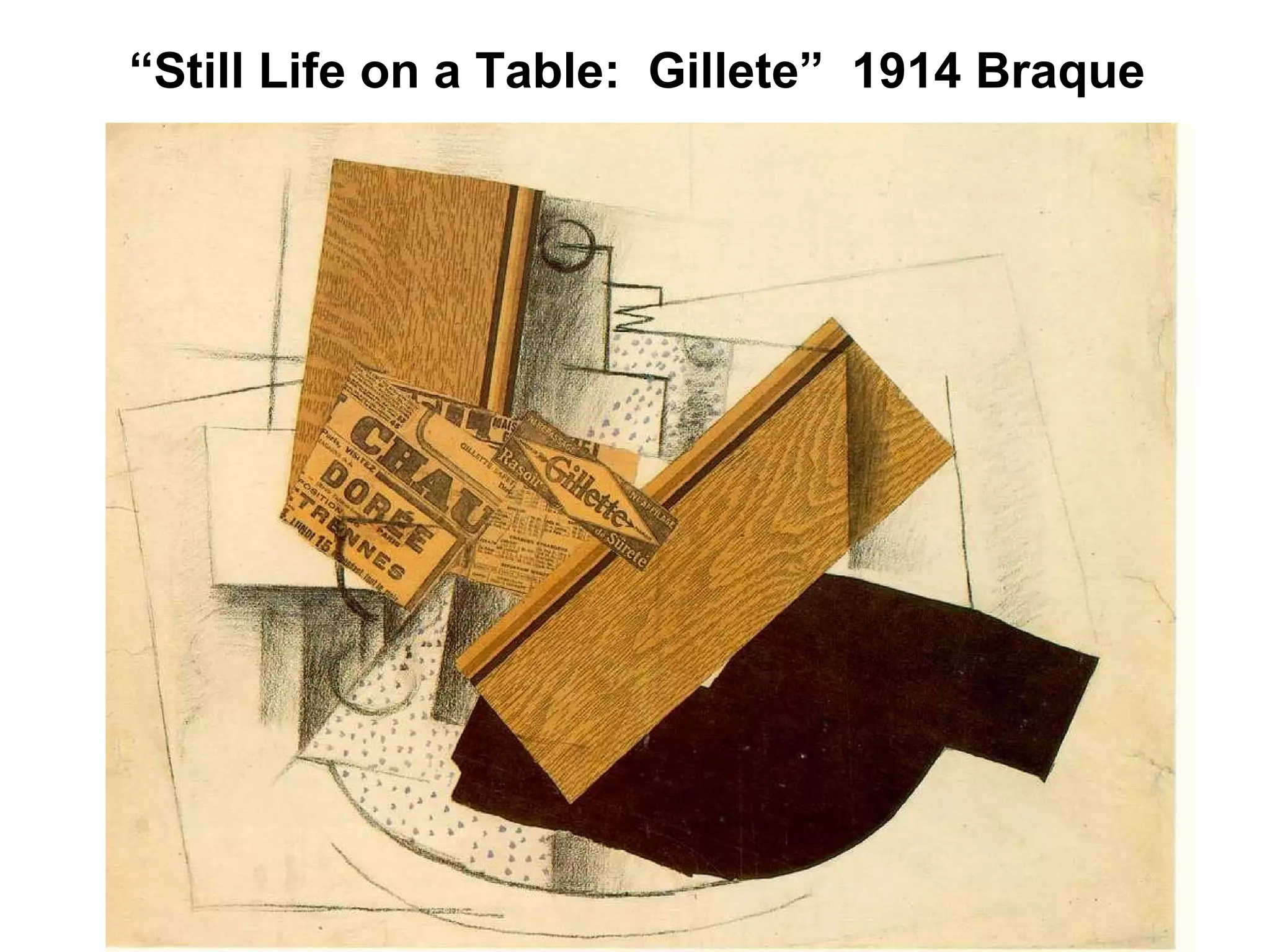
“ Still Life on a Table:  Gillete”  1914 Braque
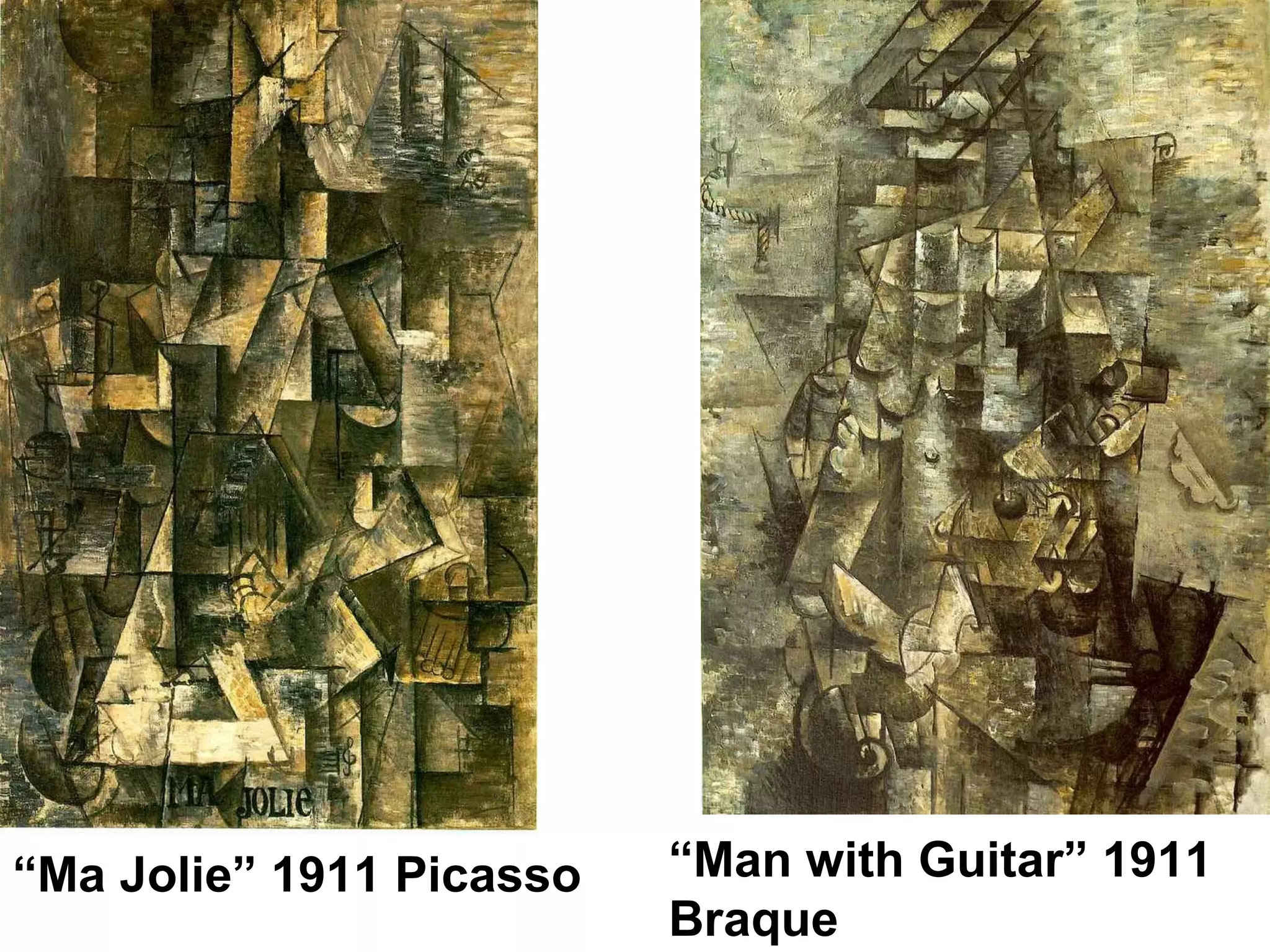
Braque and Picasso Worked together until end of synthetic cubism Thought more about forging language of cubism than about aesthetic value of subject. Common concern for accurate representation of reality Always relied on intuition Limited role of light Reduced palette to neutral range of grays Work could not be differentiated in early Cubism Braque and Picasso split in 1914 at the start of WWI
“ Man with Guitar” 1911 Braque “ Ma Jolie” 1911 Picasso
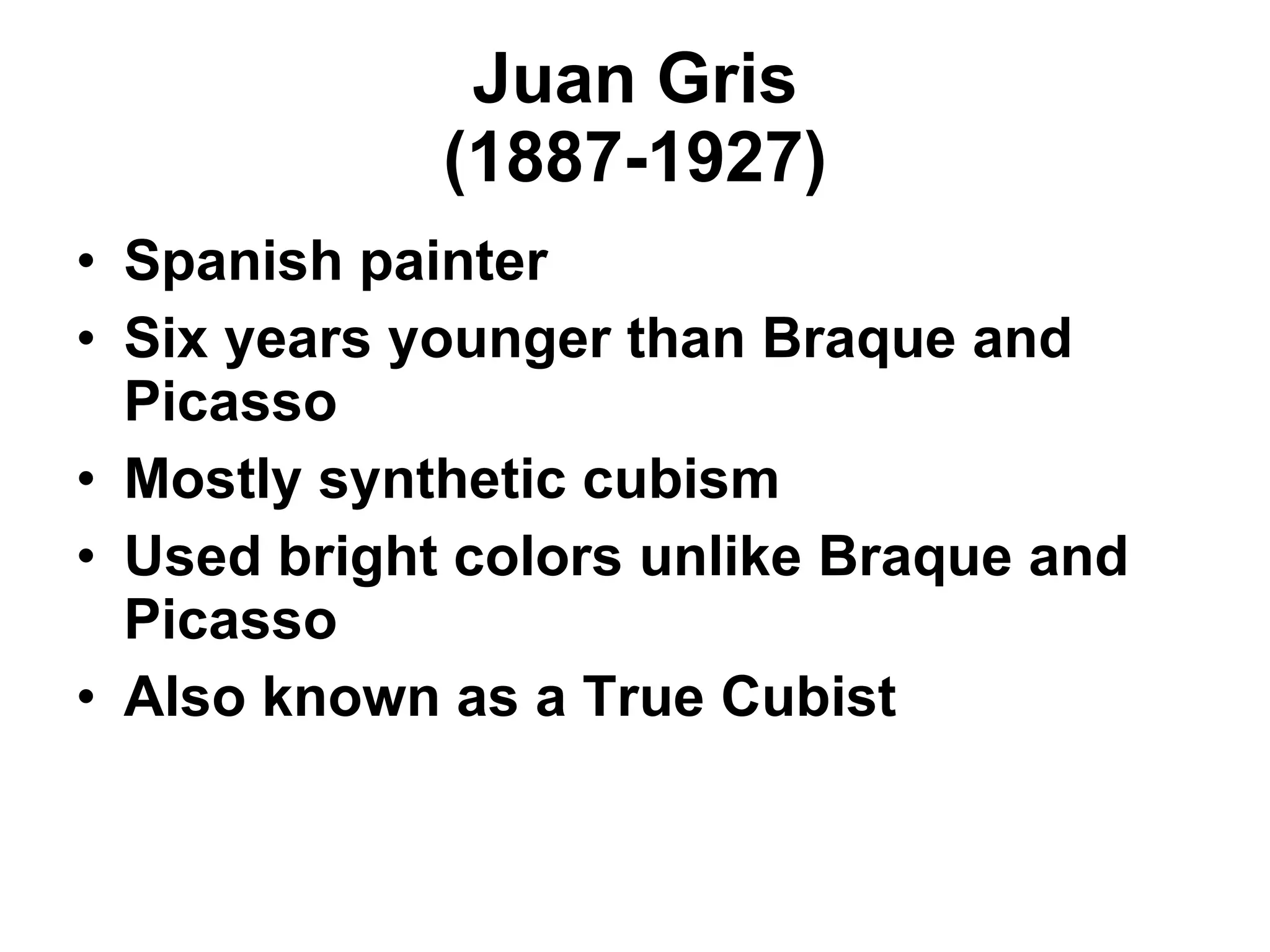
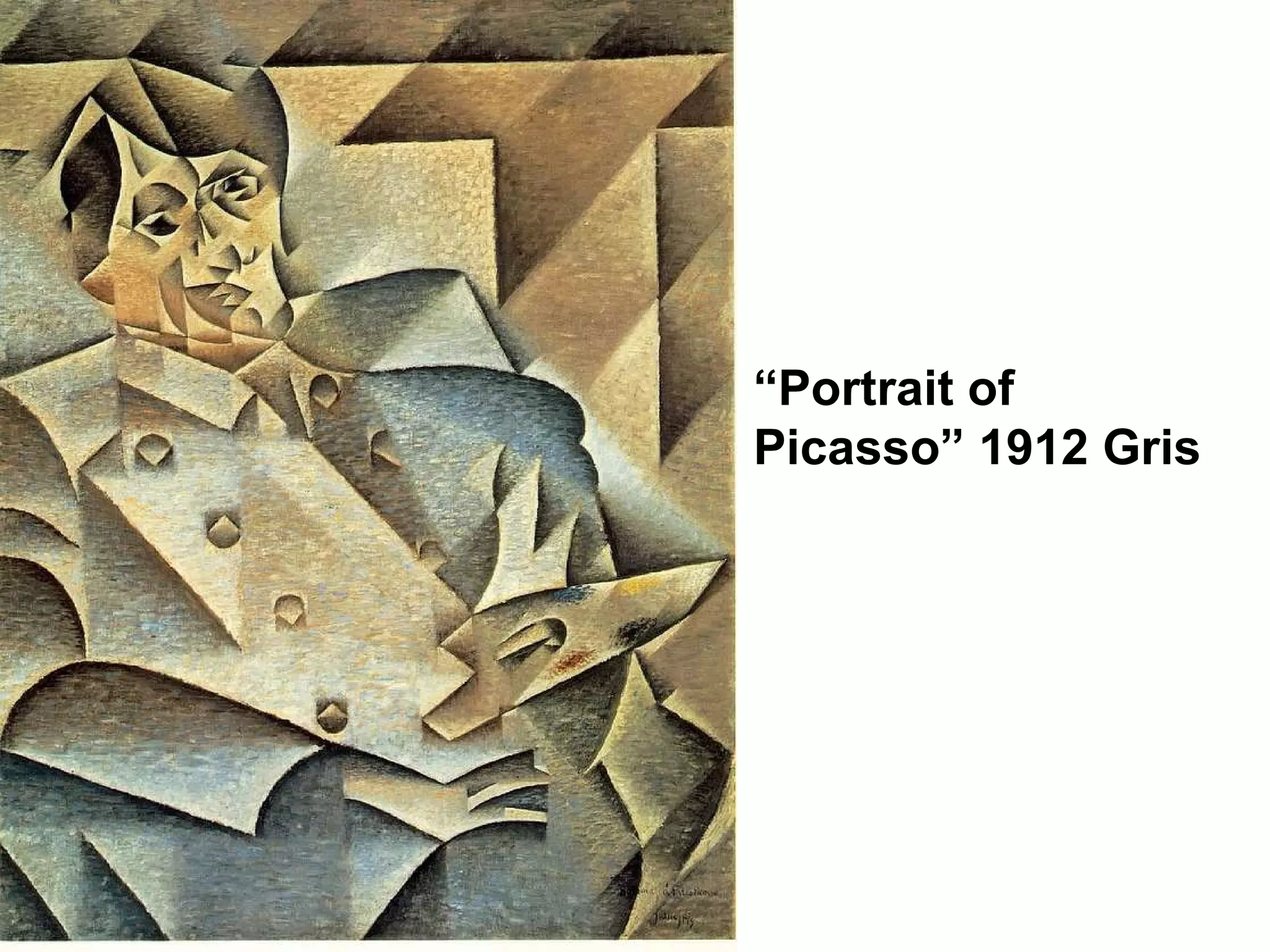
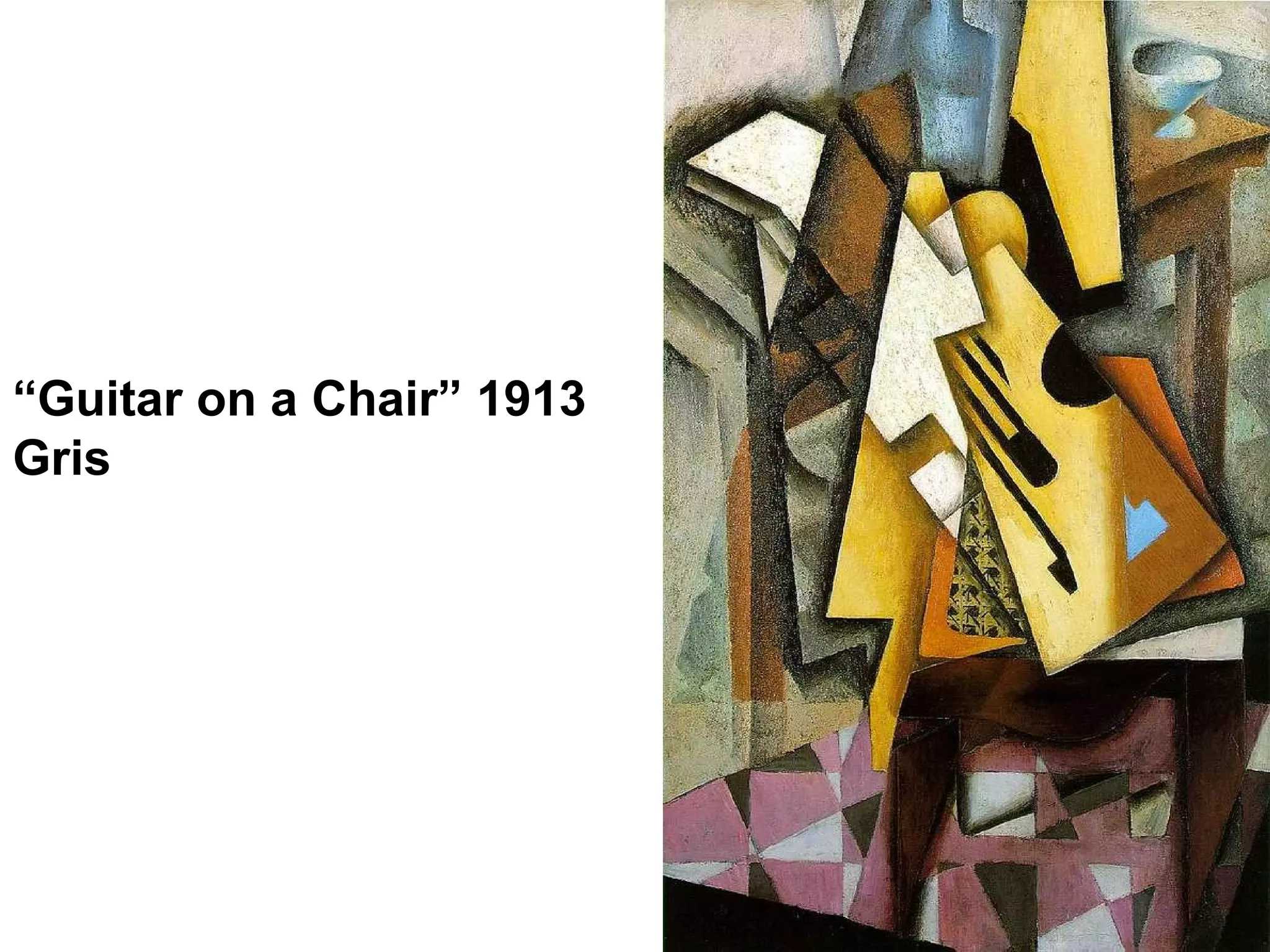
Juan Gris (1887-1927) Spanish painter Six years younger than Braque and Picasso Mostly synthetic cubism Used bright colors unlike Braque and Picasso Also known as a True Cubist
“ Portrait of Picasso” 1912 Gris
“ Guitar on a Chair” 1913 Gris
“ The Guitar” 1913 Gris
Cubism Influence on Later Art WWI ended Purists  Dadaists  Surrealists All branched off of Cubism
Conclusion Picasso, Gris, and Braque are the three main Cubists African art, Gauguin, and Cezanne are major influences  Simplified objects by cutting them down into geometric shapes and showing them from different angles and planes Two major phases, analytic and synthetic
THE END

Cubism Lecture

  • 1.
    CUBISM Katie Reily Stacey Klonowski “ Girl with Mandolin” 1910 - Picasso
  • 2.
    Science and ArtScience was rapidly changing Old notions of matter, time, and space are shattered Albert Einstein, Max Planck, and Neils Bohr introduced a new theory of the atom Bohr introduced Quantum theory Everything is broken down into a “quanta” of energy. Einstein introduced Special Theory of Relativity Changed three dimensional space
  • 3.
    What is Cubism?First abstract art style Used simple shapes Ignored color in beginning Lacks elements of light, atmosphere, and space Gave depth and richness to painting Overlapping Fragments Reality of objects in space, reality of flat painted surface
  • 4.
  • 5.
    What is Cubism…?Continued Disregard physical laws of nature. Spatial relationships without traditional perspective Light and shade not used to convey depth Figures broken down into jagged planes of color Figures broken down into more than one location in space. Two major phases: analytical and synthetic
  • 6.
    “ Violin andPitcher” Braque 1910
  • 7.
    How did Cubismget its name? Cubism got its name from remarks from the painter Henri Matisse and critic Louis Vauxcelles. They saw Braque’s work "Houses at L'Estaque" and mocked it saying “everything is broken down into cubes.”
  • 8.
    Cubism Influence PostImpressionism – Gauguin – greatly influence Pablo Picasso Impressionist – Cezanne – greatly influenced George Braque African Influence – greatly influenced Picasso’s early works Direct reaction to Fauvism
  • 9.
    African Influence AfricanMask 1900 “ Three Women” Picasso 1908
  • 10.
    Gauguin Influence “Mandolina with Flowers” Gauguin 1883 “ Composition with Skull” Picasso 1907
  • 11.
    Cezanne Influence “Monte Sainte-Victoire” 1904 Cezanne “ Fishing Boats” 1909 Braque
  • 12.
    Analytic Cubism (1909-1911)First Cubism phase Monochromatic colors (tans, browns, grays, creams, greens, blues) Based on reducing natural forms to basic geometrical parts. Focused more on intellect than emotion
  • 13.
    Synthetic Cubism (1912-1919)Grew out of analytical Wider use of color Wider use of materials Papier Colle introduced Type of collage Appealing and easier to interpret Less intricate Added substances like sand to paint to make it appear thicker
  • 14.
    Analytic vs. SyntheticBased on intellect Monochromatic color palette Reduce object to basic geometric shapes Linear construction Less intricate More color More appealing Collage Objects less recognizable Less shading Added substance to paint
  • 15.
    Pablo Picasso (1881-1973)Spanish painter and sculptor Took the sculpture approach which lead to creation of Cubism Stated forms and volumes in basic simplicity
  • 16.
    1907 - Picasso“ Les Demoiselles d’Avignon”
  • 17.
    “ The GuitarPlayer” 1910 Picasso
  • 18.
    “ Ma Jolie”(Woman with Zither or Guitar) 1911 Picasso
  • 19.
    “ Girl withMandolin” 1910 - Picasso
  • 20.
    “ Glass andBottle of Suze” Picasso 1912
  • 21.
    “ Woman inan Arm Chair” 1913 Picasso
  • 22.
    “ Still-life withFruit-dish on a table” 1915 Picasso
  • 23.
    George Braque (1882-1963)French painter Saw solid reality of objects Impressionist, Fauvist, then Cubist Painted mainly scenery Introduced faux bois. (The appearance of stenciling in his paintings)
  • 24.
    “ Fruit Dish”1909 Braque
  • 25.
    “ Bottle andFishes” 1910 Braque
  • 26.
    “ Violin andCandlestick” 1910 Braque
  • 27.
    “ Bottle, newspaper,pipe, and glass” 1913 Braque
  • 28.
    “ Fruit Dish,Ace of Clubs” 1913 Braque
  • 29.
    “ Still Lifeon a Table: Gillete” 1914 Braque
  • 30.
    Braque and PicassoWorked together until end of synthetic cubism Thought more about forging language of cubism than about aesthetic value of subject. Common concern for accurate representation of reality Always relied on intuition Limited role of light Reduced palette to neutral range of grays Work could not be differentiated in early Cubism Braque and Picasso split in 1914 at the start of WWI
  • 31.
    “ Man withGuitar” 1911 Braque “ Ma Jolie” 1911 Picasso
  • 32.
    Juan Gris (1887-1927)Spanish painter Six years younger than Braque and Picasso Mostly synthetic cubism Used bright colors unlike Braque and Picasso Also known as a True Cubist
  • 33.
    “ Portrait ofPicasso” 1912 Gris
  • 34.
    “ Guitar ona Chair” 1913 Gris
  • 35.
  • 36.
    Cubism Influence onLater Art WWI ended Purists Dadaists Surrealists All branched off of Cubism
  • 37.
    Conclusion Picasso, Gris,and Braque are the three main Cubists African art, Gauguin, and Cezanne are major influences Simplified objects by cutting them down into geometric shapes and showing them from different angles and planes Two major phases, analytic and synthetic
  • 38.