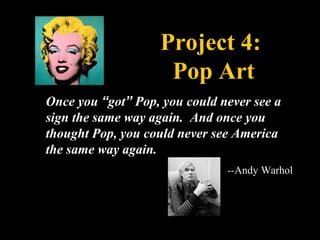
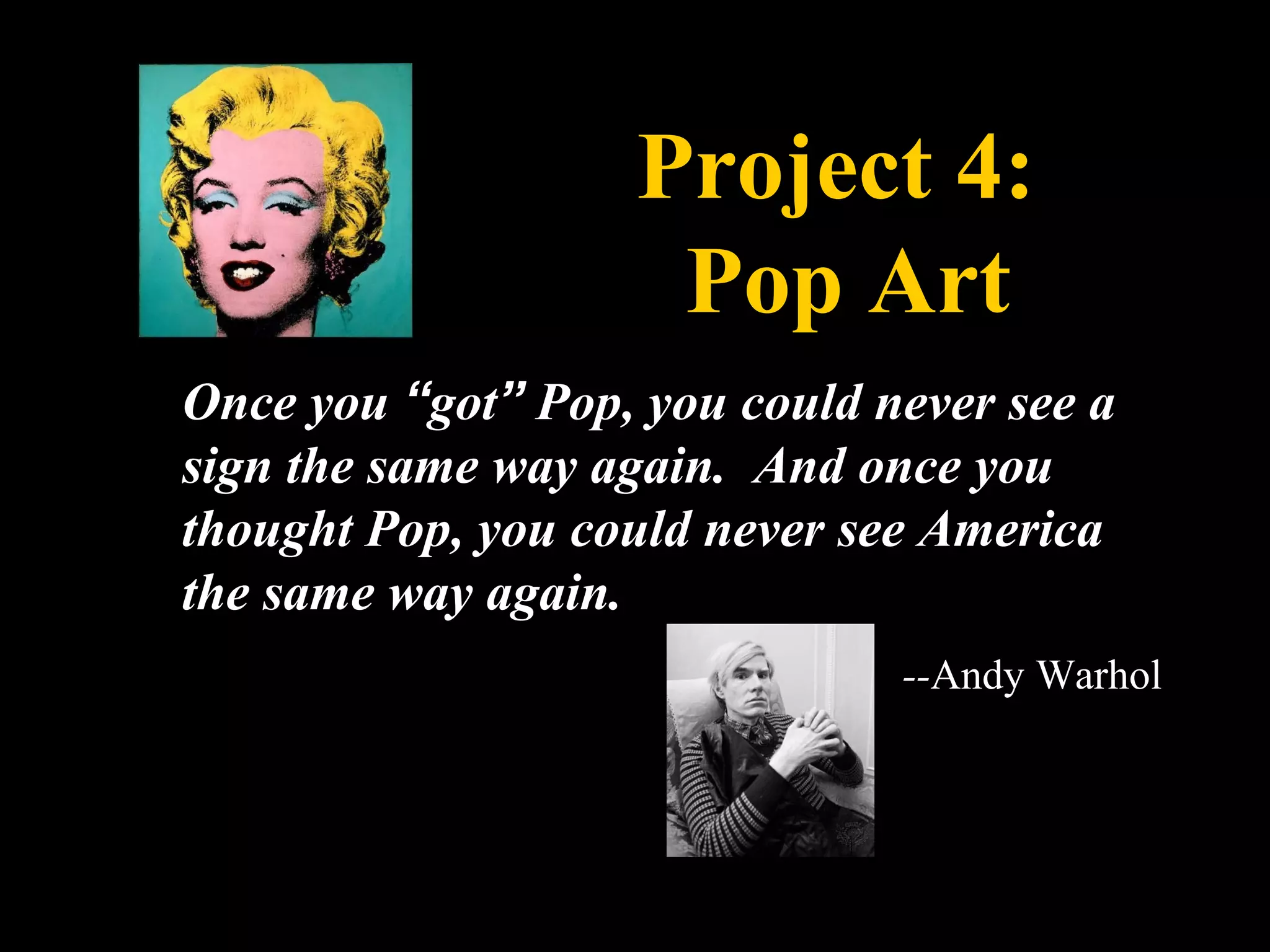
Project 4:
                    Pop Art
Once you “got” Pop, you could never see a
sign the same way again. And once you
thought Pop, you could never see America
the same way again.
                               --Andy Warhol
Pop Art
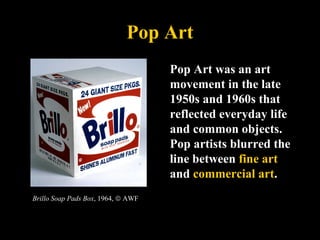
                                    Pop Art was an art
                                    movement in the late
                                    1950s and 1960s that
                                    reflected everyday life
                                    and common objects.
                                    Pop artists blurred the
                                    line between fine art
                                    and commercial art.
Brillo Soap Pads Box, 1964, © AWF
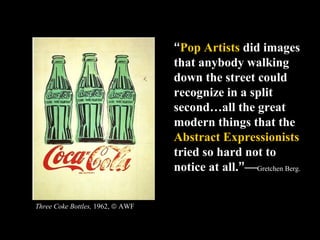
“Pop Artists did images
                                  that anybody walking
                                  down the street could
                                  recognize in a split
                                  second…all the great
                                  modern things that the
                                  Abstract Expressionists
                                  tried so hard not to
                                  notice at all.”—Gretchen Berg.


Three Coke Bottles, 1962, © AWF
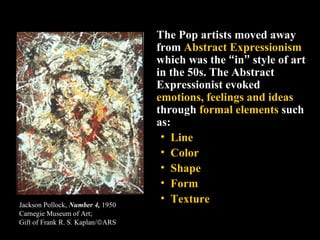
The Pop artists moved away
                                  from Abstract Expressionism
                                  which was the “in” style of art
                                  in the 50s. The Abstract
                                  Expressionist evoked
                                  emotions, feelings and ideas
                                  through formal elements such
                                  as:
                                   • Line
                                   • Color
                                   • Shape
                                   • Form
Jackson Pollock, Number 4, 1950
                                   • Texture
Carnegie Museum of Art;
Gift of Frank R. S. Kaplan/©ARS
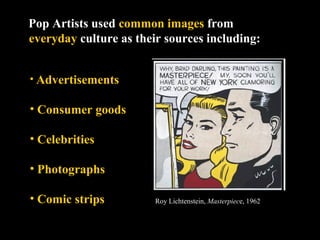
Pop Artists used common images from
everyday culture as their sources including:


• Advertisements

• Consumer goods

• Celebrities

• Photographs

• Comic strips          Roy Lichtenstein, Masterpiece, 1962
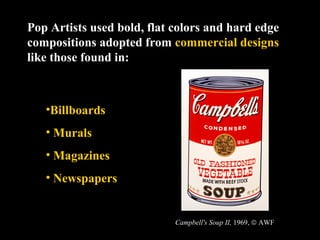
Pop Artists used bold, flat colors and hard edge
compositions adopted from commercial designs
like those found in:


   •Billboards
   • Murals
   • Magazines
   • Newspapers


                            Campbell's Soup II, 1969, © AWF
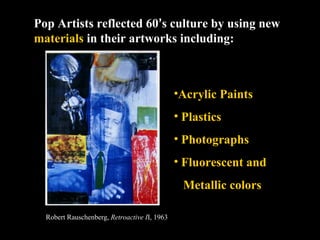
Pop Artists reflected 60’s culture by using new
materials in their artworks including:


                                              •Acrylic Paints
                                              • Plastics
                                              • Photographs
                                              • Fluorescent and
                                               Metallic colors

  Robert Rauschenberg, Retroactive II, 1963
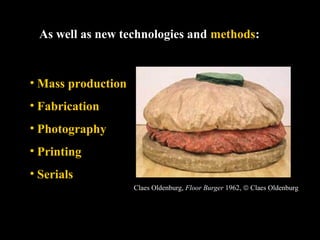
As well as new technologies and methods:


• Mass production
• Fabrication
• Photography
• Printing
• Serials
                    Claes Oldenburg, Floor Burger 1962, © Claes Oldenburg
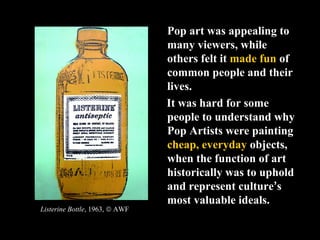
Pop art was appealing to
                                many viewers, while
                                others felt it made fun of
                                common people and their
                                lives.
                                It was hard for some
                                people to understand why
                                Pop Artists were painting
                                cheap, everyday objects,
                                when the function of art
                                historically was to uphold
                                and represent culture’s
                                most valuable ideals.
Listerine Bottle, 1963, © AWF
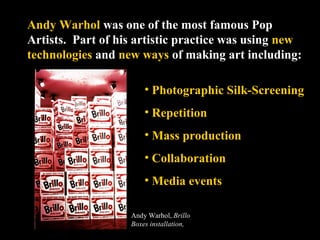
Andy Warhol was one of the most famous Pop
Artists. Part of his artistic practice was using new
technologies and new ways of making art including:

                       • Photographic Silk-Screening
                       • Repetition
                       • Mass production
                       • Collaboration
                       • Media events

                   Andy Warhol, Brillo
                   Boxes installation,
Warhol appropriated (used without permission)
images from magazines, newspapers, and press
photos of the most popular people of his time


                                        ©2006 Life Inc.


 Silver Liz [Ferus Type], 1963, © AWF
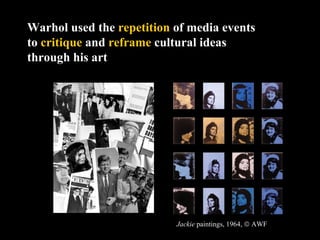
Warhol used the repetition of media events
to critique and reframe cultural ideas
through his art


                           Jackie paintings, 1964, © AWF
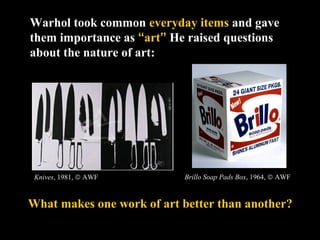
Warhol took common everyday items and gave
them importance as “art” He raised questions
about the nature of art:


 Knives, 1981, © AWF       Brillo Soap Pads Box, 1964, © AWF


What makes one work of art better than another?
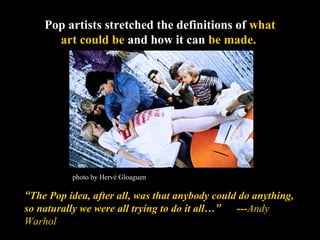
Pop artists stretched the definitions of what
      art could be and how it can be made.


          photo by Hervé Gloaguen

“The Pop idea, after all, was that anybody could do anything,
so naturally we were all trying to do it all…”  ---Andy
Warhol
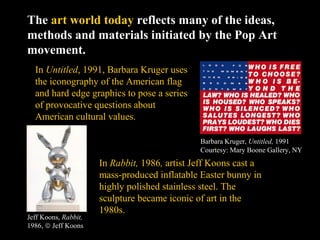
The art world today reflects many of the ideas,
methods and materials initiated by the Pop Art
movement.
  In Untitled, 1991, Barbara Kruger uses
  the iconography of the American flag
  and hard edge graphics to pose a series
  of provocative questions about
  American cultural values.

                                               Barbara Kruger, Untitled, 1991
                                               Courtesy: Mary Boone Gallery, NY
                      In Rabbit, 1986, artist Jeff Koons cast a
                      mass-produced inflatable Easter bunny in
                      highly polished stainless steel. The
                      sculpture became iconic of art in the
                      1980s.
Jeff Koons, Rabbit,
1986, © Jeff Koons
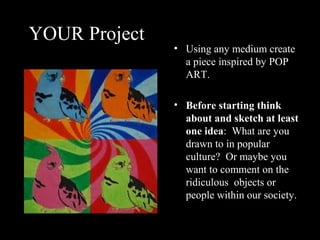
YOUR Project
               • Using any medium create
                 a piece inspired by POP
                 ART.

               • Before starting think
                 about and sketch at least
                 one idea: What are you
                 drawn to in popular
                 culture? Or maybe you
                 want to comment on the
                 ridiculous objects or
                 people within our society.
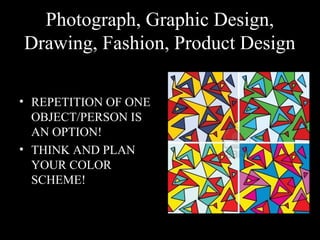
Photograph, Graphic Design,
Drawing, Fashion, Product Design

• REPETITION OF ONE
  OBJECT/PERSON IS
  AN OPTION!
• THINK AND PLAN
  YOUR COLOR
  SCHEME!
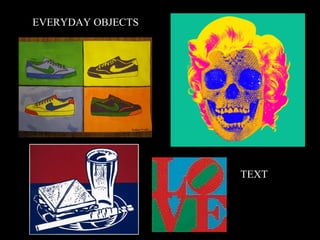
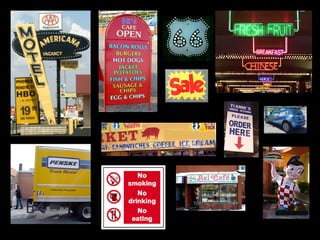
EVERYDAY OBJECTS


                   TEXT
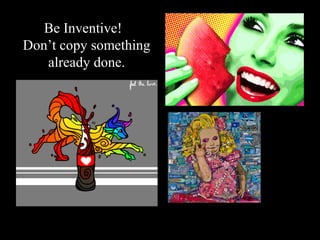
Be Inventive!
Don’t copy something
   already done.
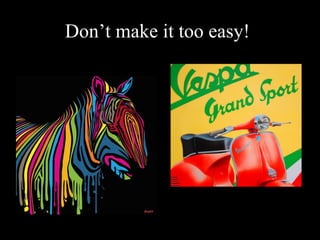
Don’t make it too easy!
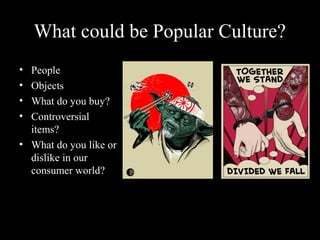
What could be Popular Culture?
• People
• Objects
• What do you buy?
• Controversial
  items?
• What do you like or
  dislike in our
  consumer world?
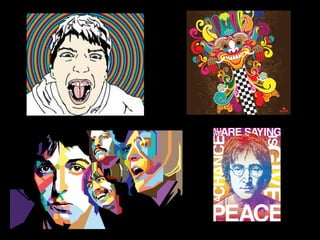
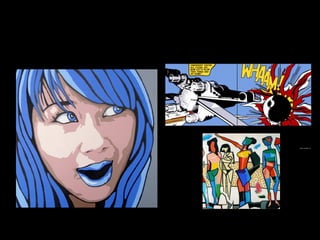
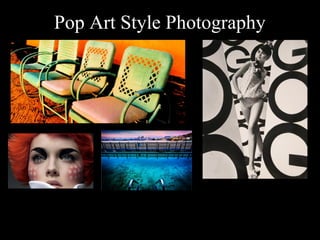
Pop Art Style Photography
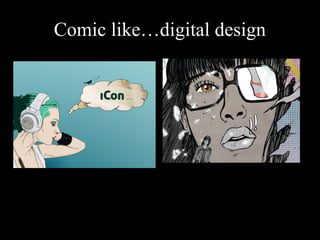
Comic like…digital design
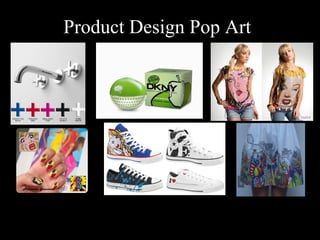
Product Design Pop Art
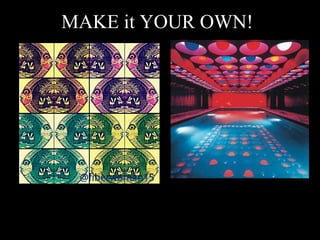
MAKE it YOUR OWN!
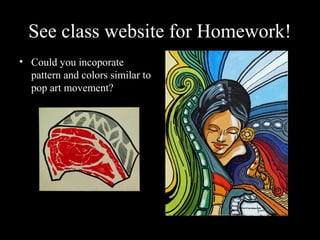
See class website for Homework!
• Could you incoporate
  pattern and colors similar to
  pop art movement?

Pop art slideshow

  • 1.
    Project 4: Pop Art Once you “got” Pop, you could never see a sign the same way again. And once you thought Pop, you could never see America the same way again. --Andy Warhol
  • 3.
    Pop Art Pop Art was an art movement in the late 1950s and 1960s that reflected everyday life and common objects. Pop artists blurred the line between fine art and commercial art. Brillo Soap Pads Box, 1964, © AWF
  • 4.
    “Pop Artists didimages that anybody walking down the street could recognize in a split second…all the great modern things that the Abstract Expressionists tried so hard not to notice at all.”—Gretchen Berg. Three Coke Bottles, 1962, © AWF
  • 5.
    The Pop artistsmoved away from Abstract Expressionism which was the “in” style of art in the 50s. The Abstract Expressionist evoked emotions, feelings and ideas through formal elements such as: • Line • Color • Shape • Form Jackson Pollock, Number 4, 1950 • Texture Carnegie Museum of Art; Gift of Frank R. S. Kaplan/©ARS
  • 6.
    Pop Artists usedcommon images from everyday culture as their sources including: • Advertisements • Consumer goods • Celebrities • Photographs • Comic strips Roy Lichtenstein, Masterpiece, 1962
  • 7.
    Pop Artists usedbold, flat colors and hard edge compositions adopted from commercial designs like those found in: •Billboards • Murals • Magazines • Newspapers Campbell's Soup II, 1969, © AWF
  • 8.
    Pop Artists reflected60’s culture by using new materials in their artworks including: •Acrylic Paints • Plastics • Photographs • Fluorescent and Metallic colors Robert Rauschenberg, Retroactive II, 1963
  • 9.
    As well asnew technologies and methods: • Mass production • Fabrication • Photography • Printing • Serials Claes Oldenburg, Floor Burger 1962, © Claes Oldenburg
  • 10.
    Pop art wasappealing to many viewers, while others felt it made fun of common people and their lives. It was hard for some people to understand why Pop Artists were painting cheap, everyday objects, when the function of art historically was to uphold and represent culture’s most valuable ideals. Listerine Bottle, 1963, © AWF
  • 11.
    Andy Warhol wasone of the most famous Pop Artists. Part of his artistic practice was using new technologies and new ways of making art including: • Photographic Silk-Screening • Repetition • Mass production • Collaboration • Media events Andy Warhol, Brillo Boxes installation,
  • 12.
    Warhol appropriated (usedwithout permission) images from magazines, newspapers, and press photos of the most popular people of his time ©2006 Life Inc. Silver Liz [Ferus Type], 1963, © AWF
  • 13.
    Warhol used therepetition of media events to critique and reframe cultural ideas through his art Jackie paintings, 1964, © AWF
  • 14.
    Warhol took commoneveryday items and gave them importance as “art” He raised questions about the nature of art: Knives, 1981, © AWF Brillo Soap Pads Box, 1964, © AWF What makes one work of art better than another?
  • 15.
    Pop artists stretchedthe definitions of what art could be and how it can be made. photo by Hervé Gloaguen “The Pop idea, after all, was that anybody could do anything, so naturally we were all trying to do it all…” ---Andy Warhol
  • 16.
    The art worldtoday reflects many of the ideas, methods and materials initiated by the Pop Art movement. In Untitled, 1991, Barbara Kruger uses the iconography of the American flag and hard edge graphics to pose a series of provocative questions about American cultural values. Barbara Kruger, Untitled, 1991 Courtesy: Mary Boone Gallery, NY In Rabbit, 1986, artist Jeff Koons cast a mass-produced inflatable Easter bunny in highly polished stainless steel. The sculpture became iconic of art in the 1980s. Jeff Koons, Rabbit, 1986, © Jeff Koons
  • 17.
    YOUR Project • Using any medium create a piece inspired by POP ART. • Before starting think about and sketch at least one idea: What are you drawn to in popular culture? Or maybe you want to comment on the ridiculous objects or people within our society.
  • 18.
    Photograph, Graphic Design, Drawing,Fashion, Product Design • REPETITION OF ONE OBJECT/PERSON IS AN OPTION! • THINK AND PLAN YOUR COLOR SCHEME!
  • 19.
  • 22.
    Be Inventive! Don’t copysomething already done.
  • 23.
    Don’t make ittoo easy!
  • 24.
    What could bePopular Culture? • People • Objects • What do you buy? • Controversial items? • What do you like or dislike in our consumer world?
  • 25.
    Pop Art StylePhotography
  • 26.
  • 27.
  • 28.
  • 29.
    See class websitefor Homework! • Could you incoporate pattern and colors similar to pop art movement?