A GOOD RESEARCH
PROBLEM
DR. MAHESWARI JAIKUMAR
maheswarijaikumar2103@gmail.com
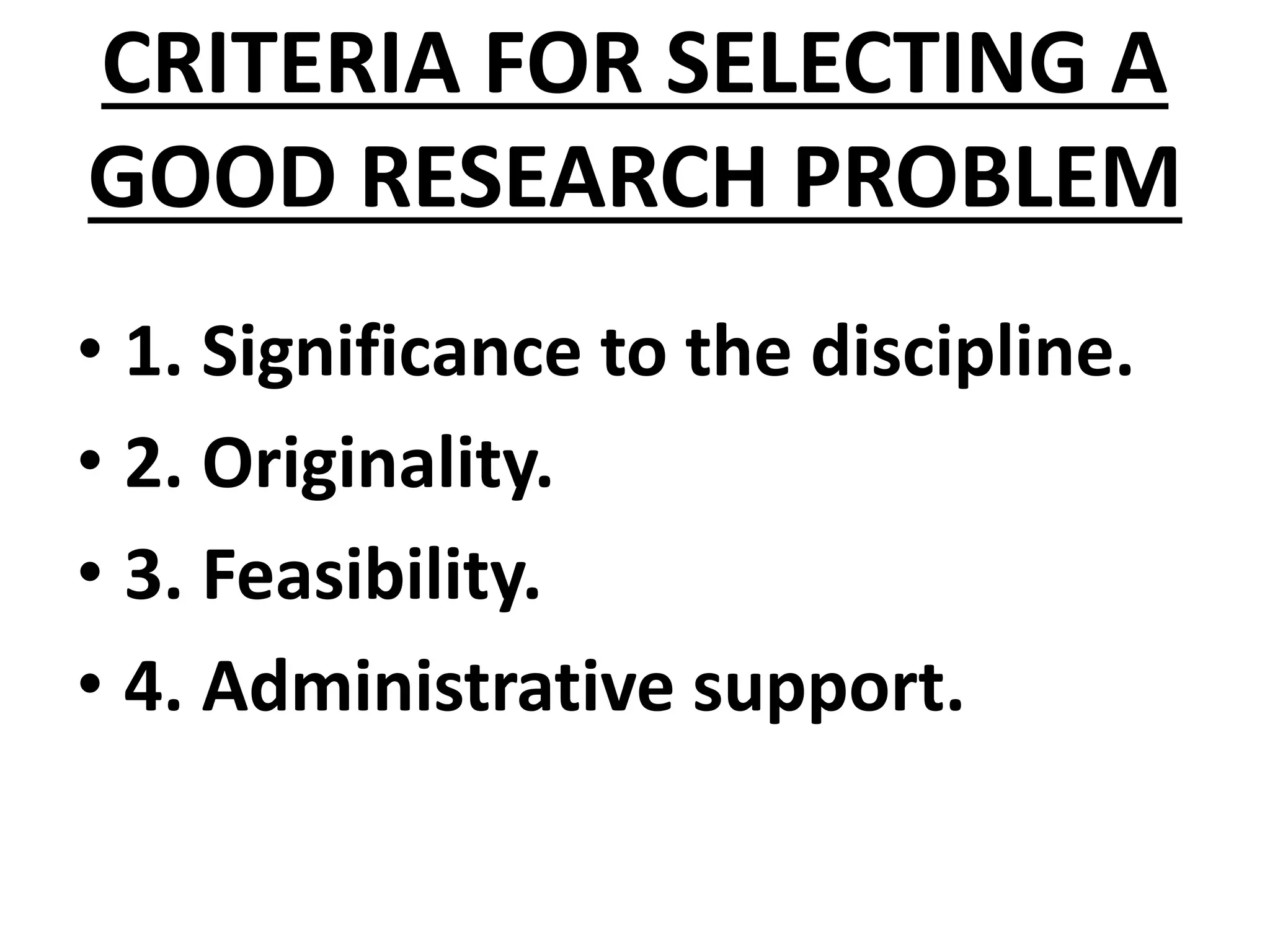
CRITERIA FOR SELECTING A
GOOD RESEARCH PROBLEM
• 1. Significance to the discipline.
• 2. Originality.
• 3. Feasibility.
• 4. Administrative support.
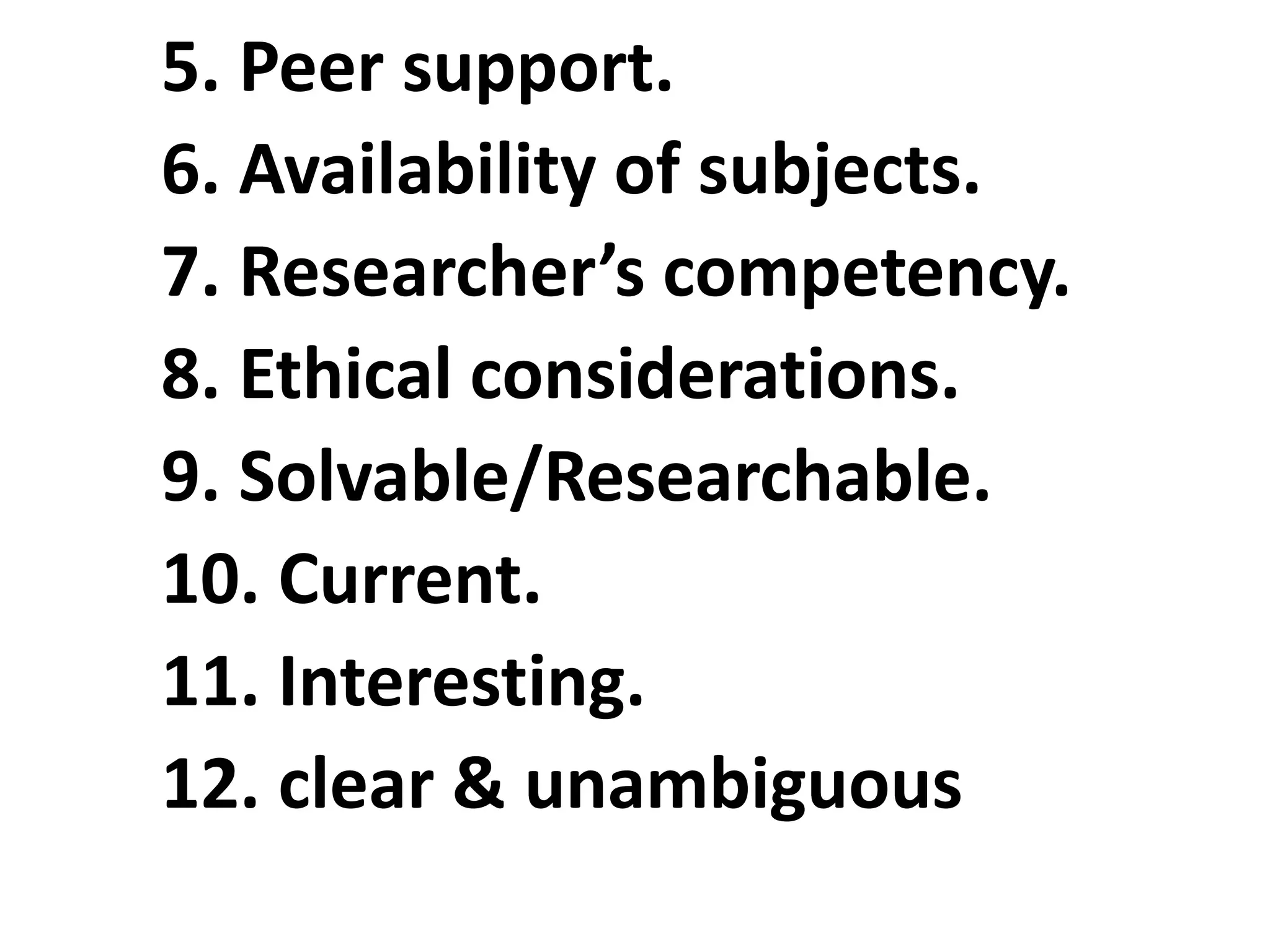
5. Peer support.
6. Availability of subjects.
7. Researcher’s competency.
8. Ethical considerations.
9. Solvable/Researchable.
10. Current.
11. Interesting.
12. clear & unambiguous
13. Empirical & Verifiable.
14. Relevant
15. Systematic.
SIGNIFICANCE TO THE
DISCIPLINE
• A problem which the researcher
is selecting should have
significance to the profession or
discipline.
• A research problem is significant
for a discipline when it is
directed to develop or refine the
body of professional knowledge.
• The following are some of the
criteria to assess the significance
to a profession.
• The consumers/stakeholders
benefit from the research findings.
• The result will improve the current
practices.
• Promotes theory development or
testing.
• . Provides solutions to current
practice needs.
• Generate information to get
practical implications for the
profession
ORIGINALITY
• Every research should be new
and unique in itself.
• Therefore it is the responsibility
of the researcher that innovative
knowledge is used for selecting a
research problem so as to extend
the growth of existing body of
knowledge in a profession.
FEASIBLE
• Feasibility is an essential
consideration of any research
project.
• A research should be feasible in
terms of time, availability of
subjects, facilities, equipment &
money and ethical considerations.
ADMINISTRATIVE SUPPORT
• Many researches require
administrative support.
• Financial & psychological
support is essential to conduct
research.
PEER SUPPORT
• Many research ideas have failed
because the researcher did not
receive any peer support.
• A climate of shared interest
among the professional
members promote research
activities smoothly.
AVAILABILITY OF SUBJECTS
• Sometimes the potential
subjects may not meet the study
criteria or may be unwilling to
participate in the study or may
be already participating in
another studies.
• Therefore the availability of the
subjects should be well ensured
in advance.
RESEARCHER’S COMPETENCE
• A research problem can only be
feasible if it is in accordance with
the researcher’s competence.
• A researcher should be capable to
handle a given research problem.
ETHICAL SOUNDNESS
• The research problem selected
should be cleared by the ethical
committee without undue
hurdles.
• A very important topic of
research cannot be considered
feasible until & unless it is in
accordance with the ethical
guidelines.
SOLVABLE/RESEARCHABLE
• Only a research problem that is
solvable is considered to be
good.
• A researcher should minimize
the chances of insolvability.
• This aspect of the problem may
pose ambiguity and hence a
researcher should ensure the
solvability of the problem that is
elected.
CURRENT
• A good research problem must
be based on the current
problems and needs of the
profession.
• Thus the result generated will be
of more use.
• Furthermore, more number of
the professionals will be
interested in the research
conducted on the current issues
of their profession.
INTERESTING
• A research problem must be as
per the motivation of the
researcher and it should be
fascinating to the researcher.
• Thus a research will be
conducted with full enthusiasm
and not merely for its
accomplishment.
CLEAR & UNABIGUOUS
• The research problem selected
should be clear in its ability to
reflect or give clues regarding
the various aspects of
methodology.
EMPIRICAL & VERIFIABLE
• The research problem selected
to be researched should
amenable to scientific enquiry.
• The research should be verifiable
by scientific calculations.
RELEVANT
• The research problem chosen to
be researched should be relevant
to the profession, time, need &
the competency of the
researcher.
SYSTEMATIC
• The research problem should be
systematic- in the sense the
researcher should have arrived
at the problem statement
following relevant selection
parameters or criteria.
THANK YOU

CRITERIA TO SELECT A GOOD RESEARCH PROBLEM

  • 1.
    A GOOD RESEARCH PROBLEM DR.MAHESWARI JAIKUMAR maheswarijaikumar2103@gmail.com
  • 2.
    CRITERIA FOR SELECTINGA GOOD RESEARCH PROBLEM • 1. Significance to the discipline. • 2. Originality. • 3. Feasibility. • 4. Administrative support.
  • 3.
    5. Peer support. 6.Availability of subjects. 7. Researcher’s competency. 8. Ethical considerations. 9. Solvable/Researchable. 10. Current. 11. Interesting. 12. clear & unambiguous
  • 4.
    13. Empirical &Verifiable. 14. Relevant 15. Systematic.
  • 5.
    SIGNIFICANCE TO THE DISCIPLINE •A problem which the researcher is selecting should have significance to the profession or discipline.
  • 6.
    • A researchproblem is significant for a discipline when it is directed to develop or refine the body of professional knowledge. • The following are some of the criteria to assess the significance to a profession.
  • 7.
    • The consumers/stakeholders benefitfrom the research findings. • The result will improve the current practices. • Promotes theory development or testing.
  • 8.
    • . Providessolutions to current practice needs. • Generate information to get practical implications for the profession
  • 9.
    ORIGINALITY • Every researchshould be new and unique in itself.
  • 10.
    • Therefore itis the responsibility of the researcher that innovative knowledge is used for selecting a research problem so as to extend the growth of existing body of knowledge in a profession.
  • 11.
    FEASIBLE • Feasibility isan essential consideration of any research project. • A research should be feasible in terms of time, availability of subjects, facilities, equipment & money and ethical considerations.
  • 12.
    ADMINISTRATIVE SUPPORT • Manyresearches require administrative support. • Financial & psychological support is essential to conduct research.
  • 13.
    PEER SUPPORT • Manyresearch ideas have failed because the researcher did not receive any peer support.
  • 14.
    • A climateof shared interest among the professional members promote research activities smoothly.
  • 15.
    AVAILABILITY OF SUBJECTS •Sometimes the potential subjects may not meet the study criteria or may be unwilling to participate in the study or may be already participating in another studies.
  • 16.
    • Therefore theavailability of the subjects should be well ensured in advance.
  • 17.
    RESEARCHER’S COMPETENCE • Aresearch problem can only be feasible if it is in accordance with the researcher’s competence. • A researcher should be capable to handle a given research problem.
  • 18.
    ETHICAL SOUNDNESS • Theresearch problem selected should be cleared by the ethical committee without undue hurdles.
  • 19.
    • A veryimportant topic of research cannot be considered feasible until & unless it is in accordance with the ethical guidelines.
  • 20.
    SOLVABLE/RESEARCHABLE • Only aresearch problem that is solvable is considered to be good. • A researcher should minimize the chances of insolvability.
  • 21.
    • This aspectof the problem may pose ambiguity and hence a researcher should ensure the solvability of the problem that is elected.
  • 22.
    CURRENT • A goodresearch problem must be based on the current problems and needs of the profession. • Thus the result generated will be of more use.
  • 23.
    • Furthermore, morenumber of the professionals will be interested in the research conducted on the current issues of their profession.
  • 24.
    INTERESTING • A researchproblem must be as per the motivation of the researcher and it should be fascinating to the researcher.
  • 25.
    • Thus aresearch will be conducted with full enthusiasm and not merely for its accomplishment.
  • 26.
    CLEAR & UNABIGUOUS •The research problem selected should be clear in its ability to reflect or give clues regarding the various aspects of methodology.
  • 27.
    EMPIRICAL & VERIFIABLE •The research problem selected to be researched should amenable to scientific enquiry. • The research should be verifiable by scientific calculations.
  • 28.
    RELEVANT • The researchproblem chosen to be researched should be relevant to the profession, time, need & the competency of the researcher.
  • 29.
    SYSTEMATIC • The researchproblem should be systematic- in the sense the researcher should have arrived at the problem statement following relevant selection parameters or criteria.
  • 30.