Research Problem
Identification
Identifying the research problem is the most crucial step in
embarking on a PhD research journey. This process involves
pinpointing a generic problem within the field of study that
warrants investigation to gain understanding and find solutions.
KP
Krishan K. Pandey (Ph.D.)
Dean ‘Office of Doctoral Studies’,
O.P.Jindal Global University, Sonipat Haryana
www.krishanpandey.com
What is a Research Problem?
Clear Statement
A research problem is a clear and definite statement about an area of concern
where investigation is needed for improvement or innovation, supported by
evidence.
Addresses Challenges
It's a statement that addresses challenges or contradictions within your field of
study. Researchers use research problems to define the aim of their study and
analysis.
Identifies Gaps
Identifying a research problem involves finding the research gap in existing
research within a chosen field. This process requires keen observation,
interest, knowledge, wisdom, and investigation.
Importance of Problem
Identification
1 Research Topic Foundation
Identifying the research problem is a source for creating a research topic and
helps in identifying key concepts and terms.
2 Study Significance
The research problem introduces the reader to the study topic, the significance
of the research, and the criteria of the research problem.
3 Project Diligence
A comprehensible and practicable research problem is important to create a
diligent and well-reasoned project.
4 Innovation and Justification
A research problem decides whether your project is innovative and unique with
an intentional purpose and justification.
How to Identify a Research Problem
1 Literature Review
Review academic journals, articles, books, and other scholarly materials to find gaps or
unanswered questions.
2 Practical Experience
Utilize your own experience or challenges faced in a professional context. Analyze
specific instances or case studies to identify common problems or areas for
improvement.
3 Observation
Observe real-world settings and note issues or inefficiencies. Engage with stakeholders
or experts to gather insights on persistent issues.
4 Theoretical Framework
Identify inconsistencies or gaps within existing theories. Formulate potential
hypotheses based on observed phenomena or theoretical inconsistencies.
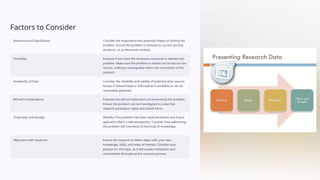
Factors to Consider
Relevance and Significance Consider the importance and potential impact of solving the
problem. Ensure the problem is relevant to current societal,
academic, or professional contexts.
Feasibility Evaluate if you have the necessary resources to address the
problem. Make sure the problem is neither too broad nor too
narrow, making it manageable within the constraints of the
research.
Availability of Data Consider the reliability and validity of potential data sources.
Assess if relevant data or information is available or can be
reasonably gathered.
Ethical Considerations Evaluate the ethical implications of researching the problem.
Ensure the problem can be investigated in a way that
respects participant rights and avoids harm.
Originality and Novelty Identify if the problem has been explored before and if your
approach offers a new perspective. Consider how addressing
the problem will contribute to the body of knowledge.
Alignment with Expertise Ensure the research problem aligns with your own
knowledge, skills, and areas of interest. Consider your
passion for the topic, as it will sustain motivation and
commitment throughout the research process.
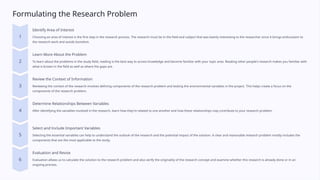
Formulating the Research Problem
Identify Area of Interest
Choosing an area of interest is the first step in the research process. The research must be in the field and subject that was keenly interesting to the researcher since it brings enthusiasm to
the research work and avoids boredom.
Learn More About the Problem
To learn about the problems in the study field, reading is the best way to access knowledge and become familiar with your topic area. Reading other people's research makes you familiar with
what is known in the field as well as where the gaps are.
Review the Context of Information
Reviewing the context of the research involves defining components of the research problem and testing the environmental variables in the project. This helps create a focus on the
components of the research problem.
Determine Relationships Between Variables
After identifying the variables involved in the research, learn how they're related to one another and how these relationships may contribute to your research problem.
Select and Include Important Variables
Selecting the essential variables can help to understand the outlook of the research and the potential impact of the solution. A clear and reasonable research problem mostly includes the
components that are the most applicable to the study.
Evaluation and Revise
Evaluation allows us to calculate the solution to the research problem and also verify the originality of the research concept and examine whether this research is already done or in an
ongoing process.
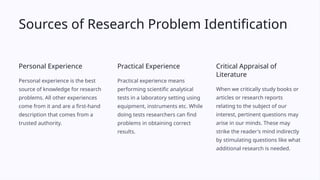
Sources of Research Problem Identification
Personal Experience
Personal experience is the best
source of knowledge for research
problems. All other experiences
come from it and are a first-hand
description that comes from a
trusted authority.
Practical Experience
Practical experience means
performing scientific analytical
tests in a laboratory setting using
equipment, instruments etc. While
doing tests researchers can find
problems in obtaining correct
results.
Critical Appraisal of
Literature
When we critically study books or
articles or research reports
relating to the subject of our
interest, pertinent questions may
arise in our minds. These may
strike the reader's mind indirectly
by stimulating questions like what
additional research is needed.
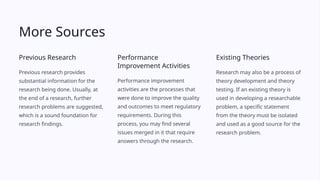
More Sources
Previous Research
Previous research provides
substantial information for the
research being done. Usually, at
the end of a research, further
research problems are suggested,
which is a sound foundation for
research findings.
Performance
Improvement Activities
Performance improvement
activities are the processes that
were done to improve the quality
and outcomes to meet regulatory
requirements. During this
process, you may find several
issues merged in it that require
answers through the research.
Existing Theories
Research may also be a process of
theory development and theory
testing. If an existing theory is
used in developing a researchable
problem, a specific statement
from the theory must be isolated
and used as a good source for the
research problem.
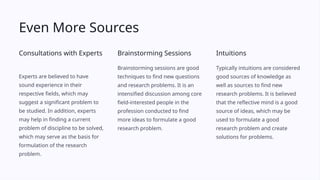
Even More Sources
Consultations with Experts
Experts are believed to have
sound experience in their
respective fields, which may
suggest a significant problem to
be studied. In addition, experts
may help in finding a current
problem of discipline to be solved,
which may serve as the basis for
formulation of the research
problem.
Brainstorming Sessions
Brainstorming sessions are good
techniques to find new questions
and research problems. It is an
intensified discussion among core
field-interested people in the
profession conducted to find
more ideas to formulate a good
research problem.
Intuitions
Typically intuitions are considered
good sources of knowledge as
well as sources to find new
research problems. It is believed
that the reflective mind is a good
source of ideas, which may be
used to formulate a good
research problem and create
solutions for problems.
Final Source
Exposure to Field Situations
During field exposure, researchers get a variety of experiences
like helping to contextualize conflicts, that provide knowledge for
further improvements in the field. These experiences may
provide plenty of ideas to formulate research problems.

Research-Problem-Identification-process PPT

  • 1.
    Research Problem Identification Identifying theresearch problem is the most crucial step in embarking on a PhD research journey. This process involves pinpointing a generic problem within the field of study that warrants investigation to gain understanding and find solutions. KP Krishan K. Pandey (Ph.D.) Dean ‘Office of Doctoral Studies’, O.P.Jindal Global University, Sonipat Haryana www.krishanpandey.com
  • 2.
    What is aResearch Problem? Clear Statement A research problem is a clear and definite statement about an area of concern where investigation is needed for improvement or innovation, supported by evidence. Addresses Challenges It's a statement that addresses challenges or contradictions within your field of study. Researchers use research problems to define the aim of their study and analysis. Identifies Gaps Identifying a research problem involves finding the research gap in existing research within a chosen field. This process requires keen observation, interest, knowledge, wisdom, and investigation.
  • 3.
    Importance of Problem Identification 1Research Topic Foundation Identifying the research problem is a source for creating a research topic and helps in identifying key concepts and terms. 2 Study Significance The research problem introduces the reader to the study topic, the significance of the research, and the criteria of the research problem. 3 Project Diligence A comprehensible and practicable research problem is important to create a diligent and well-reasoned project. 4 Innovation and Justification A research problem decides whether your project is innovative and unique with an intentional purpose and justification.
  • 4.
    How to Identifya Research Problem 1 Literature Review Review academic journals, articles, books, and other scholarly materials to find gaps or unanswered questions. 2 Practical Experience Utilize your own experience or challenges faced in a professional context. Analyze specific instances or case studies to identify common problems or areas for improvement. 3 Observation Observe real-world settings and note issues or inefficiencies. Engage with stakeholders or experts to gather insights on persistent issues. 4 Theoretical Framework Identify inconsistencies or gaps within existing theories. Formulate potential hypotheses based on observed phenomena or theoretical inconsistencies.
  • 5.
    Factors to Consider Relevanceand Significance Consider the importance and potential impact of solving the problem. Ensure the problem is relevant to current societal, academic, or professional contexts. Feasibility Evaluate if you have the necessary resources to address the problem. Make sure the problem is neither too broad nor too narrow, making it manageable within the constraints of the research. Availability of Data Consider the reliability and validity of potential data sources. Assess if relevant data or information is available or can be reasonably gathered. Ethical Considerations Evaluate the ethical implications of researching the problem. Ensure the problem can be investigated in a way that respects participant rights and avoids harm. Originality and Novelty Identify if the problem has been explored before and if your approach offers a new perspective. Consider how addressing the problem will contribute to the body of knowledge. Alignment with Expertise Ensure the research problem aligns with your own knowledge, skills, and areas of interest. Consider your passion for the topic, as it will sustain motivation and commitment throughout the research process.
  • 6.
    Formulating the ResearchProblem Identify Area of Interest Choosing an area of interest is the first step in the research process. The research must be in the field and subject that was keenly interesting to the researcher since it brings enthusiasm to the research work and avoids boredom. Learn More About the Problem To learn about the problems in the study field, reading is the best way to access knowledge and become familiar with your topic area. Reading other people's research makes you familiar with what is known in the field as well as where the gaps are. Review the Context of Information Reviewing the context of the research involves defining components of the research problem and testing the environmental variables in the project. This helps create a focus on the components of the research problem. Determine Relationships Between Variables After identifying the variables involved in the research, learn how they're related to one another and how these relationships may contribute to your research problem. Select and Include Important Variables Selecting the essential variables can help to understand the outlook of the research and the potential impact of the solution. A clear and reasonable research problem mostly includes the components that are the most applicable to the study. Evaluation and Revise Evaluation allows us to calculate the solution to the research problem and also verify the originality of the research concept and examine whether this research is already done or in an ongoing process.
  • 7.
    Sources of ResearchProblem Identification Personal Experience Personal experience is the best source of knowledge for research problems. All other experiences come from it and are a first-hand description that comes from a trusted authority. Practical Experience Practical experience means performing scientific analytical tests in a laboratory setting using equipment, instruments etc. While doing tests researchers can find problems in obtaining correct results. Critical Appraisal of Literature When we critically study books or articles or research reports relating to the subject of our interest, pertinent questions may arise in our minds. These may strike the reader's mind indirectly by stimulating questions like what additional research is needed.
  • 8.
    More Sources Previous Research Previousresearch provides substantial information for the research being done. Usually, at the end of a research, further research problems are suggested, which is a sound foundation for research findings. Performance Improvement Activities Performance improvement activities are the processes that were done to improve the quality and outcomes to meet regulatory requirements. During this process, you may find several issues merged in it that require answers through the research. Existing Theories Research may also be a process of theory development and theory testing. If an existing theory is used in developing a researchable problem, a specific statement from the theory must be isolated and used as a good source for the research problem.
  • 9.
    Even More Sources Consultationswith Experts Experts are believed to have sound experience in their respective fields, which may suggest a significant problem to be studied. In addition, experts may help in finding a current problem of discipline to be solved, which may serve as the basis for formulation of the research problem. Brainstorming Sessions Brainstorming sessions are good techniques to find new questions and research problems. It is an intensified discussion among core field-interested people in the profession conducted to find more ideas to formulate a good research problem. Intuitions Typically intuitions are considered good sources of knowledge as well as sources to find new research problems. It is believed that the reflective mind is a good source of ideas, which may be used to formulate a good research problem and create solutions for problems.
  • 10.
    Final Source Exposure toField Situations During field exposure, researchers get a variety of experiences like helping to contextualize conflicts, that provide knowledge for further improvements in the field. These experiences may provide plenty of ideas to formulate research problems.