SMART STRATEGIES
WHY
9 andTO SAY “NO”
By Abdurrahman Q. AlQahtani
Learning how to say “No” is part of success
it’s sometimes hard to understand WHY and
HOW to effectively say it.
BUT
Learning to Say “No” Is Part of Success by Ed Batista (HBR)
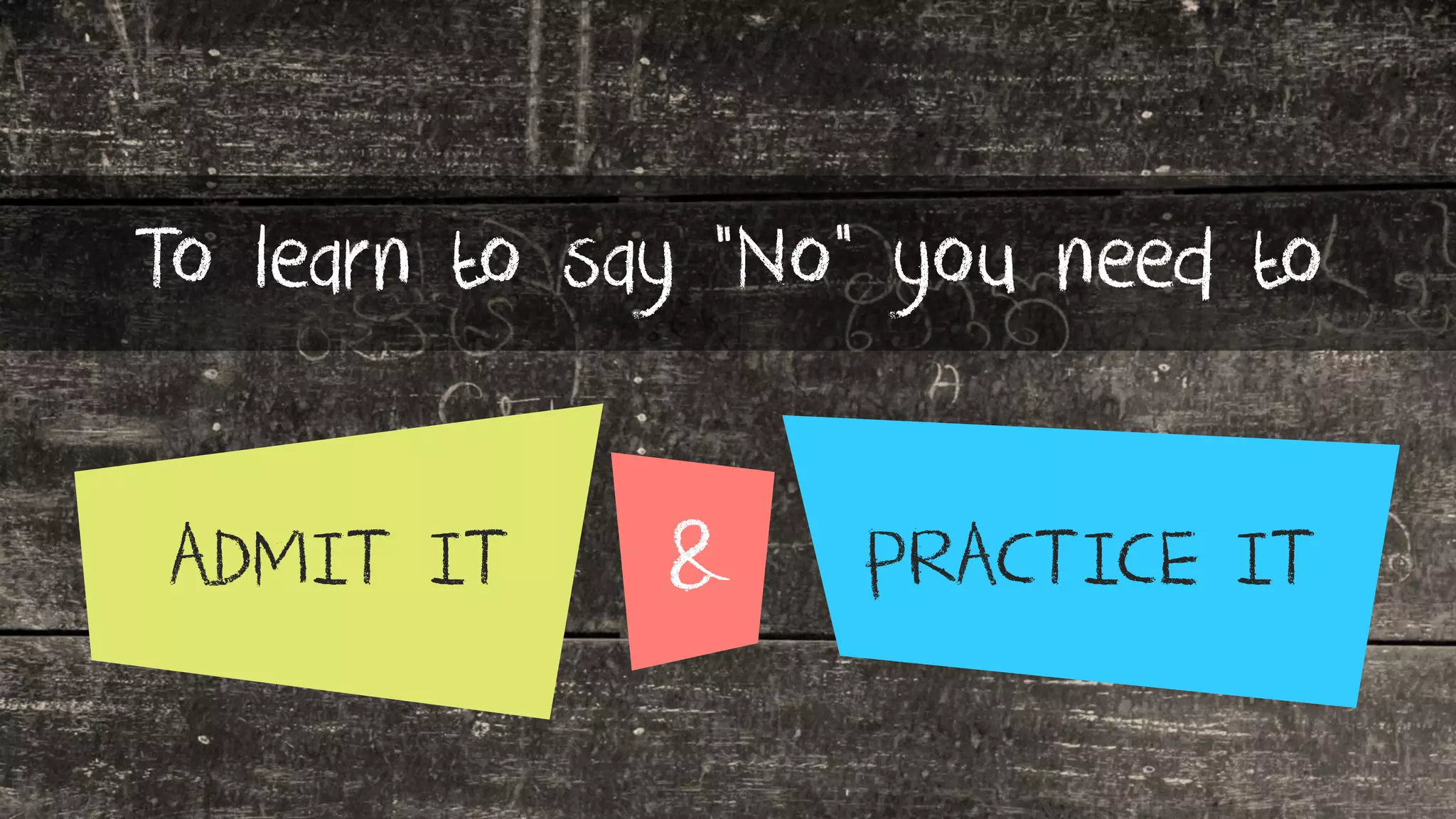
To learn to say “No” you need to
ADMIT IT PRACTICE IT&
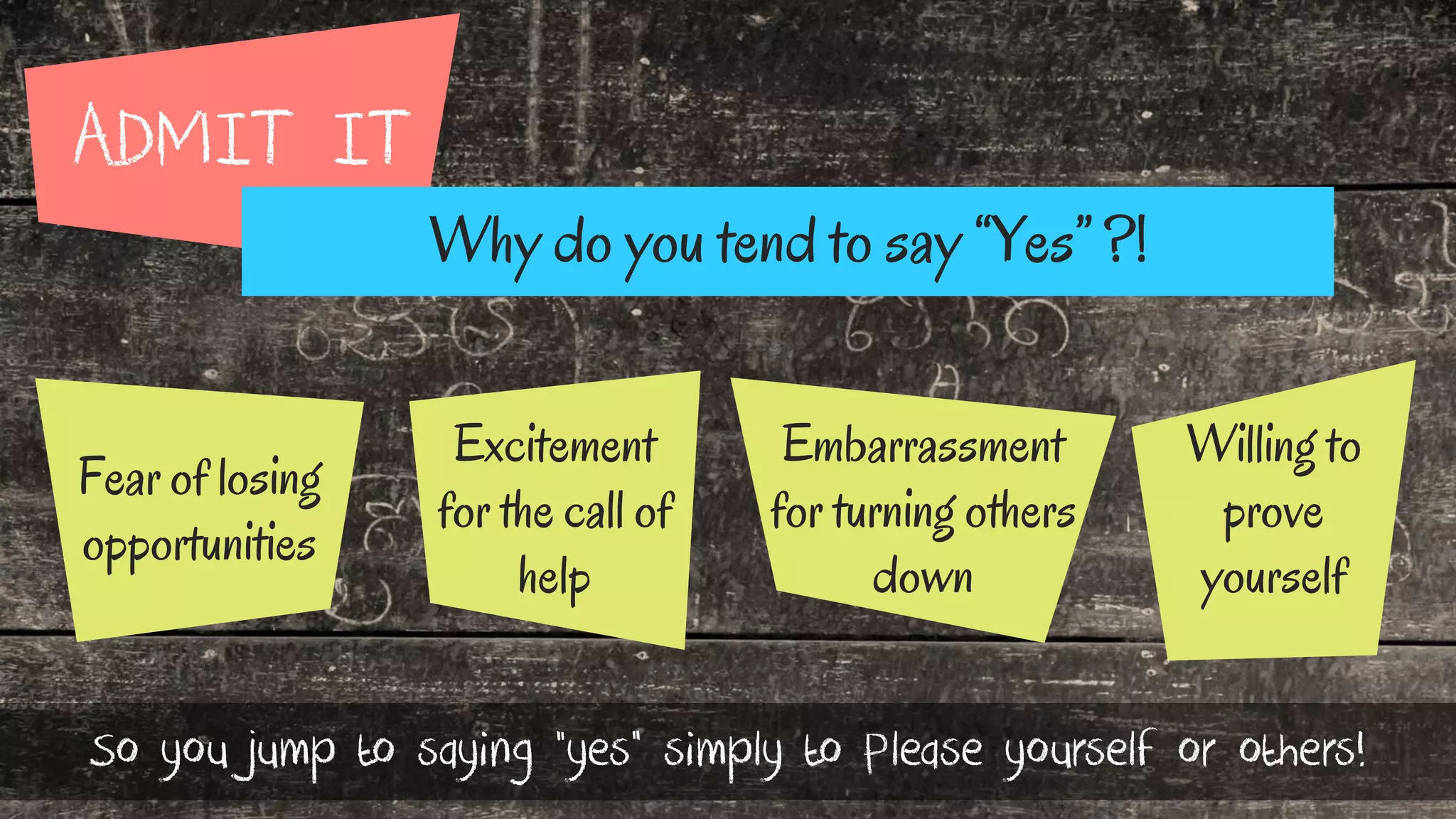
ADMIT IT
Why do you tend to say “Yes” ?!
Excitement
for the call of
help
Fear of losing
opportunities
Embarrassment
for turning others
down
Willing to
prove
yourself
So you jump to saying “yes” simply to Please yourself or others!
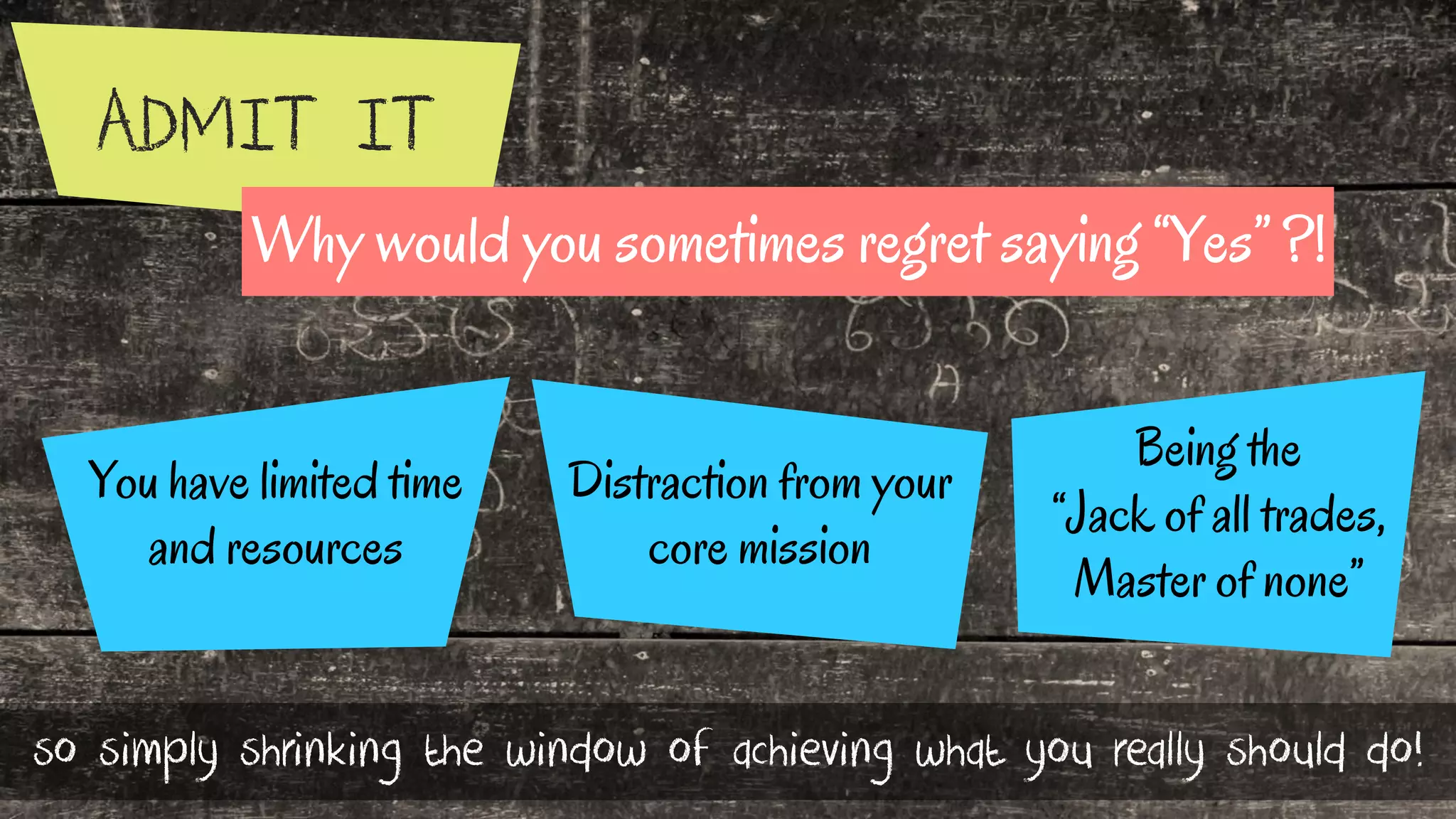
ADMIT IT
Distraction from your
core mission
You have limited time
and resources
Being the
“Jack of all trades,
Master of none”
so simply shrinking the window of achieving what you really should do!
Why would you sometimes regret saying “Yes” ?!
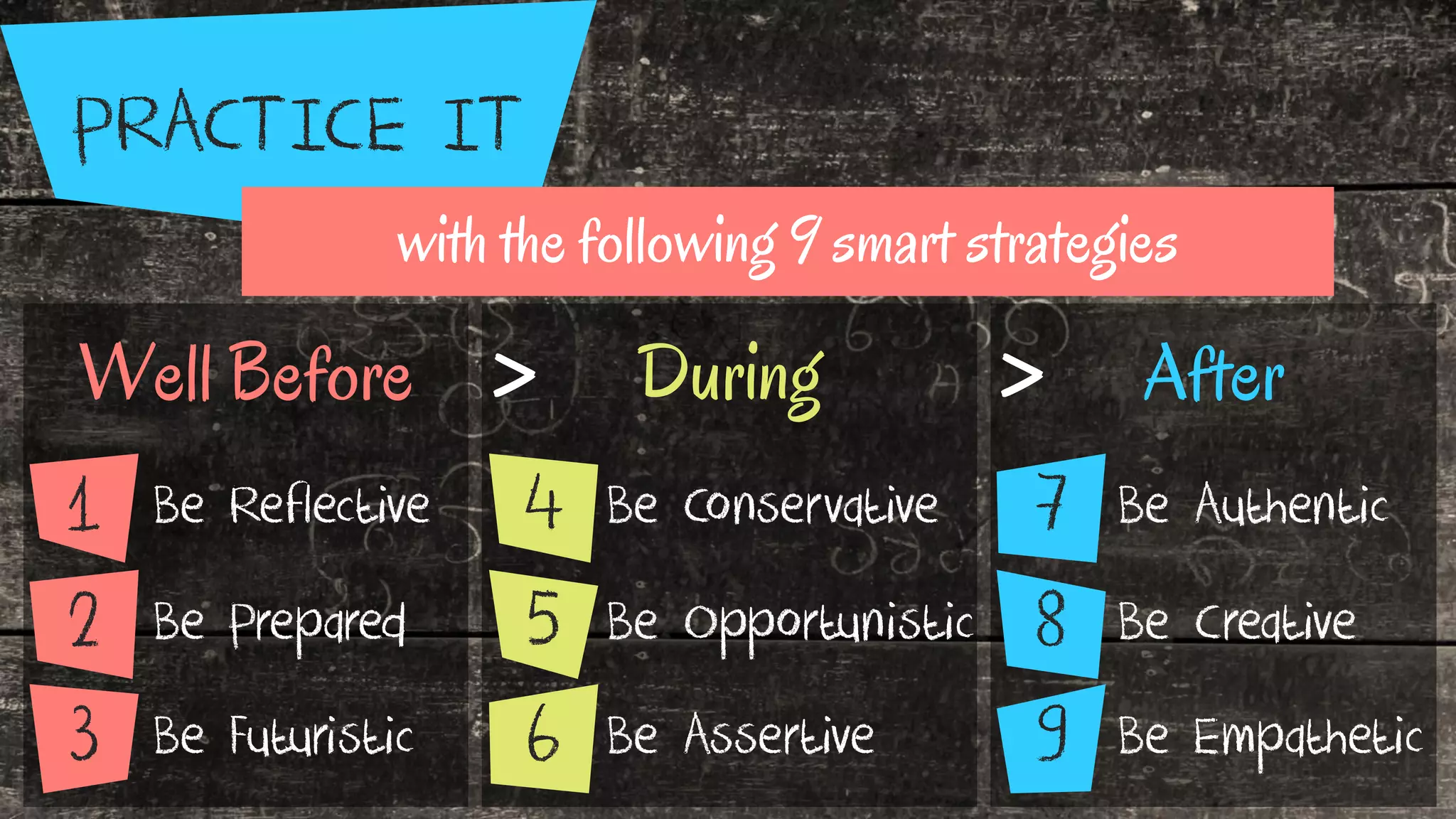
PRACTICE IT
Well Before During After
Be Reflective
Be Prepared
Be Futuristic
Be Conservative
Be Opportunistic
Be Assertive
Be Authentic
Be Creative
Be Empathetic
1 4
8
9
7
2
3
5
6
> >
with the following 9 smart strategies
WELL BEFORE
the request comes in
and the moment of
thinking and deciding
whether to say “yes”
or “no” …
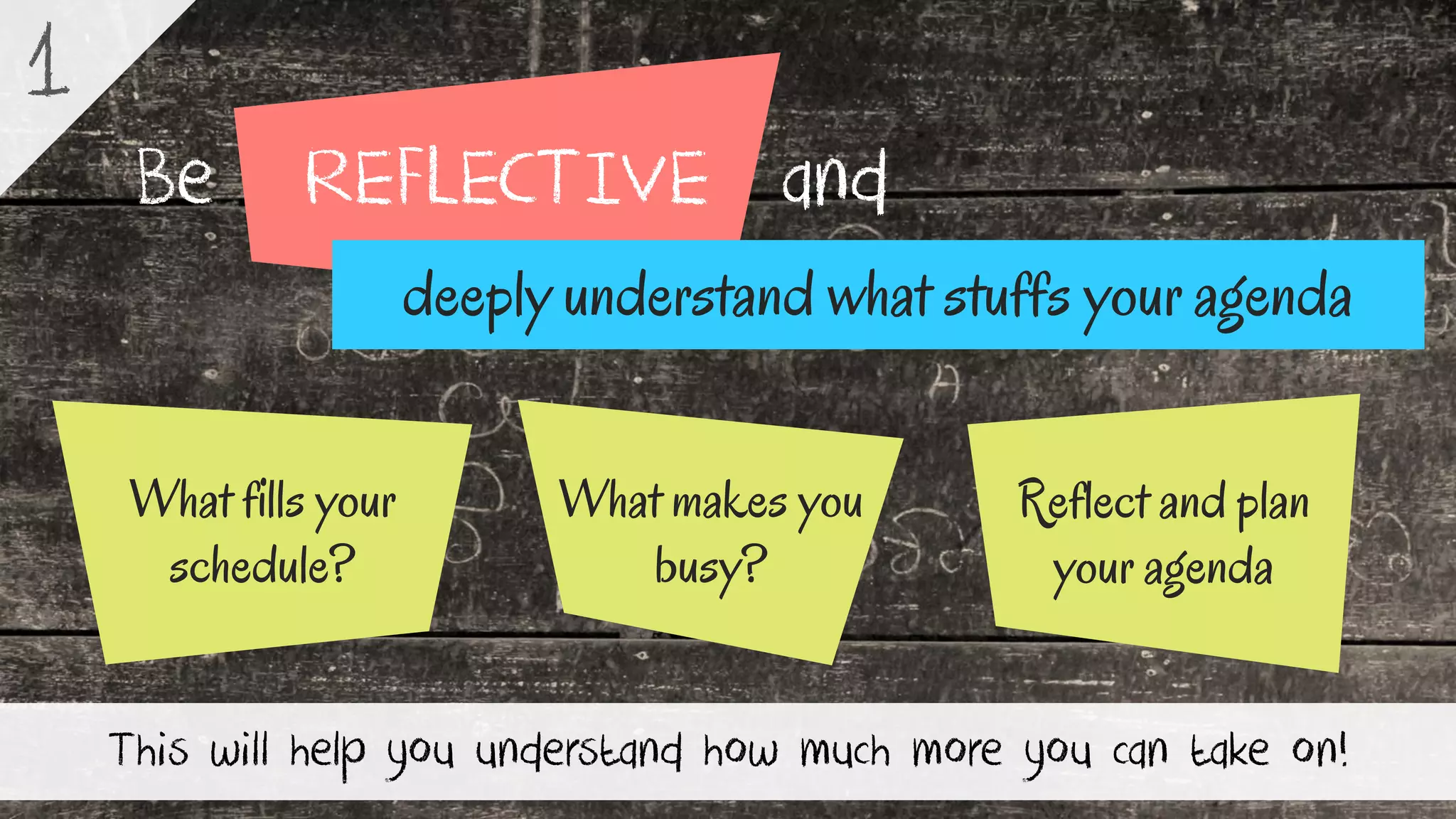
REFLECTIVEBe and
This will help you understand how much more you can take on!
1
Reflect and plan
your agenda
What fills your
schedule?
What makes you
busy?
deeply understand what stuffs your agenda
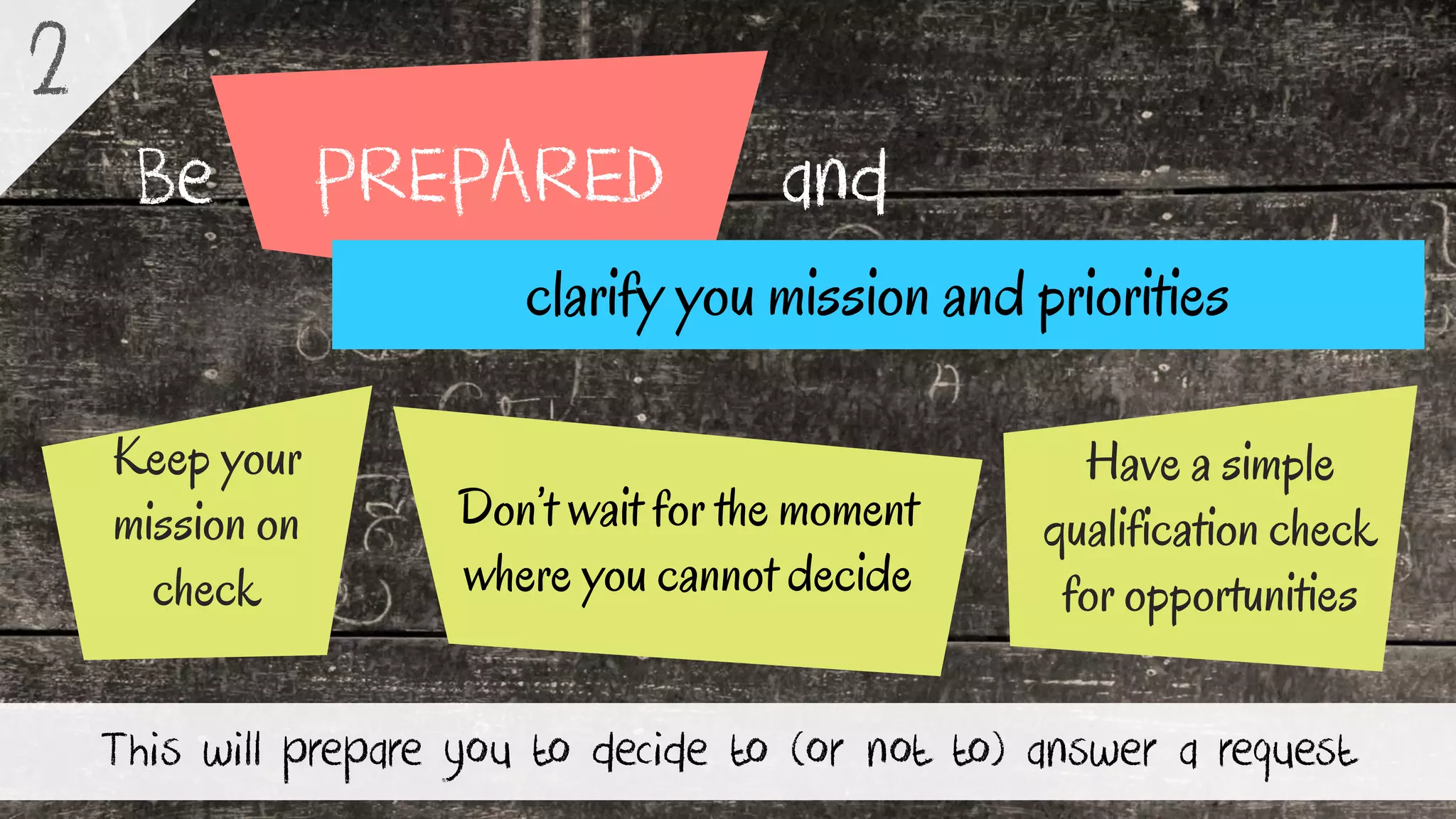
PREPAREDBe and
This will prepare you to decide to (or not to) answer a request
2
Don’t wait for the moment
where you cannot decide
Keep your
mission on
check
Have a simple
qualification check
for opportunities
clarify you mission and priorities
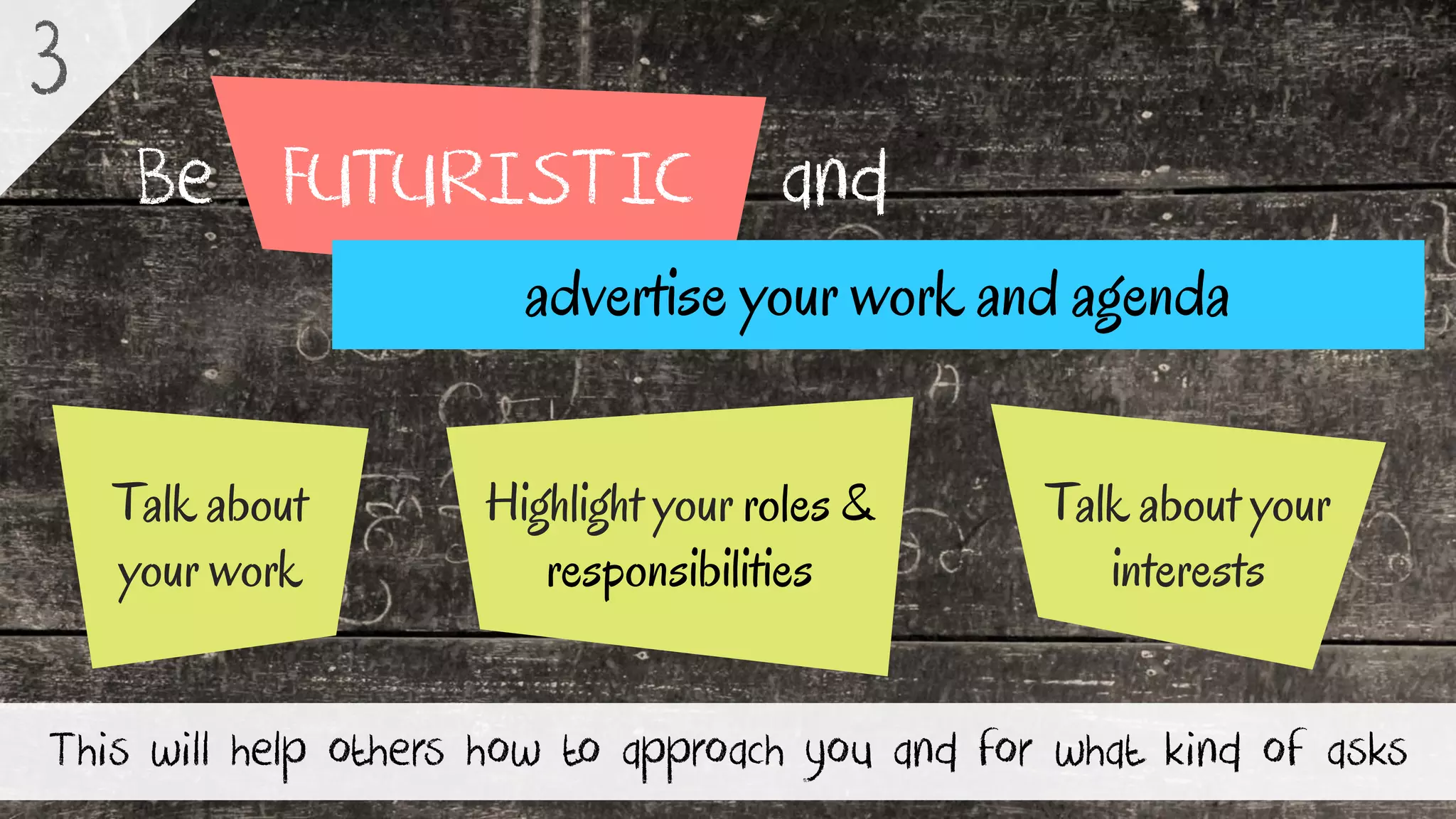
FUTURISTICBe and
This will help others how to approach you and for what kind of asks
3
Highlight your roles &
responsibilities
Talk about
your work
Talk about your
interests
advertise your work and agenda
DURING
the moment of
request where you’re
about to say “yes”
or “no” …
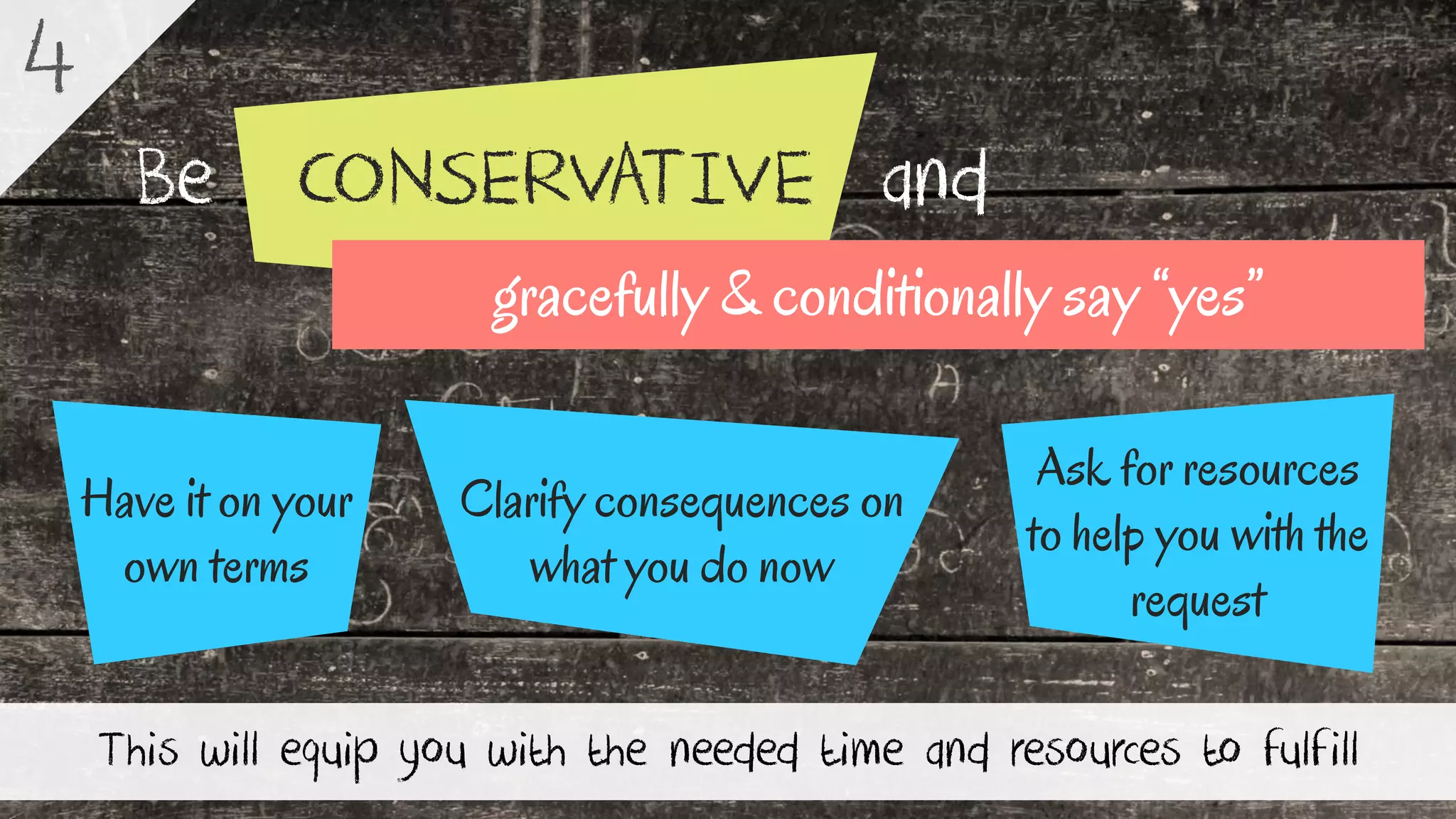
CONSERVATIVEBe and
This will equip you with the needed time and resources to fulfill
4
Ask for resources
to help you with the
request
Have it on your
own terms
Clarify consequences on
what you do now
gracefully & conditionally say “yes”
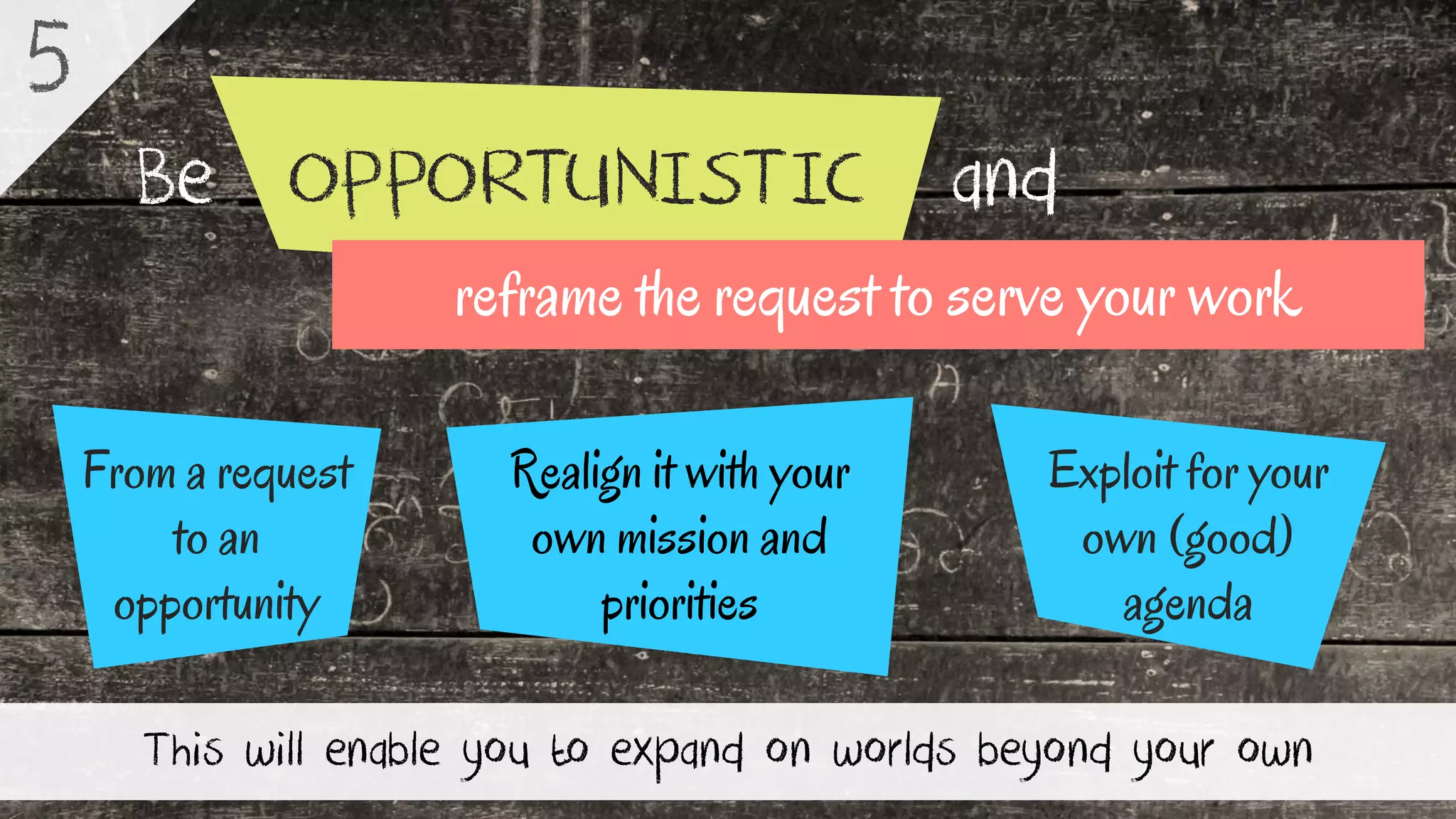
OPPORTUNISTICBe and
This will enable you to expand on worlds beyond your own
5
Realign it with your
own mission and
priorities
From a request
to an
opportunity
Exploit for your
own (good)
agenda
reframe the request to serve your work
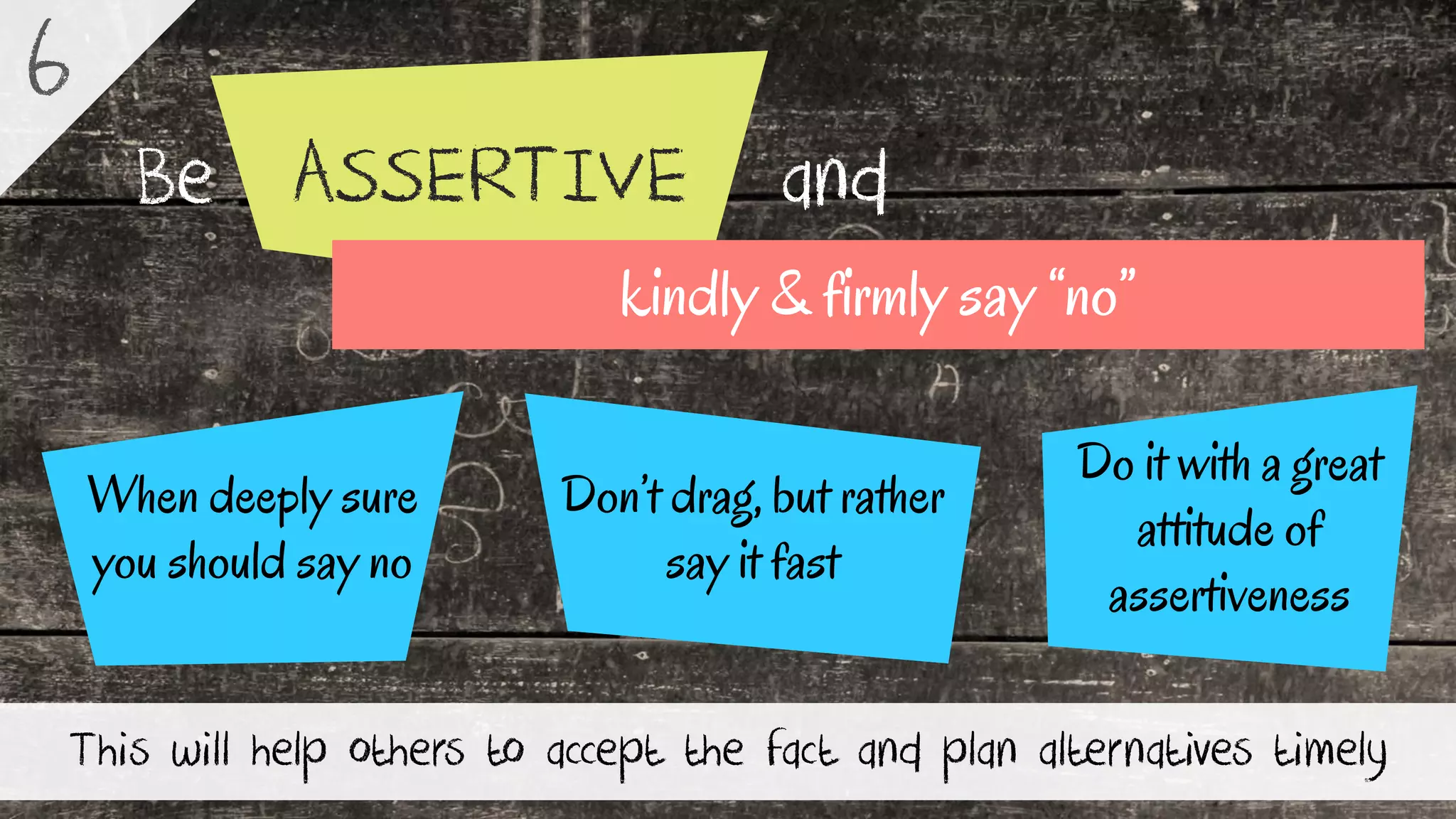
ASSERTIVEBe and
This will help others to accept the fact and plan alternatives timely
6
Don’t drag, but rather
say it fast
When deeply sure
you should say no
Do it with a great
attitude of
assertiveness
kindly & firmly say “no”
AFTER
the moment where
you’ve said “no” …
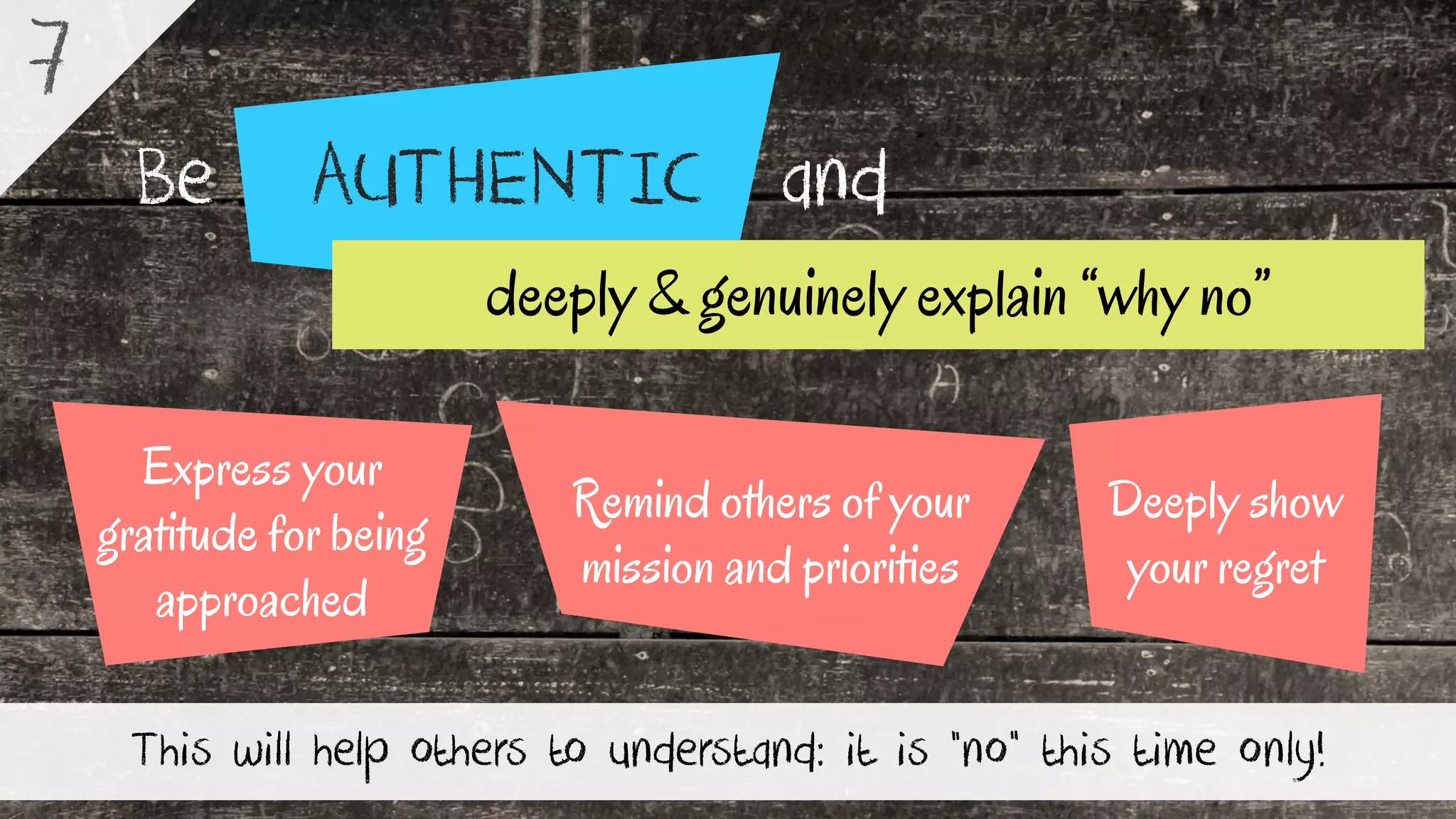
AUTHENTICBe and
This will help others to understand: it is “no” this time only!
7
Deeply show
your regret
Express your
gratitude for being
approached
Remind others of your
mission and priorities
deeply & genuinely explain “why no”
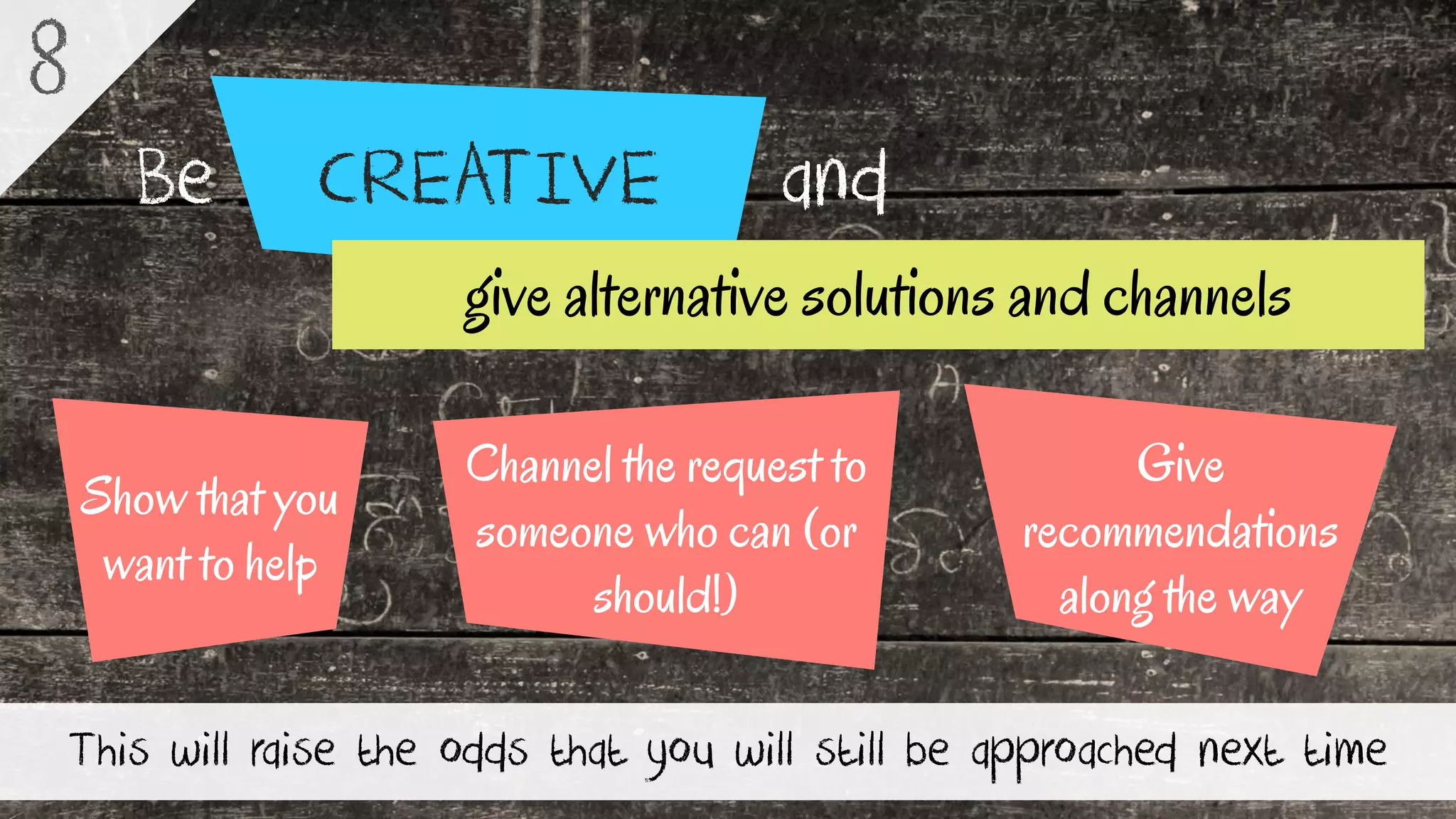
CREATIVEBe and
This will raise the odds that you will still be approached next time
8
Channel the request to
someone who can (or
should!)
Show that you
want to help
Give
recommendations
along the way
give alternative solutions and channels
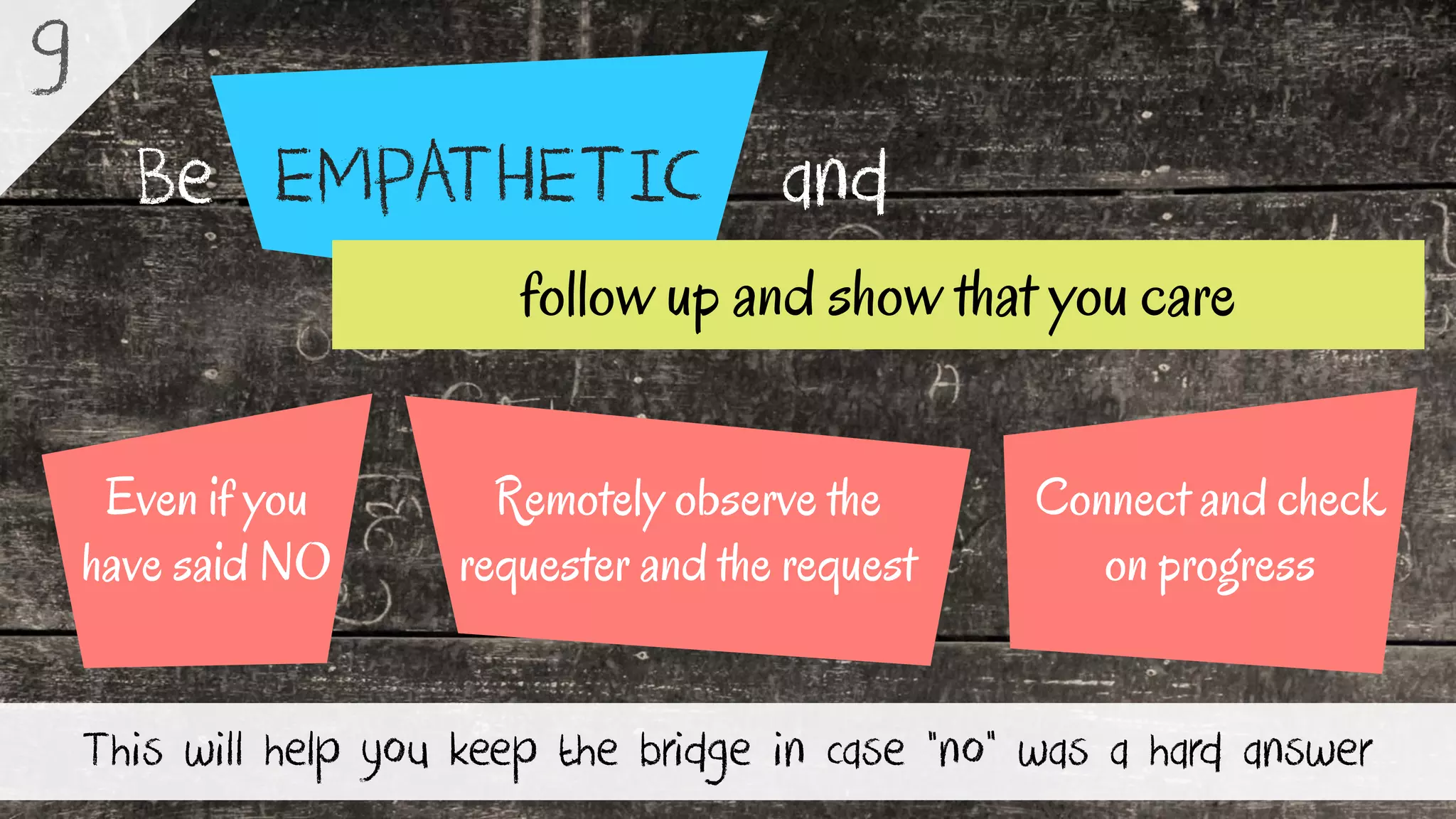
EMPATHETICBe and
This will help you keep the bridge in case “no” was a hard answer
9
Remotely observe the
requester and the request
Even if you
have said NO
Connect and check
on progress
follow up and show that you care
this is not about brutally saying “NO!”
neither about recklessly saying “YES!”
REMEMBER
it’s about being prepared, choosing a
smart answer, and having the right
attitude and commitment
Happy and mindful decisions!
Background photo by mayanais, and colors credit goes to addabarrios
http://www.slideshare.net/aqahtani
@alq_abdurrahman
http://sa.linkedin.com/in/aqahtani
http://knowledge-passion.com/blog
This work is licensed under a Creative Commons Attribution-ShareAlike 4.0 International License
Abdurrahman Q. AlQahtani - Consultant and Coach - aq@knowledge-passion.com

9 Smart Strategies to Say "No" and Why

  • 1.
    SMART STRATEGIES WHY 9 andTOSAY “NO” By Abdurrahman Q. AlQahtani
  • 2.
    Learning how tosay “No” is part of success it’s sometimes hard to understand WHY and HOW to effectively say it. BUT Learning to Say “No” Is Part of Success by Ed Batista (HBR)
  • 3.
    To learn tosay “No” you need to ADMIT IT PRACTICE IT&
  • 4.
    ADMIT IT Why doyou tend to say “Yes” ?! Excitement for the call of help Fear of losing opportunities Embarrassment for turning others down Willing to prove yourself So you jump to saying “yes” simply to Please yourself or others!
  • 5.
    ADMIT IT Distraction fromyour core mission You have limited time and resources Being the “Jack of all trades, Master of none” so simply shrinking the window of achieving what you really should do! Why would you sometimes regret saying “Yes” ?!
  • 6.
    PRACTICE IT Well BeforeDuring After Be Reflective Be Prepared Be Futuristic Be Conservative Be Opportunistic Be Assertive Be Authentic Be Creative Be Empathetic 1 4 8 9 7 2 3 5 6 > > with the following 9 smart strategies
  • 7.
    WELL BEFORE the requestcomes in and the moment of thinking and deciding whether to say “yes” or “no” …
  • 8.
    REFLECTIVEBe and This willhelp you understand how much more you can take on! 1 Reflect and plan your agenda What fills your schedule? What makes you busy? deeply understand what stuffs your agenda
  • 9.
    PREPAREDBe and This willprepare you to decide to (or not to) answer a request 2 Don’t wait for the moment where you cannot decide Keep your mission on check Have a simple qualification check for opportunities clarify you mission and priorities
  • 10.
    FUTURISTICBe and This willhelp others how to approach you and for what kind of asks 3 Highlight your roles & responsibilities Talk about your work Talk about your interests advertise your work and agenda
  • 11.
    DURING the moment of requestwhere you’re about to say “yes” or “no” …
  • 12.
    CONSERVATIVEBe and This willequip you with the needed time and resources to fulfill 4 Ask for resources to help you with the request Have it on your own terms Clarify consequences on what you do now gracefully & conditionally say “yes”
  • 13.
    OPPORTUNISTICBe and This willenable you to expand on worlds beyond your own 5 Realign it with your own mission and priorities From a request to an opportunity Exploit for your own (good) agenda reframe the request to serve your work
  • 14.
    ASSERTIVEBe and This willhelp others to accept the fact and plan alternatives timely 6 Don’t drag, but rather say it fast When deeply sure you should say no Do it with a great attitude of assertiveness kindly & firmly say “no”
  • 15.
  • 16.
    AUTHENTICBe and This willhelp others to understand: it is “no” this time only! 7 Deeply show your regret Express your gratitude for being approached Remind others of your mission and priorities deeply & genuinely explain “why no”
  • 17.
    CREATIVEBe and This willraise the odds that you will still be approached next time 8 Channel the request to someone who can (or should!) Show that you want to help Give recommendations along the way give alternative solutions and channels
  • 18.
    EMPATHETICBe and This willhelp you keep the bridge in case “no” was a hard answer 9 Remotely observe the requester and the request Even if you have said NO Connect and check on progress follow up and show that you care
  • 19.
    this is notabout brutally saying “NO!” neither about recklessly saying “YES!” REMEMBER
  • 20.
    it’s about beingprepared, choosing a smart answer, and having the right attitude and commitment Happy and mindful decisions!
  • 21.
    Background photo bymayanais, and colors credit goes to addabarrios http://www.slideshare.net/aqahtani @alq_abdurrahman http://sa.linkedin.com/in/aqahtani http://knowledge-passion.com/blog This work is licensed under a Creative Commons Attribution-ShareAlike 4.0 International License Abdurrahman Q. AlQahtani - Consultant and Coach - aq@knowledge-passion.com