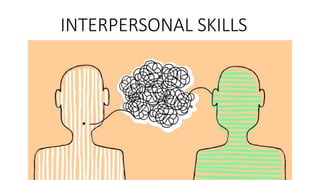
INTERPERSONAL SKILLS
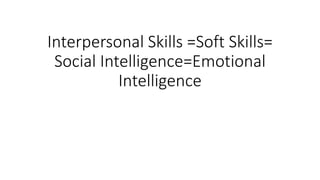
Interpersonal Skills =Soft Skills=
Social Intelligence=Emotional
Intelligence
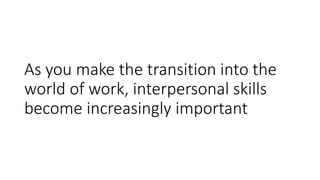
As you make the transition into the
world of work, interpersonal skills
become increasingly important
Even if you excel at the technical
aspects of your job, if you’re a
disaster to work with, your presence
in the office will not be well received.
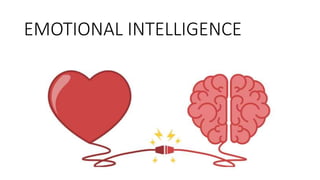
EMOTIONAL INTELLIGENCE
“We are now evolved monkeys
with nuclear weapons”
• Have you ever thought of why people of average intelligence
outperform people with highest level of intelligence majority of time?
FEW SITUATIONS WHERE EQ IS NEEDED
• Giving and receiving feedback
• Meeting tight deadlines
• Dealing with challenging relationships
• Not having enough resources
• Dealing with change
• Dealing with setbacks and failure
EMOTIONAL INTELLIGENCE
• Emotional intelligence or EI is the ability to understand and manage
your own emotions, and those of the people around you.
• People with a high degree of emotional intelligence know what
they're feeling, what their emotions mean, and how these emotions
can affect other people.
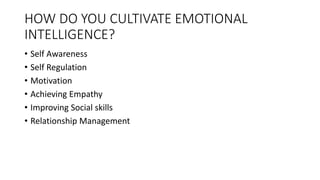
HOW DO YOU CULTIVATE EMOTIONAL
INTELLIGENCE?
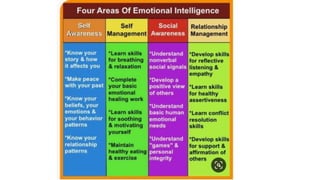
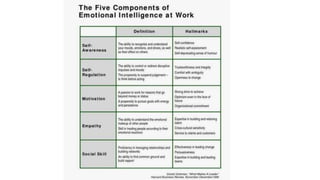
• Self Awareness
• Self Regulation
• Motivation
• Achieving Empathy
• Improving Social skills
• Relationship Management
• Today companies worldwide routinely look through the lens of EI in
hiring, promoting, and developing their employees.
• Emotional intelligence (also known as ‘emotional quotient’, or EQ)
was ranked sixth in the World Economic Forum’s list of the top 10
skills that employees will need to possess to thrive in the workplace
of the future.
• Businesses depend on the people who work for them to be highly
engaged, to be able to adapt quickly to internal and external changes,
and to show fresh thinking and come up with new ideas,”
• Studies also show that, as you grow a culture of emotional
intelligence in your organisation, levels of absenteeism drop, and
engagement levels increase.
EMOTIONAL INTELLIGENCE AT WORKPLACE
• Giving and receiving feedback
• Meeting tight deadlines
• Dealing with challenging relationships
• Not having enough resources
• Dealing with change
• Dealing with setbacks and failure
“For emotional intelligence to be effective, it
has to start with yourself”

Interpersonal skills

  • 1.
  • 3.
    Interpersonal Skills =SoftSkills= Social Intelligence=Emotional Intelligence
  • 4.
    As you makethe transition into the world of work, interpersonal skills become increasingly important
  • 5.
    Even if youexcel at the technical aspects of your job, if you’re a disaster to work with, your presence in the office will not be well received.
  • 6.
  • 7.
    “We are nowevolved monkeys with nuclear weapons”
  • 8.
    • Have youever thought of why people of average intelligence outperform people with highest level of intelligence majority of time?
  • 10.
    FEW SITUATIONS WHEREEQ IS NEEDED • Giving and receiving feedback • Meeting tight deadlines • Dealing with challenging relationships • Not having enough resources • Dealing with change • Dealing with setbacks and failure
  • 11.
    EMOTIONAL INTELLIGENCE • Emotionalintelligence or EI is the ability to understand and manage your own emotions, and those of the people around you. • People with a high degree of emotional intelligence know what they're feeling, what their emotions mean, and how these emotions can affect other people.
  • 12.
    HOW DO YOUCULTIVATE EMOTIONAL INTELLIGENCE? • Self Awareness • Self Regulation • Motivation • Achieving Empathy • Improving Social skills • Relationship Management
  • 14.
    • Today companiesworldwide routinely look through the lens of EI in hiring, promoting, and developing their employees. • Emotional intelligence (also known as ‘emotional quotient’, or EQ) was ranked sixth in the World Economic Forum’s list of the top 10 skills that employees will need to possess to thrive in the workplace of the future.
  • 15.
    • Businesses dependon the people who work for them to be highly engaged, to be able to adapt quickly to internal and external changes, and to show fresh thinking and come up with new ideas,” • Studies also show that, as you grow a culture of emotional intelligence in your organisation, levels of absenteeism drop, and engagement levels increase.
  • 17.
    EMOTIONAL INTELLIGENCE ATWORKPLACE • Giving and receiving feedback • Meeting tight deadlines • Dealing with challenging relationships • Not having enough resources • Dealing with change • Dealing with setbacks and failure
  • 18.
    “For emotional intelligenceto be effective, it has to start with yourself”