
DR. BIJAY KR.YADAV
Holly vision technical campus
Shankhamul, Kathmandu
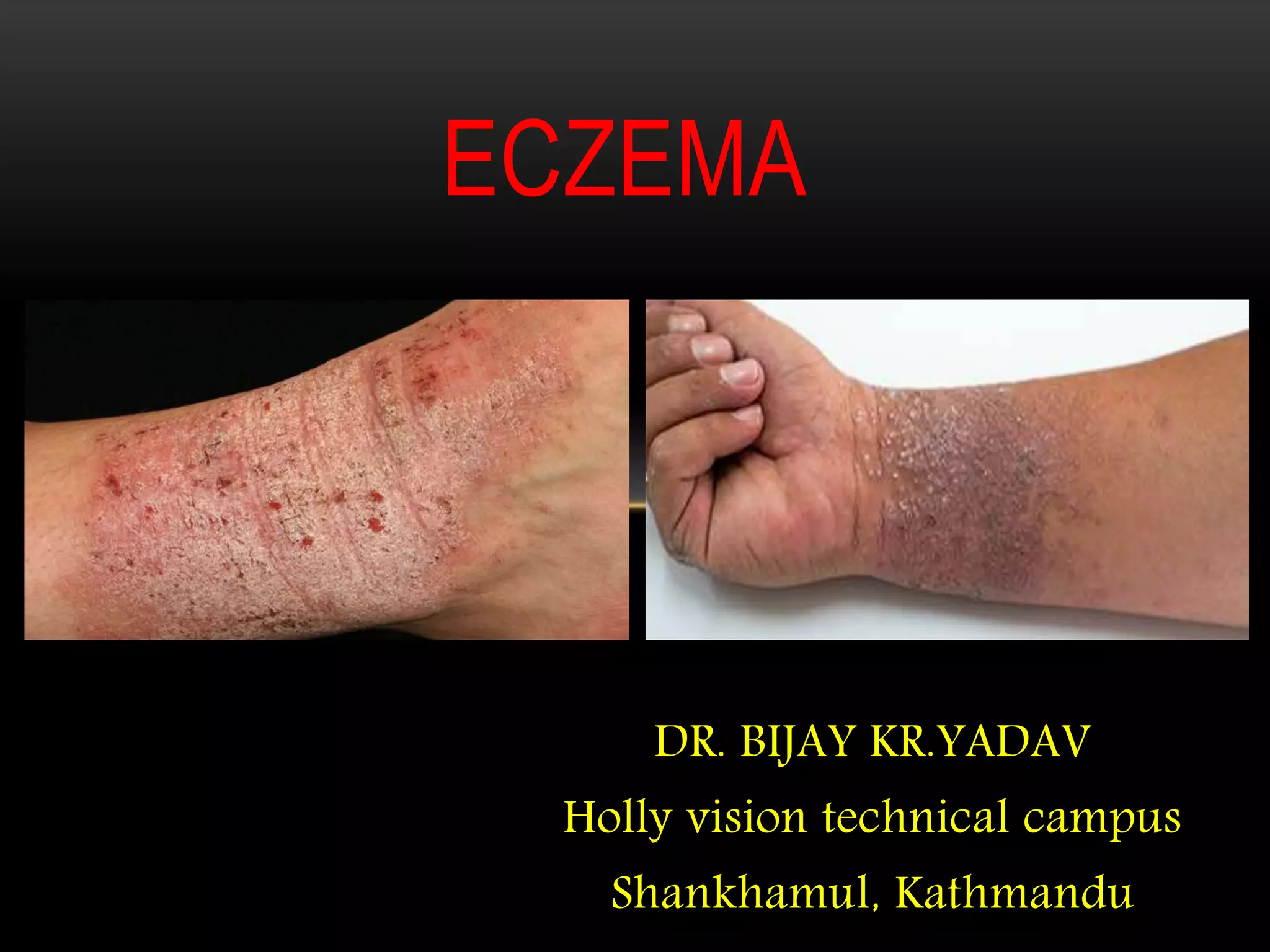
ECZEMA
ECZEMA
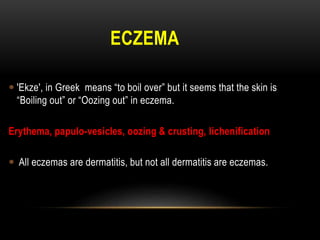
 'Ekze', in Greek means “to boil over” but it seems that the skin is
“Boiling out” or “Oozing out” in eczema.
Erythema, papulo-vesicles, oozing & crusting, lichenification
 All eczemas are dermatitis, but not all dermatitis are eczemas.
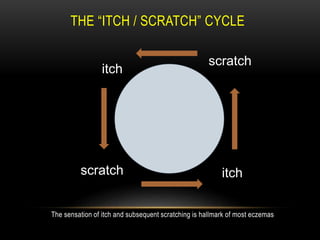
THE “ITCH / SCRATCH” CYCLE
The sensation of itch and subsequent scratching is hallmark of most eczemas
itch
scratch
itchscratch
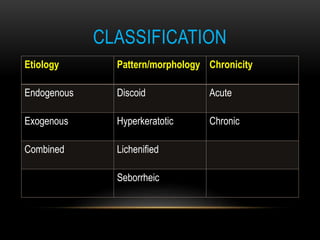
CLASSIFICATION
Etiology Pattern/morphology Chronicity
Endogenous Discoid Acute
Exogenous Hyperkeratotic Chronic
Combined Lichenified
Seborrheic
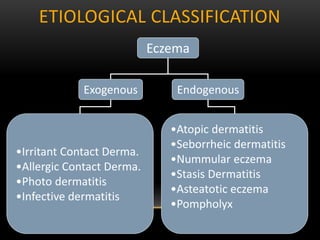
ETIOLOGICAL CLASSIFICATION
Eczema
Exogenous Endogenous
•Irritant Contact Derma.
•Allergic Contact Derma.
•Photo dermatitis
•Infective dermatitis
•Atopic dermatitis
•Seborrheic dermatitis
•Nummular eczema
•Stasis Dermatitis
•Asteatotic eczema
•Pompholyx
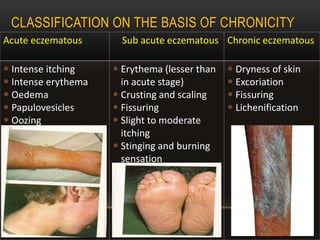
CLASSIFICATION ON THE BASIS OF CHRONICITY
Acute eczematous Sub acute eczematous Chronic eczematous
 Intense itching
 Intense erythema
 Oedema
 Papulovesicles
 Oozing
 Erythema (lesser than
in acute stage)
 Crusting and scaling
 Fissuring
 Slight to moderate
itching
 Stinging and burning
sensation
 Dryness of skin
 Excoriation
 Fissuring
 Lichenification
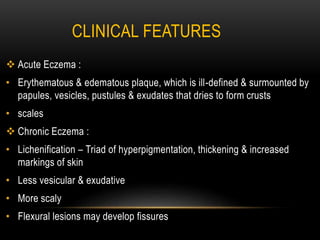
CLINICAL FEATURES
 Acute Eczema :
• Erythematous & edematous plaque, which is ill-defined & surmounted by
papules, vesicles, pustules & exudates that dries to form crusts
• scales
 Chronic Eczema :
• Lichenification – Triad of hyperpigmentation, thickening & increased
markings of skin
• Less vesicular & exudative
• More scaly
• Flexural lesions may develop fissures
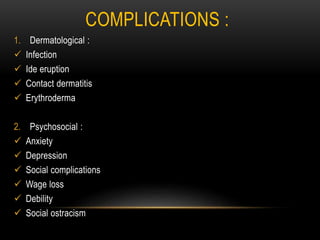
COMPLICATIONS :
1. Dermatological :
 Infection
 Ide eruption
 Contact dermatitis
 Erythroderma
2. Psychosocial :
 Anxiety
 Depression
 Social complications
 Wage loss
 Debility
 Social ostracism
TREATMENT
 General measures :
• Remove triggers
• Hydration & use of Emollients
ACUTE PHASE :
1. Topical treatment
 Acute Eczema of hands & feet : Soaks of potassium permanganate 0.01%, followed by
application of steroid lotion or cream is best
 Larger areas : compresses followed by soothing agents like calamine lotion
2. Systemic treatment
 Systemic steroids : used in extensive lesions & when Ide eruption develop
 Immunosuppressive : Azathioprine
 Antibiotics : used for infected lesions
 Antihistamines : for itching
CHRONIC PHASE
1. Steroids :
 Topical steroids : for localized lesions – t/t of choice, for
lichenified lesions, topical steroids may be combined with
keratolytic agents like salicyclic acid & urea
 Systemic steroids : for extensive lesions like in airborne contact
dermatitis
2. Antibiotics : for bacterial infection – topical or systemic
3. Topical immunomodulators : for their steroid sparing action
ATOPIC DERMATITIS
It is a chronic or relapsing dermatitis usually beginning in childhood
characterized by marked pruritus and rash
 Seen in 3% of all infant
 Increased between 3-6 months of age
 Increased worldwide incidence because of
 Pollutants
 Indoor allergen (house dust mite )
 Decline in breast feeding
ETIOPATHOGENESIS :
• Exact cause of atopic dermatitis is unknown
• It is genetic predisposition ( due to excessive I.e. hypersensitivity)
• Increased histamine release from basophils may lead to persistent
pruritus
• Produce IL-4 and IL-13, which promote IgE production by B cells
Triggering factors
 Anxiety; emotional stress
 Temperature change and sweating
 Decreased humidity
 Excessive washing
 Contact with irritants
 Allergens
 Foods
 Microbial agents
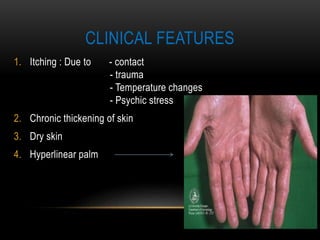
CLINICAL FEATURES
1. Itching : Due to - contact
- trauma
- Temperature changes
- Psychic stress
2. Chronic thickening of skin
3. Dry skin
4. Hyperlinear palm
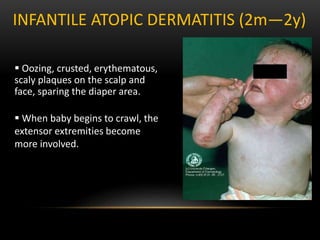
 Oozing, crusted, erythematous,
scaly plaques on the scalp and
face, sparing the diaper area.
 When baby begins to crawl, the
extensor extremities become
more involved.
INFANTILE ATOPIC DERMATITIS (2m—2y)
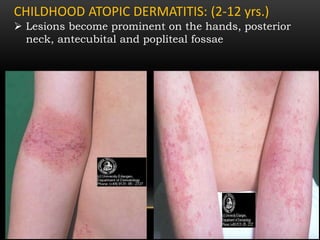
CHILDHOOD ATOPIC DERMATITIS: (2-12 yrs.)
 Lesions become prominent on the hands, posterior
neck, antecubital and popliteal fossae
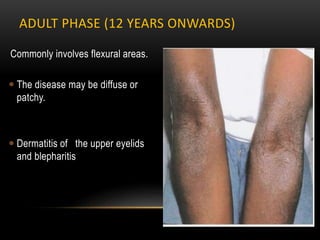
ADULT PHASE (12 YEARS ONWARDS)
Commonly involves flexural areas.
 The disease may be diffuse or
patchy.
 Dermatitis of the upper eyelids
and blepharitis
CRITERIA FOR DIAGNOSIS (HANIFIN AND RAJKA)
1. Major criteria :
 Pruritus
 Typical morphology and distribution
 Facial and ext. involvement in infant.
 Flexural lichenification in adults and children.
 Chronic and chronically relapsing dermatitis
 Personal or family H/o atopy
2. Minor criteria :
 Cataract
 Cheilitis
 Ichthyosis
 Xerosis
 Orbital darkening
 Wool intolerance
 P. alba
 Dennie- Morgan fold
 Palmer hyperlinearity
 Itching when sweating
MANAGEMENT OF ATOPIC DERMATITIS
INVESTIGATIONS
1. Patch test : ( Type IV hypersensitivity)
2. Prick test : ( Type I hypersensitivity )
3. Bacteria & viral swabs for microscopy & culture.
TREATMENT
1. First-line treatment
General measures -
 Avoid scratching
 Avoid frequent use of soap, contact woollen clothes
 Measure to avoid house dust mite
Topical treatments -
◦ Moisturizer ; Emollients; Humectants
◦ Corticosteroids
◦ Calcineurin inhibitors: Pimecrolimus; tacrolimus
 Oral treatment -
◦ Antihistamines
 Sedative antihistamines preferred
 Promethazine; trimeprazine; hydroxyzine
◦ Antibiotics
◦ Systemic steroids (in severe cases)
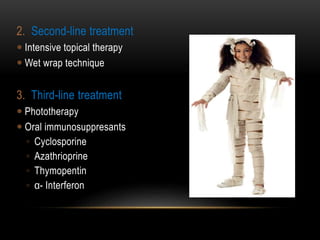
2. Second-line treatment
 Intensive topical therapy
 Wet wrap technique
3. Third-line treatment
 Phototherapy
 Oral immunosuppresants
◦ Cyclosporine
◦ Azathrioprine
◦ Thymopentin
◦ α- Interferon
THANK YOU

9. Eczema & dermatitis

  • 1.
    DR. BIJAY KR.YADAV Hollyvision technical campus Shankhamul, Kathmandu ECZEMA
  • 2.
    ECZEMA  'Ekze', inGreek means “to boil over” but it seems that the skin is “Boiling out” or “Oozing out” in eczema. Erythema, papulo-vesicles, oozing & crusting, lichenification  All eczemas are dermatitis, but not all dermatitis are eczemas.
  • 3.
    THE “ITCH /SCRATCH” CYCLE The sensation of itch and subsequent scratching is hallmark of most eczemas itch scratch itchscratch
  • 4.
    CLASSIFICATION Etiology Pattern/morphology Chronicity EndogenousDiscoid Acute Exogenous Hyperkeratotic Chronic Combined Lichenified Seborrheic
  • 5.
    ETIOLOGICAL CLASSIFICATION Eczema Exogenous Endogenous •IrritantContact Derma. •Allergic Contact Derma. •Photo dermatitis •Infective dermatitis •Atopic dermatitis •Seborrheic dermatitis •Nummular eczema •Stasis Dermatitis •Asteatotic eczema •Pompholyx
  • 6.
    CLASSIFICATION ON THEBASIS OF CHRONICITY Acute eczematous Sub acute eczematous Chronic eczematous  Intense itching  Intense erythema  Oedema  Papulovesicles  Oozing  Erythema (lesser than in acute stage)  Crusting and scaling  Fissuring  Slight to moderate itching  Stinging and burning sensation  Dryness of skin  Excoriation  Fissuring  Lichenification
  • 7.
    CLINICAL FEATURES  AcuteEczema : • Erythematous & edematous plaque, which is ill-defined & surmounted by papules, vesicles, pustules & exudates that dries to form crusts • scales  Chronic Eczema : • Lichenification – Triad of hyperpigmentation, thickening & increased markings of skin • Less vesicular & exudative • More scaly • Flexural lesions may develop fissures
  • 8.
    COMPLICATIONS : 1. Dermatological:  Infection  Ide eruption  Contact dermatitis  Erythroderma 2. Psychosocial :  Anxiety  Depression  Social complications  Wage loss  Debility  Social ostracism
  • 9.
    TREATMENT  General measures: • Remove triggers • Hydration & use of Emollients ACUTE PHASE : 1. Topical treatment  Acute Eczema of hands & feet : Soaks of potassium permanganate 0.01%, followed by application of steroid lotion or cream is best  Larger areas : compresses followed by soothing agents like calamine lotion 2. Systemic treatment  Systemic steroids : used in extensive lesions & when Ide eruption develop  Immunosuppressive : Azathioprine  Antibiotics : used for infected lesions  Antihistamines : for itching
  • 10.
    CHRONIC PHASE 1. Steroids:  Topical steroids : for localized lesions – t/t of choice, for lichenified lesions, topical steroids may be combined with keratolytic agents like salicyclic acid & urea  Systemic steroids : for extensive lesions like in airborne contact dermatitis 2. Antibiotics : for bacterial infection – topical or systemic 3. Topical immunomodulators : for their steroid sparing action
  • 11.
    ATOPIC DERMATITIS It isa chronic or relapsing dermatitis usually beginning in childhood characterized by marked pruritus and rash  Seen in 3% of all infant  Increased between 3-6 months of age  Increased worldwide incidence because of  Pollutants  Indoor allergen (house dust mite )  Decline in breast feeding
  • 12.
    ETIOPATHOGENESIS : • Exactcause of atopic dermatitis is unknown • It is genetic predisposition ( due to excessive I.e. hypersensitivity) • Increased histamine release from basophils may lead to persistent pruritus • Produce IL-4 and IL-13, which promote IgE production by B cells
  • 13.
    Triggering factors  Anxiety;emotional stress  Temperature change and sweating  Decreased humidity  Excessive washing  Contact with irritants  Allergens  Foods  Microbial agents
  • 14.
    CLINICAL FEATURES 1. Itching: Due to - contact - trauma - Temperature changes - Psychic stress 2. Chronic thickening of skin 3. Dry skin 4. Hyperlinear palm
  • 15.
     Oozing, crusted,erythematous, scaly plaques on the scalp and face, sparing the diaper area.  When baby begins to crawl, the extensor extremities become more involved. INFANTILE ATOPIC DERMATITIS (2m—2y)
  • 16.
    CHILDHOOD ATOPIC DERMATITIS:(2-12 yrs.)  Lesions become prominent on the hands, posterior neck, antecubital and popliteal fossae
  • 17.
    ADULT PHASE (12YEARS ONWARDS) Commonly involves flexural areas.  The disease may be diffuse or patchy.  Dermatitis of the upper eyelids and blepharitis
  • 18.
    CRITERIA FOR DIAGNOSIS(HANIFIN AND RAJKA) 1. Major criteria :  Pruritus  Typical morphology and distribution  Facial and ext. involvement in infant.  Flexural lichenification in adults and children.  Chronic and chronically relapsing dermatitis  Personal or family H/o atopy
  • 19.
    2. Minor criteria:  Cataract  Cheilitis  Ichthyosis  Xerosis  Orbital darkening  Wool intolerance  P. alba  Dennie- Morgan fold  Palmer hyperlinearity  Itching when sweating
  • 20.
    MANAGEMENT OF ATOPICDERMATITIS INVESTIGATIONS 1. Patch test : ( Type IV hypersensitivity) 2. Prick test : ( Type I hypersensitivity ) 3. Bacteria & viral swabs for microscopy & culture.
  • 21.
    TREATMENT 1. First-line treatment Generalmeasures -  Avoid scratching  Avoid frequent use of soap, contact woollen clothes  Measure to avoid house dust mite Topical treatments - ◦ Moisturizer ; Emollients; Humectants ◦ Corticosteroids ◦ Calcineurin inhibitors: Pimecrolimus; tacrolimus
  • 22.
     Oral treatment- ◦ Antihistamines  Sedative antihistamines preferred  Promethazine; trimeprazine; hydroxyzine ◦ Antibiotics ◦ Systemic steroids (in severe cases)
  • 23.
    2. Second-line treatment Intensive topical therapy  Wet wrap technique 3. Third-line treatment  Phototherapy  Oral immunosuppresants ◦ Cyclosporine ◦ Azathrioprine ◦ Thymopentin ◦ α- Interferon
  • 24.