 It is a common disorder,autosomal dominant
 Seen in childhood and reaches its peak incidence
in adolescence.
 keratinous plugs in the follicular orifices with
varying degrees of perifollicular
erythema.
Clinical Picture:
 The lesions appear as small gray to white plugs of
keratin that obstruct the mouths of the follicles
entrapping the hair.
 sites of predilection: extensor surfaces of
the upper arms, thighs & buttocks.
 except glabrous skin (like the palms
or soles of feet)
 Treatments: may consist of moisturizing or
keratolytic treatments including: urea,
lactic acid, salicylic acid, or topical retinoids.
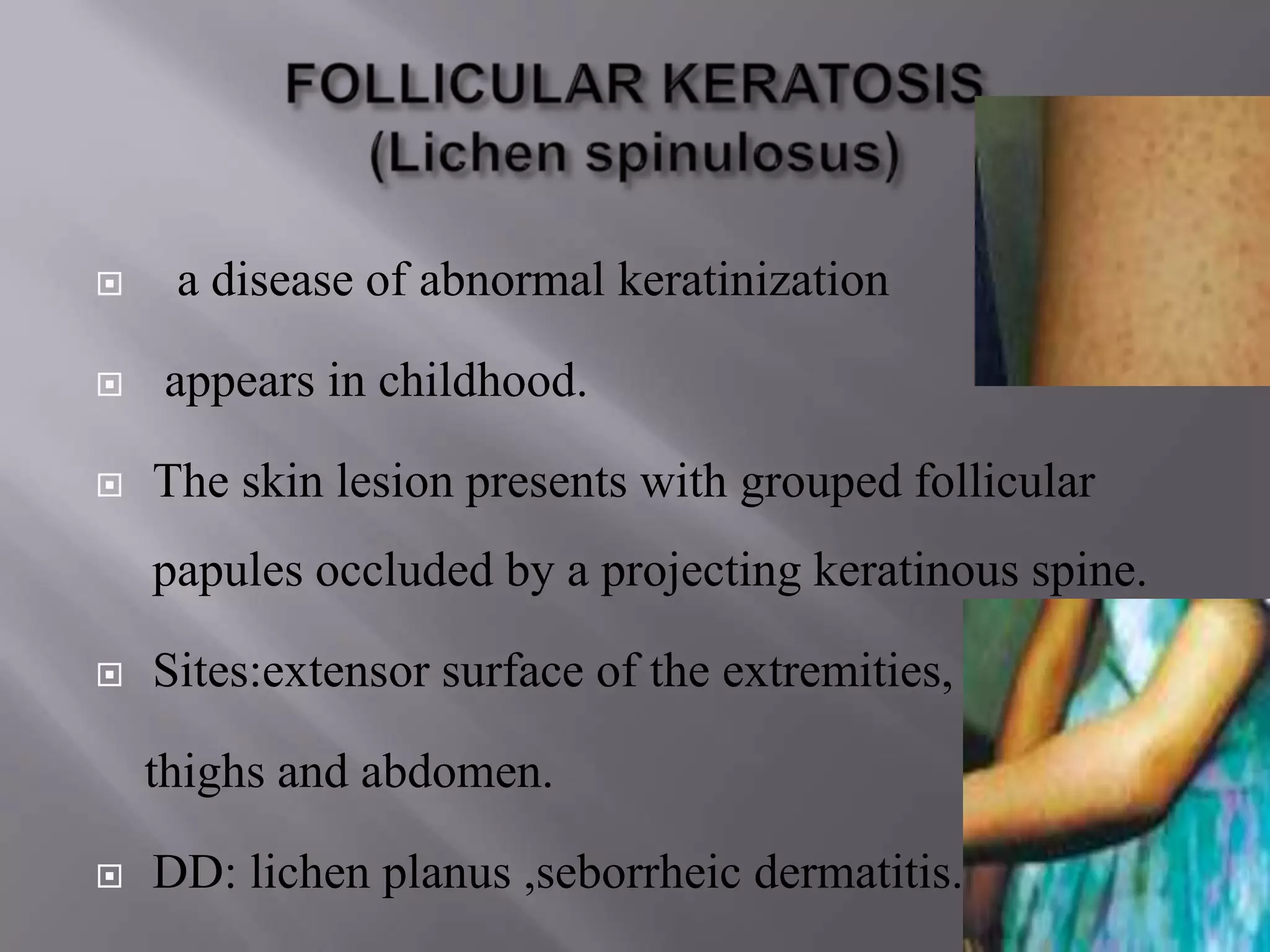
 a disease of abnormal keratinization
 appears in childhood.
 The skin lesion presents with grouped follicular
papules occluded by a projecting keratinous spine.
 Sites:extensor surface of the extremities,
thighs and abdomen.
 DD: lichen planus ,seborrheic dermatitis.
 Its chronic thickening of palms and soles.
 may be inherited (hereditary) or, more
commonly, acquired.
 Hereditary keratoderma : runs in families, its Ad
or AR
 Acquired keratoderma: occurs as a result of a
change in the health or environment
 The genetic basis involves mutations in
genes encoding
 keratins,
 connexins, and
 desmosomal components.
Clinically, three distinct pattern :
1. Diffuse type : the whole palm and sole,
2. focal type : are restricted to more limited
areas(mainly affect pressure areas)
3. punctate type : are bead-like tiny lesions
Complications:
 severe pain, difficulty in walking, and
secondary infection.
 Treatments: keratolytics and systemic
retinoids
appropriate footwear is helpful.
Different skin diseases may give rise to
palmoplanter hyperkeratosis
 Psoriasis. Hyperkeratosis of the palms and soles
with the silvery scales.
 Reiter‘s disease
 Pityriasis rubra pilaris..
 Eczema
 Lichen planus
 Viral warts in immuno-compromised patients
may be confluent on the palms or soles.
 Hyperkeratosis due to dermatophytes (fungal
skin infections).
 Syphilis.
 Arsenic ingestion: causes multiple, irregular
warty keratoses

Keratosis pilaris

  • 2.
     It isa common disorder,autosomal dominant  Seen in childhood and reaches its peak incidence in adolescence.  keratinous plugs in the follicular orifices with varying degrees of perifollicular erythema.
  • 3.
    Clinical Picture:  Thelesions appear as small gray to white plugs of keratin that obstruct the mouths of the follicles entrapping the hair.  sites of predilection: extensor surfaces of the upper arms, thighs & buttocks.  except glabrous skin (like the palms or soles of feet)
  • 4.
     Treatments: mayconsist of moisturizing or keratolytic treatments including: urea, lactic acid, salicylic acid, or topical retinoids.
  • 5.
     a diseaseof abnormal keratinization  appears in childhood.  The skin lesion presents with grouped follicular papules occluded by a projecting keratinous spine.  Sites:extensor surface of the extremities, thighs and abdomen.  DD: lichen planus ,seborrheic dermatitis.
  • 6.
     Its chronicthickening of palms and soles.  may be inherited (hereditary) or, more commonly, acquired.  Hereditary keratoderma : runs in families, its Ad or AR  Acquired keratoderma: occurs as a result of a change in the health or environment
  • 7.
     The geneticbasis involves mutations in genes encoding  keratins,  connexins, and  desmosomal components.
  • 8.
    Clinically, three distinctpattern : 1. Diffuse type : the whole palm and sole, 2. focal type : are restricted to more limited areas(mainly affect pressure areas) 3. punctate type : are bead-like tiny lesions
  • 10.
    Complications:  severe pain,difficulty in walking, and secondary infection.  Treatments: keratolytics and systemic retinoids appropriate footwear is helpful.
  • 11.
    Different skin diseasesmay give rise to palmoplanter hyperkeratosis  Psoriasis. Hyperkeratosis of the palms and soles with the silvery scales.  Reiter‘s disease  Pityriasis rubra pilaris..  Eczema
  • 12.
     Lichen planus Viral warts in immuno-compromised patients may be confluent on the palms or soles.  Hyperkeratosis due to dermatophytes (fungal skin infections).  Syphilis.  Arsenic ingestion: causes multiple, irregular warty keratoses