Progression of chronic kidney
diseases: mechanisms, risk factors,
treatment strategies
Dlin V.V., Konkova N.E.
Nephrology department of Research Institute of
Pediatrics & Children surgery, Moscow, Russia
History and conception of problem
•

The conception was developed at the beginning of XXI century by U.S.
National Kidney Foundation (National Kidney Foundation) and published
in 2002. It’s development was continued by experts from the European
Dialysis and Transplant Association (ERA-EDTA) and KDIGO (Kidney
Desease: Improving Global Outcomes)

• The purpose of the conception:
- early detection of kidney disease
- slowing down the progression of kidney disease
- reduction the risk of cardiovascular complications
- prevention of kidney lesions
- the use of common criteria and universal classification
- the use of common terminology
Importance of the problem

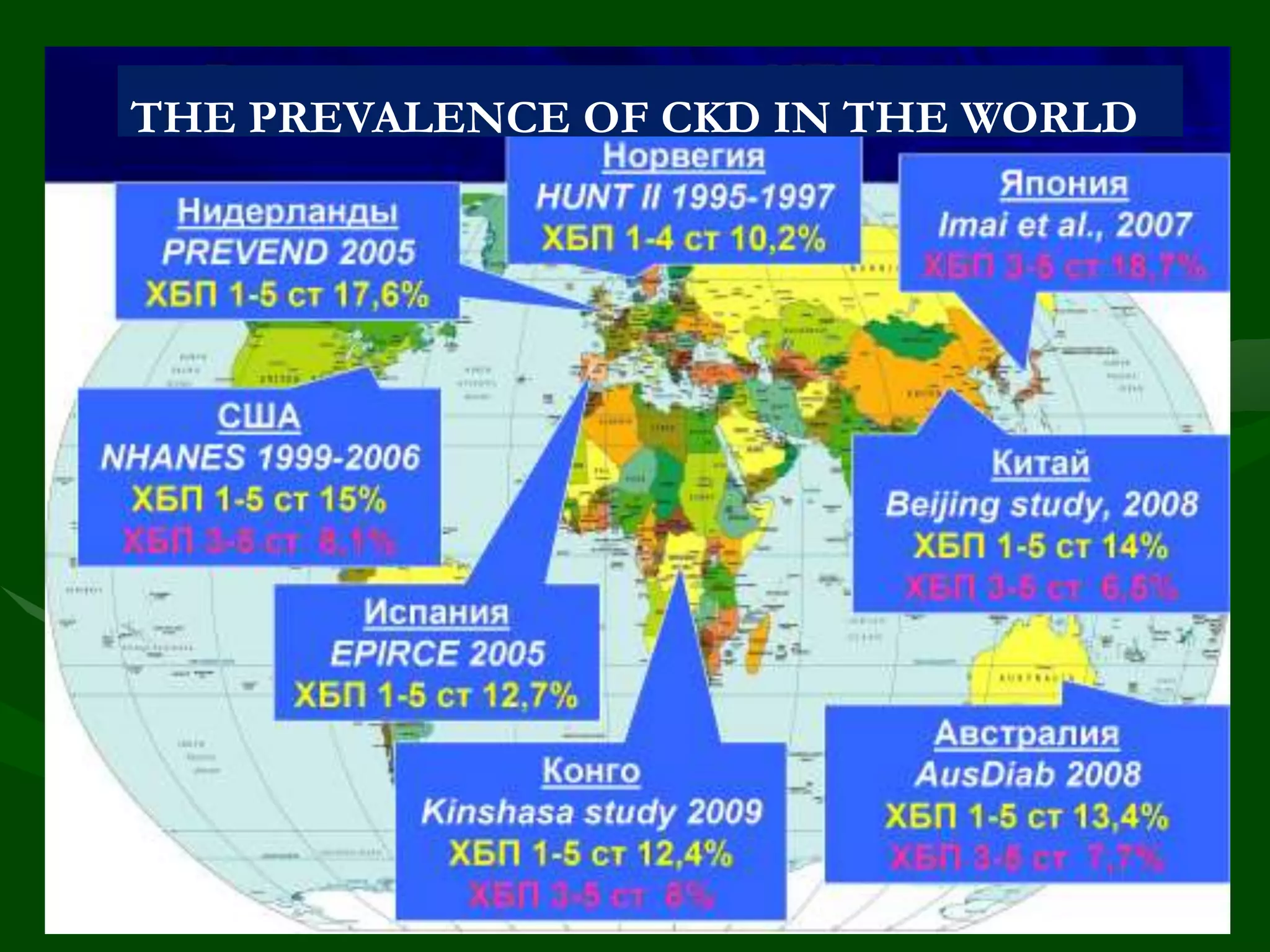
The high prevalence of CKD in the world:
1-5 stage of CKD - 12-15% of the population
3-5 stage of CKD - 6-8 % of the population
THE PREVALENCE OF CKD IN THE WORLD
Importance of the problem

Renal mortality in patients with kidney disease is low.
Cardiovascular pathology as a major factor of patient’s death is
ignored.
Importance of the problem
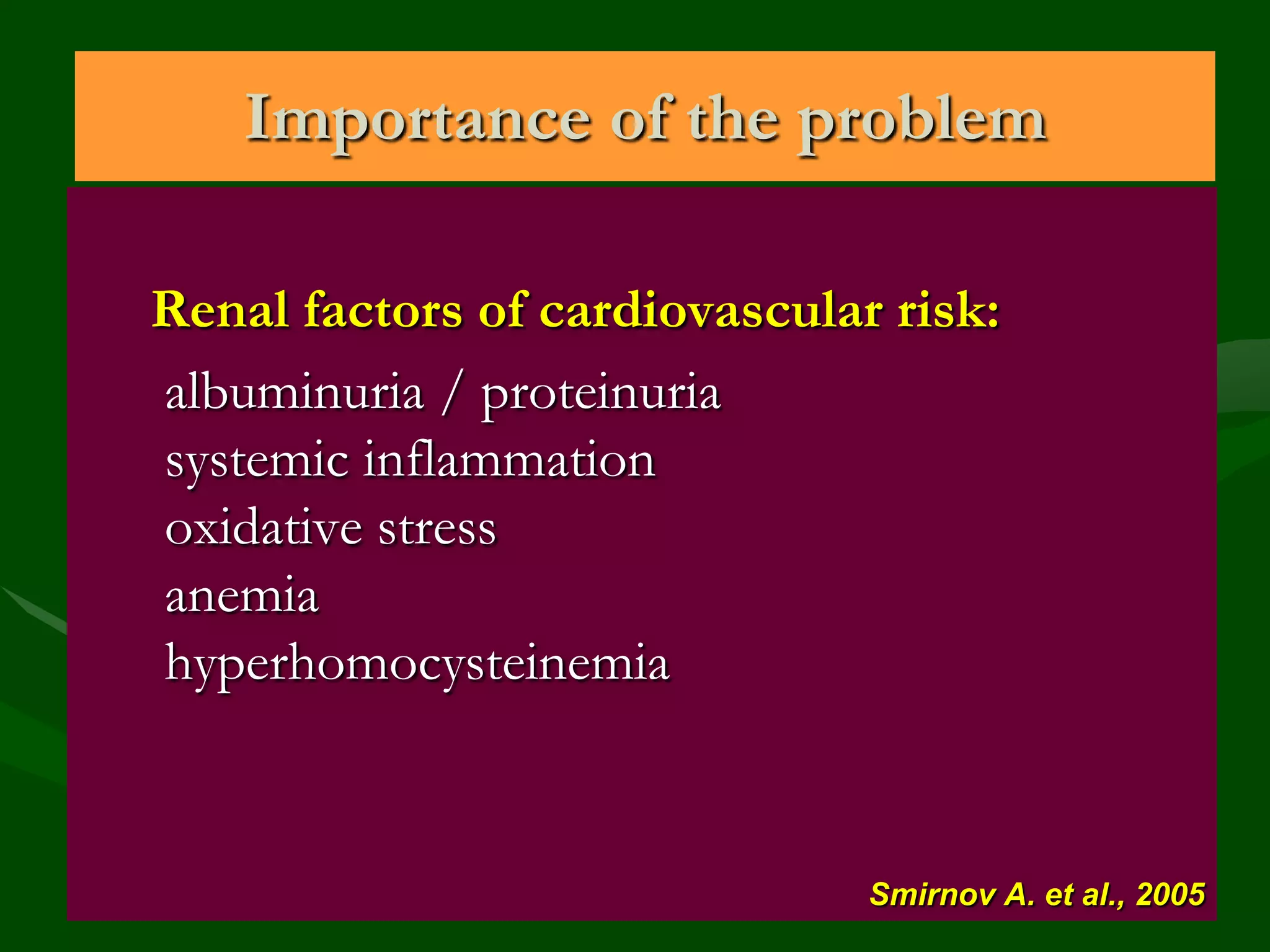
Renal factors of cardiovascular risk:
albuminuria / proteinuria
systemic inflammation
oxidative stress
anemia
hyperhomocysteinemia

Smirnov A. et al., 2005
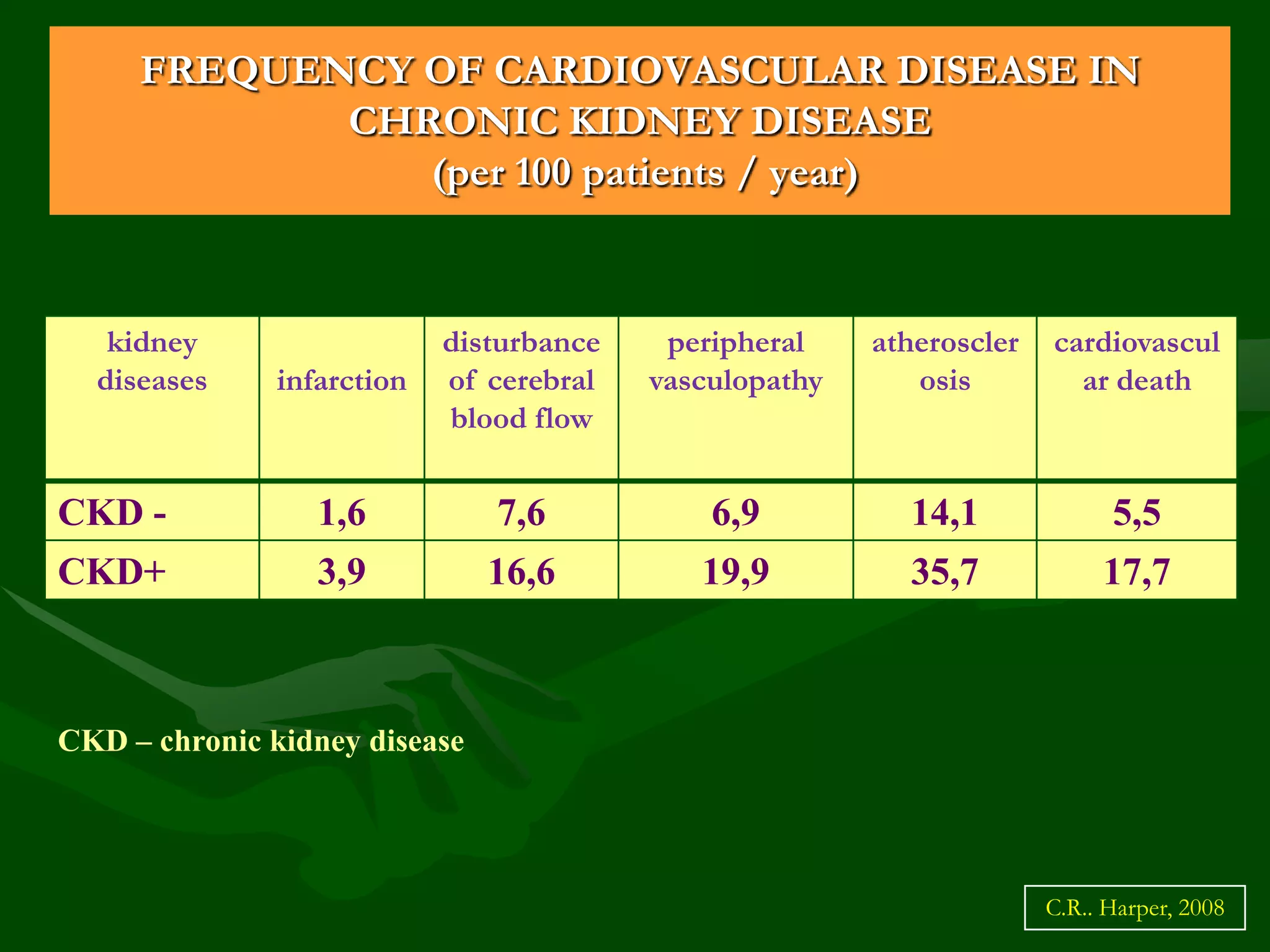
FREQUENCY OF CARDIOVASCULAR DISEASE IN
CHRONIC KIDNEY DISEASE
(per 100 patients / year)

kidney
diseases

infarction

disturbance
of cerebral
blood flow

peripheral
vasculopathy

atheroscler
osis

cardiovascul
ar death

CKD -

1,6

7,6

6,9

14,1

5,5

CKD+

3,9

16,6

19,9

35,7

17,7

CKD – chronic kidney disease

C.R.. Harper, 2008
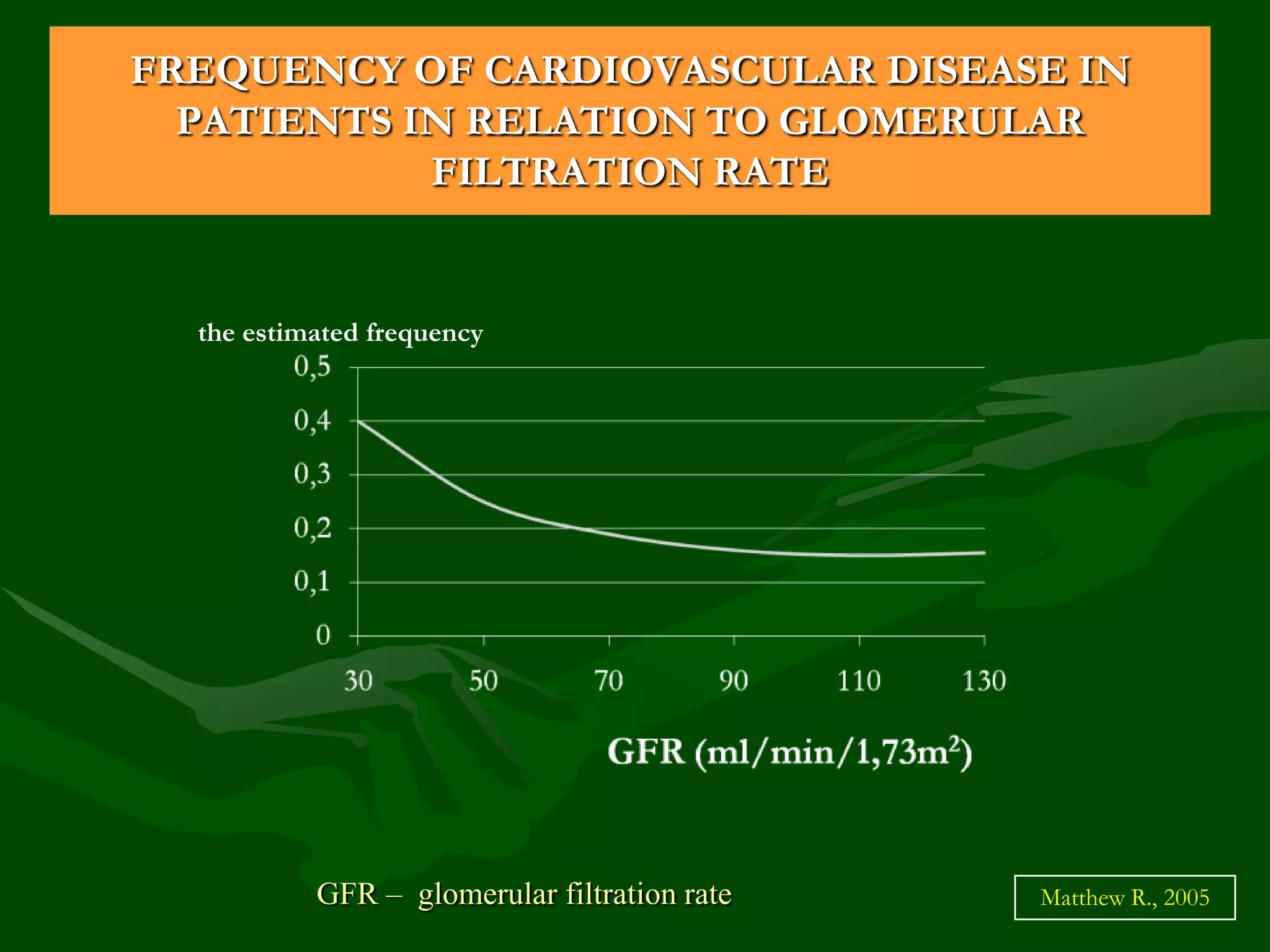
FREQUENCY OF CARDIOVASCULAR DISEASE IN
PATIENTS IN RELATION TO GLOMERULAR
FILTRATION RATE

the estimated frequency

GFR – glomerular filtration rate

Matthew R., 2005
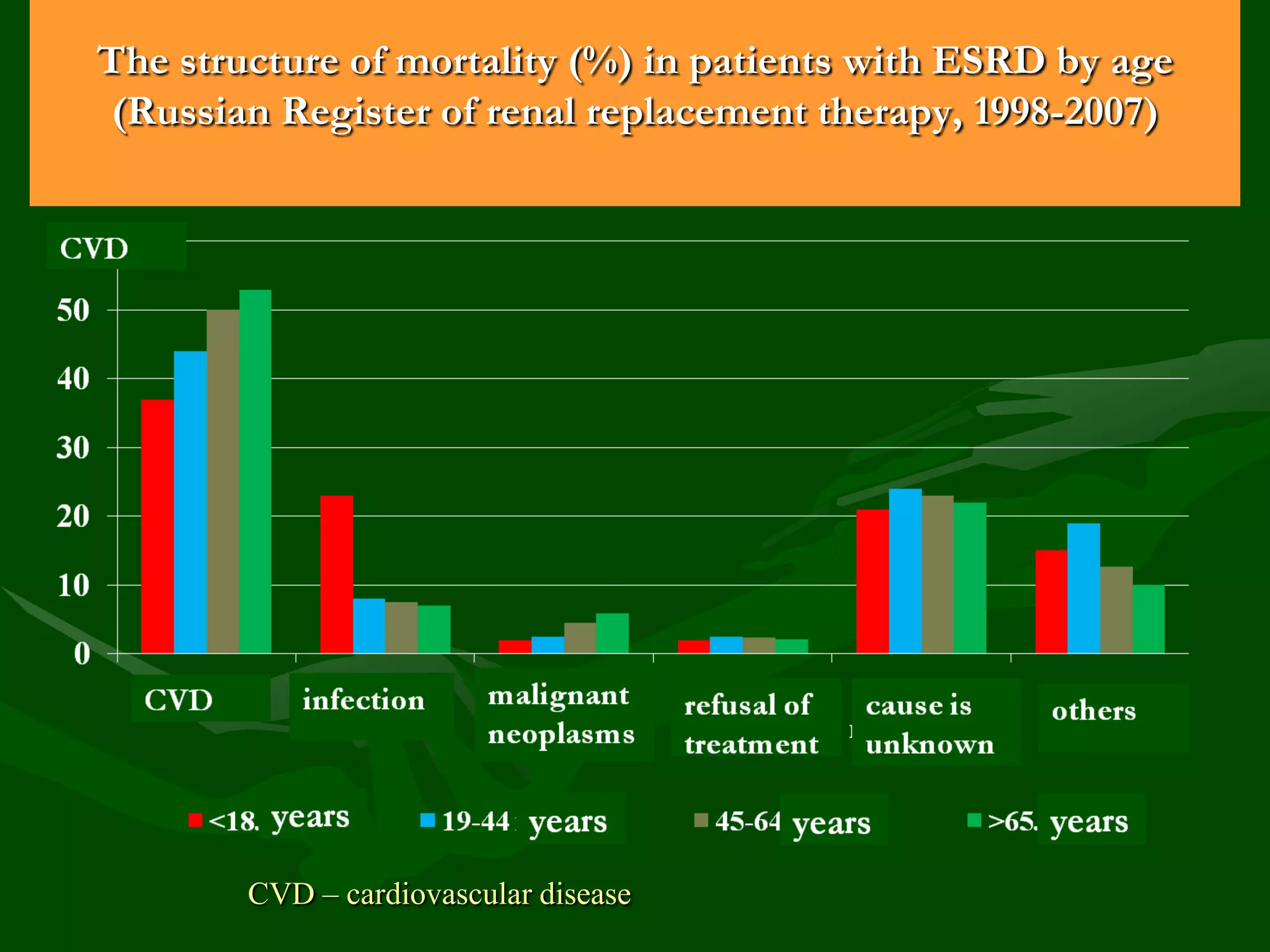
The structure of mortality (%) in patients with ESRD by age
(Russian Register of renal replacement therapy, 1998-2007)

CVD – cardiovascular disease
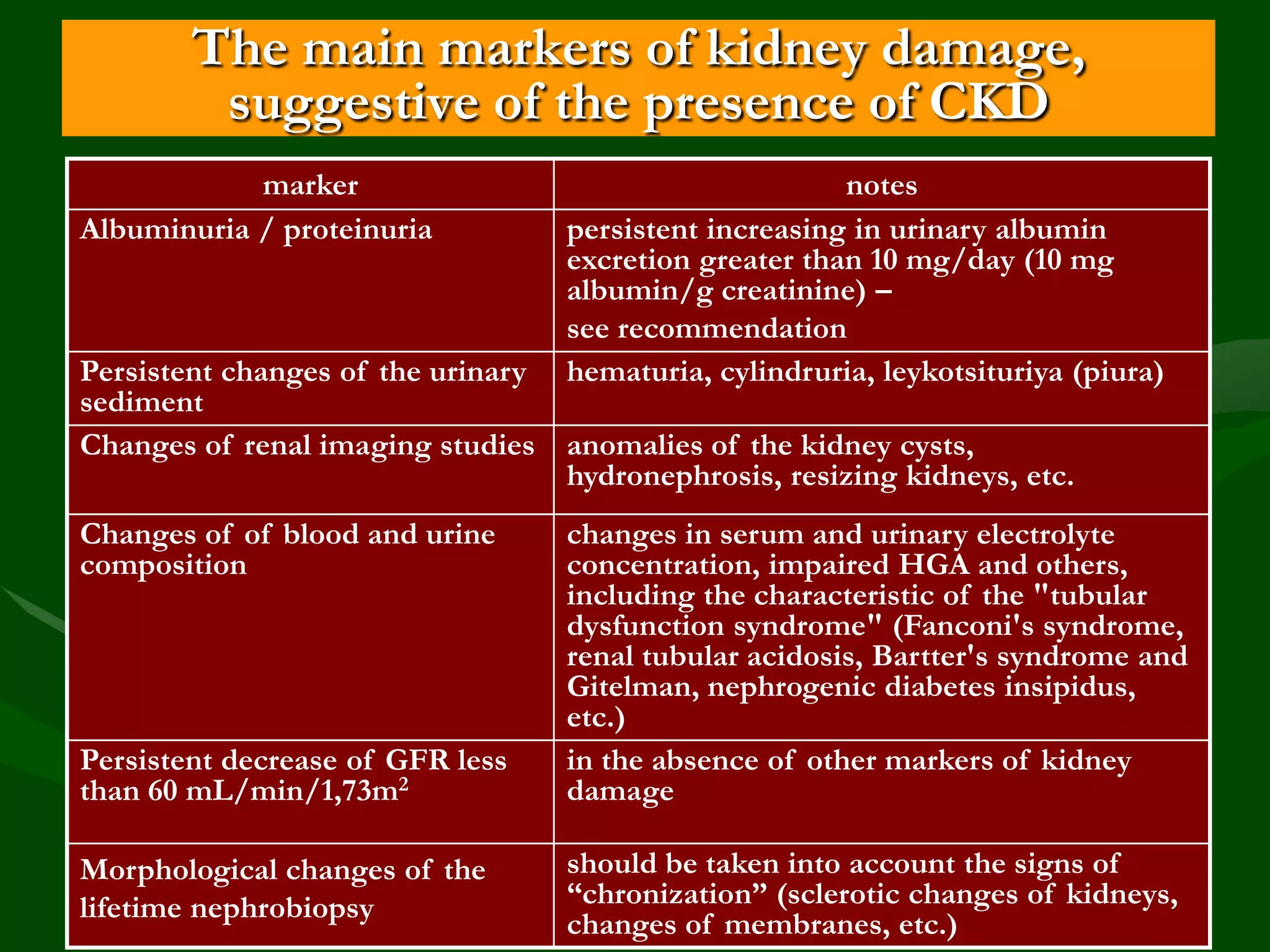
The main markers of kidney damage,
suggestive of the presence of CKD
marker
Albuminuria / proteinuria

notes
persistent increasing in urinary albumin
excretion greater than 10 mg/day (10 mg
albumin/g creatinine) –
see recommendation
hematuria, cylindruria, leykotsituriya (piura)

Persistent changes of the urinary
sediment
Changes of renal imaging studies anomalies of the kidney cysts,
hydronephrosis, resizing kidneys, etc.
Changes of of blood and urine
composition

Persistent decrease of GFR less
than 60 mL/min/1,73m2
Morphological changes of the
lifetime nephrobiopsy

changes in serum and urinary electrolyte
concentration, impaired HGA and others,
including the characteristic of the "tubular
dysfunction syndrome" (Fanconi's syndrome,
renal tubular acidosis, Bartter's syndrome and
Gitelman, nephrogenic diabetes insipidus,
etc.)
in the absence of other markers of kidney
damage
should be taken into account the signs of
“chronization” (sclerotic changes of kidneys,
changes of membranes, etc.)
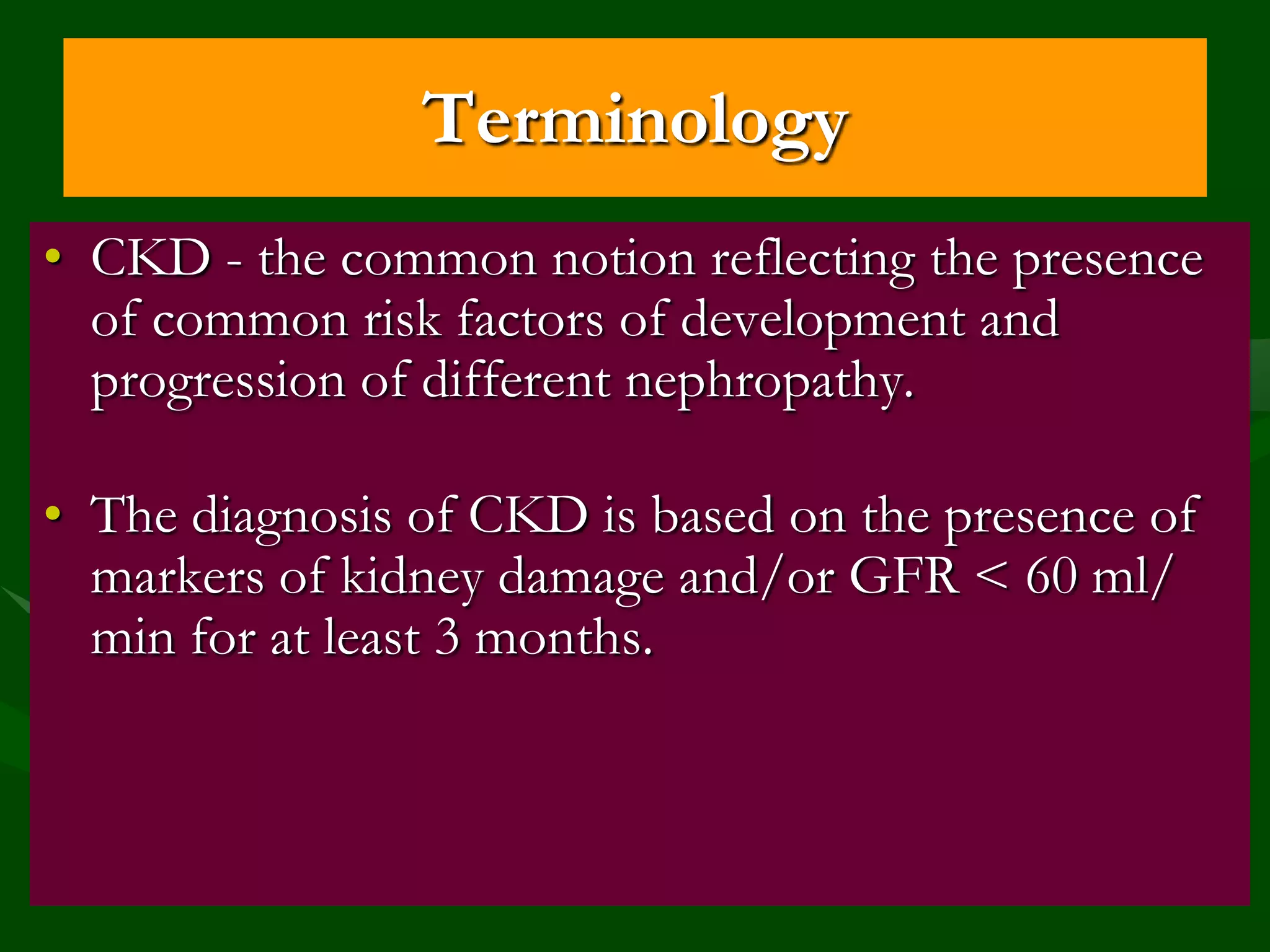
Terminology
• CKD - the common notion reflecting the presence
of common risk factors of development and
progression of different nephropathy.
• The diagnosis of CKD is based on the presence of
markers of kidney damage and/or GFR < 60 ml/
min for at least 3 months.
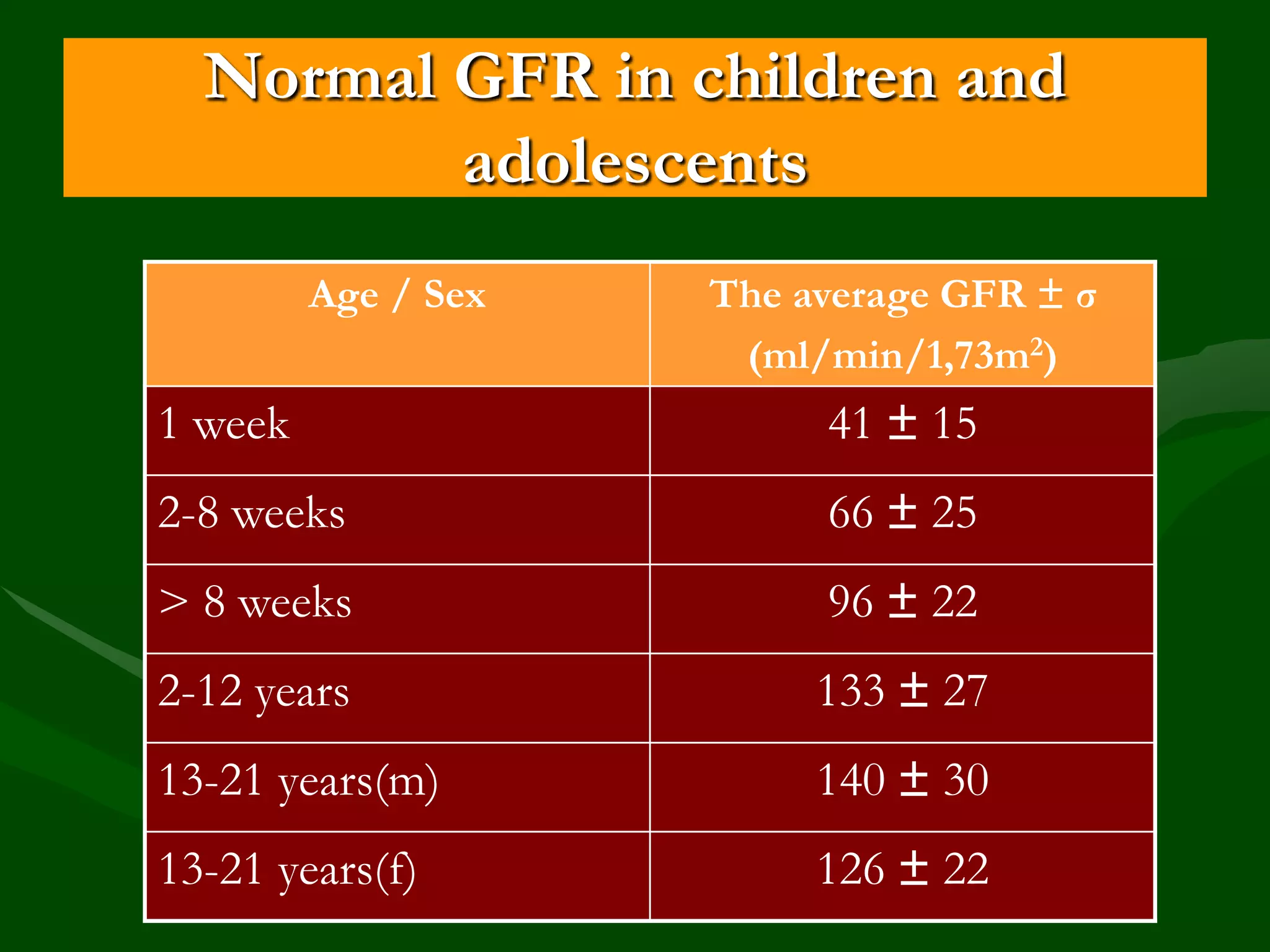
Normal GFR in children and
adolescents
Age / Sex

The average GFR ± σ
(ml/min/1,73m2)

1 week

41 ± 15

2-8 weeks

66 ± 25

> 8 weeks

96 ± 22

2-12 years

133 ± 27

13-21 years(m)

140 ± 30

13-21 years(f)

126 ± 22
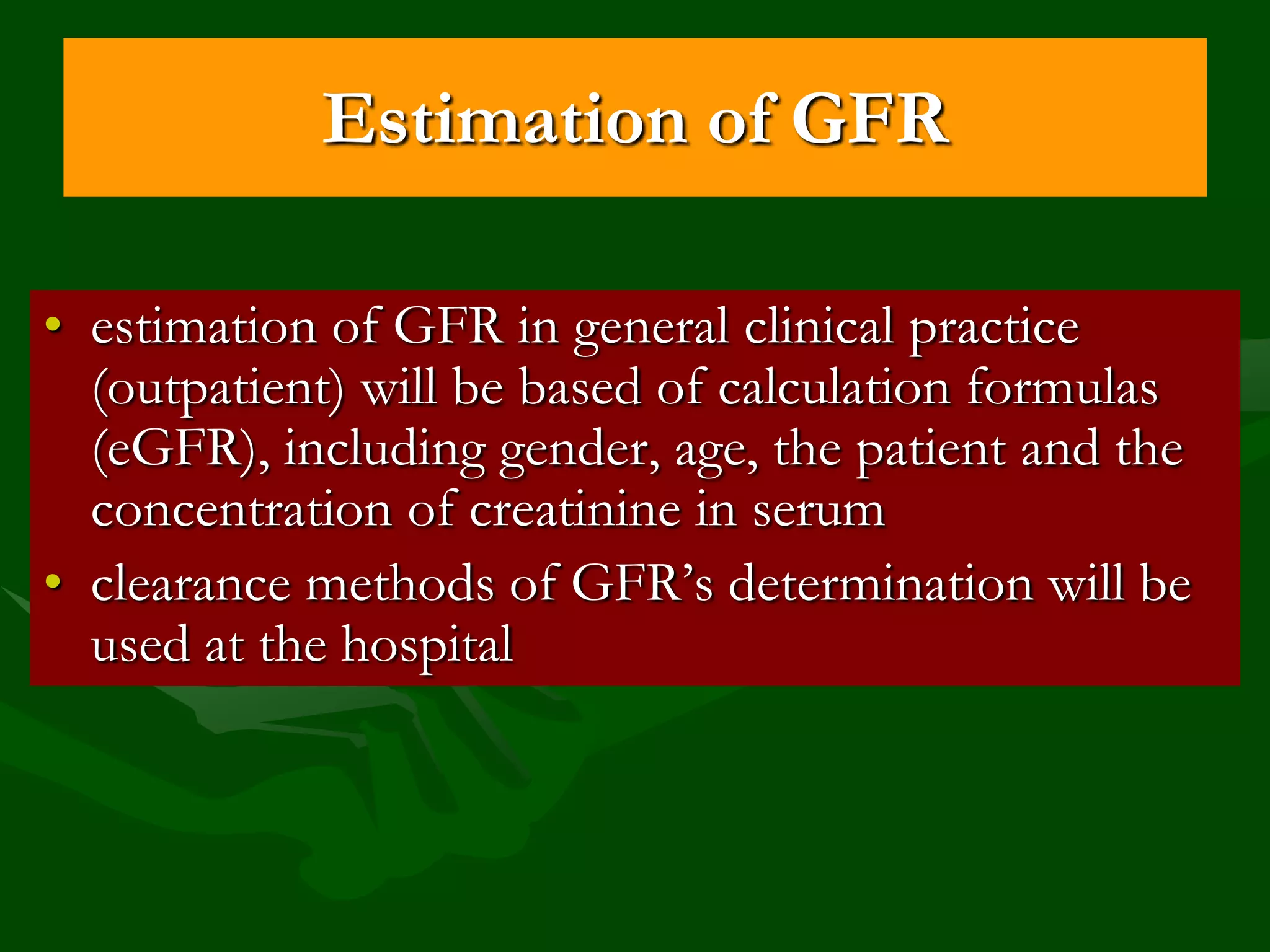
Estimation of GFR
• estimation of GFR in general clinical practice
(outpatient) will be based of calculation formulas
(eGFR), including gender, age, the patient and the
concentration of creatinine in serum
• clearance methods of GFR’s determination will be
used at the hospital
Methods of GFR’s estimation
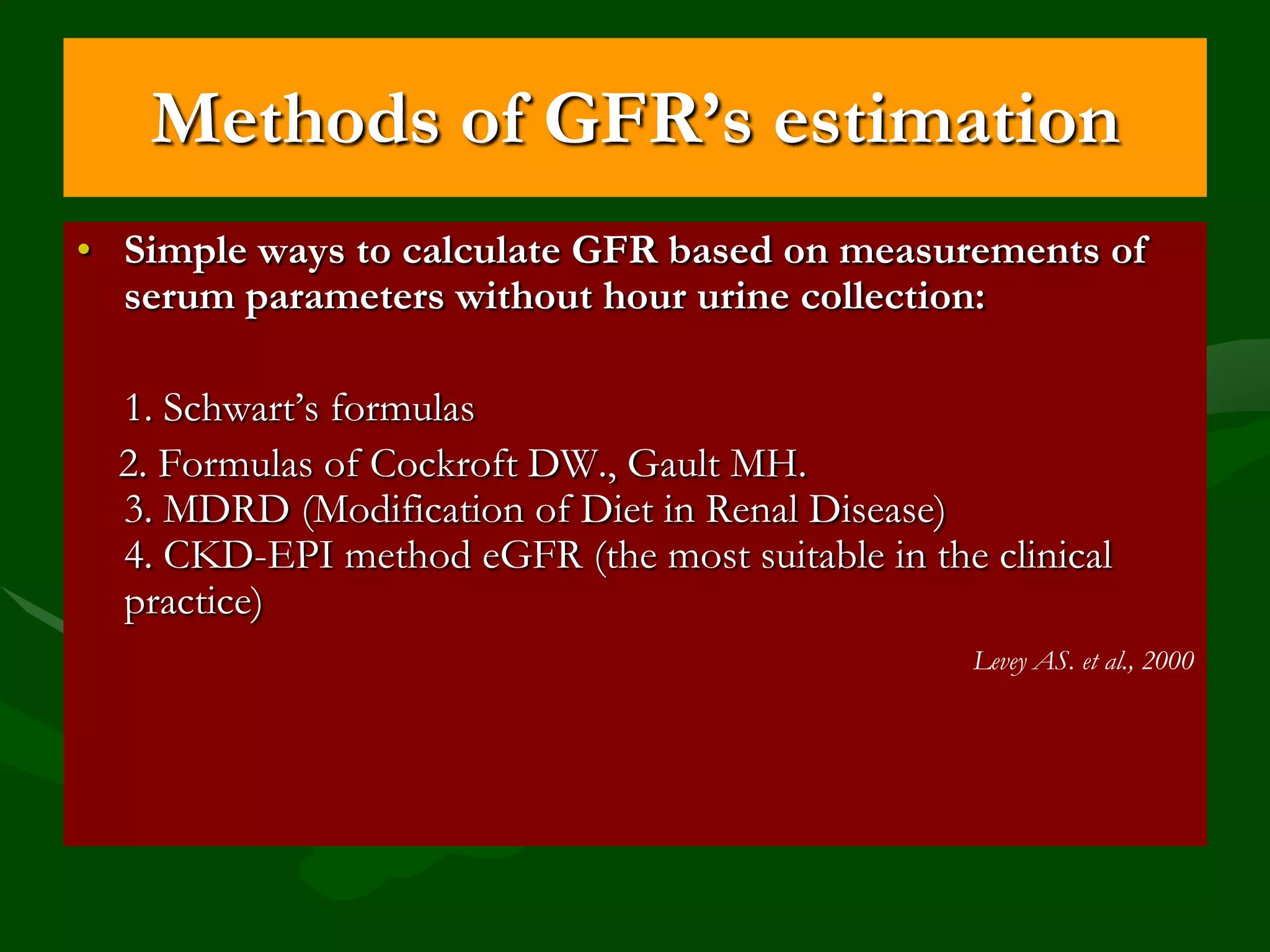
• Simple ways to calculate GFR based on measurements of
serum parameters without hour urine collection:
1. Schwart’s formulas
2. Formulas of Cockroft DW., Gault MH.
3. MDRD (Modification of Diet in Renal Disease)
4. CKD-EPI method eGFR (the most suitable in the clinical
practice)
Levey AS. et al., 2000
eGFR in children on the basis of serum creatinine
and growth (according to Schwartz)

• GFR (ml/min/1,73m2)= [0,0484*х Height
(сm)]/Scr (mmol/l)
*k= 0,0616 for boys >13 years
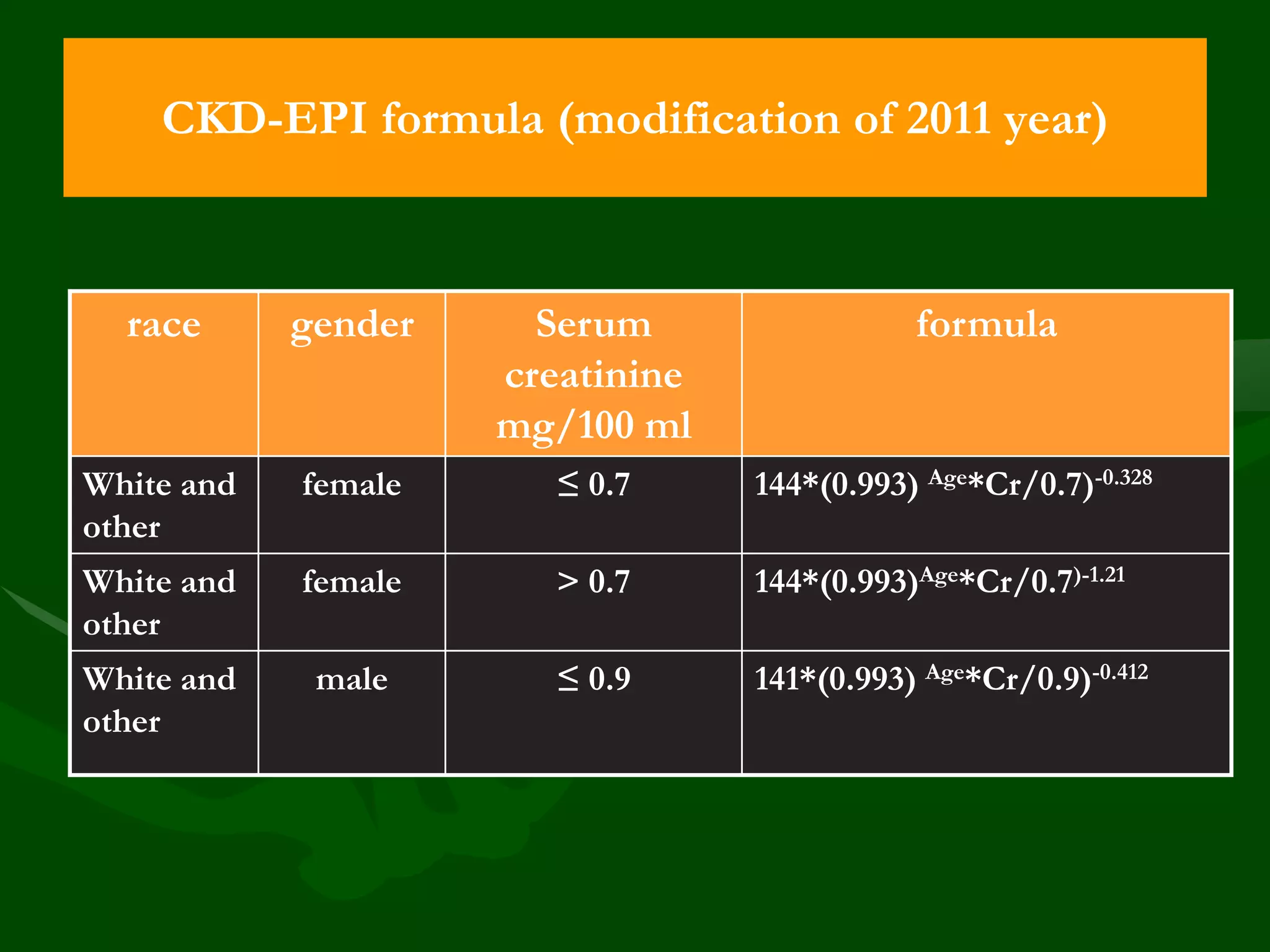
CKD-EPI formula (modification of 2011 year)

race

gender

Serum
creatinine
mg/100 ml

formula

White and
other

female

≤ 0.7

144*(0.993) Age*Cr/0.7)-0.328

White and
other

female

> 0.7

144*(0.993)Age*Cr/0.7)-1.21

White and
other

male

≤ 0.9

141*(0.993) Age*Cr/0.9)-0.412
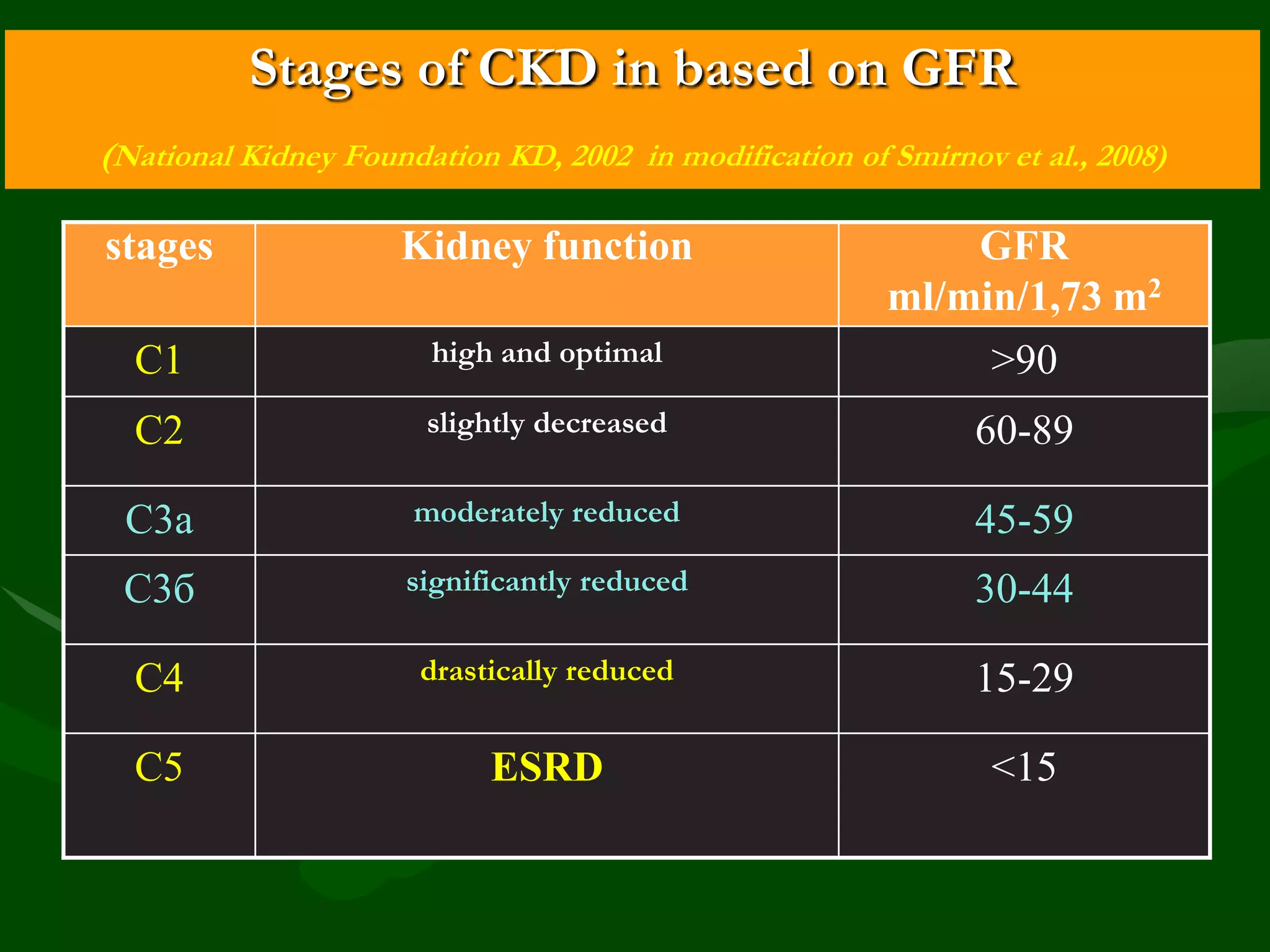
Stages of CKD in based on GFR
(National Kidney Foundation KD, 2002 in modification of Smirnov et al., 2008)

stages

Kidney function

GFR
ml/min/1,73 m2

С1

high and optimal

>90

С2

slightly decreased

60-89

С3а

moderately reduced

45-59

С3б

significantly reduced

30-44

С4

drastically reduced

15-29

С5

ESRD

<15
Albuminuria
• Albuminuria (normal < 10 mg/day) – integral sign of CKD
[A. Smirnov et al., 2010] and represents:
- increased permeability of cell membranes (size-selectivity, the chargeselectivity);
- transport changes in the proximal tubule;
- increased hemodynamic burden on the glomerules;
- presence of systemic and renal endothelial dysfunction;
- the degree of glomerular/interstitial sclerosis due to glomerular and
tubular transport protein disturbances and subsequent activation of
profibrotic cytokines

• Albuminuria – risk factor of total and cardiovascular mortality,
ESRD, acute kidney injury and progression of CKD
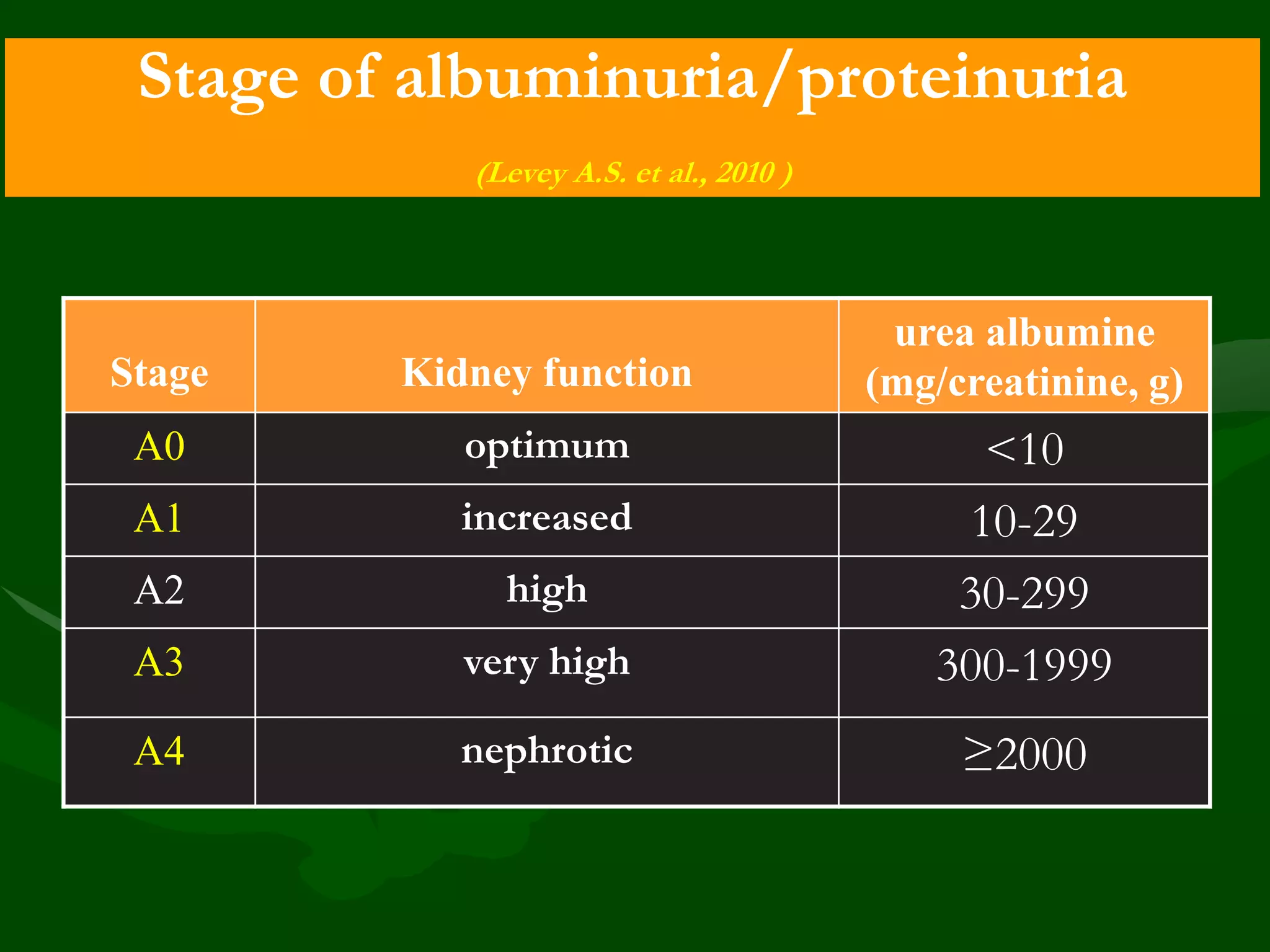
Stage of albuminuria/proteinuria
(Levey A.S. et al., 2010 )

urea albumine
(mg/creatinine, g)

Stage

Kidney function

А0

optimum

А1

increased

А2

high

А3

very high

<10
10-29
30-299
300-1999

А4

nephrotic

≥2000
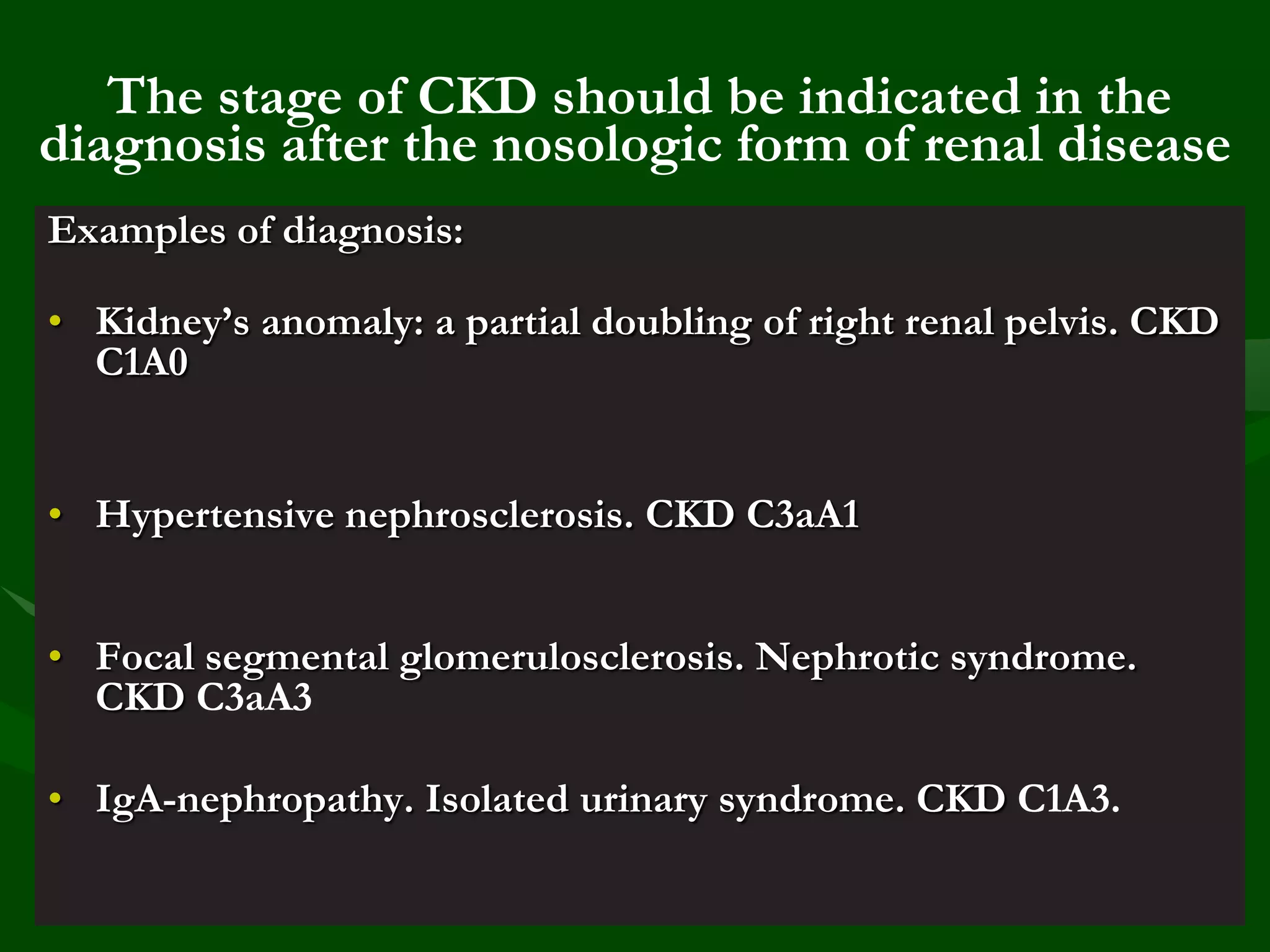
The stage of CKD should be indicated in the
diagnosis after the nosologic form of renal disease
Examples of diagnosis:
• Kidney’s anomaly: a partial doubling of right renal pelvis. CKD
C1A0
• Hypertensive nephrosclerosis. CKD C3aA1
• Focal segmental glomerulosclerosis. Nephrotic syndrome.
CKD С3аА3

• IgA-nephropathy. Isolated urinary syndrome. CKD С1А3.
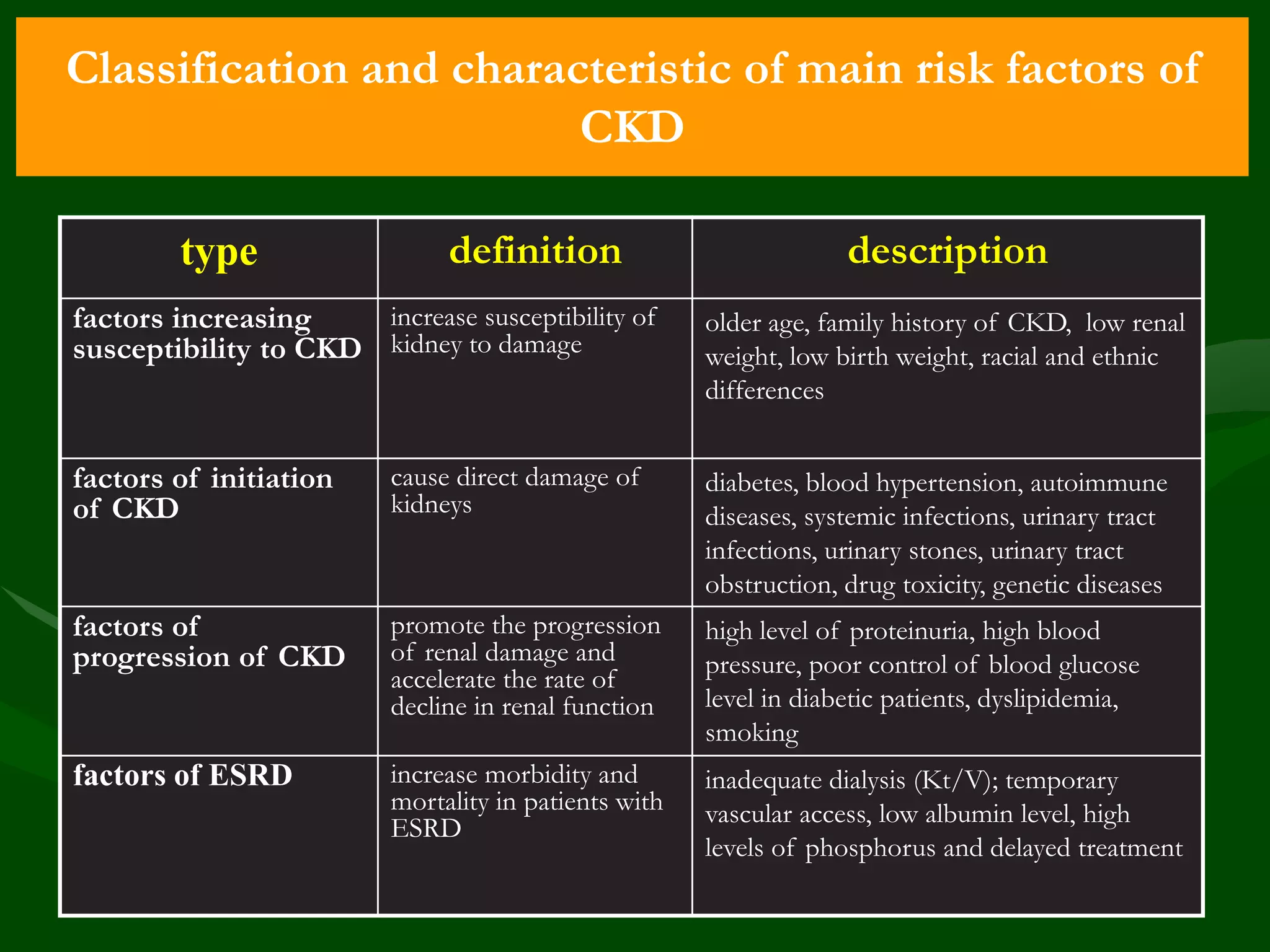
Classification and characteristic of main risk factors of
CKD
type

definition

description

increase susceptibility of
factors increasing
susceptibility to CKD kidney to damage

older age, family history of CKD, low renal
weight, low birth weight, racial and ethnic
differences

factors of initiation
of CKD

cause direct damage of
kidneys

diabetes, blood hypertension, autoimmune
diseases, systemic infections, urinary tract
infections, urinary stones, urinary tract
obstruction, drug toxicity, genetic diseases

factors of
progression of CKD

promote the progression
of renal damage and
accelerate the rate of
decline in renal function

high level of proteinuria, high blood
pressure, poor control of blood glucose
level in diabetic patients, dyslipidemia,
smoking

factors of ESRD

increase morbidity and
mortality in patients with
ESRD

inadequate dialysis (Kt/V); temporary
vascular access, low albumin level, high
levels of phosphorus and delayed treatment
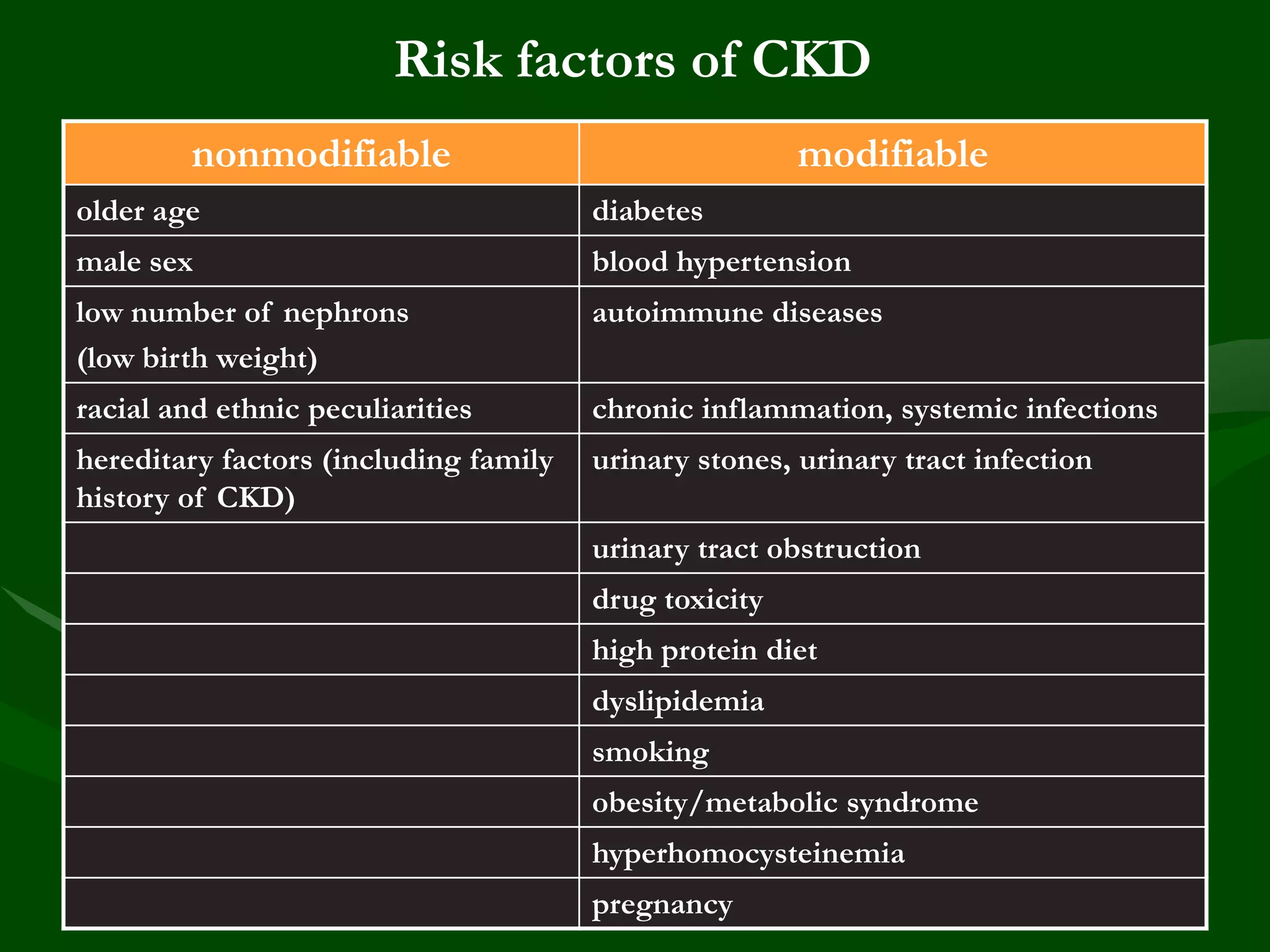
Risk factors of CKD
nonmodifiable

modifiable

older age

diabetes

male sex

blood hypertension

low number of nephrons
(low birth weight)

autoimmune diseases

racial and ethnic peculiarities

chronic inflammation, systemic infections

hereditary factors (including family
history of CKD)

urinary stones, urinary tract infection
urinary tract obstruction
drug toxicity
high protein diet
dyslipidemia
smoking
obesity/metabolic syndrome
hyperhomocysteinemia
pregnancy
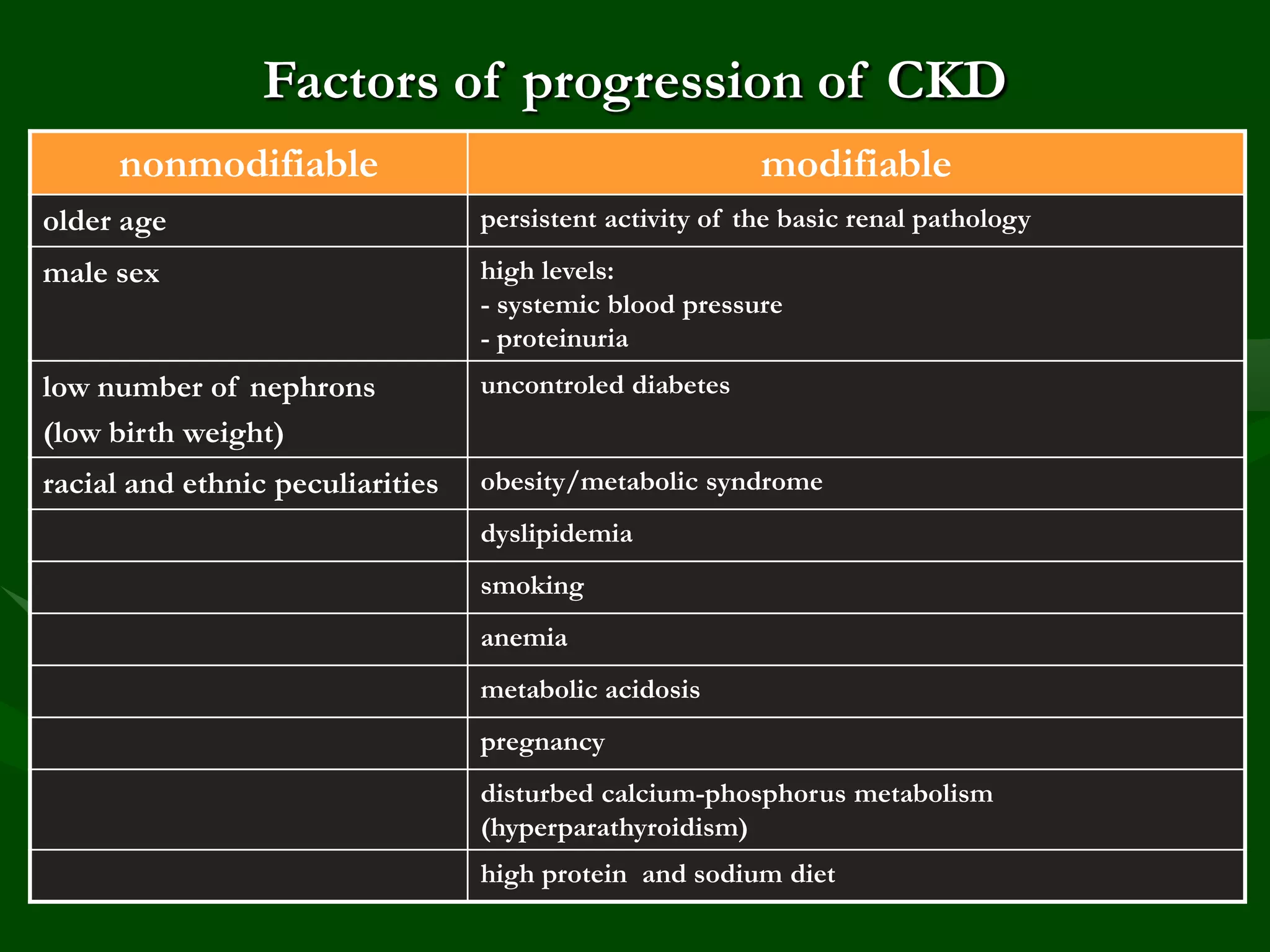
Factors of progression of CKD
nonmodifiable

modifiable

older age

persistent activity of the basic renal pathology

male sex

high levels:
- systemic blood pressure
- proteinuria

low number of nephrons
(low birth weight)

uncontroled diabetes

racial and ethnic peculiarities

obesity/metabolic syndrome
dyslipidemia
smoking
anemia
metabolic acidosis

pregnancy
disturbed calcium-phosphorus metabolism
(hyperparathyroidism)
high protein and sodium diet
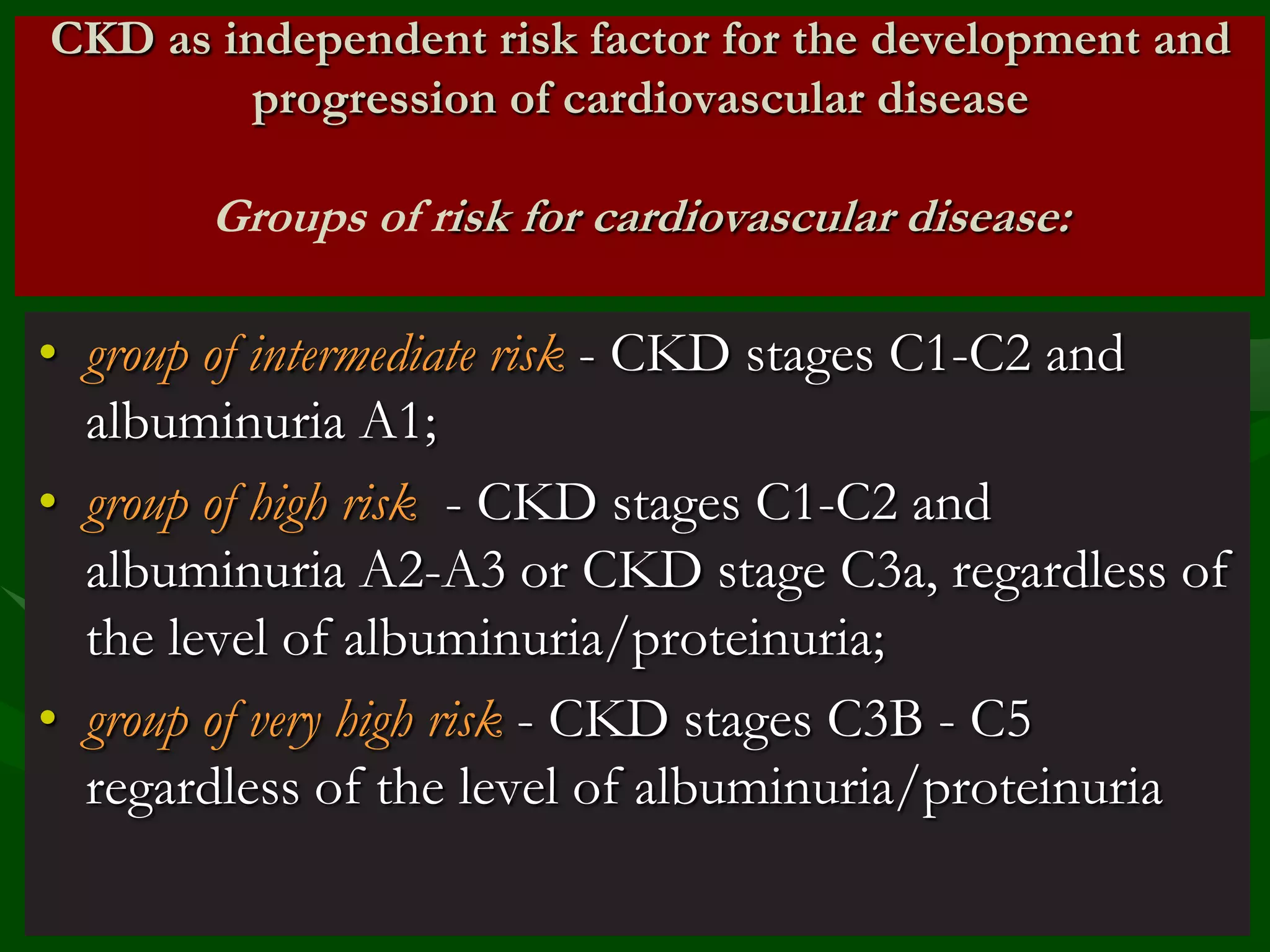
CKD as independent risk factor for the development and
progression of cardiovascular disease

Groups of risk for cardiovascular disease:

• group of intermediate risk - CKD stages C1-C2 and
albuminuria A1;
• group of high risk - CKD stages C1-C2 and
albuminuria A2-A3 or CKD stage C3a, regardless of
the level of albuminuria/proteinuria;
• group of very high risk - CKD stages C3B - C5
regardless of the level of albuminuria/proteinuria
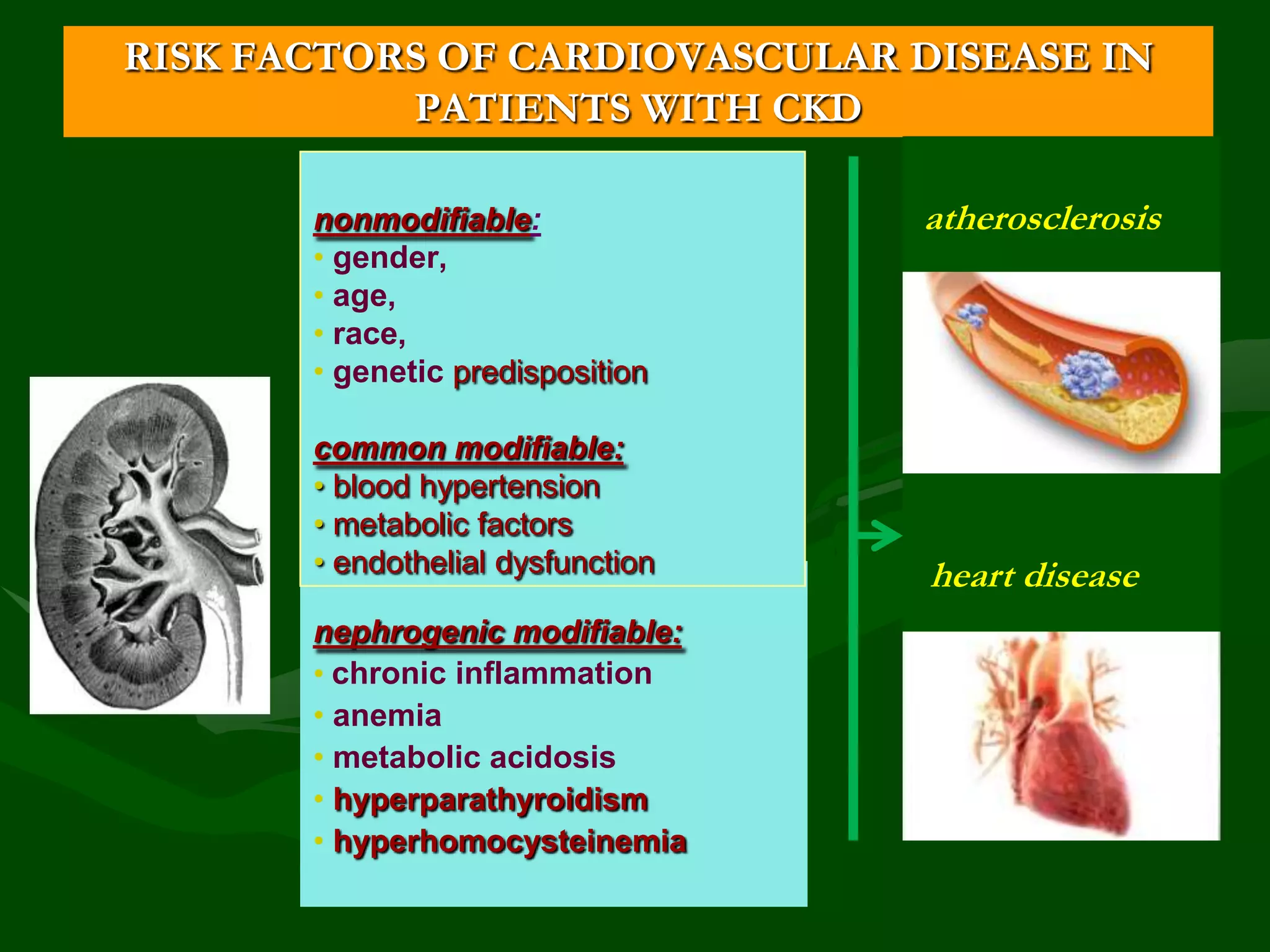
RISK FACTORS OF CARDIOVASCULAR DISEASE IN
PATIENTS WITH CKD
nonmodifiable:
• gender,
• age,
• race,
• genetic predisposition
common modifiable:
• blood hypertension
• metabolic factors
• endothelial dysfunction
nephrogenic modifiable:
• chronic inflammation
• anemia
• metabolic acidosis
• hyperparathyroidism
• hyperhomocysteinemia

atherosclerosis

heart disease
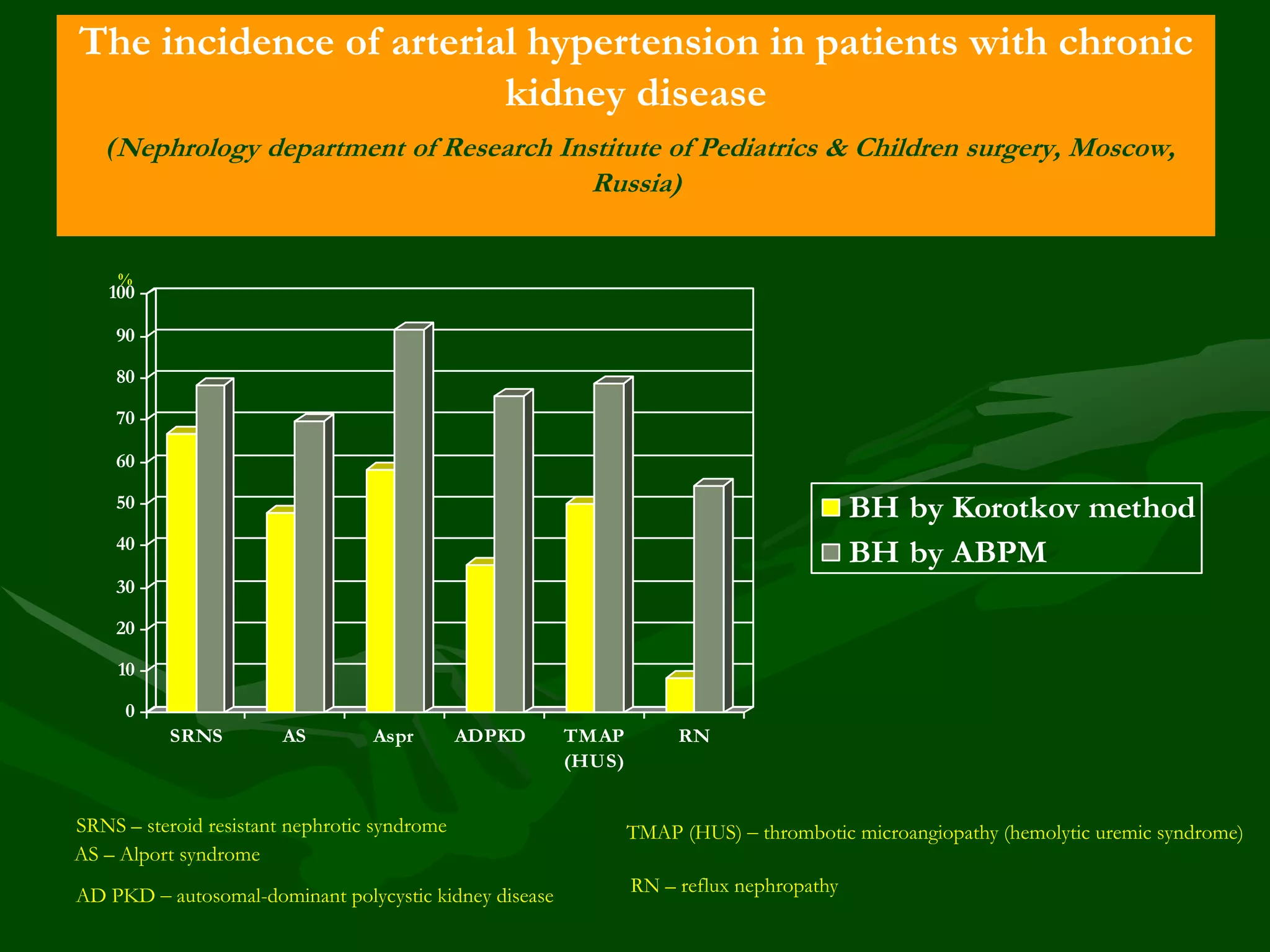
The incidence of arterial hypertension in patients with chronic
kidney disease
(Nephrology department of Research Institute of Pediatrics & Children surgery, Moscow,

Russia)
%

100
90
80
70
60

BH by Korotkov method
BH by ABPM

50
40
30
20
10
0
SRNS

AS

Aspr

ADPKD

TMAP
(HUS)

RN

SRNS – steroid resistant nephrotic syndrome
AS – Alport syndrome

ТМАP (HUS) – thrombotic microangiopathy (hemolytic uremic syndrome)

AD PKD – autosomal-dominant polycystic kidney disease

RN – reflux nephropathy
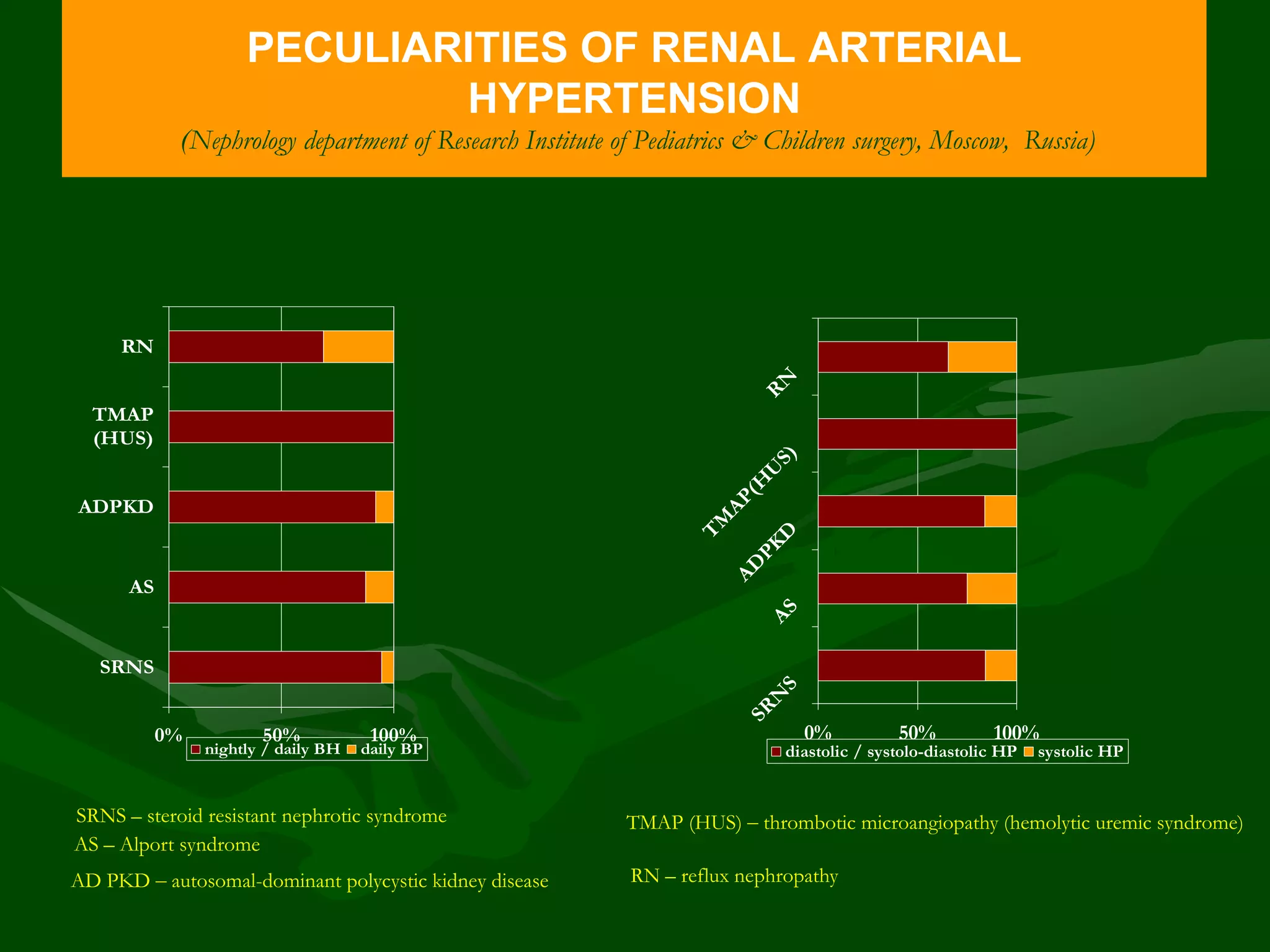
PECULIARITIES OF RENAL ARTERIAL
HYPERTENSION
(Nephrology department of Research Institute of Pediatrics & Children surgery, Moscow, Russia)

RN

RN

TM
AP
AD
(H
PK
U
S)
D

TMAP
(HUS)
ADPKD

AS

AS

SR

N

S

SRNS
0%

50%

nightly / daily BH

100%

daily BP

0%

50%

100%

diastolic / systolo-diastolic HP

systolic HP

SRNS – steroid resistant nephrotic syndrome
AS – Alport syndrome

ТМАP (HUS) – thrombotic microangiopathy (hemolytic uremic syndrome)

AD PKD – autosomal-dominant polycystic kidney disease

RN – reflux nephropathy
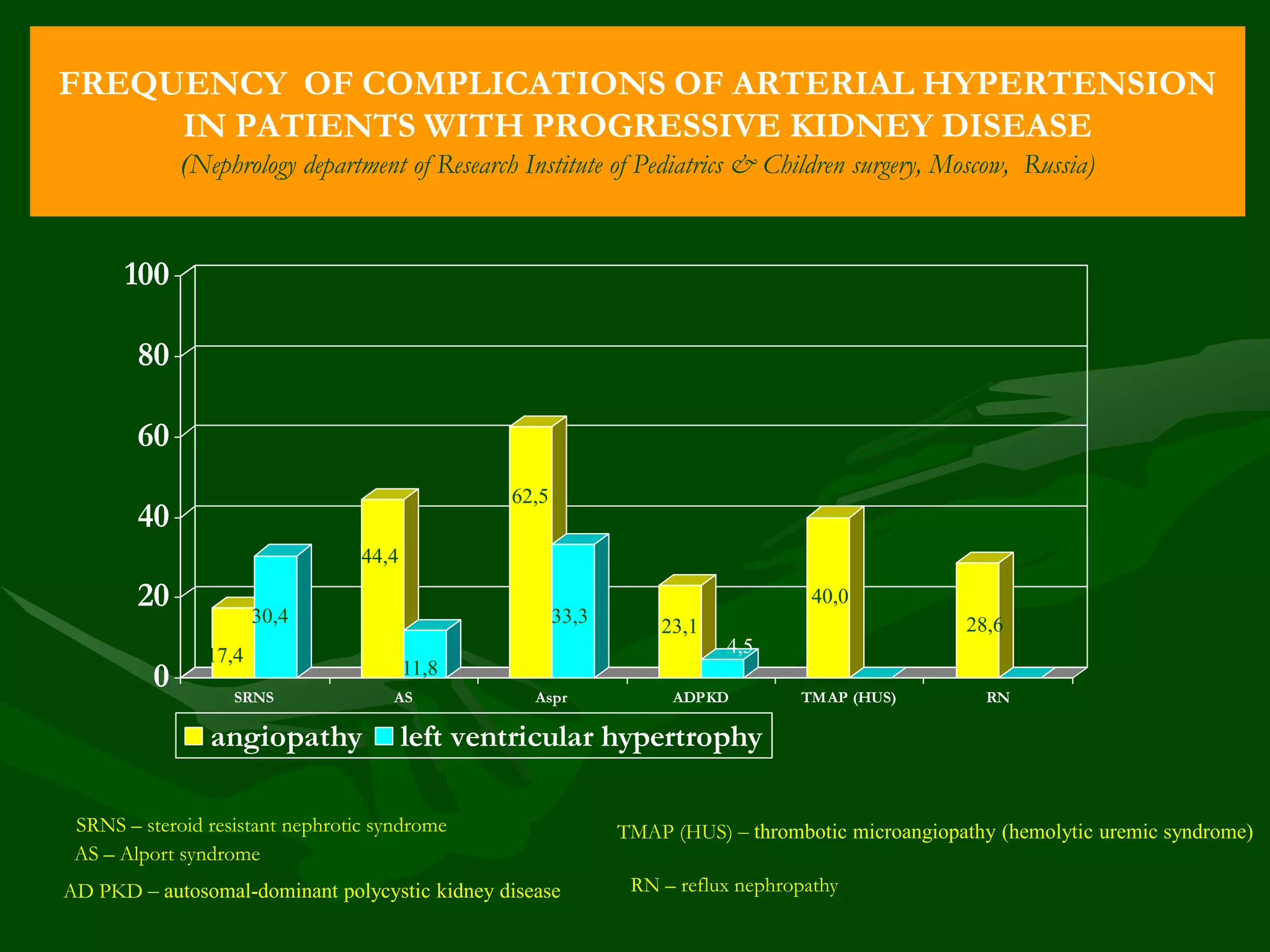
FREQUENCY OF COMPLICATIONS OF ARTERIAL HYPERTENSION
IN PATIENTS WITH PROGRESSIVE KIDNEY DISEASE
(Nephrology department of Research Institute of Pediatrics & Children surgery, Moscow, Russia)

100
80
60
62,5

40
44,4

20
0

40,0
30,4
17,4
SRNS

angiopathy

33,3

28,6

23,1
4,5

11,8
AS

Aspr

ADPKD

TMAP (HUS)

RN

left ventricular hypertrophy

SRNS – steroid resistant nephrotic syndrome
AS – Alport syndrome
AD PKD – autosomal-dominant polycystic kidney disease

ТМАP (HUS) – thrombotic microangiopathy (hemolytic uremic syndrome)
RN – reflux nephropathy
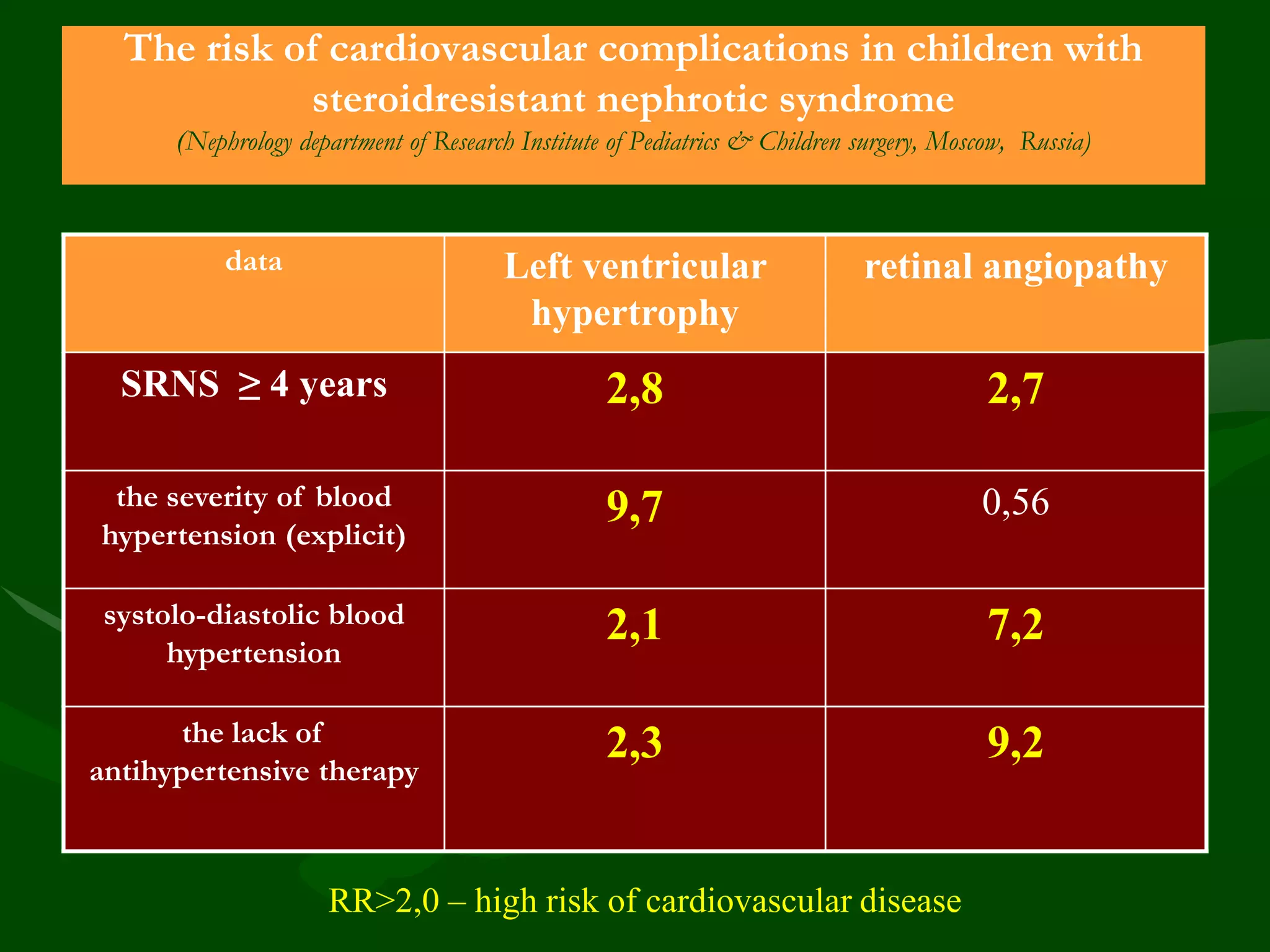
The risk of cardiovascular complications in children with
steroidresistant nephrotic syndrome
(Nephrology department of Research Institute of Pediatrics & Children surgery, Moscow, Russia)

data

Left ventricular
hypertrophy

retinal angiopathy

SRNS ≥ 4 years

2,8

2,7

the severity of blood
hypertension (explicit)

9,7

0,56

systolo-diastolic blood
hypertension

2,1

7,2

the lack of
antihypertensive therapy

2,3

9,2

RR>2,0 – high risk of cardiovascular disease
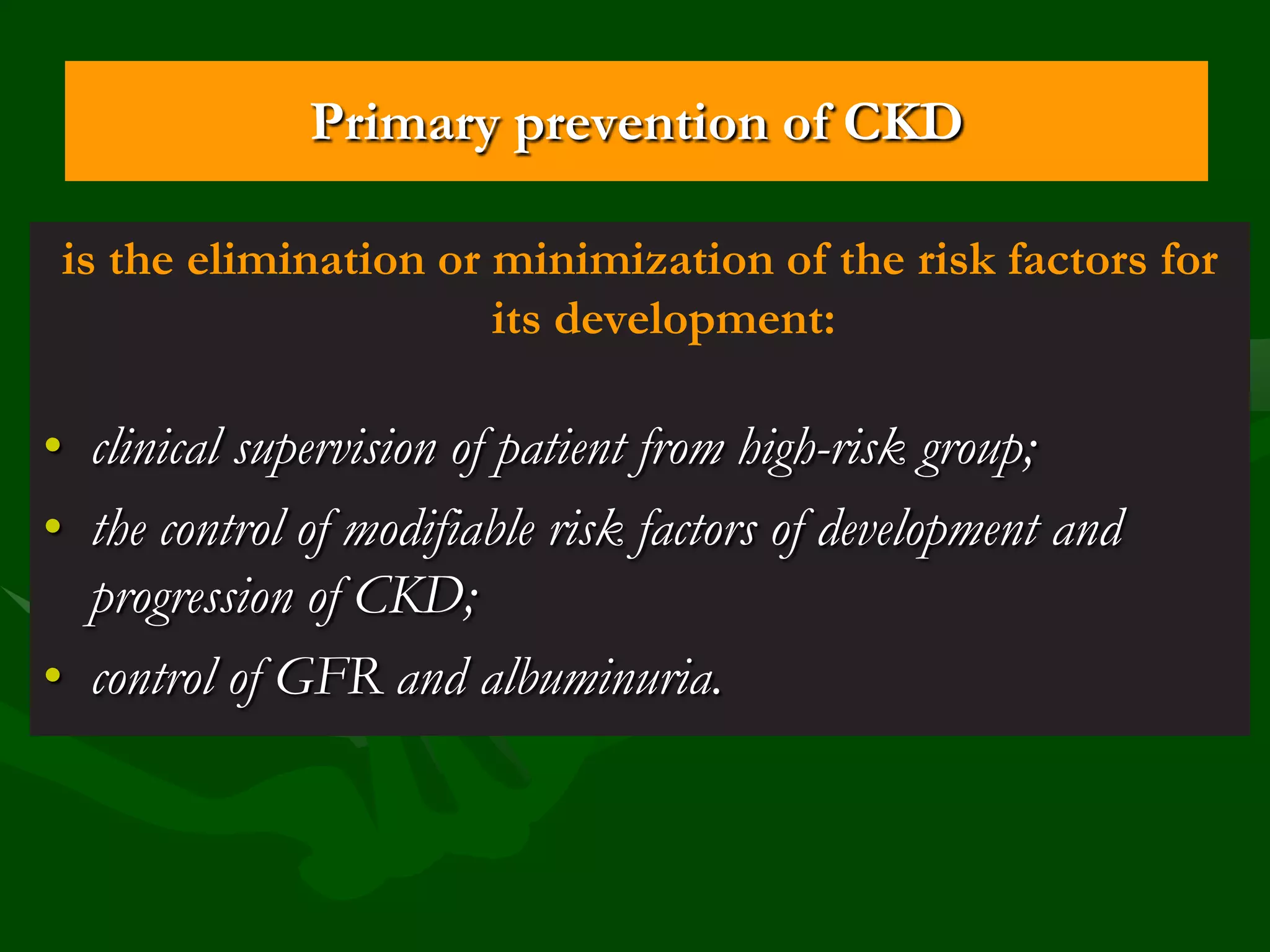
Primary prevention of CKD
is the elimination or minimization of the risk factors for
its development:

• clinical supervision of patient from high-risk group;
• the control of modifiable risk factors of development and
progression of CKD;
• control of GFR and albuminuria.
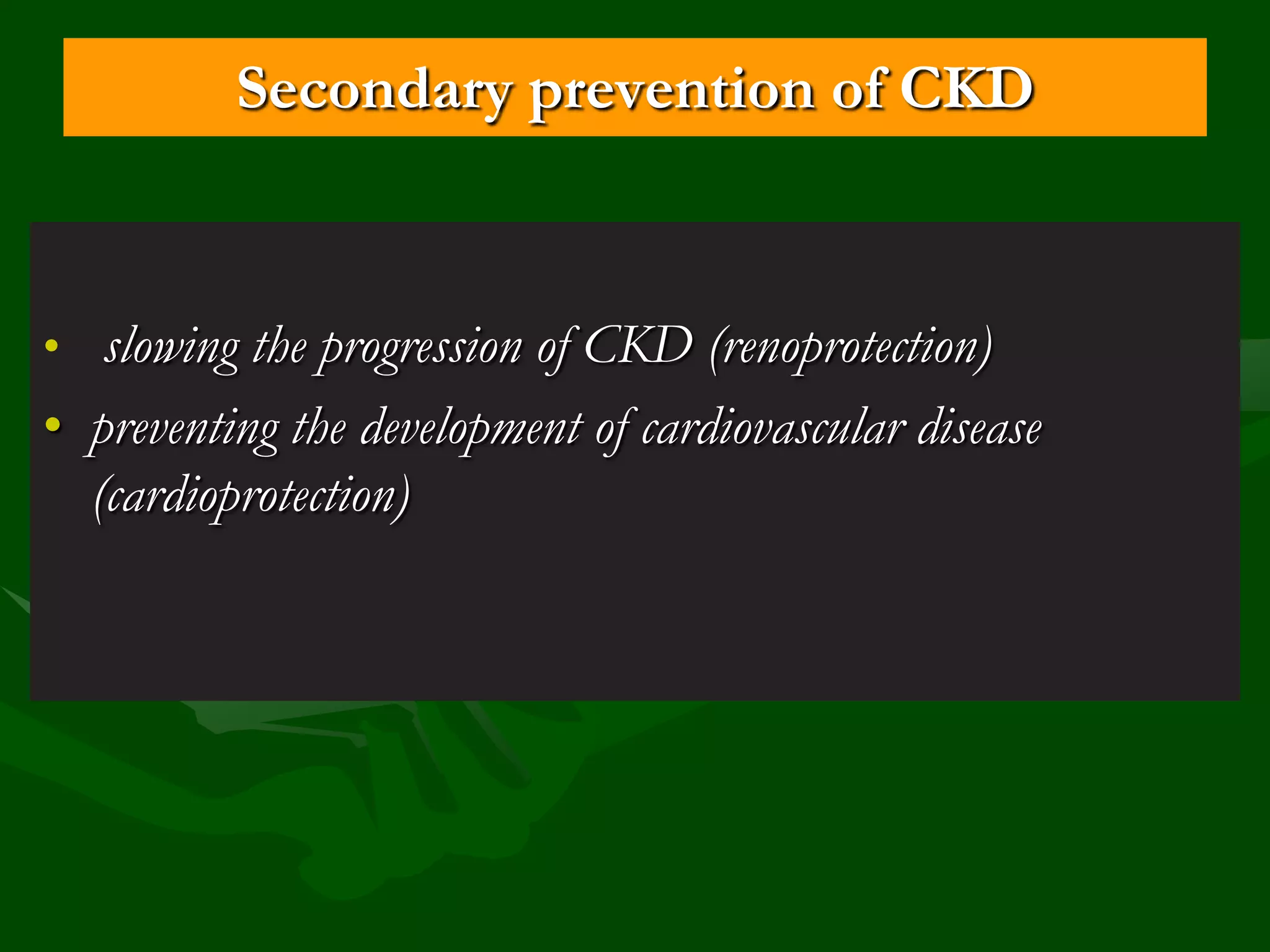
Secondary prevention of CKD

• slowing the progression of CKD (renoprotection)

• preventing the development of cardiovascular disease
(cardioprotection)
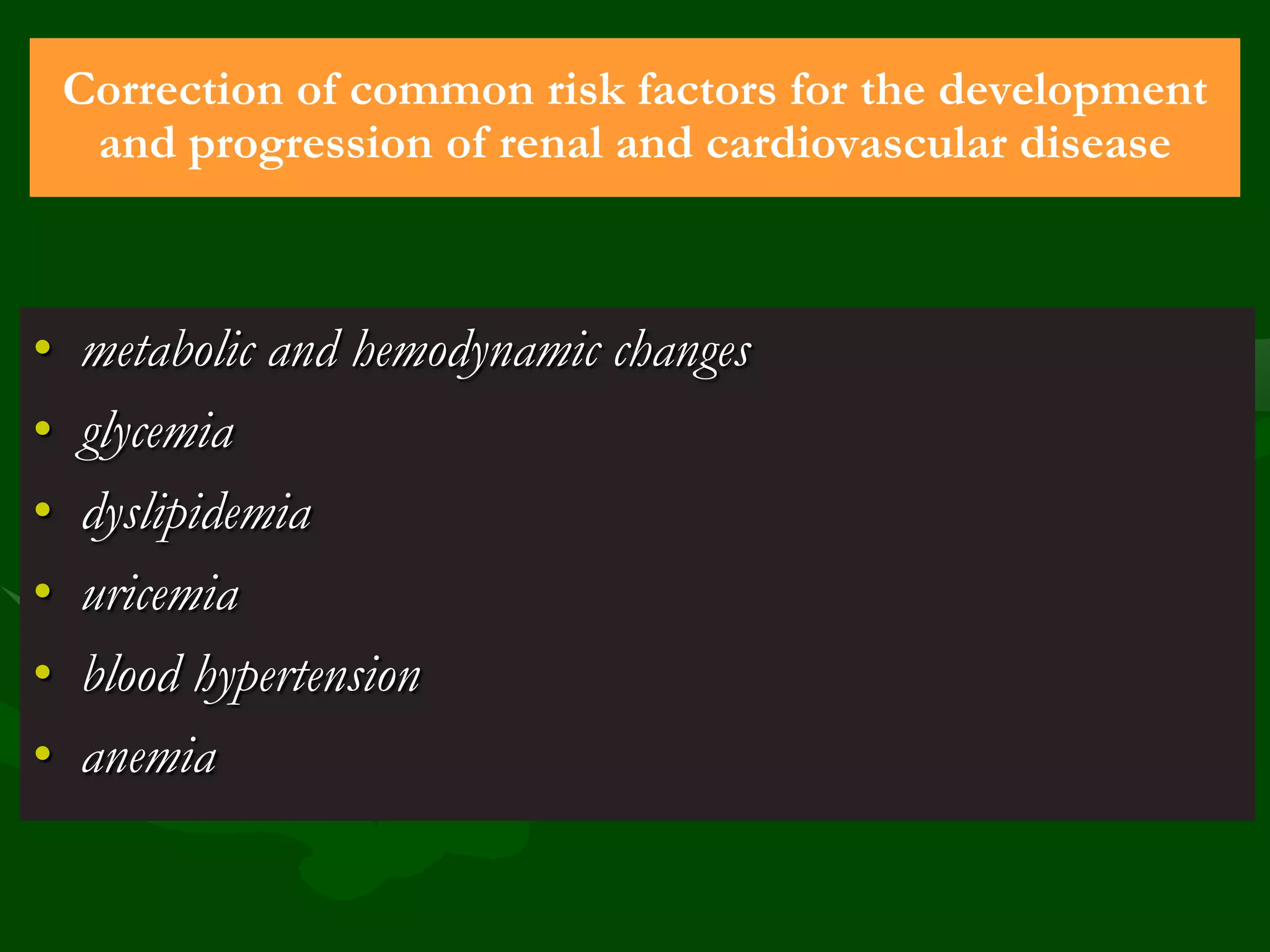
Correction of common risk factors for the development
and progression of renal and cardiovascular disease

•
•
•
•
•
•

metabolic and hemodynamic changes
glycemia
dyslipidemia
uricemia
blood hypertension
anemia
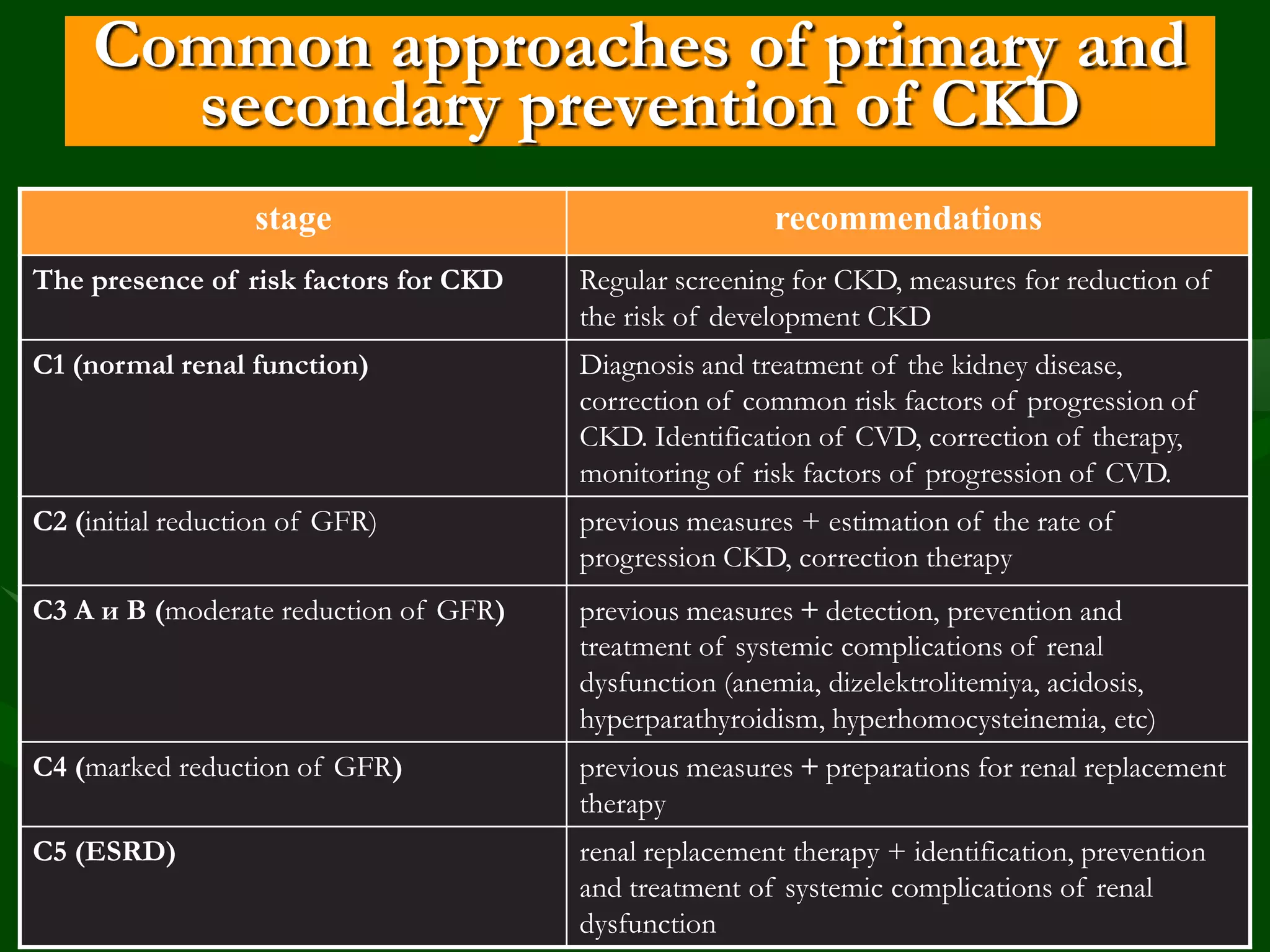
Common approaches of primary and
secondary prevention of CKD
stage

recommendations

The presence of risk factors for CKD

Regular screening for CKD, measures for reduction of
the risk of development CKD

С1 (normal renal function)

Diagnosis and treatment of the kidney disease,
correction of common risk factors of progression of
CKD. Identification of CVD, correction of therapy,
monitoring of risk factors of progression of CVD.

С2 (initial reduction of GFR)

previous measures + estimation of the rate of
progression CKD, correction therapy

С3 А и В (moderate reduction of GFR)

previous measures + detection, prevention and
treatment of systemic complications of renal
dysfunction (anemia, dizelektrolitemiya, acidosis,
hyperparathyroidism, hyperhomocysteinemia, etc)

С4 (marked reduction of GFR)

previous measures + preparations for renal replacement
therapy

С5 (ESRD)

renal replacement therapy + identification, prevention
and treatment of systemic complications of renal
dysfunction
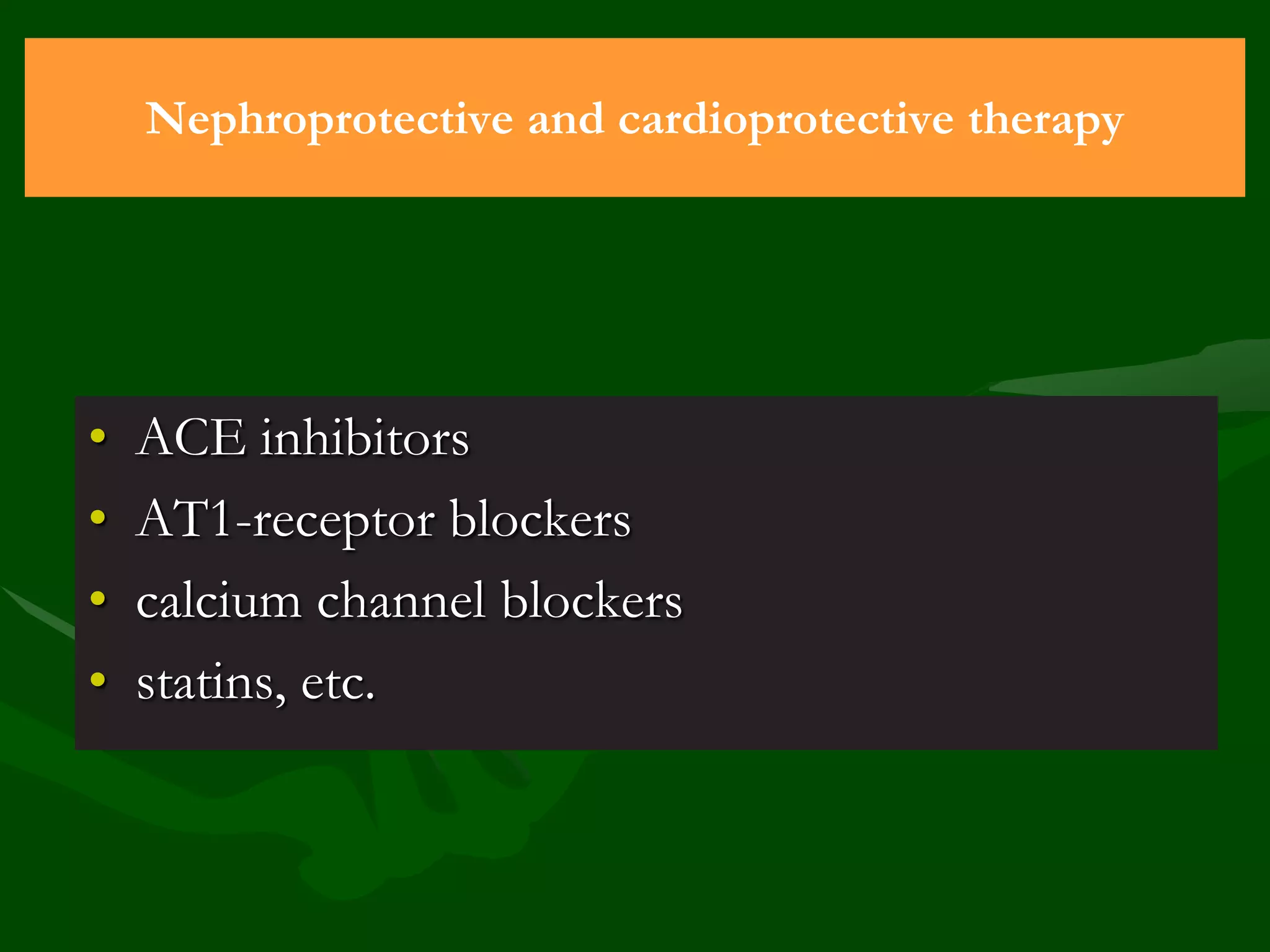
Nephroprotective and cardioprotective therapy

•
•
•
•

ACE inhibitors
AT1-receptor blockers
calcium channel blockers
statins, etc.
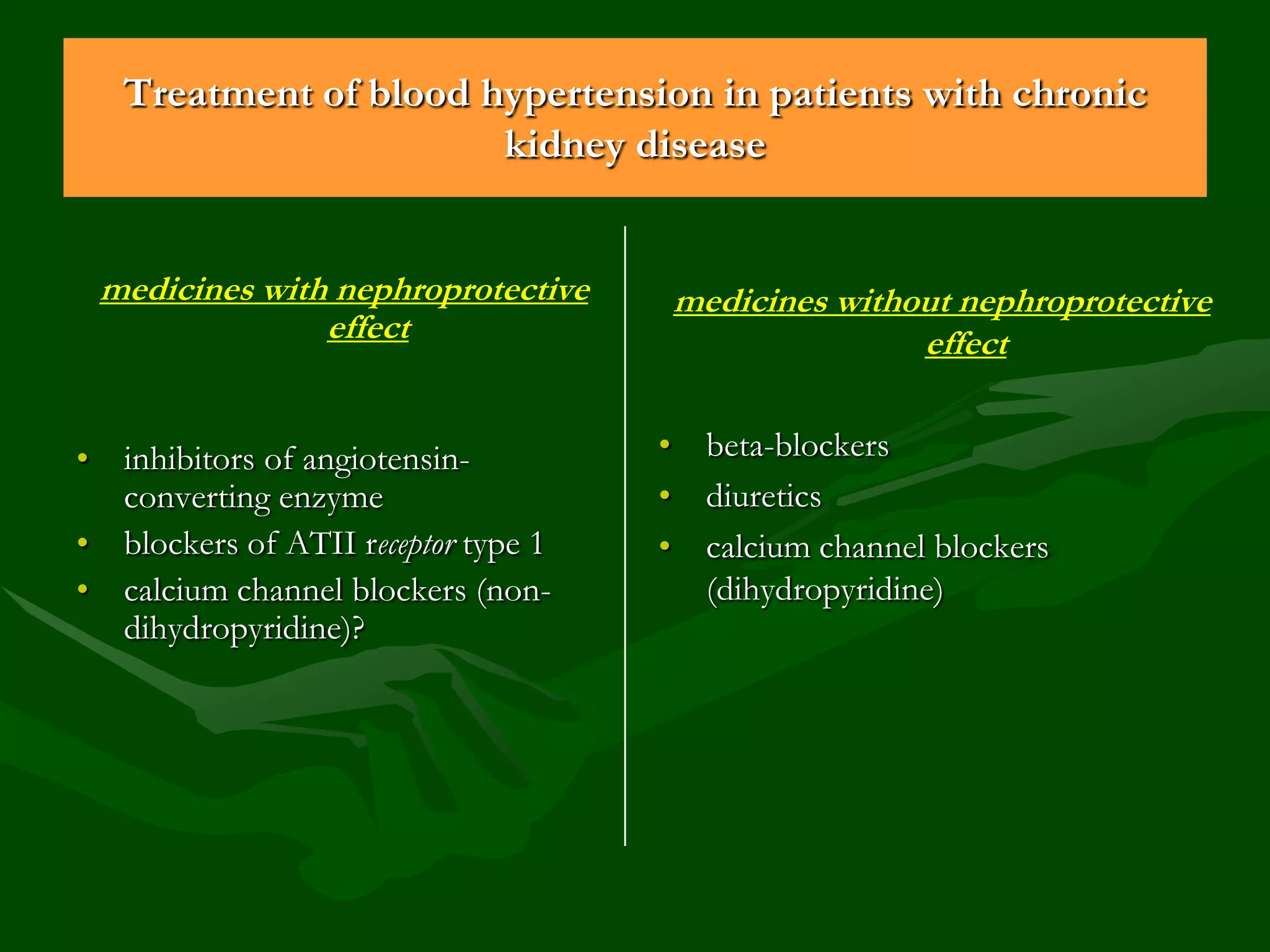
Treatment of blood hypertension in patients with chronic
kidney disease
medicines with nephroprotective
effect
• inhibitors of angiotensinconverting enzyme
• blockers of ATII receptor type 1
• calcium channel blockers (nondihydropyridine)?

medicines without nephroprotective
effect
• beta-blockers
• diuretics
• calcium channel blockers
(dihydropyridine)
Indications for ACE inhibitors and
BRA in patients with CKD
• in patients with blood hypertension (for
achievation of target blood pressure levels)
• in patients with albuminuria / proteinuria A2-A3
(even in the absence of hypertension)
Antihypertensive therapy

• If the target level of blood pressure was not achieved
by ACE inhibitors and BRA it’s necessary to add the
hypotensive medicine of other pharmacological
groups and/or diuretics
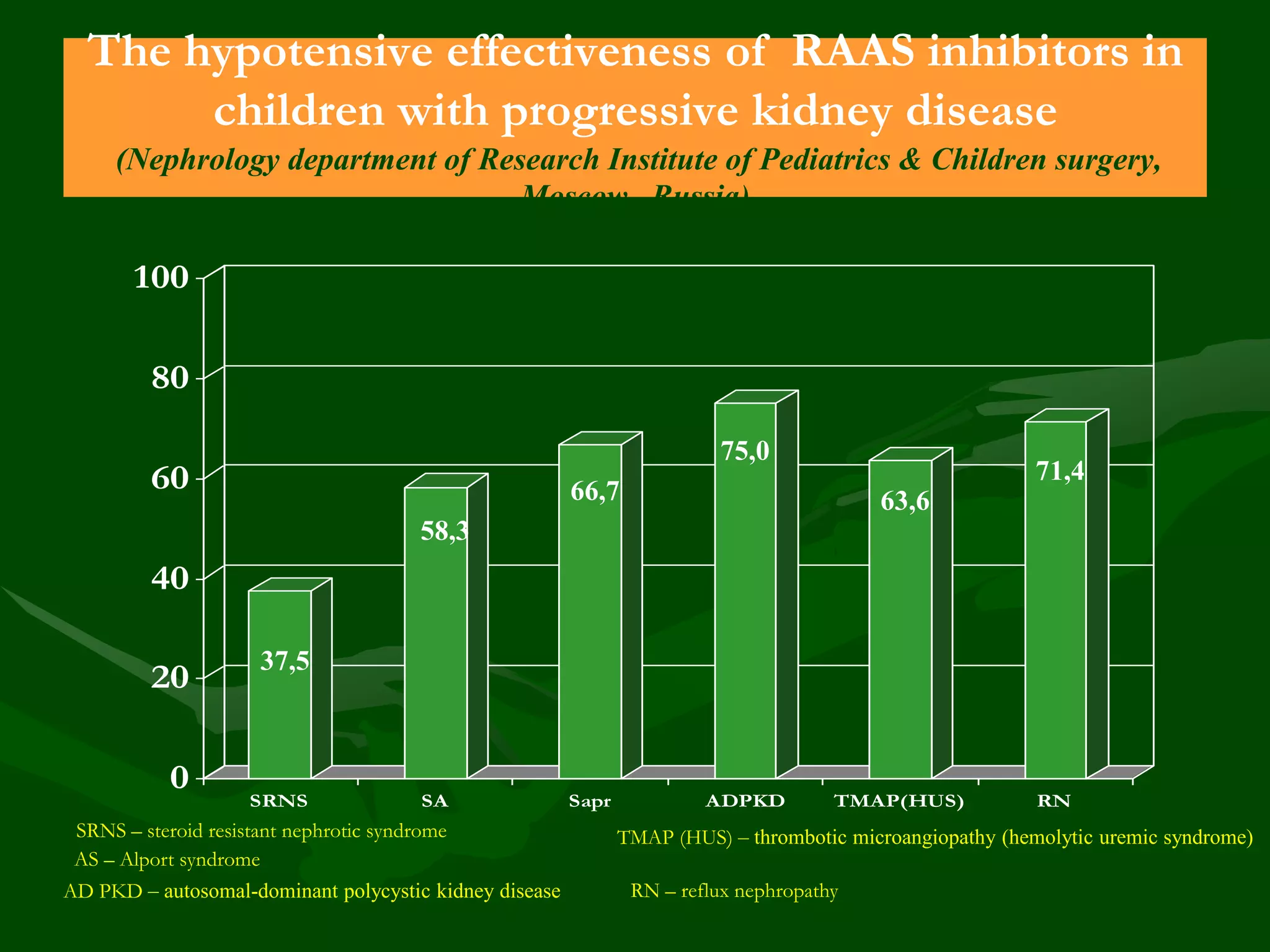
The hypotensive effectiveness of RAAS inhibitors in
children with progressive kidney disease
(Nephrology department of Research Institute of Pediatrics & Children surgery,
Moscow, Russia)

100
80
75,0

60

71,4

66,7

63,6

58,3

40
20
0

37,5

SRNS

SA

SRNS – steroid resistant nephrotic syndrome
AS – Alport syndrome
AD PKD – autosomal-dominant polycystic kidney disease

Sapr

ADPKD

TMAP(HUS)

RN

ТМАP (HUS) – thrombotic microangiopathy (hemolytic uremic syndrome)
RN – reflux nephropathy
Antihypertensive therapy
• Clinical predictor of renoprotective efficacy of the
drugs is partial (daily proteinuria <2.5 g / day) or
total (daily proteinuria <0.5 g / day) remission of
proteinuria in a few weeks or months after starting of
treatment
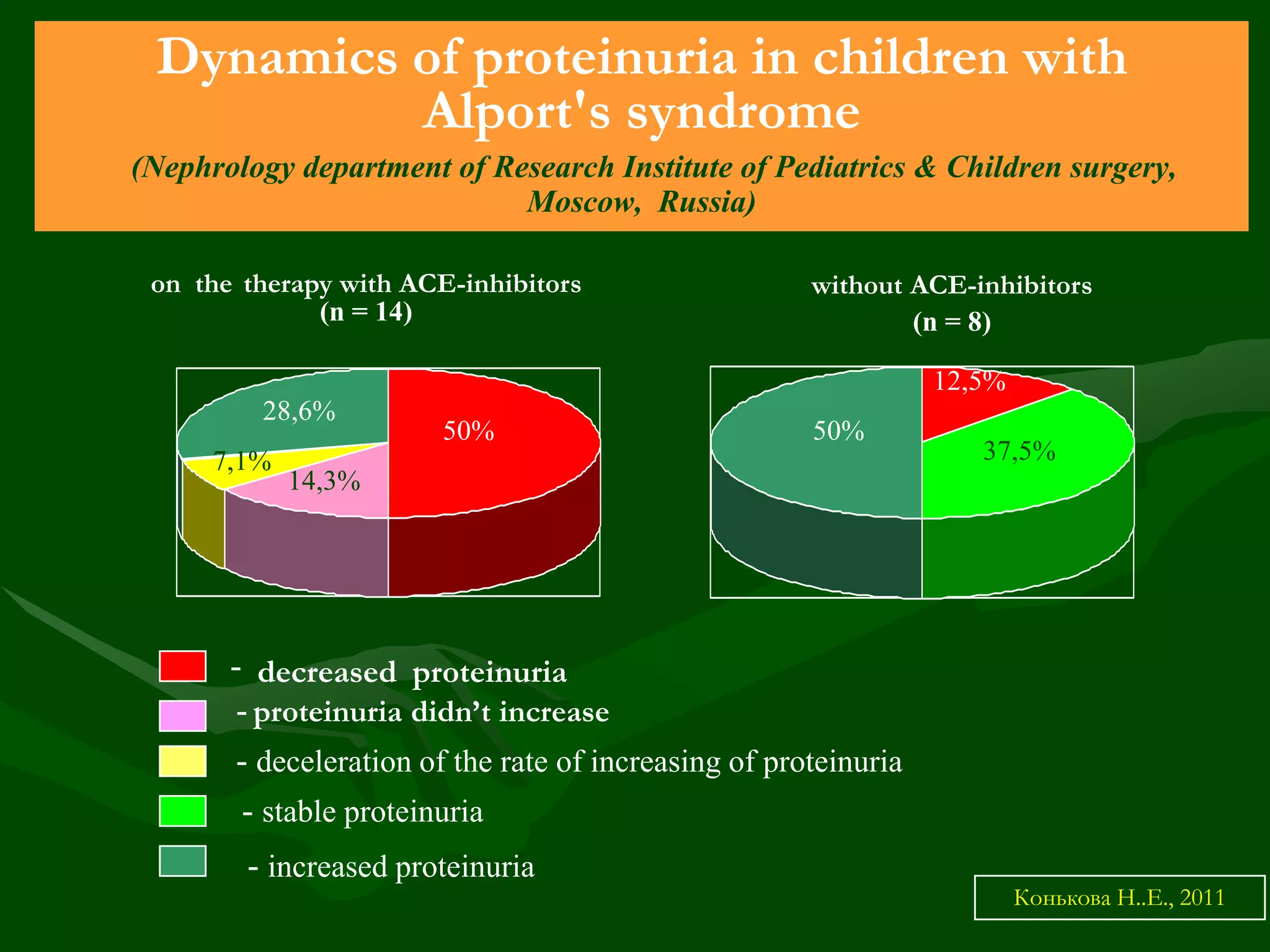
Dynamics of proteinuria in children with
Alport's syndrome
(Nephrology department of Research Institute of Pediatrics & Children surgery,
Moscow, Russia)
on the therapy with ACE-inhibitors
(n = 14)

without ACE-inhibitors
(n = 8)

12,5%
28,6%
7,1%

50%

50%

37,5%

14,3%

- decreased proteinuria
- proteinuria didn’t increase
- deceleration of the rate of increasing of proteinuria
- stable proteinuria
- increased proteinuria

Конькова Н..Е., 2011
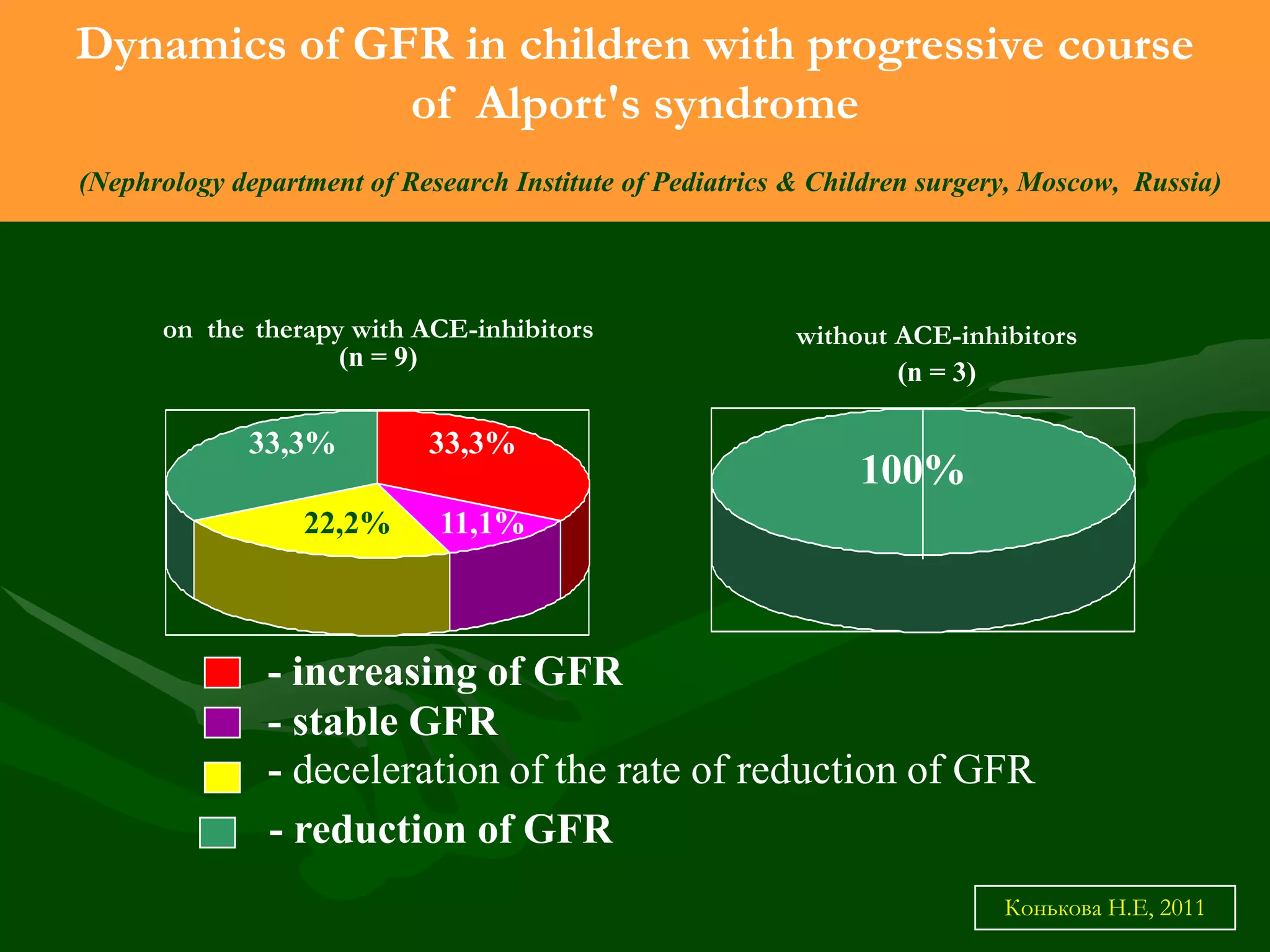
Dynamics of GFR in children with progressive course
of Alport's syndrome
(Nephrology department of Research Institute of Pediatrics & Children surgery, Moscow, Russia)

on the therapy with ACE-inhibitors
(n = 9)

33,3%
22,2%

33,3%

without ACE-inhibitors
(n = 3)

100%

11,1%

- increasing of GFR
- stable GFR
- deceleration of the rate of reduction of GFR
- reduction of GFR
Конькова Н.Е, 2011
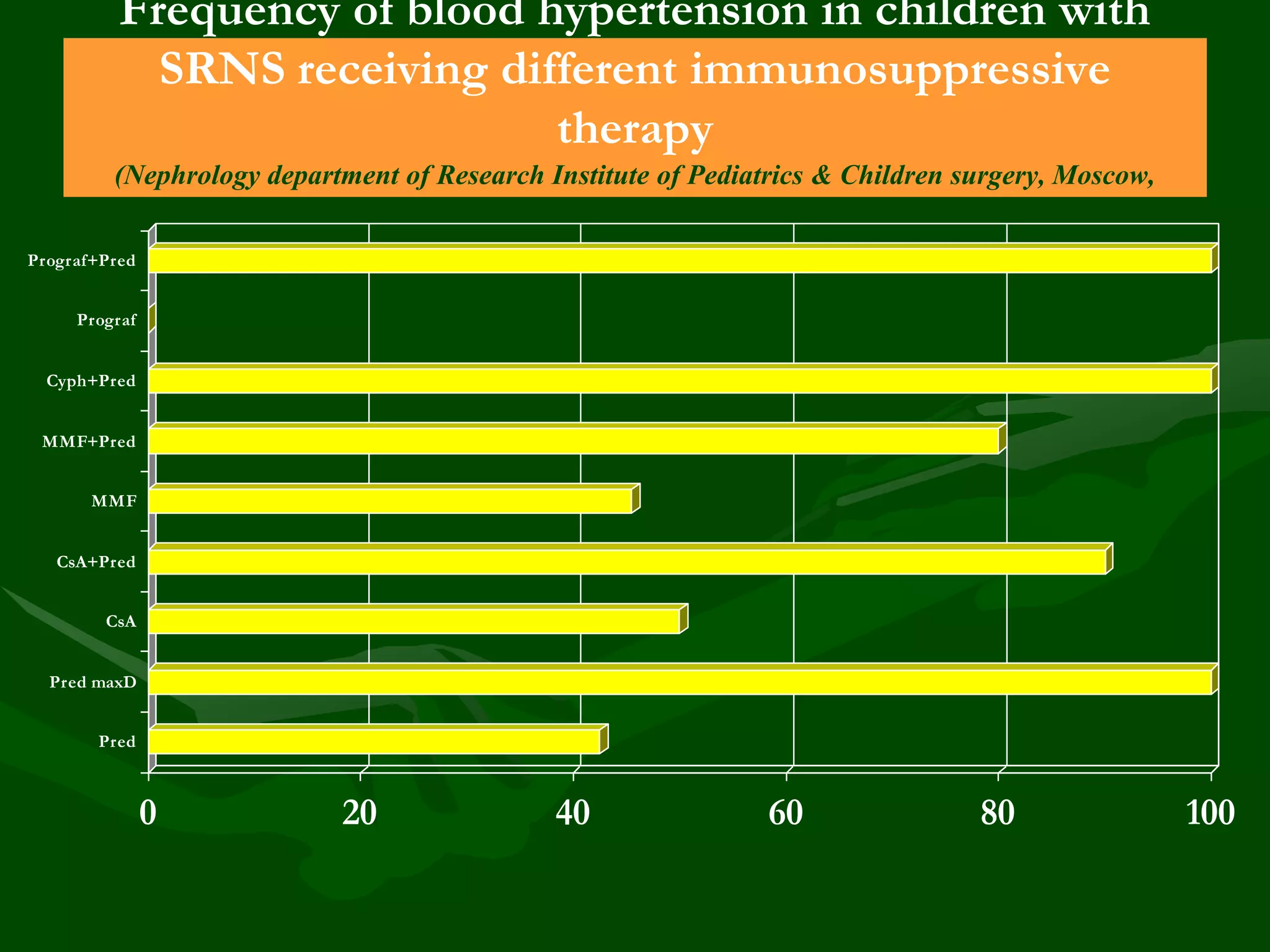
Frequency of blood hypertension in children with
SRNS receiving different immunosuppressive
therapy
(Nephrology department of Research Institute of Pediatrics & Children surgery, Moscow,
Russia)
Prograf+Pred
Prograf
Cyph+Pred
MMF+Pred
MMF
CsA+Pred
CsA
Pred maxD
Pred

0

20

40

60

80

100
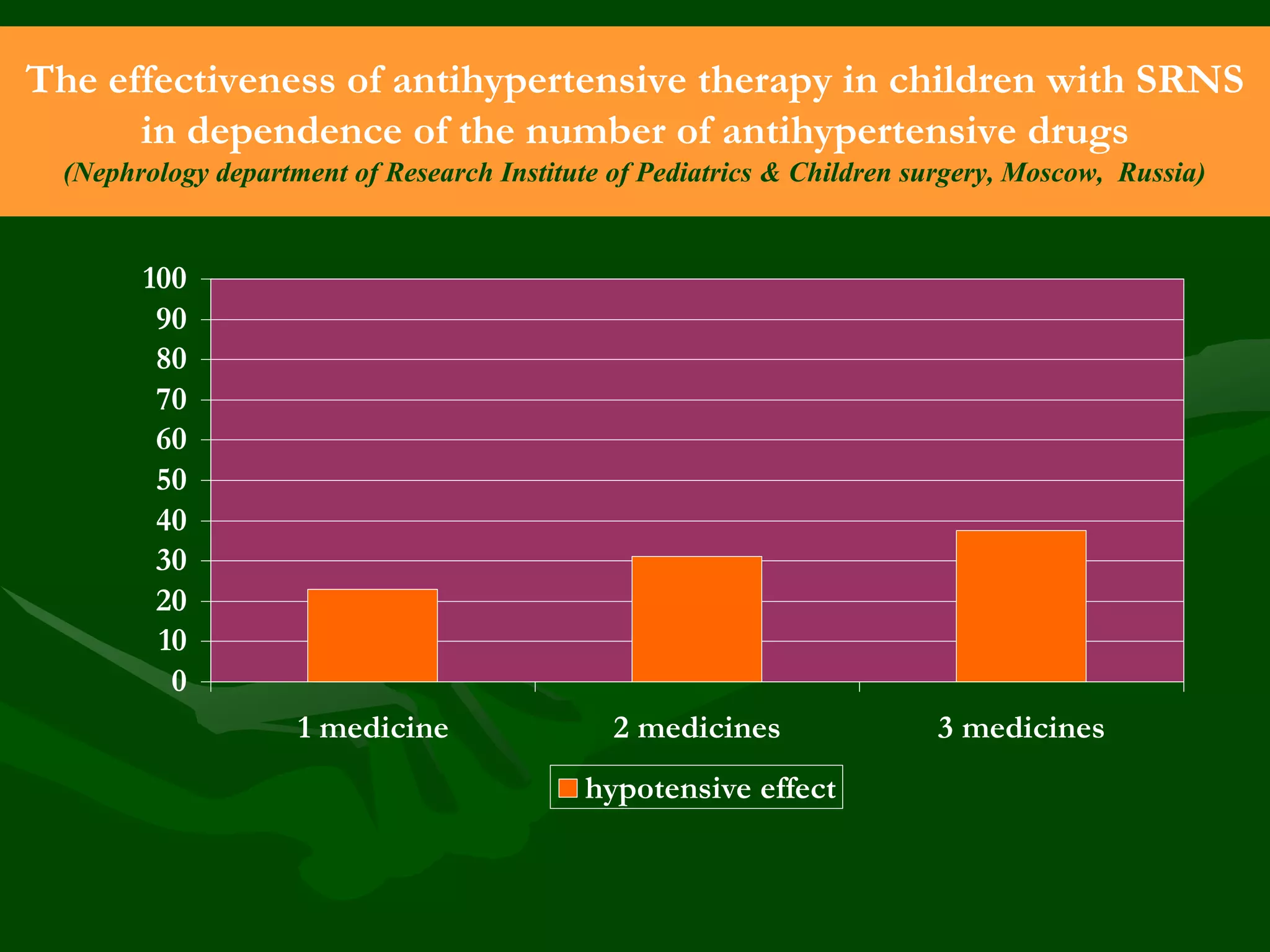
The effectiveness of antihypertensive therapy in children with SRNS
in dependence of the number of antihypertensive drugs
(Nephrology department of Research Institute of Pediatrics & Children surgery, Moscow, Russia)

100
90
80
70
60
50
40
30
20
10
0
1 medicine

2 medicines
hypotensive effect

3 medicines
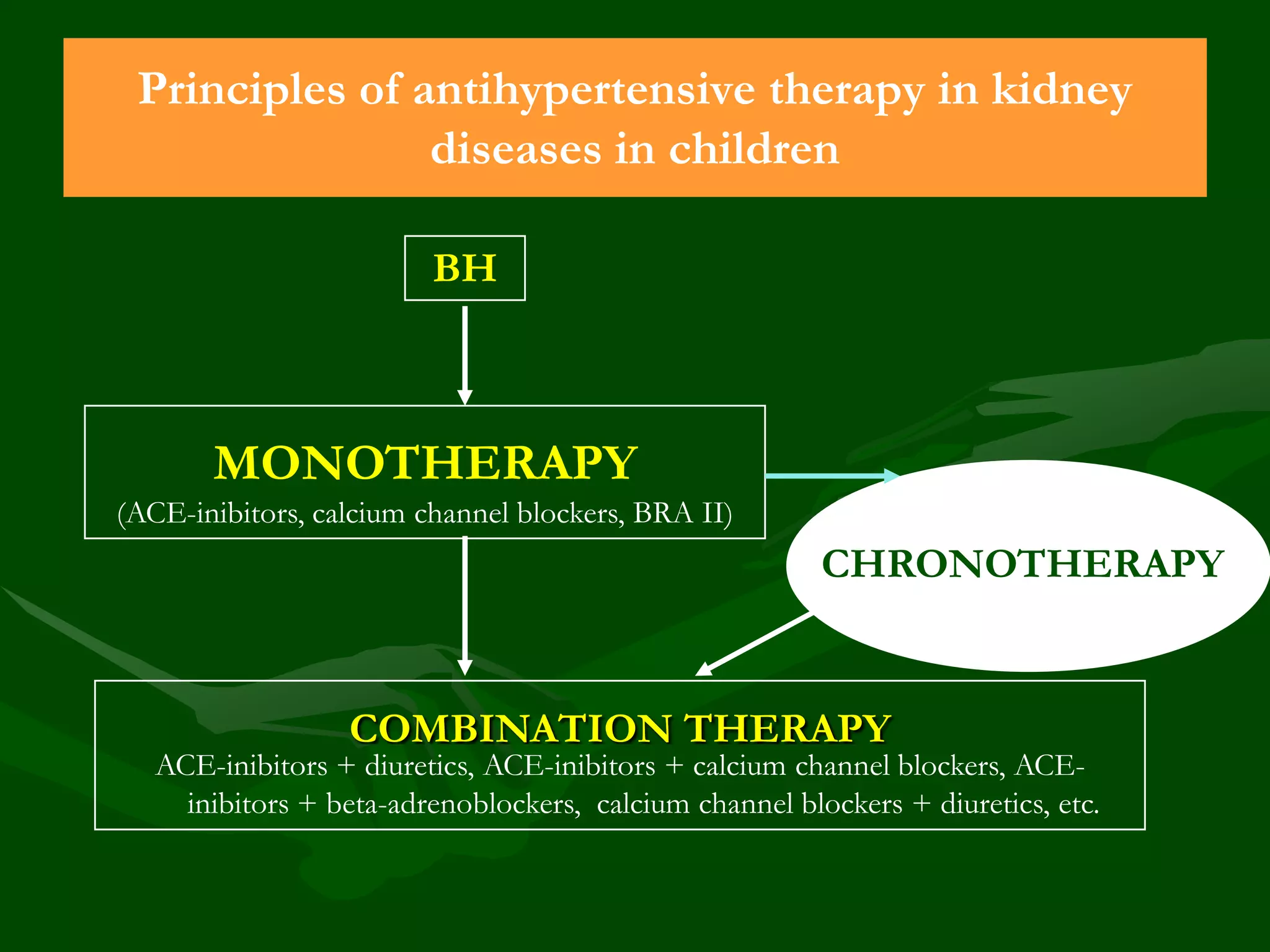
Principles of antihypertensive therapy in kidney
diseases in children
BH

MONOTHERAPY
(ACE-inibitors, calcium channel blockers, BRA II)

CHRONOTHERAPY

COMBINATION THERAPY

ACE-inibitors + diuretics, ACE-inibitors + calcium channel blockers, ACEinibitors + beta-adrenoblockers, calcium channel blockers + diuretics, etc.
CHRONOTHERAPY
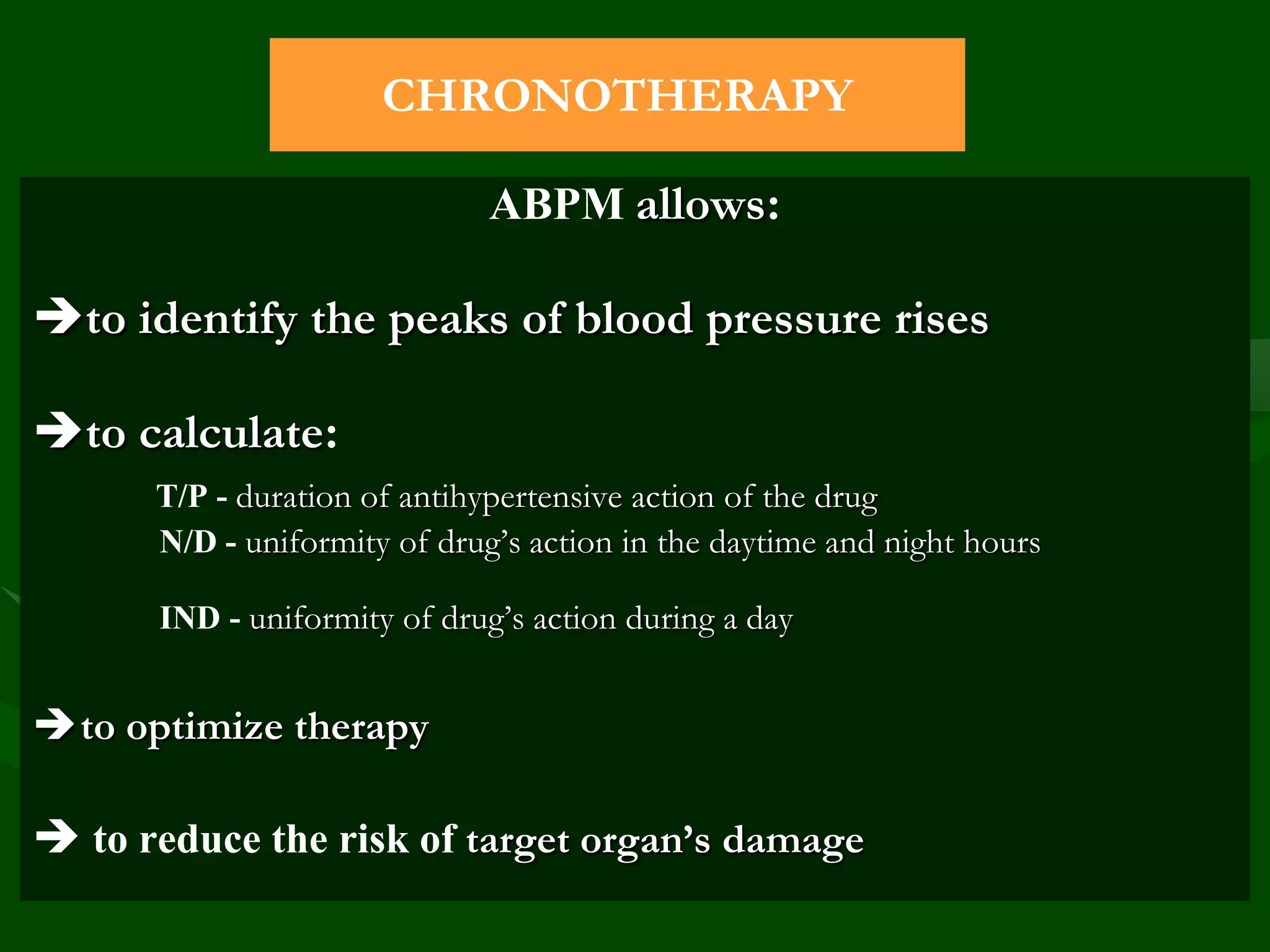
ABPM allows:

to identify the peaks of blood pressure rises
to calculate:
Т/Р - duration of antihypertensive action of the drug
N/D - uniformity of drug’s action in the daytime and night hours
IND - uniformity of drug’s action during a day

to optimize therapy

 to reduce the risk of target organ’s damage
CHRONOTHERAPY
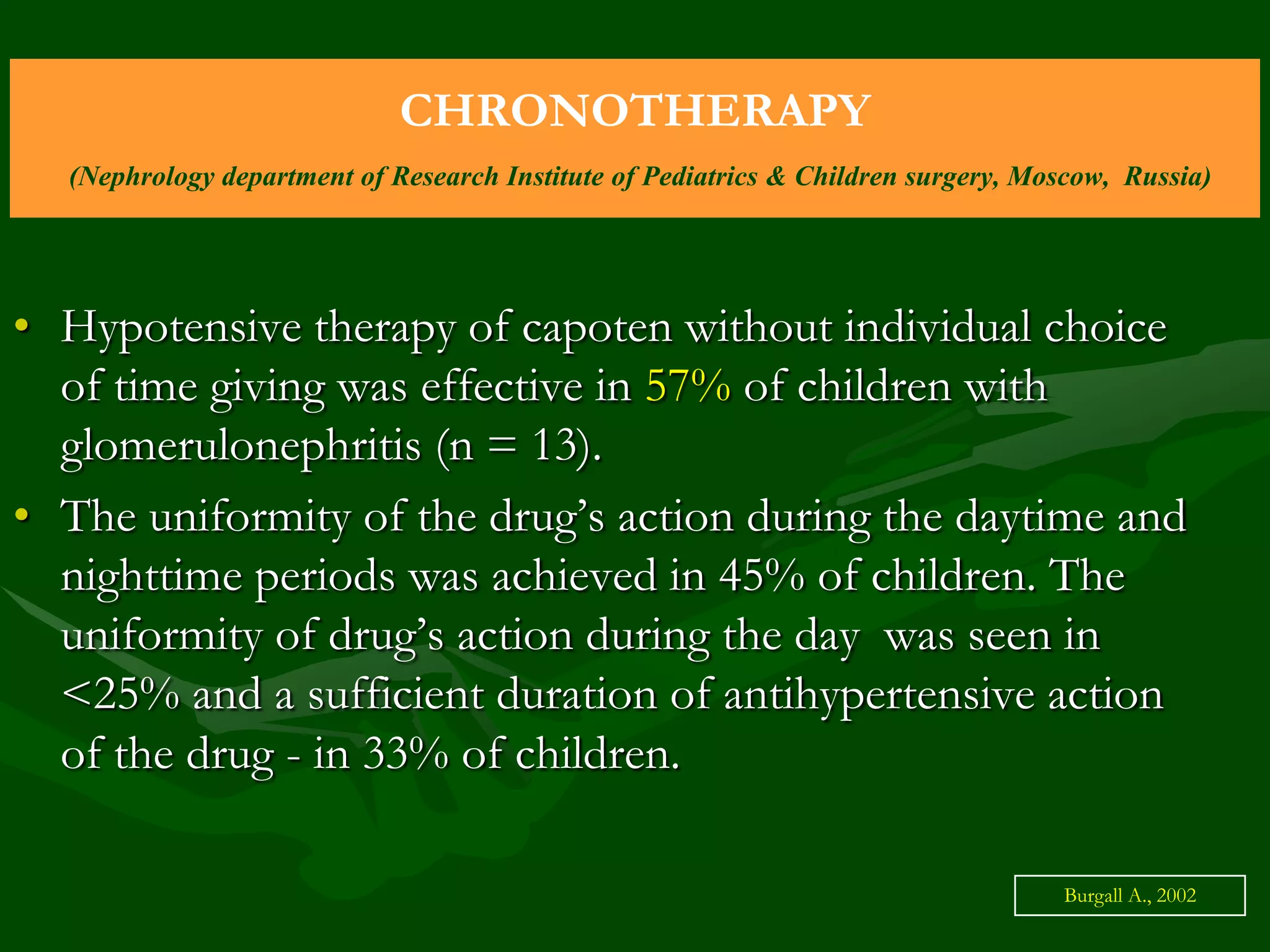
(Nephrology department of Research Institute of Pediatrics & Children surgery, Moscow, Russia)

• Hypotensive therapy of capoten without individual choice
of time giving was effective in 57% of children with
glomerulonephritis (n = 13).
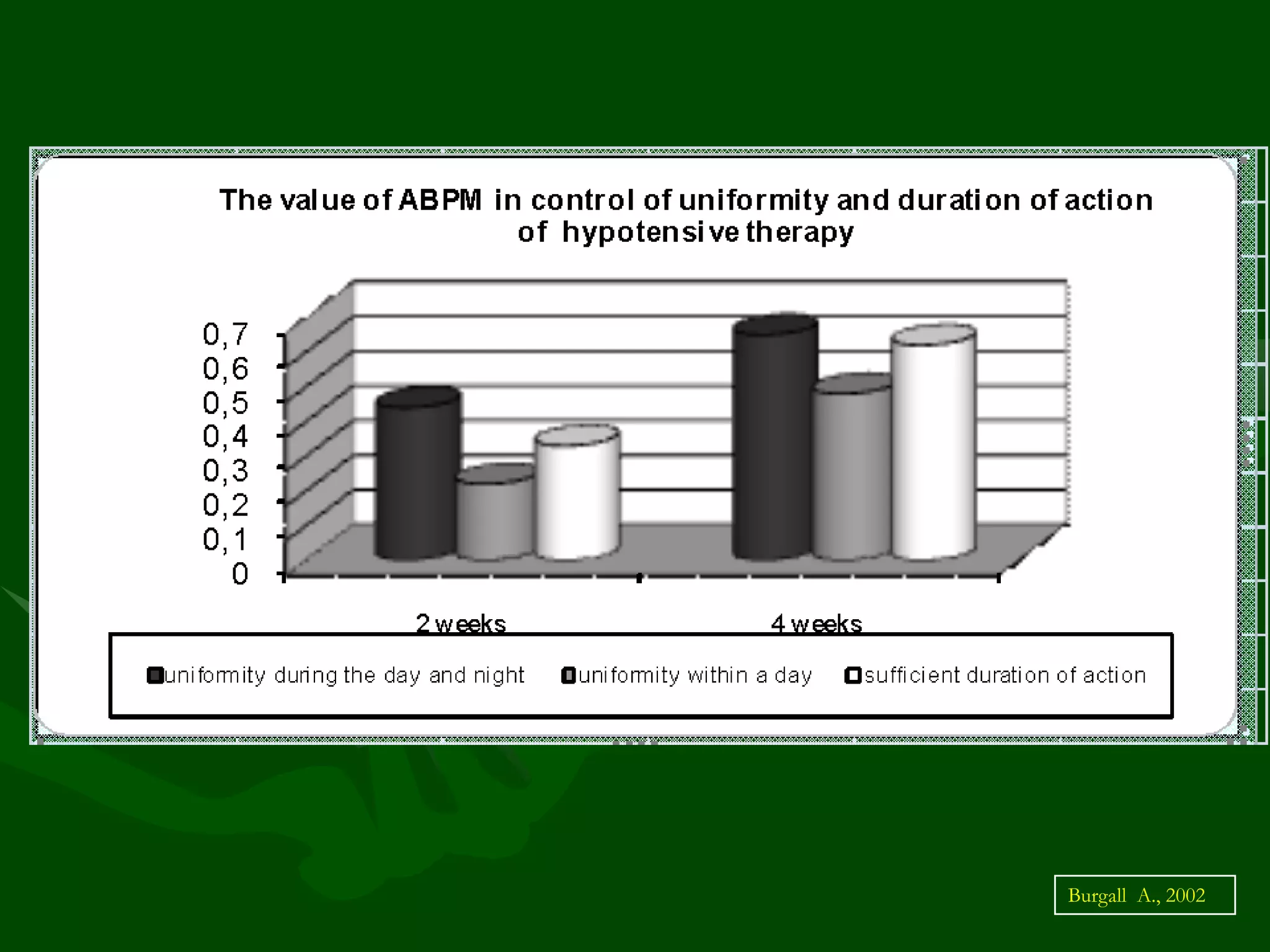
• The uniformity of the drug’s action during the daytime and
nighttime periods was achieved in 45% of children. The
uniformity of drug’s action during the day was seen in
<25% and a sufficient duration of antihypertensive action
of the drug - in 33% of children.
Burgall А., 2002
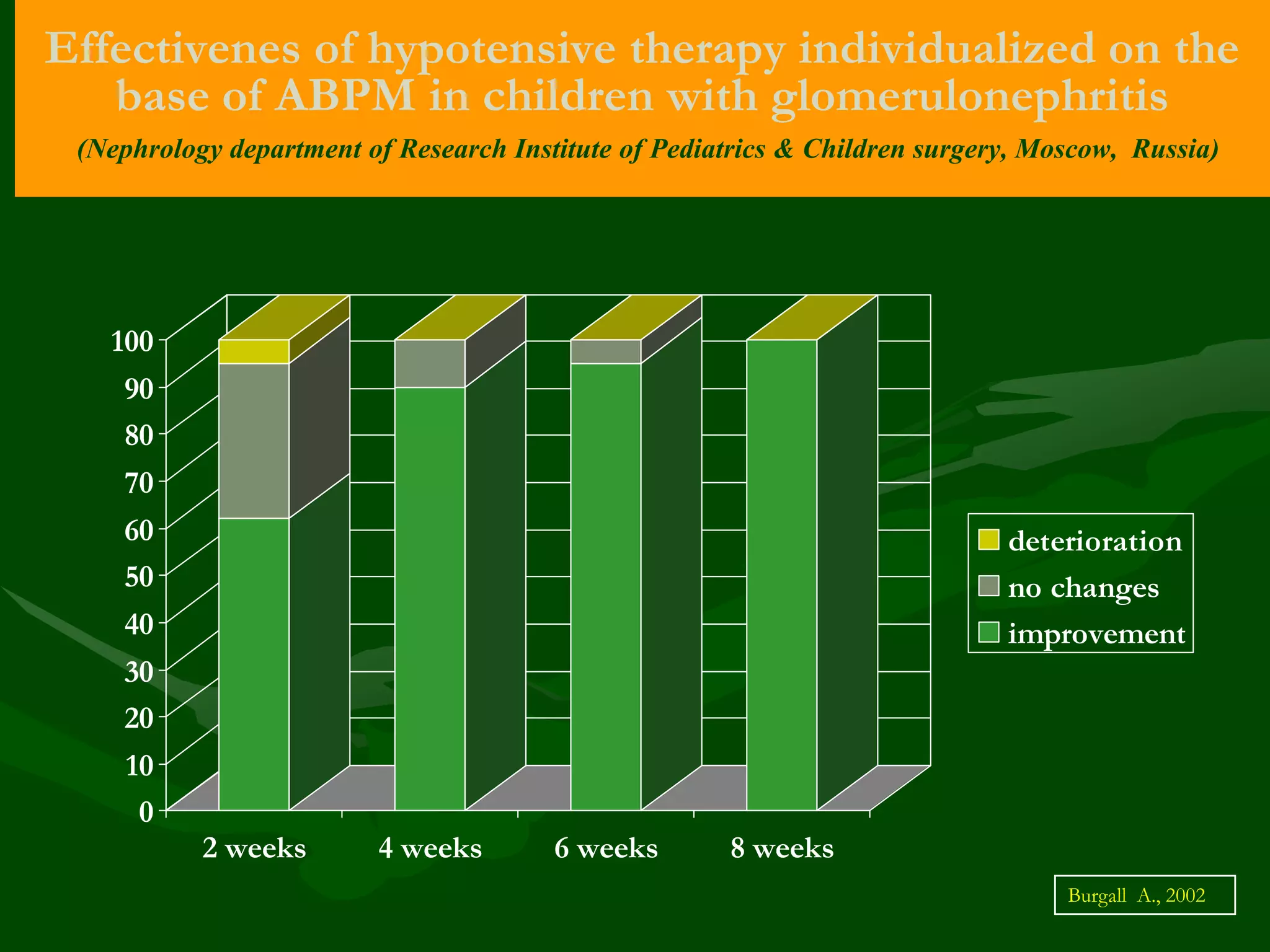
Effectivenes of hypotensive therapy individualized on the
base of ABPM in children with glomerulonephritis
(Nephrology department of Research Institute of Pediatrics & Children surgery, Moscow, Russia)

100
90
80
70
60
50
40
30
20
10
0

deterioration
no changes
improvement

2 weeks

4 weeks

6 weeks

8 weeks
Burgall А., 2002
Burgall А., 2002
Conclusion
Preventing initiation and progression of CKD:
• correction of common modifiable risk factors for the
development and progression of renal and cardiovascular
disease;
• primary and secondary prevention of CKD (factors increasing
susceptibility to CKD, factors of initiation of CKD and factors
of progression of CKD);

• nephroprotective and cardioprotective early therapy;
• SMBP control
Thank you for your
attention!

8-1. Progression of CKD to CRF. Vladimir Dlin (eng)

  • 1.
    Progression of chronickidney diseases: mechanisms, risk factors, treatment strategies Dlin V.V., Konkova N.E. Nephrology department of Research Institute of Pediatrics & Children surgery, Moscow, Russia
  • 2.
    History and conceptionof problem • The conception was developed at the beginning of XXI century by U.S. National Kidney Foundation (National Kidney Foundation) and published in 2002. It’s development was continued by experts from the European Dialysis and Transplant Association (ERA-EDTA) and KDIGO (Kidney Desease: Improving Global Outcomes) • The purpose of the conception: - early detection of kidney disease - slowing down the progression of kidney disease - reduction the risk of cardiovascular complications - prevention of kidney lesions - the use of common criteria and universal classification - the use of common terminology
  • 3.
    Importance of theproblem The high prevalence of CKD in the world: 1-5 stage of CKD - 12-15% of the population 3-5 stage of CKD - 6-8 % of the population
  • 4.
    THE PREVALENCE OFCKD IN THE WORLD
  • 5.
    Importance of theproblem Renal mortality in patients with kidney disease is low. Cardiovascular pathology as a major factor of patient’s death is ignored.
  • 6.
    Importance of theproblem Renal factors of cardiovascular risk: albuminuria / proteinuria systemic inflammation oxidative stress anemia hyperhomocysteinemia Smirnov A. et al., 2005
  • 7.
    FREQUENCY OF CARDIOVASCULARDISEASE IN CHRONIC KIDNEY DISEASE (per 100 patients / year) kidney diseases infarction disturbance of cerebral blood flow peripheral vasculopathy atheroscler osis cardiovascul ar death CKD - 1,6 7,6 6,9 14,1 5,5 CKD+ 3,9 16,6 19,9 35,7 17,7 CKD – chronic kidney disease C.R.. Harper, 2008
  • 8.
    FREQUENCY OF CARDIOVASCULARDISEASE IN PATIENTS IN RELATION TO GLOMERULAR FILTRATION RATE the estimated frequency GFR – glomerular filtration rate Matthew R., 2005
  • 9.
    The structure ofmortality (%) in patients with ESRD by age (Russian Register of renal replacement therapy, 1998-2007) CVD – cardiovascular disease
  • 10.
    The main markersof kidney damage, suggestive of the presence of CKD marker Albuminuria / proteinuria notes persistent increasing in urinary albumin excretion greater than 10 mg/day (10 mg albumin/g creatinine) – see recommendation hematuria, cylindruria, leykotsituriya (piura) Persistent changes of the urinary sediment Changes of renal imaging studies anomalies of the kidney cysts, hydronephrosis, resizing kidneys, etc. Changes of of blood and urine composition Persistent decrease of GFR less than 60 mL/min/1,73m2 Morphological changes of the lifetime nephrobiopsy changes in serum and urinary electrolyte concentration, impaired HGA and others, including the characteristic of the "tubular dysfunction syndrome" (Fanconi's syndrome, renal tubular acidosis, Bartter's syndrome and Gitelman, nephrogenic diabetes insipidus, etc.) in the absence of other markers of kidney damage should be taken into account the signs of “chronization” (sclerotic changes of kidneys, changes of membranes, etc.)
  • 11.
    Terminology • CKD -the common notion reflecting the presence of common risk factors of development and progression of different nephropathy. • The diagnosis of CKD is based on the presence of markers of kidney damage and/or GFR < 60 ml/ min for at least 3 months.
  • 12.
    Normal GFR inchildren and adolescents Age / Sex The average GFR ± σ (ml/min/1,73m2) 1 week 41 ± 15 2-8 weeks 66 ± 25 > 8 weeks 96 ± 22 2-12 years 133 ± 27 13-21 years(m) 140 ± 30 13-21 years(f) 126 ± 22
  • 13.
    Estimation of GFR •estimation of GFR in general clinical practice (outpatient) will be based of calculation formulas (eGFR), including gender, age, the patient and the concentration of creatinine in serum • clearance methods of GFR’s determination will be used at the hospital
  • 14.
    Methods of GFR’sestimation • Simple ways to calculate GFR based on measurements of serum parameters without hour urine collection: 1. Schwart’s formulas 2. Formulas of Cockroft DW., Gault MH. 3. MDRD (Modification of Diet in Renal Disease) 4. CKD-EPI method eGFR (the most suitable in the clinical practice) Levey AS. et al., 2000
  • 15.
    eGFR in childrenon the basis of serum creatinine and growth (according to Schwartz) • GFR (ml/min/1,73m2)= [0,0484*х Height (сm)]/Scr (mmol/l) *k= 0,0616 for boys >13 years
  • 16.
    CKD-EPI formula (modificationof 2011 year) race gender Serum creatinine mg/100 ml formula White and other female ≤ 0.7 144*(0.993) Age*Cr/0.7)-0.328 White and other female > 0.7 144*(0.993)Age*Cr/0.7)-1.21 White and other male ≤ 0.9 141*(0.993) Age*Cr/0.9)-0.412
  • 17.
    Stages of CKDin based on GFR (National Kidney Foundation KD, 2002 in modification of Smirnov et al., 2008) stages Kidney function GFR ml/min/1,73 m2 С1 high and optimal >90 С2 slightly decreased 60-89 С3а moderately reduced 45-59 С3б significantly reduced 30-44 С4 drastically reduced 15-29 С5 ESRD <15
  • 18.
    Albuminuria • Albuminuria (normal< 10 mg/day) – integral sign of CKD [A. Smirnov et al., 2010] and represents: - increased permeability of cell membranes (size-selectivity, the chargeselectivity); - transport changes in the proximal tubule; - increased hemodynamic burden on the glomerules; - presence of systemic and renal endothelial dysfunction; - the degree of glomerular/interstitial sclerosis due to glomerular and tubular transport protein disturbances and subsequent activation of profibrotic cytokines • Albuminuria – risk factor of total and cardiovascular mortality, ESRD, acute kidney injury and progression of CKD
  • 19.
    Stage of albuminuria/proteinuria (LeveyA.S. et al., 2010 ) urea albumine (mg/creatinine, g) Stage Kidney function А0 optimum А1 increased А2 high А3 very high <10 10-29 30-299 300-1999 А4 nephrotic ≥2000
  • 20.
    The stage ofCKD should be indicated in the diagnosis after the nosologic form of renal disease Examples of diagnosis: • Kidney’s anomaly: a partial doubling of right renal pelvis. CKD C1A0 • Hypertensive nephrosclerosis. CKD C3aA1 • Focal segmental glomerulosclerosis. Nephrotic syndrome. CKD С3аА3 • IgA-nephropathy. Isolated urinary syndrome. CKD С1А3.
  • 21.
    Classification and characteristicof main risk factors of CKD type definition description increase susceptibility of factors increasing susceptibility to CKD kidney to damage older age, family history of CKD, low renal weight, low birth weight, racial and ethnic differences factors of initiation of CKD cause direct damage of kidneys diabetes, blood hypertension, autoimmune diseases, systemic infections, urinary tract infections, urinary stones, urinary tract obstruction, drug toxicity, genetic diseases factors of progression of CKD promote the progression of renal damage and accelerate the rate of decline in renal function high level of proteinuria, high blood pressure, poor control of blood glucose level in diabetic patients, dyslipidemia, smoking factors of ESRD increase morbidity and mortality in patients with ESRD inadequate dialysis (Kt/V); temporary vascular access, low albumin level, high levels of phosphorus and delayed treatment
  • 22.
    Risk factors ofCKD nonmodifiable modifiable older age diabetes male sex blood hypertension low number of nephrons (low birth weight) autoimmune diseases racial and ethnic peculiarities chronic inflammation, systemic infections hereditary factors (including family history of CKD) urinary stones, urinary tract infection urinary tract obstruction drug toxicity high protein diet dyslipidemia smoking obesity/metabolic syndrome hyperhomocysteinemia pregnancy
  • 23.
    Factors of progressionof CKD nonmodifiable modifiable older age persistent activity of the basic renal pathology male sex high levels: - systemic blood pressure - proteinuria low number of nephrons (low birth weight) uncontroled diabetes racial and ethnic peculiarities obesity/metabolic syndrome dyslipidemia smoking anemia metabolic acidosis pregnancy disturbed calcium-phosphorus metabolism (hyperparathyroidism) high protein and sodium diet
  • 24.
    CKD as independentrisk factor for the development and progression of cardiovascular disease Groups of risk for cardiovascular disease: • group of intermediate risk - CKD stages C1-C2 and albuminuria A1; • group of high risk - CKD stages C1-C2 and albuminuria A2-A3 or CKD stage C3a, regardless of the level of albuminuria/proteinuria; • group of very high risk - CKD stages C3B - C5 regardless of the level of albuminuria/proteinuria
  • 25.
    RISK FACTORS OFCARDIOVASCULAR DISEASE IN PATIENTS WITH CKD nonmodifiable: • gender, • age, • race, • genetic predisposition common modifiable: • blood hypertension • metabolic factors • endothelial dysfunction nephrogenic modifiable: • chronic inflammation • anemia • metabolic acidosis • hyperparathyroidism • hyperhomocysteinemia atherosclerosis heart disease
  • 26.
    The incidence ofarterial hypertension in patients with chronic kidney disease (Nephrology department of Research Institute of Pediatrics & Children surgery, Moscow, Russia) % 100 90 80 70 60 BH by Korotkov method BH by ABPM 50 40 30 20 10 0 SRNS AS Aspr ADPKD TMAP (HUS) RN SRNS – steroid resistant nephrotic syndrome AS – Alport syndrome ТМАP (HUS) – thrombotic microangiopathy (hemolytic uremic syndrome) AD PKD – autosomal-dominant polycystic kidney disease RN – reflux nephropathy
  • 27.
    PECULIARITIES OF RENALARTERIAL HYPERTENSION (Nephrology department of Research Institute of Pediatrics & Children surgery, Moscow, Russia) RN RN TM AP AD (H PK U S) D TMAP (HUS) ADPKD AS AS SR N S SRNS 0% 50% nightly / daily BH 100% daily BP 0% 50% 100% diastolic / systolo-diastolic HP systolic HP SRNS – steroid resistant nephrotic syndrome AS – Alport syndrome ТМАP (HUS) – thrombotic microangiopathy (hemolytic uremic syndrome) AD PKD – autosomal-dominant polycystic kidney disease RN – reflux nephropathy
  • 28.
    FREQUENCY OF COMPLICATIONSOF ARTERIAL HYPERTENSION IN PATIENTS WITH PROGRESSIVE KIDNEY DISEASE (Nephrology department of Research Institute of Pediatrics & Children surgery, Moscow, Russia) 100 80 60 62,5 40 44,4 20 0 40,0 30,4 17,4 SRNS angiopathy 33,3 28,6 23,1 4,5 11,8 AS Aspr ADPKD TMAP (HUS) RN left ventricular hypertrophy SRNS – steroid resistant nephrotic syndrome AS – Alport syndrome AD PKD – autosomal-dominant polycystic kidney disease ТМАP (HUS) – thrombotic microangiopathy (hemolytic uremic syndrome) RN – reflux nephropathy
  • 29.
    The risk ofcardiovascular complications in children with steroidresistant nephrotic syndrome (Nephrology department of Research Institute of Pediatrics & Children surgery, Moscow, Russia) data Left ventricular hypertrophy retinal angiopathy SRNS ≥ 4 years 2,8 2,7 the severity of blood hypertension (explicit) 9,7 0,56 systolo-diastolic blood hypertension 2,1 7,2 the lack of antihypertensive therapy 2,3 9,2 RR>2,0 – high risk of cardiovascular disease
  • 30.
    Primary prevention ofCKD is the elimination or minimization of the risk factors for its development: • clinical supervision of patient from high-risk group; • the control of modifiable risk factors of development and progression of CKD; • control of GFR and albuminuria.
  • 31.
    Secondary prevention ofCKD • slowing the progression of CKD (renoprotection) • preventing the development of cardiovascular disease (cardioprotection)
  • 32.
    Correction of commonrisk factors for the development and progression of renal and cardiovascular disease • • • • • • metabolic and hemodynamic changes glycemia dyslipidemia uricemia blood hypertension anemia
  • 33.
    Common approaches ofprimary and secondary prevention of CKD stage recommendations The presence of risk factors for CKD Regular screening for CKD, measures for reduction of the risk of development CKD С1 (normal renal function) Diagnosis and treatment of the kidney disease, correction of common risk factors of progression of CKD. Identification of CVD, correction of therapy, monitoring of risk factors of progression of CVD. С2 (initial reduction of GFR) previous measures + estimation of the rate of progression CKD, correction therapy С3 А и В (moderate reduction of GFR) previous measures + detection, prevention and treatment of systemic complications of renal dysfunction (anemia, dizelektrolitemiya, acidosis, hyperparathyroidism, hyperhomocysteinemia, etc) С4 (marked reduction of GFR) previous measures + preparations for renal replacement therapy С5 (ESRD) renal replacement therapy + identification, prevention and treatment of systemic complications of renal dysfunction
  • 34.
    Nephroprotective and cardioprotectivetherapy • • • • ACE inhibitors AT1-receptor blockers calcium channel blockers statins, etc.
  • 35.
    Treatment of bloodhypertension in patients with chronic kidney disease medicines with nephroprotective effect • inhibitors of angiotensinconverting enzyme • blockers of ATII receptor type 1 • calcium channel blockers (nondihydropyridine)? medicines without nephroprotective effect • beta-blockers • diuretics • calcium channel blockers (dihydropyridine)
  • 36.
    Indications for ACEinhibitors and BRA in patients with CKD • in patients with blood hypertension (for achievation of target blood pressure levels) • in patients with albuminuria / proteinuria A2-A3 (even in the absence of hypertension)
  • 37.
    Antihypertensive therapy • Ifthe target level of blood pressure was not achieved by ACE inhibitors and BRA it’s necessary to add the hypotensive medicine of other pharmacological groups and/or diuretics
  • 38.
    The hypotensive effectivenessof RAAS inhibitors in children with progressive kidney disease (Nephrology department of Research Institute of Pediatrics & Children surgery, Moscow, Russia) 100 80 75,0 60 71,4 66,7 63,6 58,3 40 20 0 37,5 SRNS SA SRNS – steroid resistant nephrotic syndrome AS – Alport syndrome AD PKD – autosomal-dominant polycystic kidney disease Sapr ADPKD TMAP(HUS) RN ТМАP (HUS) – thrombotic microangiopathy (hemolytic uremic syndrome) RN – reflux nephropathy
  • 39.
    Antihypertensive therapy • Clinicalpredictor of renoprotective efficacy of the drugs is partial (daily proteinuria <2.5 g / day) or total (daily proteinuria <0.5 g / day) remission of proteinuria in a few weeks or months after starting of treatment
  • 40.
    Dynamics of proteinuriain children with Alport's syndrome (Nephrology department of Research Institute of Pediatrics & Children surgery, Moscow, Russia) on the therapy with ACE-inhibitors (n = 14) without ACE-inhibitors (n = 8) 12,5% 28,6% 7,1% 50% 50% 37,5% 14,3% - decreased proteinuria - proteinuria didn’t increase - deceleration of the rate of increasing of proteinuria - stable proteinuria - increased proteinuria Конькова Н..Е., 2011
  • 41.
    Dynamics of GFRin children with progressive course of Alport's syndrome (Nephrology department of Research Institute of Pediatrics & Children surgery, Moscow, Russia) on the therapy with ACE-inhibitors (n = 9) 33,3% 22,2% 33,3% without ACE-inhibitors (n = 3) 100% 11,1% - increasing of GFR - stable GFR - deceleration of the rate of reduction of GFR - reduction of GFR Конькова Н.Е, 2011
  • 42.
    Frequency of bloodhypertension in children with SRNS receiving different immunosuppressive therapy (Nephrology department of Research Institute of Pediatrics & Children surgery, Moscow, Russia) Prograf+Pred Prograf Cyph+Pred MMF+Pred MMF CsA+Pred CsA Pred maxD Pred 0 20 40 60 80 100
  • 43.
    The effectiveness ofantihypertensive therapy in children with SRNS in dependence of the number of antihypertensive drugs (Nephrology department of Research Institute of Pediatrics & Children surgery, Moscow, Russia) 100 90 80 70 60 50 40 30 20 10 0 1 medicine 2 medicines hypotensive effect 3 medicines
  • 44.
    Principles of antihypertensivetherapy in kidney diseases in children BH MONOTHERAPY (ACE-inibitors, calcium channel blockers, BRA II) CHRONOTHERAPY COMBINATION THERAPY ACE-inibitors + diuretics, ACE-inibitors + calcium channel blockers, ACEinibitors + beta-adrenoblockers, calcium channel blockers + diuretics, etc.
  • 45.
    CHRONOTHERAPY ABPM allows: to identifythe peaks of blood pressure rises to calculate: Т/Р - duration of antihypertensive action of the drug N/D - uniformity of drug’s action in the daytime and night hours IND - uniformity of drug’s action during a day to optimize therapy  to reduce the risk of target organ’s damage
  • 46.
    CHRONOTHERAPY (Nephrology department ofResearch Institute of Pediatrics & Children surgery, Moscow, Russia) • Hypotensive therapy of capoten without individual choice of time giving was effective in 57% of children with glomerulonephritis (n = 13). • The uniformity of the drug’s action during the daytime and nighttime periods was achieved in 45% of children. The uniformity of drug’s action during the day was seen in <25% and a sufficient duration of antihypertensive action of the drug - in 33% of children. Burgall А., 2002
  • 47.
    Effectivenes of hypotensivetherapy individualized on the base of ABPM in children with glomerulonephritis (Nephrology department of Research Institute of Pediatrics & Children surgery, Moscow, Russia) 100 90 80 70 60 50 40 30 20 10 0 deterioration no changes improvement 2 weeks 4 weeks 6 weeks 8 weeks Burgall А., 2002
  • 48.
  • 49.
    Conclusion Preventing initiation andprogression of CKD: • correction of common modifiable risk factors for the development and progression of renal and cardiovascular disease; • primary and secondary prevention of CKD (factors increasing susceptibility to CKD, factors of initiation of CKD and factors of progression of CKD); • nephroprotective and cardioprotective early therapy; • SMBP control
  • 50.
    Thank you foryour attention!