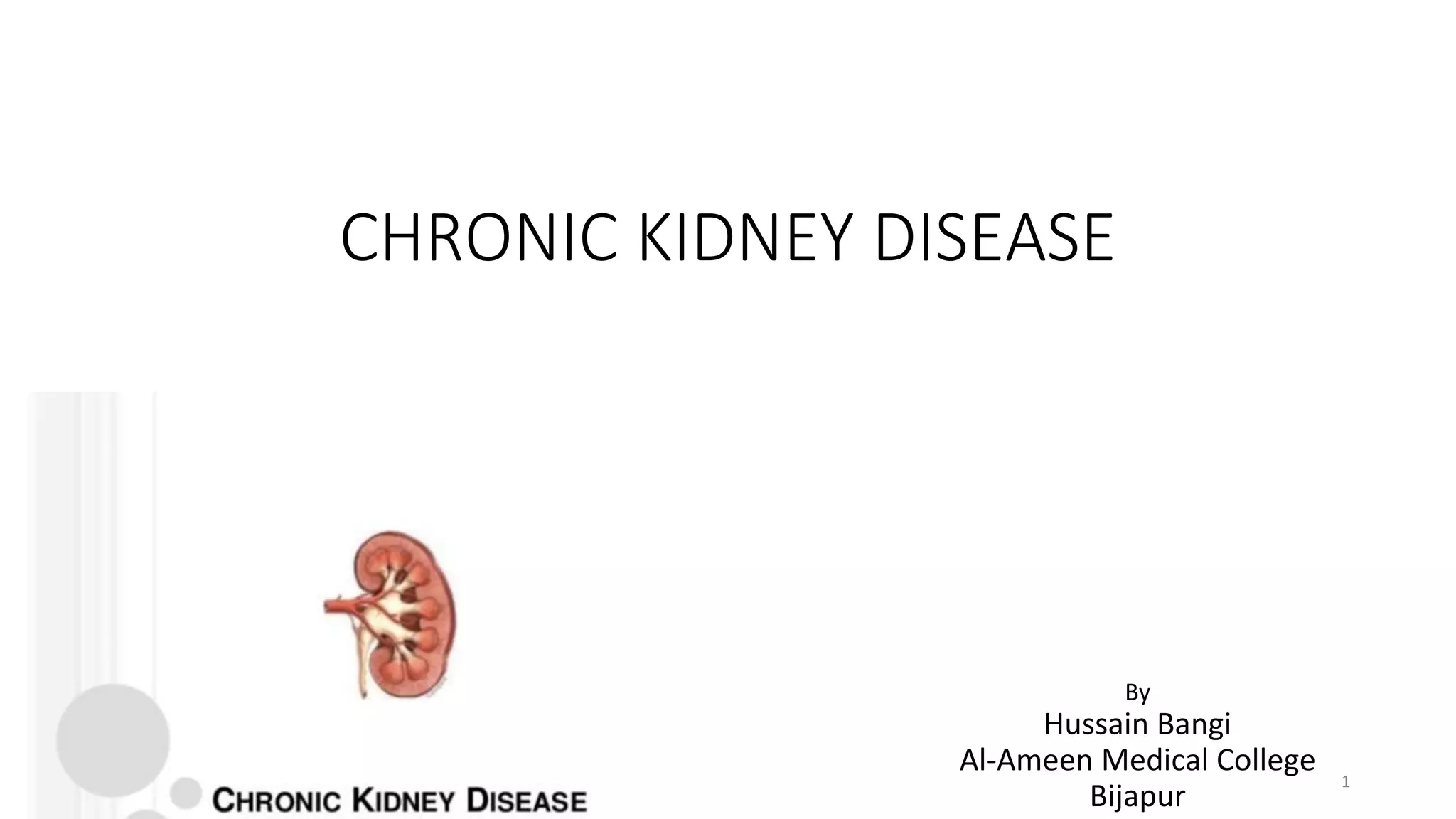
CHRONIC KIDNEY DISEASE
By
Hussain Bangi
Al-Ameen Medical College
Bijapur
1
OUTLINE
• Introduction
• Definition
• Stages of CKD
• Epidemiology
• Etiology
• Risk Factors for CKD
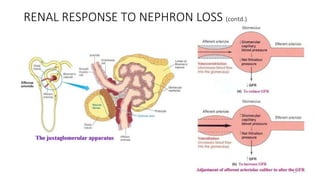
• Renal Response to Nephron Loss
• Progression of Renal Damage
• Systemic Features
• Diagnostic Evaluation
• Management
• End Stage Renal Disease
• Summary
2
INTRODUCTION
• Chronic kidney disease is characterized by an irreversible deterioration of renal
function that gradually progresses to end-stage renal disease (ESRD) and
eventually requires renal replacement therapy.
3
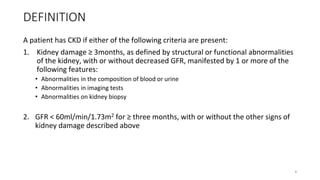
DEFINITION
A patient has CKD if either of the following criteria are present:
1. Kidney damage ≥ 3months, as defined by structural or functional abnormalities
of the kidney, with or without decreased GFR, manifested by 1 or more of the
following features:
• Abnormalities in the composition of blood or urine
• Abnormalities in imaging tests
• Abnormalities on kidney biopsy
2. GFR < 60ml/min/1.73m2 for ≥ three months, with or without the other signs of
kidney damage described above
4
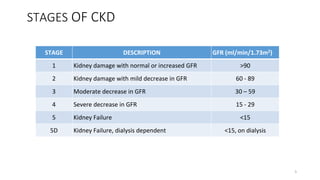
STAGES OF CKD
STAGE DESCRIPTION GFR (ml/min/1.73m2)
1 Kidney damage with normal or increased GFR >90
2 Kidney damage with mild decrease in GFR 60 - 89
3 Moderate decrease in GFR 30 – 59
4 Severe decrease in GFR 15 - 29
5 Kidney Failure <15
5D Kidney Failure, dialysis dependent <15, on dialysis
5
EPIDEMIOLOGY
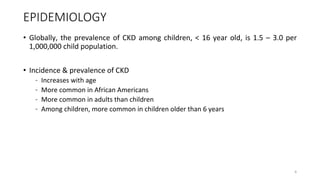
• Globally, the prevalence of CKD among children, < 16 year old, is 1.5 – 3.0 per
1,000,000 child population.
• Incidence & prevalence of CKD
– Increases with age
– More common in African Americans
– More common in adults than children
– Among children, more common in children older than 6 years
6
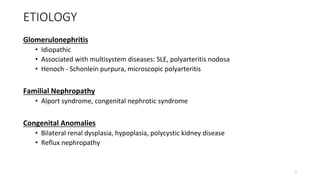
ETIOLOGY
Glomerulonephritis
• Idiopathic
• Associated with multisystem diseases: SLE, polyarteritis nodosa
• Henoch - Schonlein purpura, microscopic polyarteritis
Familial Nephropathy
• Alport syndrome, congenital nephrotic syndrome
Congenital Anomalies
• Bilateral renal dysplasia, hypoplasia, polycystic kidney disease
• Reflux nephropathy
7
ETIOLOGY (contd.)
Obstructive Uropathy
• Pelviureteric or ureterovesical junction obstruction
• Posterior urethral valve, calculi
Amylodiosis
Hemolytic Uremic Syndrome
Miscellaneous
• Bilateral wilms tumor
• Renal cortical necrosis
8
ETIOLOGY (contd.)
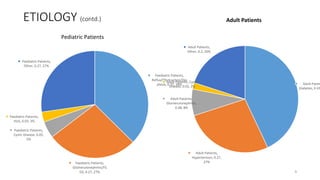
Paediatric Patients,
Reflux/Obstruction/Dys
plasia, 0.37, 38%
Paediatric Patients,
Glomerulonephritis/FS
GS, 0.27, 27%
Paediatric Patients,
Cystic Disease, 0.05,
5%
Paediatric Patients,
HUS, 0.03, 3%
Paediatric Patients,
Other, 0.27, 27%
Adult Patien
Diabetes, 0.43
Adult Patients,
Hypertension, 0.27,
27%
Adult Patients,
Glomerulonephritis,
0.08, 8%
Adult Patients, Cystic
Disease, 0.02, 2%
Adult Patients,
Other, 0.2, 20%
Adult Patients
9
Pediatric Patients
RISK FACTORS FOR CKD
• VUR associated with recurrent urinary tract infections & renal scarring
• Obstructive uropathy
• Prior history of acute nephritis or nephrotic syndrome
• Renal failure in perinatal period
• Family H/O polycystic kidneys or genetic renal conditions
• Renal dysplasia or hypoplasia
• Low birth weight infants
• Prior history of HSP
• Diabetes, hypertension
• SLE, vasculitis
10
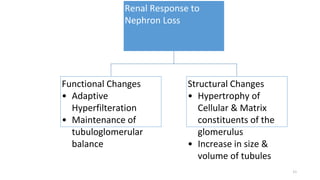
Renal Response to
Nephron Loss
Functional Changes
• Adaptive
Hyperfilteration
• Maintenance of
tubuloglomerular
balance
Structural Changes
• Hypertrophy of
Cellular & Matrix
constituents of the
glomerulus
• Increase in size &
volume of tubules
11
RENAL RESPONSE TO NEPHRON LOSS (contd.)
12
PROGRESSION OF RENAL DAMAGE –
RISK FACTORS
NON – MODIFIABLE RISK FACTORS
• Foetal Programming : low birth weight
• Angiotensin converting enzyme (ACE) gene
13
PROGRESSION OF RENAL DAMAGE –
RISK FACTORS (contd.)
MODIFIABLE RISK FACTORS
• HYPERTENSION
• PROTEINURIA
• Obesity
• Dyslipidemia
• Mineral homeostatsis
• Hyperuricemia
• Anemia
Important & Independent Risk Factors
14
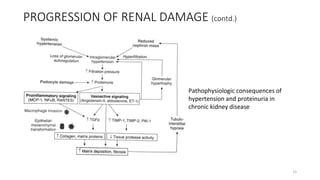
PROGRESSION OF RENAL DAMAGE (contd.)
Pathophysiologic consequences of
hypertension and proteinuria in
chronic kidney disease
15
SYSTEMIC FEATURES
GROWTH RETARDATION
Factors contributing:
– Poor Nutrition
– Metabolic Acidosis
– Bone Disease
– Anaemia
16
SYSTEMIC FEATURES (contd.)
MALNUTRITION
Factors contributing
• Anorexia
• Nausea and Vomiting
• Abnormal sense of taste
• Imposition of a variety of appropriate or inappropriate dietary restrictions
17
SYSTEMIC FEATURES (contd.)
Factors contributing:
• Lack of erythropoietin production
• Iron Deficiency
• Chronic Inflammation
• Bone Marrow Suppression
• Increased red cell turnover
• Malnutrition
• Aluminium Toxicity
ANAEMIA
develops once the renal function < 50%
18
SYSTEMIC FEATURES – ANAEMIA (contd.)
Clinical effects of Anaemia:
• Fatigue
• Loss of appetite
• Depression
• Decreased quality of life
• Sleep disturbances
• Decreased exercise tolerance
• Impaired Cognitive function
• Left Ventricular Hypertrophy
19
SYSTEMIC FEATURES (contd.)
NEUROLOGICAL ABNORMALITIES
• Infants and young children with moderate CKD are at risk for encephalopathy
• Features
– Hypotonia
– Delayed motor development
– Seizures
– Truncal ataxia and other signs of cerebellar dysfunction
– Uremic neuropathy
– Severe proximal muscle weakness
20
SYSTEMIC FEATURES (contd.)
BONE AND MINERAL DISORDER [RENAL OSTEODYSTROPHY]
• Systemic disorder of bone & mineral metabolism manifested by either
one or a combination of the following:
– abnormlities of Ca++, phosphorous, PTH or vitamin D
– abnormalities in bone histology, linear growth or strength
– vascular or other soft tissue calcification
• As early as in CKD stage 2 vit D ↓ & serum PTH ↑
• Seen in 30% of patients with ESRD
21
CHRONIC KIDNEY DISEASE –
MINERAL & BONE DISORDER (CKD - MBD)
Clinical Spectrum of CKD -MBD
• Secondary Hyperparathyroidism - Osteitis fibrosa cystica, Bone resorption,
fractures & deformities
• Alterations in growth plate cartilage – failure of linear growth
• Vit D3 deficiency – rickets/osteomalacia
• Adynamic bone lesions
• Hypotonia & delayed motor development
• Genu valgum, Scoliosis, compression fractures of vertebrae, thoracic deformities
and pathologic fractures of long bones
22
SYSTEMIC FEATURES (contd.)
METABOLIC ACIDOSIS & DYSELECTROLYTEMIA
HYPERKALEMIA
HYPERTENSION
MISCELLANEOUS
• Anorexia
• Lack of energy
• Increased sleep
• Poor school performance
• Platelet dysfunction
• Gastric Ulceration
• Severe Itching
• Pericarditis
23
DIAGNOSTIC EVALUATION
DETAILED HISTORY
• Age at onset/ duration
• Polyuria/ polydipsia/ enuresis/hematuria
• Fever/ rash / arthralgia/ arthritis/odema
• Recurrent UTI
• Antenatal detection of any renal anomalies
• Spinal abnormalities
• Uraemic symptoms (fatigue/anorexia/vomiting)
• History of renal disease in the family [Alport syndrome/ Nephronophthisis/
congenital nephrotic syndrome]
24
CLINICAL EXAMINATION
• vitals [blood pressure]
• assessment for the presence & severity of peripheral odema
• evaluation of growth, pubertal development & nutritional status
• features of anaemia & bone disease
• pericardial rub/ diminished heart sounds
• psychological & intellectual functions
DIAGNOSTIC EVALUATION (contd.)
25
LABOROTARY INVESTIGATIONS
• Complete blood counts
• ↓ Hb
• ↑ Total counts
• ↓ Platelet counts
• Renal function test
• ↑s. creatinine/B.urea
• Blood urea nitrogen
• Serum electrolytes
• ↑Na / ↑K+
• Serum calcium, phosphate, ALP & proteins
• Serum cholesterol
• PTH
• Iron studies
DIAGNOSTIC EVALUATION (contd.)
26
Urine Analysis
• Look for red blood cells (RBCs), white blood cells (WBCs)
• Most children with chronic kidney disease have broad hyaline casts
• Proteinuria
Glomerular Filteration Rate (GFR)
Estimation of GFR - Schwartz formula
GFR = k X height[cm] / serum creatinine [mg/dl]
k = 0.4 for preterm infants),
k = 0.45 for full-term infants
k = 0.55 for those aged 2-12 yrs and adolescent girls
k = 0.7 years in adolescent boys
DIAGNOSTIC EVALUATION –
LABORATORY INVESTIGATIONS (contd.)
27
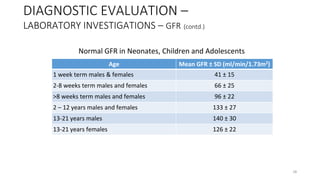
Age Mean GFR ± SD (ml/min/1.73m2)
1 week term males & females 41 ± 15
2-8 weeks term males and females 66 ± 25
>8 weeks term males and females 96 ± 22
2 – 12 years males and females 133 ± 27
13-21 years males 140 ± 30
13-21 years females 126 ± 22
DIAGNOSTIC EVALUATION –
LABORATORY INVESTIGATIONS – GFR (contd.)
Normal GFR in Neonates, Children and Adolescents
28
Cystatin C
• Low molecular weight protein [13.36 kD]
• Freely filtered by the glomerulus & metabolized after tubular reabsorption
DIAGNOSTIC EVALUATION –
LABORATORY INVESTIGATIONS (contd.)
Reference Intervals
Preterm Infants 1.34 – 2.57
Fullterm Infants 1.36 – 2.23
>8 days – 1year 0.75 – 1.87
1 – 3 years 0.68 – 1.90
3 – 16 years 0.51 – 1.31
Reference Intervals for Cystatin C
29
DIAGNOSTIC EVALUATION(contd.)
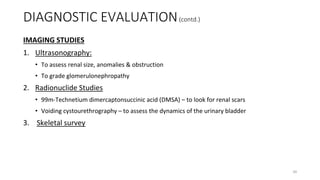
IMAGING STUDIES
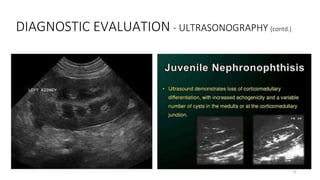
1. Ultrasonography:
• To assess renal size, anomalies & obstruction
• To grade glomerulonephropathy
2. Radionuclide Studies
• 99m-Technetium dimercaptonsuccinic acid (DMSA) – to look for renal scars
• Voiding cystourethrography – to assess the dynamics of the urinary bladder
3. Skeletal survey
30
DIAGNOSTIC EVALUATION - ULTRASONOGRAPHY (contd.)
31
MANAGEMENT
• Adequate management of early stages of CKD retards the decline in renal
function
• Treatment is aimed at maintaining the well being and quality of life
RETARDING THE PROGRESSION OF CKD
1. Control of hypertension
2. Reduction in proteinuria
3. Other strategies
– Management of anaemia
– Prevention and management of dyslipidemia
– Prevention of acidosis
– Non hypercalcemic doses of vitamin D analogs
32
MANAGEMENT (contd.)
NUTRITION
Dietary Management
Goals –
a) Reduce nitrogen intake
b) Maintain nitrogen balance
c) Cover essential amino acid requirement
d) Supply enough calories
• Energy: Intake equivalent to the RDA of healthy children of the same age
• Infant : 100 – 120 kCal/kg/day
• Children : 80 – 100 kCal/kg/day
• 55 – 60% from carbohydrates
• 30% from fats
• 10% from proteins
33
MANAGEMENT – NUTRITION – DIETARY MANAGEMENT (contd.)
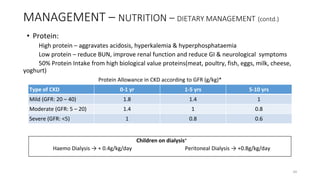
• Protein:
High protein – aggravates acidosis, hyperkalemia & hyperphosphataemia
Low protein – reduce BUN, improve renal function and reduce GI & neurological symptoms
50% Protein Intake from high biological value proteins(meat, poultry, fish, eggs, milk, cheese,
yoghurt)
Type of CKD 0-1 yr 1-5 yrs 5-10 yrs
Mild (GFR: 20 – 40) 1.8 1.4 1
Moderate (GFR: 5 – 20) 1.4 1 0.8
Severe (GFR: <5) 1 0.8 0.6
Protein Allowance in CKD according to GFR (g/kg)*
Children on dialysis+
Haemo Dialysis → + 0.4g/kg/day Peritoneal Dialysis → +0.8g/kg/day
34
MANAGEMENT – NUTRITION – DIETARY MANAGEMENT (contd.)
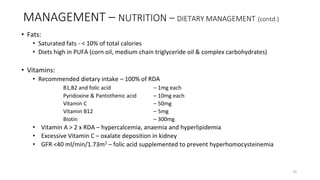
• Fats:
• Saturated fats - < 10% of total calories
• Diets high in PUFA (corn oil, medium chain triglyceride oil & complex carbohydrates)
• Vitamins:
• Recommended dietary intake – 100% of RDA
B1,B2 and folic acid – 1mg each
Pyridoxine & Pantothenic acid – 10mg each
Vitamin C – 50mg
Vitamin B12 – 5mg
Biotin – 300mg
• Vitamin A > 2 x RDA – hypercalcemia, anaemia and hyperlipidemia
• Excessive Vitamin C – oxalate deposition in kidney
• GFR <40 ml/min/1.73m2 – folic acid supplemented to prevent hyperhomocysteinemia
35
MANAGEMENT – NUTRITION – DIETARY MANAGEMENT (contd.)
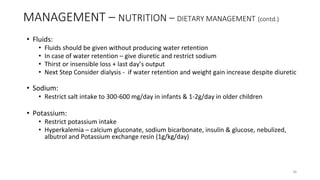
• Fluids:
• Fluids should be given without producing water retention
• In case of water retention – give diuretic and restrict sodium
• Thirst or insensible loss + last day’s output
• Next Step Consider dialysis - if water retention and weight gain increase despite diuretic
• Sodium:
• Restrict salt intake to 300-600 mg/day in infants & 1-2g/day in older children
• Potassium:
• Restrict potassium intake
• Hyperkalemia – calcium gluconate, sodium bicarbonate, insulin & glucose, nebulized,
albutrol and Potassium exchange resin (1g/kg/day)
36
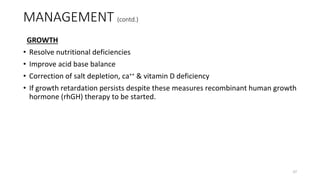
GROWTH
• Resolve nutritional deficiencies
• Improve acid base balance
• Correction of salt depletion, ca++ & vitamin D deficiency
• If growth retardation persists despite these measures recombinant human growth
hormone (rhGH) therapy to be started.
MANAGEMENT (contd.)
37
MANAGEMENT (contd.)
ANAEMIA
Key Elements –
• Erythropoietin Stimulating Agents – ESA
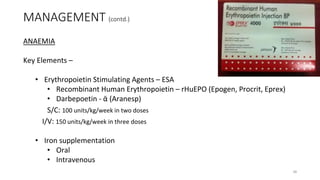
• Recombinant Human Erythropoietin – rHuEPO (Epogen, Procrit, Eprex)
• Darbepoetin - ᾱ (Aranesp)
S/C: 100 units/kg/week in two doses
I/V: 150 units/kg/week in three doses
• Iron supplementation
• Oral
• Intravenous
38
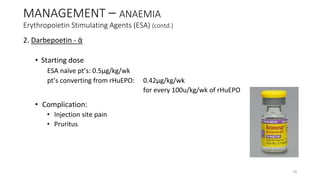
2. Darbepoetin - ᾱ
• Starting dose
ESA naïve pt’s: 0.5µg/kg/wk
pt’s converting from rHuEPO: 0.42µg/kg/wk
for every 100u/kg/wk of rHuEPO
• Complication:
• Injection site pain
• Pruritus
MANAGEMENT – ANAEMIA
Erythropoietin Stimulating Agents (ESA) (contd.)
39
Iron Supplementation
1. Oral Iron
• 3 – 5 mg/kg/day of elemental iron(max 150 – 300 mg/day)
• Adequate therapy in children not on haemodialysis
• Given 1 - 2 hrs before food
• Absorption affected by phosphate binders, H2 receptor antagonists & PPIs
MANAGEMENT – ANAEMIA (contd.)
40
2. Intravenous Iron
• Preparations:
a) Iron Dextran(INFeD)
b) Iron Gluconate(Ferrlecit)
c) Iron Sucrose(Venofer)
• Acute Dosing – Given when TSAT < 20% or ferritin<100ng/ml
Recommended Dose: 1.5mg/kg/dose with a max. of 125mg/dose
• Chronic Dosing – Started at 1mg/kg/week - one dose a week
• Complications:
• Iron dextran: acute anaphylactic reactions
• Iron gluconate: loin pain, hypotension, emesis, paraesthesias
• Iron sucrose: rash, flushing, hypotension
MANAGEMENT – ANAEMIA
Iron Supplementation (contd.)
41
MANAGEMENT (contd.)
CKD - MBD
• Control of levels of blood phosphate – most important factor in prevention & treatment of
secondary hyperparathyroidism
• Daily intake of phosphorous: 800 -1000mg
• Dairy products, chocolate, chicken, nuts, dried beans, aerated drinks to be avoided
Treatment Modalities
1. Phosphate binders:
• Calcium salts [calcium carbonate & calcium acetate]
• Sevelamer hydrochloride
2. Vitamin D & its analogues
3. Calcimimetic agents
4. Surgical intervention
42
HYPERTENSION
• Target level < 90th percentile of bp for age , gender & height
• Salt restriction & diuretics
• Antihypertensive drugs:
1. Thiazides [hydrochlorothiazide 2mg/kg/24r] : GFR upto 30ml/min/1.73m2
2. Loop diuretics [furosemide 1-2mg/kg/dose] : GFR < 30
3. Calcium channel blockers [amlodipine]
4. Beta blockers [atenolol/metoprolol]
5. Centrally acting agents [clonidine]
MANAGEMENT (contd.)
43
MANAGEMENT (contd.)
IMMUNIZATION
• All standard immunizations according to the schedule
• Withhold live vaccines when on immunosuppressive medication
• Administer live vaccines before transplantation
• These children should be offered Pneumococcal, Varicella and Rotavirus vaccines.
• Yearly influenza vaccine
44
END- STAGE RENAL DISEASE
• State in which renal dysfunction has progressed to a point at which homeostasis &
survival can no longer be sustained with native kidney function & medical
management
• Ultimate goal : successful kidney transplantation
• Initiation of renal replacement therapy : stage 4 CKD
• Birth to 5 years: peritoneal dialysis
> 12 yr of age : hemodialysis
45
SUMMARY
• CKD is irreversible loss of renal function
• Glomerulonephritis, congenital renal & urological anomalies & reflux nephropathy
account for majority of paediatric CKD
• Hypertension & Proteinuria are the most important factors for progression of CKD
• Presenting features include anaemia, growth retardation, malnutrition,
hypertension, bone disease, acidosis or encephalopathy
• Adequate management of early stages retards decline in renal function
• Psychological and emotional support to parents
• Renal replacement therapy initiated when GFR < 15ml/min/1.73m2
46
THANK YOU
47

Chronic Kidney Disease

  • 1.
    CHRONIC KIDNEY DISEASE By HussainBangi Al-Ameen Medical College Bijapur 1
  • 2.
    OUTLINE • Introduction • Definition •Stages of CKD • Epidemiology • Etiology • Risk Factors for CKD • Renal Response to Nephron Loss • Progression of Renal Damage • Systemic Features • Diagnostic Evaluation • Management • End Stage Renal Disease • Summary 2
  • 3.
    INTRODUCTION • Chronic kidneydisease is characterized by an irreversible deterioration of renal function that gradually progresses to end-stage renal disease (ESRD) and eventually requires renal replacement therapy. 3
  • 4.
    DEFINITION A patient hasCKD if either of the following criteria are present: 1. Kidney damage ≥ 3months, as defined by structural or functional abnormalities of the kidney, with or without decreased GFR, manifested by 1 or more of the following features: • Abnormalities in the composition of blood or urine • Abnormalities in imaging tests • Abnormalities on kidney biopsy 2. GFR < 60ml/min/1.73m2 for ≥ three months, with or without the other signs of kidney damage described above 4
  • 5.
    STAGES OF CKD STAGEDESCRIPTION GFR (ml/min/1.73m2) 1 Kidney damage with normal or increased GFR >90 2 Kidney damage with mild decrease in GFR 60 - 89 3 Moderate decrease in GFR 30 – 59 4 Severe decrease in GFR 15 - 29 5 Kidney Failure <15 5D Kidney Failure, dialysis dependent <15, on dialysis 5
  • 6.
    EPIDEMIOLOGY • Globally, theprevalence of CKD among children, < 16 year old, is 1.5 – 3.0 per 1,000,000 child population. • Incidence & prevalence of CKD – Increases with age – More common in African Americans – More common in adults than children – Among children, more common in children older than 6 years 6
  • 7.
    ETIOLOGY Glomerulonephritis • Idiopathic • Associatedwith multisystem diseases: SLE, polyarteritis nodosa • Henoch - Schonlein purpura, microscopic polyarteritis Familial Nephropathy • Alport syndrome, congenital nephrotic syndrome Congenital Anomalies • Bilateral renal dysplasia, hypoplasia, polycystic kidney disease • Reflux nephropathy 7
  • 8.
    ETIOLOGY (contd.) Obstructive Uropathy •Pelviureteric or ureterovesical junction obstruction • Posterior urethral valve, calculi Amylodiosis Hemolytic Uremic Syndrome Miscellaneous • Bilateral wilms tumor • Renal cortical necrosis 8
  • 9.
    ETIOLOGY (contd.) Paediatric Patients, Reflux/Obstruction/Dys plasia,0.37, 38% Paediatric Patients, Glomerulonephritis/FS GS, 0.27, 27% Paediatric Patients, Cystic Disease, 0.05, 5% Paediatric Patients, HUS, 0.03, 3% Paediatric Patients, Other, 0.27, 27% Adult Patien Diabetes, 0.43 Adult Patients, Hypertension, 0.27, 27% Adult Patients, Glomerulonephritis, 0.08, 8% Adult Patients, Cystic Disease, 0.02, 2% Adult Patients, Other, 0.2, 20% Adult Patients 9 Pediatric Patients
  • 10.
    RISK FACTORS FORCKD • VUR associated with recurrent urinary tract infections & renal scarring • Obstructive uropathy • Prior history of acute nephritis or nephrotic syndrome • Renal failure in perinatal period • Family H/O polycystic kidneys or genetic renal conditions • Renal dysplasia or hypoplasia • Low birth weight infants • Prior history of HSP • Diabetes, hypertension • SLE, vasculitis 10
  • 11.
    Renal Response to NephronLoss Functional Changes • Adaptive Hyperfilteration • Maintenance of tubuloglomerular balance Structural Changes • Hypertrophy of Cellular & Matrix constituents of the glomerulus • Increase in size & volume of tubules 11
  • 12.
    RENAL RESPONSE TONEPHRON LOSS (contd.) 12
  • 13.
    PROGRESSION OF RENALDAMAGE – RISK FACTORS NON – MODIFIABLE RISK FACTORS • Foetal Programming : low birth weight • Angiotensin converting enzyme (ACE) gene 13
  • 14.
    PROGRESSION OF RENALDAMAGE – RISK FACTORS (contd.) MODIFIABLE RISK FACTORS • HYPERTENSION • PROTEINURIA • Obesity • Dyslipidemia • Mineral homeostatsis • Hyperuricemia • Anemia Important & Independent Risk Factors 14
  • 15.
    PROGRESSION OF RENALDAMAGE (contd.) Pathophysiologic consequences of hypertension and proteinuria in chronic kidney disease 15
  • 16.
    SYSTEMIC FEATURES GROWTH RETARDATION Factorscontributing: – Poor Nutrition – Metabolic Acidosis – Bone Disease – Anaemia 16
  • 17.
    SYSTEMIC FEATURES (contd.) MALNUTRITION Factorscontributing • Anorexia • Nausea and Vomiting • Abnormal sense of taste • Imposition of a variety of appropriate or inappropriate dietary restrictions 17
  • 18.
    SYSTEMIC FEATURES (contd.) Factorscontributing: • Lack of erythropoietin production • Iron Deficiency • Chronic Inflammation • Bone Marrow Suppression • Increased red cell turnover • Malnutrition • Aluminium Toxicity ANAEMIA develops once the renal function < 50% 18
  • 19.
    SYSTEMIC FEATURES –ANAEMIA (contd.) Clinical effects of Anaemia: • Fatigue • Loss of appetite • Depression • Decreased quality of life • Sleep disturbances • Decreased exercise tolerance • Impaired Cognitive function • Left Ventricular Hypertrophy 19
  • 20.
    SYSTEMIC FEATURES (contd.) NEUROLOGICALABNORMALITIES • Infants and young children with moderate CKD are at risk for encephalopathy • Features – Hypotonia – Delayed motor development – Seizures – Truncal ataxia and other signs of cerebellar dysfunction – Uremic neuropathy – Severe proximal muscle weakness 20
  • 21.
    SYSTEMIC FEATURES (contd.) BONEAND MINERAL DISORDER [RENAL OSTEODYSTROPHY] • Systemic disorder of bone & mineral metabolism manifested by either one or a combination of the following: – abnormlities of Ca++, phosphorous, PTH or vitamin D – abnormalities in bone histology, linear growth or strength – vascular or other soft tissue calcification • As early as in CKD stage 2 vit D ↓ & serum PTH ↑ • Seen in 30% of patients with ESRD 21
  • 22.
    CHRONIC KIDNEY DISEASE– MINERAL & BONE DISORDER (CKD - MBD) Clinical Spectrum of CKD -MBD • Secondary Hyperparathyroidism - Osteitis fibrosa cystica, Bone resorption, fractures & deformities • Alterations in growth plate cartilage – failure of linear growth • Vit D3 deficiency – rickets/osteomalacia • Adynamic bone lesions • Hypotonia & delayed motor development • Genu valgum, Scoliosis, compression fractures of vertebrae, thoracic deformities and pathologic fractures of long bones 22
  • 23.
    SYSTEMIC FEATURES (contd.) METABOLICACIDOSIS & DYSELECTROLYTEMIA HYPERKALEMIA HYPERTENSION MISCELLANEOUS • Anorexia • Lack of energy • Increased sleep • Poor school performance • Platelet dysfunction • Gastric Ulceration • Severe Itching • Pericarditis 23
  • 24.
    DIAGNOSTIC EVALUATION DETAILED HISTORY •Age at onset/ duration • Polyuria/ polydipsia/ enuresis/hematuria • Fever/ rash / arthralgia/ arthritis/odema • Recurrent UTI • Antenatal detection of any renal anomalies • Spinal abnormalities • Uraemic symptoms (fatigue/anorexia/vomiting) • History of renal disease in the family [Alport syndrome/ Nephronophthisis/ congenital nephrotic syndrome] 24
  • 25.
    CLINICAL EXAMINATION • vitals[blood pressure] • assessment for the presence & severity of peripheral odema • evaluation of growth, pubertal development & nutritional status • features of anaemia & bone disease • pericardial rub/ diminished heart sounds • psychological & intellectual functions DIAGNOSTIC EVALUATION (contd.) 25
  • 26.
    LABOROTARY INVESTIGATIONS • Completeblood counts • ↓ Hb • ↑ Total counts • ↓ Platelet counts • Renal function test • ↑s. creatinine/B.urea • Blood urea nitrogen • Serum electrolytes • ↑Na / ↑K+ • Serum calcium, phosphate, ALP & proteins • Serum cholesterol • PTH • Iron studies DIAGNOSTIC EVALUATION (contd.) 26
  • 27.
    Urine Analysis • Lookfor red blood cells (RBCs), white blood cells (WBCs) • Most children with chronic kidney disease have broad hyaline casts • Proteinuria Glomerular Filteration Rate (GFR) Estimation of GFR - Schwartz formula GFR = k X height[cm] / serum creatinine [mg/dl] k = 0.4 for preterm infants), k = 0.45 for full-term infants k = 0.55 for those aged 2-12 yrs and adolescent girls k = 0.7 years in adolescent boys DIAGNOSTIC EVALUATION – LABORATORY INVESTIGATIONS (contd.) 27
  • 28.
    Age Mean GFR± SD (ml/min/1.73m2) 1 week term males & females 41 ± 15 2-8 weeks term males and females 66 ± 25 >8 weeks term males and females 96 ± 22 2 – 12 years males and females 133 ± 27 13-21 years males 140 ± 30 13-21 years females 126 ± 22 DIAGNOSTIC EVALUATION – LABORATORY INVESTIGATIONS – GFR (contd.) Normal GFR in Neonates, Children and Adolescents 28
  • 29.
    Cystatin C • Lowmolecular weight protein [13.36 kD] • Freely filtered by the glomerulus & metabolized after tubular reabsorption DIAGNOSTIC EVALUATION – LABORATORY INVESTIGATIONS (contd.) Reference Intervals Preterm Infants 1.34 – 2.57 Fullterm Infants 1.36 – 2.23 >8 days – 1year 0.75 – 1.87 1 – 3 years 0.68 – 1.90 3 – 16 years 0.51 – 1.31 Reference Intervals for Cystatin C 29
  • 30.
    DIAGNOSTIC EVALUATION(contd.) IMAGING STUDIES 1.Ultrasonography: • To assess renal size, anomalies & obstruction • To grade glomerulonephropathy 2. Radionuclide Studies • 99m-Technetium dimercaptonsuccinic acid (DMSA) – to look for renal scars • Voiding cystourethrography – to assess the dynamics of the urinary bladder 3. Skeletal survey 30
  • 31.
    DIAGNOSTIC EVALUATION -ULTRASONOGRAPHY (contd.) 31
  • 32.
    MANAGEMENT • Adequate managementof early stages of CKD retards the decline in renal function • Treatment is aimed at maintaining the well being and quality of life RETARDING THE PROGRESSION OF CKD 1. Control of hypertension 2. Reduction in proteinuria 3. Other strategies – Management of anaemia – Prevention and management of dyslipidemia – Prevention of acidosis – Non hypercalcemic doses of vitamin D analogs 32
  • 33.
    MANAGEMENT (contd.) NUTRITION Dietary Management Goals– a) Reduce nitrogen intake b) Maintain nitrogen balance c) Cover essential amino acid requirement d) Supply enough calories • Energy: Intake equivalent to the RDA of healthy children of the same age • Infant : 100 – 120 kCal/kg/day • Children : 80 – 100 kCal/kg/day • 55 – 60% from carbohydrates • 30% from fats • 10% from proteins 33
  • 34.
    MANAGEMENT – NUTRITION– DIETARY MANAGEMENT (contd.) • Protein: High protein – aggravates acidosis, hyperkalemia & hyperphosphataemia Low protein – reduce BUN, improve renal function and reduce GI & neurological symptoms 50% Protein Intake from high biological value proteins(meat, poultry, fish, eggs, milk, cheese, yoghurt) Type of CKD 0-1 yr 1-5 yrs 5-10 yrs Mild (GFR: 20 – 40) 1.8 1.4 1 Moderate (GFR: 5 – 20) 1.4 1 0.8 Severe (GFR: <5) 1 0.8 0.6 Protein Allowance in CKD according to GFR (g/kg)* Children on dialysis+ Haemo Dialysis → + 0.4g/kg/day Peritoneal Dialysis → +0.8g/kg/day 34
  • 35.
    MANAGEMENT – NUTRITION– DIETARY MANAGEMENT (contd.) • Fats: • Saturated fats - < 10% of total calories • Diets high in PUFA (corn oil, medium chain triglyceride oil & complex carbohydrates) • Vitamins: • Recommended dietary intake – 100% of RDA B1,B2 and folic acid – 1mg each Pyridoxine & Pantothenic acid – 10mg each Vitamin C – 50mg Vitamin B12 – 5mg Biotin – 300mg • Vitamin A > 2 x RDA – hypercalcemia, anaemia and hyperlipidemia • Excessive Vitamin C – oxalate deposition in kidney • GFR <40 ml/min/1.73m2 – folic acid supplemented to prevent hyperhomocysteinemia 35
  • 36.
    MANAGEMENT – NUTRITION– DIETARY MANAGEMENT (contd.) • Fluids: • Fluids should be given without producing water retention • In case of water retention – give diuretic and restrict sodium • Thirst or insensible loss + last day’s output • Next Step Consider dialysis - if water retention and weight gain increase despite diuretic • Sodium: • Restrict salt intake to 300-600 mg/day in infants & 1-2g/day in older children • Potassium: • Restrict potassium intake • Hyperkalemia – calcium gluconate, sodium bicarbonate, insulin & glucose, nebulized, albutrol and Potassium exchange resin (1g/kg/day) 36
  • 37.
    GROWTH • Resolve nutritionaldeficiencies • Improve acid base balance • Correction of salt depletion, ca++ & vitamin D deficiency • If growth retardation persists despite these measures recombinant human growth hormone (rhGH) therapy to be started. MANAGEMENT (contd.) 37
  • 38.
    MANAGEMENT (contd.) ANAEMIA Key Elements– • Erythropoietin Stimulating Agents – ESA • Recombinant Human Erythropoietin – rHuEPO (Epogen, Procrit, Eprex) • Darbepoetin - ᾱ (Aranesp) S/C: 100 units/kg/week in two doses I/V: 150 units/kg/week in three doses • Iron supplementation • Oral • Intravenous 38
  • 39.
    2. Darbepoetin -ᾱ • Starting dose ESA naïve pt’s: 0.5µg/kg/wk pt’s converting from rHuEPO: 0.42µg/kg/wk for every 100u/kg/wk of rHuEPO • Complication: • Injection site pain • Pruritus MANAGEMENT – ANAEMIA Erythropoietin Stimulating Agents (ESA) (contd.) 39
  • 40.
    Iron Supplementation 1. OralIron • 3 – 5 mg/kg/day of elemental iron(max 150 – 300 mg/day) • Adequate therapy in children not on haemodialysis • Given 1 - 2 hrs before food • Absorption affected by phosphate binders, H2 receptor antagonists & PPIs MANAGEMENT – ANAEMIA (contd.) 40
  • 41.
    2. Intravenous Iron •Preparations: a) Iron Dextran(INFeD) b) Iron Gluconate(Ferrlecit) c) Iron Sucrose(Venofer) • Acute Dosing – Given when TSAT < 20% or ferritin<100ng/ml Recommended Dose: 1.5mg/kg/dose with a max. of 125mg/dose • Chronic Dosing – Started at 1mg/kg/week - one dose a week • Complications: • Iron dextran: acute anaphylactic reactions • Iron gluconate: loin pain, hypotension, emesis, paraesthesias • Iron sucrose: rash, flushing, hypotension MANAGEMENT – ANAEMIA Iron Supplementation (contd.) 41
  • 42.
    MANAGEMENT (contd.) CKD -MBD • Control of levels of blood phosphate – most important factor in prevention & treatment of secondary hyperparathyroidism • Daily intake of phosphorous: 800 -1000mg • Dairy products, chocolate, chicken, nuts, dried beans, aerated drinks to be avoided Treatment Modalities 1. Phosphate binders: • Calcium salts [calcium carbonate & calcium acetate] • Sevelamer hydrochloride 2. Vitamin D & its analogues 3. Calcimimetic agents 4. Surgical intervention 42
  • 43.
    HYPERTENSION • Target level< 90th percentile of bp for age , gender & height • Salt restriction & diuretics • Antihypertensive drugs: 1. Thiazides [hydrochlorothiazide 2mg/kg/24r] : GFR upto 30ml/min/1.73m2 2. Loop diuretics [furosemide 1-2mg/kg/dose] : GFR < 30 3. Calcium channel blockers [amlodipine] 4. Beta blockers [atenolol/metoprolol] 5. Centrally acting agents [clonidine] MANAGEMENT (contd.) 43
  • 44.
    MANAGEMENT (contd.) IMMUNIZATION • Allstandard immunizations according to the schedule • Withhold live vaccines when on immunosuppressive medication • Administer live vaccines before transplantation • These children should be offered Pneumococcal, Varicella and Rotavirus vaccines. • Yearly influenza vaccine 44
  • 45.
    END- STAGE RENALDISEASE • State in which renal dysfunction has progressed to a point at which homeostasis & survival can no longer be sustained with native kidney function & medical management • Ultimate goal : successful kidney transplantation • Initiation of renal replacement therapy : stage 4 CKD • Birth to 5 years: peritoneal dialysis > 12 yr of age : hemodialysis 45
  • 46.
    SUMMARY • CKD isirreversible loss of renal function • Glomerulonephritis, congenital renal & urological anomalies & reflux nephropathy account for majority of paediatric CKD • Hypertension & Proteinuria are the most important factors for progression of CKD • Presenting features include anaemia, growth retardation, malnutrition, hypertension, bone disease, acidosis or encephalopathy • Adequate management of early stages retards decline in renal function • Psychological and emotional support to parents • Renal replacement therapy initiated when GFR < 15ml/min/1.73m2 46
  • 47.

Editor's Notes