CHRONIC KIDNEY DISEASE
Dr Beenish Sohail Bhutta
WHAT IS CKD ?
National Kidney Foundation (NKF) defines CKD as
evidence of renal damage (based on abnormal UA
[proteinuria, hematuria] or
structural abnormalities (found with US) or
GFR < 60 mL/min for 3 or more months
PATHOPHYSIOLOGY
 In CKD, reduced clearance of certain solutes
principally excreted by the kidney results in their
retention in the body fluids.
 CKD is rarely reversible and leads to progressive
decline in renal function. Reduction in renal mass
leads to hypertrophy of the remaining nephrons
with hyperfiltration, and the GFR in these
nephrons is transiently increased, placing a burden
on remaining nephrons, leading to progressive
glomerular sclerosis and interstitial fibrosis
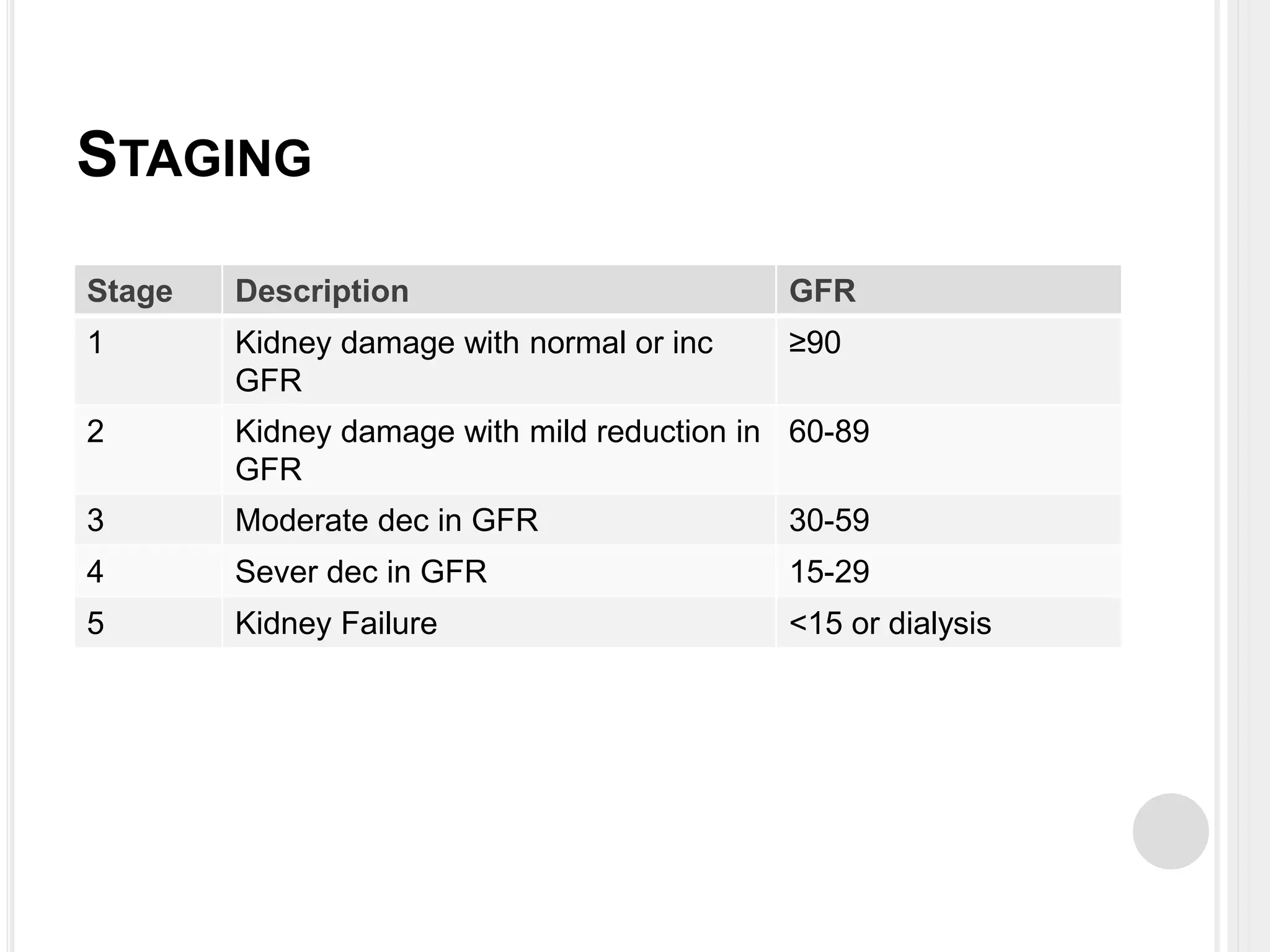
STAGING
Stage Description GFR
1 Kidney damage with normal or inc
GFR
≥90
2 Kidney damage with mild reduction in
GFR
60-89
3 Moderate dec in GFR 30-59
4 Sever dec in GFR 15-29
5 Kidney Failure <15 or dialysis
EITIOLOGY
 Diabetic kidney disease
 Hypertension
 Vascular disease (renal artery stenosis,
vasculitidies, atheroemboli, renal vein thrombosis)
 Glomerular Disease ( primary or secondary)
 Cystic kidney disease
 Urinary tract obstruction or dysfunction
 Recurrent kidney stone disease
 Congenital defects of kidney or bladder
 Unrecovered acute kidney injury
PATIENT PRESENTS WITH..
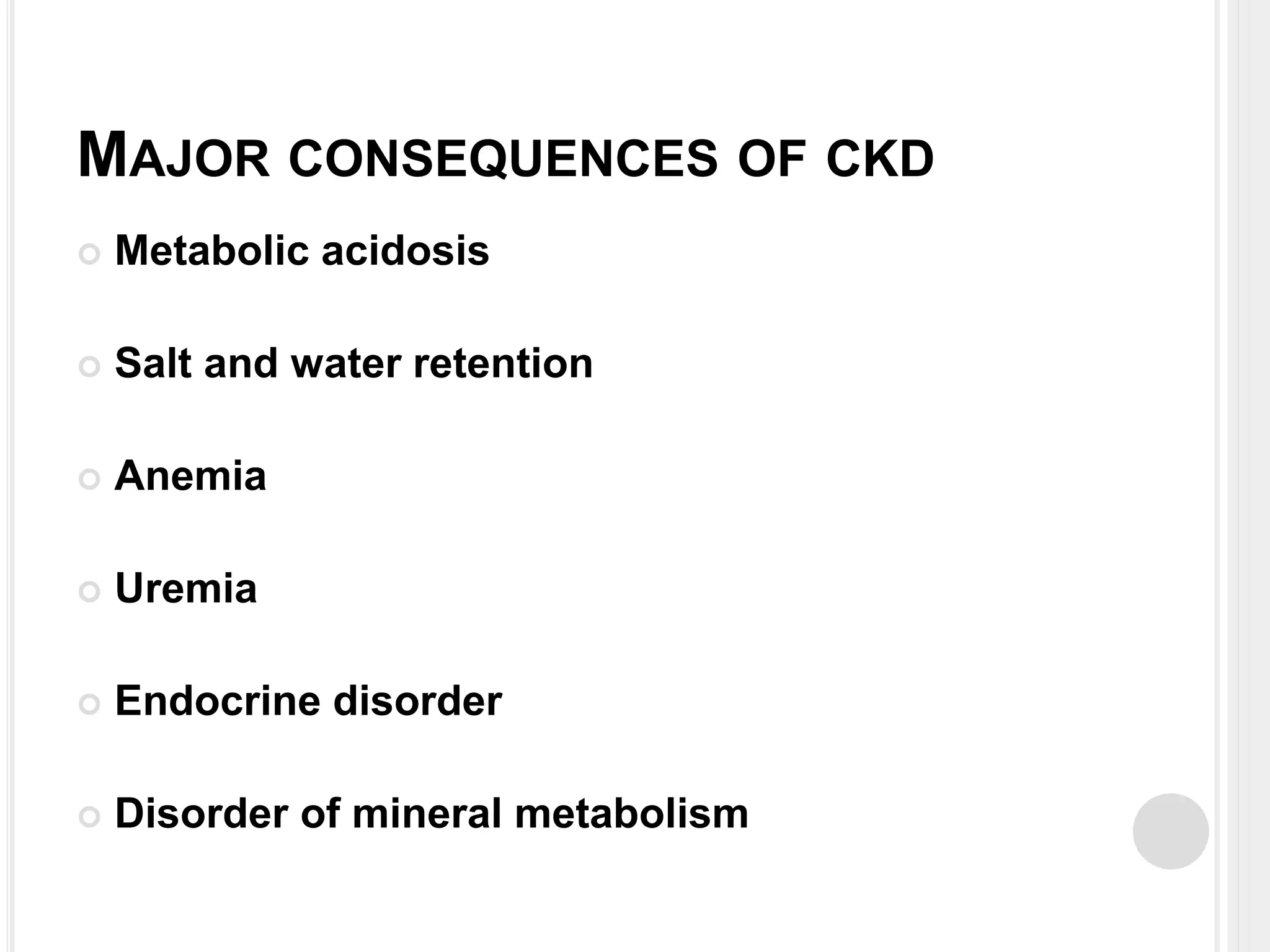
MAJOR CONSEQUENCES OF CKD
 Metabolic acidosis
 Salt and water retention
 Anemia
 Uremia
 Endocrine disorder
 Disorder of mineral metabolism
SIGNS OF METABOLIC ACIDOSIS IN
STAGE 5
 Protein energy malnutrition
 Loss of lean body mass
 Muscle weakness
SIGNS OF SALT AND WATER
RETENTION IN STAGE 5
 Peripheral edema
 Pulmonary edema
 Hypertention
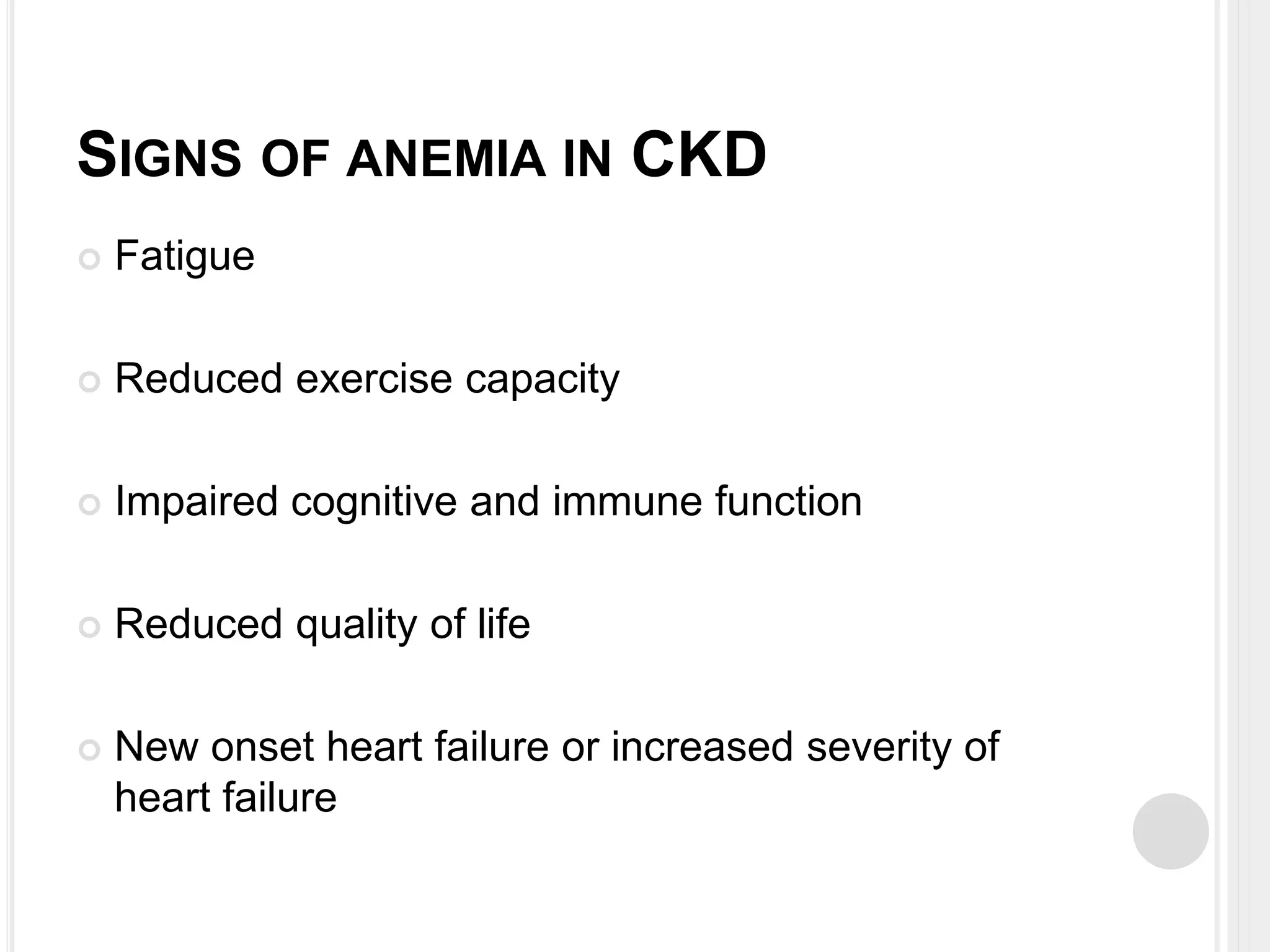
SIGNS OF ANEMIA IN CKD
 Fatigue
 Reduced exercise capacity
 Impaired cognitive and immune function
 Reduced quality of life
 New onset heart failure or increased severity of
heart failure
SIGNS OF UREMIA
 Pericarditis
 Encephalopathy
 Perpheral neuropathy
 Restless leg syndrome
 GI symptoms: N V D , anorexia
 Skin : dry skin, pruritis, echymosis
 Fatigue, inc somnolence
 Platelet dysfunction
 Sexual dysfunction
PHYSICAL SIGNS IN ADVANCED CKD
LABS
 Complete blood count (CBC)
 Basic metabolic panel
 Urinalysis (Patients with a P/C ratio above 200
mg/mg should undergo a full diagnostic
evaluation. A value of greater than 300-350 mg/mg
is within the nephrotic range.)
 Serum albumin levels: Patients may have
hypoalbuminemia due to urinary protein loss or
malnutrition
 Lipid profile: Patients with CKD have an increased
risk of cardiovascular disease
LABS
Evidence of renal bone disease can be derived from
the following tests:
 Serum phosphate
 25-hydroxyvitamin D
 Alkaline phosphatase
 Intact parathyroid hormone (PTH) levels
FURTHER EVALUATION
 Serum and urine protein electrophoresis: Screen for
multiple myeloma
 Antinuclear antibodies (ANA), double-stranded DNA antibody
levels: Screen for SLE
 Serum complement levels: Results may be depressed with
some glomerulonephritides
 Cytoplasmic and perinuclear pattern antineutrophil
cytoplasmic antibody (C-ANCA and P-ANCA) levels: Positive
findings are helpful in the diagnosis of Wegener
granulomatosis and polyarteritis nodosa; P-ANCA is also
helpful in the diagnosis of microscopic polyangiitis
 Anti–glomerular basement membrane (anti-GBM) antibodies:
Presence is highly suggestive of underlying Goodpasture
syndrome
 Hepatitis B and C, human immunodeficiency virus (HIV),
Venereal Disease Research Laboratory (VDRL) serology:
Conditions associated with some glomerulonephritides
IMAGING
 Renal ultrasonography: Useful to screen for hydronephrosis,
which may not be observed in early obstruction, or for
involvement of the retroperitoneum with fibrosis, tumor, or diffuse
adenopathy; small, echogenic kidneys are observed in advanced
renal failure
 Retrograde pyelography: Useful in cases with high suspicion
for obstruction despite negative renal ultrasonograms, as well as
for diagnosing renal stones
 Computed tomography (CT) scanning: Useful to better define
renal masses and cysts usually noted on ultrasonograms; also
the most sensitive test for identifying renal stones
 Magnetic resonance imaging (MRI): Useful in patients who
require a CT scan but who cannot receive intravenous contrast;
reliable in the diagnosis of renal vein thrombosis
 Renal radionuclide scanning: Useful to screen for renal artery
stenosis when performed with captopril administration; also
quantitates the renal contribution to the GFR
BIOPSY
 Biopsies are also indicated to guide management in
already-diagnosed conditions, such as lupus, in
which the prognosis is highly dependent on the
degree of kidney involvement. Biopsy is not
usually indicated when renal ultrasonography
reveals small, echogenic kidneys on
ultrasonography, because this finding represents
severe scarring and chronic, irreversible injury.
TREATMENT
HYPERTENTION
 HTN control with weight loss and tobacco cessation
 Salt intake reduced to 2g/day
 Initial Rx to include ACE inhibitor or angiotensin II receptor blocker
(ARB)
 Goal BP is <130/80 mm Hg; for those with proteinuria > 1-2 g/d,
goal is < 125/75 mm Hg
 When an ACE inhibitor (zestril 5-10mg HS) (ranitec 5-
10mg, 20mg HS) or an Losartan (eziday 25-50mg HS) is
initiated or uptitrated, patients should have serum creatinine
and potassium checked within 5–14 days. Hyperkalemia or
a rise in serum creatinine > 30% from baseline or dec of
GFR <15% from baseline mandates reduction or cessation
of the drug.
 Second-line antihypertensive agents include
calcium(HERBESSOR 30 mg OD, AMODIP 10mg OD)
channel-blocking agents.
HYPERKALEMIA
 IV calcium gluconate 10 % in 10 ml N/S over 10-20
mins
 Salbutamol (SALBO 5mg) nebulizer
 Low potassium diet
 4 ampules of 25 % dextrose water with 12-14 units
of insulin
 Lasix 40mg OD if systolic more than 90 mmHg
 Discontinue Aldactone
 Emergency dialysis in case of potentially lethal
hyperkalemia
PULMONARY EDEMA
 Prop up and give high flow Oxygen with face mask
 Lasix 120-250mg IV over 1 hour
 Hemodylisis or hemofiltration in unresponsive
cases
 CPAP
 Venesection (100-200ml)
DISORDER OF BONE METABOLISM
 Dietary phosphorus restriction to 1000 mg/d .
 Oral phosphorus binders, such as calcium
carbonate(Qalsan D) (650 mg/tablet) or calcium
acetate(LOPHOS) (667 mg/capsule), block
absorption of dietary phosphorus and given in TDS
or QID at the beginning of meals.
 These should be titrated to a serum phosphorus of
< 4.6 mg/dL in stage 3–4 of CKD (GFR of 15–59
mL/min) and
 < 4.6–5.5 mg/dL in ESRD patients
TREATMENT OF HYPOCALCEMIA
 Maximal elemental calcium doses of 1500 mg/d (eg,nine
tablets of calcium acetate),
 doses should be decreased if serum calcium rises
above 10 mg/dL
 Typical calcitriol(BONE-ONE) dosing is 0.25 or 0.5 mcg
orally daily or every other day initially. Cinacalcet is a
calcimimetic agent that targets the calcium-sensing
receptor on the chief cells of the parathyroid gland and
suppresses PTH production.
 Cinacalcet, 30–90 mg PO x OD, can be used if
elevated serum phosphorus or calcium levels prohibit
the use of vitamin D analogs
MANAGEMENT OF ANEMIA
 Serum ferritin < 100–200 ng/mL or iron saturation <
20% is suggestive of iron deficiency.
 Iron therapy should be withheld if the serum ferritin
is > 500–800 ng/mL, or Hb is 12 even if the iron
saturation is < 20%.
 Ferrous sulphate, gluconate or fumarate 325 mg
from OD to TDS may be given,
 Erythropoiten (Epokine, Heamex, 50IU/Kg once
or twice a week)
 Darbepoetin alfa ( Aranesp) is started at 0.45
mcg/kg and can be administered every 2–4
weeks.
 SIDE EFFECTS of ERYTHROPOETIN:
 Allergic reactions
 Hypertension
 Hyperviscosity
 Pure red cell aplasia
TREATING COAGULOPATHIES
 Raising the Hb to 9–10 g/dL in anemic patients can
reduce bleeding time via increased blood viscosity
 Desmopressin ( Minirin 25 mcg intravenously
every 8–12 hours for two doses) is a short-lived
but effective treatment for platelet dysfunction and it
is often used in preparation for surgery.
 Dialysis
TREATING ACIDOSIS
 serum bicarbonate level should be maintained at >
21 mEq/L
 Administration of bicarb should begin with 20–30
mEq/d divided into two doses per day and titrated
as needed
DRUGS WHICH REQUIRE DOSE
REDUCTION OR COMPLETE CESSATION
 Antivirals
 Benzodiazepines
 Colchicine
 Digoxin
 Exenatide
 Fenofibrate
 Gabapentin
 Insulin
 Lithium
 Metformin*
 Opioid analgesics
 Saxagliptin
 Sitagliptin
 Sotalol
 Spironolactone
 Sulphonylureas (all)
 Vildagliptin

Chronic Kidney Disease (CKD)

  • 1.
    CHRONIC KIDNEY DISEASE DrBeenish Sohail Bhutta
  • 2.
    WHAT IS CKD? National Kidney Foundation (NKF) defines CKD as evidence of renal damage (based on abnormal UA [proteinuria, hematuria] or structural abnormalities (found with US) or GFR < 60 mL/min for 3 or more months
  • 3.
    PATHOPHYSIOLOGY  In CKD,reduced clearance of certain solutes principally excreted by the kidney results in their retention in the body fluids.  CKD is rarely reversible and leads to progressive decline in renal function. Reduction in renal mass leads to hypertrophy of the remaining nephrons with hyperfiltration, and the GFR in these nephrons is transiently increased, placing a burden on remaining nephrons, leading to progressive glomerular sclerosis and interstitial fibrosis
  • 4.
    STAGING Stage Description GFR 1Kidney damage with normal or inc GFR ≥90 2 Kidney damage with mild reduction in GFR 60-89 3 Moderate dec in GFR 30-59 4 Sever dec in GFR 15-29 5 Kidney Failure <15 or dialysis
  • 5.
    EITIOLOGY  Diabetic kidneydisease  Hypertension  Vascular disease (renal artery stenosis, vasculitidies, atheroemboli, renal vein thrombosis)  Glomerular Disease ( primary or secondary)  Cystic kidney disease  Urinary tract obstruction or dysfunction  Recurrent kidney stone disease  Congenital defects of kidney or bladder  Unrecovered acute kidney injury
  • 6.
  • 7.
    MAJOR CONSEQUENCES OFCKD  Metabolic acidosis  Salt and water retention  Anemia  Uremia  Endocrine disorder  Disorder of mineral metabolism
  • 8.
    SIGNS OF METABOLICACIDOSIS IN STAGE 5  Protein energy malnutrition  Loss of lean body mass  Muscle weakness
  • 9.
    SIGNS OF SALTAND WATER RETENTION IN STAGE 5  Peripheral edema  Pulmonary edema  Hypertention
  • 10.
    SIGNS OF ANEMIAIN CKD  Fatigue  Reduced exercise capacity  Impaired cognitive and immune function  Reduced quality of life  New onset heart failure or increased severity of heart failure
  • 11.
    SIGNS OF UREMIA Pericarditis  Encephalopathy  Perpheral neuropathy  Restless leg syndrome  GI symptoms: N V D , anorexia  Skin : dry skin, pruritis, echymosis  Fatigue, inc somnolence  Platelet dysfunction  Sexual dysfunction
  • 12.
    PHYSICAL SIGNS INADVANCED CKD
  • 13.
    LABS  Complete bloodcount (CBC)  Basic metabolic panel  Urinalysis (Patients with a P/C ratio above 200 mg/mg should undergo a full diagnostic evaluation. A value of greater than 300-350 mg/mg is within the nephrotic range.)  Serum albumin levels: Patients may have hypoalbuminemia due to urinary protein loss or malnutrition  Lipid profile: Patients with CKD have an increased risk of cardiovascular disease
  • 14.
    LABS Evidence of renalbone disease can be derived from the following tests:  Serum phosphate  25-hydroxyvitamin D  Alkaline phosphatase  Intact parathyroid hormone (PTH) levels
  • 15.
    FURTHER EVALUATION  Serumand urine protein electrophoresis: Screen for multiple myeloma  Antinuclear antibodies (ANA), double-stranded DNA antibody levels: Screen for SLE  Serum complement levels: Results may be depressed with some glomerulonephritides  Cytoplasmic and perinuclear pattern antineutrophil cytoplasmic antibody (C-ANCA and P-ANCA) levels: Positive findings are helpful in the diagnosis of Wegener granulomatosis and polyarteritis nodosa; P-ANCA is also helpful in the diagnosis of microscopic polyangiitis  Anti–glomerular basement membrane (anti-GBM) antibodies: Presence is highly suggestive of underlying Goodpasture syndrome  Hepatitis B and C, human immunodeficiency virus (HIV), Venereal Disease Research Laboratory (VDRL) serology: Conditions associated with some glomerulonephritides
  • 16.
    IMAGING  Renal ultrasonography:Useful to screen for hydronephrosis, which may not be observed in early obstruction, or for involvement of the retroperitoneum with fibrosis, tumor, or diffuse adenopathy; small, echogenic kidneys are observed in advanced renal failure  Retrograde pyelography: Useful in cases with high suspicion for obstruction despite negative renal ultrasonograms, as well as for diagnosing renal stones  Computed tomography (CT) scanning: Useful to better define renal masses and cysts usually noted on ultrasonograms; also the most sensitive test for identifying renal stones  Magnetic resonance imaging (MRI): Useful in patients who require a CT scan but who cannot receive intravenous contrast; reliable in the diagnosis of renal vein thrombosis  Renal radionuclide scanning: Useful to screen for renal artery stenosis when performed with captopril administration; also quantitates the renal contribution to the GFR
  • 17.
    BIOPSY  Biopsies arealso indicated to guide management in already-diagnosed conditions, such as lupus, in which the prognosis is highly dependent on the degree of kidney involvement. Biopsy is not usually indicated when renal ultrasonography reveals small, echogenic kidneys on ultrasonography, because this finding represents severe scarring and chronic, irreversible injury.
  • 18.
  • 19.
    HYPERTENTION  HTN controlwith weight loss and tobacco cessation  Salt intake reduced to 2g/day  Initial Rx to include ACE inhibitor or angiotensin II receptor blocker (ARB)  Goal BP is <130/80 mm Hg; for those with proteinuria > 1-2 g/d, goal is < 125/75 mm Hg  When an ACE inhibitor (zestril 5-10mg HS) (ranitec 5- 10mg, 20mg HS) or an Losartan (eziday 25-50mg HS) is initiated or uptitrated, patients should have serum creatinine and potassium checked within 5–14 days. Hyperkalemia or a rise in serum creatinine > 30% from baseline or dec of GFR <15% from baseline mandates reduction or cessation of the drug.  Second-line antihypertensive agents include calcium(HERBESSOR 30 mg OD, AMODIP 10mg OD) channel-blocking agents.
  • 20.
    HYPERKALEMIA  IV calciumgluconate 10 % in 10 ml N/S over 10-20 mins  Salbutamol (SALBO 5mg) nebulizer  Low potassium diet  4 ampules of 25 % dextrose water with 12-14 units of insulin  Lasix 40mg OD if systolic more than 90 mmHg  Discontinue Aldactone  Emergency dialysis in case of potentially lethal hyperkalemia
  • 21.
    PULMONARY EDEMA  Propup and give high flow Oxygen with face mask  Lasix 120-250mg IV over 1 hour  Hemodylisis or hemofiltration in unresponsive cases  CPAP  Venesection (100-200ml)
  • 22.
    DISORDER OF BONEMETABOLISM  Dietary phosphorus restriction to 1000 mg/d .  Oral phosphorus binders, such as calcium carbonate(Qalsan D) (650 mg/tablet) or calcium acetate(LOPHOS) (667 mg/capsule), block absorption of dietary phosphorus and given in TDS or QID at the beginning of meals.  These should be titrated to a serum phosphorus of < 4.6 mg/dL in stage 3–4 of CKD (GFR of 15–59 mL/min) and  < 4.6–5.5 mg/dL in ESRD patients
  • 23.
    TREATMENT OF HYPOCALCEMIA Maximal elemental calcium doses of 1500 mg/d (eg,nine tablets of calcium acetate),  doses should be decreased if serum calcium rises above 10 mg/dL  Typical calcitriol(BONE-ONE) dosing is 0.25 or 0.5 mcg orally daily or every other day initially. Cinacalcet is a calcimimetic agent that targets the calcium-sensing receptor on the chief cells of the parathyroid gland and suppresses PTH production.  Cinacalcet, 30–90 mg PO x OD, can be used if elevated serum phosphorus or calcium levels prohibit the use of vitamin D analogs
  • 24.
    MANAGEMENT OF ANEMIA Serum ferritin < 100–200 ng/mL or iron saturation < 20% is suggestive of iron deficiency.  Iron therapy should be withheld if the serum ferritin is > 500–800 ng/mL, or Hb is 12 even if the iron saturation is < 20%.  Ferrous sulphate, gluconate or fumarate 325 mg from OD to TDS may be given,  Erythropoiten (Epokine, Heamex, 50IU/Kg once or twice a week)  Darbepoetin alfa ( Aranesp) is started at 0.45 mcg/kg and can be administered every 2–4 weeks.
  • 25.
     SIDE EFFECTSof ERYTHROPOETIN:  Allergic reactions  Hypertension  Hyperviscosity  Pure red cell aplasia
  • 26.
    TREATING COAGULOPATHIES  Raisingthe Hb to 9–10 g/dL in anemic patients can reduce bleeding time via increased blood viscosity  Desmopressin ( Minirin 25 mcg intravenously every 8–12 hours for two doses) is a short-lived but effective treatment for platelet dysfunction and it is often used in preparation for surgery.  Dialysis
  • 27.
    TREATING ACIDOSIS  serumbicarbonate level should be maintained at > 21 mEq/L  Administration of bicarb should begin with 20–30 mEq/d divided into two doses per day and titrated as needed
  • 28.
    DRUGS WHICH REQUIREDOSE REDUCTION OR COMPLETE CESSATION  Antivirals  Benzodiazepines  Colchicine  Digoxin  Exenatide  Fenofibrate  Gabapentin  Insulin  Lithium  Metformin*  Opioid analgesics  Saxagliptin  Sitagliptin  Sotalol  Spironolactone  Sulphonylureas (all)  Vildagliptin

Editor's Notes

  • #29 *use with caution if GFR 30-60 mL/min/1.73m2 ; not recommended if GFR < 30 mL/min/1.73m2 )