7.1 The Respiratory Process in energy Production
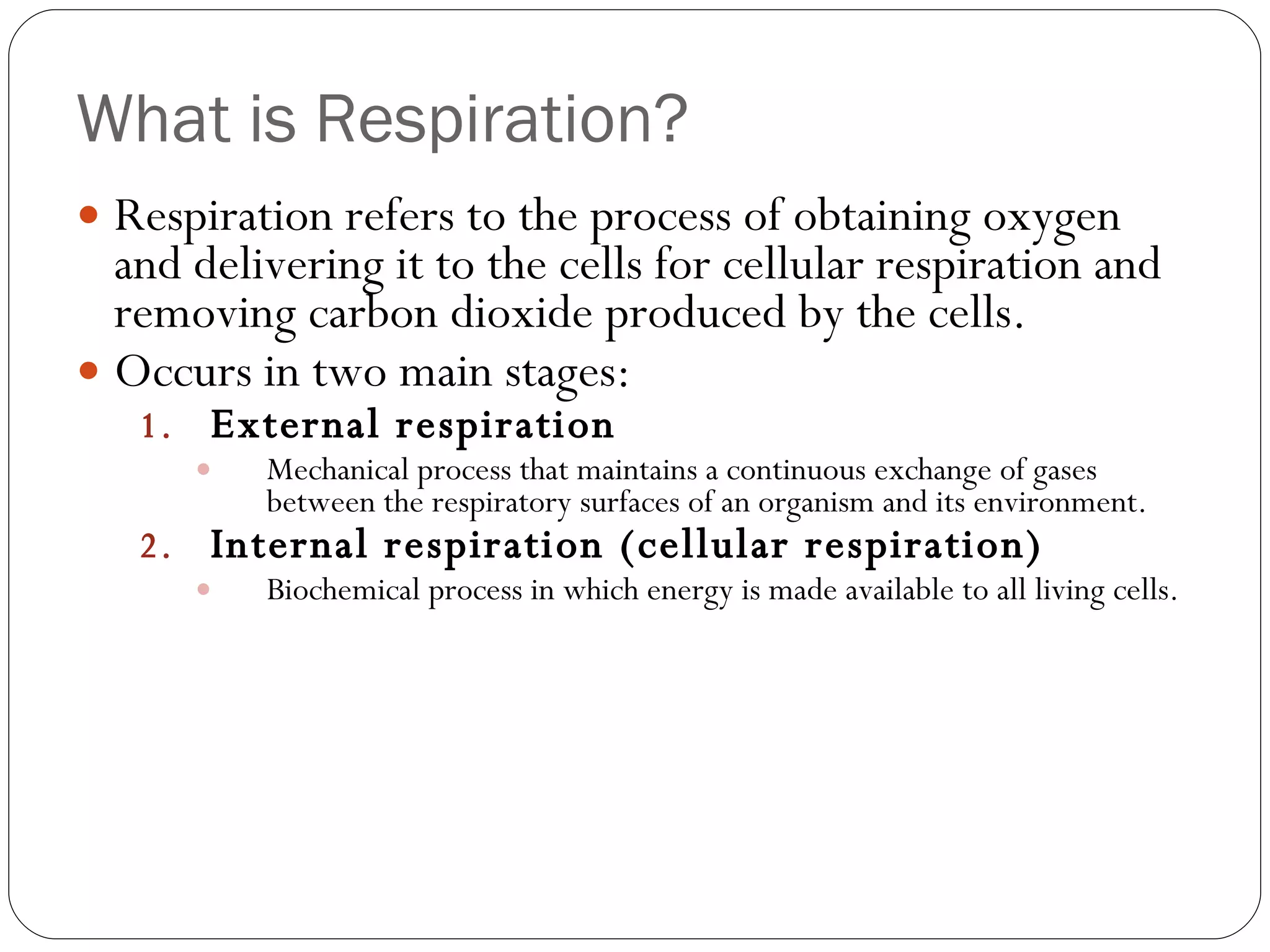
What is Respiration? Respiration refers to the process of obtaining oxygen and delivering it to the cells for cellular respiration and removing carbon dioxide produced by the cells. Occurs in two main stages: External respiration Mechanical process that maintains a continuous exchange of gases between the respiratory surfaces of an organism and its environment. Internal respiration (cellular respiration) Biochemical process in which energy is made available to all living cells.
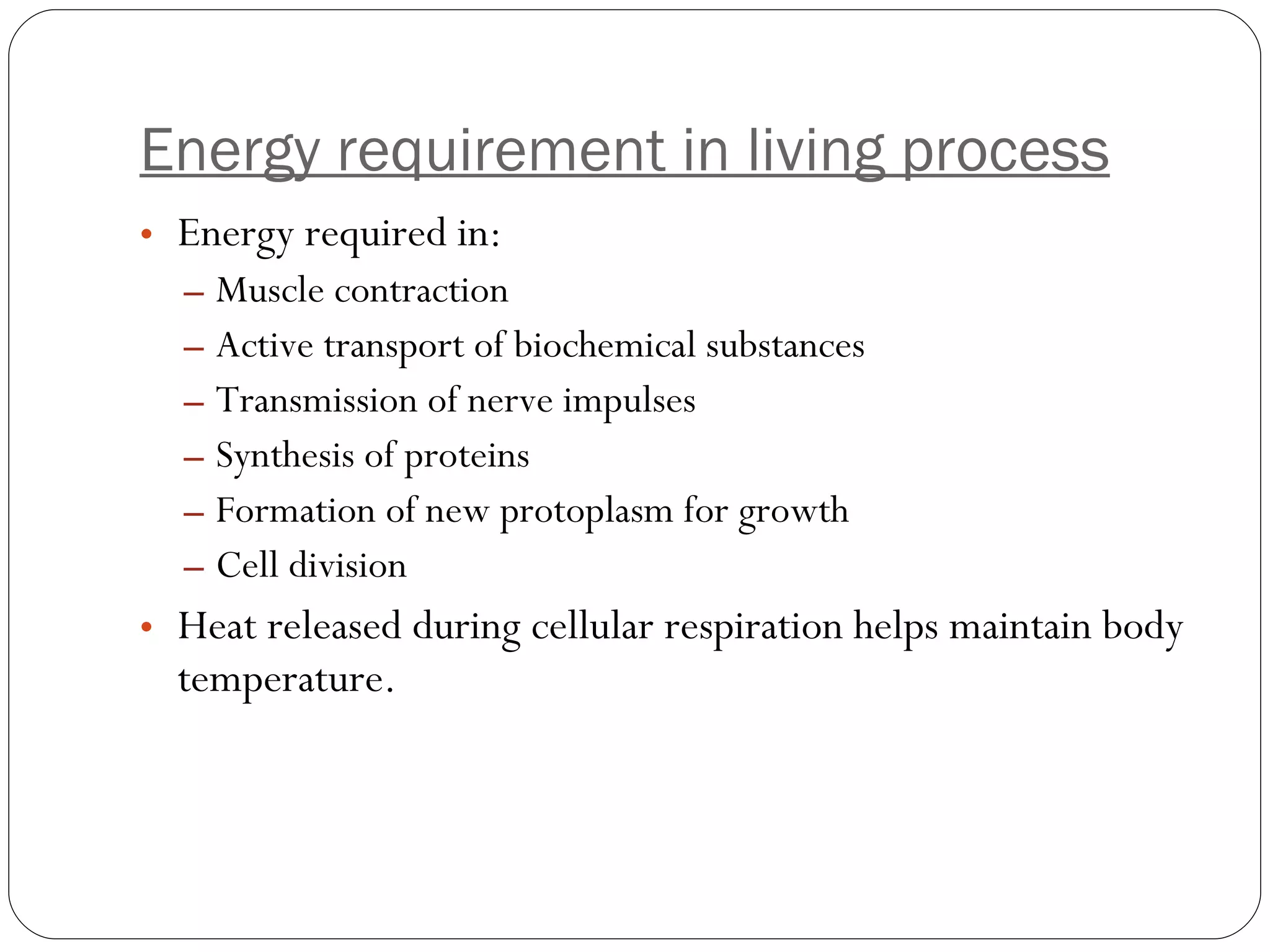
Energy requirement in living process Energy required in: Muscle contraction Active transport of biochemical substances Transmission of nerve impulses Synthesis of proteins Formation of new protoplasm for growth Cell division Heat released during cellular respiration helps maintain body temperature.
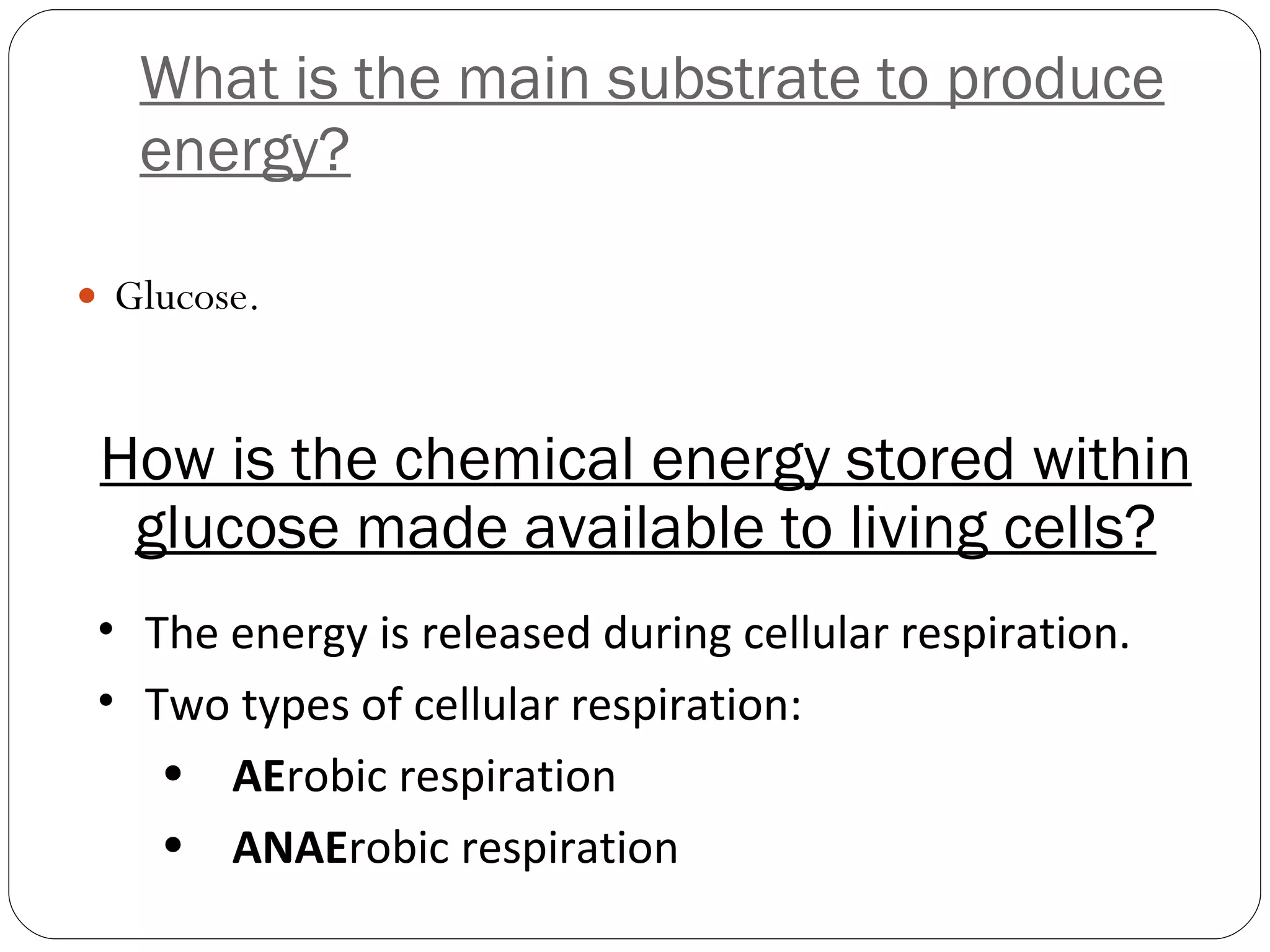
What is the main substrate to produce energy? Glucose. How is the chemical energy stored within glucose made available to living cells? The energy is released during cellular respiration. Two types of cellular respiration: AE robic respiration ANAE robic respiration
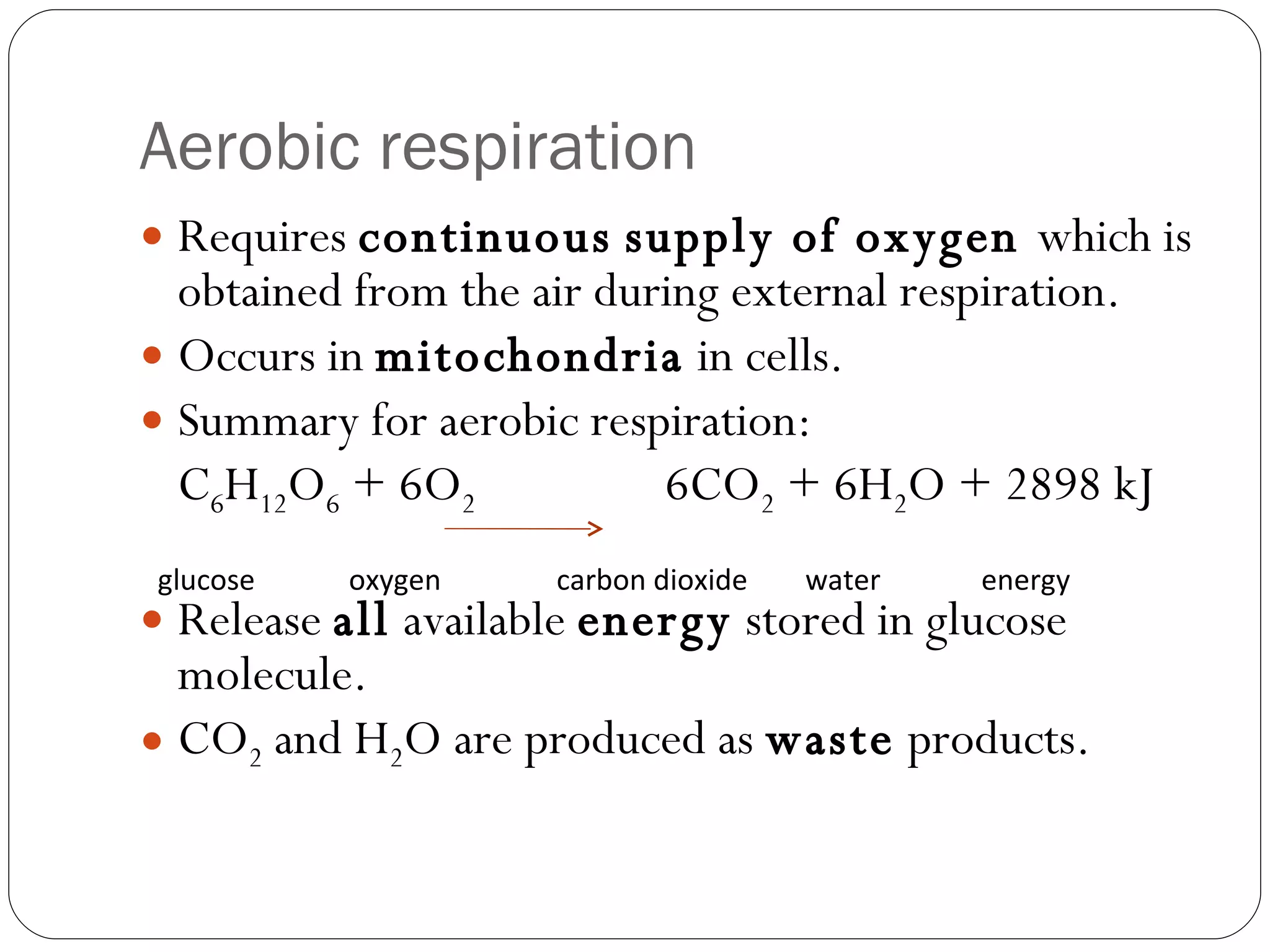
Aerobic respiration Requires  continuous   supply of oxygen  which is obtained from the air during external respiration. Occurs in  mitochondria  in cells. Summary for aerobic respiration: C 6 H 12 O 6  + 6O 2   6CO 2  + 6H 2 O + 2898 kJ Release  all  available  energy  stored in glucose molecule. CO 2  and H 2 O are produced as  waste  products. glucose  oxygen  carbon dioxide  water  energy
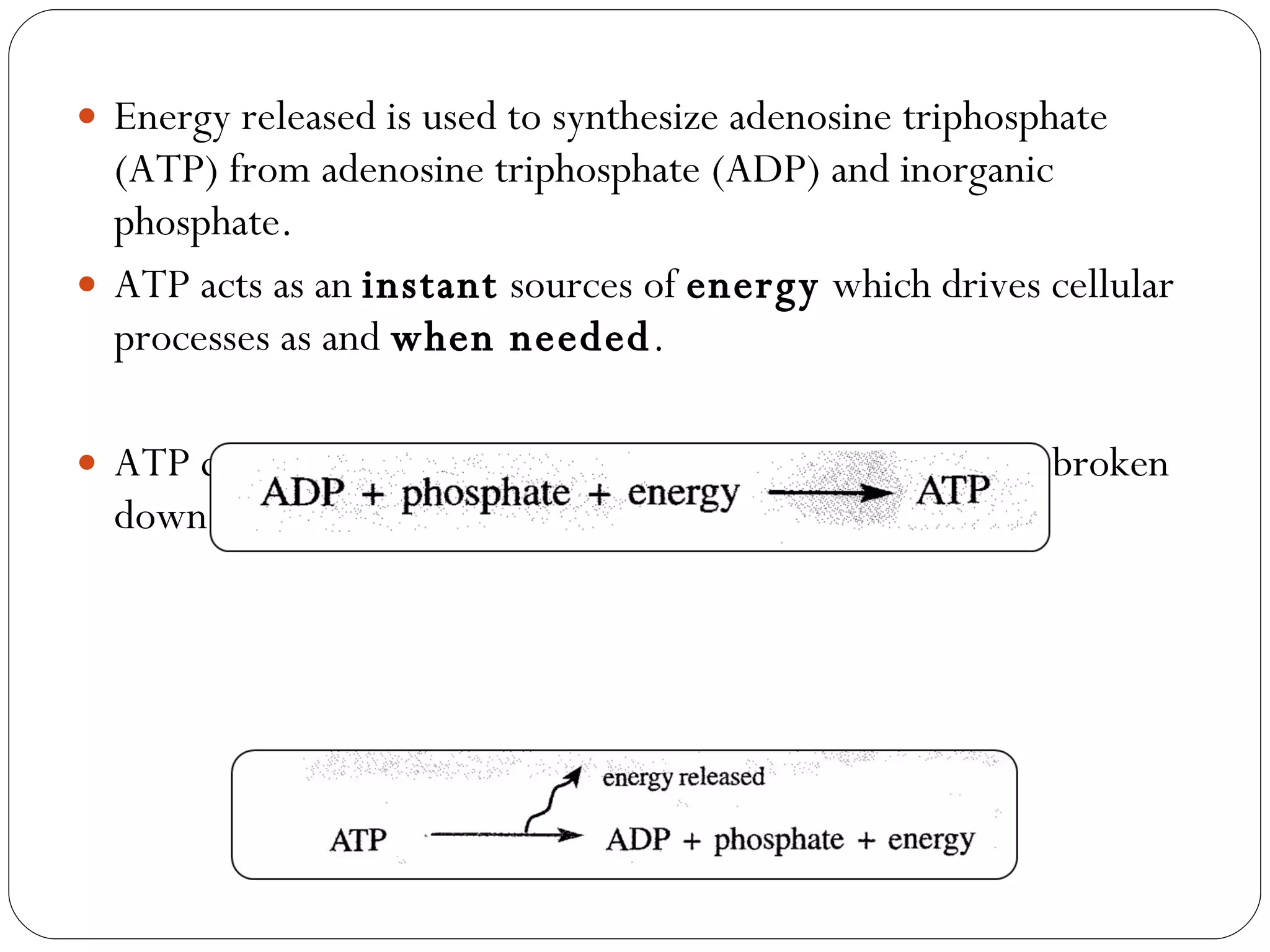
Energy released is used to synthesize adenosine triphosphate (ATP) from adenosine triphosphate (ADP) and inorganic phosphate. ATP acts as an  instant  sources of  energy  which drives cellular processes as and  when needed . ATP consists of  phosphate bonds  which can be easily broken down to  release energy  when required by the body.
How do cells overcome the shortfall in oxygen supply? Cells undergo  ana erobic respiration, a process in which the cells continue to generate ATP without utilizing oxygen.
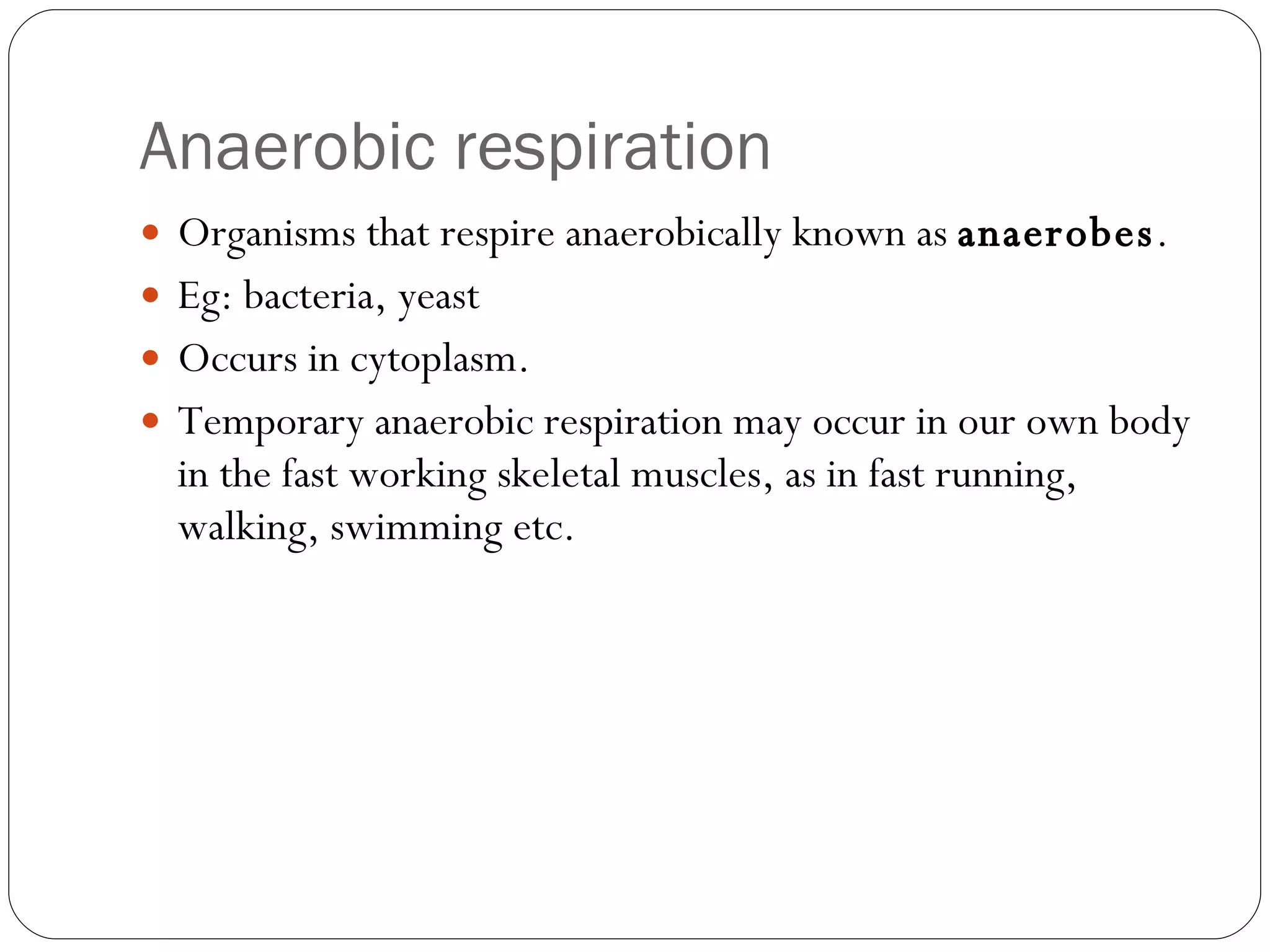
Anaerobic respiration Organisms that respire anaerobically known as  anaerobes . Eg: bacteria, yeast Occurs in cytoplasm. Temporary anaerobic respiration may occur in our own body in the fast working skeletal muscles, as in fast running, walking, swimming etc.
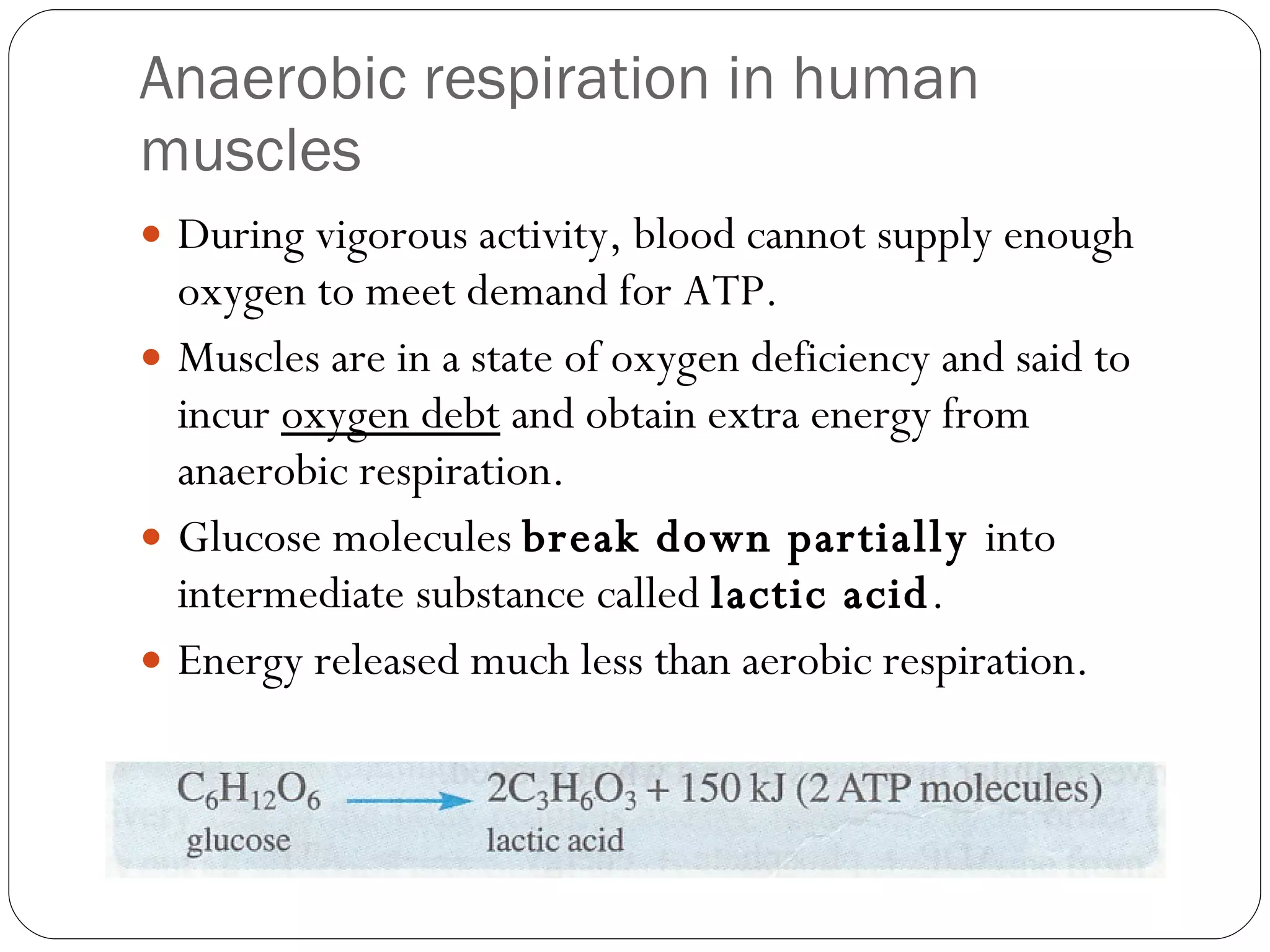
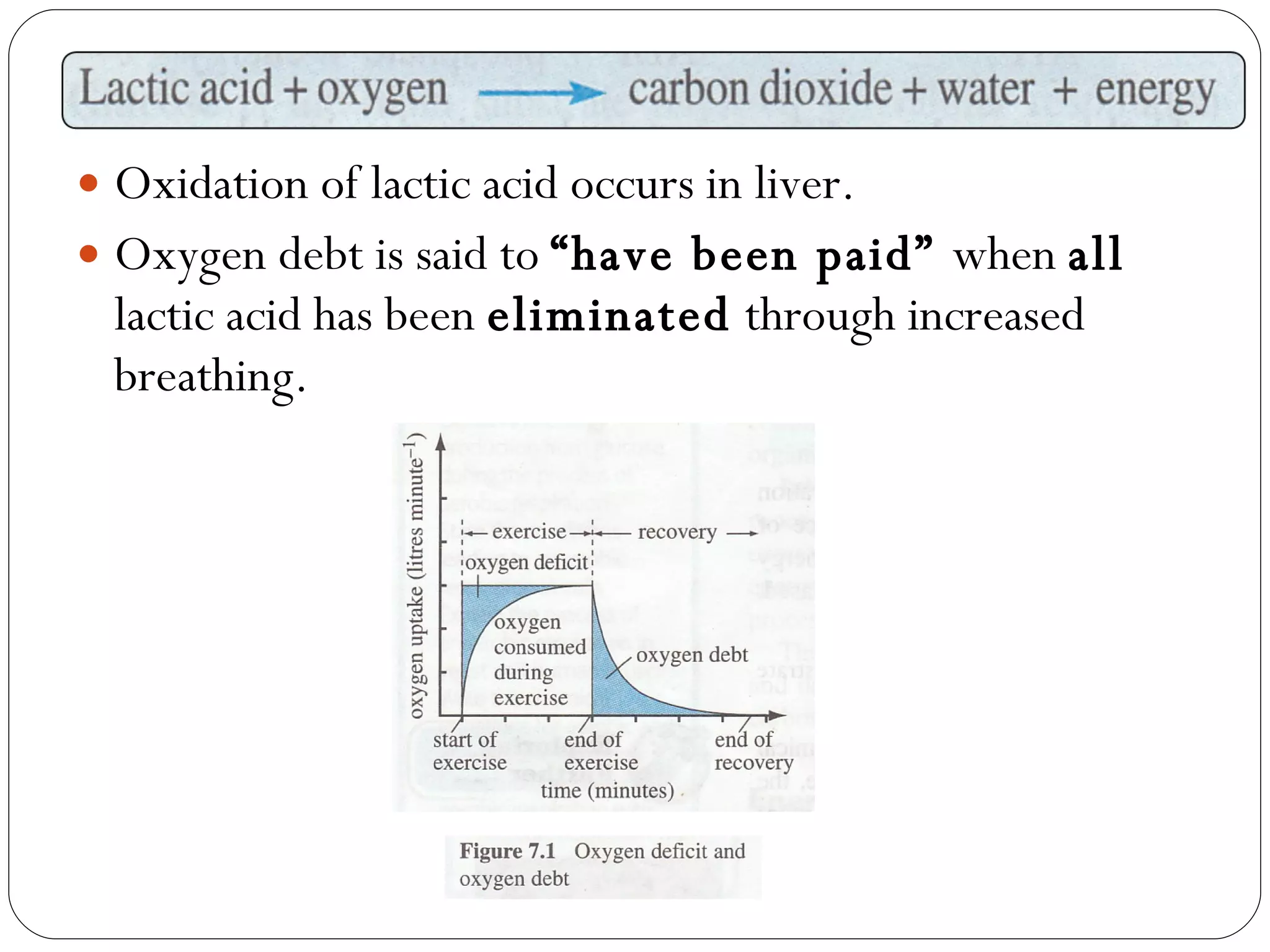
Anaerobic respiration in human muscles During vigorous activity, blood cannot supply enough oxygen to meet demand for ATP. Muscles are in a state of oxygen deficiency and said to incur  oxygen debt  and obtain extra energy from anaerobic respiration. Glucose molecules  break down partially  into intermediate substance called  lactic acid . Energy released much less than aerobic respiration.
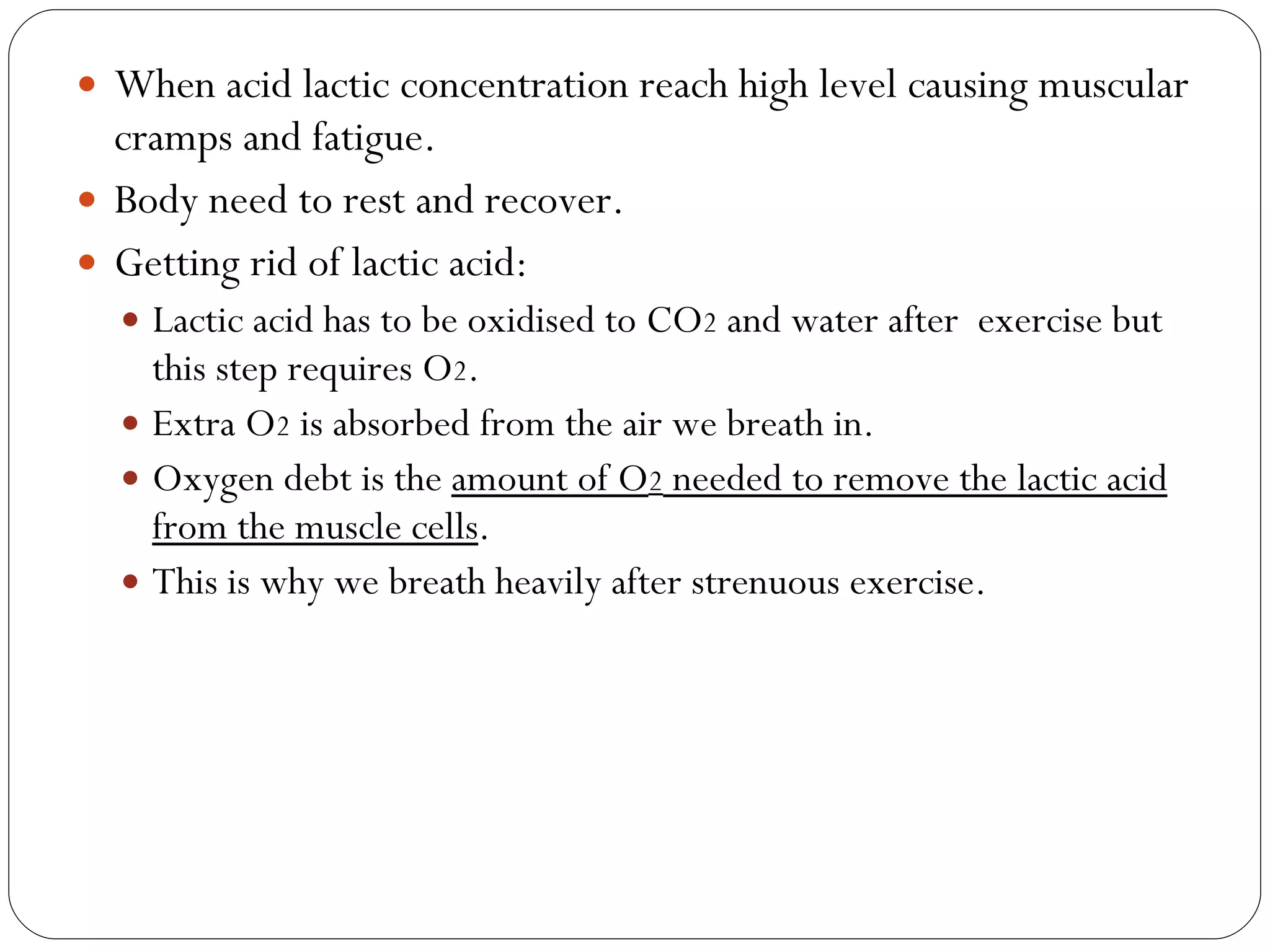
When acid lactic concentration reach high level causing muscular cramps and fatigue. Body need to rest and recover. Getting rid of lactic acid: Lactic acid has to be oxidised to CO 2  and water after  exercise but this step requires O 2 . Extra O 2  is absorbed from the air we breath in. Oxygen debt is the  amount of O 2  needed to remove the lactic acid from the muscle cells . This is why we breath heavily after strenuous exercise.
Oxidation of lactic acid occurs in liver. Oxygen debt is said to  “have been paid”  when  all  lactic acid has been  eliminated  through increased breathing.
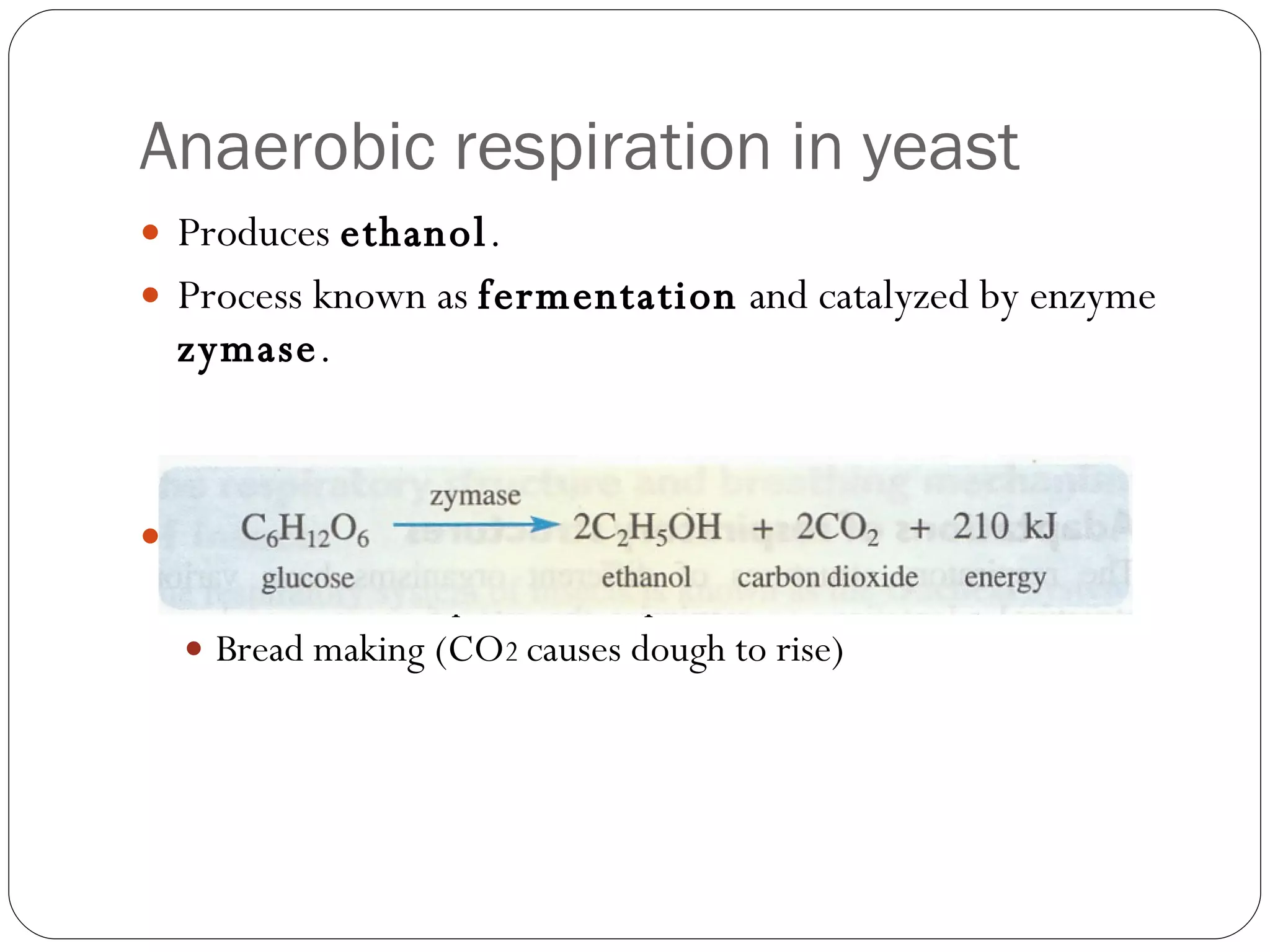
Anaerobic respiration in yeast Produces  ethanol . Process known as  fermentation  and catalyzed by enzyme  zymase . Application: Wine and beer production (production of ethanol) Bread making (CO 2  causes dough to rise)
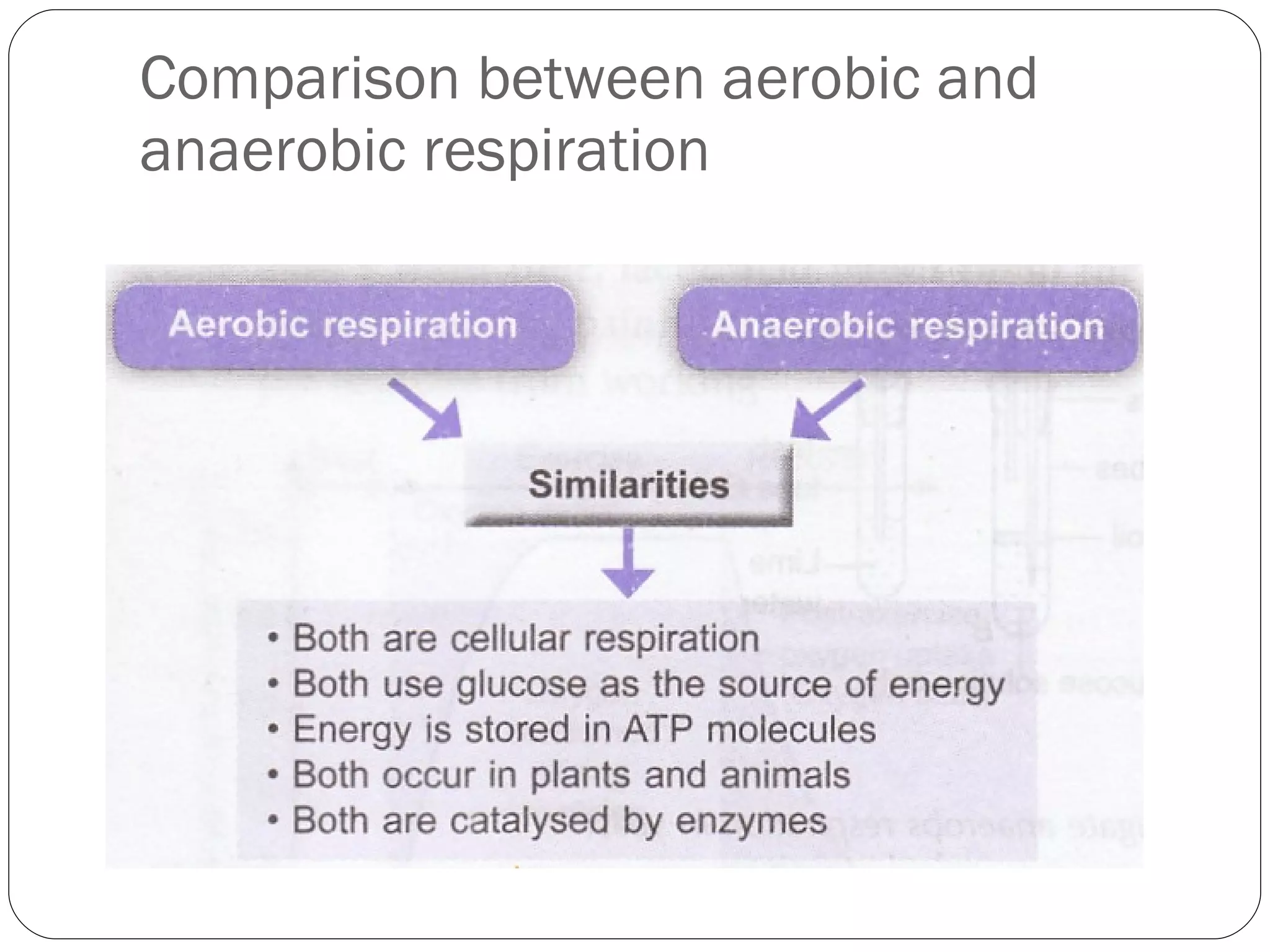
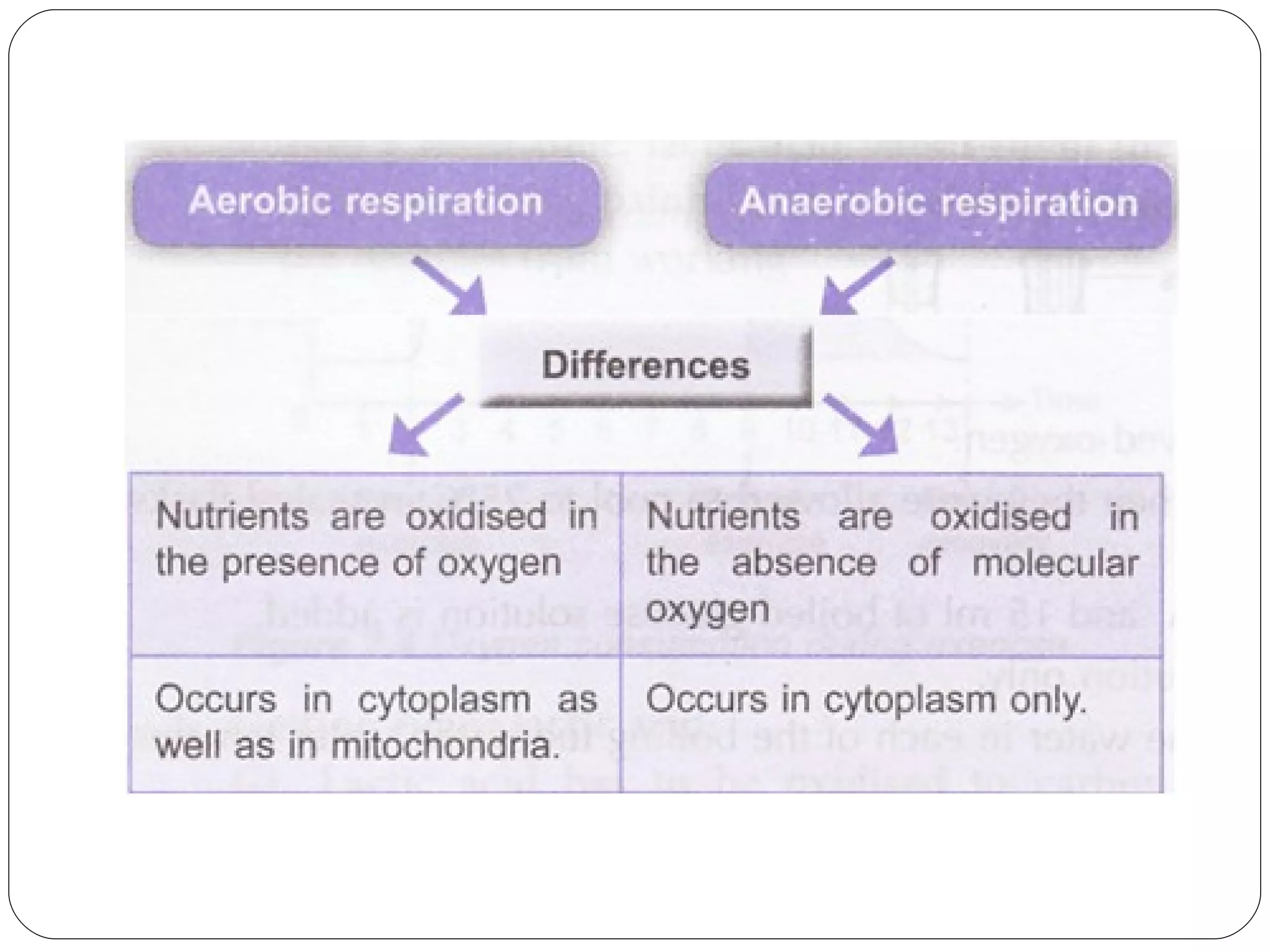
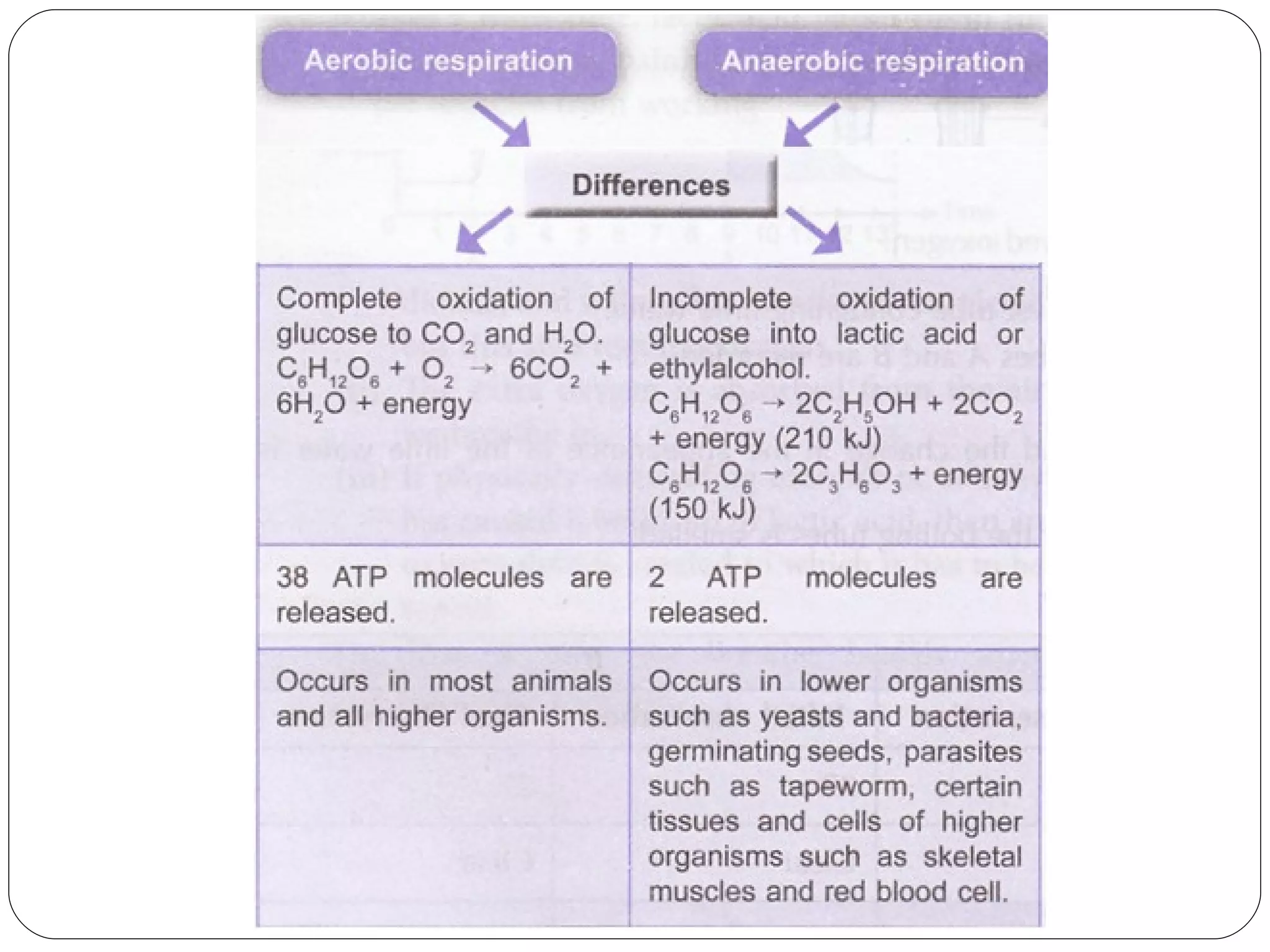
Comparison between aerobic and anaerobic respiration


7.1

  • 1.
    7.1 The RespiratoryProcess in energy Production
  • 2.
    What is Respiration?Respiration refers to the process of obtaining oxygen and delivering it to the cells for cellular respiration and removing carbon dioxide produced by the cells. Occurs in two main stages: External respiration Mechanical process that maintains a continuous exchange of gases between the respiratory surfaces of an organism and its environment. Internal respiration (cellular respiration) Biochemical process in which energy is made available to all living cells.
  • 3.
    Energy requirement inliving process Energy required in: Muscle contraction Active transport of biochemical substances Transmission of nerve impulses Synthesis of proteins Formation of new protoplasm for growth Cell division Heat released during cellular respiration helps maintain body temperature.
  • 4.
    What is themain substrate to produce energy? Glucose. How is the chemical energy stored within glucose made available to living cells? The energy is released during cellular respiration. Two types of cellular respiration: AE robic respiration ANAE robic respiration
  • 5.
    Aerobic respiration Requires continuous supply of oxygen which is obtained from the air during external respiration. Occurs in mitochondria in cells. Summary for aerobic respiration: C 6 H 12 O 6 + 6O 2 6CO 2 + 6H 2 O + 2898 kJ Release all available energy stored in glucose molecule. CO 2 and H 2 O are produced as waste products. glucose oxygen carbon dioxide water energy
  • 6.
    Energy released isused to synthesize adenosine triphosphate (ATP) from adenosine triphosphate (ADP) and inorganic phosphate. ATP acts as an instant sources of energy which drives cellular processes as and when needed . ATP consists of phosphate bonds which can be easily broken down to release energy when required by the body.
  • 7.
    How do cellsovercome the shortfall in oxygen supply? Cells undergo ana erobic respiration, a process in which the cells continue to generate ATP without utilizing oxygen.
  • 8.
    Anaerobic respiration Organismsthat respire anaerobically known as anaerobes . Eg: bacteria, yeast Occurs in cytoplasm. Temporary anaerobic respiration may occur in our own body in the fast working skeletal muscles, as in fast running, walking, swimming etc.
  • 9.
    Anaerobic respiration inhuman muscles During vigorous activity, blood cannot supply enough oxygen to meet demand for ATP. Muscles are in a state of oxygen deficiency and said to incur oxygen debt and obtain extra energy from anaerobic respiration. Glucose molecules break down partially into intermediate substance called lactic acid . Energy released much less than aerobic respiration.
  • 10.
    When acid lacticconcentration reach high level causing muscular cramps and fatigue. Body need to rest and recover. Getting rid of lactic acid: Lactic acid has to be oxidised to CO 2 and water after exercise but this step requires O 2 . Extra O 2 is absorbed from the air we breath in. Oxygen debt is the amount of O 2 needed to remove the lactic acid from the muscle cells . This is why we breath heavily after strenuous exercise.
  • 11.
    Oxidation of lacticacid occurs in liver. Oxygen debt is said to “have been paid” when all lactic acid has been eliminated through increased breathing.
  • 12.
    Anaerobic respiration inyeast Produces ethanol . Process known as fermentation and catalyzed by enzyme zymase . Application: Wine and beer production (production of ethanol) Bread making (CO 2 causes dough to rise)
  • 13.
    Comparison between aerobicand anaerobic respiration
  • 14.
  • 15.