ANAEROBIC
RESPIRATION
REPORTED BY:
Harvey S. Lacdao
Meregel Joshua N. Santos
   CELLULAR RESPIRATION


       GLYCOLISIS


                    ANAEROBIC
                    RESPIRATION

                             FERMENTATION


                                    DATAS AND
                                    TABLES
CELLULAR RESPIRATION
   All living things in the world including plants require
    energy in order to function. This energy is obtained
    from the food we eat. The cells break down the
    energy stored in the food through a unique system
    known as cellular respiration. In plain
    language, cellular respiration means the procedure
    through which the food is broken down by the cells
    of living beings in order to produce the energy which
    is in the form of ATP molecules (also known as the
    Adenosine Tri Phosphate molecules). Plants use a
    part of this ATP energy during photosynthesis for
    producing sugar. The sugars are then broken down
    during cellular respiration. This cycle is continued
    again and again as long as the plant lives.
GLYCOLISIS
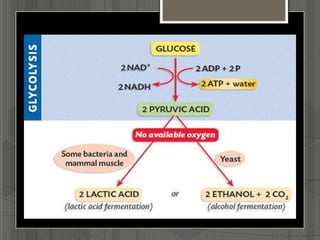
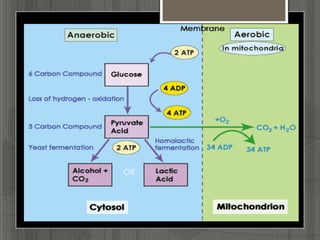
   Glycolysis (it literally means glucose degradation)
    is a metabolic pathway which changes glucose
    C6H12O6 into pyruvate CH3COCOO + H. The free
    energy which is generated in this process is utilized
    to make high energy compounds namely ATP
    (adenosine triphophate) and NADH (reduced
    nicotinamide adenine dinucleotide).
   This occurs in the cytoplasm.
   Was found out by Gustav Embden and Otto
    Meyerhof.
ANAEROBIC RESPIRATION
   AN Anaerobic organism is called an
    ANAEROBE
   One way of doing this is to just get the
    pyruvate to do oxidation; in this procedure
    the pyruvate gets converted in to lactate (this
    is the conjugate base of lactic acid) in a
    process which is called lactic acid
    fermentation. This process can be
    represented in a word equation as:
   pyruvate + NADH + H -> lactate + NAD
ANAEROBIC RESPIRATION
   Some organisms like yeast turn NADH to NAD in a
    reaction called as ethanol fermentation. In the
    reaction the pyruvate is turned first into
    acetaldehyde and CO2, after this into ethanol.
   The lactic acid fermentation and ethanol
    fermentation can happen in the lack of oxygen
    presence. The anaerobic fermentation lets a lot of
    single celled organisms to use glycolysis as their
    only source of energy. From the two examples
    above regarding the fermentation, NADH is
    oxidized by sending 2 electrons to pyruvate. But
    anaerobic bacteria use a big range of
    compounds as the terminal electron acceptors in
    the process of cellular respiration
Anaerobic respiration for
humans
   In general in humans it is the muscle tissue
    that respires anaerobically normally during
    exercise, at which time the body cannot
    intake the required oxygen for the cells to
    respire. This clearly indicates that enough
    energy is not made and the muscles require
    more energy. So they achieve it in the
    absence of oxygen. But when they have
    stopped exercising, commonly an oxygen
    debt has been created, because of the large
    amount of lactic acid inside the muscles. It is
    because of this fact the humans breath
    heavily after exercising to negate the oxygen
    debt.
FERMENTATION
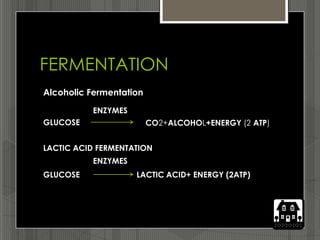
Alcoholic Fermentation

          ENZYMES
GLUCOSE                  CO2+ALCOHOL+ENERGY (2 ATP)


LACTIC ACID FERMENTATION
          ENZYMES
GLUCOSE             LACTIC ACID+ ENERGY (2ATP)
OR
QUIZ
 1-4
 IDENTIFICATION
5
 YES/NO
 6-10   COMPLETION

Anaerobic respiration

  • 1.
    ANAEROBIC RESPIRATION REPORTED BY: Harvey S.Lacdao Meregel Joshua N. Santos
  • 2.
    CELLULAR RESPIRATION GLYCOLISIS ANAEROBIC RESPIRATION FERMENTATION DATAS AND TABLES
  • 3.
    CELLULAR RESPIRATION  All living things in the world including plants require energy in order to function. This energy is obtained from the food we eat. The cells break down the energy stored in the food through a unique system known as cellular respiration. In plain language, cellular respiration means the procedure through which the food is broken down by the cells of living beings in order to produce the energy which is in the form of ATP molecules (also known as the Adenosine Tri Phosphate molecules). Plants use a part of this ATP energy during photosynthesis for producing sugar. The sugars are then broken down during cellular respiration. This cycle is continued again and again as long as the plant lives.
  • 4.
    GLYCOLISIS  Glycolysis (it literally means glucose degradation) is a metabolic pathway which changes glucose C6H12O6 into pyruvate CH3COCOO + H. The free energy which is generated in this process is utilized to make high energy compounds namely ATP (adenosine triphophate) and NADH (reduced nicotinamide adenine dinucleotide).  This occurs in the cytoplasm.  Was found out by Gustav Embden and Otto Meyerhof.
  • 5.
    ANAEROBIC RESPIRATION  AN Anaerobic organism is called an ANAEROBE  One way of doing this is to just get the pyruvate to do oxidation; in this procedure the pyruvate gets converted in to lactate (this is the conjugate base of lactic acid) in a process which is called lactic acid fermentation. This process can be represented in a word equation as:  pyruvate + NADH + H -> lactate + NAD
  • 6.
    ANAEROBIC RESPIRATION  Some organisms like yeast turn NADH to NAD in a reaction called as ethanol fermentation. In the reaction the pyruvate is turned first into acetaldehyde and CO2, after this into ethanol.  The lactic acid fermentation and ethanol fermentation can happen in the lack of oxygen presence. The anaerobic fermentation lets a lot of single celled organisms to use glycolysis as their only source of energy. From the two examples above regarding the fermentation, NADH is oxidized by sending 2 electrons to pyruvate. But anaerobic bacteria use a big range of compounds as the terminal electron acceptors in the process of cellular respiration
  • 7.
    Anaerobic respiration for humans  In general in humans it is the muscle tissue that respires anaerobically normally during exercise, at which time the body cannot intake the required oxygen for the cells to respire. This clearly indicates that enough energy is not made and the muscles require more energy. So they achieve it in the absence of oxygen. But when they have stopped exercising, commonly an oxygen debt has been created, because of the large amount of lactic acid inside the muscles. It is because of this fact the humans breath heavily after exercising to negate the oxygen debt.
  • 8.
    FERMENTATION Alcoholic Fermentation ENZYMES GLUCOSE CO2+ALCOHOL+ENERGY (2 ATP) LACTIC ACID FERMENTATION ENZYMES GLUCOSE LACTIC ACID+ ENERGY (2ATP)
  • 10.
  • 11.
    QUIZ  1-4  IDENTIFICATION 5 YES/NO  6-10 COMPLETION