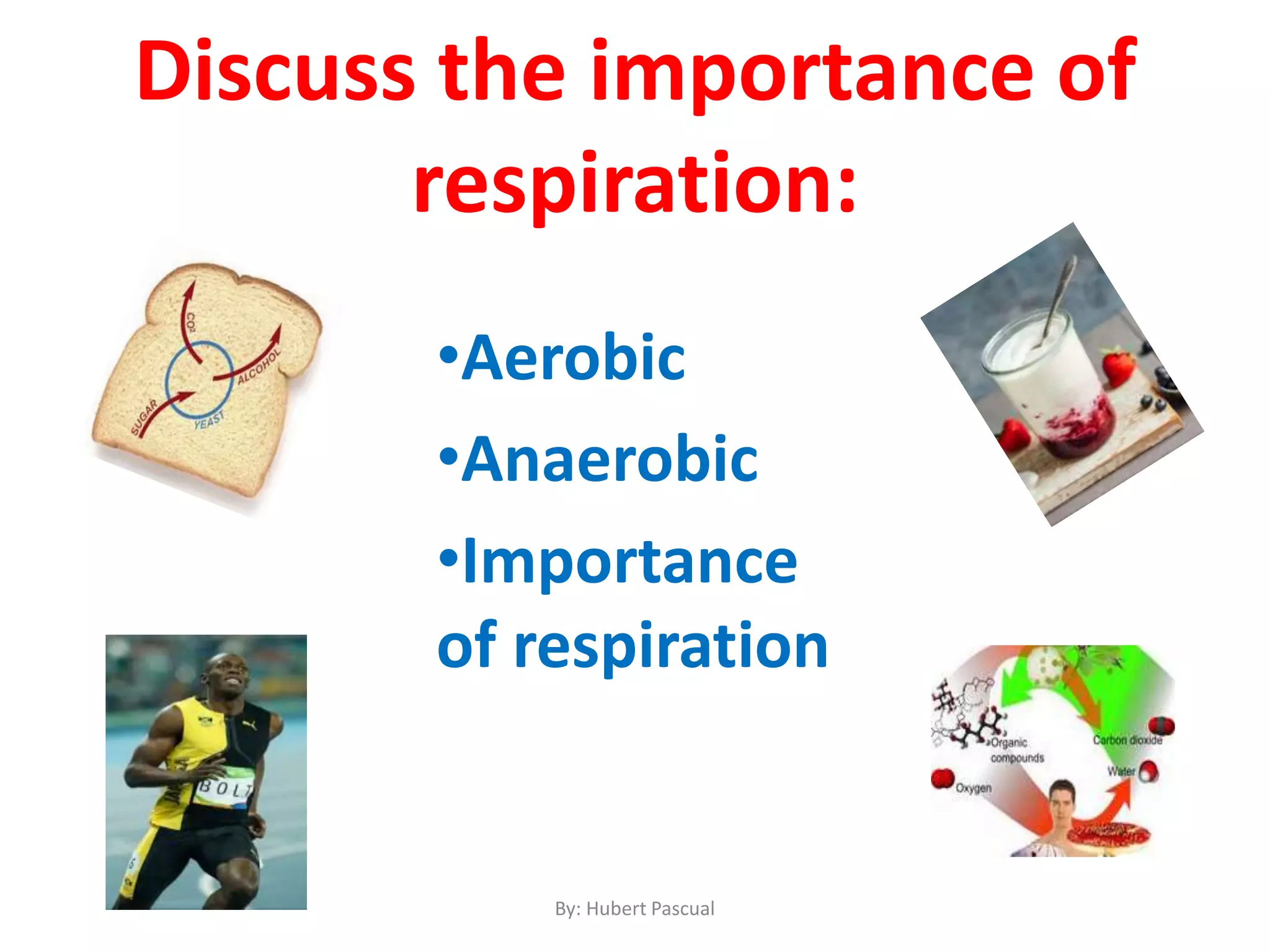
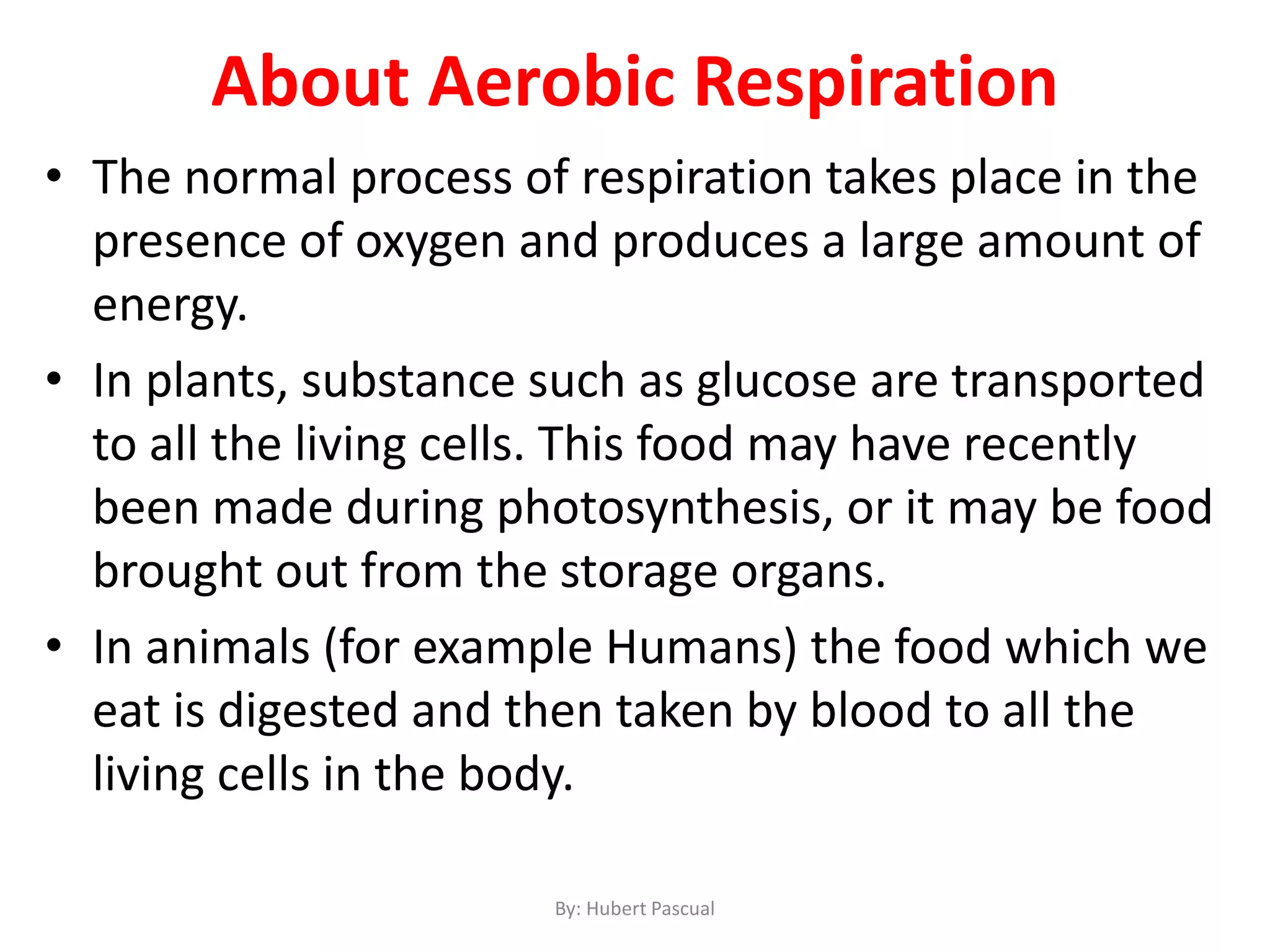
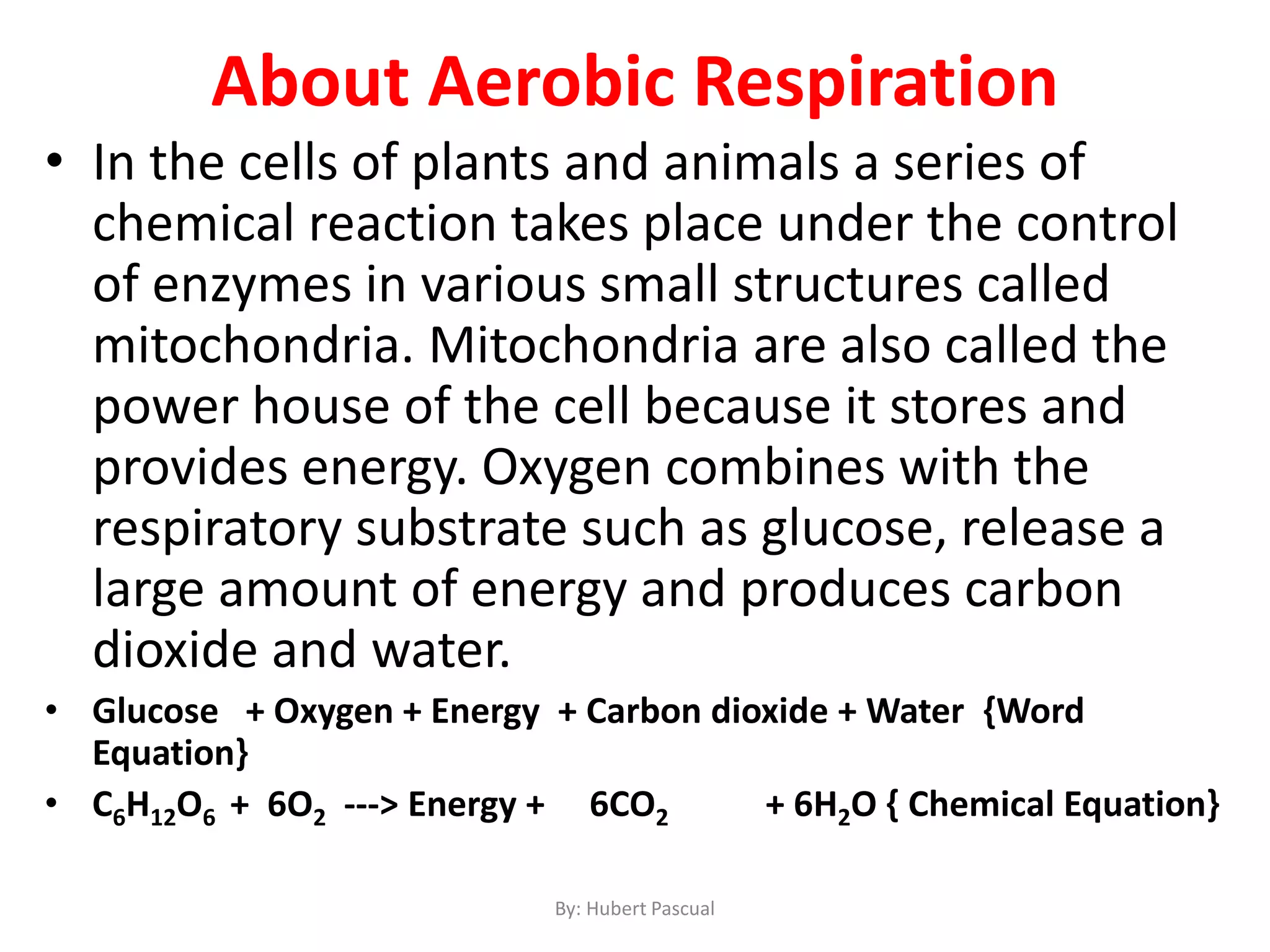
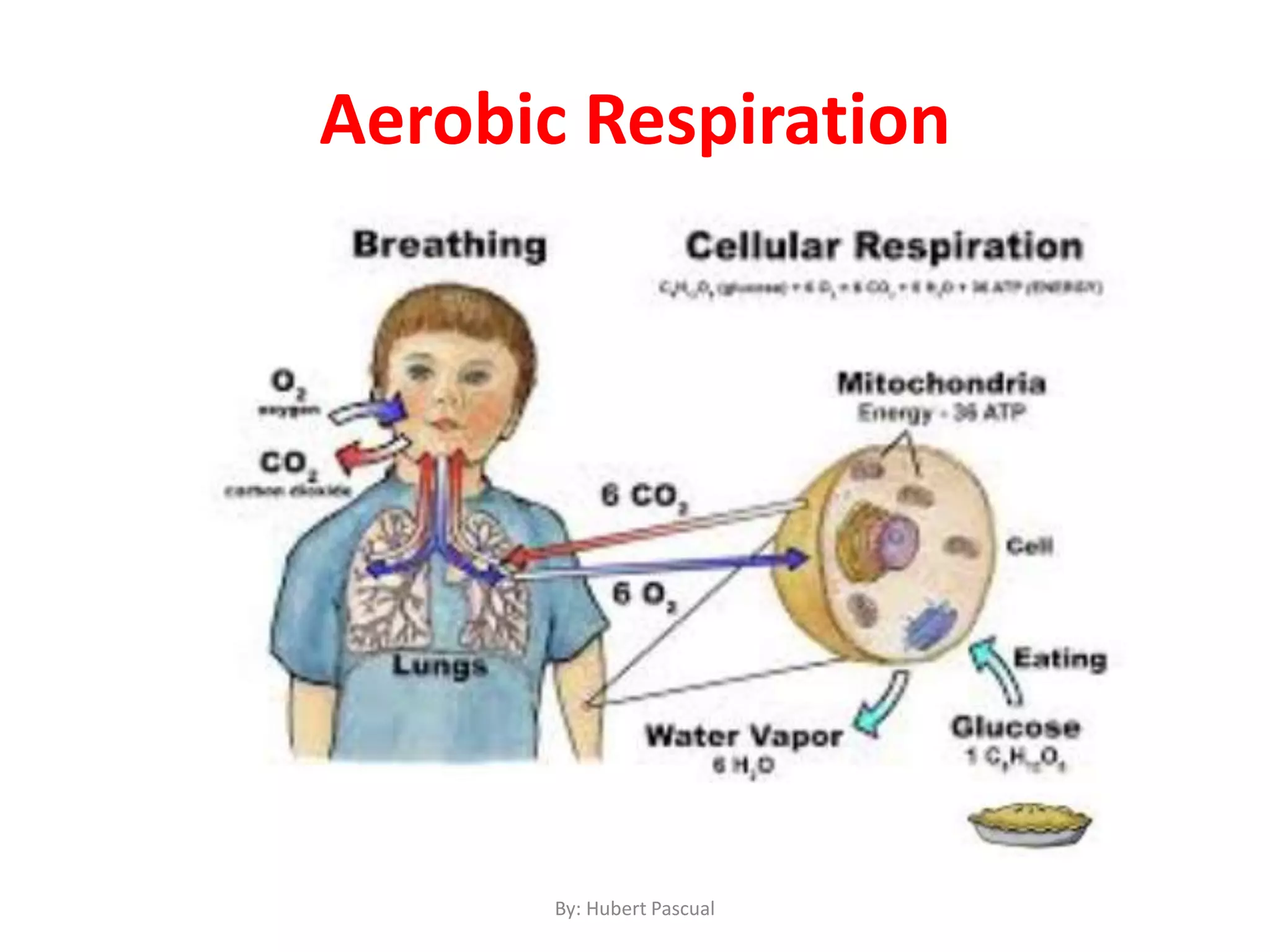
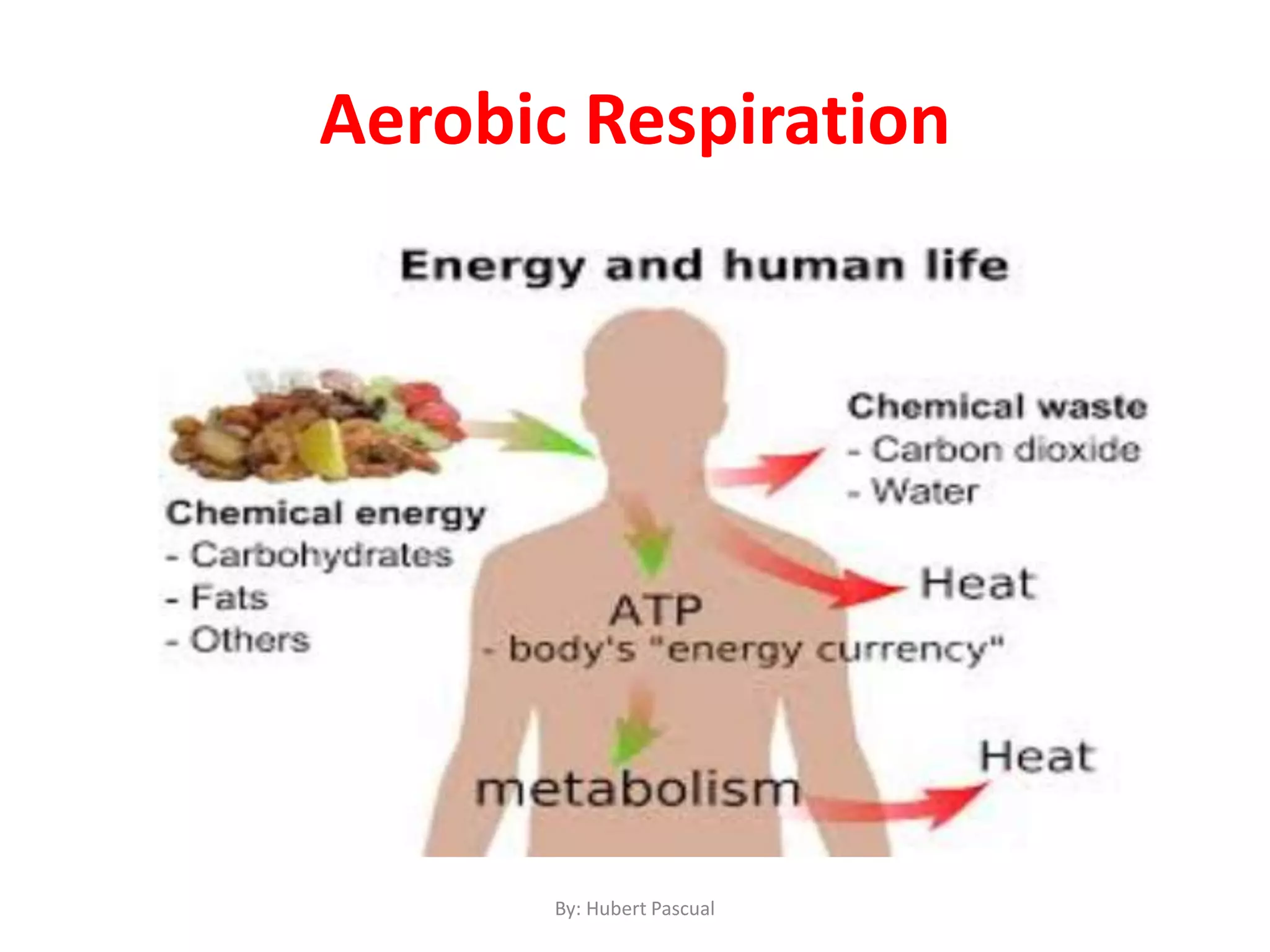
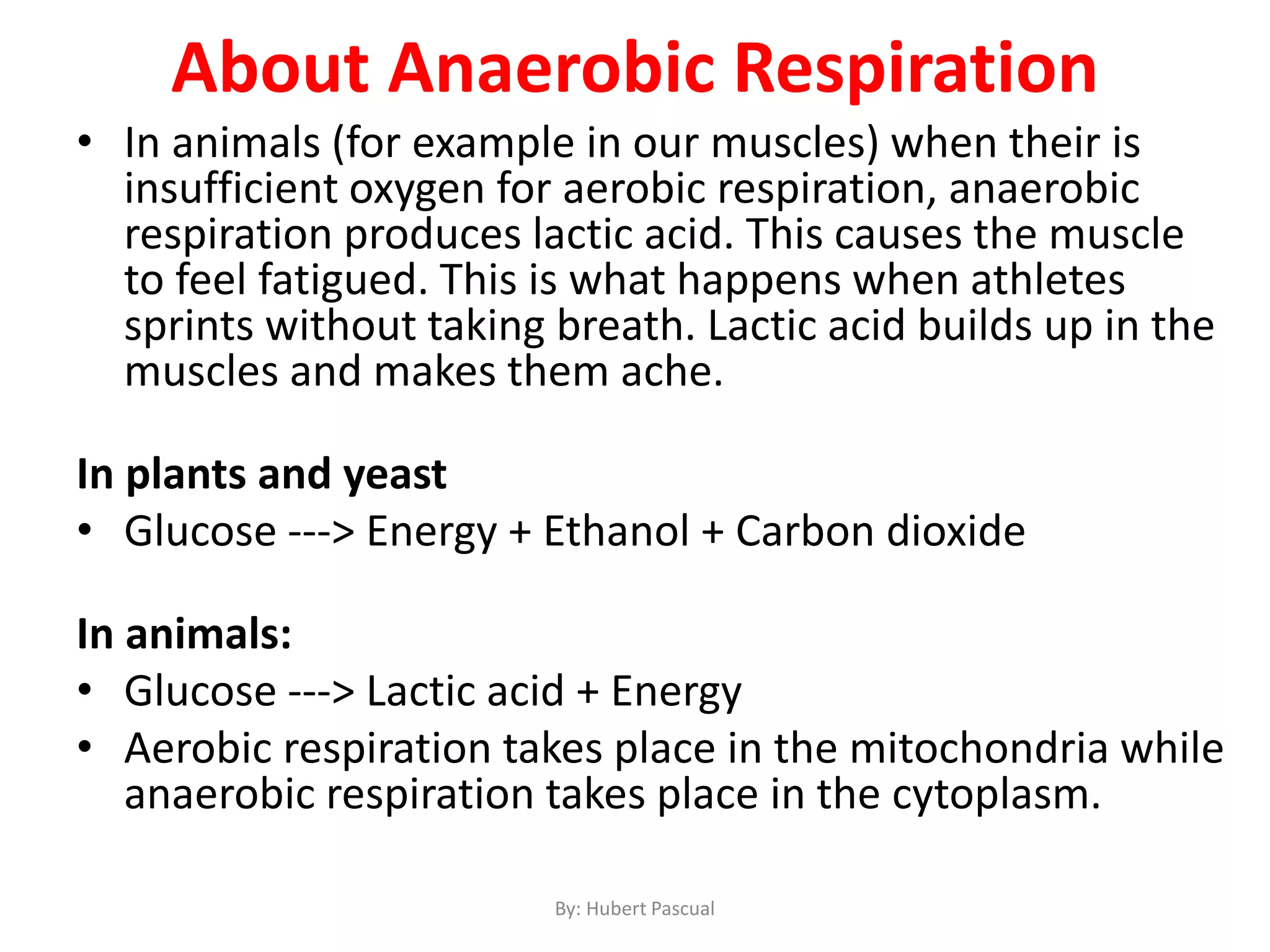
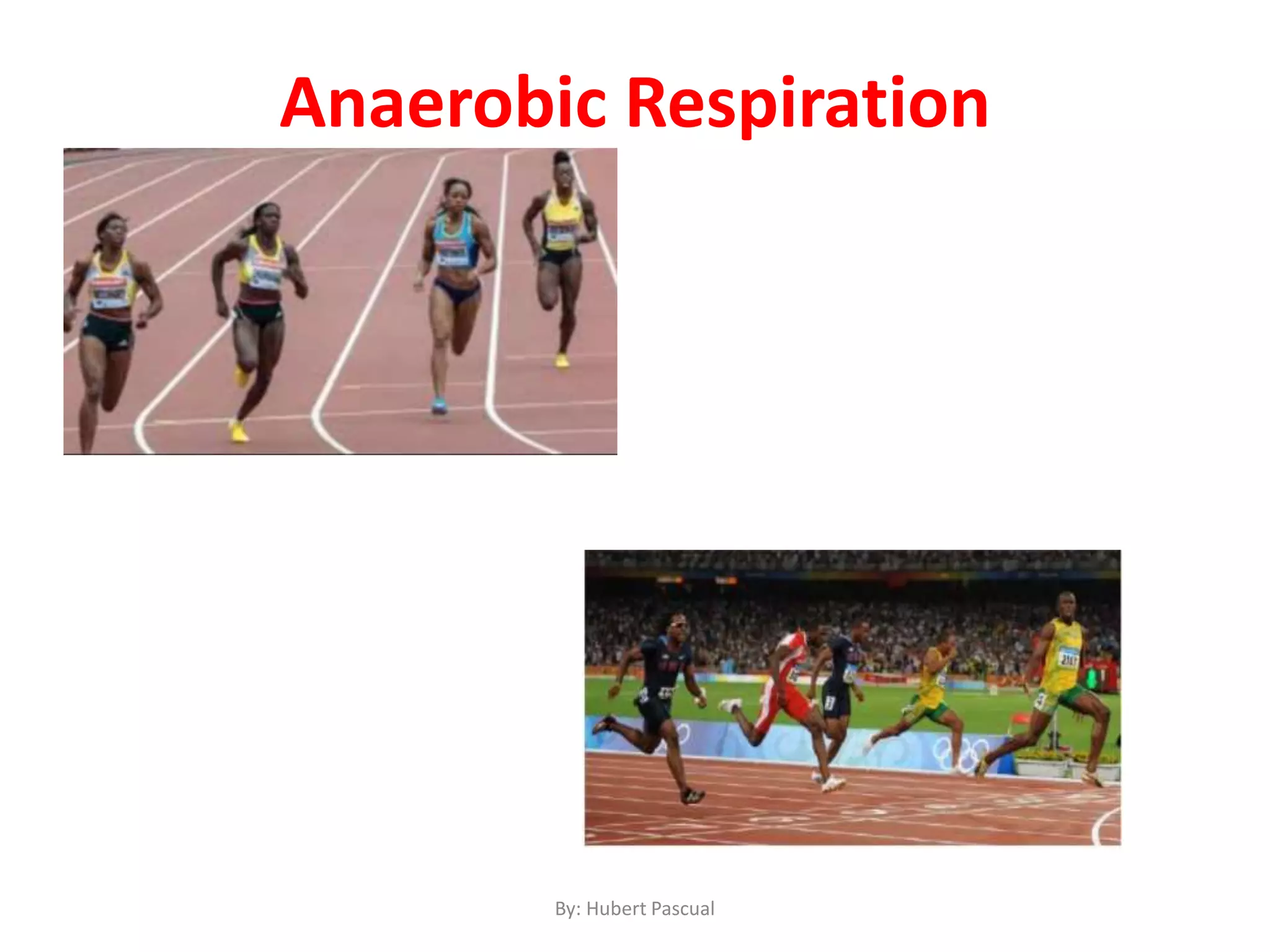
Respiration is the process by which organisms produce energy from food. There are two types: aerobic respiration uses oxygen to fully break down glucose, producing much energy as carbon dioxide and water. Anaerobic respiration breaks down glucose without oxygen, producing less energy as ethanol, lactic acid or carbon dioxide. Both are important - aerobic respiration powers most cell functions while anaerobic respiration allows functions like leavening bread or muscle movement without oxygen.






![Respiration_and_Aerobic_Respiration_Grade8 [Autosaved].pptx](https://cdn.slidesharecdn.com/ss_thumbnails/respirationandaerobicrespirationgrade8autosaved-251207072517-720aee52-thumbnail.jpg?width=640&height=640&fit=bounds)


![7[1].1 the respiratory process in energy production](https://cdn.slidesharecdn.com/ss_thumbnails/71-1-therespiratoryprocessinenergyproduction-120601180320-phpapp02-thumbnail.jpg?width=640&height=640&fit=bounds)

![7[1].1 the respiratory process in energy production](https://cdn.slidesharecdn.com/ss_thumbnails/71-1-therespiratoryprocessinenergyproduction-120601182218-phpapp02-thumbnail.jpg?width=640&height=640&fit=bounds)


