B11 Gas exchange in humans
 We can see from the syllabus content that this chapter is divided into two main
cores
RESPIRARTION & BREATHING
(Gas Exchange)
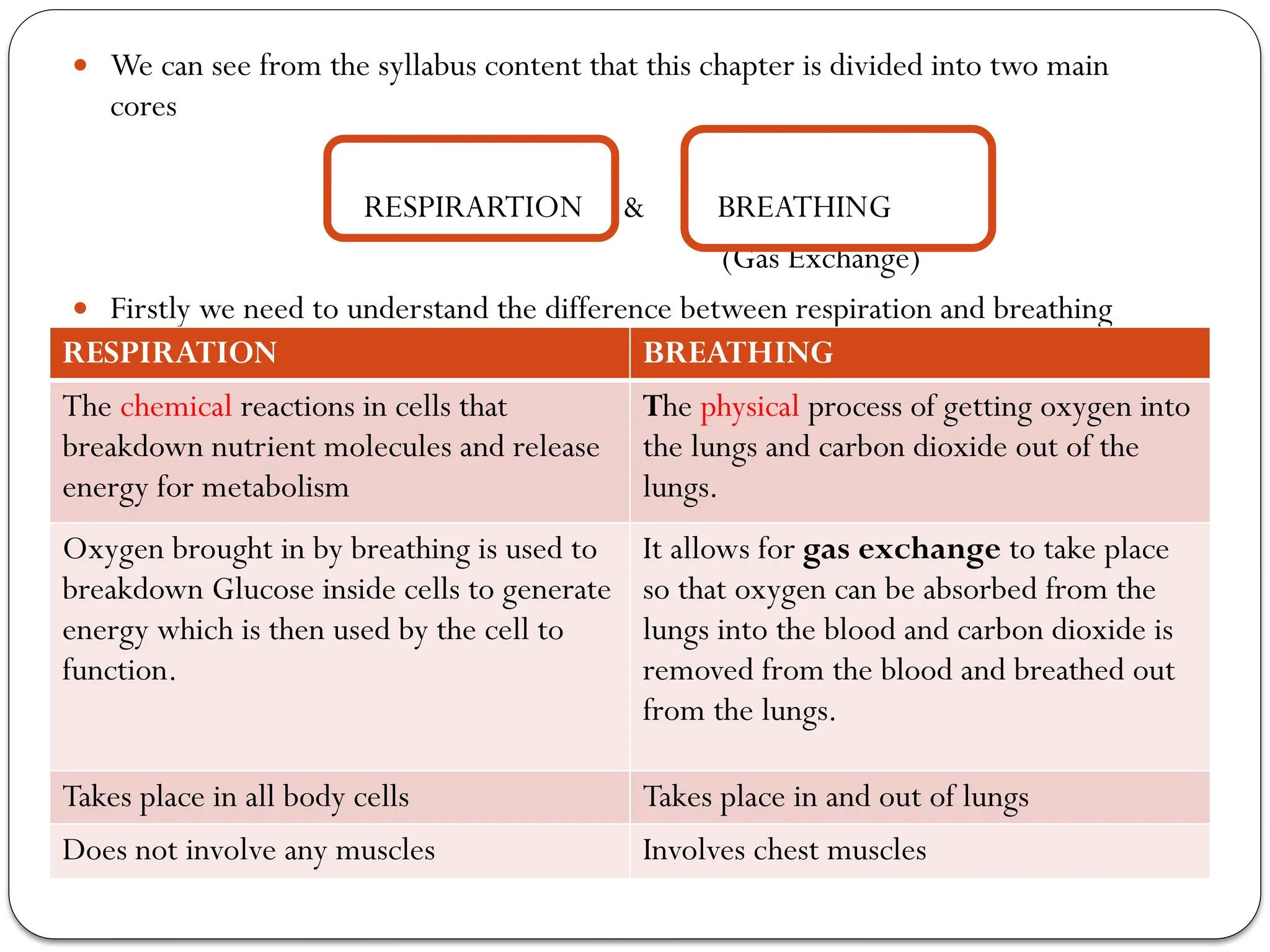
 Firstly we need to understand the difference between respiration and breathing
RESPIRATION BREATHING
The chemical reactions in cells that
breakdown nutrient molecules and release
energy for metabolism
The physical process of getting oxygen into
the lungs and carbon dioxide out of the
lungs.
Oxygen brought in by breathing is used to
breakdown Glucose inside cells to generate
energy which is then used by the cell to
function.
It allows for gas exchange to take place
so that oxygen can be absorbed from the
lungs into the blood and carbon dioxide is
removed from the blood and breathed out
from the lungs.
Takes place in all body cells Takes place in and out of lungs
Does not involve any muscles Involves chest muscles
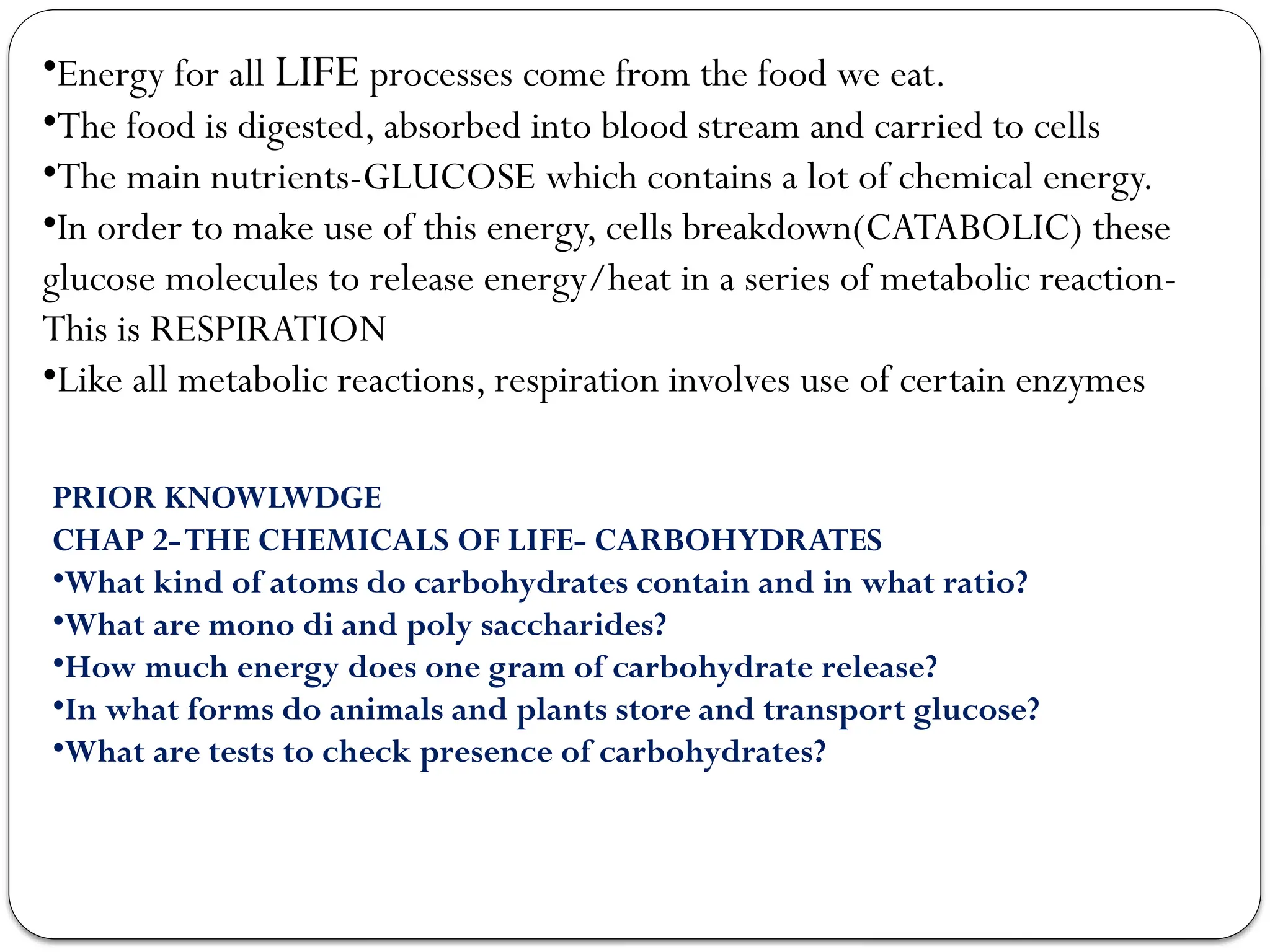
•Energy for all LIFE processes come from the food we eat.
•The food is digested, absorbed into blood stream and carried to cells
•The main nutrients-GLUCOSE which contains a lot of chemical energy.
•In order to make use of this energy, cells breakdown(CATABOLIC) these
glucose molecules to release energy/heat in a series of metabolic reaction-
This is RESPIRATION
•Like all metabolic reactions, respiration involves use of certain enzymes
PRIOR KNOWLWDGE
CHAP 2-THE CHEMICALS OF LIFE- CARBOHYDRATES
•What kind of atoms do carbohydrates contain and in what ratio?
•What are mono di and poly saccharides?
•How much energy does one gram of carbohydrate release?
•In what forms do animals and plants store and transport glucose?
•What are tests to check presence of carbohydrates?
RESPIRATION
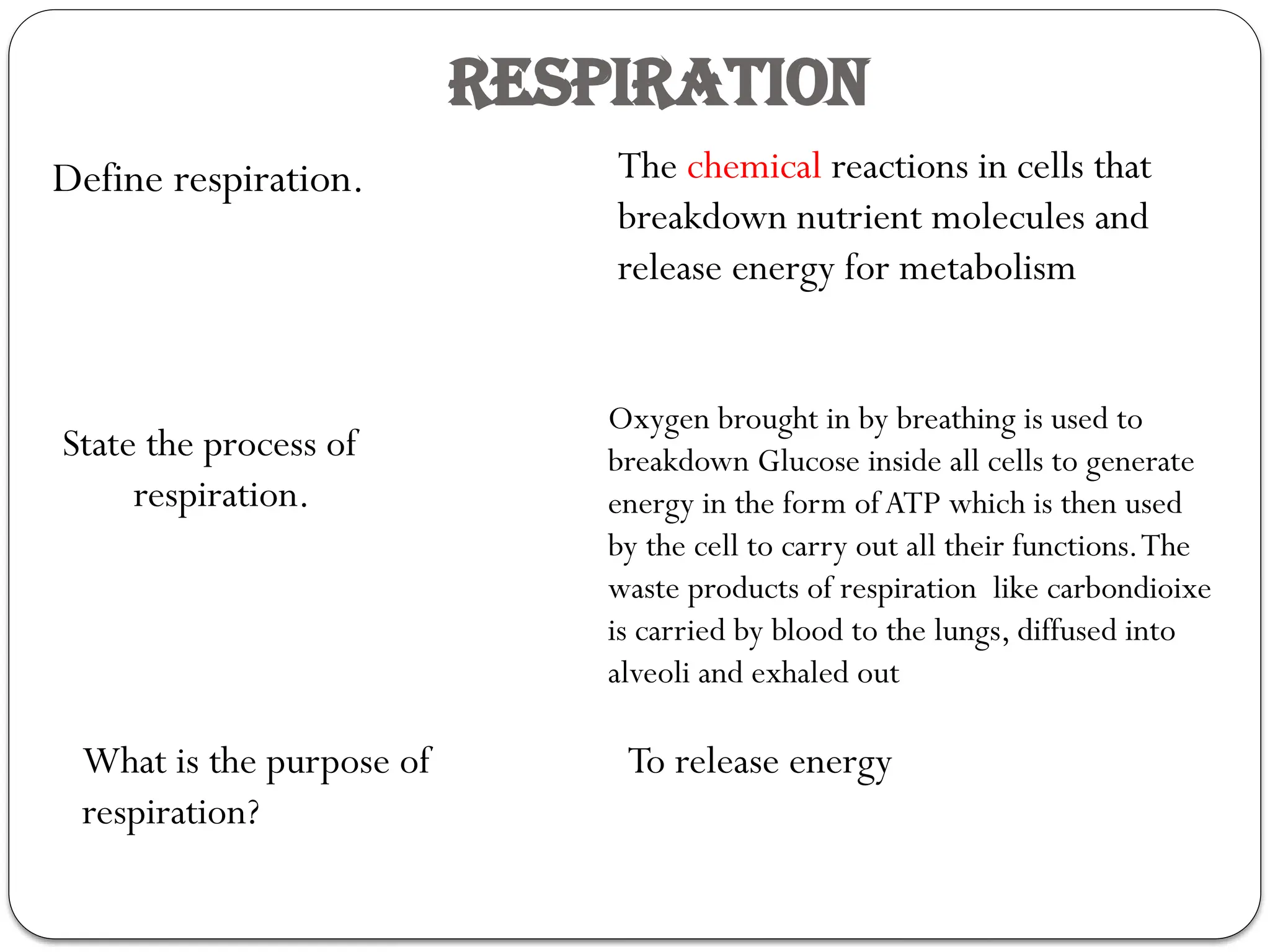
Define respiration. The chemical reactions in cells that
breakdown nutrient molecules and
release energy for metabolism
State the process of
respiration.
Oxygen brought in by breathing is used to
breakdown Glucose inside all cells to generate
energy in the form ofATP which is then used
by the cell to carry out all their functions.The
waste products of respiration like carbondioixe
is carried by blood to the lungs, diffused into
alveoli and exhaled out
What is the purpose of
respiration?
To release energy
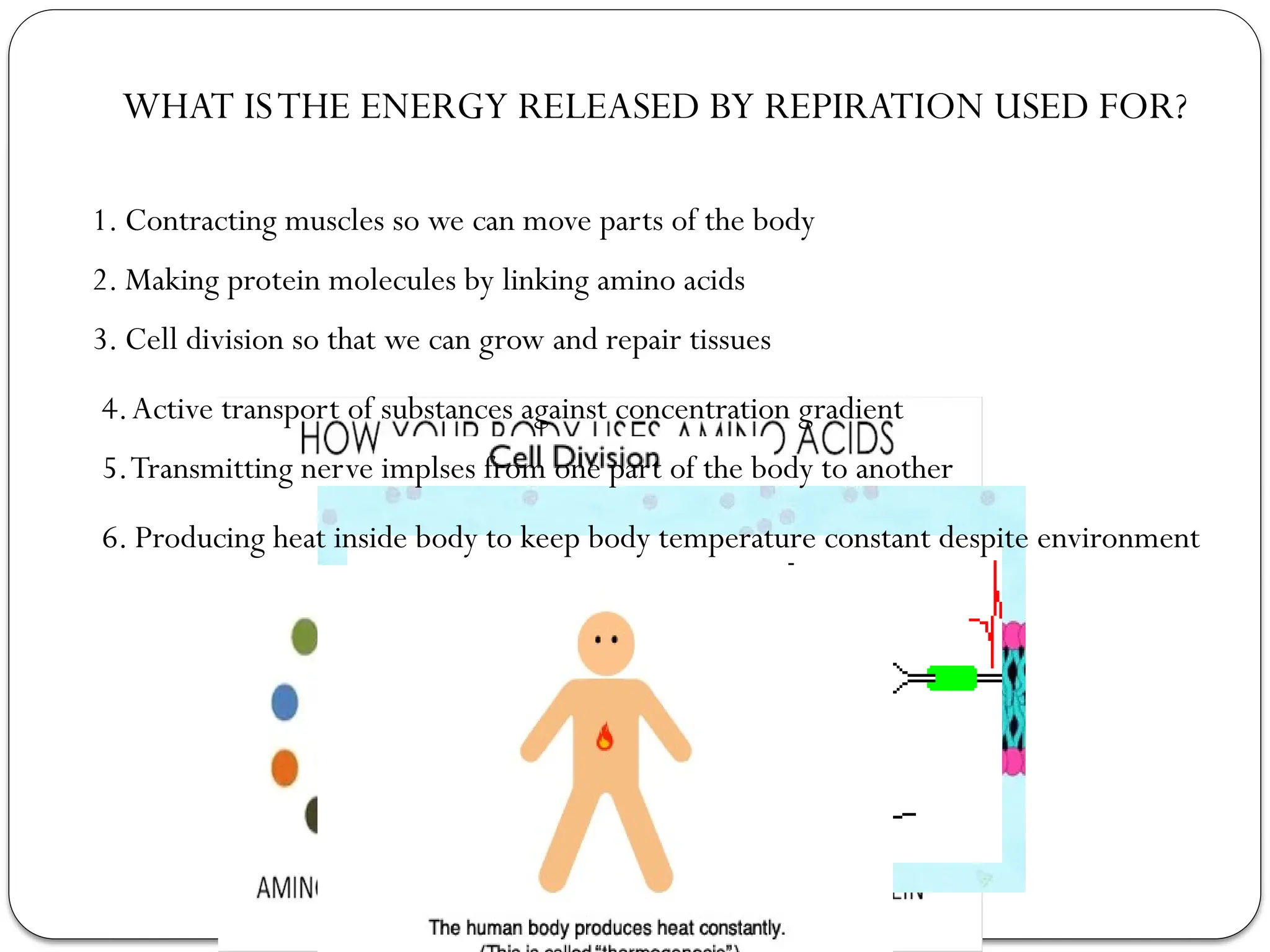
WHAT ISTHE ENERGY RELEASED BY REPIRATION USED FOR?
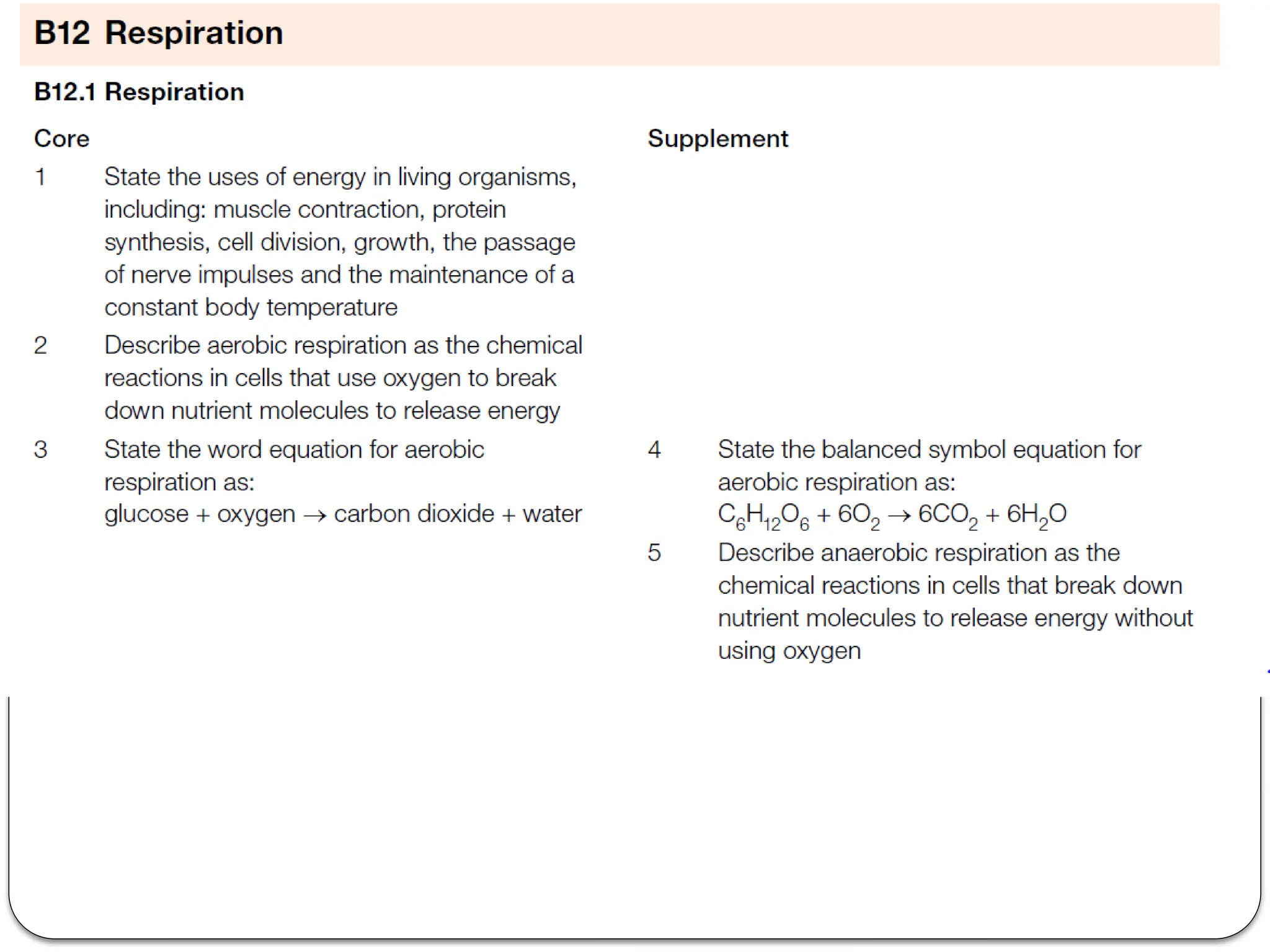
1. Contracting muscles so we can move parts of the body
2. Making protein molecules by linking amino acids
3. Cell division so that we can grow and repair tissues
4.Active transport of substances against concentration gradient
5.Transmitting nerve implses from one part of the body to another
6. Producing heat inside body to keep body temperature constant despite environment
There are two methods of releasing energy from glucose.
1. With the use of oxygen – AEROBIC RESPIRATION
2. Without the use of oxygen – ANAEROBIC RESPIRATION
The chemical reactions in cells that
breakdown nutrient molecules and release
energy for metabolism
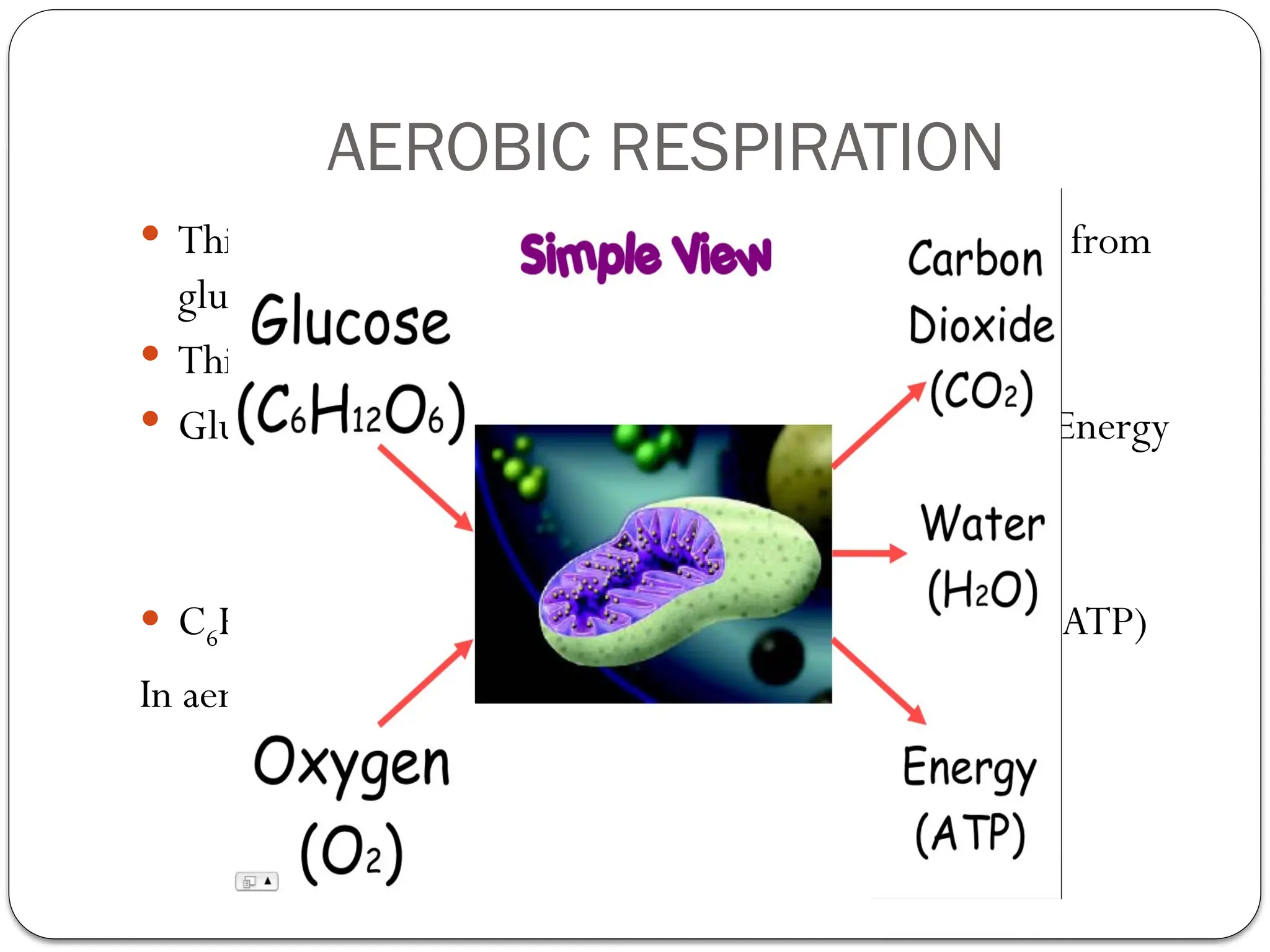
AEROBIC RESPIRATION
 This type of respiration uses oxygen to release energy from
glucose present in our cells.
 This takes place inside mitochondria
 Glucose + Oxygen Carbon dioxide +Water + Energy
 C6H12O6 + 6O2 6CO2 + 6H2O +ENERGY (ATP)
In aerobic respiration glucose is brken down completely
ANAEROBIC RESPIRATION
 Sometimes there is not enough oxygen around for animals and
plants to respire, but they still need energy to survive.
Instead they carry out respiration in the absence of oxygen to
produce the energy they require this is called anaerobic
respiration.
 This process generally takes place in cytoplasm of the cell
Anaerobic respiration has different end products in plants and
animals.
:
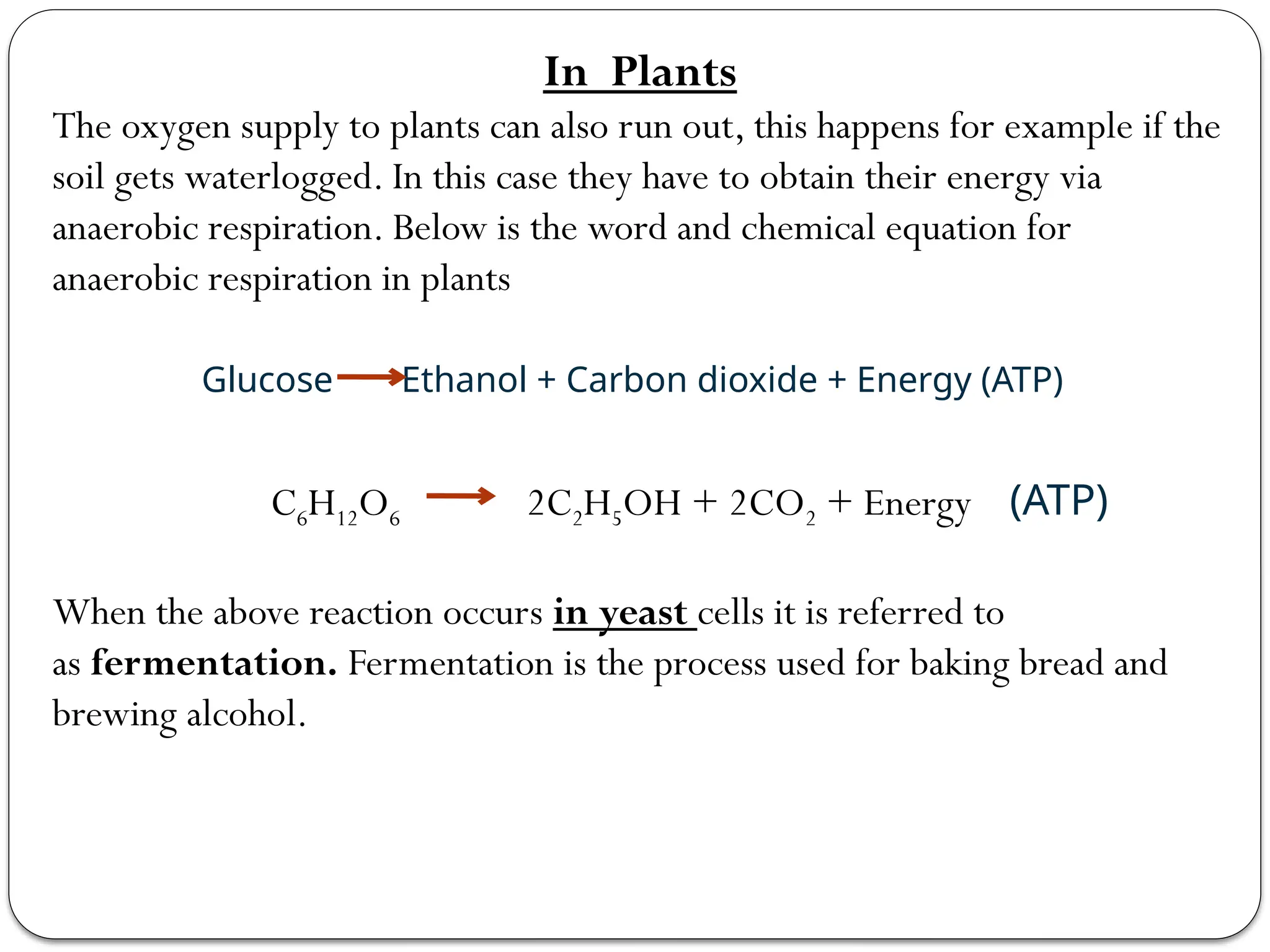
In Plants
The oxygen supply to plants can also run out, this happens for example if the
soil gets waterlogged. In this case they have to obtain their energy via
anaerobic respiration. Below is the word and chemical equation for
anaerobic respiration in plants
Glucose Ethanol + Carbon dioxide + Energy (ATP)
C6H12O6 2C2H5OH + 2CO2 + Energy (ATP)
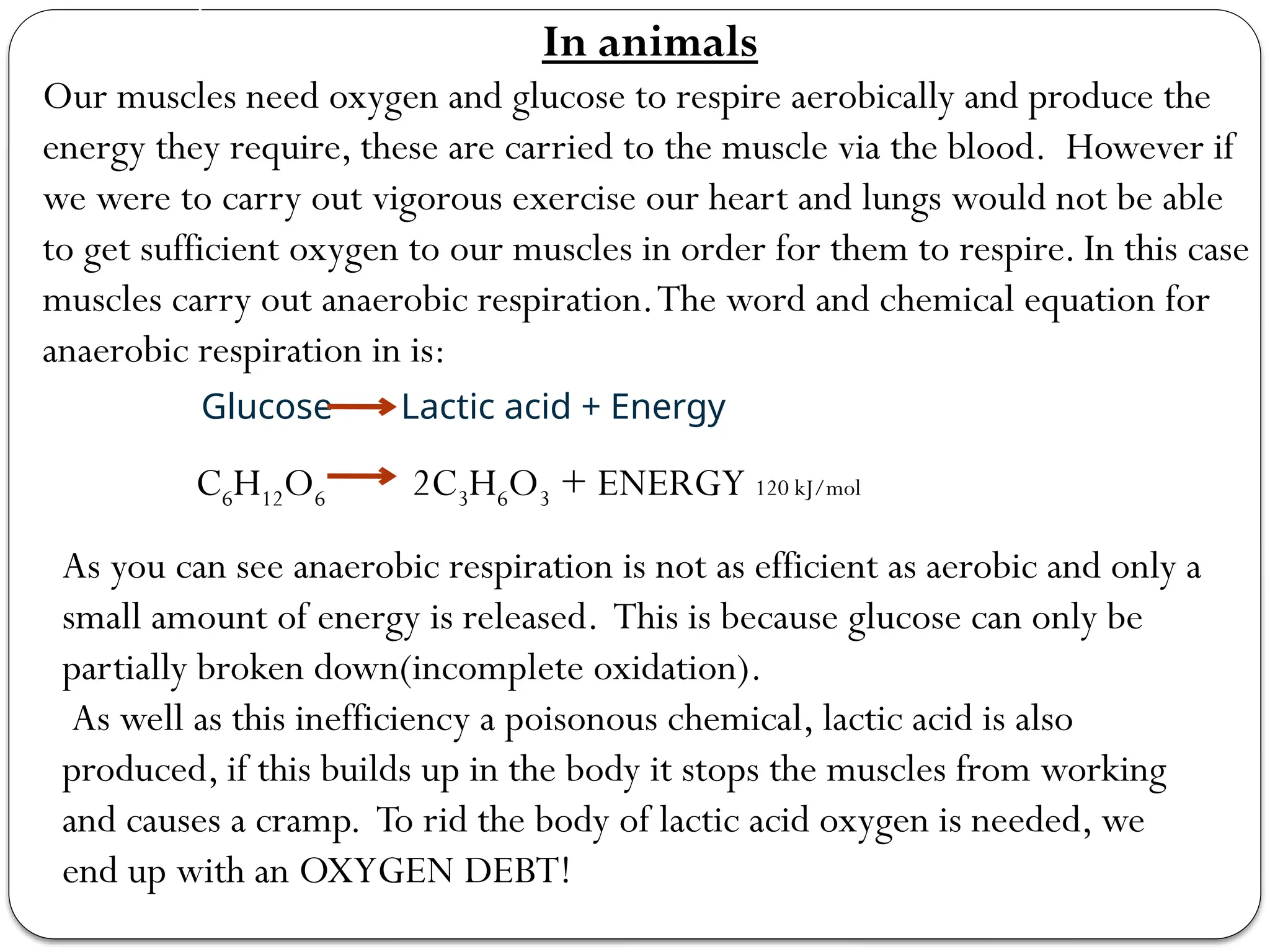
When the above reaction occurs in yeast cells it is referred to
as fermentation. Fermentation is the process used for baking bread and
brewing alcohol.
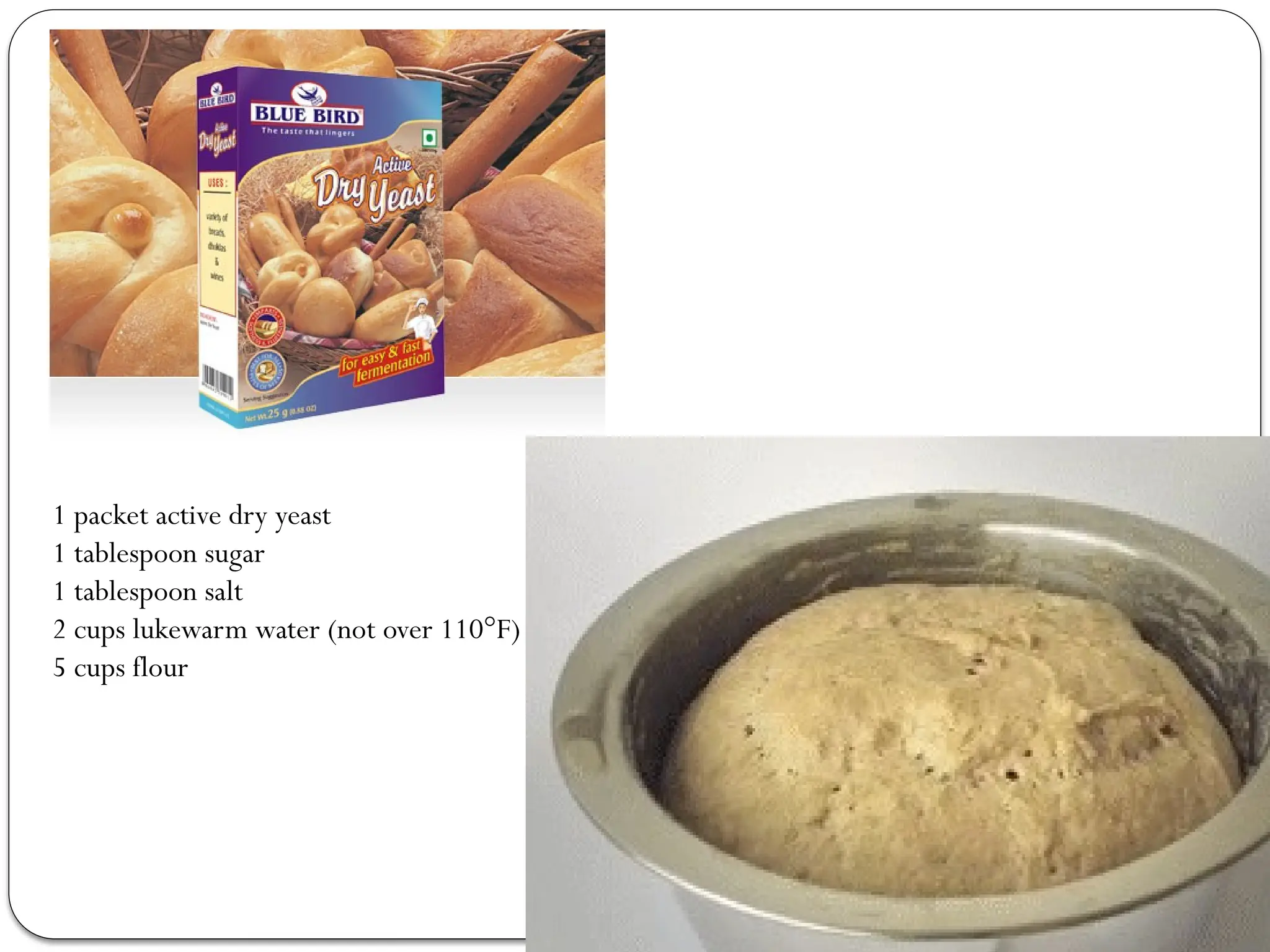
1 packet active dry yeast
1 tablespoon sugar
1 tablespoon salt
2 cups lukewarm water (not over 110°F)
5 cups flour
In animals
Our muscles need oxygen and glucose to respire aerobically and produce the
energy they require, these are carried to the muscle via the blood. However if
we were to carry out vigorous exercise our heart and lungs would not be able
to get sufficient oxygen to our muscles in order for them to respire. In this case
muscles carry out anaerobic respiration.The word and chemical equation for
anaerobic respiration in is:
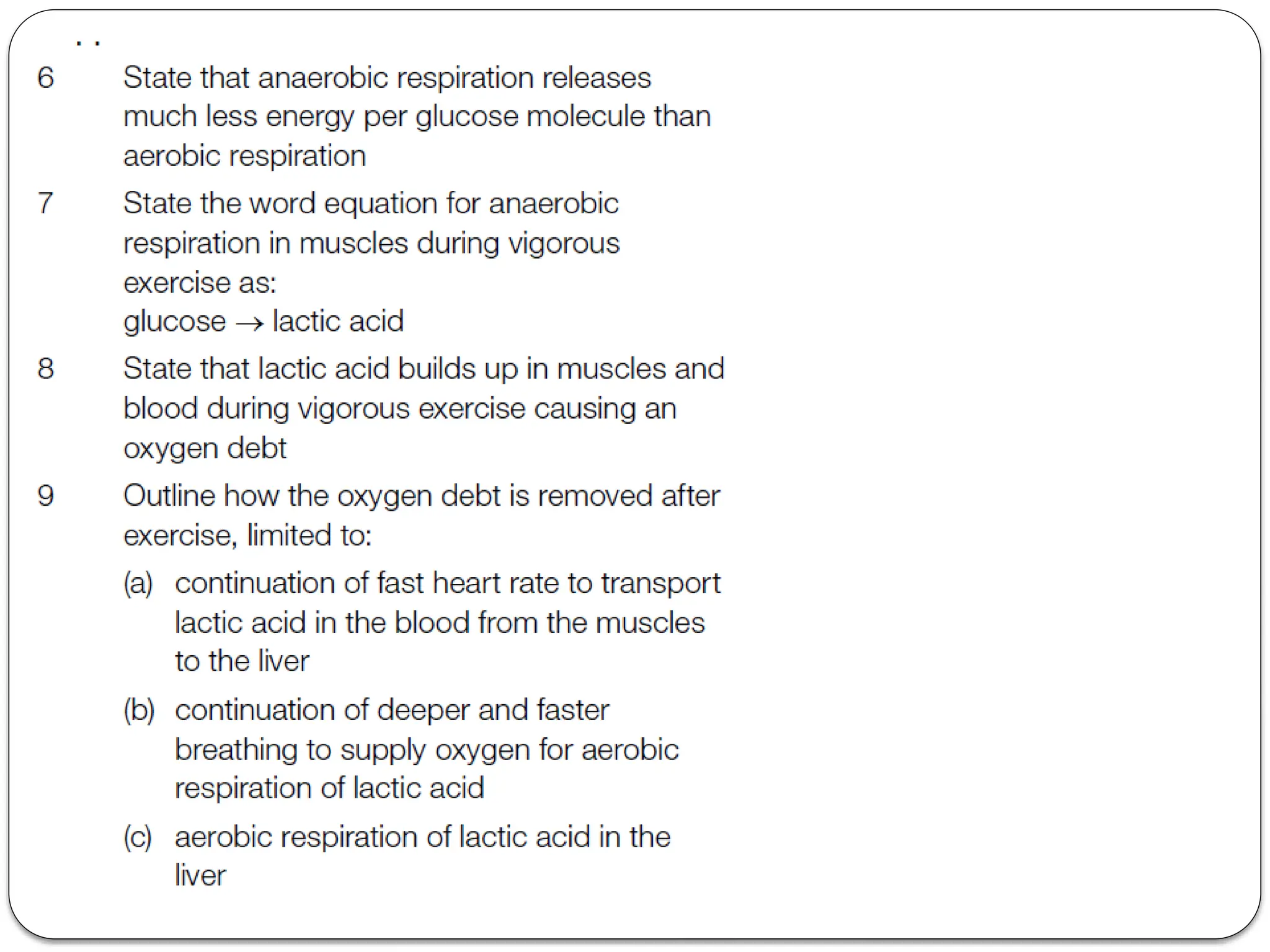
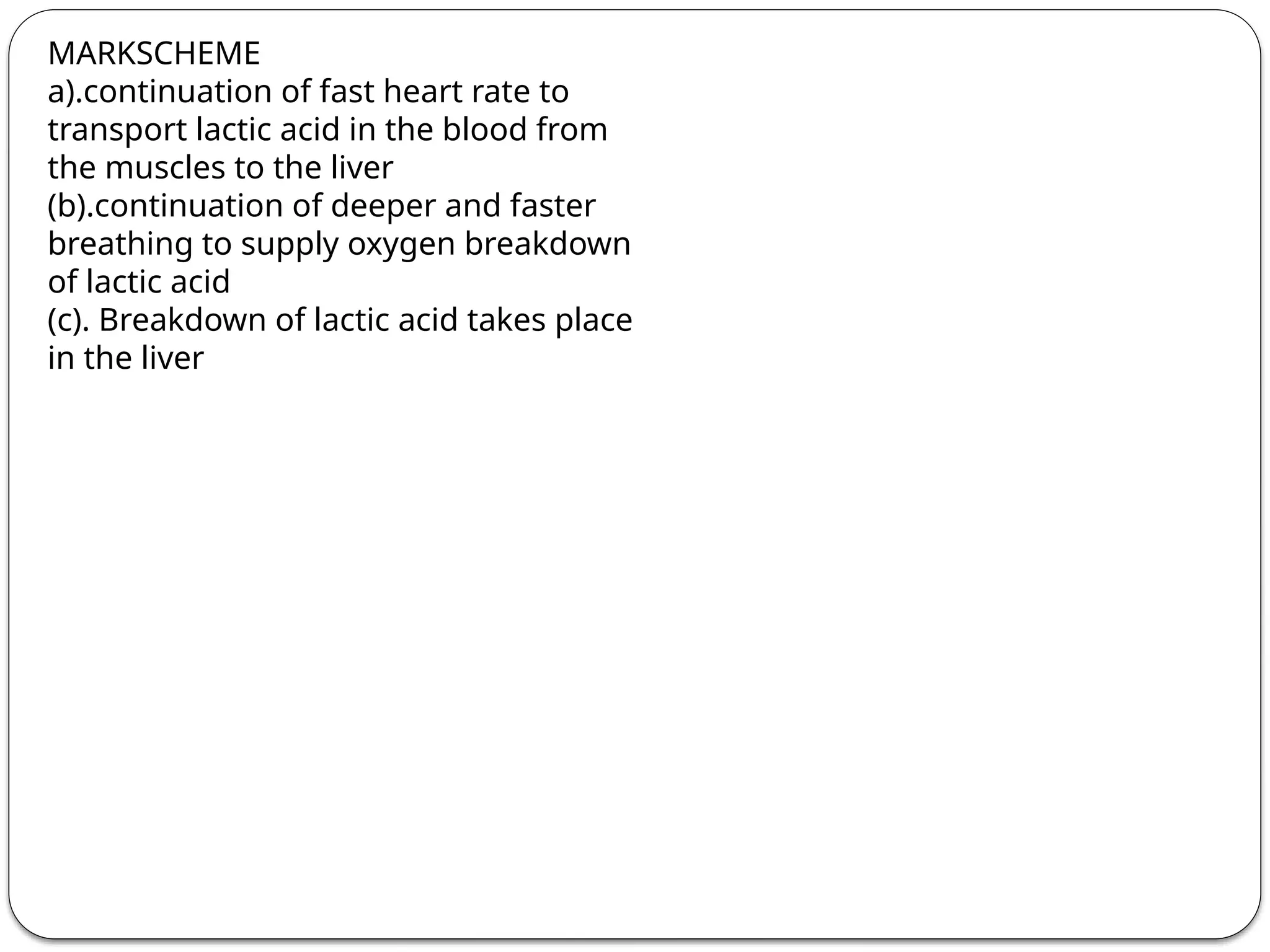
Glucose Lactic acid + Energy
C6H12O6 2C3H6O3 + ENERGY 120 kJ/mol
As you can see anaerobic respiration is not as efficient as aerobic and only a
small amount of energy is released. This is because glucose can only be
partially broken down(incomplete oxidation).
As well as this inefficiency a poisonous chemical, lactic acid is also
produced, if this builds up in the body it stops the muscles from working
and causes a cramp. To rid the body of lactic acid oxygen is needed, we
end up with an OXYGEN DEBT!
MARKSCHEME
a).continuation of fast heart rate to
transport lactic acid in the blood from
the muscles to the liver
(b).continuation of deeper and faster
breathing to supply oxygen breakdown
of lactic acid
(c). Breakdown of lactic acid takes place
in the liver
OXYGEN DEBT
While running the muscles are using a lot of energy and for this a lot oxygen is needed.
You breathe faster and deeper to get more oxygen into your blood
But eventually a limit is reached and but heart and lungs cannot supply any more oxygen
But extra energy is yet needed which is provided by anaerobic respiration.
Glucose Lactic acid + Energy
When you stop running you have quite a lot of lactic acid in your muscles which
must be broken down to glucose with the help of oxygen in the liver
So even after you finish running you need to continue to breathe deeper and
faster to provide oxygen for the breakdown of lactic acid
While you were running you built up an oxygen debt- you borrowed some
extra energy without paying for it with oxygen (anaerobic)
Now you need oxygen to breakdown lactic acid and are paying off the debt by
breathing deeper and faster to get oxygen
https://www.youtube.com/watch?v=6XT_Ivl_J1g
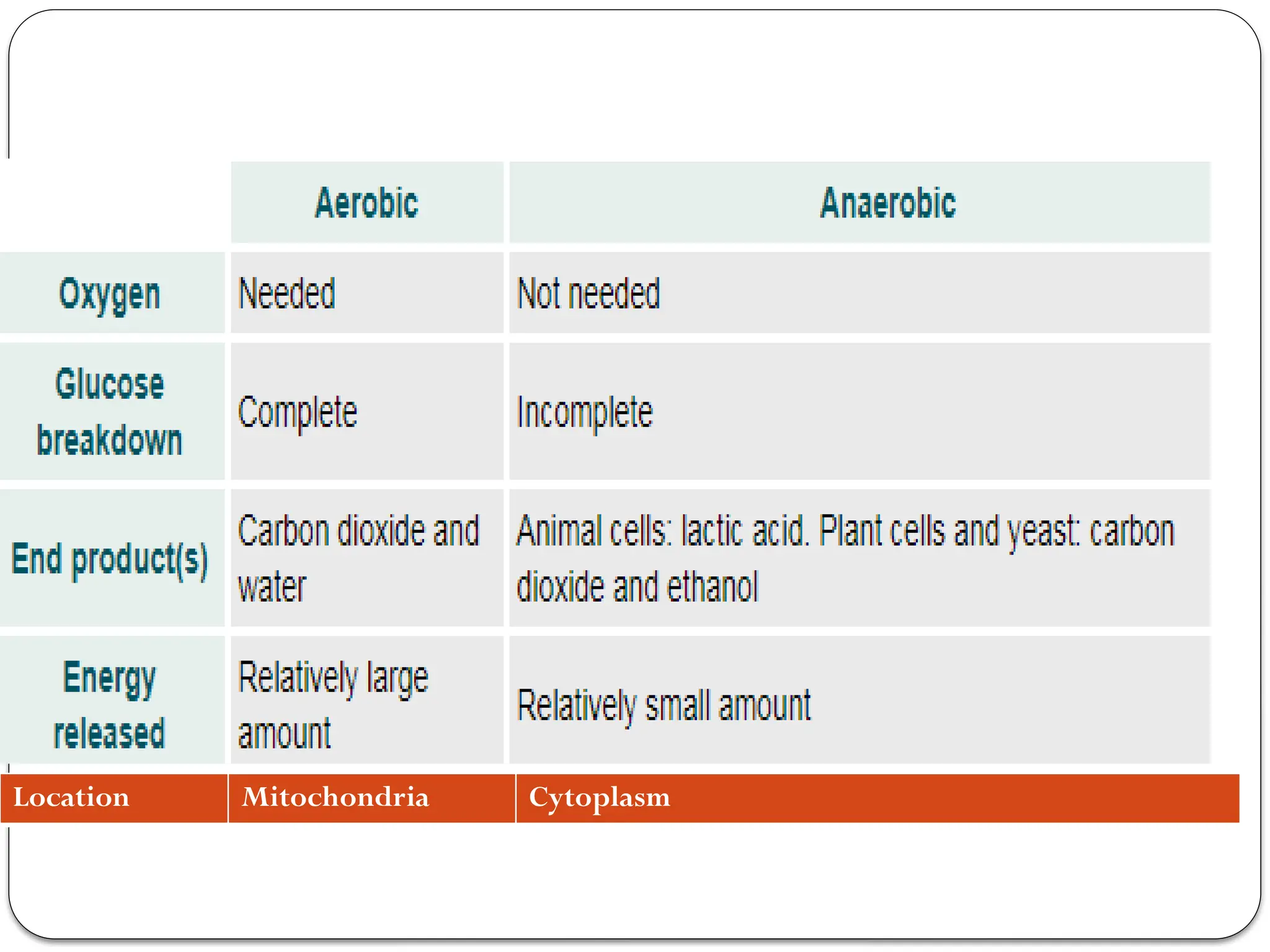
Location Mitochondria Cytoplasm
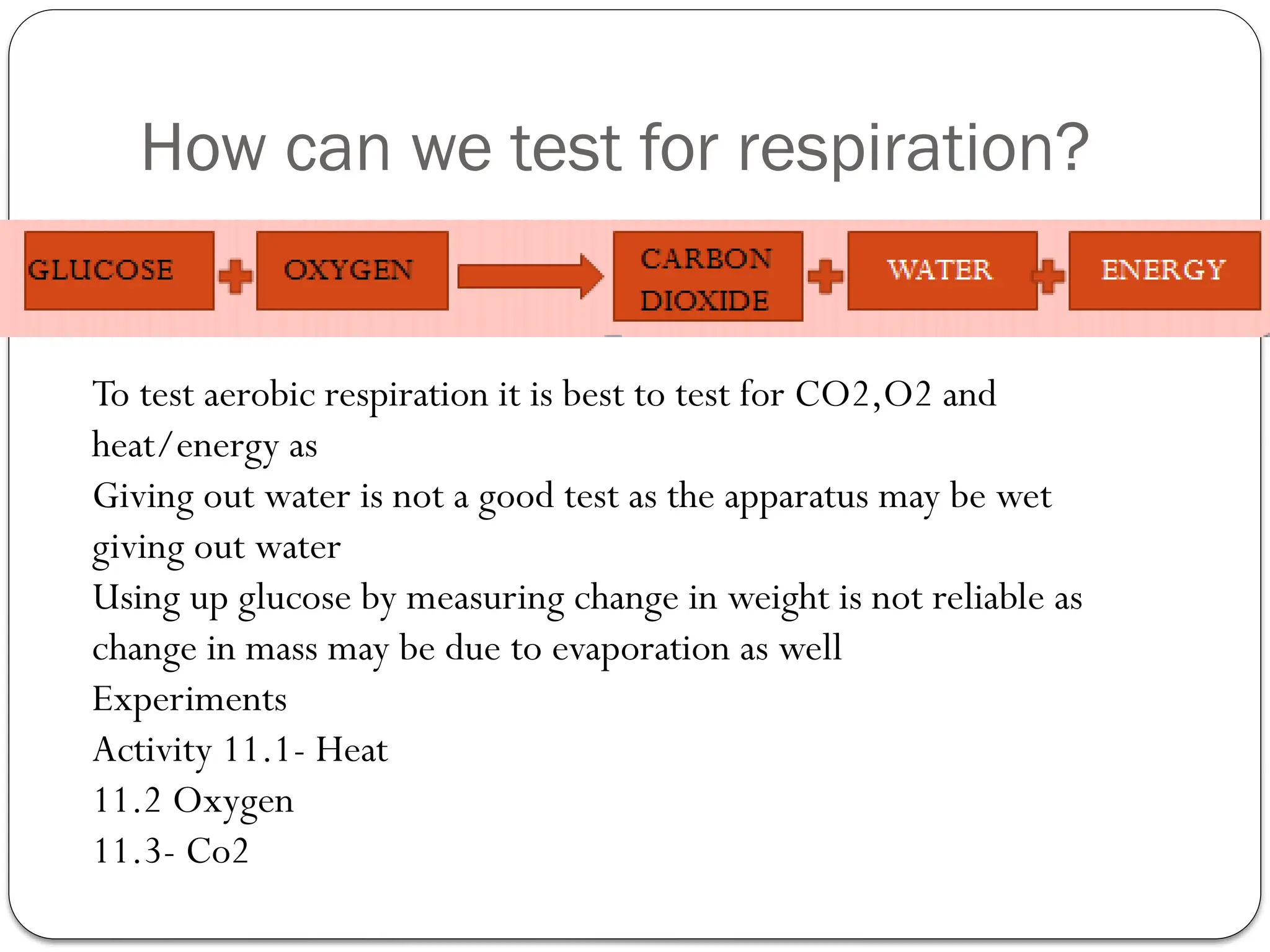
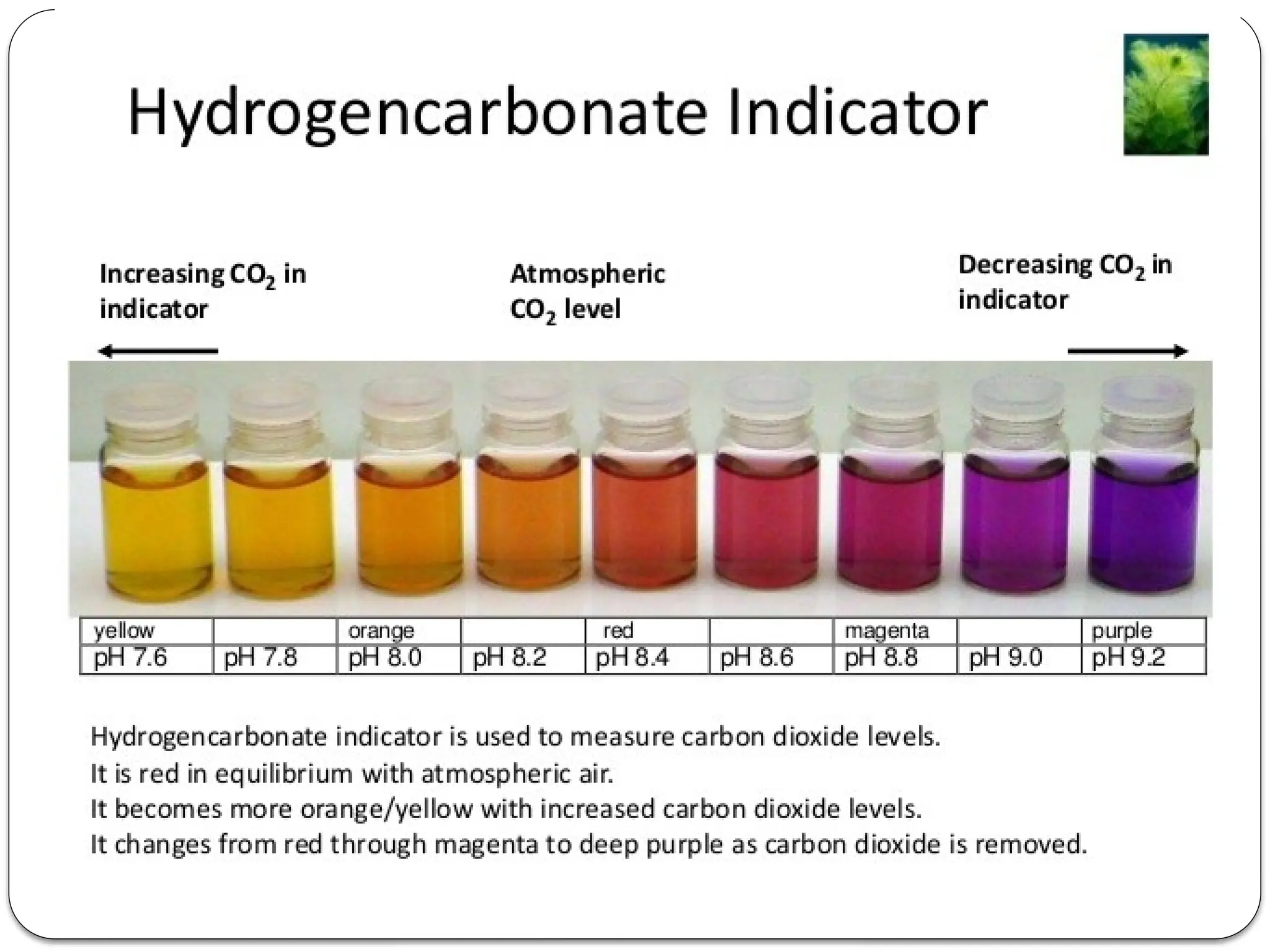
How can we test for respiration?
To test aerobic respiration it is best to test for CO2,O2 and
heat/energy as
Giving out water is not a good test as the apparatus may be wet
giving out water
Using up glucose by measuring change in weight is not reliable as
change in mass may be due to evaporation as well
Experiments
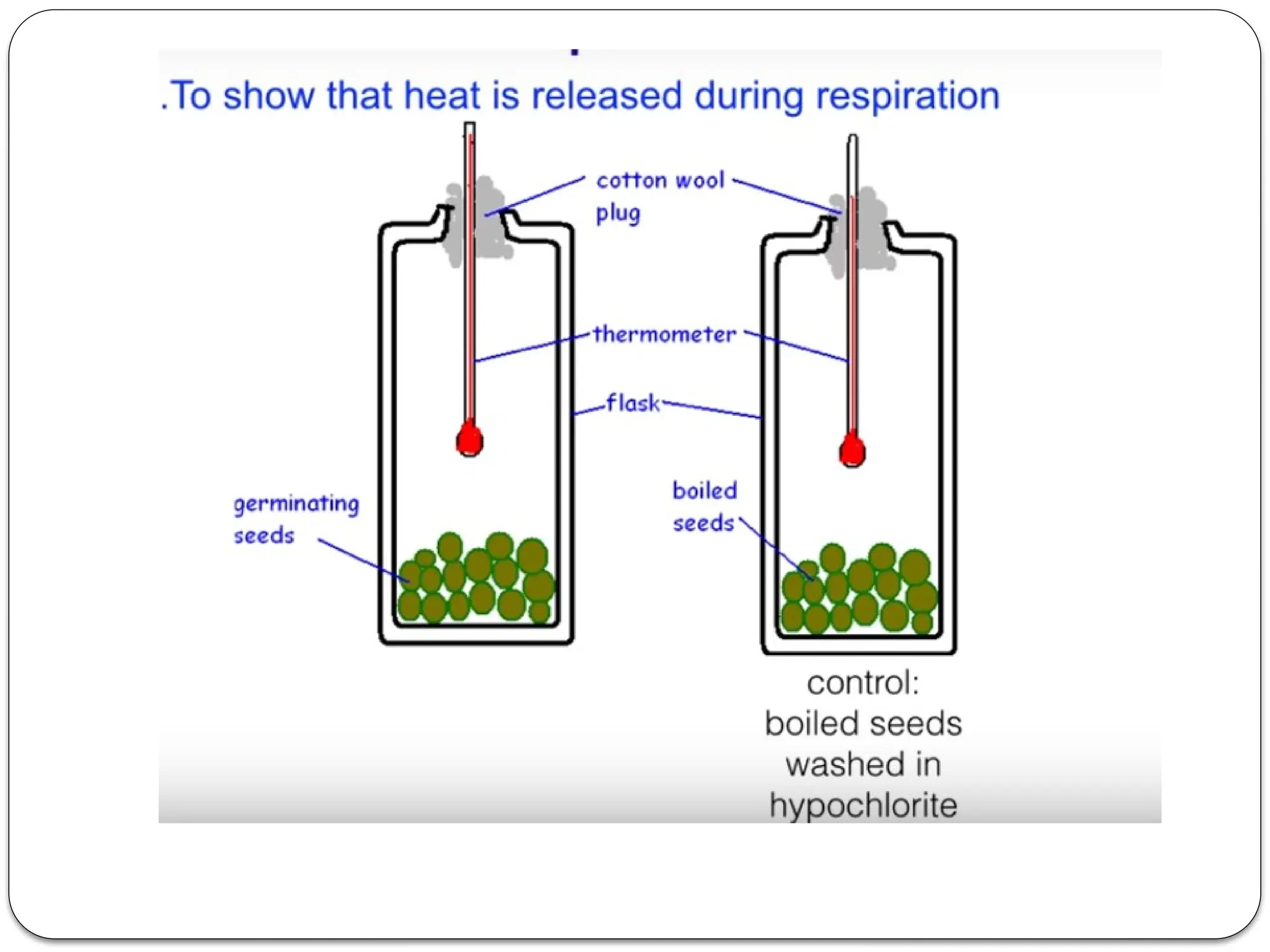
Activity 11.1- Heat
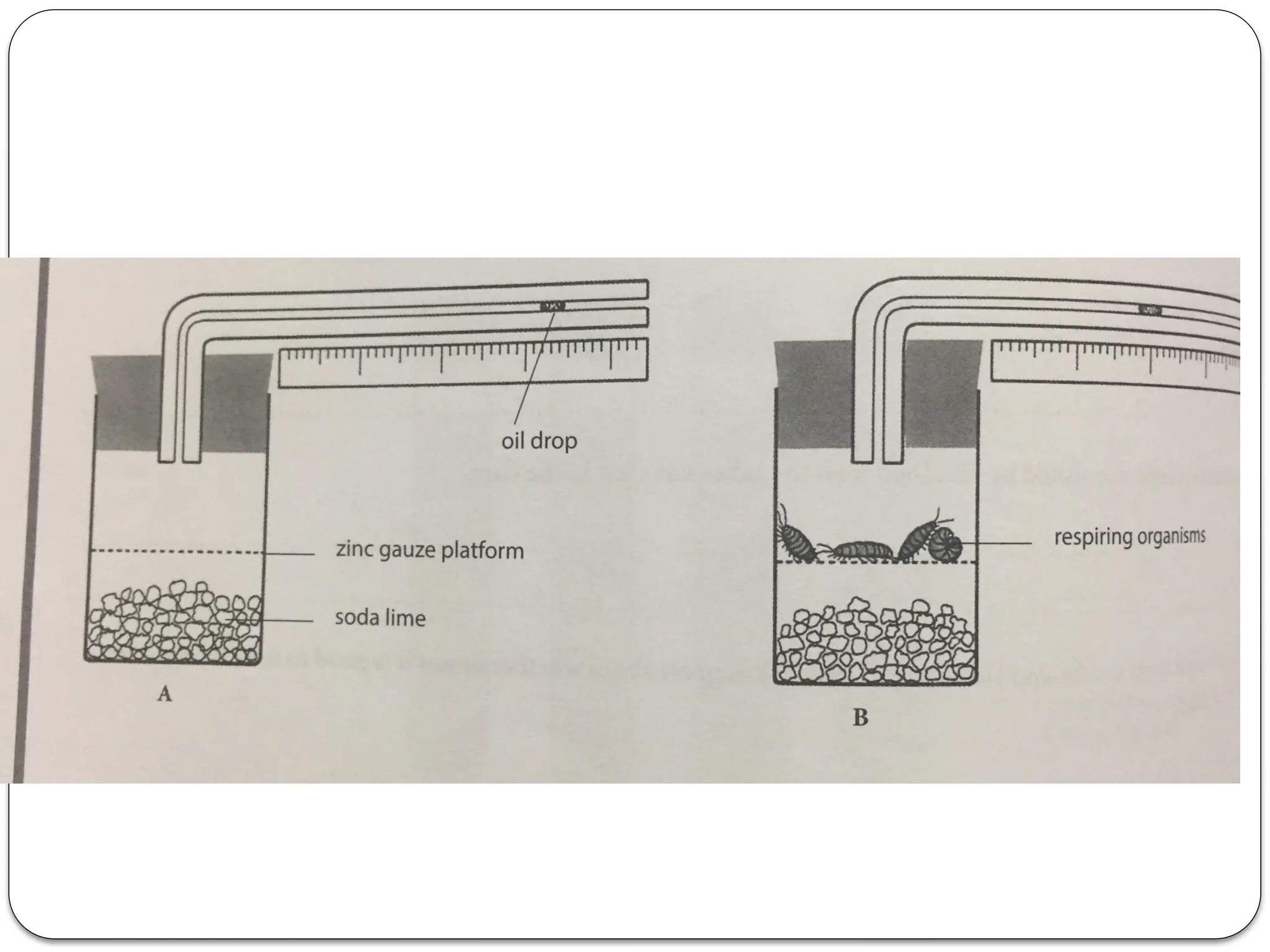
11.2 Oxygen
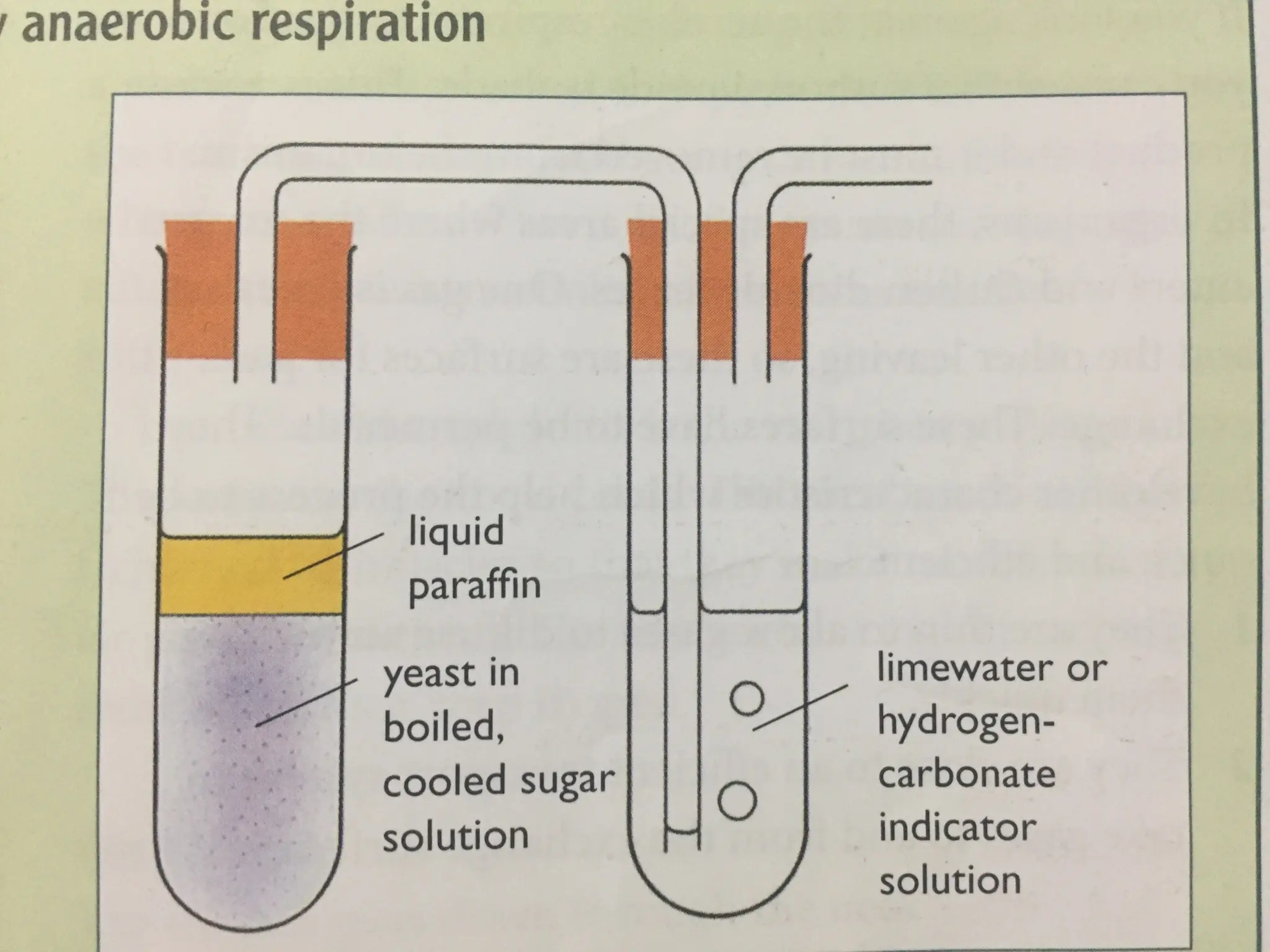
11.3- Co2
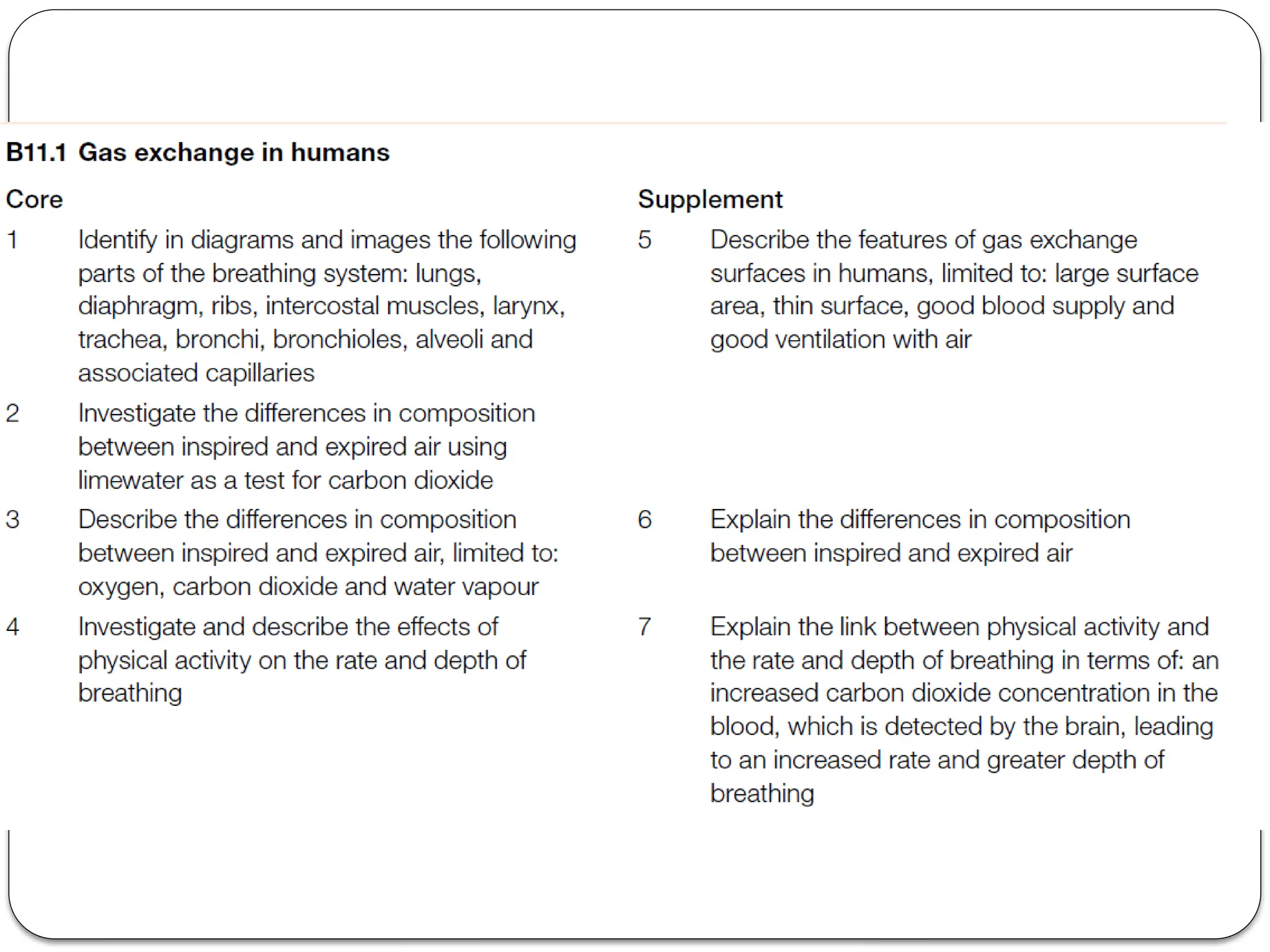
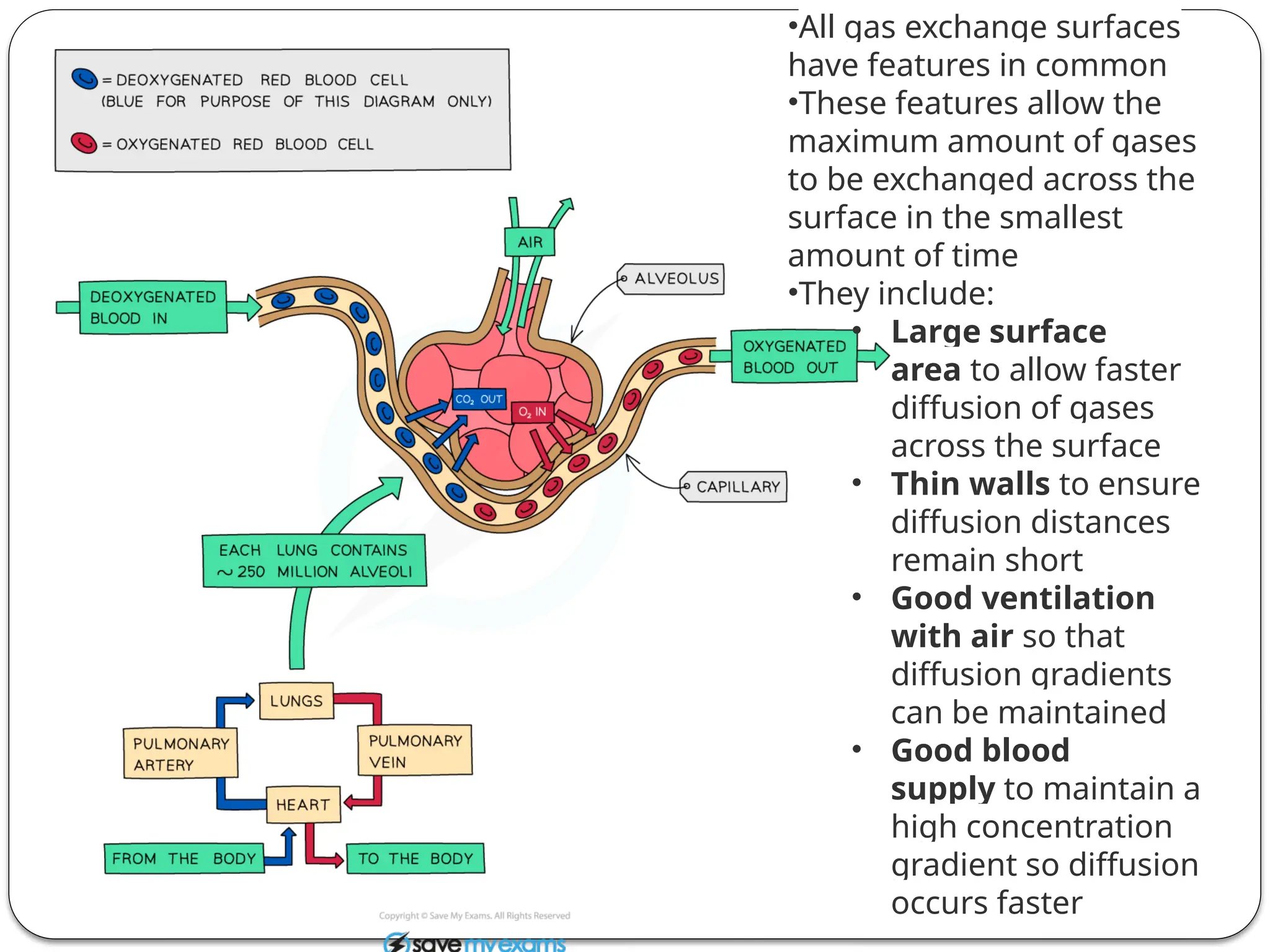
•All gas exchange surfaces
have features in common
•These features allow the
maximum amount of gases
to be exchanged across the
surface in the smallest
amount of time
•They include:
• Large surface
area to allow faster
diffusion of gases
across the surface
• Thin walls to ensure
diffusion distances
remain short
• Good ventilation
with air so that
diffusion gradients
can be maintained
• Good blood
supply to maintain a
high concentration
gradient so diffusion
occurs faster
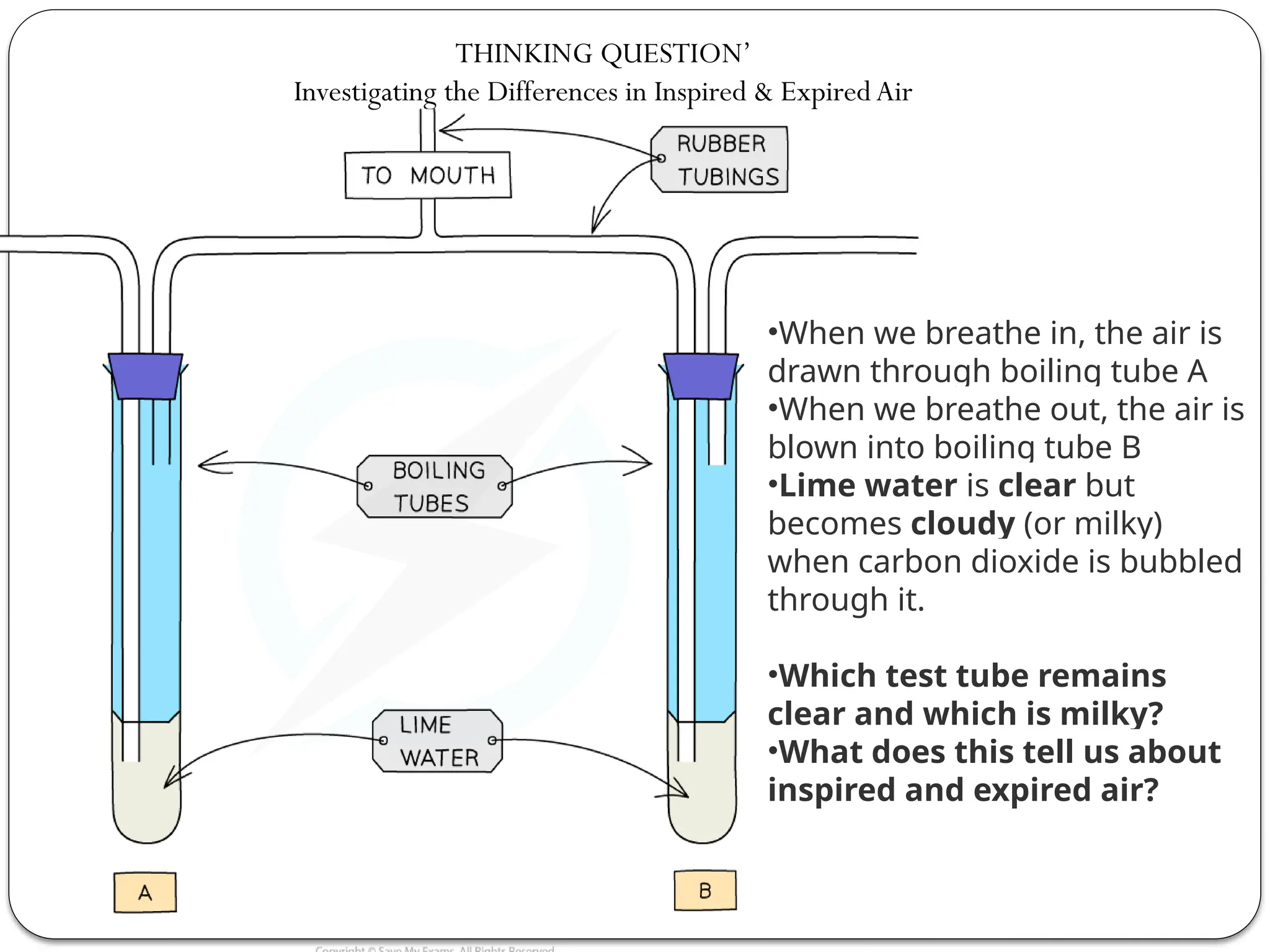
THINKING QUESTION’
Investigating the Differences in Inspired & Expired Air
•When we breathe in, the air is
drawn through boiling tube A
•When we breathe out, the air is
blown into boiling tube B
•Lime water is clear but
becomes cloudy (or milky)
when carbon dioxide is bubbled
through it.
•Which test tube remains
clear and which is milky?
•What does this tell us about
inspired and expired air?
Investigating the Effects of PhysicalActivity on Breathing
•Exercise increases the frequency and depth of breathing
•This can be investigated by counting the breaths taken
during one minute at rest and measuring average chest
expansion over 5 breaths using a tape measure held
around the chest
•Exercise for a set time (at least 3 minutes)
•Immediately after exercising, count the breaths taken in
one minute and measure the average chest expansion
over 5 breaths
•Following exercise, the number of breaths per minute will
have increased and the chest expansion will also have
increased
•Frequency and depth of breathing increase when exercising
•This is because muscles are working harder and aerobically
respiring more and they need more oxygen to be delivered to
them (and carbon dioxide removed) to keep up with the energy
demand
•If they cannot meet the energy demand they will also respire
anaerobically, producing lactic acid
•After exercise has finished, the lactic acid that has built up in
muscles needs to be removed as it lowers the pH of cells and
can denature enzymes catalysing cell reactions
•It can only be removed by combining it with oxygen - this is known
as ‘repaying the oxygen debt’
•This can be tested by seeing how long it takes after exercise for the
breathing rate and depth to return to normal - the longer it takes,
the more lactic acid produced during exercise and the greater
the oxygen debt that needs to be repaid
Mechanism for increasing breathing during
exercise
•The rate of respiration increases in muscle cells
when exercising heavily
•This CO2 diffuses out of the cells into the blood
plasma
• CO2 in solution causes a slight drop in pH so
the blood becomes slightly more acidic
•The blood flows around the circulatory system and
passes to the brain where the increased carbon
dioxide levels are detected by chemoreceptors in the
brain
• The chemoreceptors are located in
the medulla oblongata of the brain
• Chemoreceptors are cells that detect chemical
changes in the body-blood gas levels, as well
as changes in pH
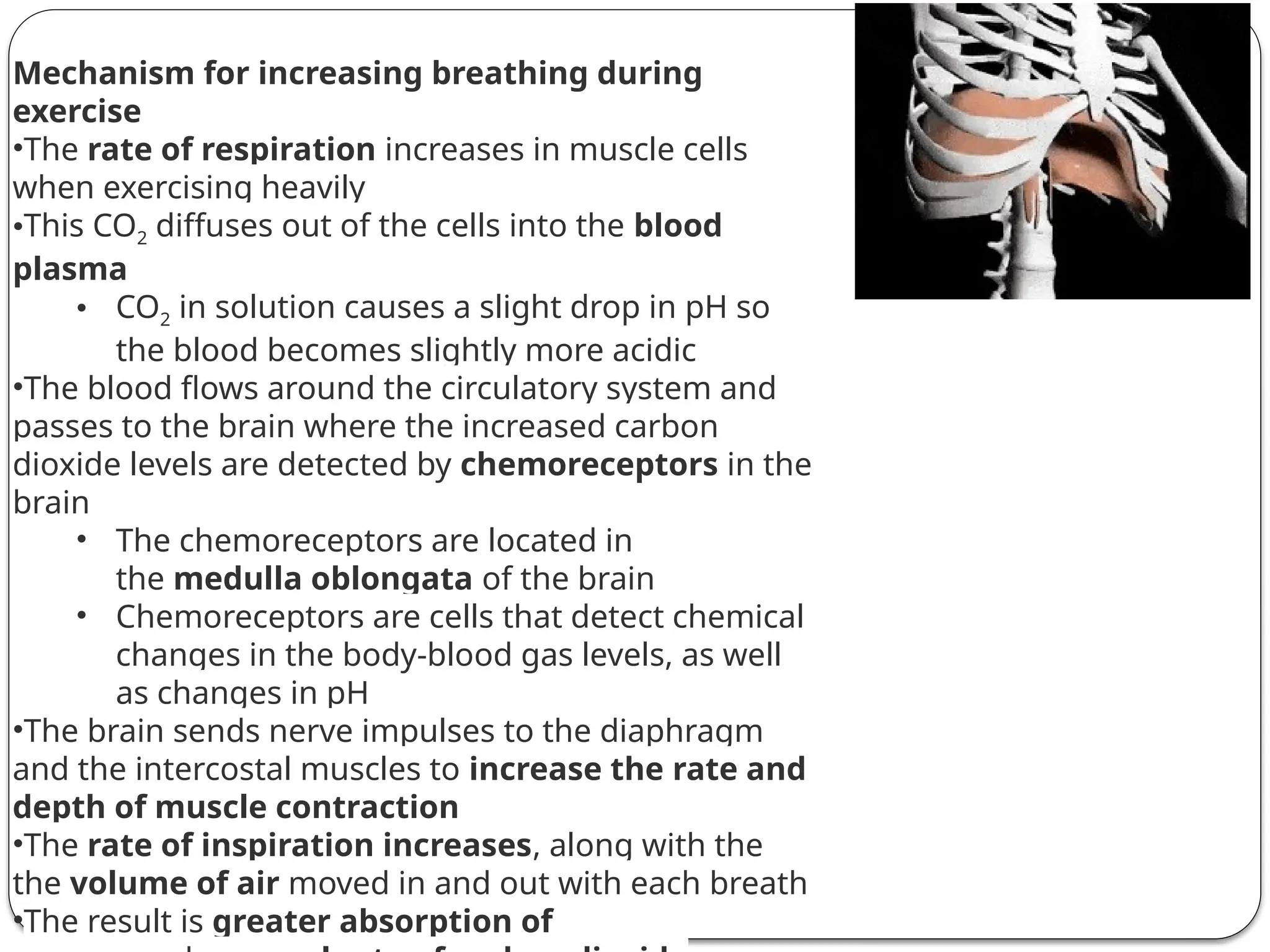
•The brain sends nerve impulses to the diaphragm
and the intercostal muscles to increase the rate and
depth of muscle contraction
•The rate of inspiration increases, along with the
the volume of air moved in and out with each breath
•The result is greater absorption of
B11_and_12__Autosaved_.pptxasperIGCSESYLLABUSGUIDE

B11_and_12__Autosaved_.pptxasperIGCSESYLLABUSGUIDE

  • 1.
  • 5.
     We cansee from the syllabus content that this chapter is divided into two main cores RESPIRARTION & BREATHING (Gas Exchange)  Firstly we need to understand the difference between respiration and breathing RESPIRATION BREATHING The chemical reactions in cells that breakdown nutrient molecules and release energy for metabolism The physical process of getting oxygen into the lungs and carbon dioxide out of the lungs. Oxygen brought in by breathing is used to breakdown Glucose inside cells to generate energy which is then used by the cell to function. It allows for gas exchange to take place so that oxygen can be absorbed from the lungs into the blood and carbon dioxide is removed from the blood and breathed out from the lungs. Takes place in all body cells Takes place in and out of lungs Does not involve any muscles Involves chest muscles
  • 6.
    •Energy for allLIFE processes come from the food we eat. •The food is digested, absorbed into blood stream and carried to cells •The main nutrients-GLUCOSE which contains a lot of chemical energy. •In order to make use of this energy, cells breakdown(CATABOLIC) these glucose molecules to release energy/heat in a series of metabolic reaction- This is RESPIRATION •Like all metabolic reactions, respiration involves use of certain enzymes PRIOR KNOWLWDGE CHAP 2-THE CHEMICALS OF LIFE- CARBOHYDRATES •What kind of atoms do carbohydrates contain and in what ratio? •What are mono di and poly saccharides? •How much energy does one gram of carbohydrate release? •In what forms do animals and plants store and transport glucose? •What are tests to check presence of carbohydrates?
  • 7.
    RESPIRATION Define respiration. Thechemical reactions in cells that breakdown nutrient molecules and release energy for metabolism State the process of respiration. Oxygen brought in by breathing is used to breakdown Glucose inside all cells to generate energy in the form ofATP which is then used by the cell to carry out all their functions.The waste products of respiration like carbondioixe is carried by blood to the lungs, diffused into alveoli and exhaled out What is the purpose of respiration? To release energy
  • 8.
    WHAT ISTHE ENERGYRELEASED BY REPIRATION USED FOR? 1. Contracting muscles so we can move parts of the body 2. Making protein molecules by linking amino acids 3. Cell division so that we can grow and repair tissues 4.Active transport of substances against concentration gradient 5.Transmitting nerve implses from one part of the body to another 6. Producing heat inside body to keep body temperature constant despite environment
  • 9.
    There are twomethods of releasing energy from glucose. 1. With the use of oxygen – AEROBIC RESPIRATION 2. Without the use of oxygen – ANAEROBIC RESPIRATION The chemical reactions in cells that breakdown nutrient molecules and release energy for metabolism
  • 10.
    AEROBIC RESPIRATION  Thistype of respiration uses oxygen to release energy from glucose present in our cells.  This takes place inside mitochondria  Glucose + Oxygen Carbon dioxide +Water + Energy  C6H12O6 + 6O2 6CO2 + 6H2O +ENERGY (ATP) In aerobic respiration glucose is brken down completely
  • 11.
    ANAEROBIC RESPIRATION  Sometimesthere is not enough oxygen around for animals and plants to respire, but they still need energy to survive. Instead they carry out respiration in the absence of oxygen to produce the energy they require this is called anaerobic respiration.  This process generally takes place in cytoplasm of the cell Anaerobic respiration has different end products in plants and animals. :
  • 12.
    In Plants The oxygensupply to plants can also run out, this happens for example if the soil gets waterlogged. In this case they have to obtain their energy via anaerobic respiration. Below is the word and chemical equation for anaerobic respiration in plants Glucose Ethanol + Carbon dioxide + Energy (ATP) C6H12O6 2C2H5OH + 2CO2 + Energy (ATP) When the above reaction occurs in yeast cells it is referred to as fermentation. Fermentation is the process used for baking bread and brewing alcohol.
  • 13.
    1 packet activedry yeast 1 tablespoon sugar 1 tablespoon salt 2 cups lukewarm water (not over 110°F) 5 cups flour
  • 14.
    In animals Our musclesneed oxygen and glucose to respire aerobically and produce the energy they require, these are carried to the muscle via the blood. However if we were to carry out vigorous exercise our heart and lungs would not be able to get sufficient oxygen to our muscles in order for them to respire. In this case muscles carry out anaerobic respiration.The word and chemical equation for anaerobic respiration in is: Glucose Lactic acid + Energy C6H12O6 2C3H6O3 + ENERGY 120 kJ/mol As you can see anaerobic respiration is not as efficient as aerobic and only a small amount of energy is released. This is because glucose can only be partially broken down(incomplete oxidation). As well as this inefficiency a poisonous chemical, lactic acid is also produced, if this builds up in the body it stops the muscles from working and causes a cramp. To rid the body of lactic acid oxygen is needed, we end up with an OXYGEN DEBT!
  • 15.
    MARKSCHEME a).continuation of fastheart rate to transport lactic acid in the blood from the muscles to the liver (b).continuation of deeper and faster breathing to supply oxygen breakdown of lactic acid (c). Breakdown of lactic acid takes place in the liver
  • 16.
    OXYGEN DEBT While runningthe muscles are using a lot of energy and for this a lot oxygen is needed. You breathe faster and deeper to get more oxygen into your blood But eventually a limit is reached and but heart and lungs cannot supply any more oxygen But extra energy is yet needed which is provided by anaerobic respiration. Glucose Lactic acid + Energy When you stop running you have quite a lot of lactic acid in your muscles which must be broken down to glucose with the help of oxygen in the liver So even after you finish running you need to continue to breathe deeper and faster to provide oxygen for the breakdown of lactic acid While you were running you built up an oxygen debt- you borrowed some extra energy without paying for it with oxygen (anaerobic) Now you need oxygen to breakdown lactic acid and are paying off the debt by breathing deeper and faster to get oxygen https://www.youtube.com/watch?v=6XT_Ivl_J1g
  • 17.
  • 18.
    How can wetest for respiration? To test aerobic respiration it is best to test for CO2,O2 and heat/energy as Giving out water is not a good test as the apparatus may be wet giving out water Using up glucose by measuring change in weight is not reliable as change in mass may be due to evaporation as well Experiments Activity 11.1- Heat 11.2 Oxygen 11.3- Co2
  • 27.
    •All gas exchangesurfaces have features in common •These features allow the maximum amount of gases to be exchanged across the surface in the smallest amount of time •They include: • Large surface area to allow faster diffusion of gases across the surface • Thin walls to ensure diffusion distances remain short • Good ventilation with air so that diffusion gradients can be maintained • Good blood supply to maintain a high concentration gradient so diffusion occurs faster
  • 28.
    THINKING QUESTION’ Investigating theDifferences in Inspired & Expired Air •When we breathe in, the air is drawn through boiling tube A •When we breathe out, the air is blown into boiling tube B •Lime water is clear but becomes cloudy (or milky) when carbon dioxide is bubbled through it. •Which test tube remains clear and which is milky? •What does this tell us about inspired and expired air?
  • 30.
    Investigating the Effectsof PhysicalActivity on Breathing •Exercise increases the frequency and depth of breathing •This can be investigated by counting the breaths taken during one minute at rest and measuring average chest expansion over 5 breaths using a tape measure held around the chest •Exercise for a set time (at least 3 minutes) •Immediately after exercising, count the breaths taken in one minute and measure the average chest expansion over 5 breaths •Following exercise, the number of breaths per minute will have increased and the chest expansion will also have increased
  • 31.
    •Frequency and depthof breathing increase when exercising •This is because muscles are working harder and aerobically respiring more and they need more oxygen to be delivered to them (and carbon dioxide removed) to keep up with the energy demand •If they cannot meet the energy demand they will also respire anaerobically, producing lactic acid •After exercise has finished, the lactic acid that has built up in muscles needs to be removed as it lowers the pH of cells and can denature enzymes catalysing cell reactions •It can only be removed by combining it with oxygen - this is known as ‘repaying the oxygen debt’ •This can be tested by seeing how long it takes after exercise for the breathing rate and depth to return to normal - the longer it takes, the more lactic acid produced during exercise and the greater the oxygen debt that needs to be repaid
  • 32.
    Mechanism for increasingbreathing during exercise •The rate of respiration increases in muscle cells when exercising heavily •This CO2 diffuses out of the cells into the blood plasma • CO2 in solution causes a slight drop in pH so the blood becomes slightly more acidic •The blood flows around the circulatory system and passes to the brain where the increased carbon dioxide levels are detected by chemoreceptors in the brain • The chemoreceptors are located in the medulla oblongata of the brain • Chemoreceptors are cells that detect chemical changes in the body-blood gas levels, as well as changes in pH •The brain sends nerve impulses to the diaphragm and the intercostal muscles to increase the rate and depth of muscle contraction •The rate of inspiration increases, along with the the volume of air moved in and out with each breath •The result is greater absorption of

Editor's Notes

  • #1 Chap11 – Mary jones and Geoff Jones Chap 11 and 12 in Mckean and Hayward
  • #4 Before you start any chapter- always look at the syllabus content You can see that this chapter has 2 main cores- Respiration and Breathing
  • #8 In short,what all do humans need energy for
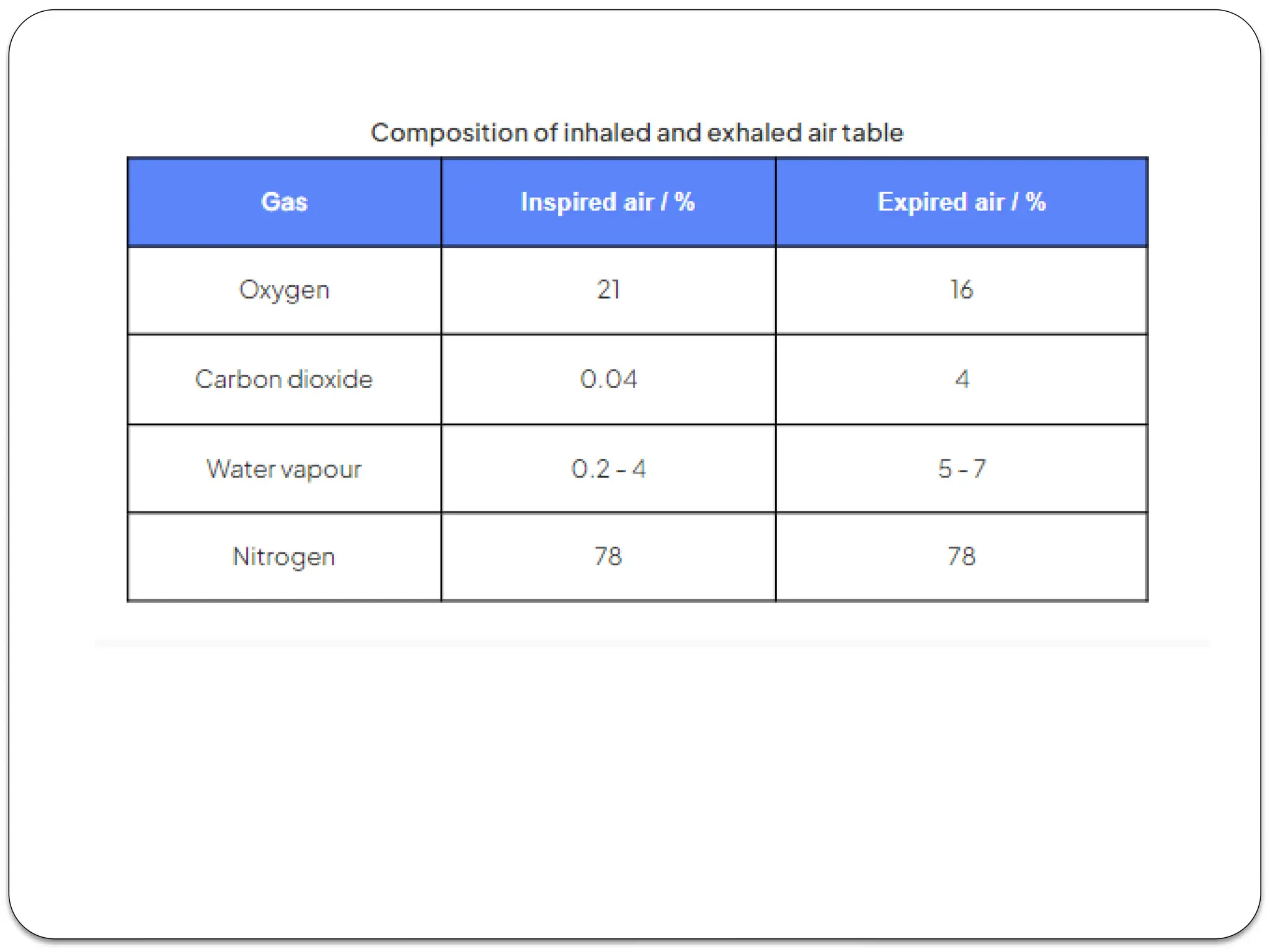
  • #28 The lime water in boiling tube A will remain clear, but the limewater in boiling tube B will become cloudy This shows us that the percentage of carbon dioxide in exhaled air is higher than in inhaled air