6E: ASSISTED REPRODUCTIVE 
TECHNOLOGY
Assisted Reproductive 
Technologies 
 Infertility is the inability of a couple to have a 
baby 
 Approx. 15% of couple in North America 
experience infertility 
 There can be several causes of infertility: 
 Too few sperm produced 
 Hormone imbalances 
 Problems with the reproductive structures 
 Damage to eggs or sperm by other medical teatments 
 Assisted reproductive technologies allow 
infertile couples to have a baby
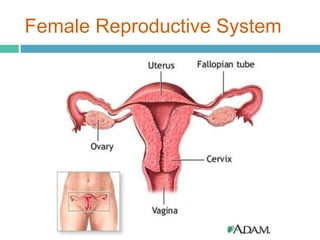
Female Reproductive System
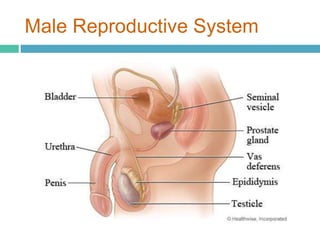
Male Reproductive System
Artificial Insemination (AI) 
 Technique originally developed for selective 
breeding of livestock 
 Sperm from the woman's partner or a sperm 
donor is injected into the cervix or uterus. 
 A.I. is performed just before the ovulation (egg 
released) 
 This method is used when the infertility is 
caused by issues with the male partners 
sperm or if there is no male partner.
In Vitro Fertilization (IVF) 
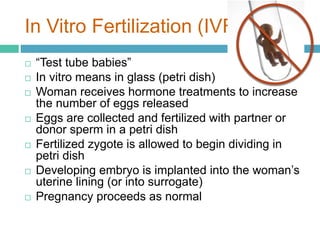
 “Test tube babies” 
 In vitro means in glass (petri dish) 
 Woman receives hormone treatments to increase 
the number of eggs released 
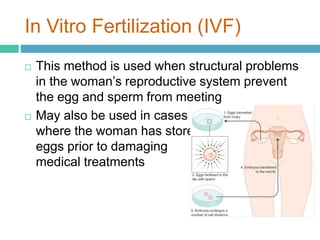
 Eggs are collected and fertilized with partner or 
donor sperm in a petri dish 
 Fertilized zygote is allowed to begin dividing in 
petri dish 
 Developing embryo is implanted into the woman’s 
uterine lining (or into surrogate) 
 Pregnancy proceeds as normal
In Vitro Fertilization (IVF) 
 This method is used when structural problems 
in the woman’s reproductive system prevent 
the egg and sperm from meeting 
 May also be used in cases 
where the woman has stored 
eggs prior to damaging 
medical treatments
Gamete Intrafallopian Transfer 
(GIFT) 
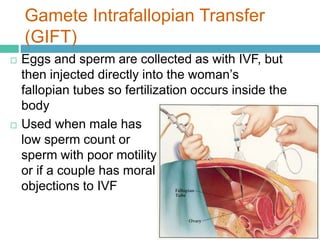
 Eggs and sperm are collected as with IVF, but 
then injected directly into the woman’s 
fallopian tubes so fertilization occurs inside the 
body 
 Used when male has 
low sperm count or 
sperm with poor motility 
or if a couple has moral 
objections to IVF
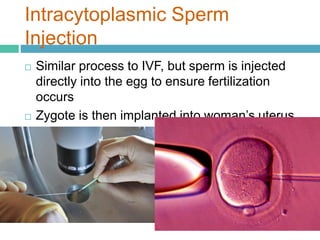
Intracytoplasmic Sperm 
Injection 
 Similar process to IVF, but sperm is injected 
directly into the egg to ensure fertilization 
occurs 
 Zygote is then implanted into woman’s uterus
Concerns with ART 
 Higher risk or birth defects/multiple births 
 Donor sperm – anonymous genetic father 
 Extra embryos left over after IVF – stem cell 
research 
 Genetic screening of embryos vs. amniocentesis

6e art

  • 1.
  • 2.
    Assisted Reproductive Technologies  Infertility is the inability of a couple to have a baby  Approx. 15% of couple in North America experience infertility  There can be several causes of infertility:  Too few sperm produced  Hormone imbalances  Problems with the reproductive structures  Damage to eggs or sperm by other medical teatments  Assisted reproductive technologies allow infertile couples to have a baby
  • 3.
  • 4.
  • 5.
    Artificial Insemination (AI)  Technique originally developed for selective breeding of livestock  Sperm from the woman's partner or a sperm donor is injected into the cervix or uterus.  A.I. is performed just before the ovulation (egg released)  This method is used when the infertility is caused by issues with the male partners sperm or if there is no male partner.
  • 6.
    In Vitro Fertilization(IVF)  “Test tube babies”  In vitro means in glass (petri dish)  Woman receives hormone treatments to increase the number of eggs released  Eggs are collected and fertilized with partner or donor sperm in a petri dish  Fertilized zygote is allowed to begin dividing in petri dish  Developing embryo is implanted into the woman’s uterine lining (or into surrogate)  Pregnancy proceeds as normal
  • 7.
    In Vitro Fertilization(IVF)  This method is used when structural problems in the woman’s reproductive system prevent the egg and sperm from meeting  May also be used in cases where the woman has stored eggs prior to damaging medical treatments
  • 8.
    Gamete Intrafallopian Transfer (GIFT)  Eggs and sperm are collected as with IVF, but then injected directly into the woman’s fallopian tubes so fertilization occurs inside the body  Used when male has low sperm count or sperm with poor motility or if a couple has moral objections to IVF
  • 9.
    Intracytoplasmic Sperm Injection  Similar process to IVF, but sperm is injected directly into the egg to ensure fertilization occurs  Zygote is then implanted into woman’s uterus
  • 10.
    Concerns with ART  Higher risk or birth defects/multiple births  Donor sperm – anonymous genetic father  Extra embryos left over after IVF – stem cell research  Genetic screening of embryos vs. amniocentesis