WELCOME TO
ZOOLOGY SEMINAR
GUIDED BY
SHREE. RADHAKANTA PRADHAN
Dr.JATINDRA KU. PRADHAN
Dr. MUMTAJ KHAN
PREPARED BY
RAJU MEHER
SUDEEPTA BAG
A.R.T
ASSITED REPRODUCTIVE TECHNOLOGY
CONTENTS
INFERTILITY
ASSISTED REPRODUCTIVE TECHNOLOGY(A.R.T)
DIFFERENT TECHNIQUE OF A.R.T
 ARTIFICIAL INSEMINATION (AI)
 IN VITRO FERTILIZATION (IVF)
 SARROGACY
NEGATIVE ASPECTS OF ART
RECENT TRENDS OF ART
CONCLUSION
Infertility
According to WHO -
Clinically infertility defined as inability to conceive after
more than one year of intercourse without contraception.
– It may be seen in both male and female
reason for infertility
Reasons for infertility in male:
– the different factor that causes infertility in male are-
– Sperm production/sperm count disorders - include azospermia
(no sperm cells are produced) and oligospermia (few
sperm cells are produced). Sometimes, sperm cells are
malformed or they die before they can reach the egg.
– Erectile or ejaculation deficiency- also cause infertility in male
– Ejaculatory disturbances due to ejaculatory failure or
impotence.
– Structural abnormalities- Either the shape or motility of the
sperm is affected preventing the sperm from either swimming to
or binding with the egg.
- Age - The age of male is also a major cause of infertility.
- Aged male have less sperm count and motility rate of sperm is
Reason for infertility in female
– There are a number of female factors that that
causes infertility in female-
– Ability of the ovaries to produce ova e.g. ovulation
disorders that may prevent an egg from being
released such as Polycystic Ovarian Syndrome
(PCOS).
– Fallopian tube structure e.g. tubal blockage which
prevents ovum and sperm meeting.
– Advanced maternal age is a major cause of infertility
in women. The quality of a woman’s ovum decrease
with age and can limit her ability to conceive
– Quality of the uterine lining e.g. Endometriosis, in
which womb tissue invades and damages
neighbouring reproductive tissue
ASSISTED REPRODUCTIVE
TECHNOLOGY :1
DEFINATION
Assisted Reproductive technology is defined
as the technology used to achieve pregnancy
in procedures such as artificial insemination,
in vitro fertilization and surrogacy
TECHNIQUES OF A.R.T
Main three technique of ART-
1) ARTIFICIAL INSEMINATION (A.I)
2) IN VITRO FERTILIZATION (I.V.F)
3) SURROGACY
1) ARTIFICIAL INSEMINATION
 It is the deliberate introduction of sperm into the female’s uterus
or cervix for the purpose of achieving pregnancy through in vivo
fertilization by means other than sexual intercourse.
ARTIFICIAL INSEMINATION
IT MAY BE OF FOLLOWING TYPE
Intracervical insemination
Intrauterine insemination
Intratubal insemination
INTRACERVICAL INSEMINATION
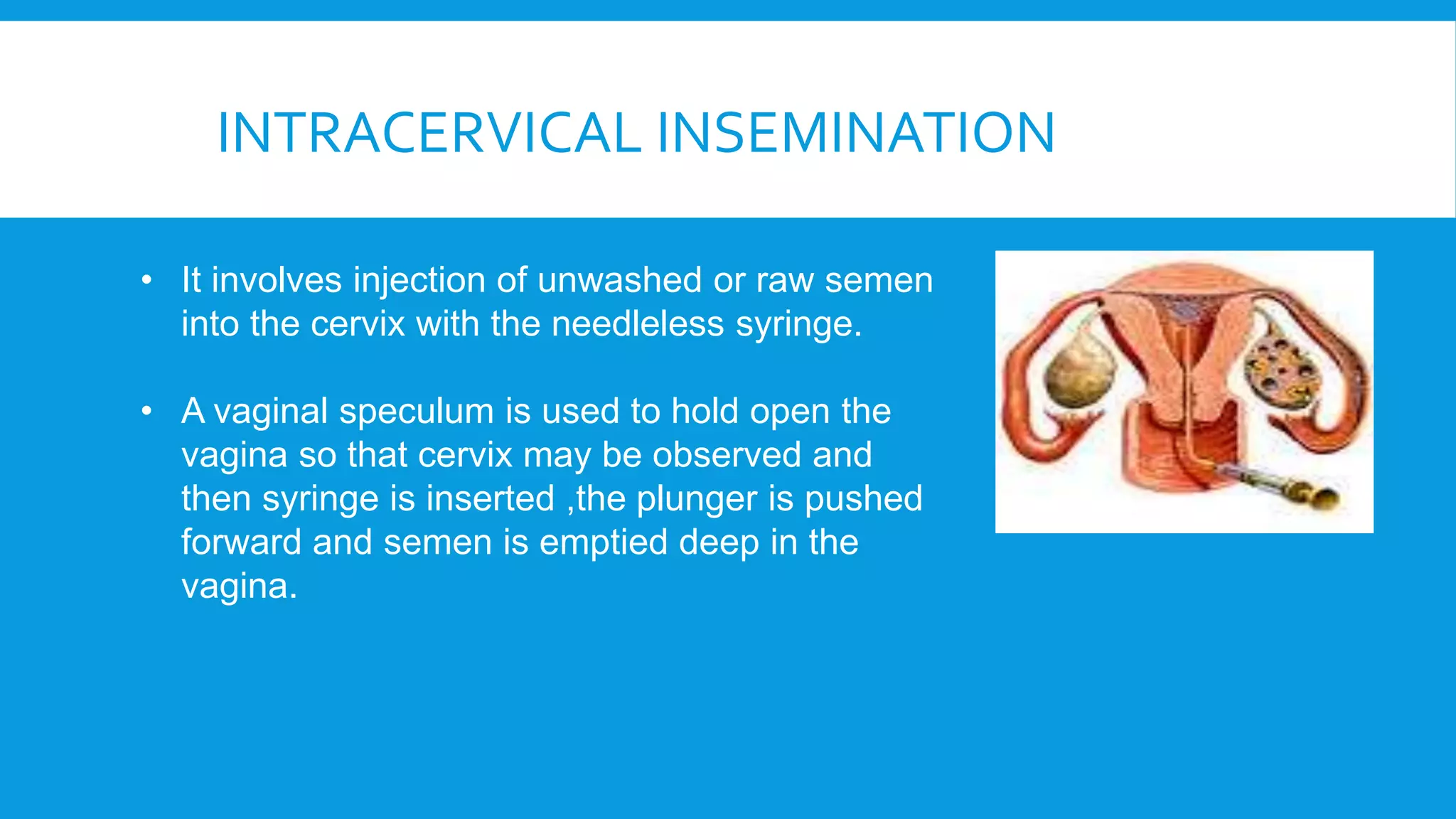
• It involves injection of unwashed or raw semen
into the cervix with the needleless syringe.
• A vaginal speculum is used to hold open the
vagina so that cervix may be observed and
then syringe is inserted ,the plunger is pushed
forward and semen is emptied deep in the
vagina.
INTRAUTERINE INSEMINATION
• The seminal vesicle is prepared in the
laboratory (washed with special media).
Injected inside the uterus with catheter
after stimulating the ovaries to produce
more eggs per cycle.
• The catheter used here is known as
‘TOM CAT’
INTRATUBAL INSEMINATION
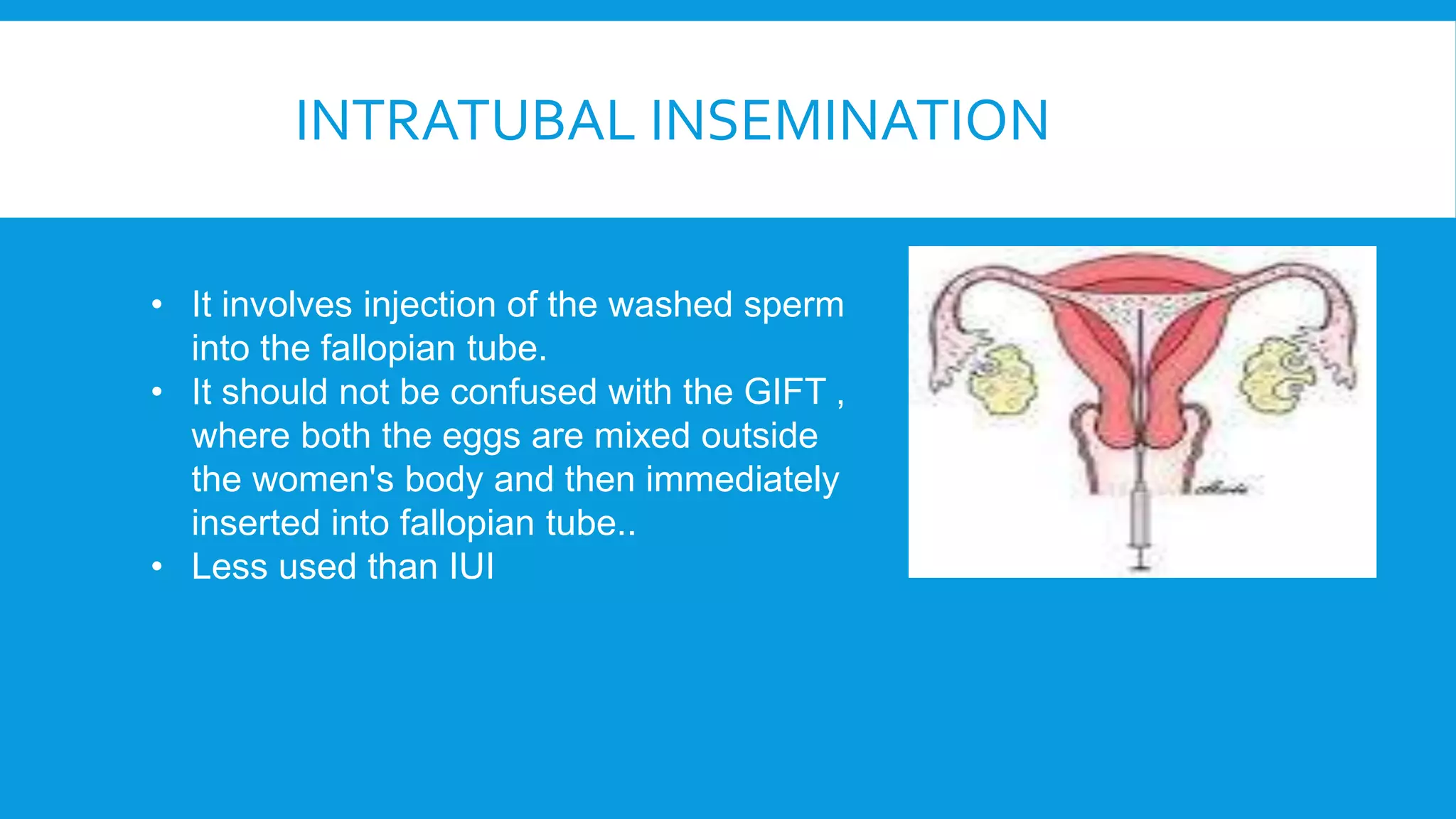
• It involves injection of the washed sperm
into the fallopian tube.
• It should not be confused with the GIFT ,
where both the eggs are mixed outside
the women's body and then immediately
inserted into fallopian tube..
• Less used than IUI
INVITRO FERTILIZATION
(IVF)
INVITRO FERTILIZATION
In Vitro Fertilization is the uniting of egg and
sperm in vitro(in the lab).Subsequently the
embryos are transferred into the uterus through the
cervix and pregnancy is allowed to begin.
 It is the technique of letting fertilization of male
and female gametes occur outside the female
body.
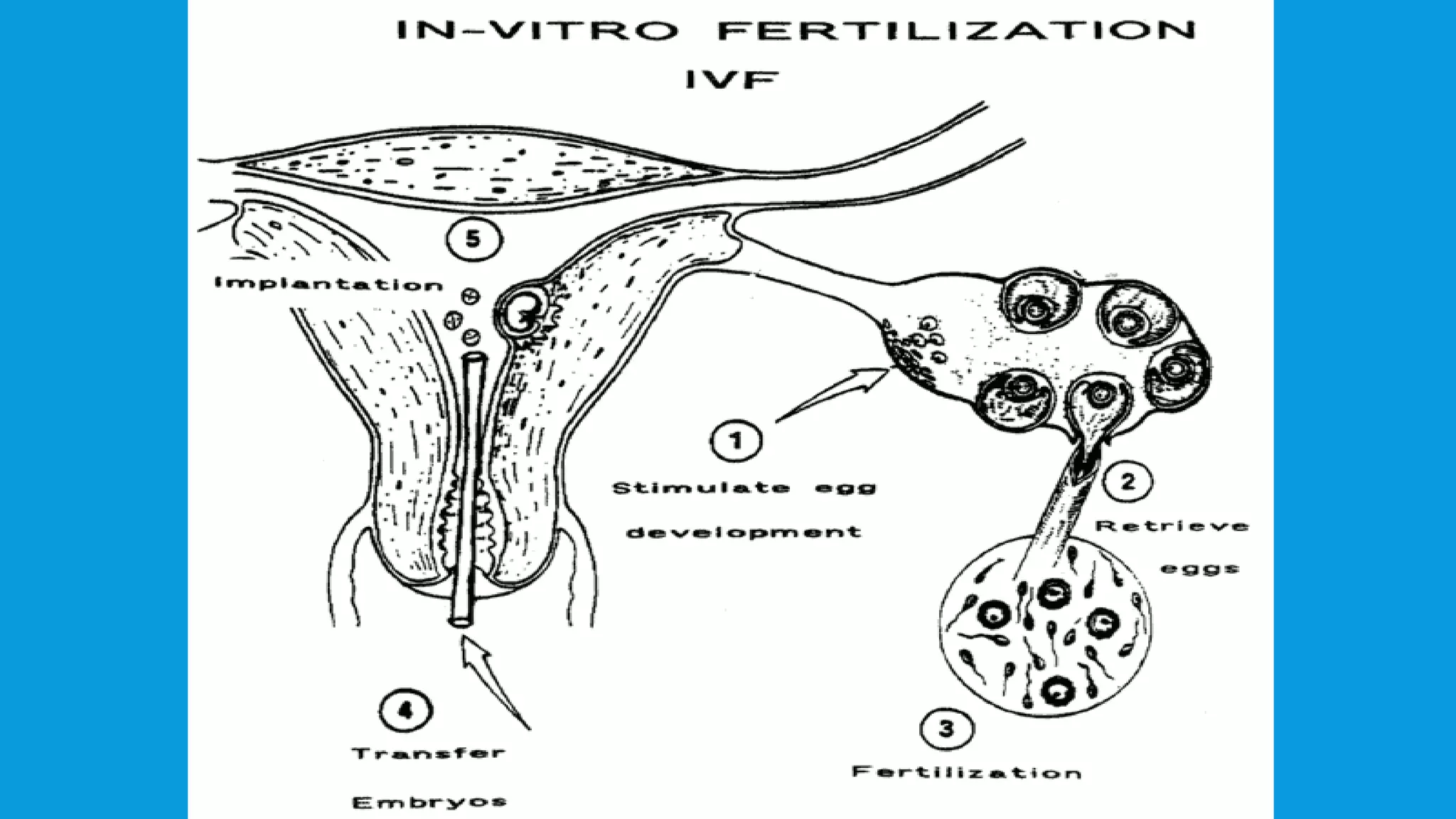
STEPS OF INVITRO FERTILIZATION
There are generally five major steps in the process of
IVF:
I. Ovary stimulation
II. Oocyte retrieval
III. Sperm retrieval-wash sperm
IV. Fertilization
V. Embryo transfer
Ovary stimulation
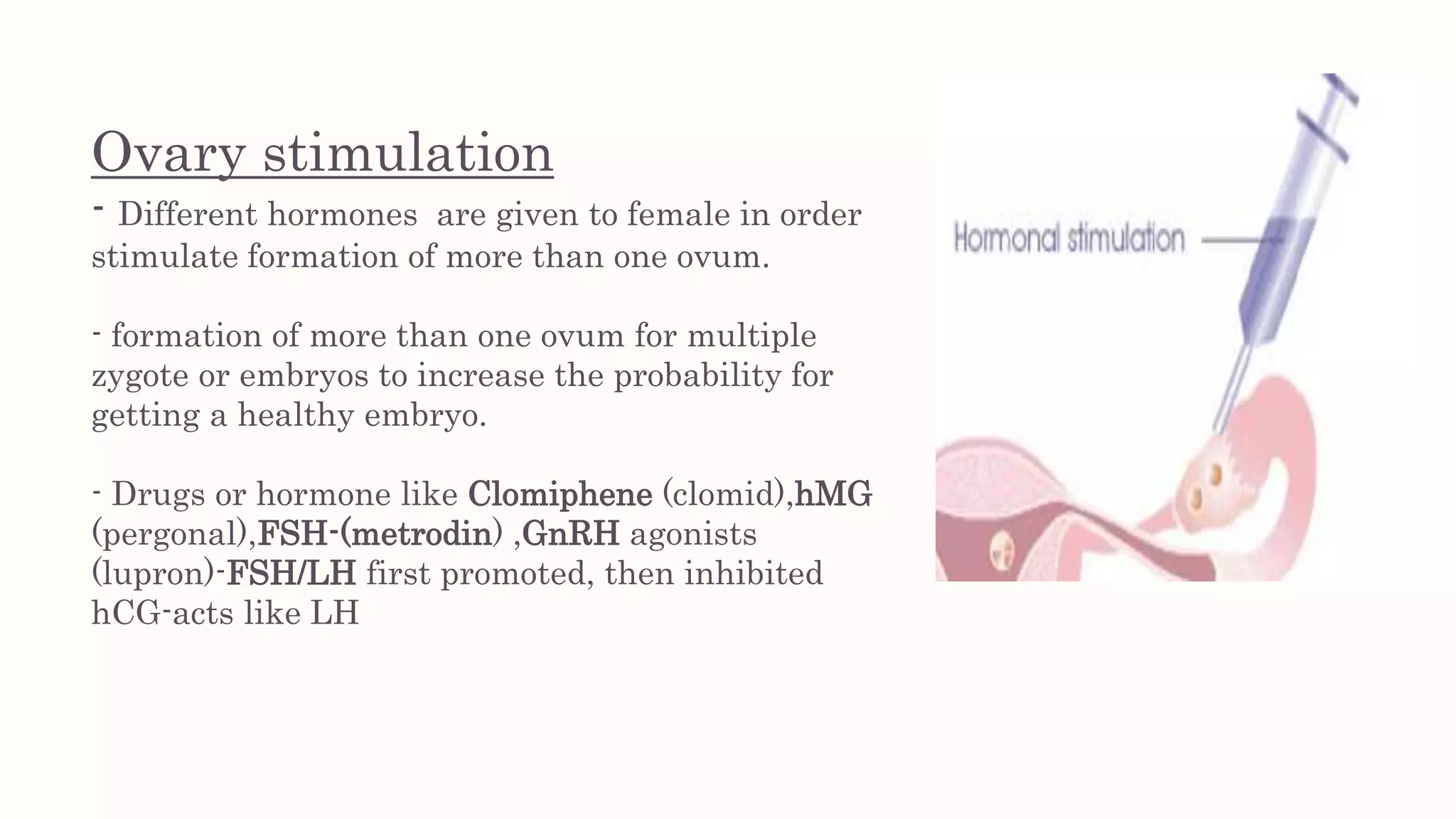
- Different hormones are given to female in order
stimulate formation of more than one ovum.
- formation of more than one ovum for multiple
zygote or embryos to increase the probability for
getting a healthy embryo.
- Drugs or hormone like Clomiphene (clomid),hMG
(pergonal),FSH-(metrodin) ,GnRH agonists
(lupron)-FSH/LH first promoted, then inhibited
hCG-acts like LH
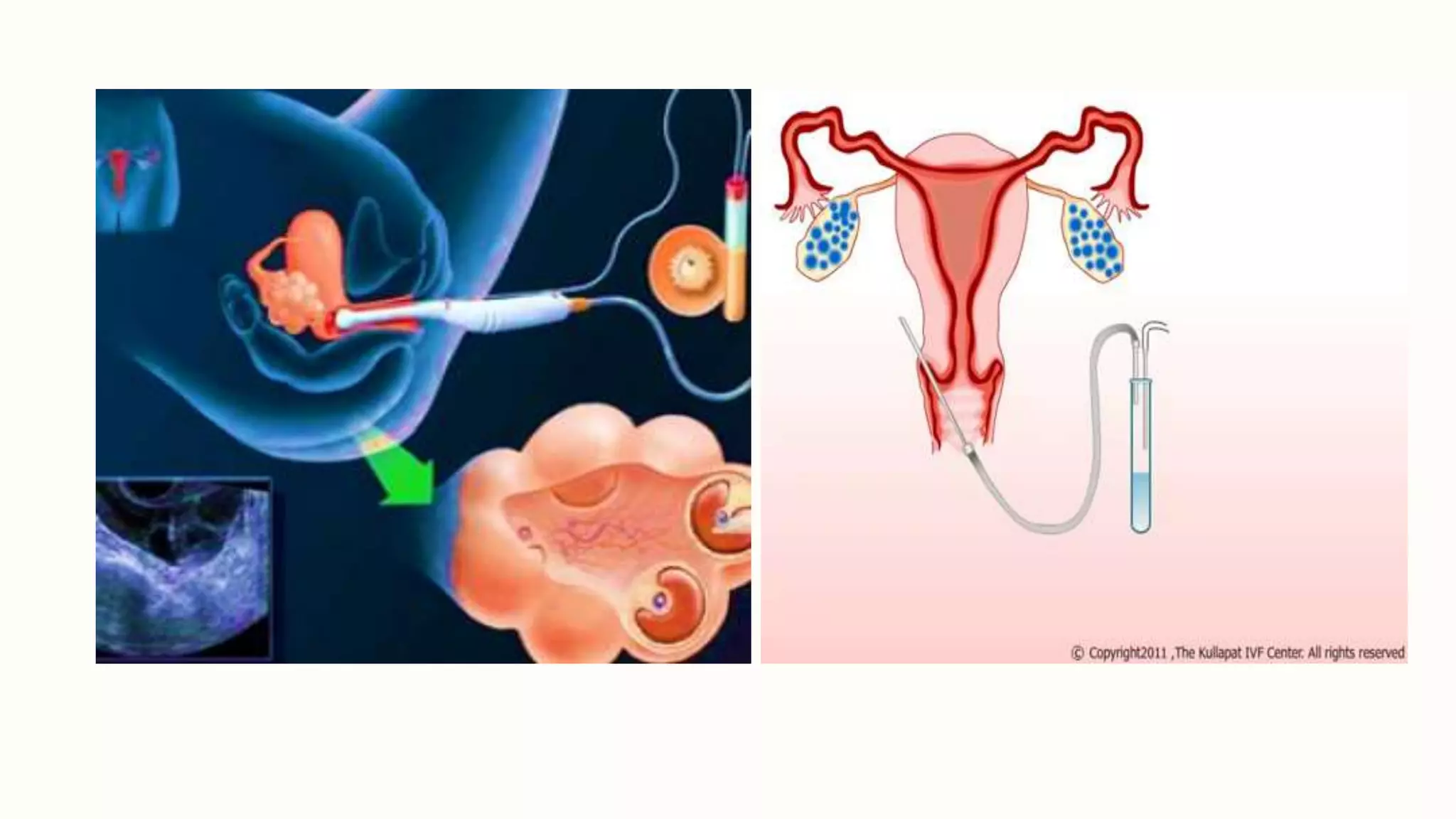
Oocyte retrieval
– it is a technique used to remove oocyte from the ovary of the
female enabling fertilization outside the body
PROCEDURE:
– Under ultrasound guidance, the operator inserts a needle through
the vaginal wall and into an ovarian follicle, taking care not to
injure organs located between the vaginal wall and the ovary.
– The other end of the needle is attached to a suction device.
– Then the follicular fluid and cellular material is suctioned with the
needle.
– The procedure usually lasts 10-20 minutes
Sperm retrieval
– Approximately three hour before the procedure ,a
semen sample from the male donor is obtained .
The sperm is then washed and prepared for loading
into the same catheter into which several of the
female’s best eggs will be placed .
– The eggs are obtained by transvaginal needle
aspiration(no surgical incision) via an ultrasound
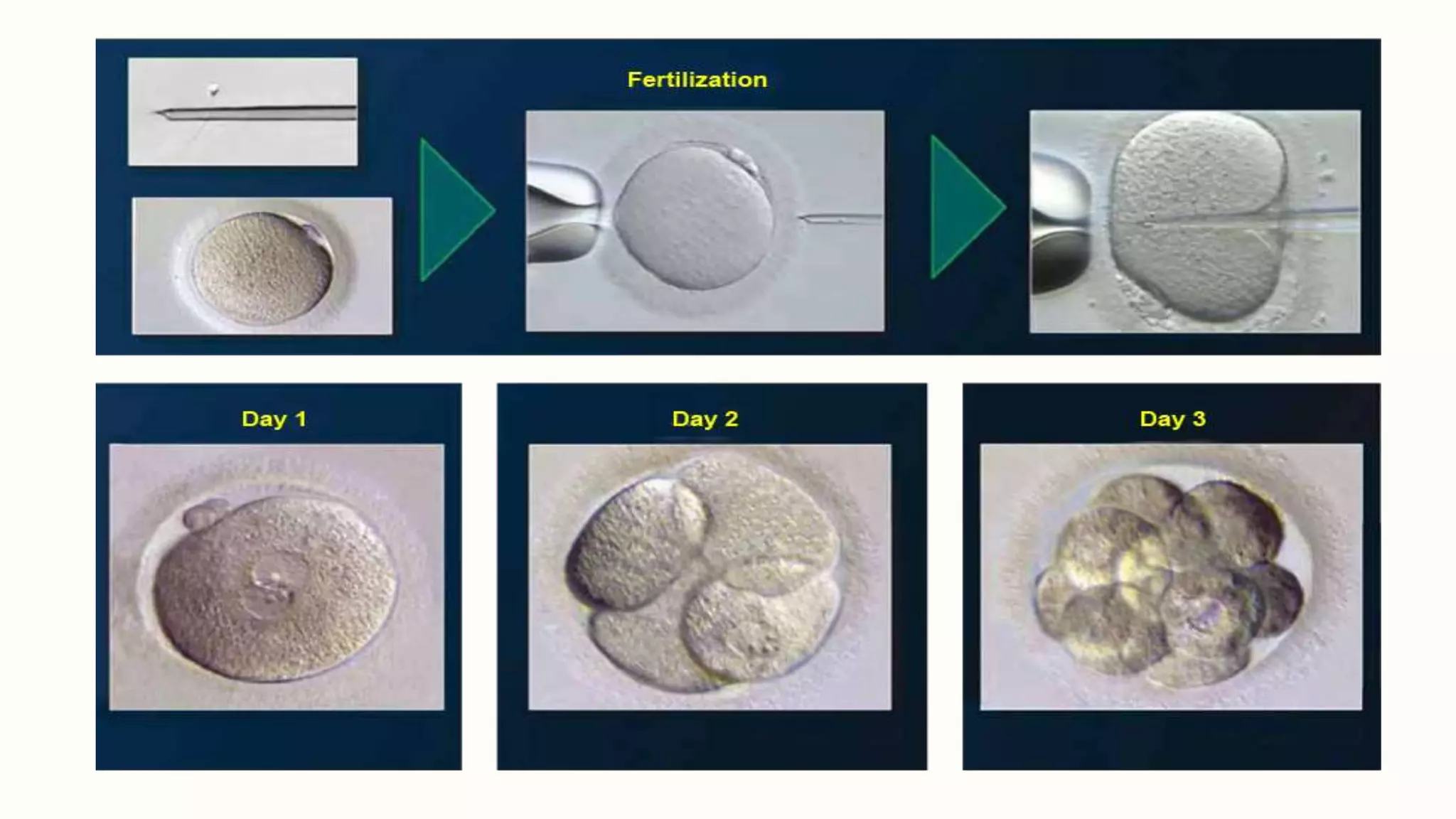
Fertilization
– After retrieval of sperm, eggs and sperm are brought together in a
laboratory glass dish to allow the sperm to fertilize an egg . If
sperm parameters are normal, approximately 50,000 to 100,000
motile sperm are transferred to the dish containing the eggs. This
is called standard insemination. Once fertilization takes place one
or more healthy embryos are transfered to the uterus
– The ICSI technique is utilized to fertilize mature eggs if sperm
parameters are abnormal. This procedure is performed under a
high-powered microscope
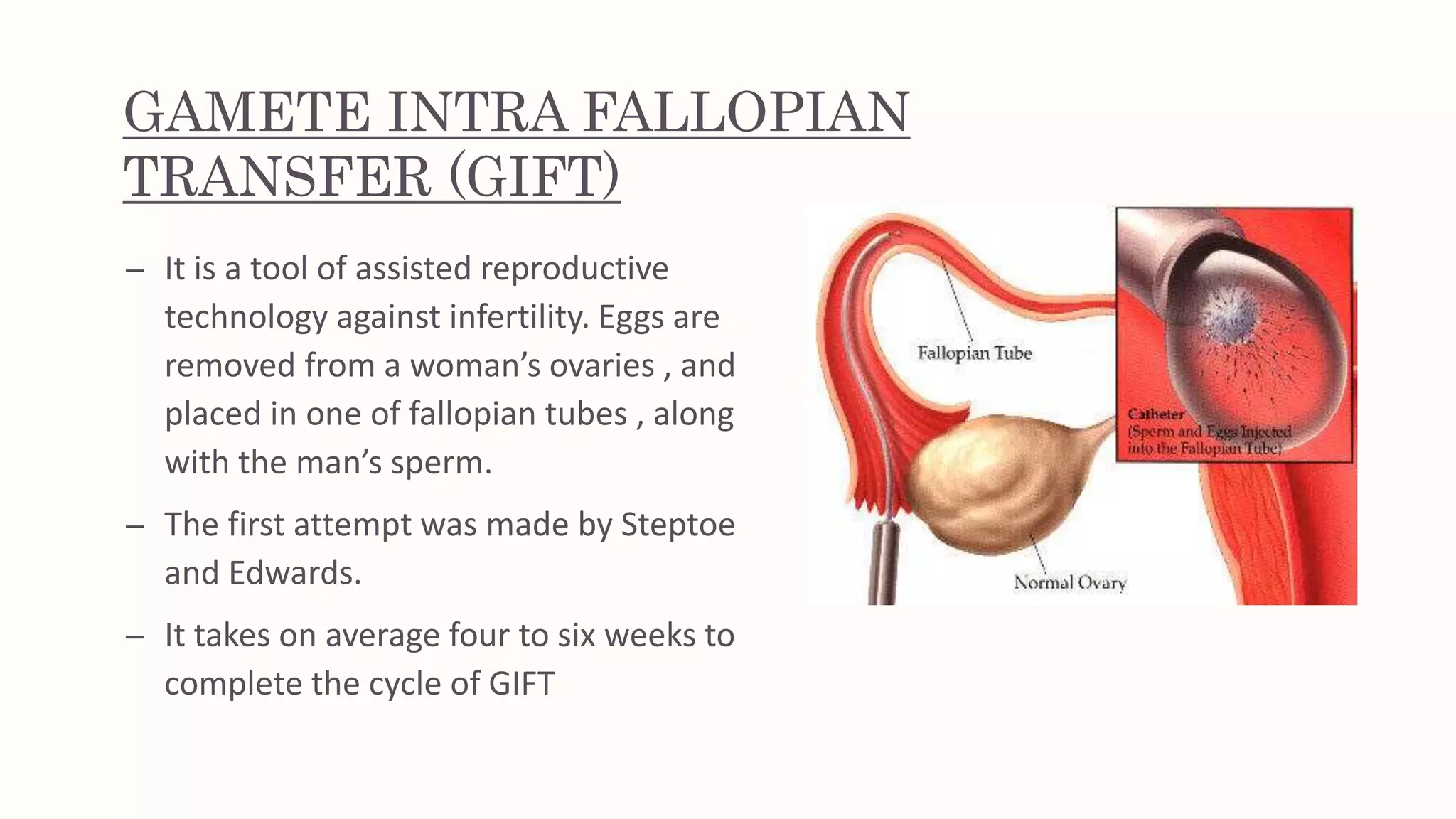
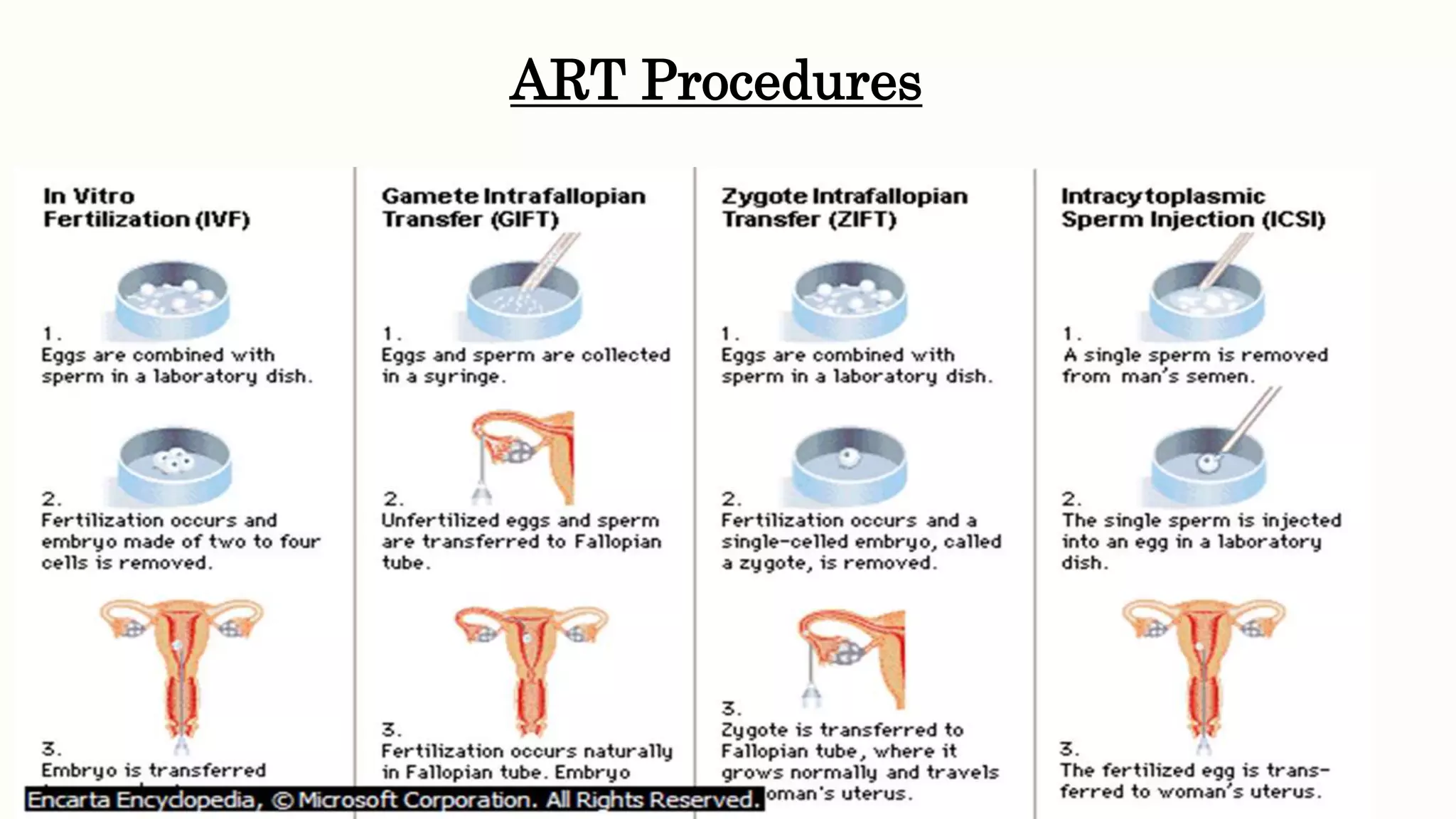
GAMETE INTRA FALLOPIAN
TRANSFER (GIFT)
– It is a tool of assisted reproductive
technology against infertility. Eggs are
removed from a woman’s ovaries , and
placed in one of fallopian tubes , along
with the man’s sperm.
– The first attempt was made by Steptoe
and Edwards.
– It takes on average four to six weeks to
complete the cycle of GIFT
ADVANTAGES
– There is no much human intervention in the actual fertilization of the
eggs.
– Because fertilisation takes place within the fallopian tube, GIFT offers
an option for people whose religious beliefs prohibit conception
outside the body.
DISADVANTAGES
– Can be performed only if woman have at least one normal fallopian
tube.
– GIFT does not allow for visual confirmation of fertilization.
– GIFT involves a laproscopic surgery.
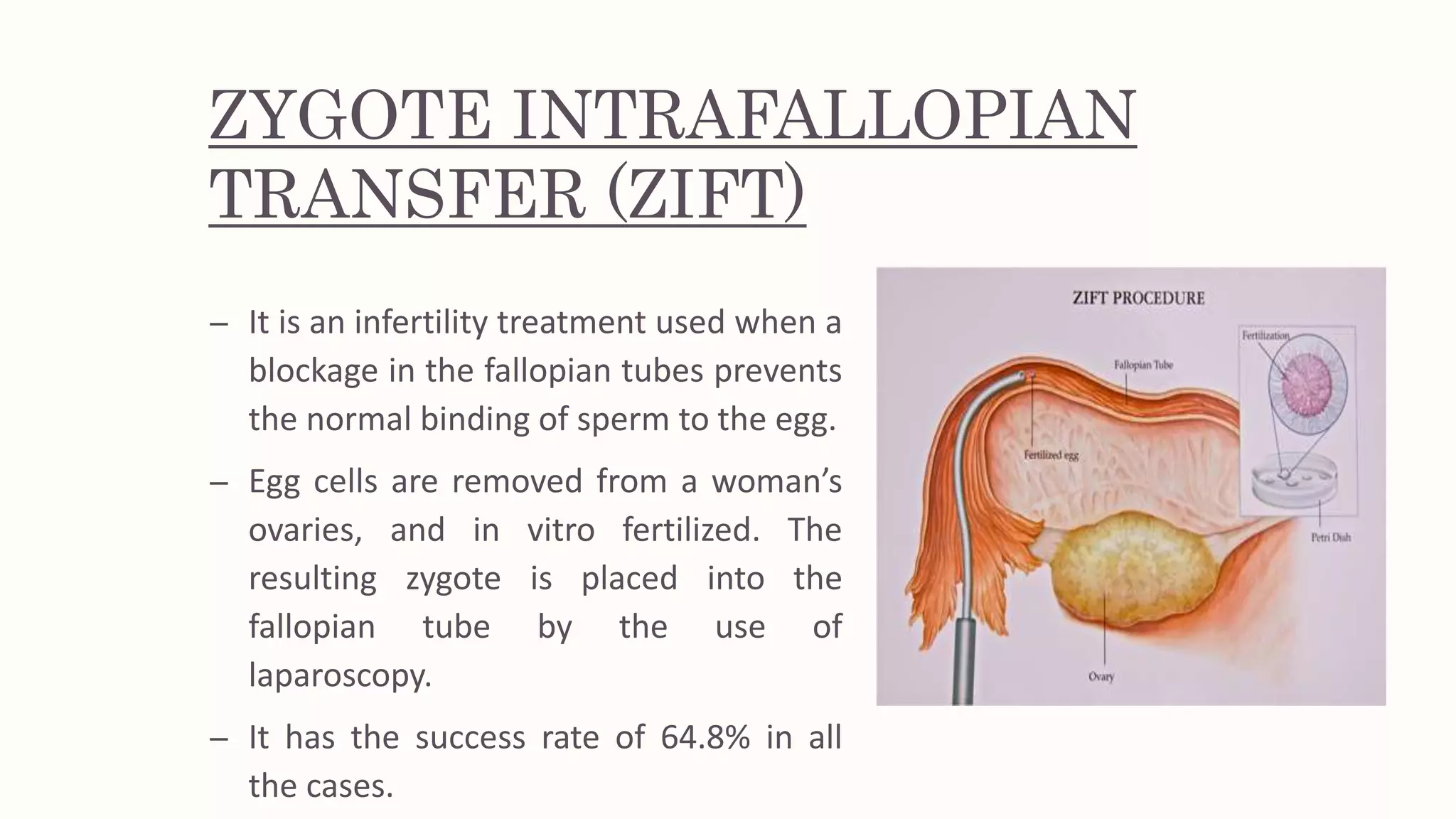
ZYGOTE INTRAFALLOPIAN
TRANSFER (ZIFT)
– It is an infertility treatment used when a
blockage in the fallopian tubes prevents
the normal binding of sperm to the egg.
– Egg cells are removed from a woman’s
ovaries, and in vitro fertilized. The
resulting zygote is placed into the
fallopian tube by the use of
laparoscopy.
– It has the success rate of 64.8% in all
the cases.
ADVANTAGES
– Fertilization can be confirmed before they are implanted into the fallopian
tube.
– Allows a developing embryo to travel into the uterus on its own, which may
be important to those who wish their baby to develop as naturally as
possible
DISADVANTAGES
– Can be performed only if woman have atleast one normal fallopian tube.
– It is more expensive than GIFT.
– ZIFT involves a laproscopic surgery
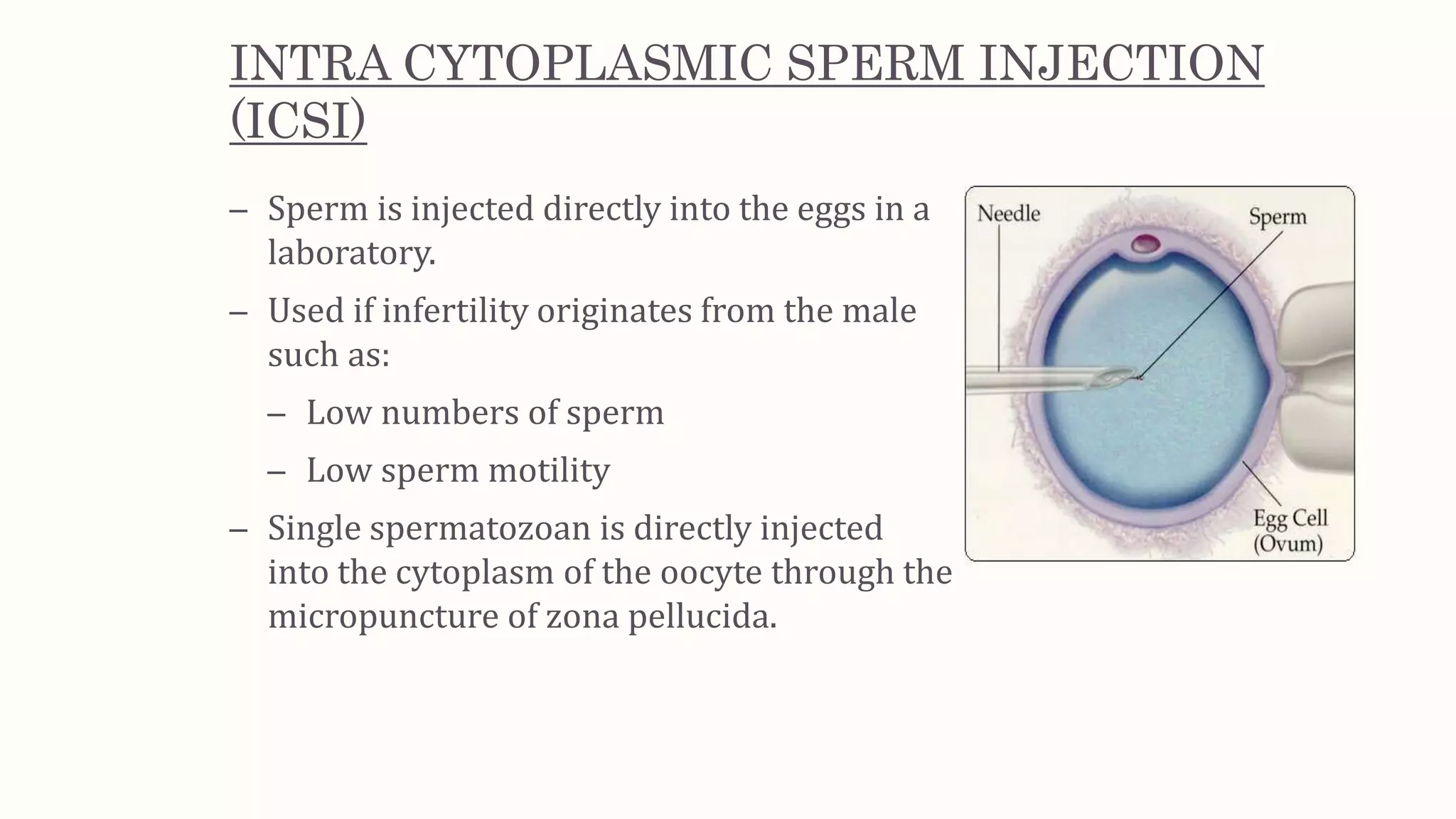
INTRA CYTOPLASMIC SPERM INJECTION
(ICSI)
– Sperm is injected directly into the eggs in a
laboratory.
– Used if infertility originates from the male
such as:
– Low numbers of sperm
– Low sperm motility
– Single spermatozoan is directly injected
into the cytoplasm of the oocyte through the
micropuncture of zona pellucida.
ADVANTAGES
Can be useful when very low numbers of motile sperm are
present and when there are problems with sperm binding and
penetration.
DISADVANTAGES
Altering the nature’s selection process for sperm can lead to an
increase risk of developmental and health issues for ICSI
children, as well as a higher risk of miscarriage because of the
poorer genetic material involved.
TUBAL EMBRYO STAGE TRANSFER (TET)
• It combines IVF with tubal transfer
• Embryos are placed into the women’s fallopian tube.
• The embryos are transferred back into the woman 2 days after
fertilisation. This is at the ‘2 cell or 4 cell’ stage.
• TET allows embryos to make their way to the uterus for
implantation.
• Its advantage over ZIFT is that it allows for the assessment of
fertilization and embryo quality.
• Success rate higher than ZIFT.
ART Procedures
SURROGACY
• Surrogacy is when another woman carries
and gives birth to a baby for the couple
who want to have a child.
• It is the carrying of a pregnancy for
intended parents.
• In this a woman agrees to became
pregnant and deliver a child for a
contracted party
SURROGACY
TYPES
1. Traditional surrogacy: It is the simplest and least
expensive form of surrogacy and is also known as
artificial insemination. The surrogate mother uses
an insemination kit to became pregnant using an
intended father’s semen.
2. Gestational surrogacy: It is physically more
complicated and more expensive. Here both the
eggs and sperm are taken from intended father
and mother.
NEGATIVE ASPECT OF ART
– Due to administration of hormones and drugs, ovarian hyperstimulation
syndrome (OHSS) can occur.
– Risks associated with pregnancy
– Multiple pregnancy
– Increased risk of premature labor etc..
– Can cause premature menopause.
– Increased risk of ovarian cancer, atleast by 3 times when compared to normal
women.
RECENT TRENDS
– Innovative design of IVF equipment (PLoS ONE, june 2012)
– A novel system for processing embryos during IVF treatment has been
shown to significantly improve the chances of pregnancy by 27%.
– Pioneered by a Newcastle team of fertility experts within the
University and NHS, the innovative design of interlinked incubators
provides a totally enclosed and controlled environment within which
every step of the IVF process can be performed.
CONCLUSION
– ART has been the answer for many childless couples, resulting in successful
pregnancies and childbirth.
– Today there is a range of infertile treatment that aims to ensure a healthy
sustainable pregnancy.
– But there are still risks, stress and high cost associated with ART.
– With the advent of new technologies, it is hoped that these shortcomings
would be overcome in the near future and every infertile couple would have
the privilege of parenthood.
THANK YOU

assisted reproductive technology

  • 1.
    WELCOME TO ZOOLOGY SEMINAR GUIDEDBY SHREE. RADHAKANTA PRADHAN Dr.JATINDRA KU. PRADHAN Dr. MUMTAJ KHAN PREPARED BY RAJU MEHER SUDEEPTA BAG
  • 2.
  • 3.
    CONTENTS INFERTILITY ASSISTED REPRODUCTIVE TECHNOLOGY(A.R.T) DIFFERENTTECHNIQUE OF A.R.T  ARTIFICIAL INSEMINATION (AI)  IN VITRO FERTILIZATION (IVF)  SARROGACY NEGATIVE ASPECTS OF ART RECENT TRENDS OF ART CONCLUSION
  • 4.
    Infertility According to WHO- Clinically infertility defined as inability to conceive after more than one year of intercourse without contraception. – It may be seen in both male and female
  • 5.
    reason for infertility Reasonsfor infertility in male: – the different factor that causes infertility in male are- – Sperm production/sperm count disorders - include azospermia (no sperm cells are produced) and oligospermia (few sperm cells are produced). Sometimes, sperm cells are malformed or they die before they can reach the egg. – Erectile or ejaculation deficiency- also cause infertility in male – Ejaculatory disturbances due to ejaculatory failure or impotence. – Structural abnormalities- Either the shape or motility of the sperm is affected preventing the sperm from either swimming to or binding with the egg. - Age - The age of male is also a major cause of infertility. - Aged male have less sperm count and motility rate of sperm is
  • 6.
    Reason for infertilityin female – There are a number of female factors that that causes infertility in female- – Ability of the ovaries to produce ova e.g. ovulation disorders that may prevent an egg from being released such as Polycystic Ovarian Syndrome (PCOS). – Fallopian tube structure e.g. tubal blockage which prevents ovum and sperm meeting. – Advanced maternal age is a major cause of infertility in women. The quality of a woman’s ovum decrease with age and can limit her ability to conceive – Quality of the uterine lining e.g. Endometriosis, in which womb tissue invades and damages neighbouring reproductive tissue
  • 7.
    ASSISTED REPRODUCTIVE TECHNOLOGY :1 DEFINATION AssistedReproductive technology is defined as the technology used to achieve pregnancy in procedures such as artificial insemination, in vitro fertilization and surrogacy
  • 8.
    TECHNIQUES OF A.R.T Mainthree technique of ART- 1) ARTIFICIAL INSEMINATION (A.I) 2) IN VITRO FERTILIZATION (I.V.F) 3) SURROGACY
  • 9.
    1) ARTIFICIAL INSEMINATION It is the deliberate introduction of sperm into the female’s uterus or cervix for the purpose of achieving pregnancy through in vivo fertilization by means other than sexual intercourse.
  • 10.
  • 11.
    IT MAY BEOF FOLLOWING TYPE Intracervical insemination Intrauterine insemination Intratubal insemination
  • 12.
    INTRACERVICAL INSEMINATION • Itinvolves injection of unwashed or raw semen into the cervix with the needleless syringe. • A vaginal speculum is used to hold open the vagina so that cervix may be observed and then syringe is inserted ,the plunger is pushed forward and semen is emptied deep in the vagina.
  • 13.
    INTRAUTERINE INSEMINATION • Theseminal vesicle is prepared in the laboratory (washed with special media). Injected inside the uterus with catheter after stimulating the ovaries to produce more eggs per cycle. • The catheter used here is known as ‘TOM CAT’
  • 14.
    INTRATUBAL INSEMINATION • Itinvolves injection of the washed sperm into the fallopian tube. • It should not be confused with the GIFT , where both the eggs are mixed outside the women's body and then immediately inserted into fallopian tube.. • Less used than IUI
  • 15.
  • 16.
    INVITRO FERTILIZATION In VitroFertilization is the uniting of egg and sperm in vitro(in the lab).Subsequently the embryos are transferred into the uterus through the cervix and pregnancy is allowed to begin.  It is the technique of letting fertilization of male and female gametes occur outside the female body.
  • 17.
    STEPS OF INVITROFERTILIZATION There are generally five major steps in the process of IVF: I. Ovary stimulation II. Oocyte retrieval III. Sperm retrieval-wash sperm IV. Fertilization V. Embryo transfer
  • 19.
    Ovary stimulation - Differenthormones are given to female in order stimulate formation of more than one ovum. - formation of more than one ovum for multiple zygote or embryos to increase the probability for getting a healthy embryo. - Drugs or hormone like Clomiphene (clomid),hMG (pergonal),FSH-(metrodin) ,GnRH agonists (lupron)-FSH/LH first promoted, then inhibited hCG-acts like LH
  • 20.
    Oocyte retrieval – itis a technique used to remove oocyte from the ovary of the female enabling fertilization outside the body PROCEDURE: – Under ultrasound guidance, the operator inserts a needle through the vaginal wall and into an ovarian follicle, taking care not to injure organs located between the vaginal wall and the ovary. – The other end of the needle is attached to a suction device. – Then the follicular fluid and cellular material is suctioned with the needle. – The procedure usually lasts 10-20 minutes
  • 22.
    Sperm retrieval – Approximatelythree hour before the procedure ,a semen sample from the male donor is obtained . The sperm is then washed and prepared for loading into the same catheter into which several of the female’s best eggs will be placed . – The eggs are obtained by transvaginal needle aspiration(no surgical incision) via an ultrasound
  • 23.
    Fertilization – After retrievalof sperm, eggs and sperm are brought together in a laboratory glass dish to allow the sperm to fertilize an egg . If sperm parameters are normal, approximately 50,000 to 100,000 motile sperm are transferred to the dish containing the eggs. This is called standard insemination. Once fertilization takes place one or more healthy embryos are transfered to the uterus – The ICSI technique is utilized to fertilize mature eggs if sperm parameters are abnormal. This procedure is performed under a high-powered microscope
  • 25.
    GAMETE INTRA FALLOPIAN TRANSFER(GIFT) – It is a tool of assisted reproductive technology against infertility. Eggs are removed from a woman’s ovaries , and placed in one of fallopian tubes , along with the man’s sperm. – The first attempt was made by Steptoe and Edwards. – It takes on average four to six weeks to complete the cycle of GIFT
  • 26.
    ADVANTAGES – There isno much human intervention in the actual fertilization of the eggs. – Because fertilisation takes place within the fallopian tube, GIFT offers an option for people whose religious beliefs prohibit conception outside the body. DISADVANTAGES – Can be performed only if woman have at least one normal fallopian tube. – GIFT does not allow for visual confirmation of fertilization. – GIFT involves a laproscopic surgery.
  • 27.
    ZYGOTE INTRAFALLOPIAN TRANSFER (ZIFT) –It is an infertility treatment used when a blockage in the fallopian tubes prevents the normal binding of sperm to the egg. – Egg cells are removed from a woman’s ovaries, and in vitro fertilized. The resulting zygote is placed into the fallopian tube by the use of laparoscopy. – It has the success rate of 64.8% in all the cases.
  • 28.
    ADVANTAGES – Fertilization canbe confirmed before they are implanted into the fallopian tube. – Allows a developing embryo to travel into the uterus on its own, which may be important to those who wish their baby to develop as naturally as possible DISADVANTAGES – Can be performed only if woman have atleast one normal fallopian tube. – It is more expensive than GIFT. – ZIFT involves a laproscopic surgery
  • 29.
    INTRA CYTOPLASMIC SPERMINJECTION (ICSI) – Sperm is injected directly into the eggs in a laboratory. – Used if infertility originates from the male such as: – Low numbers of sperm – Low sperm motility – Single spermatozoan is directly injected into the cytoplasm of the oocyte through the micropuncture of zona pellucida.
  • 30.
    ADVANTAGES Can be usefulwhen very low numbers of motile sperm are present and when there are problems with sperm binding and penetration. DISADVANTAGES Altering the nature’s selection process for sperm can lead to an increase risk of developmental and health issues for ICSI children, as well as a higher risk of miscarriage because of the poorer genetic material involved.
  • 31.
    TUBAL EMBRYO STAGETRANSFER (TET) • It combines IVF with tubal transfer • Embryos are placed into the women’s fallopian tube. • The embryos are transferred back into the woman 2 days after fertilisation. This is at the ‘2 cell or 4 cell’ stage. • TET allows embryos to make their way to the uterus for implantation. • Its advantage over ZIFT is that it allows for the assessment of fertilization and embryo quality. • Success rate higher than ZIFT.
  • 32.
  • 35.
  • 36.
    • Surrogacy iswhen another woman carries and gives birth to a baby for the couple who want to have a child. • It is the carrying of a pregnancy for intended parents. • In this a woman agrees to became pregnant and deliver a child for a contracted party SURROGACY
  • 37.
    TYPES 1. Traditional surrogacy:It is the simplest and least expensive form of surrogacy and is also known as artificial insemination. The surrogate mother uses an insemination kit to became pregnant using an intended father’s semen. 2. Gestational surrogacy: It is physically more complicated and more expensive. Here both the eggs and sperm are taken from intended father and mother.
  • 38.
    NEGATIVE ASPECT OFART – Due to administration of hormones and drugs, ovarian hyperstimulation syndrome (OHSS) can occur. – Risks associated with pregnancy – Multiple pregnancy – Increased risk of premature labor etc.. – Can cause premature menopause. – Increased risk of ovarian cancer, atleast by 3 times when compared to normal women.
  • 39.
    RECENT TRENDS – Innovativedesign of IVF equipment (PLoS ONE, june 2012) – A novel system for processing embryos during IVF treatment has been shown to significantly improve the chances of pregnancy by 27%. – Pioneered by a Newcastle team of fertility experts within the University and NHS, the innovative design of interlinked incubators provides a totally enclosed and controlled environment within which every step of the IVF process can be performed.
  • 40.
    CONCLUSION – ART hasbeen the answer for many childless couples, resulting in successful pregnancies and childbirth. – Today there is a range of infertile treatment that aims to ensure a healthy sustainable pregnancy. – But there are still risks, stress and high cost associated with ART. – With the advent of new technologies, it is hoped that these shortcomings would be overcome in the near future and every infertile couple would have the privilege of parenthood.
  • 41.