
DIAGNOSIS
PROFESSOR : DRA. ROSA GONZALES LLONTOP

STUDENTS:

Campos Milyan Leidy
Chavesta Manrique Xinthia
Huamán Cueva Zoila
Racchumí Nima Anita
Ramírez Armas Karina           Group N° 6
Velásquez Esspinal José Luis
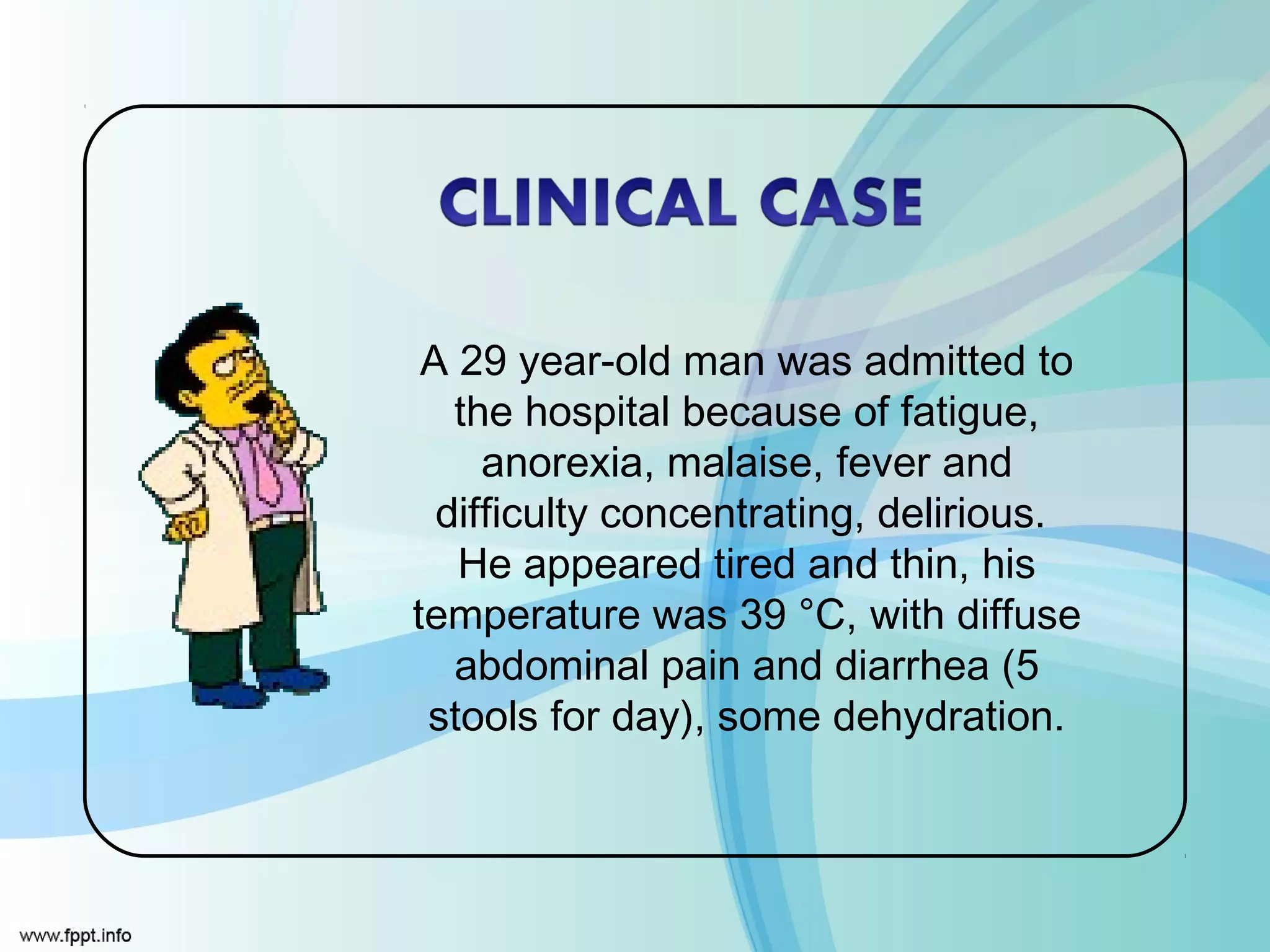
A 29 year-old man was admitted to
   the hospital because of fatigue,
     anorexia, malaise, fever and
  difficulty concentrating, delirious.
   He appeared tired and thin, his
temperature was 39 °C, with diffuse
   abdominal pain and diarrhea (5
 stools for day), some dehydration.
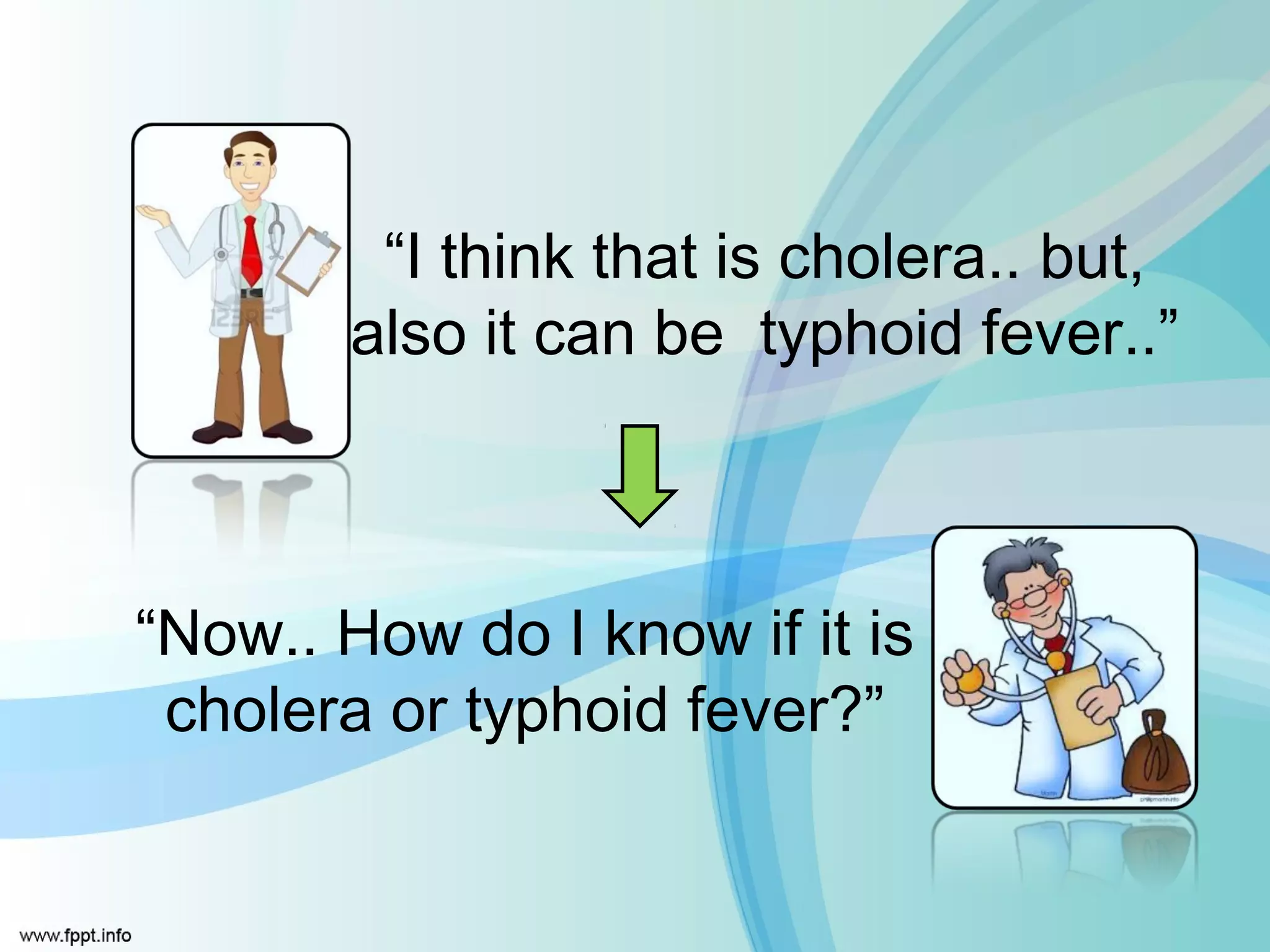
“I think that is cholera.. but,
        also it can be typhoid fever..”


“Now.. How do I know if it is
 cholera or typhoid fever?”
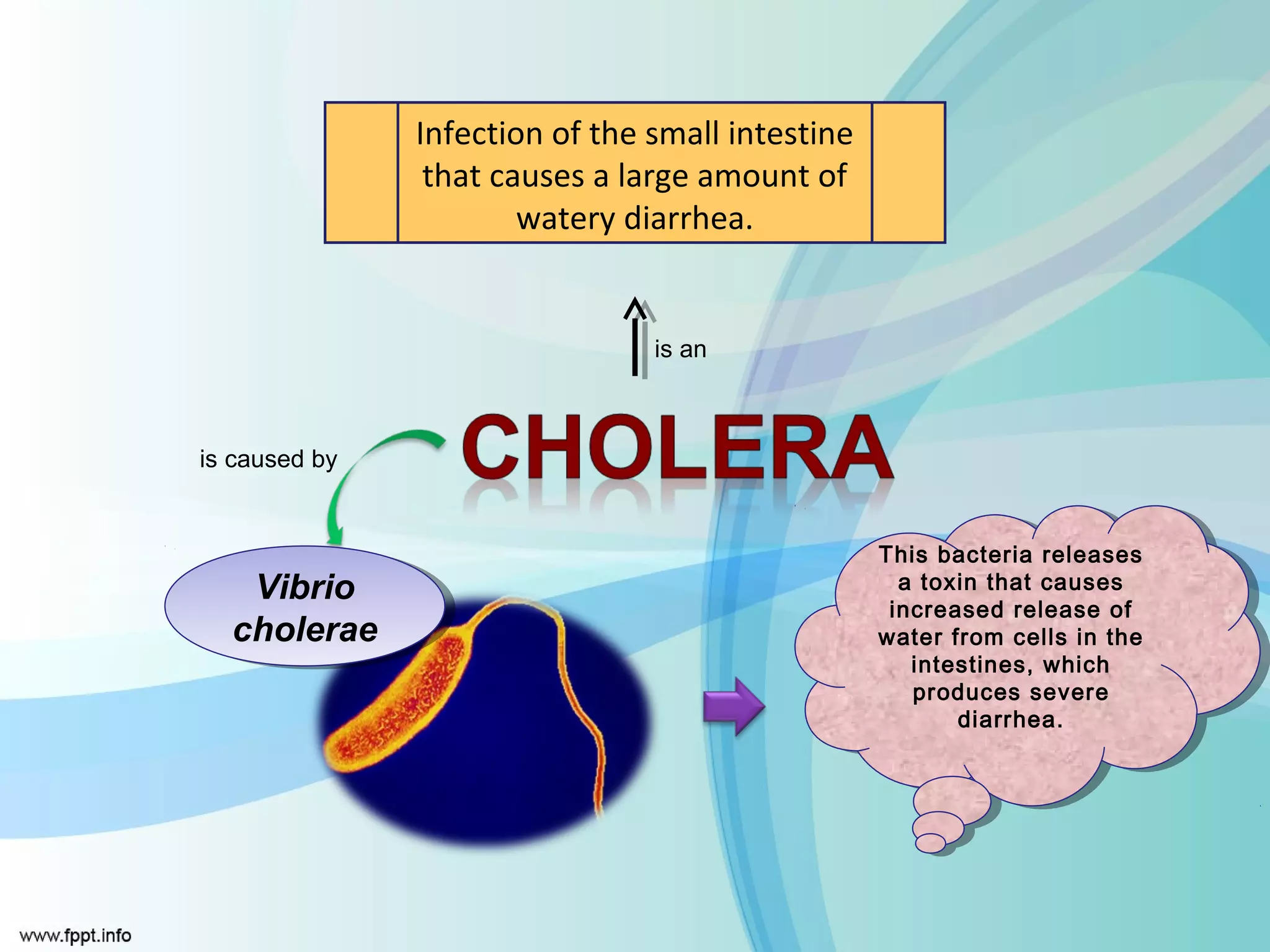
Infection of the small intestine
                that causes a large amount of
                       watery diarrhea.


                                is an


is caused by


                                                  This bacteria releases
                                                   This bacteria releases
    Vibrio                                          aatoxin that causes
                                                       toxin that causes
    Vibrio                                         increased release of
                                                    increased release of
  cholerae
   cholerae                                       water from cells in the
                                                   water from cells in the
                                                     intestines, which
                                                      intestines, which
                                                     produces severe
                                                      produces severe
                                                         diarrhea.
                                                          diarrhea.
Symptoms of
THE cholera
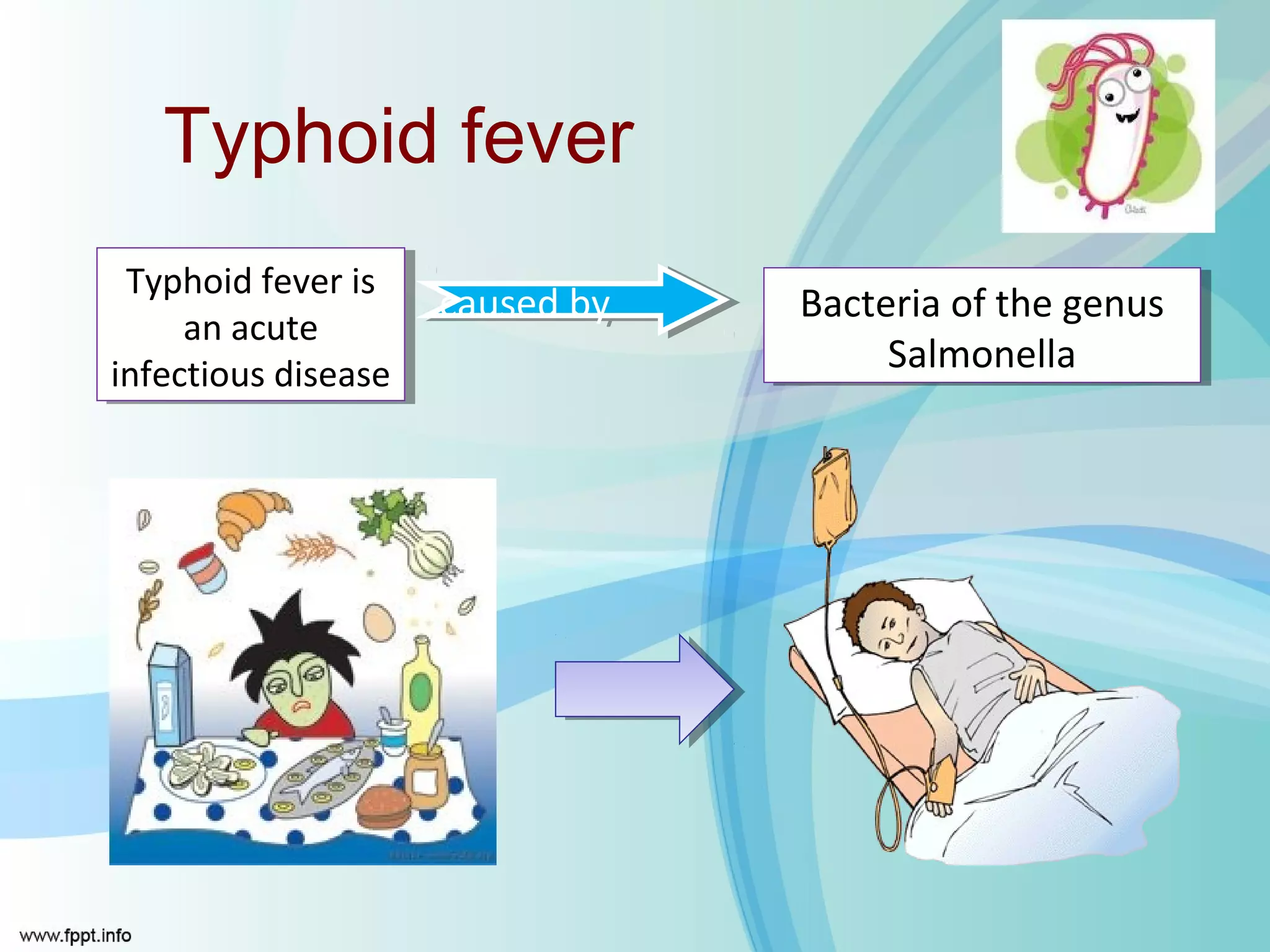
Typhoid fever
  Typhoid fever is
   Typhoid fever is
                    caused by
                     caused by   Bacteria of the genus
                                 Bacteria of the genus
      an acute
       an acute
infectious disease                    Salmonella
                                       Salmonella
 infectious disease
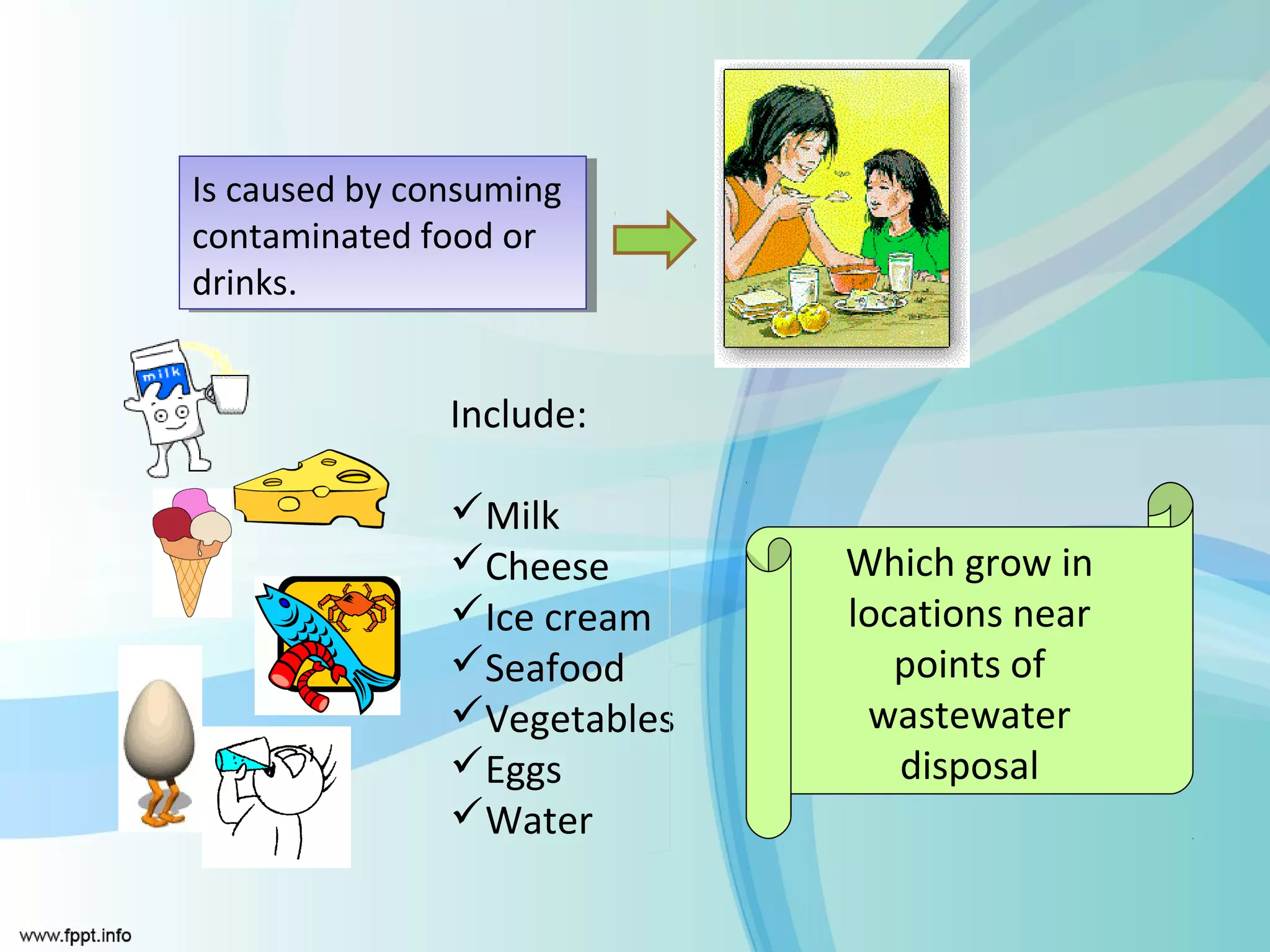
Is caused by consuming
 Is caused by consuming
contaminated food or
 contaminated food or
drinks.
 drinks.


               Include:

               Milk
               Cheese       Which grow in
               Ice cream    locations near
               Seafood         points of
               Vegetables    wastewater
               Eggs            disposal
               Water
Symptoms of
the typhoid
   fever
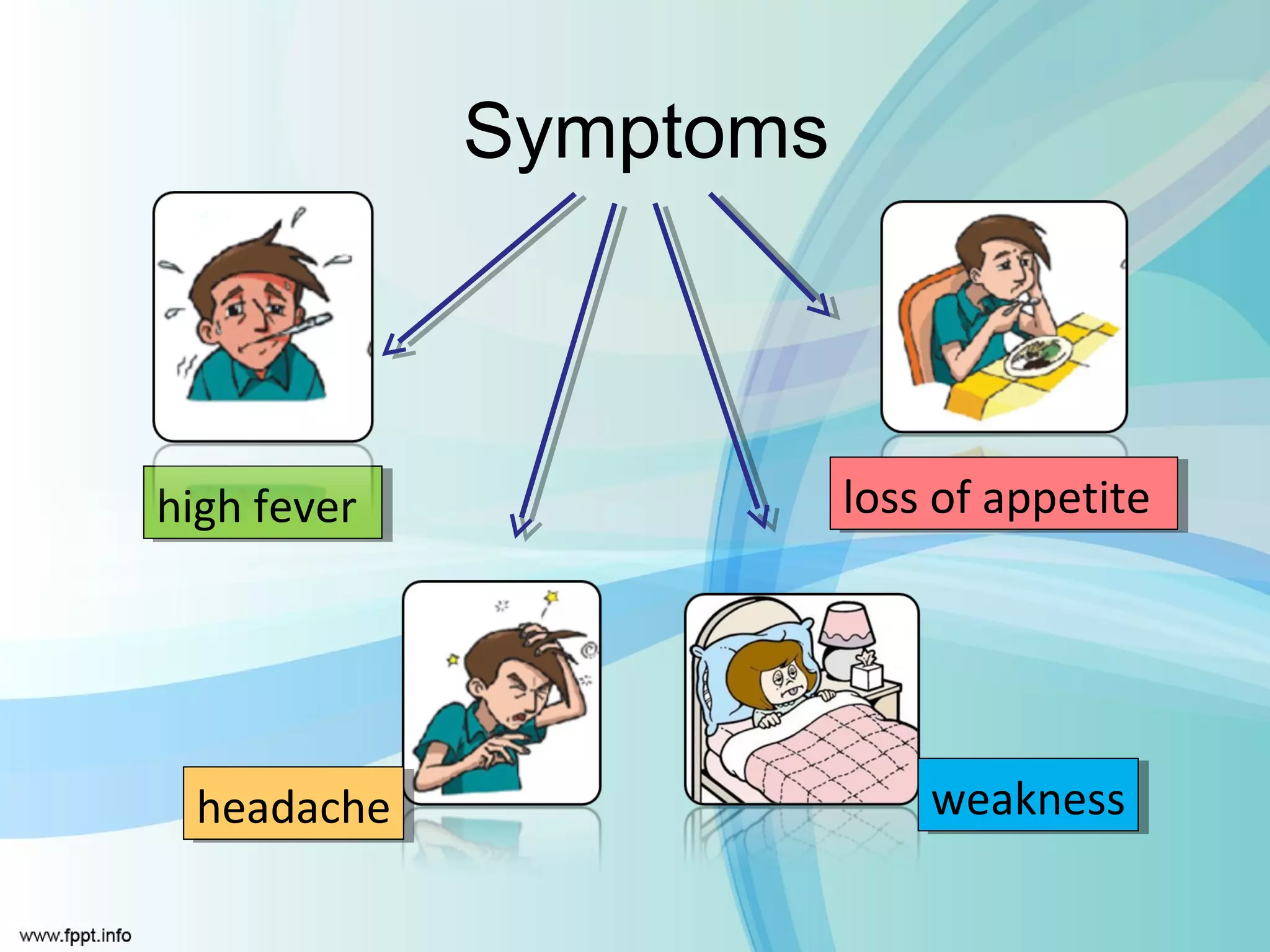
Symptoms


high fever
high fever              loss of appetite
                         loss of appetite


 headache
 headache                   weakness
                            weakness
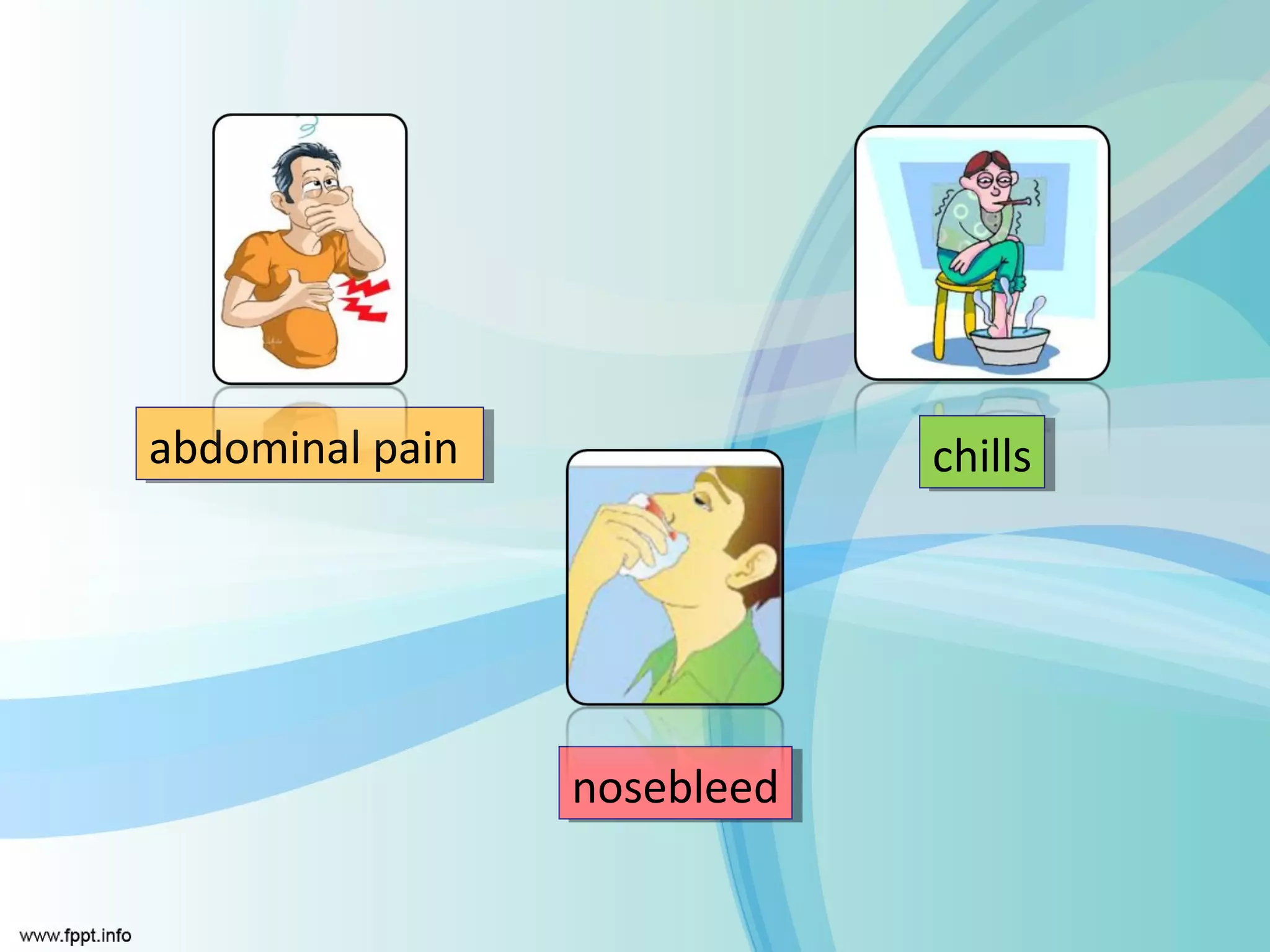
abdominal pain
abdominal pain               chills
                             chills


                 nosebleed
                 nosebleed
Differential signs and
symptoms of both diseases
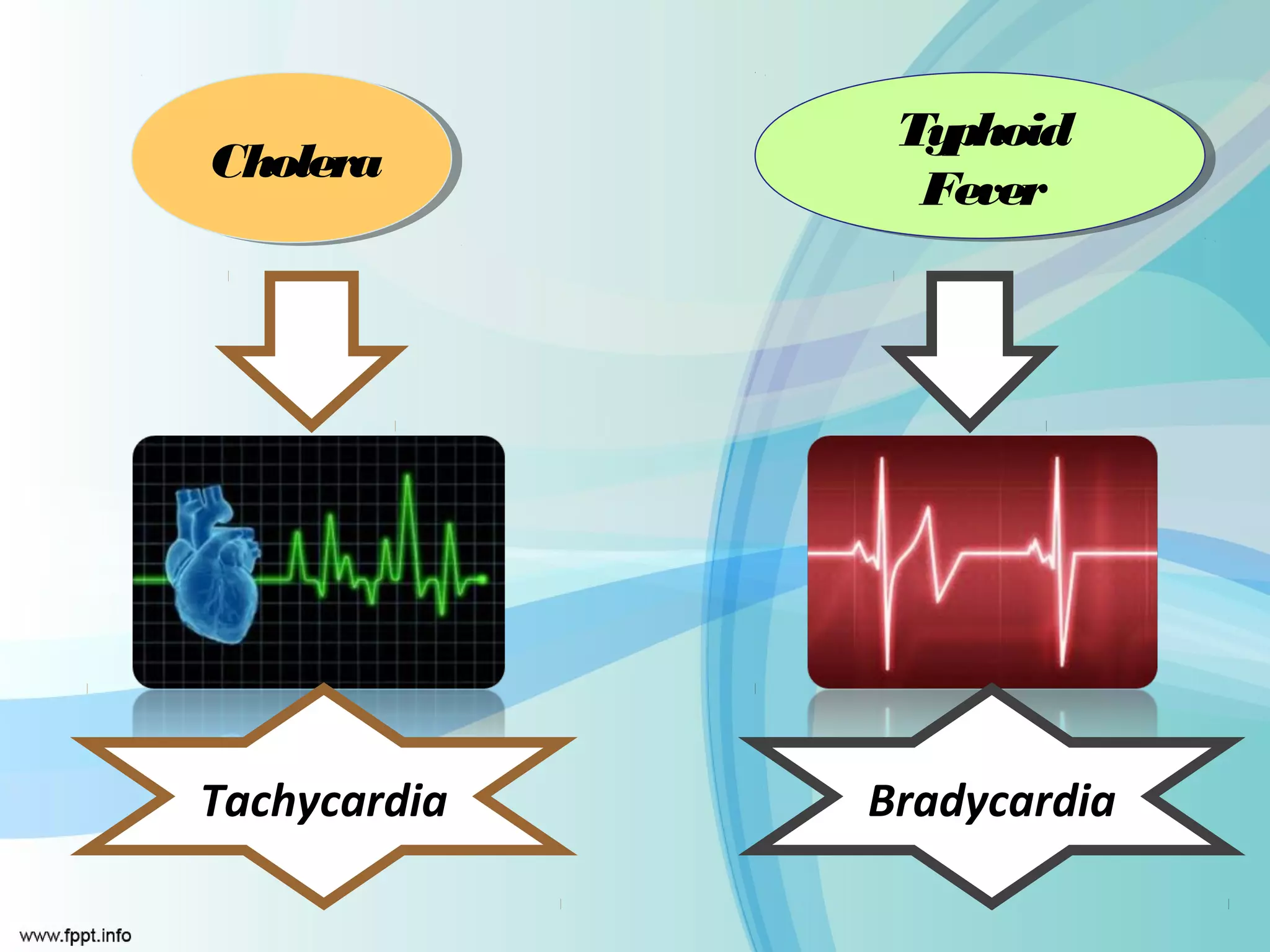
Typhoid
               Typhoid
Cholera
Cholera
                Fever
                Fever


Tachycardia   Bradycardia
Cholera
 Cholera          TyphoidFever
                  Typhoid Fever


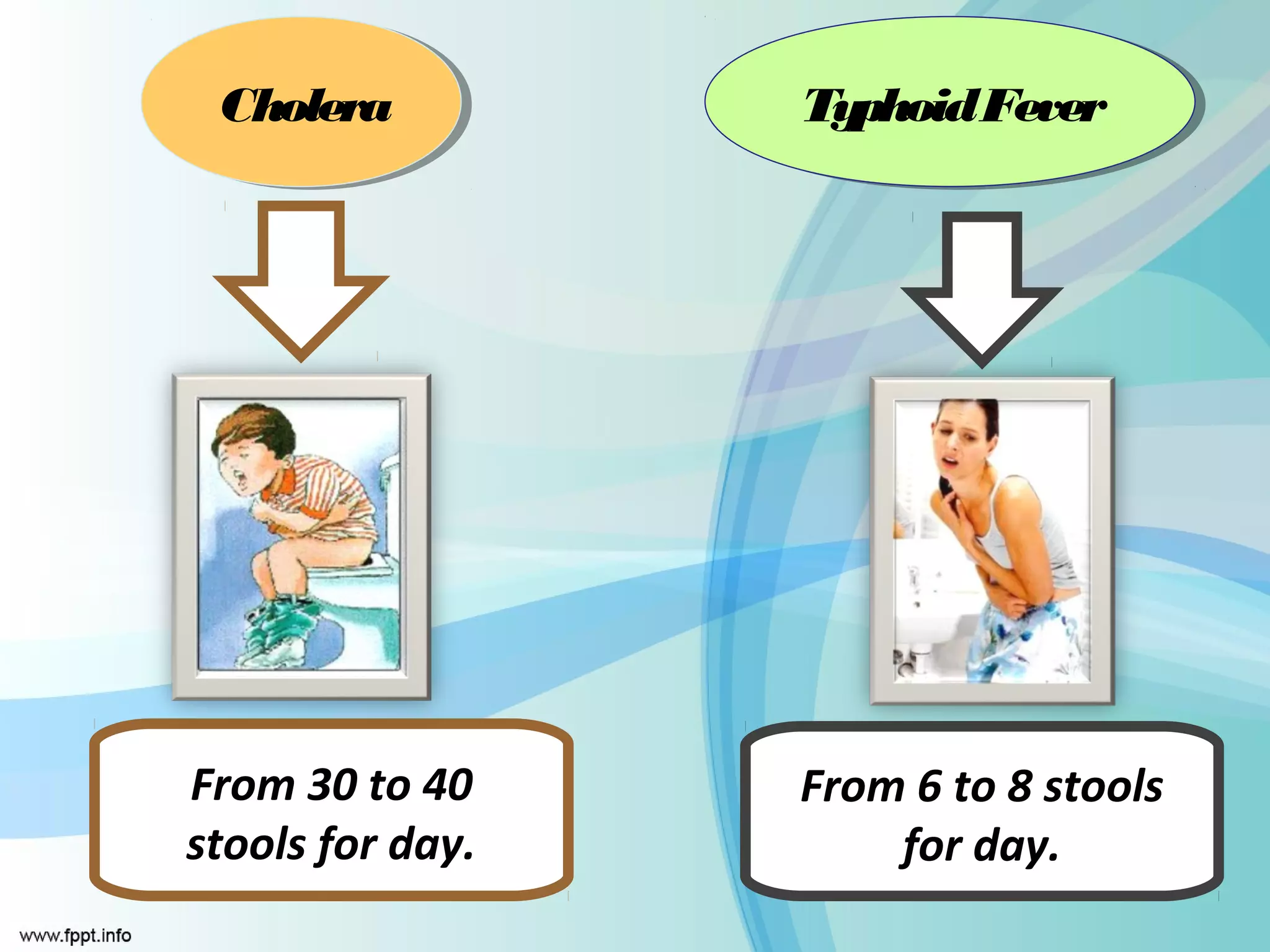
From 30 to 40     From 6 to 8 stools
stools for day.       for day.
Cholera
   Cholera          TyphoidFever
                    Typhoid Fever


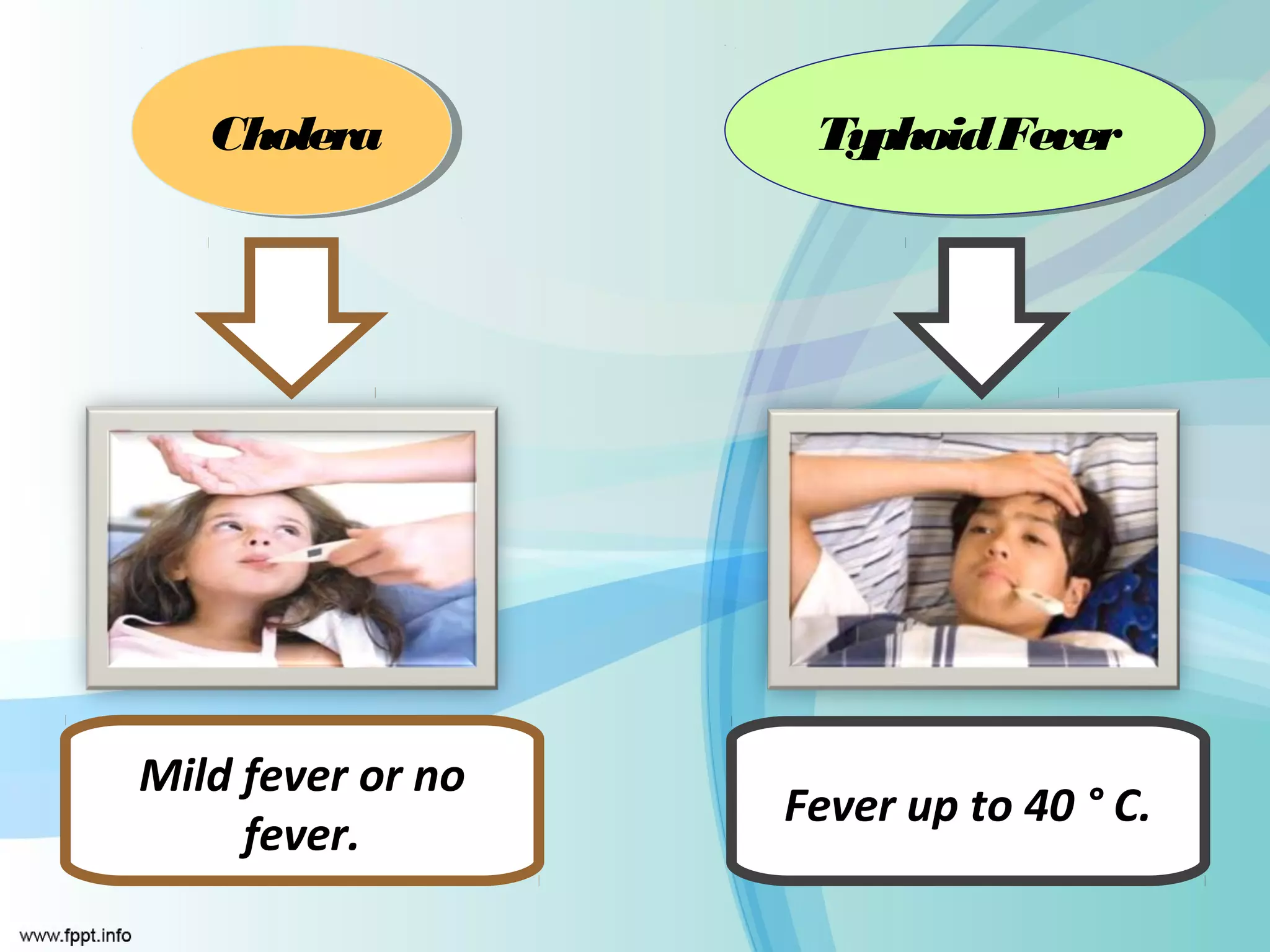
Mild fever or no
                   Fever up to 40 ° C.
     fever.
Typhoid
                        Typhoid
  Cholera
  Cholera
                         Fever
                         Fever


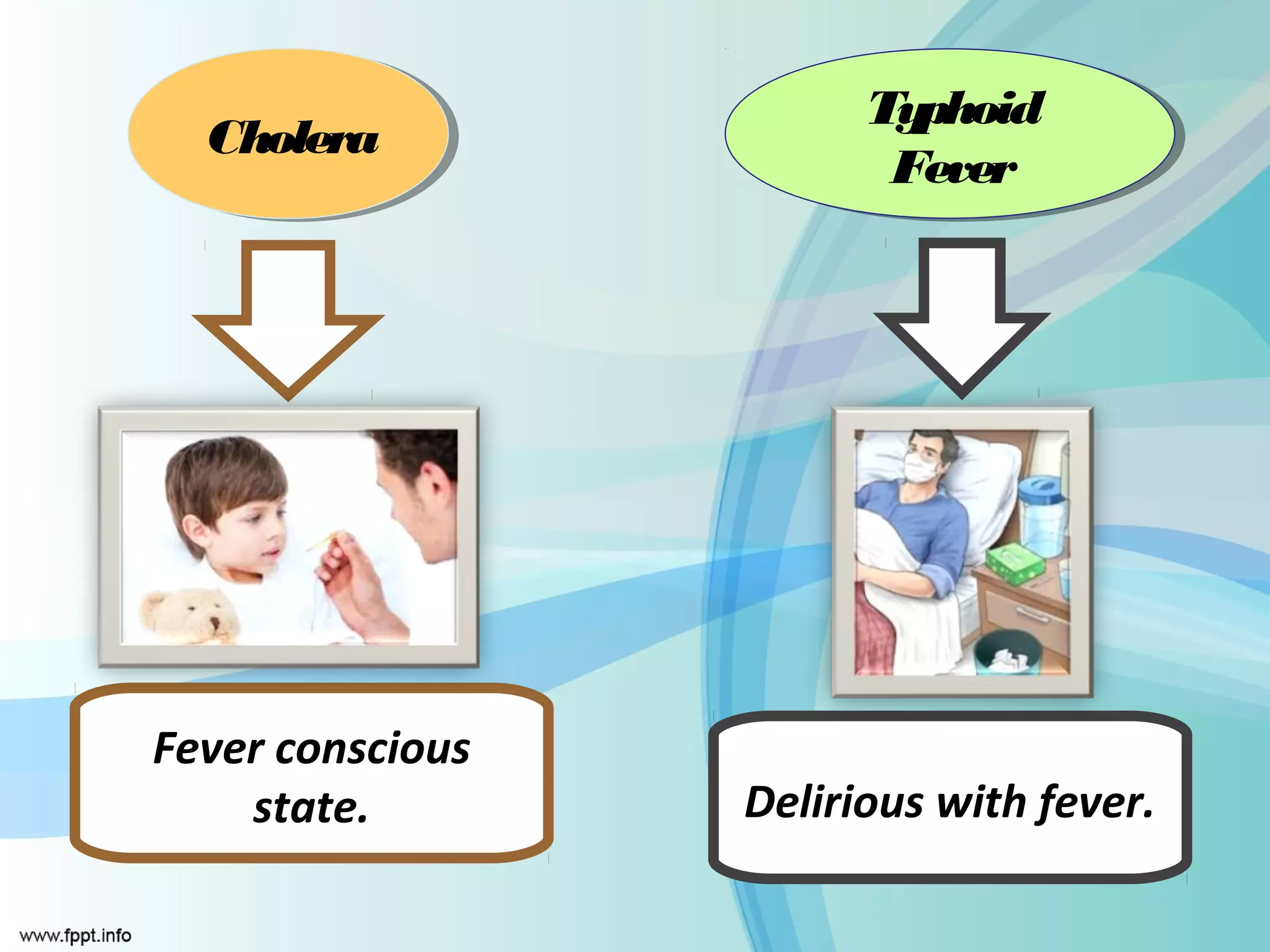
Fever conscious
    state.        Delirious with fever.
Cholera
     Cholera         TyphoidFever
                     Typhoid Fever


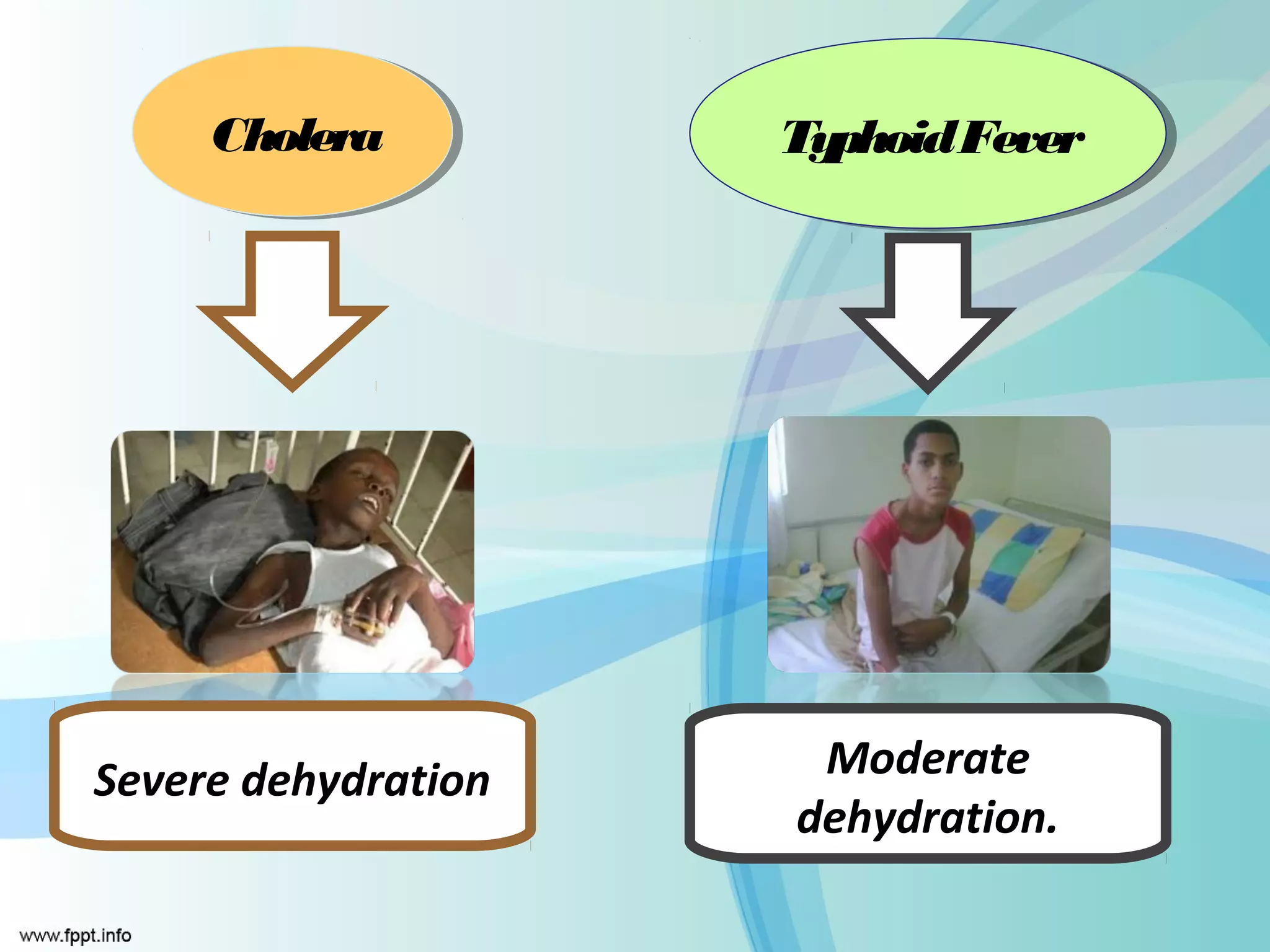
Severe dehydration    Moderate
                     dehydration.
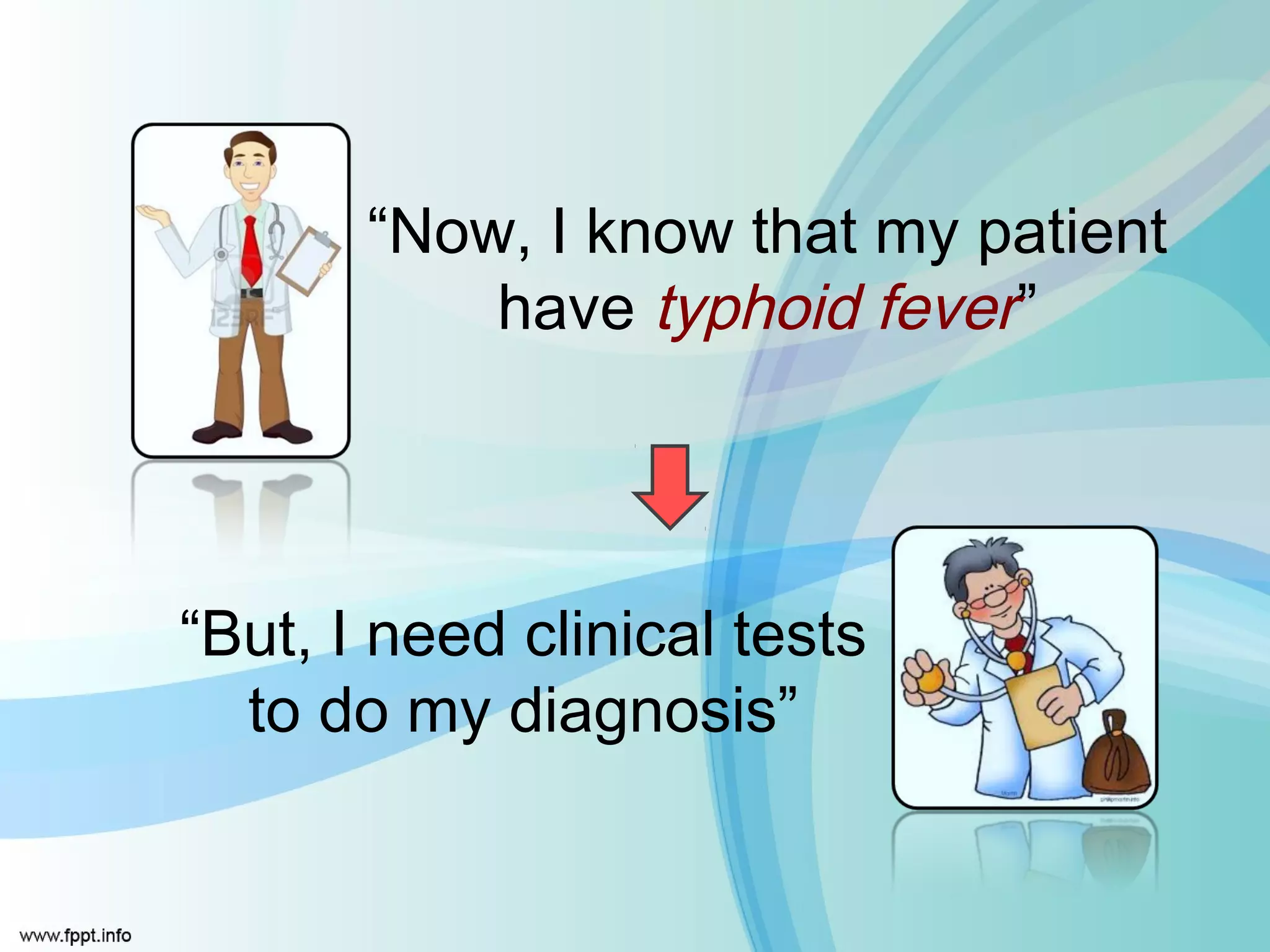
“Now, I know that my patient
           have typhoid fever”


“But, I need clinical tests
  to do my diagnosis”
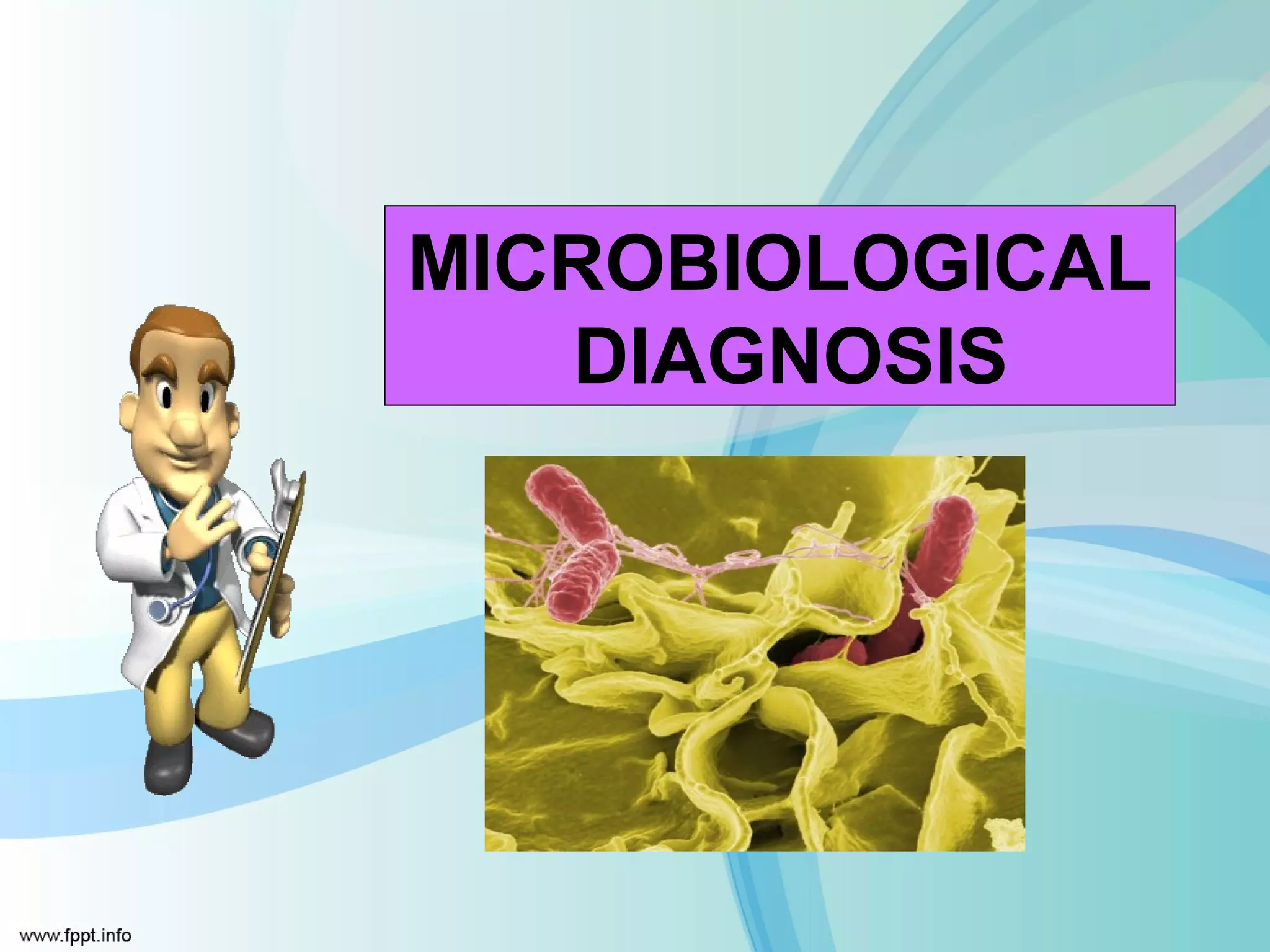
MICROBIOLOGICAL
   DIAGNOSIS
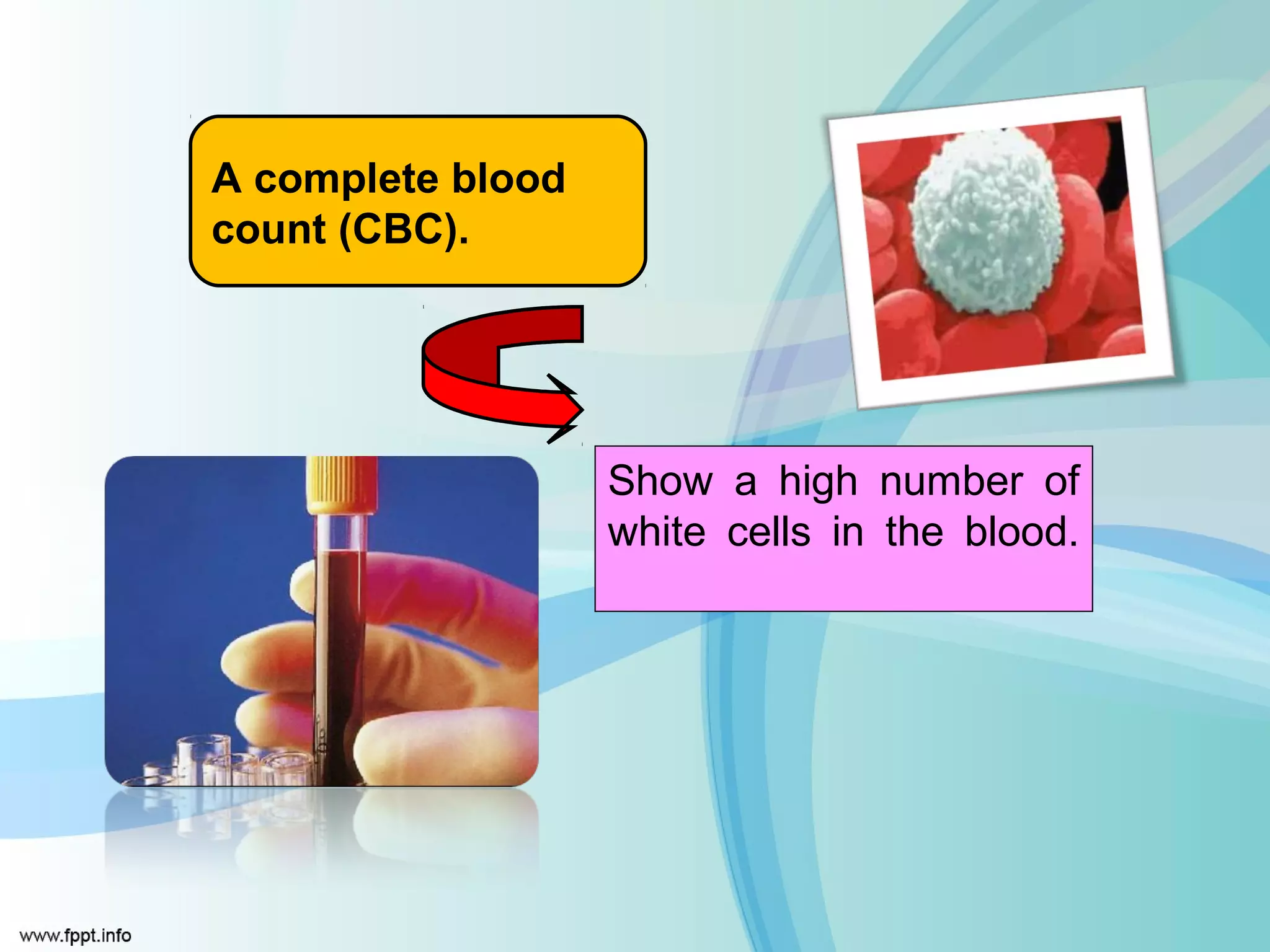
A complete blood
count (CBC).


                   Show a high number of
                   white cells in the blood.
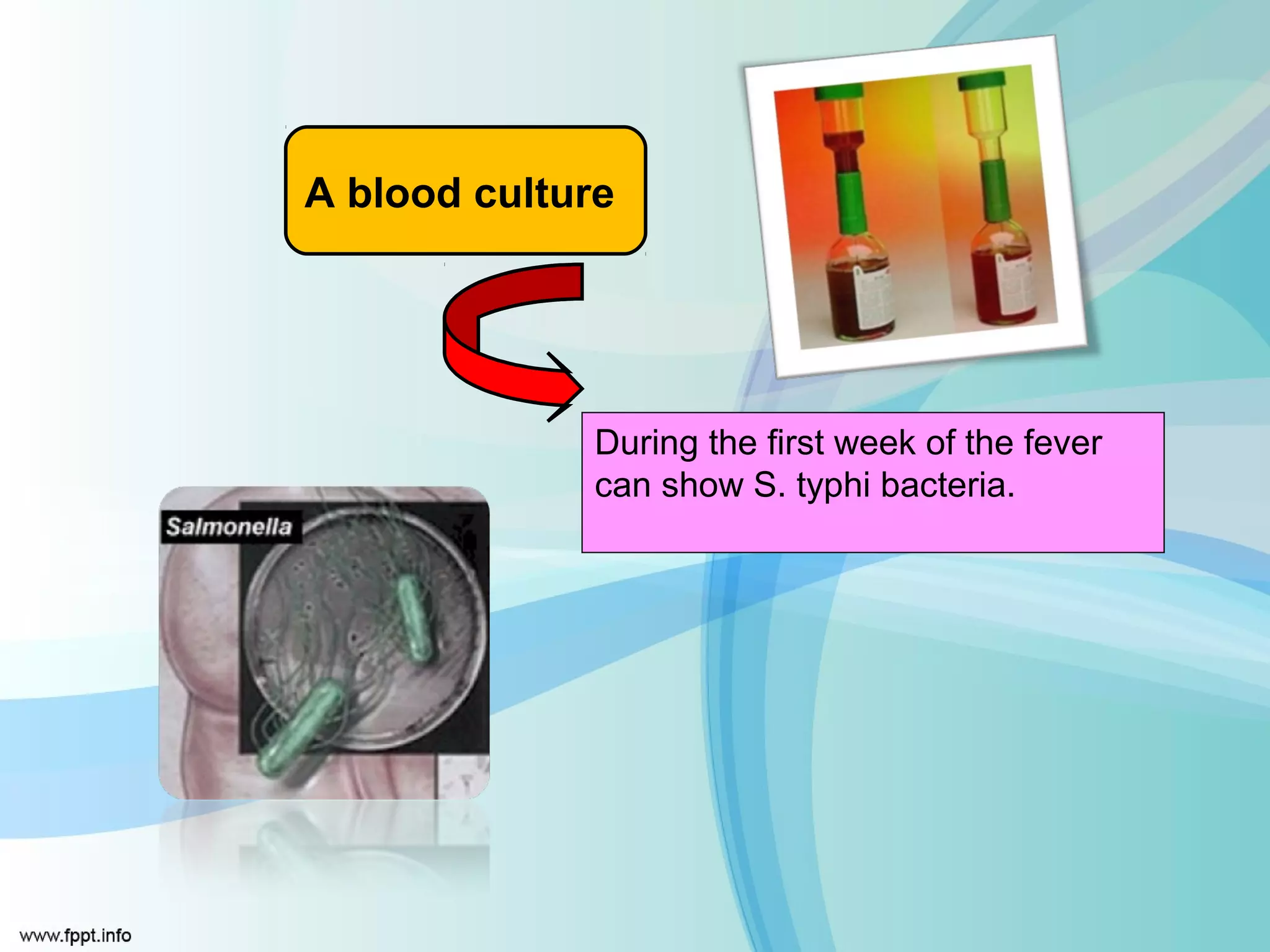
A blood culture


              During the first week of the fever
              can show S. typhi bacteria.
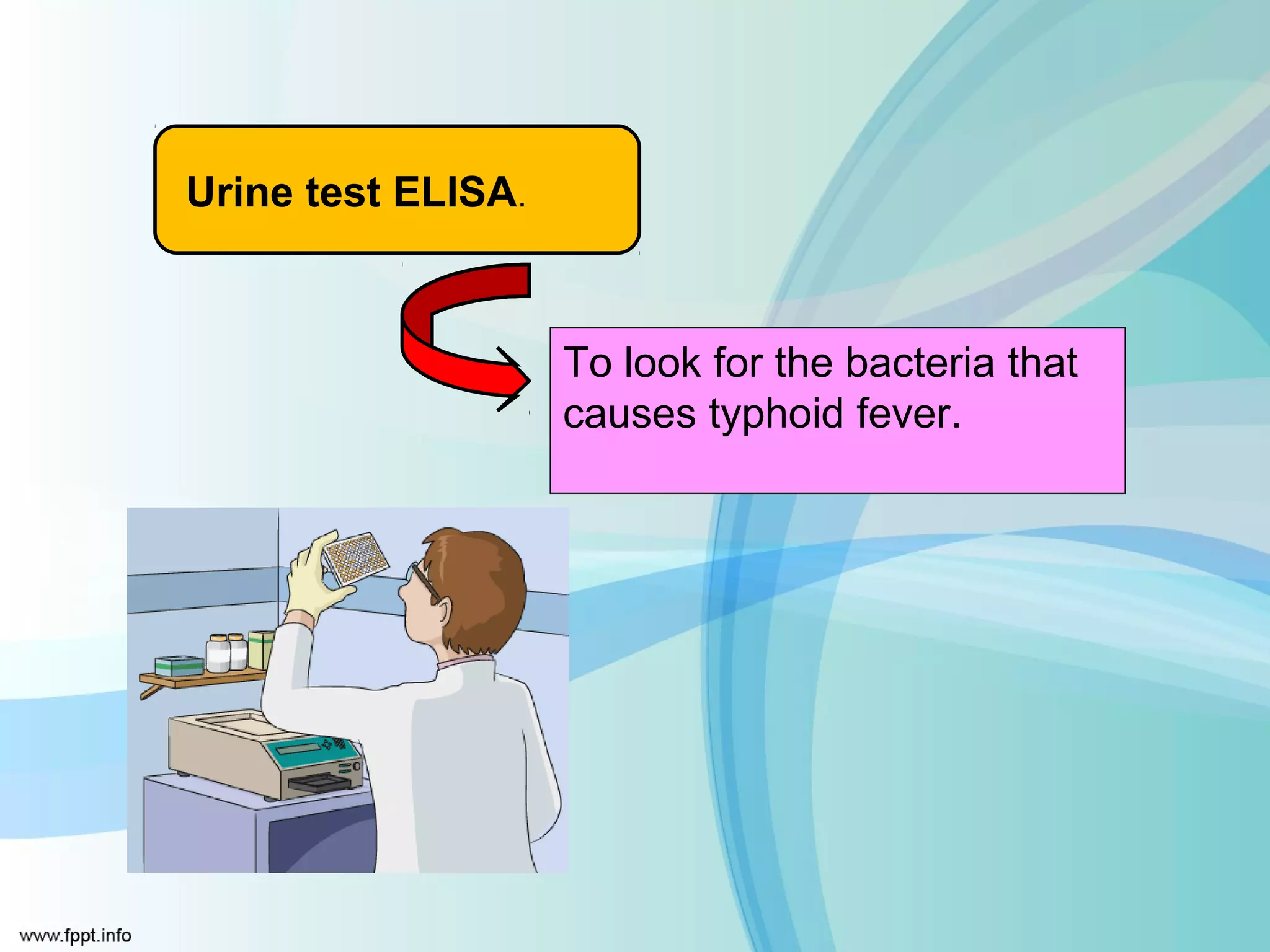
Urine test ELISA.


                    To look for the bacteria that
                    causes typhoid fever.
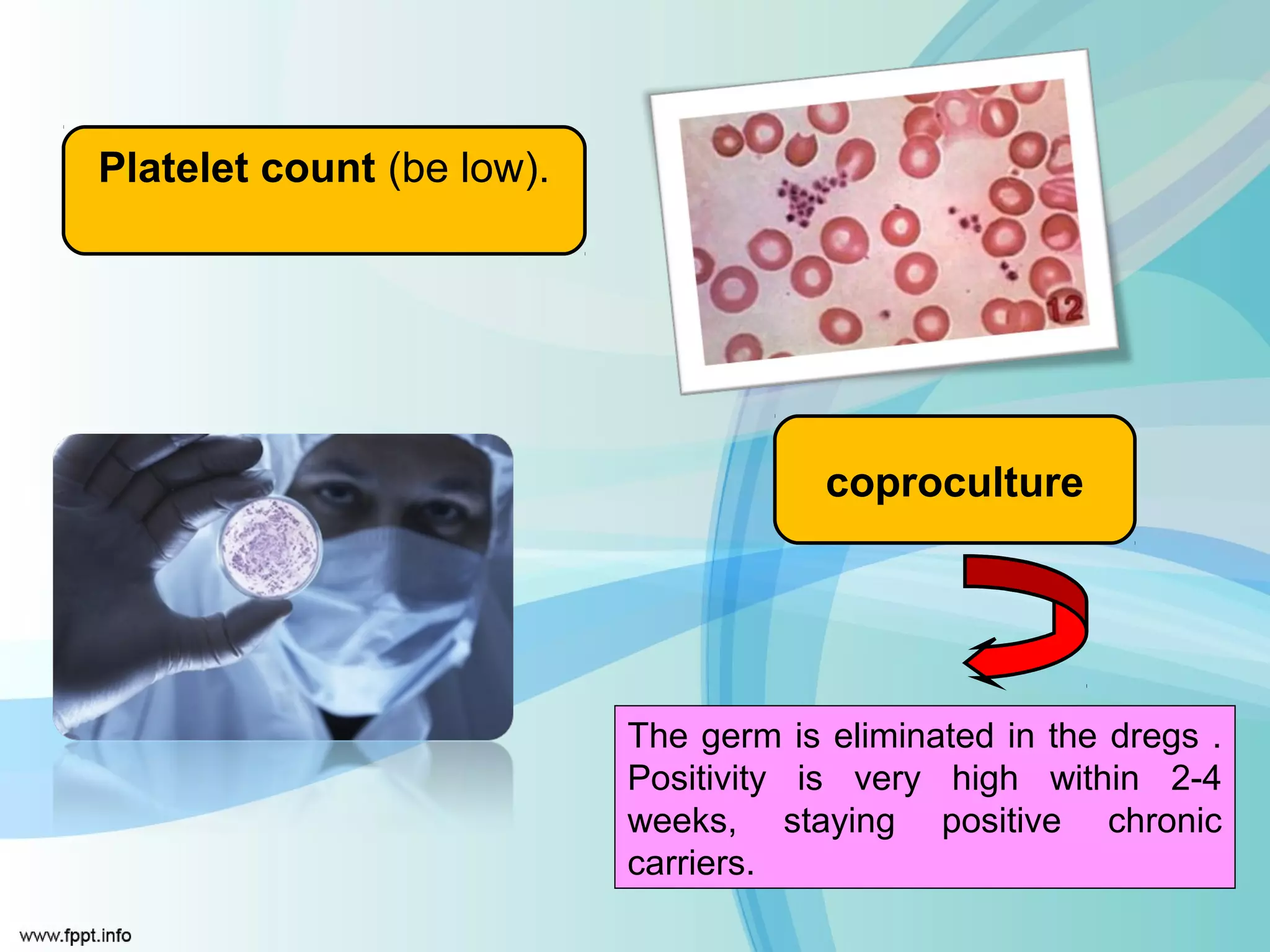
Platelet count (be low).


                                       coproculture
  .


                           The germ is eliminated in the dregs .
                           Positivity is very high within 2-4
                           weeks, staying positive chronic
                           carriers.
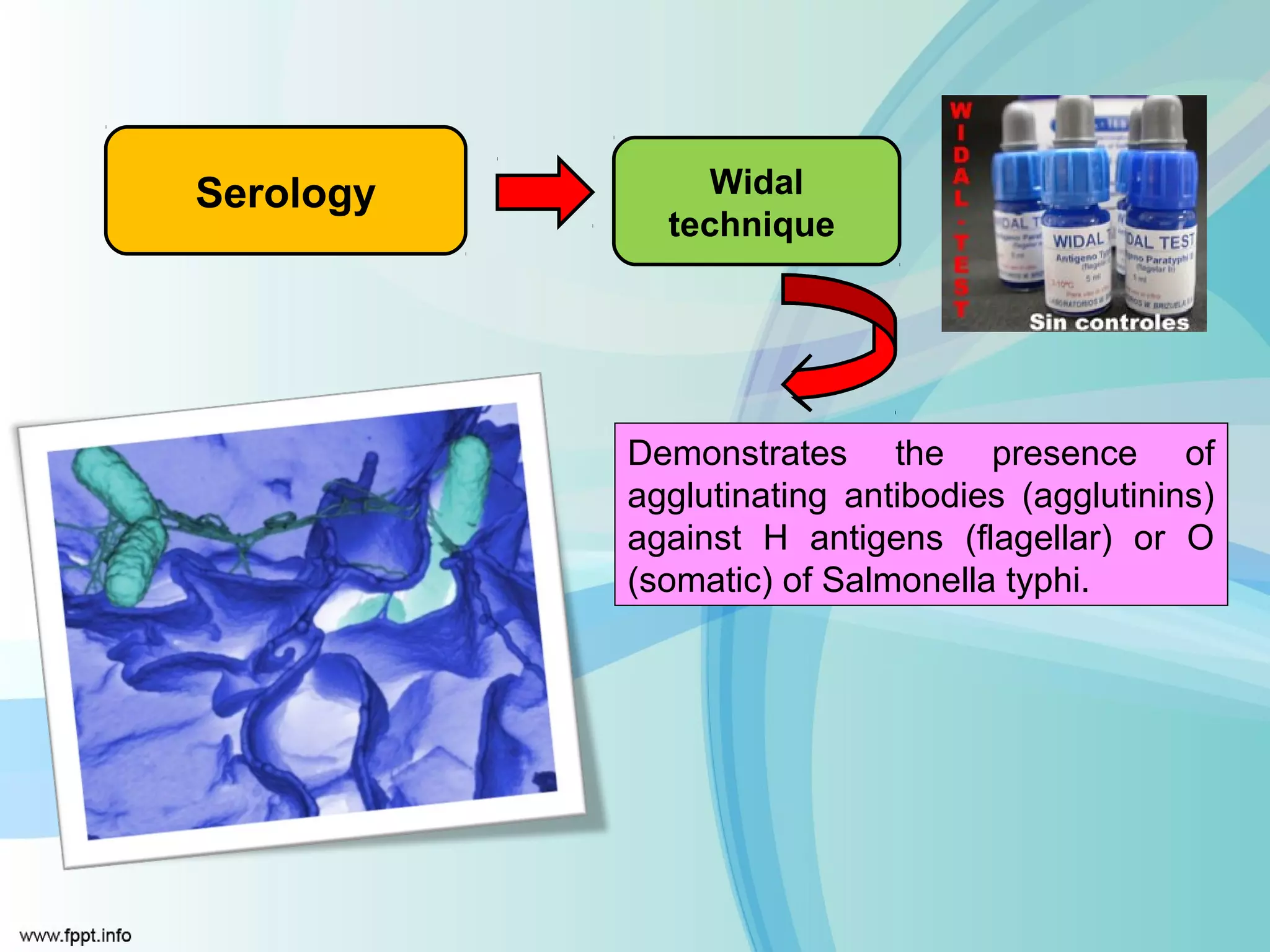
Serology       Widal
             technique


           Demonstrates the presence of
           agglutinating antibodies (agglutinins)
           against H antigens (flagellar) or O
           (somatic) of Salmonella typhi.
“I confirmed my diagnosis”


“Finally, give the treatment”
TREATMENT
                                                   A person will usually
                   antibiotics                      recover in 2-3 days
                                                       with prompt
                                                   antibiotic treatment
  Ciprofloxacin                  Ceftriaxone
     (Cipro)                      (Rocephin


If you are being treated for typhoid fever, it is important to
 If you are being treated for typhoid fever, it is important to
do the following:
 do the following:

                   Wash your hands carefully with soap
                  and water after using the bathroom

                   Eating a healthy diet.

                   Drinking fluids
Thank
s a lot
!!!!

6 comparative diagnosis

  • 1.
  • 2.
    PROFESSOR : DRA.ROSA GONZALES LLONTOP STUDENTS: Campos Milyan Leidy Chavesta Manrique Xinthia Huamán Cueva Zoila Racchumí Nima Anita Ramírez Armas Karina Group N° 6 Velásquez Esspinal José Luis
  • 3.
    A 29 year-oldman was admitted to the hospital because of fatigue, anorexia, malaise, fever and difficulty concentrating, delirious. He appeared tired and thin, his temperature was 39 °C, with diffuse abdominal pain and diarrhea (5 stools for day), some dehydration.
  • 4.
    “I think thatis cholera.. but, also it can be typhoid fever..” “Now.. How do I know if it is cholera or typhoid fever?”
  • 6.
    Infection of thesmall intestine that causes a large amount of watery diarrhea. is an is caused by This bacteria releases This bacteria releases Vibrio aatoxin that causes toxin that causes Vibrio increased release of increased release of cholerae cholerae water from cells in the water from cells in the intestines, which intestines, which produces severe produces severe diarrhea. diarrhea.
  • 7.
  • 10.
    Typhoid fever Typhoid fever is Typhoid fever is caused by caused by Bacteria of the genus Bacteria of the genus an acute an acute infectious disease Salmonella Salmonella infectious disease
  • 11.
    Is caused byconsuming Is caused by consuming contaminated food or contaminated food or drinks. drinks. Include: Milk Cheese Which grow in Ice cream locations near Seafood points of Vegetables wastewater Eggs disposal Water
  • 12.
  • 13.
    Symptoms high fever high fever loss of appetite loss of appetite headache headache weakness weakness
  • 14.
    abdominal pain abdominal pain chills chills nosebleed nosebleed
  • 15.
  • 16.
    Typhoid Typhoid Cholera Cholera Fever Fever Tachycardia Bradycardia
  • 17.
    Cholera Cholera TyphoidFever Typhoid Fever From 30 to 40 From 6 to 8 stools stools for day. for day.
  • 18.
    Cholera Cholera TyphoidFever Typhoid Fever Mild fever or no Fever up to 40 ° C. fever.
  • 19.
    Typhoid Typhoid Cholera Cholera Fever Fever Fever conscious state. Delirious with fever.
  • 20.
    Cholera Cholera TyphoidFever Typhoid Fever Severe dehydration Moderate dehydration.
  • 21.
    “Now, I knowthat my patient have typhoid fever” “But, I need clinical tests to do my diagnosis”
  • 22.
  • 23.
    A complete blood count(CBC). Show a high number of white cells in the blood.
  • 24.
    A blood culture During the first week of the fever can show S. typhi bacteria.
  • 25.
    Urine test ELISA. To look for the bacteria that causes typhoid fever.
  • 26.
    Platelet count (below). coproculture . The germ is eliminated in the dregs . Positivity is very high within 2-4 weeks, staying positive chronic carriers.
  • 27.
    Serology Widal technique Demonstrates the presence of agglutinating antibodies (agglutinins) against H antigens (flagellar) or O (somatic) of Salmonella typhi.
  • 28.
    “I confirmed mydiagnosis” “Finally, give the treatment”
  • 29.
    TREATMENT A person will usually antibiotics recover in 2-3 days with prompt antibiotic treatment Ciprofloxacin Ceftriaxone (Cipro) (Rocephin If you are being treated for typhoid fever, it is important to If you are being treated for typhoid fever, it is important to do the following: do the following: Wash your hands carefully with soap and water after using the bathroom Eating a healthy diet. Drinking fluids
  • 30.