1. Digestion
Digestion of Carbohydrates
  • It is the breakdown &
   degradation of polysaccharides &

   oligosaccharides into their

   simplest units (Monosaccharides)
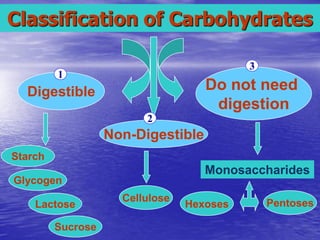
Classification of Carbohydrates

                                           3
         1
  Digestible                        Do not need
                                     digestion
                         2
                   Non-Digestible
Starch
                                    Monosaccharides
Glycogen
                     Cellulose                 Pentoses
    Lactose                      Hexoses

         Sucrose
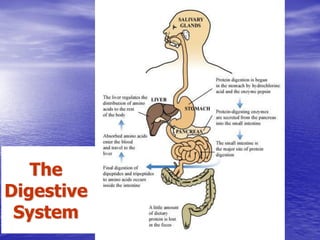
The
Digestive
 System
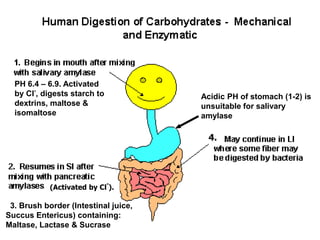
PH 6.4 – 6.9. Activated
  by Cl-, digests starch to           Acidic PH of stomach (1-2) is
  dextrins, maltose &                 unsuitable for salivary
  isomaltose                          amylase

                                       4.


                              -
            (Activated by Cl ).

 3. Brush border (Intestinal juice,
Succus Entericus) containing:
Maltase, Lactase & Sucrase
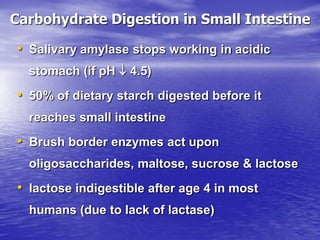
Carbohydrate Digestion in Small Intestine

• Salivary amylase stops working in acidic
  stomach (if pH  4.5)
• 50% of dietary starch digested before it
  reaches small intestine
• Brush border enzymes act upon
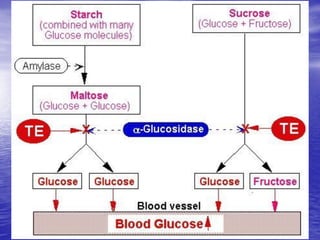
  oligosaccharides, maltose, sucrose & lactose
• lactose indigestible after age 4 in most
  humans (due to lack of lactase)
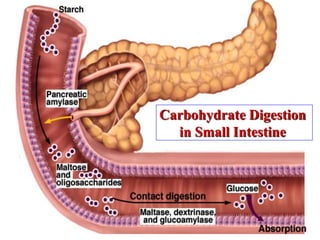
Carbohydrate Digestion
  in Small Intestine
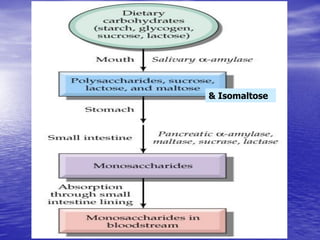
& Isomaltose
2. Absorption
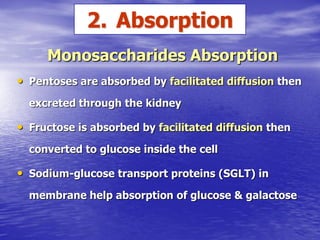
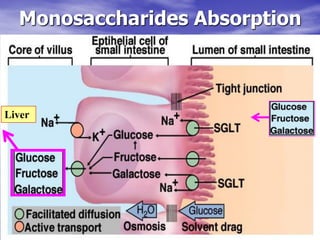
     Monosaccharides Absorption
• Pentoses are absorbed by facilitated diffusion then
  excreted through the kidney

• Fructose is absorbed by facilitated diffusion then
  converted to glucose inside the cell

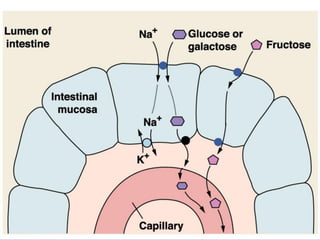
• Sodium-glucose transport proteins (SGLT) in
  membrane help absorption of glucose & galactose
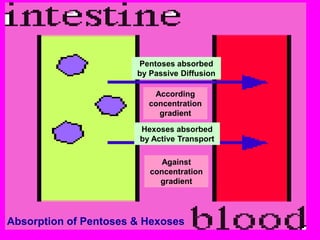
Pentoses absorbed
                       by Passive Diffusion

                          According
                         concentration
                           gradient

                       Hexoses absorbed
                       by Active Transport

                             Against
                          concentration
                            gradient


Absorption of Pentoses & Hexoses
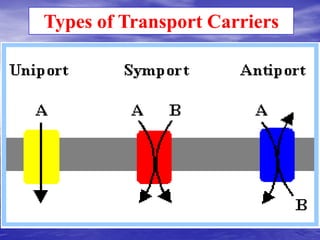
Types of Transport Carriers
Monosaccharides Absorption


Liver
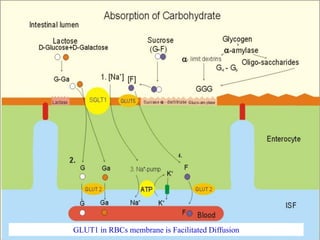
GLUT1 in RBCs membrane is Facilitated Diffusion
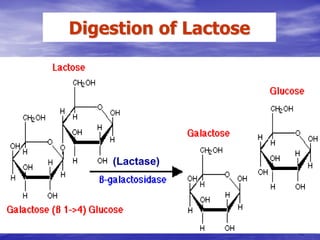
Digestion of Lactose


    (Lactase)
Lactose Intolerance
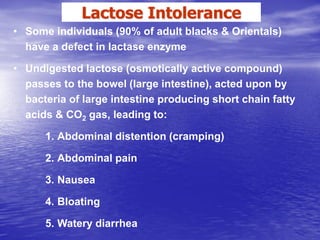
• Some individuals (90% of adult blacks & Orientals)
  have a defect in lactase enzyme

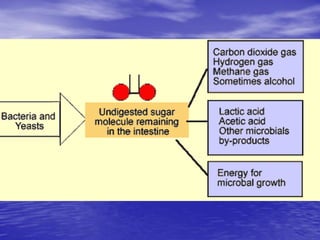
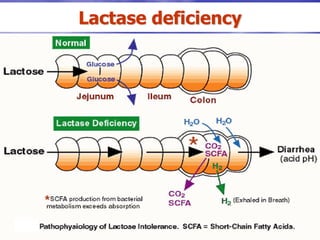
• Undigested lactose (osmotically active compound)
  passes to the bowel (large intestine), acted upon by
  bacteria of large intestine producing short chain fatty
  acids & CO2 gas, leading to:

      1. Abdominal distention (cramping)

      2. Abdominal pain

      3. Nausea

      4. Bloating

      5. Watery diarrhea
Lactase deficiency
Fate of Absorbed Glucose
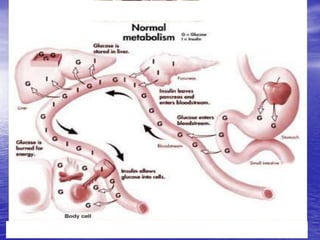
• Glucose enter Liver & Brain by Passive
  diffusion

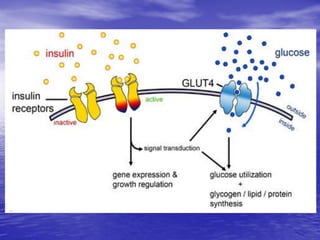
• Glucose enter other tissues (skeletal muscle,
  adipose tissue, etc…) by Active transport

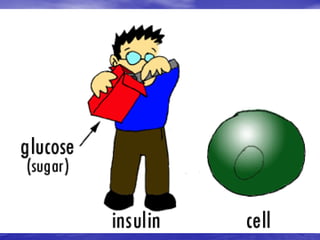
• Active transport is enhanced by Insulin
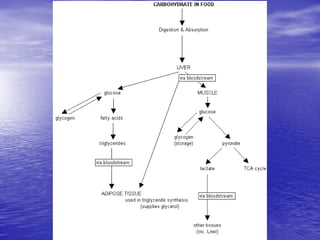
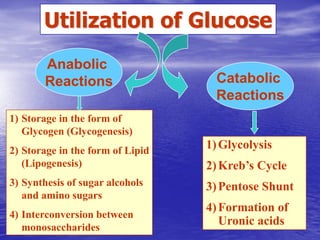
Utilization of Glucose
       Anabolic
       Reactions                    Catabolic
                                    Reactions
1) Storage in the form of
   Glycogen (Glycogenesis)
2) Storage in the form of Lipid
                                  1) Glycolysis
   (Lipogenesis)                  2) Kreb’s Cycle
3) Synthesis of sugar alcohols    3) Pentose Shunt
   and amino sugars
                                  4) Formation of
4) Interconversion between
   monosaccharides
                                     Uronic acids
4 digestion pdf
4 digestion pdf

4 digestion pdf

  • 1.
    1. Digestion Digestion ofCarbohydrates • It is the breakdown & degradation of polysaccharides & oligosaccharides into their simplest units (Monosaccharides)
  • 2.
    Classification of Carbohydrates 3 1 Digestible Do not need digestion 2 Non-Digestible Starch Monosaccharides Glycogen Cellulose Pentoses Lactose Hexoses Sucrose
  • 3.
  • 4.
    PH 6.4 –6.9. Activated by Cl-, digests starch to Acidic PH of stomach (1-2) is dextrins, maltose & unsuitable for salivary isomaltose amylase 4. - (Activated by Cl ). 3. Brush border (Intestinal juice, Succus Entericus) containing: Maltase, Lactase & Sucrase
  • 5.
    Carbohydrate Digestion inSmall Intestine • Salivary amylase stops working in acidic stomach (if pH  4.5) • 50% of dietary starch digested before it reaches small intestine • Brush border enzymes act upon oligosaccharides, maltose, sucrose & lactose • lactose indigestible after age 4 in most humans (due to lack of lactase)
  • 6.
    Carbohydrate Digestion in Small Intestine
  • 7.
  • 9.
    2. Absorption Monosaccharides Absorption • Pentoses are absorbed by facilitated diffusion then excreted through the kidney • Fructose is absorbed by facilitated diffusion then converted to glucose inside the cell • Sodium-glucose transport proteins (SGLT) in membrane help absorption of glucose & galactose
  • 10.
    Pentoses absorbed by Passive Diffusion According concentration gradient Hexoses absorbed by Active Transport Against concentration gradient Absorption of Pentoses & Hexoses
  • 12.
  • 13.
  • 14.
    GLUT1 in RBCsmembrane is Facilitated Diffusion
  • 15.
  • 16.
    Lactose Intolerance • Someindividuals (90% of adult blacks & Orientals) have a defect in lactase enzyme • Undigested lactose (osmotically active compound) passes to the bowel (large intestine), acted upon by bacteria of large intestine producing short chain fatty acids & CO2 gas, leading to: 1. Abdominal distention (cramping) 2. Abdominal pain 3. Nausea 4. Bloating 5. Watery diarrhea
  • 18.
  • 19.
    Fate of AbsorbedGlucose • Glucose enter Liver & Brain by Passive diffusion • Glucose enter other tissues (skeletal muscle, adipose tissue, etc…) by Active transport • Active transport is enhanced by Insulin
  • 24.
    Utilization of Glucose Anabolic Reactions Catabolic Reactions 1) Storage in the form of Glycogen (Glycogenesis) 2) Storage in the form of Lipid 1) Glycolysis (Lipogenesis) 2) Kreb’s Cycle 3) Synthesis of sugar alcohols 3) Pentose Shunt and amino sugars 4) Formation of 4) Interconversion between monosaccharides Uronic acids