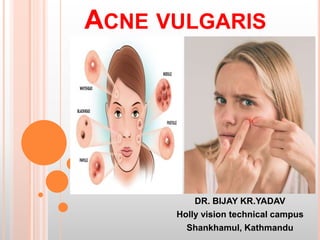
ACNE VULGARIS
DR. BIJAY KR.YADAV
Holly vision technical campus
Shankhamul, Kathmandu
ACNE VULGARIS
Acne vulgaris is a follicular disorder affecting sebaceous glands of the face,
neck and upper trunk characterized by both inflammatory and non-
inflammatory lesions.
• It is the most common dermatoses affecting teenagers.
• Aggravated form of acne which are large and infected it is called as
nodulocystic acne.
Incidence :-
• Peak incidence in late teen age years.
(M = 16 – 19 yrs, F = 14 – 16 yrs)
• It starts after adolescence and by the age of 25 yrs most patients stop
having acne.
• Both sexes equally affected.
CO-FACTORS (AGGRAVATING)
 Premenstrual
 UV radiation(Excessive sunlight may either
improve or flare acne).
 Stress
 Sweating
 Smoking
 Mechanical or Frictional forces
 Greasy or occlusive products
 Diet- high glycemic & milk
Etiology :-
A. Causative organism
 Propionebacterium acnes
B. Risk factors :
 Age – Adolescence (14 - 19 yrs)
 Environment – Hot and Humidity
 Food – Oily food, Spicy food
 Drugs – Steroids, Anticonvulsant, OCP
 Others
- Emotional and stress factors
- Genetics
- Poor hygiene
PATHOGENESIS
 Increased sebum production.
 Hyperkeratosis of pilosebaceous duct.
 Colonisation of duct with propioniform bacteria.
 Inflammation.
GRADES OF ACNE (PILLSBURG’S)
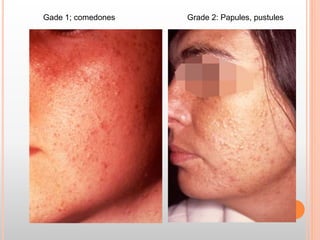
 Grade 1: comedones,( open or closed) occasional papules.
 Grade 2: papules, comedones, few pustules.
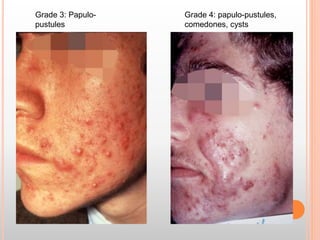
 Grade 3: Pre-dominant pustules, nodules, abscesses.
 Grade 4: mainly cysts, abscesses, scars
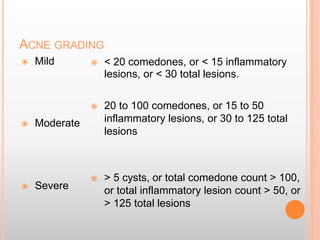
ACNE GRADING
 Mild
 Moderate
 Severe
 < 20 comedones, or < 15 inflammatory
lesions, or < 30 total lesions.
 20 to 100 comedones, or 15 to 50
inflammatory lesions, or 30 to 125 total
lesions
 > 5 cysts, or total comedone count > 100,
or total inflammatory lesion count > 50, or
> 125 total lesions
Gade 1; comedones Grade 2: Papules, pustules
Grade 3: Papulo-
pustules
Grade 4: papulo-pustules,
comedones, cysts
MANAGEMENT
1. General measures :
 Face wash with warm water 2-3 times a day
 Avoid spicy food, oc-pills, skin exposure etc.
2. Topical therapy :
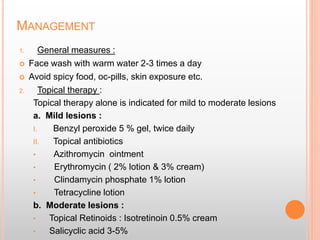
Topical therapy alone is indicated for mild to moderate lesions
a. Mild lesions :
I. Benzyl peroxide 5 % gel, twice daily
II. Topical antibiotics
• Azithromycin ointment
• Erythromycin ( 2% lotion & 3% cream)
• Clindamycin phosphate 1% lotion
• Tetracycline lotion
b. Moderate lesions :
• Topical Retinoids : Isotretinoin 0.5% cream
• Salicyclic acid 3-5%
3. Systemic therapy :
- In severe acne
- Not responding to topical therapy.
a. Antibiotics :
I. Tetracycline : ( most common )
250 mg 4 times a day taken in empty stomach initially for 4-5
weeks.
Followed by maintenance dose of 250-500 mg daily for several months
II. Erythromycin : 250 mg QID for 4-5 wks
followed by maintenance dose of 250-500 mgs for several months
III. Doxycycline 100-200 mg
IV. Clindamycin 150 mg
V. Azithromycin 500 mg
b. Estrogens : Ethinyl estrodiol 100 mg/day for few
months
c. Antiandrogen :
 cyproterone acetate 50-100 mg/day on 5- 14 day
of cycle to enhance the effect of sebum reduction
 Spironolactone 1 mg /kg/day for facial lesions.
2mg/kg/day for truncal lesions for 15-20 wks.
COMPLICATIONS:
 Post-inflammatory hyperpigmentation.
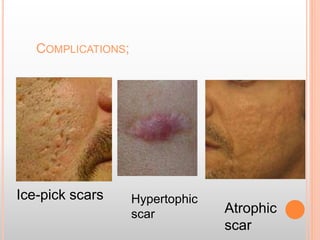
 Ice-pick scars
 Atrophic/ Hypertrophic scars
 Psychiatric disturbances-depression.
 Keloids
COMPLICATIONS;
Ice-pick scars Hypertophic
scar Atrophic
scar
CONCLUSION:
 Acne typically recurs over years and maintenance
therapy is an important component of acne
management.
 The preventive effect of topical retinoids and for
antibiotic resistance makes topical retinoids ideal.
 Any treatment started must be continued for at least
6 wks before changing.
 Though acne remits with age, scars can be life-
long.
4. Acne vulgaris

4. Acne vulgaris

  • 1.
    ACNE VULGARIS DR. BIJAYKR.YADAV Holly vision technical campus Shankhamul, Kathmandu
  • 2.
    ACNE VULGARIS Acne vulgarisis a follicular disorder affecting sebaceous glands of the face, neck and upper trunk characterized by both inflammatory and non- inflammatory lesions. • It is the most common dermatoses affecting teenagers. • Aggravated form of acne which are large and infected it is called as nodulocystic acne. Incidence :- • Peak incidence in late teen age years. (M = 16 – 19 yrs, F = 14 – 16 yrs) • It starts after adolescence and by the age of 25 yrs most patients stop having acne. • Both sexes equally affected.
  • 3.
    CO-FACTORS (AGGRAVATING)  Premenstrual UV radiation(Excessive sunlight may either improve or flare acne).  Stress  Sweating  Smoking  Mechanical or Frictional forces  Greasy or occlusive products  Diet- high glycemic & milk
  • 4.
    Etiology :- A. Causativeorganism  Propionebacterium acnes B. Risk factors :  Age – Adolescence (14 - 19 yrs)  Environment – Hot and Humidity  Food – Oily food, Spicy food  Drugs – Steroids, Anticonvulsant, OCP  Others - Emotional and stress factors - Genetics - Poor hygiene
  • 5.
    PATHOGENESIS  Increased sebumproduction.  Hyperkeratosis of pilosebaceous duct.  Colonisation of duct with propioniform bacteria.  Inflammation.
  • 6.
    GRADES OF ACNE(PILLSBURG’S)  Grade 1: comedones,( open or closed) occasional papules.  Grade 2: papules, comedones, few pustules.  Grade 3: Pre-dominant pustules, nodules, abscesses.  Grade 4: mainly cysts, abscesses, scars
  • 7.
    ACNE GRADING  Mild Moderate  Severe  < 20 comedones, or < 15 inflammatory lesions, or < 30 total lesions.  20 to 100 comedones, or 15 to 50 inflammatory lesions, or 30 to 125 total lesions  > 5 cysts, or total comedone count > 100, or total inflammatory lesion count > 50, or > 125 total lesions
  • 8.
    Gade 1; comedonesGrade 2: Papules, pustules
  • 9.
    Grade 3: Papulo- pustules Grade4: papulo-pustules, comedones, cysts
  • 10.
    MANAGEMENT 1. General measures:  Face wash with warm water 2-3 times a day  Avoid spicy food, oc-pills, skin exposure etc. 2. Topical therapy : Topical therapy alone is indicated for mild to moderate lesions a. Mild lesions : I. Benzyl peroxide 5 % gel, twice daily II. Topical antibiotics • Azithromycin ointment • Erythromycin ( 2% lotion & 3% cream) • Clindamycin phosphate 1% lotion • Tetracycline lotion b. Moderate lesions : • Topical Retinoids : Isotretinoin 0.5% cream • Salicyclic acid 3-5%
  • 11.
    3. Systemic therapy: - In severe acne - Not responding to topical therapy. a. Antibiotics : I. Tetracycline : ( most common ) 250 mg 4 times a day taken in empty stomach initially for 4-5 weeks. Followed by maintenance dose of 250-500 mg daily for several months II. Erythromycin : 250 mg QID for 4-5 wks followed by maintenance dose of 250-500 mgs for several months III. Doxycycline 100-200 mg IV. Clindamycin 150 mg V. Azithromycin 500 mg
  • 12.
    b. Estrogens :Ethinyl estrodiol 100 mg/day for few months c. Antiandrogen :  cyproterone acetate 50-100 mg/day on 5- 14 day of cycle to enhance the effect of sebum reduction  Spironolactone 1 mg /kg/day for facial lesions. 2mg/kg/day for truncal lesions for 15-20 wks.
  • 13.
    COMPLICATIONS:  Post-inflammatory hyperpigmentation. Ice-pick scars  Atrophic/ Hypertrophic scars  Psychiatric disturbances-depression.  Keloids
  • 14.
  • 15.
    CONCLUSION:  Acne typicallyrecurs over years and maintenance therapy is an important component of acne management.  The preventive effect of topical retinoids and for antibiotic resistance makes topical retinoids ideal.  Any treatment started must be continued for at least 6 wks before changing.  Though acne remits with age, scars can be life- long.