Downloaded 69 times
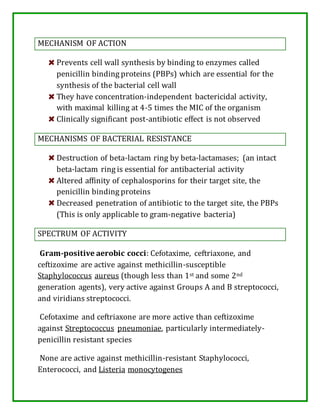
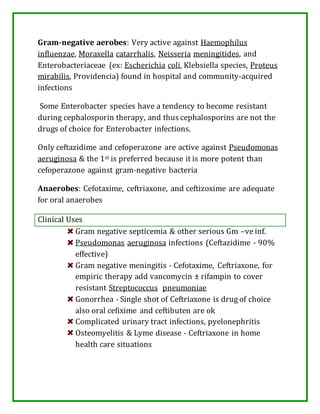
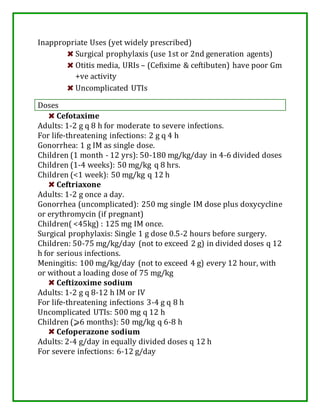
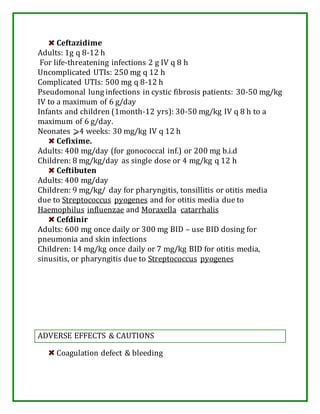
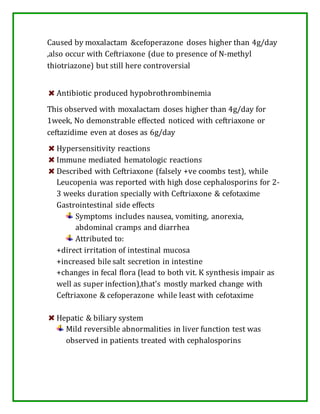
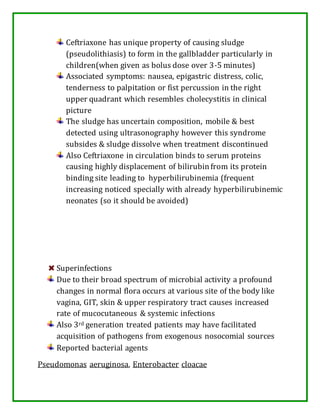


This document discusses 3rd generation cephalosporins, including their mechanism of action, mechanisms of bacterial resistance, spectrum of activity, clinical uses, doses, adverse effects, and cautions. Key points include: - They prevent bacterial cell wall synthesis by binding to penicillin binding proteins. They have concentration-independent bactericidal activity. - Common mechanisms of resistance include beta-lactamase production and altered binding affinity of the drugs. - They are very active against gram-negative aerobes and adequate for oral anaerobes. Ceftazidime is preferred for Pseudomonas infections. - Common uses include gram-negative infections, gonorrhea, UTIs.


![PERI-PROSTHETIC FRACTURE NAIL-PLATE CONSTRUCT [NPC].pptx](https://cdn.slidesharecdn.com/ss_thumbnails/drarunkumardrmohamedashrafperiprostheticfrasturenail-plateconstructnpc-260209164459-7e9d15a1-thumbnail.jpg?width=640&height=640&fit=bounds)


