Clindamycine 
Aya Qafesha 
Dr. Ahmad Ewida
Clindamycin 
• is an antibiotic useful for the treatment of a 
number of infections. 
• It is of the lincosamide class .Which 
include lincomycin, clindamycin.
Mechanism of action 
• Clindamycin has a 
primarily 
bacteriostatic effect. 
• inhibits 
protein synthesis. by 
binding to the 50s .
Pharmacokinetics 
• May be given Orally or parenterally 
• Orally: 
Rapidly absorbed. 
Bioavailability is 90%. 
• Widely concentrated in tissues including bones, 
and body fluids. 
• It diffuses across the placenta. 
• Metabolized in liver 
• Excretion- urin and bile
Antibacterial activity 
• It is usually used to treat infections with 
anaerobic bacteria 
• Can also be used to treat some protozoal 
diseases, such as malaria. 
• It is a common topical treatment for acne .
Susceptible bacteria 
It is most effective against infections involving the following types of 
organisms: 
• Aerobic Gram-positive cocci, including some members of the 
Staphylococcus and Streptococcus (e.g.pneumococcus) genera, 
but not enterococci. 
• Anaerobic, Gram-negative rod-shaped bacteria, including some 
Bacteroides, Fusobacterium, and Prevotella. 
• Most aerobic Gram-negative bacteria (such as Pseudomonas , 
Legionella, Haemophilus influenzae and Moraxella) are resistant to 
clindamycin.
Medical use 
• Bacteremia 
• Bacterial Endocarditis Prophylaxis 
• Deep Neck Infection 
• Intraabdominal Infection 
• Joint Infection 
• Malaria 
• Osteomyelitis 
• Pelvic Inflammatory Disease 
• Peritonitis 
• Pneumonia 
• Aspiration Pneumonia 
• Sinusitis 
• Skin or Soft Tissue Infection 
• Surgical Prophylaxis 
• Toxoplasmosis - Prophylaxis 
• Toxoplasmosis 
• Bacterial Infection
Doses of clindamycin 
• Usual Adult Dose for Bacterial Endocarditis Prophylaxis 
• 600mg orally 1 hour prior to the procedure. 
• Usual Adult Dose for Deep Neck Infection 
• 600 mg IV every 6 to 8 hours. 
• Duration: 3 to 4 weeks, depending on the nature and severity of the infection 
• Usual Adult Dose for Osteomyelitis 
• 450 to 900 mg IV every 8 hours. 
• Once the patient is stable and able to tolerate oral medications, oral clindamycin may be 
substituted according to the microbiology sensitivity data. An appropriate oral dosage for this 
patient may be 450 mg orally every 6 hours. 
Duration: 4 to 6 weeks, sometimes longer, depending on the nature and severity of the infection. 
Chronic osteomyelitis may require an additional one to two months of oral antibiotic therapy. 
• Usual Adult Dose for Sinusitis 
• 150 to 300 mg orally every 6 hours. 
Duration: 2 to 4 weeks
adverse drug reactions 
• Common adverse drug reactions associated with 
systemic clindamycin therapy — found in over 
1% of people — include: diarrhea, 
pseudomembranous colitis ,nausea , vomiting, 
abdominal pain or cramps and/or rash. 
• High doses (both intravenous and oral) may 
cause a metallic taste. 
• Common adverse drug reactions associated with 
topical formulations - found in over 10% of 
people - include: dryness, burning, itching of 
skin.
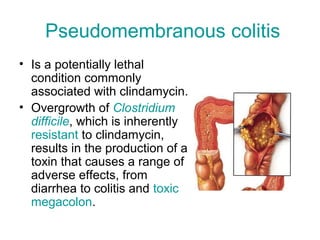
Pseudomembranous colitis 
• Is a potentially lethal 
condition commonly 
associated with clindamycin. 
• Overgrowth of Clostridium 
difficile, which is inherently 
resistant to clindamycin, 
results in the production of a 
toxin that causes a range of 
adverse effects, from 
diarrhea to colitis and toxic 
megacolon.
Clindamycin and dentistry 
• When antibiotics are required, Penicillin is 
usually the first drug prescribed. For 
patients who are allergic to Penicillin, or 
have more serious and persistent dental 
infections, Clindamycin is usually the next 
drug recommended.
Why clindamycin 
• Clindamycin is a highly effective drug 
when used to fight dental infections. The 
reason is that Clindamycin is nearly 
completely absorbed (90%), and 
penetrates deeply into the soft tissues of 
the body, as well as bone, where dental 
infections reside.
• THANKS

Clindamycine,,

  • 1.
    Clindamycine Aya Qafesha Dr. Ahmad Ewida
  • 2.
    Clindamycin • isan antibiotic useful for the treatment of a number of infections. • It is of the lincosamide class .Which include lincomycin, clindamycin.
  • 3.
    Mechanism of action • Clindamycin has a primarily bacteriostatic effect. • inhibits protein synthesis. by binding to the 50s .
  • 4.
    Pharmacokinetics • Maybe given Orally or parenterally • Orally: Rapidly absorbed. Bioavailability is 90%. • Widely concentrated in tissues including bones, and body fluids. • It diffuses across the placenta. • Metabolized in liver • Excretion- urin and bile
  • 5.
    Antibacterial activity •It is usually used to treat infections with anaerobic bacteria • Can also be used to treat some protozoal diseases, such as malaria. • It is a common topical treatment for acne .
  • 6.
    Susceptible bacteria Itis most effective against infections involving the following types of organisms: • Aerobic Gram-positive cocci, including some members of the Staphylococcus and Streptococcus (e.g.pneumococcus) genera, but not enterococci. • Anaerobic, Gram-negative rod-shaped bacteria, including some Bacteroides, Fusobacterium, and Prevotella. • Most aerobic Gram-negative bacteria (such as Pseudomonas , Legionella, Haemophilus influenzae and Moraxella) are resistant to clindamycin.
  • 7.
    Medical use •Bacteremia • Bacterial Endocarditis Prophylaxis • Deep Neck Infection • Intraabdominal Infection • Joint Infection • Malaria • Osteomyelitis • Pelvic Inflammatory Disease • Peritonitis • Pneumonia • Aspiration Pneumonia • Sinusitis • Skin or Soft Tissue Infection • Surgical Prophylaxis • Toxoplasmosis - Prophylaxis • Toxoplasmosis • Bacterial Infection
  • 9.
    Doses of clindamycin • Usual Adult Dose for Bacterial Endocarditis Prophylaxis • 600mg orally 1 hour prior to the procedure. • Usual Adult Dose for Deep Neck Infection • 600 mg IV every 6 to 8 hours. • Duration: 3 to 4 weeks, depending on the nature and severity of the infection • Usual Adult Dose for Osteomyelitis • 450 to 900 mg IV every 8 hours. • Once the patient is stable and able to tolerate oral medications, oral clindamycin may be substituted according to the microbiology sensitivity data. An appropriate oral dosage for this patient may be 450 mg orally every 6 hours. Duration: 4 to 6 weeks, sometimes longer, depending on the nature and severity of the infection. Chronic osteomyelitis may require an additional one to two months of oral antibiotic therapy. • Usual Adult Dose for Sinusitis • 150 to 300 mg orally every 6 hours. Duration: 2 to 4 weeks
  • 10.
    adverse drug reactions • Common adverse drug reactions associated with systemic clindamycin therapy — found in over 1% of people — include: diarrhea, pseudomembranous colitis ,nausea , vomiting, abdominal pain or cramps and/or rash. • High doses (both intravenous and oral) may cause a metallic taste. • Common adverse drug reactions associated with topical formulations - found in over 10% of people - include: dryness, burning, itching of skin.
  • 11.
    Pseudomembranous colitis •Is a potentially lethal condition commonly associated with clindamycin. • Overgrowth of Clostridium difficile, which is inherently resistant to clindamycin, results in the production of a toxin that causes a range of adverse effects, from diarrhea to colitis and toxic megacolon.
  • 12.
    Clindamycin and dentistry • When antibiotics are required, Penicillin is usually the first drug prescribed. For patients who are allergic to Penicillin, or have more serious and persistent dental infections, Clindamycin is usually the next drug recommended.
  • 13.
    Why clindamycin •Clindamycin is a highly effective drug when used to fight dental infections. The reason is that Clindamycin is nearly completely absorbed (90%), and penetrates deeply into the soft tissues of the body, as well as bone, where dental infections reside.
  • 14.