Clouds And Precipitation

           By Jason Batcsics
All pictures were from Google images
 and whatever actual websites they
                were on
Adiabatic Temperature Changes and
        Expansion and cooling
• Adiabatic means when air is cooling or heating
  its not losing energy.
• Much of the adiabatic air is saturated
• And wet adiabatic air is a lot slower than dry
  adiabatic air
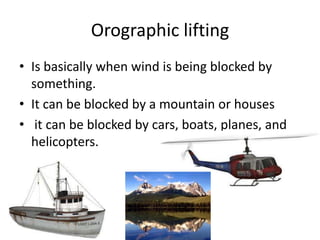
Orographic lifting
• Is basically when wind is being blocked by
  something.
• It can be blocked by a mountain or houses
• it can be blocked by cars, boats, planes, and
  helicopters.
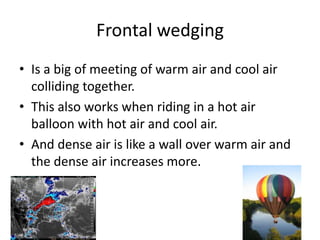
Frontal wedging
• Is a big of meeting of warm air and cool air
  colliding together.
• This also works when riding in a hot air
  balloon with hot air and cool air.
• And dense air is like a wall over warm air and
  the dense air increases more.
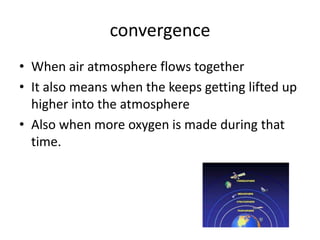
convergence
• When air atmosphere flows together
• It also means when the keeps getting lifted up
  higher into the atmosphere
• Also when more oxygen is made during that
  time.
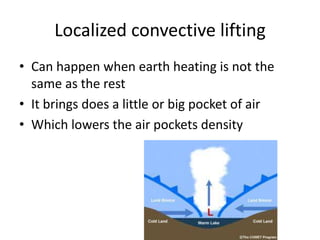
Localized convective lifting
• Can happen when earth heating is not the
  same as the rest
• It brings does a little or big pocket of air
• Which lowers the air pockets density
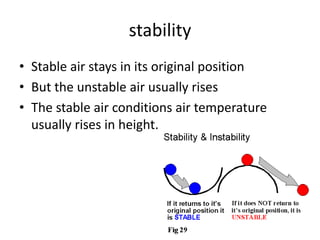
stability
• Stable air stays in its original position
• But the unstable air usually rises
• The stable air conditions air temperature
  usually rises in height.
condensation
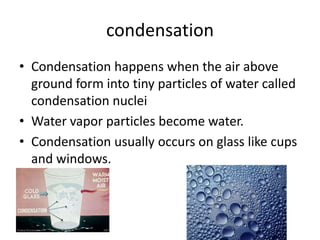
• Condensation happens when the air above
  ground form into tiny particles of water called
  condensation nuclei
• Water vapor particles become water.
• Condensation usually occurs on glass like cups
  and windows.
Types of clouds
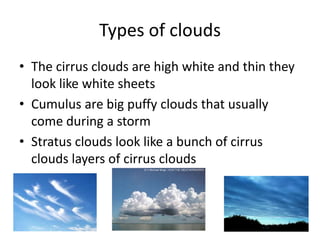
• The cirrus clouds are high white and thin they
  look like white sheets
• Cumulus are big puffy clouds that usually
  come during a storm
• Stratus clouds look like a bunch of cirrus
  clouds layers of cirrus clouds
High clouds
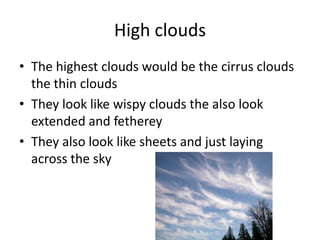
• The highest clouds would be the cirrus clouds
  the thin clouds
• They look like wispy clouds the also look
  extended and fetherey
• They also look like sheets and just laying
  across the sky
Middle clouds
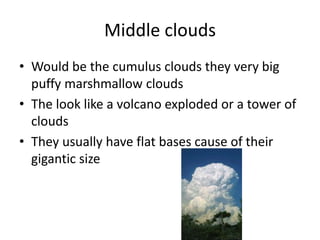
• Would be the cumulus clouds they very big
  puffy marshmallow clouds
• The look like a volcano exploded or a tower of
  clouds
• They usually have flat bases cause of their
  gigantic size
Low clouds
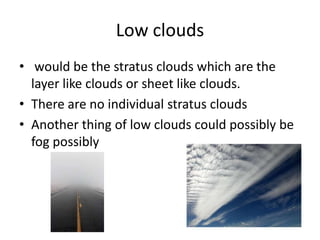
• would be the stratus clouds which are the
  layer like clouds or sheet like clouds.
• There are no individual stratus clouds
• Another thing of low clouds could possibly be
  fog possibly
Clouds of vertical development
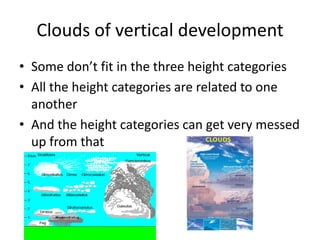
• Some don’t fit in the three height categories
• All the height categories are related to one
  another
• And the height categories can get very messed
  up from that
fog
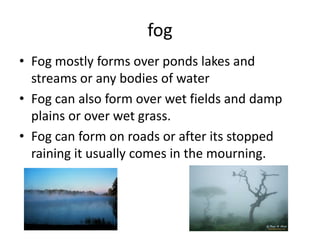
• Fog mostly forms over ponds lakes and
  streams or any bodies of water
• Fog can also form over wet fields and damp
  plains or over wet grass.
• Fog can form on roads or after its stopped
  raining it usually comes in the mourning.
Cold cloud precipitation
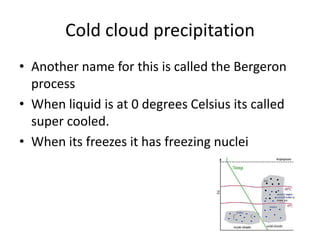
• Another name for this is called the Bergeron
  process
• When liquid is at 0 degrees Celsius its called
  super cooled.
• When its freezes it has freezing nuclei
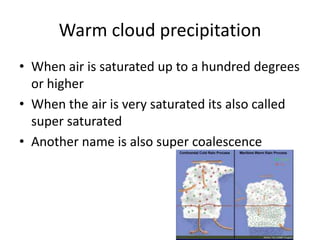
Warm cloud precipitation
• When air is saturated up to a hundred degrees
  or higher
• When the air is very saturated its also called
  super saturated
• Another name is also super coalescence
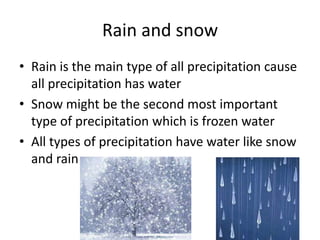
Rain and snow
• Rain is the main type of all precipitation cause
  all precipitation has water
• Snow might be the second most important
  type of precipitation which is frozen water
• All types of precipitation have water like snow
  and rain
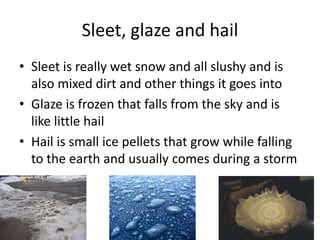
Sleet, glaze and hail
• Sleet is really wet snow and all slushy and is
  also mixed dirt and other things it goes into
• Glaze is frozen that falls from the sky and is
  like little hail
• Hail is small ice pellets that grow while falling
  to the earth and usually comes during a storm

3jbatcsics

  • 1.
    Clouds And Precipitation By Jason Batcsics All pictures were from Google images and whatever actual websites they were on
  • 2.
    Adiabatic Temperature Changesand Expansion and cooling • Adiabatic means when air is cooling or heating its not losing energy. • Much of the adiabatic air is saturated • And wet adiabatic air is a lot slower than dry adiabatic air
  • 3.
    Orographic lifting • Isbasically when wind is being blocked by something. • It can be blocked by a mountain or houses • it can be blocked by cars, boats, planes, and helicopters.
  • 4.
    Frontal wedging • Isa big of meeting of warm air and cool air colliding together. • This also works when riding in a hot air balloon with hot air and cool air. • And dense air is like a wall over warm air and the dense air increases more.
  • 5.
    convergence • When airatmosphere flows together • It also means when the keeps getting lifted up higher into the atmosphere • Also when more oxygen is made during that time.
  • 6.
    Localized convective lifting •Can happen when earth heating is not the same as the rest • It brings does a little or big pocket of air • Which lowers the air pockets density
  • 7.
    stability • Stable airstays in its original position • But the unstable air usually rises • The stable air conditions air temperature usually rises in height.
  • 8.
    condensation • Condensation happenswhen the air above ground form into tiny particles of water called condensation nuclei • Water vapor particles become water. • Condensation usually occurs on glass like cups and windows.
  • 9.
    Types of clouds •The cirrus clouds are high white and thin they look like white sheets • Cumulus are big puffy clouds that usually come during a storm • Stratus clouds look like a bunch of cirrus clouds layers of cirrus clouds
  • 10.
    High clouds • Thehighest clouds would be the cirrus clouds the thin clouds • They look like wispy clouds the also look extended and fetherey • They also look like sheets and just laying across the sky
  • 11.
    Middle clouds • Wouldbe the cumulus clouds they very big puffy marshmallow clouds • The look like a volcano exploded or a tower of clouds • They usually have flat bases cause of their gigantic size
  • 12.
    Low clouds • wouldbe the stratus clouds which are the layer like clouds or sheet like clouds. • There are no individual stratus clouds • Another thing of low clouds could possibly be fog possibly
  • 13.
    Clouds of verticaldevelopment • Some don’t fit in the three height categories • All the height categories are related to one another • And the height categories can get very messed up from that
  • 14.
    fog • Fog mostlyforms over ponds lakes and streams or any bodies of water • Fog can also form over wet fields and damp plains or over wet grass. • Fog can form on roads or after its stopped raining it usually comes in the mourning.
  • 15.
    Cold cloud precipitation •Another name for this is called the Bergeron process • When liquid is at 0 degrees Celsius its called super cooled. • When its freezes it has freezing nuclei
  • 16.
    Warm cloud precipitation •When air is saturated up to a hundred degrees or higher • When the air is very saturated its also called super saturated • Another name is also super coalescence
  • 17.
    Rain and snow •Rain is the main type of all precipitation cause all precipitation has water • Snow might be the second most important type of precipitation which is frozen water • All types of precipitation have water like snow and rain
  • 18.
    Sleet, glaze andhail • Sleet is really wet snow and all slushy and is also mixed dirt and other things it goes into • Glaze is frozen that falls from the sky and is like little hail • Hail is small ice pellets that grow while falling to the earth and usually comes during a storm