Clouds and Precipitation
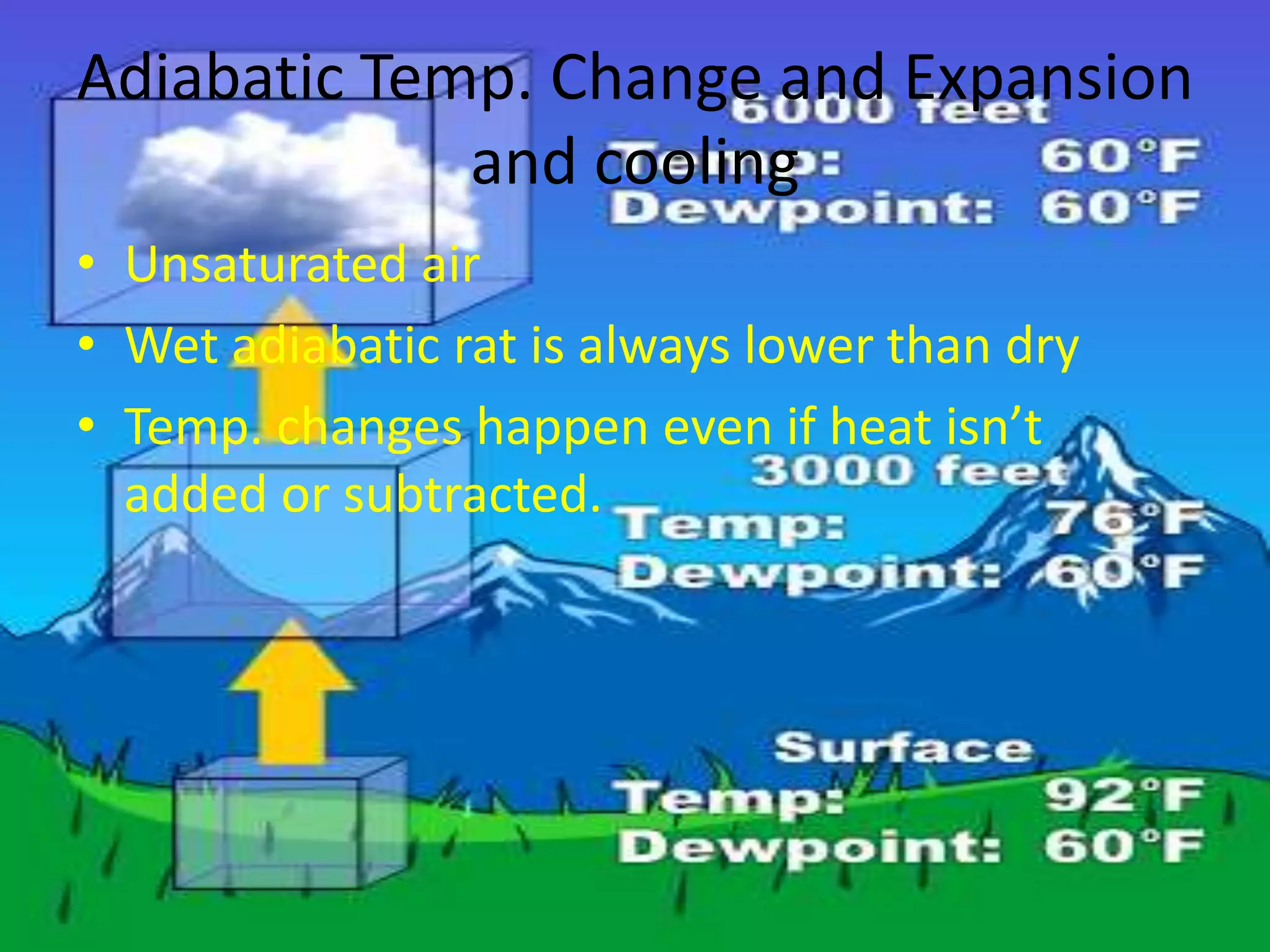
Adiabatic Temp. Change and Expansion
             and cooling
• Unsaturated air
• Wet adiabatic rat is always lower than dry
• Temp. changes happen even if heat isn’t
  added or subtracted.
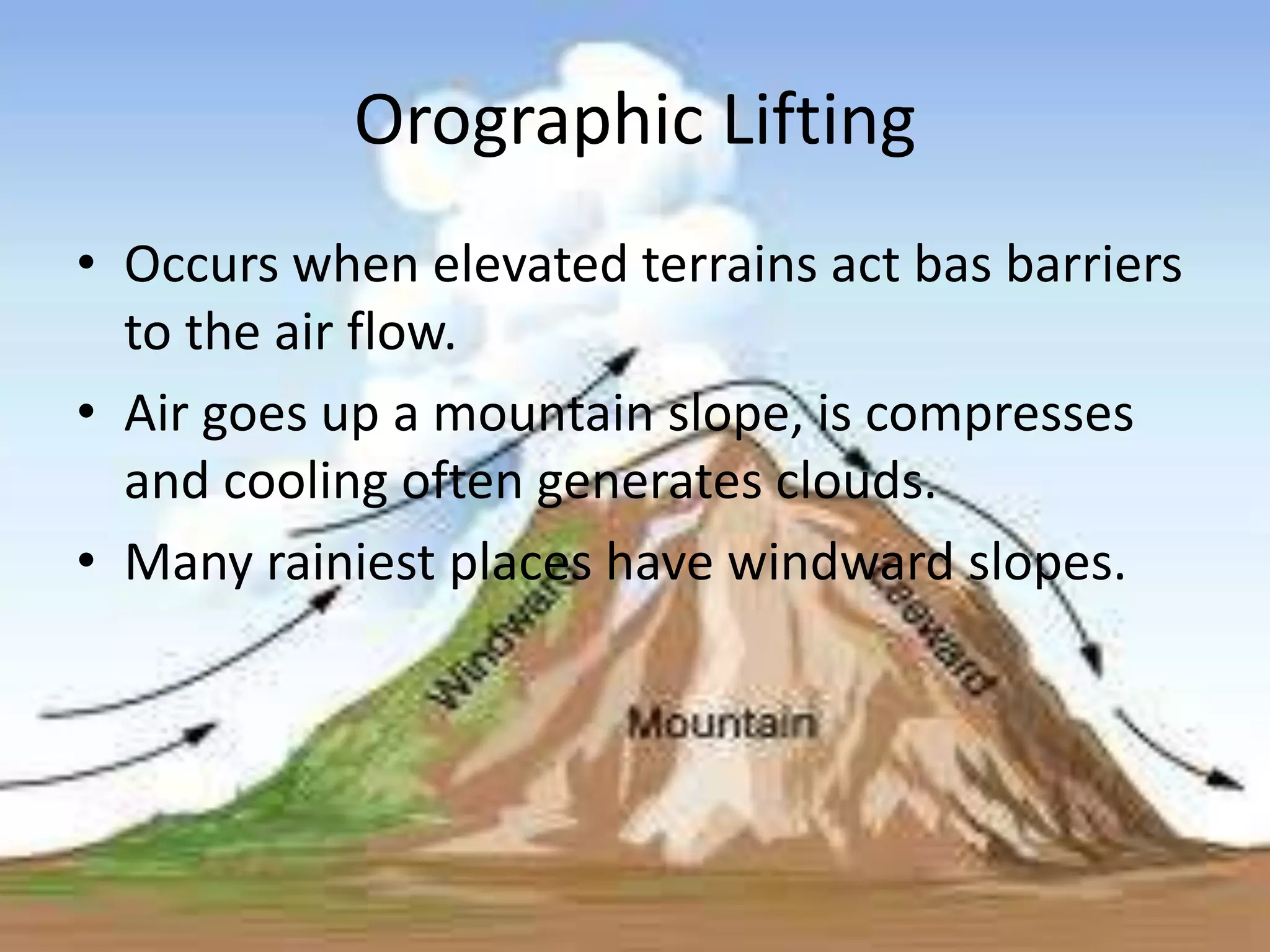
Orographic Lifting
• Occurs when elevated terrains act bas barriers
  to the air flow.
• Air goes up a mountain slope, is compresses
  and cooling often generates clouds.
• Many rainiest places have windward slopes.
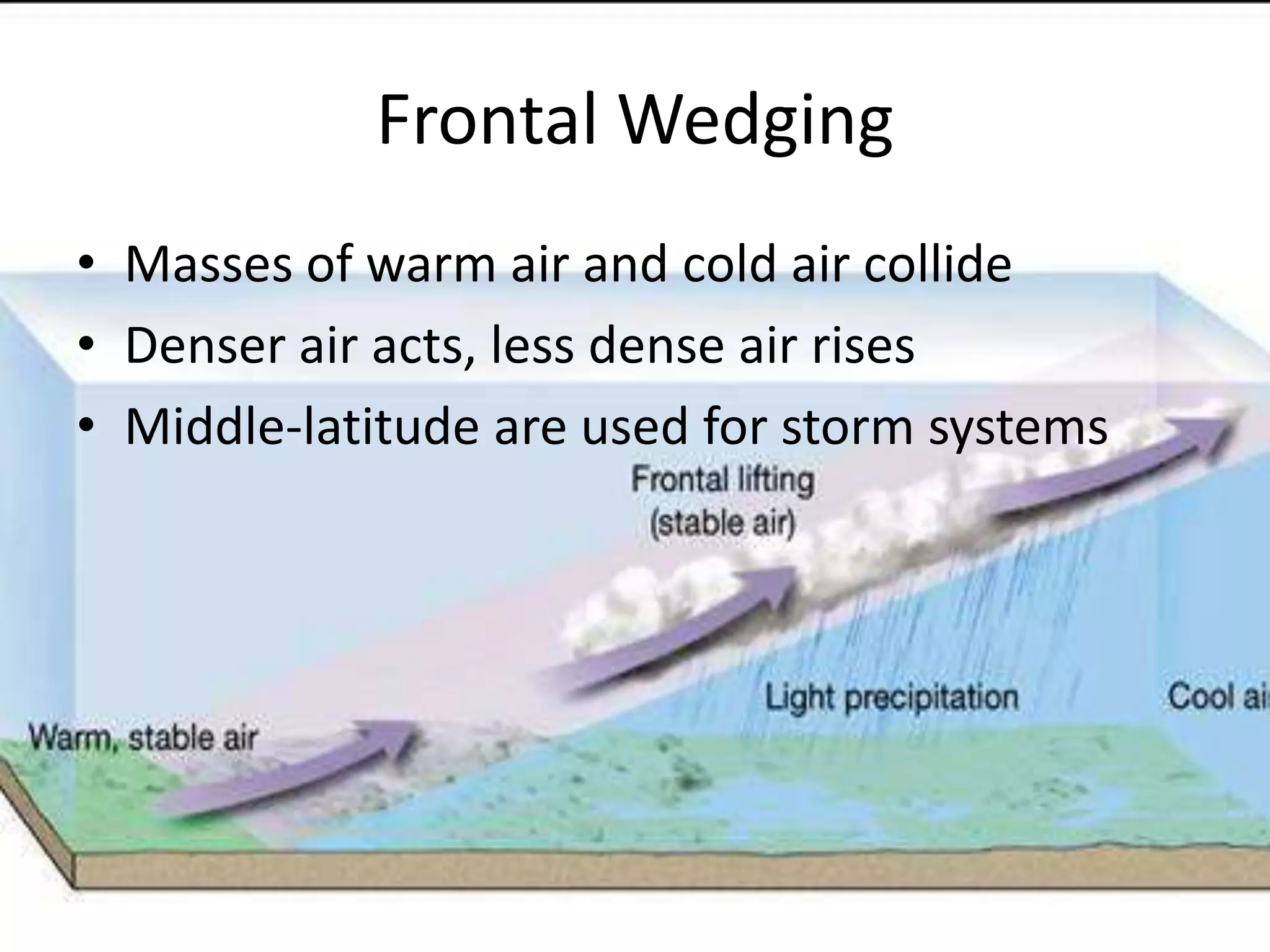
Frontal Wedging
• Masses of warm air and cold air collide
• Denser air acts, less dense air rises
• Middle-latitude are used for storm systems
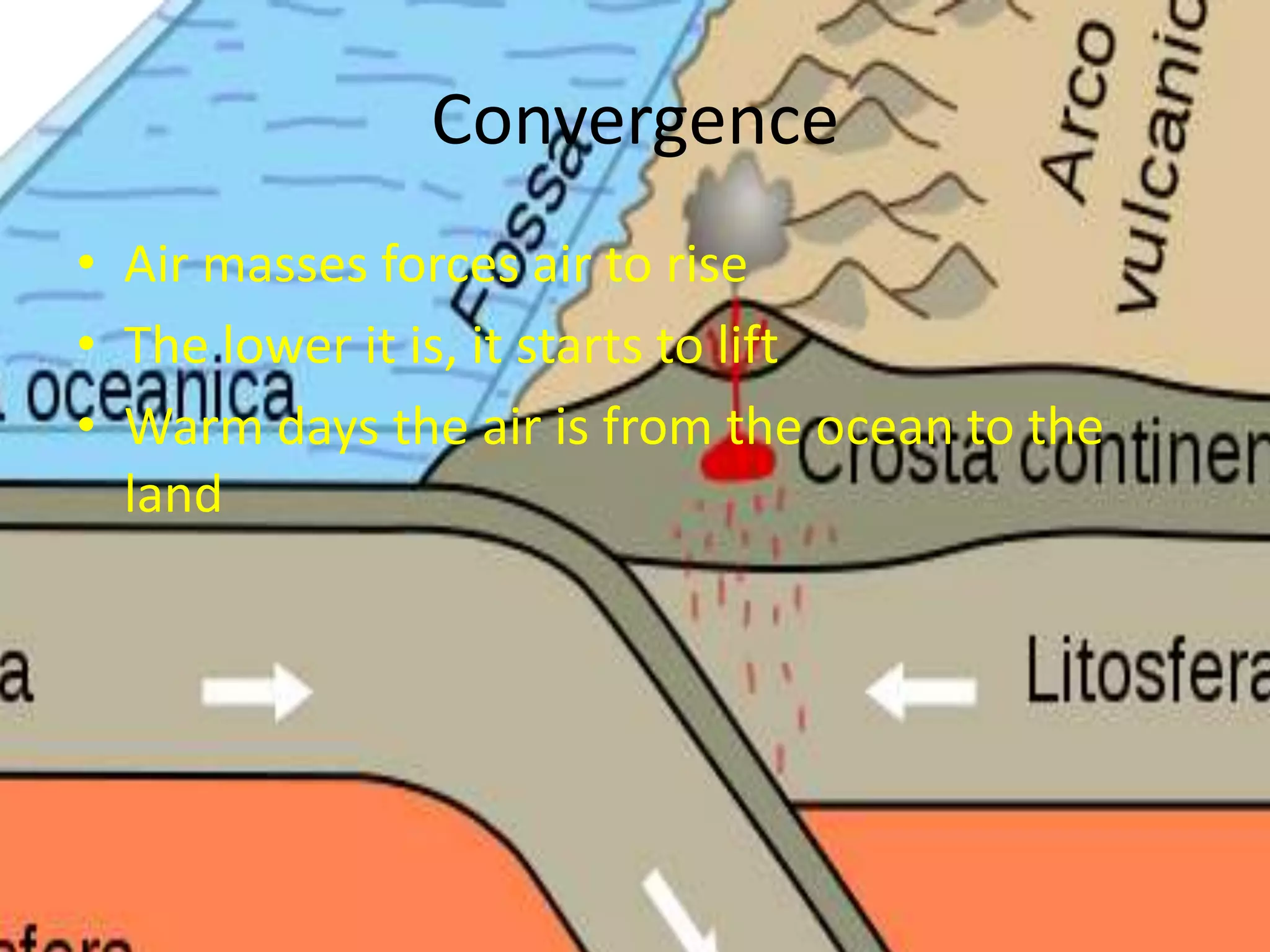
Convergence
• Air masses forces air to rise
• The lower it is, it starts to lift
• Warm days the air is from the ocean to the
  land
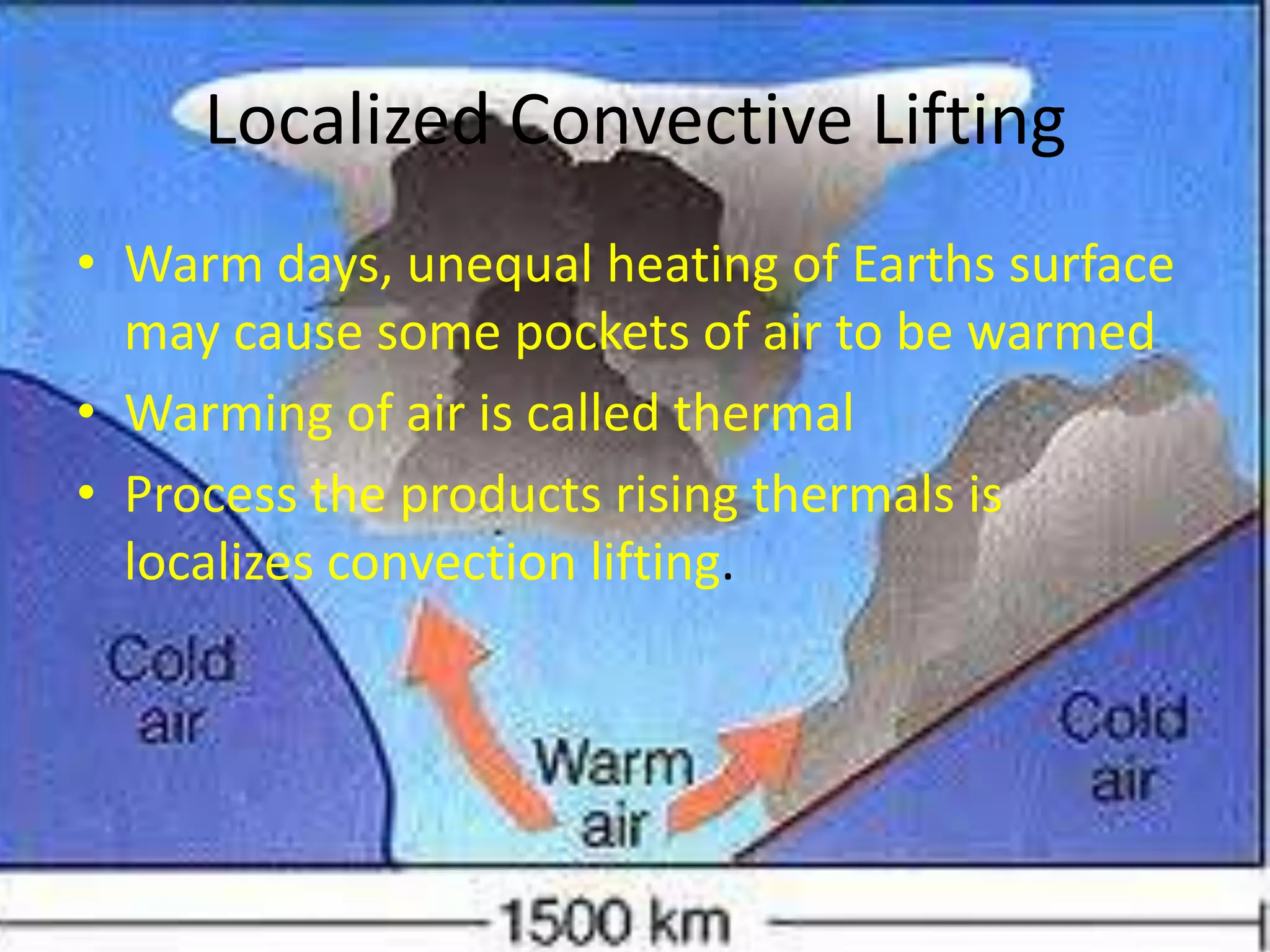
Localized Convective Lifting
• Warm days, unequal heating of Earths surface
  may cause some pockets of air to be warmed
• Warming of air is called thermal
• Process the products rising thermals is
  localizes convection lifting.
Stability
• Air is forced to rise
• Temperature would drop because of
  expansion
• Volume of air was cooler than the surrounding
  environment.
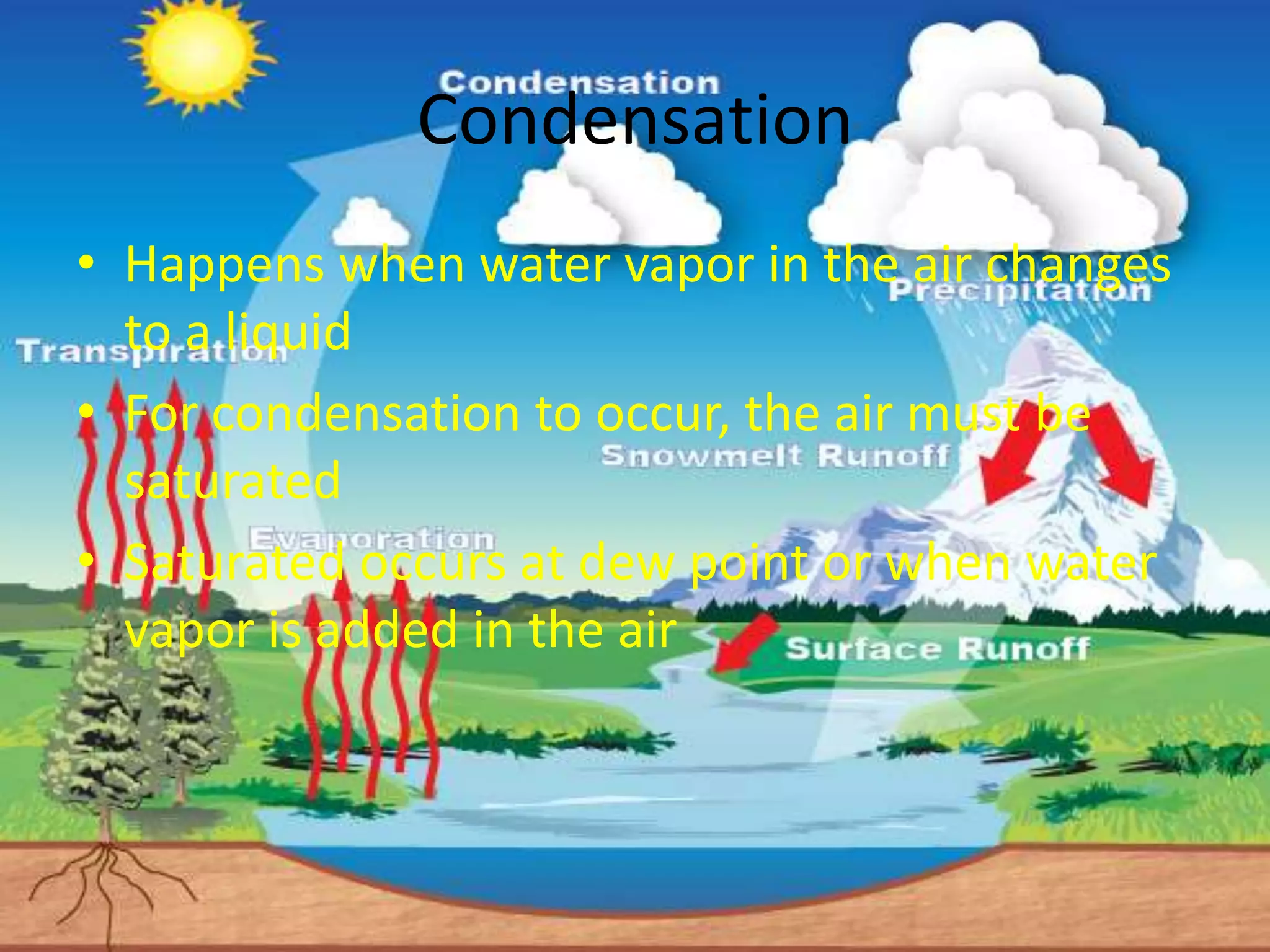
Condensation
• Happens when water vapor in the air changes
  to a liquid
• For condensation to occur, the air must be
  saturated
• Saturated occurs at dew point or when water
  vapor is added in the air
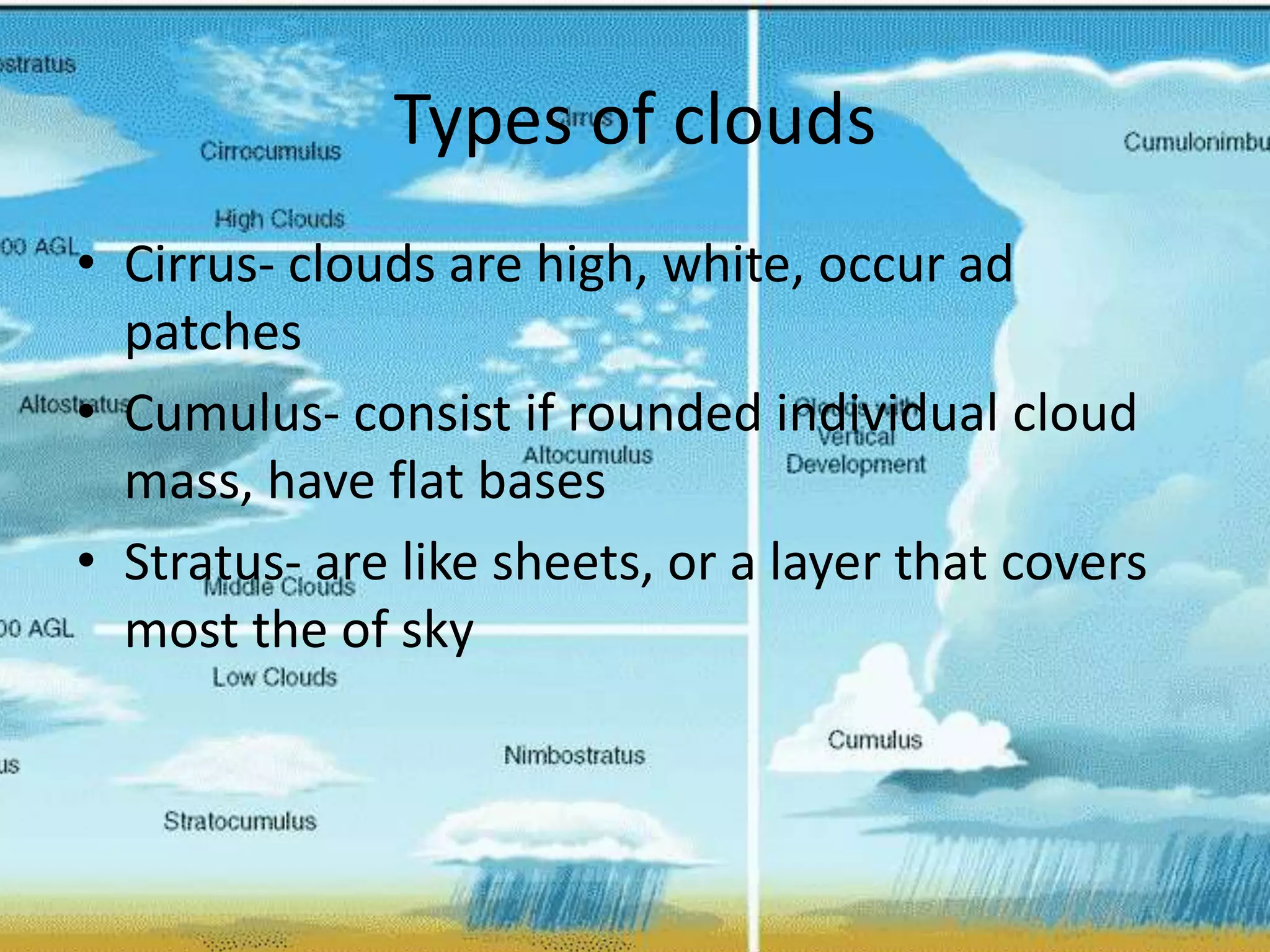
Types of clouds
• Cirrus- clouds are high, white, occur ad
  patches
• Cumulus- consist if rounded individual cloud
  mass, have flat bases
• Stratus- are like sheets, or a layer that covers
  most the of sky
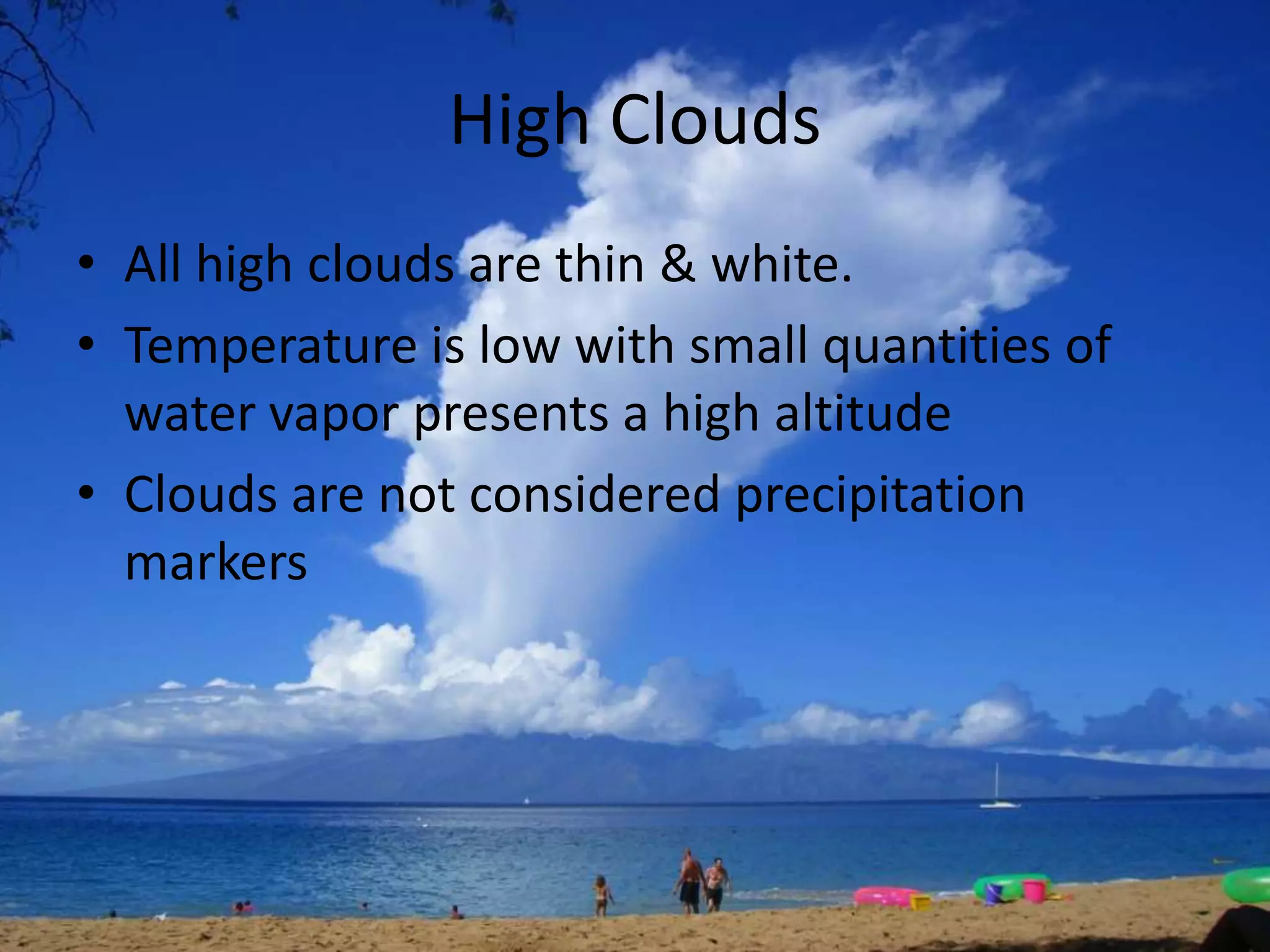
High Clouds
• All high clouds are thin & white.
• Temperature is low with small quantities of
  water vapor presents a high altitude
• Clouds are not considered precipitation
  markers
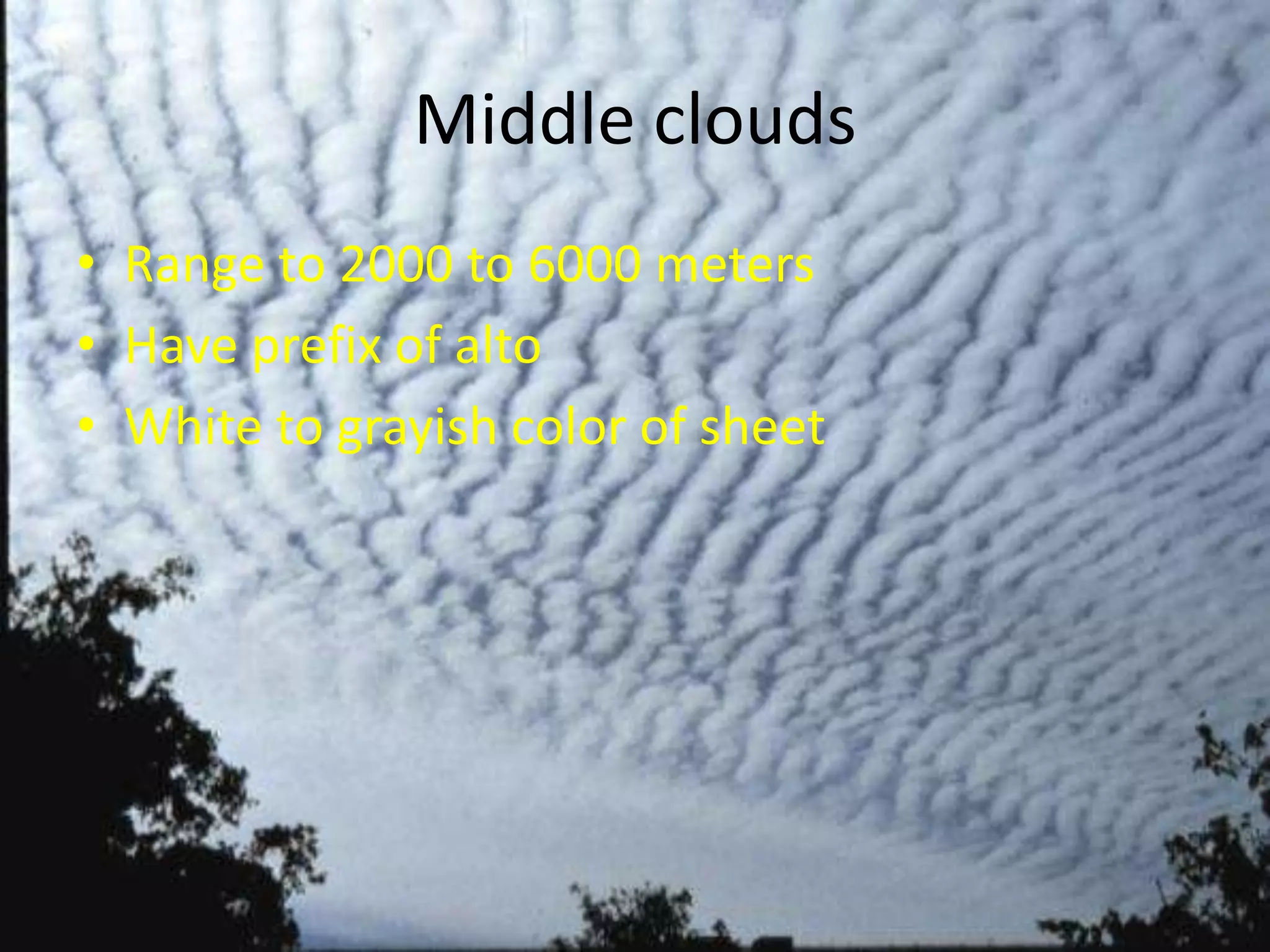
Middle clouds
• Range to 2000 to 6000 meters
• Have prefix of alto
• White to grayish color of sheet
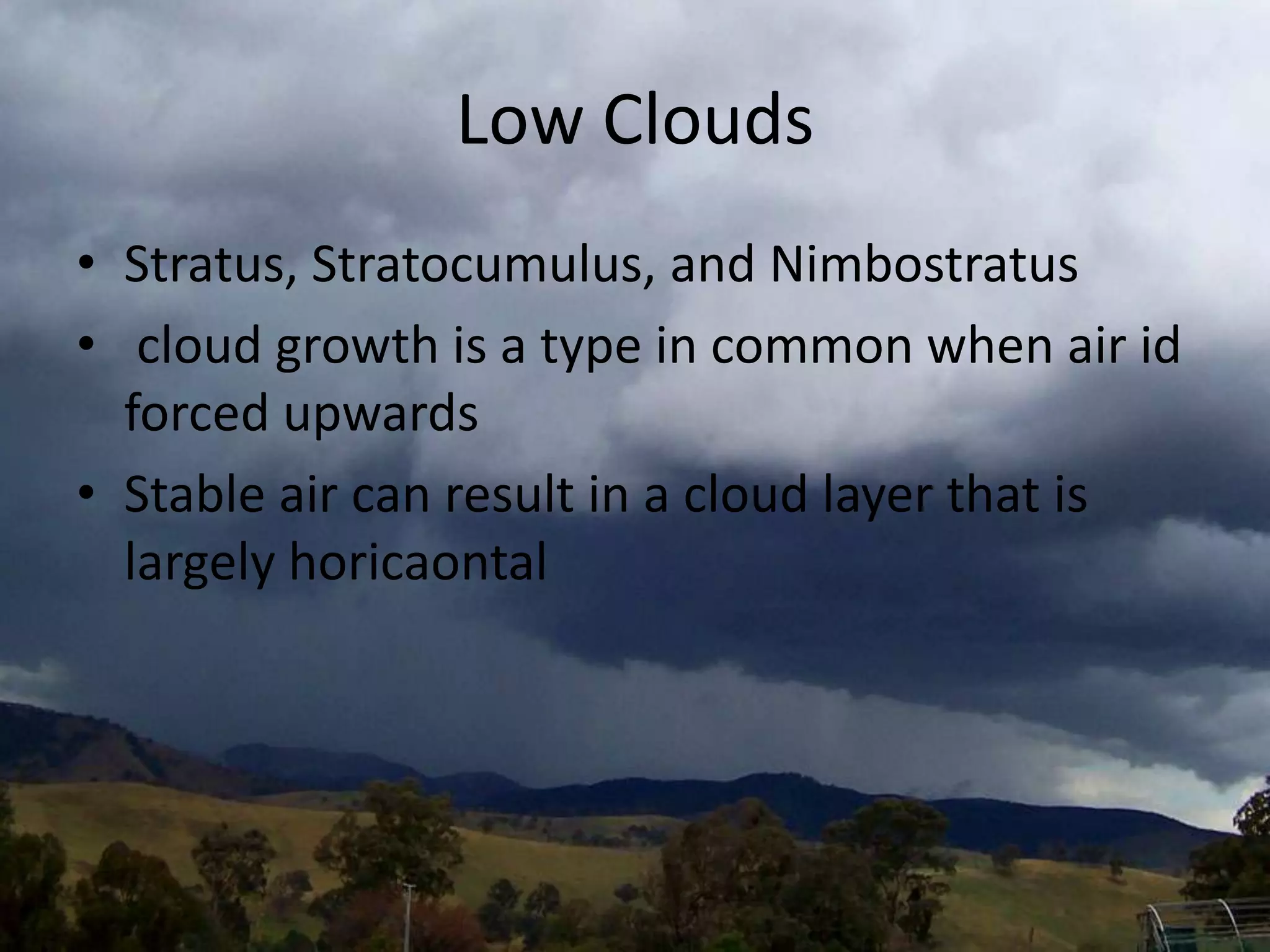
Low Clouds
• Stratus, Stratocumulus, and Nimbostratus
• cloud growth is a type in common when air id
  forced upwards
• Stable air can result in a cloud layer that is
  largely horicaontal
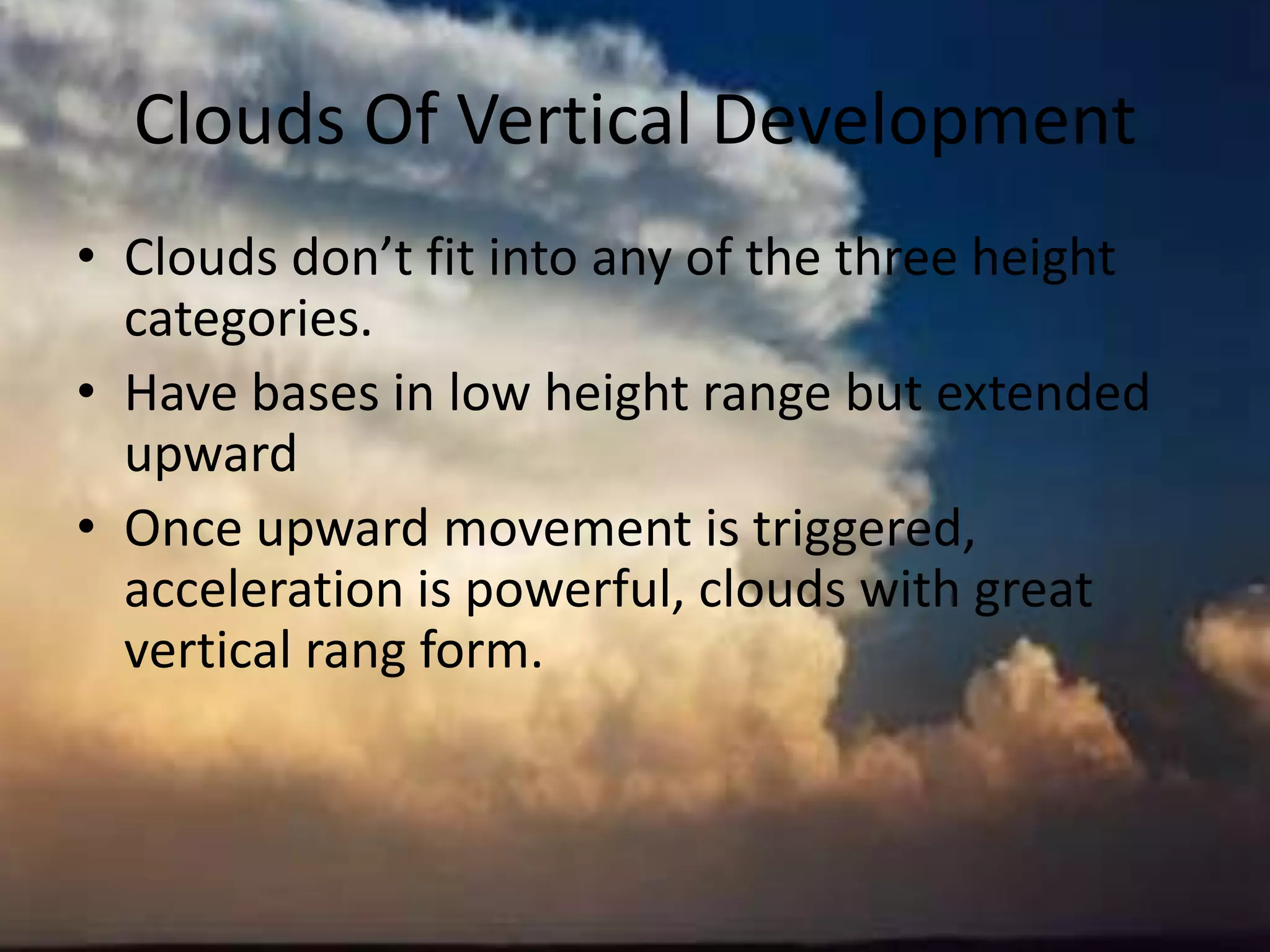
Clouds Of Vertical Development
• Clouds don’t fit into any of the three height
  categories.
• Have bases in low height range but extended
  upward
• Once upward movement is triggered,
  acceleration is powerful, clouds with great
  vertical rang form.
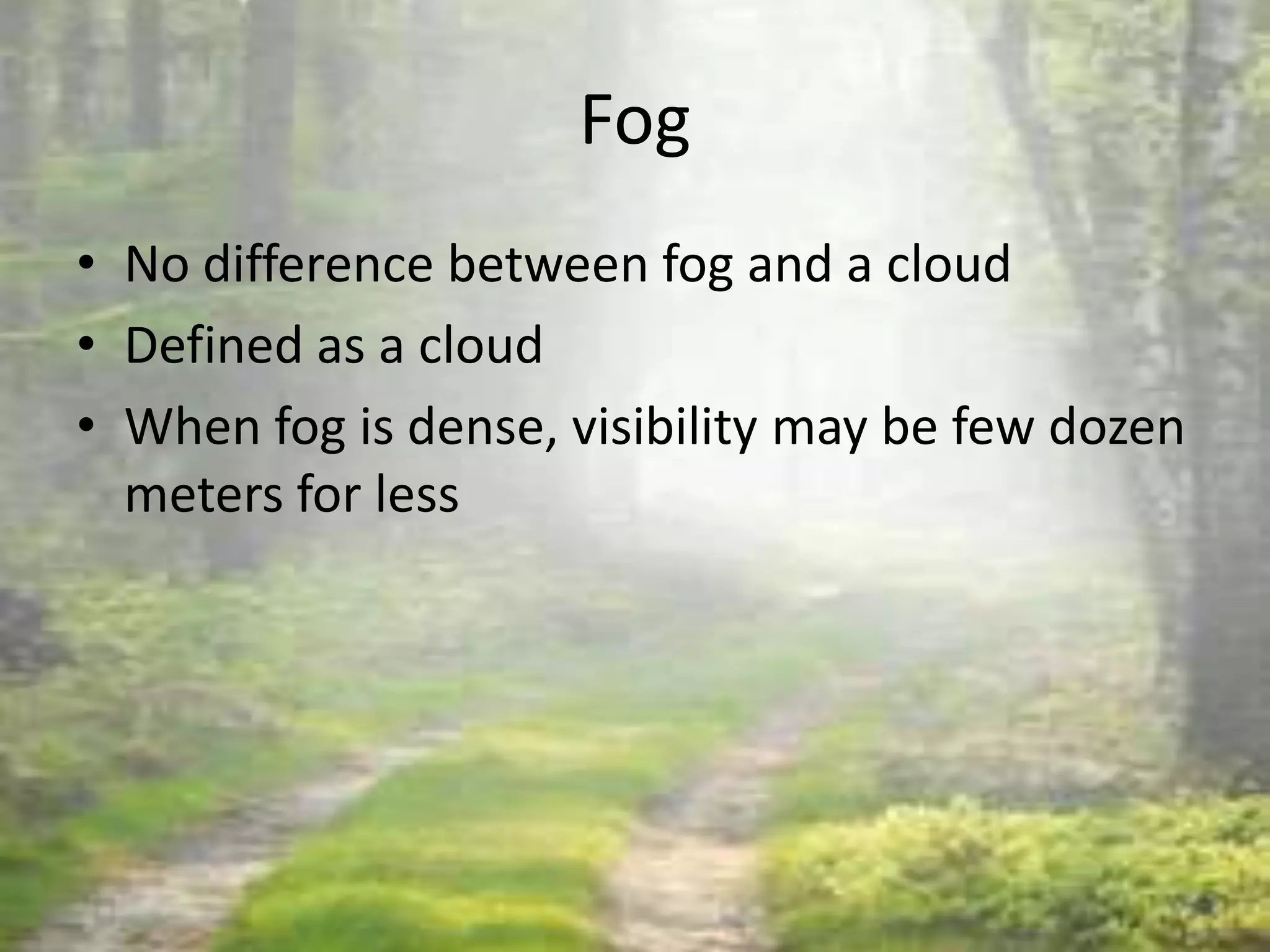
Fog
• No difference between fog and a cloud
• Defined as a cloud
• When fog is dense, visibility may be few dozen
  meters for less
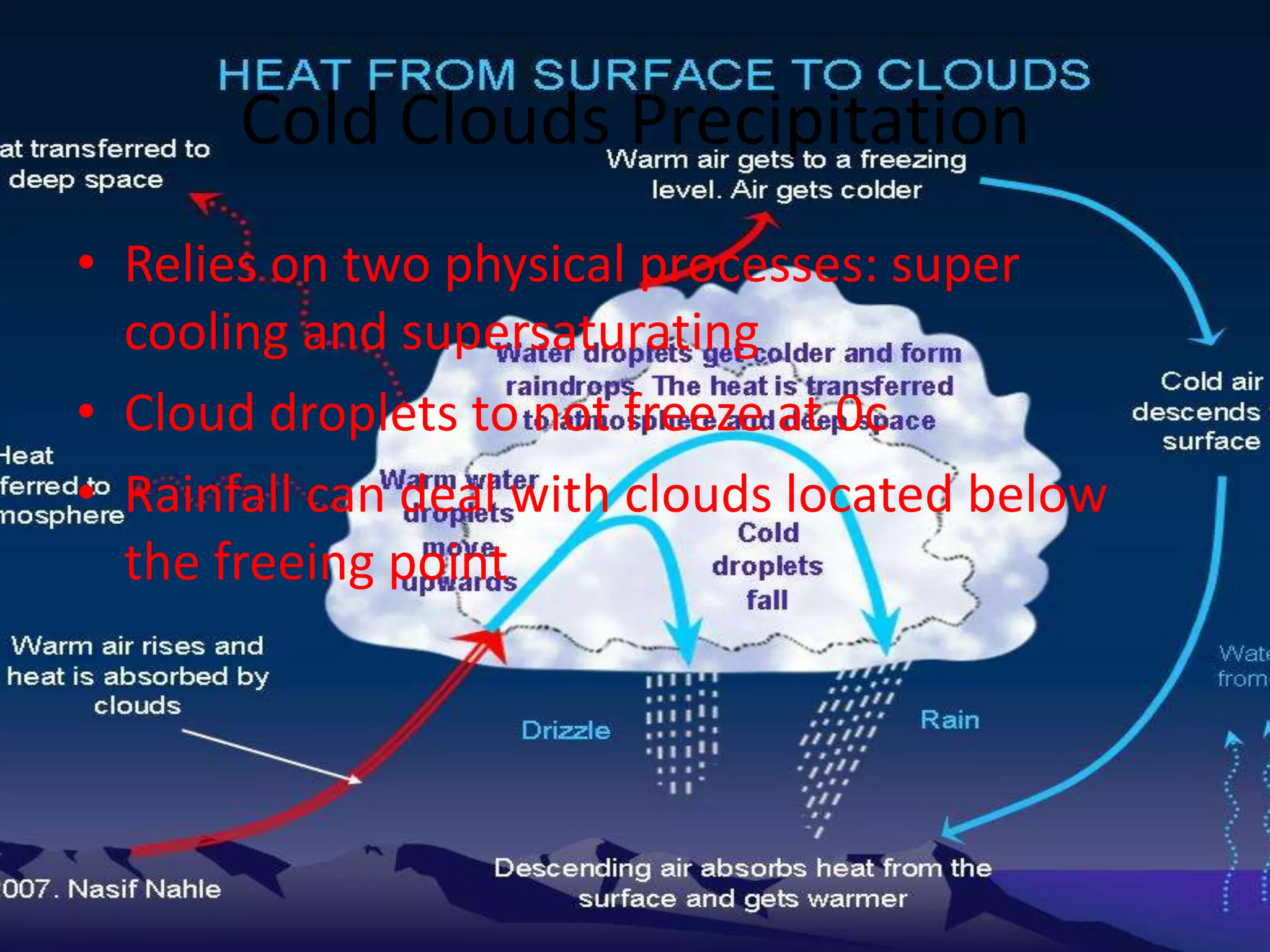
Cold Clouds Precipitation
• Relies on two physical processes: super
  cooling and supersaturating
• Cloud droplets to not freeze at 0c
• Rainfall can deal with clouds located below
  the freeing point
Warm Clouds Precipitation
• Mechanism forms raindrops, in the collision-
  coalscence process
• Salt can remove water vapor form the air
• Large droplets move through clouds, collide
  and coalesce
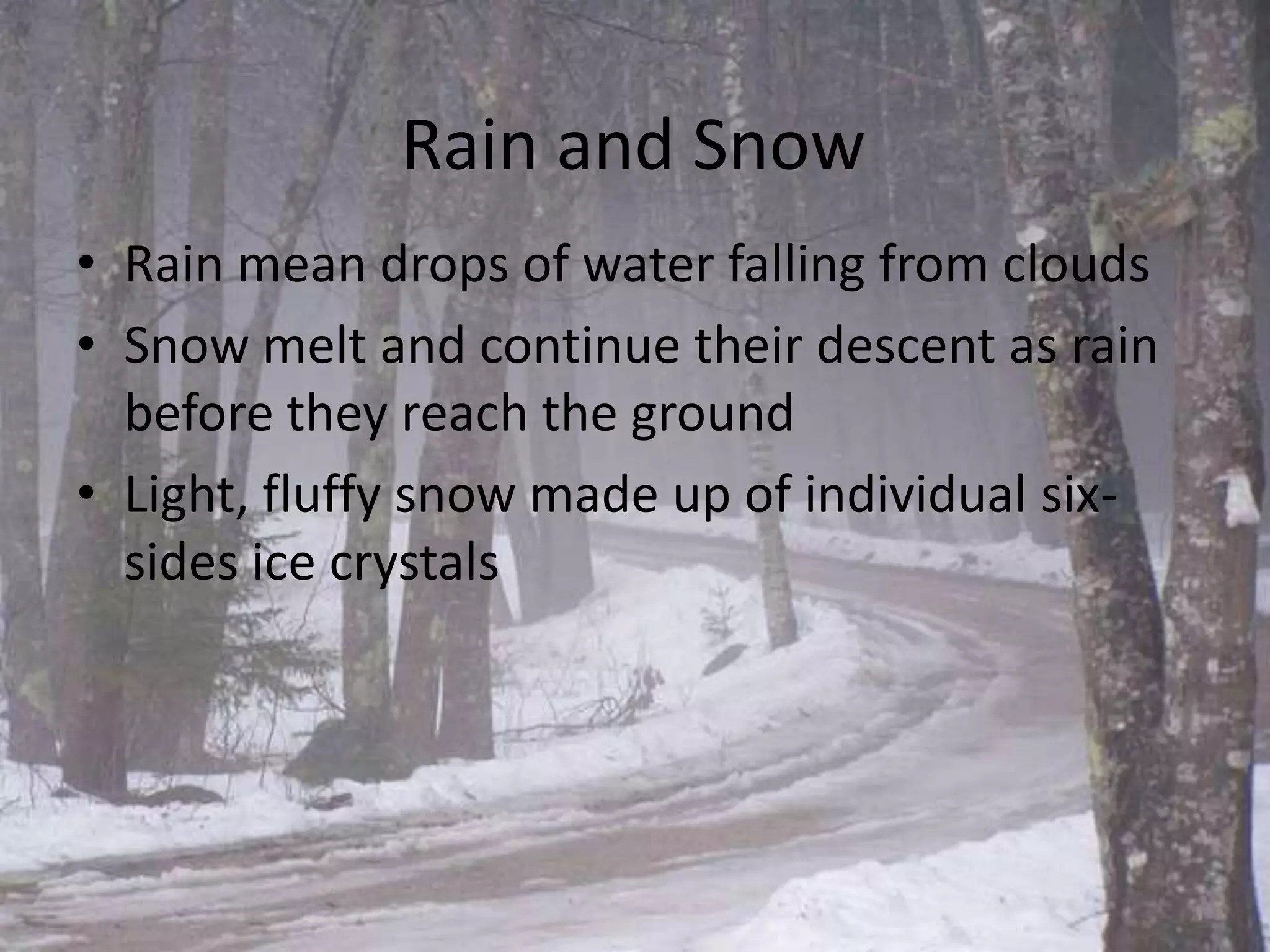
Rain and Snow
• Rain mean drops of water falling from clouds
• Snow melt and continue their descent as rain
  before they reach the ground
• Light, fluffy snow made up of individual six-
  sides ice crystals
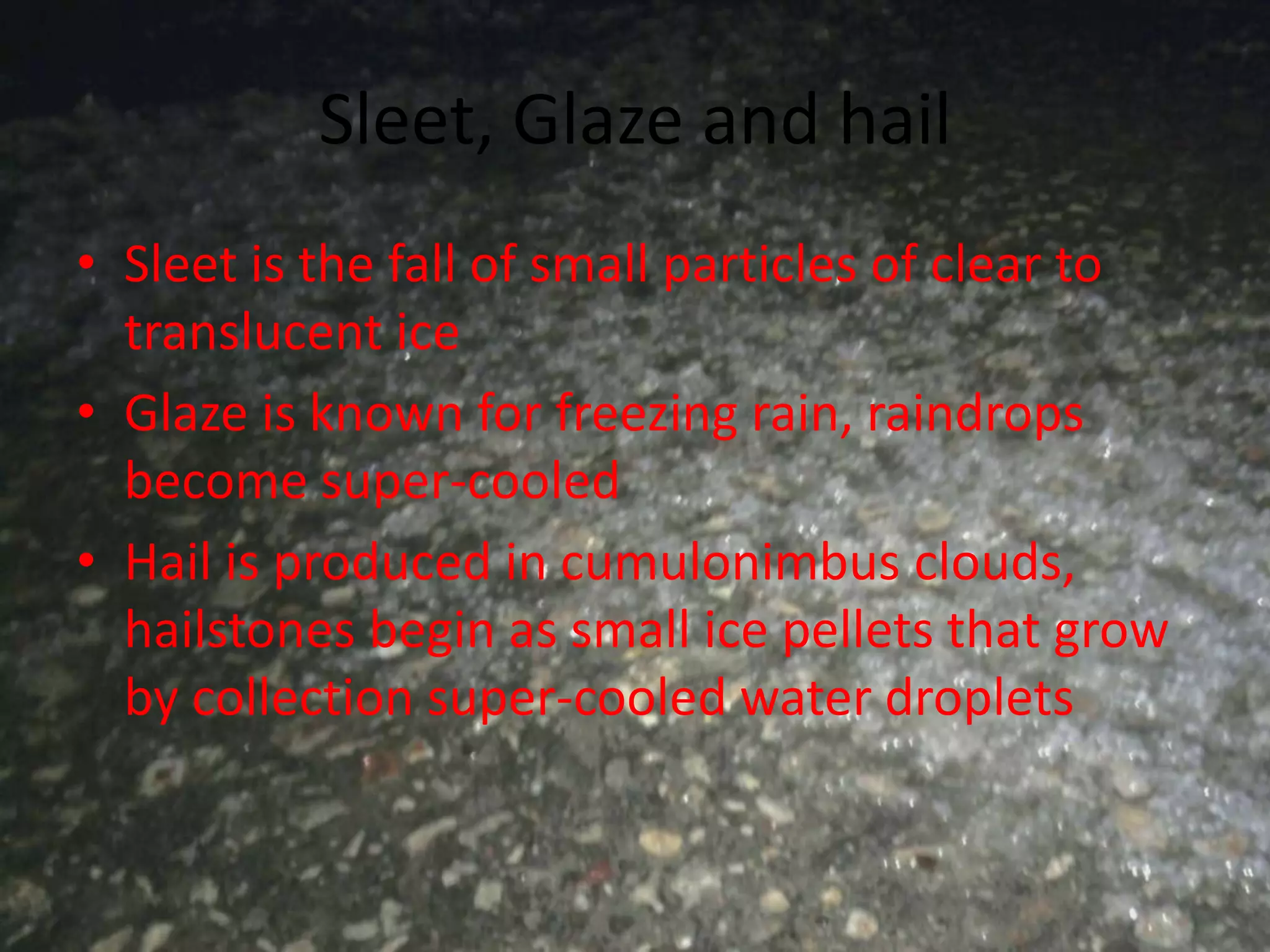
Sleet, Glaze and hail
• Sleet is the fall of small particles of clear to
  translucent ice
• Glaze is known for freezing rain, raindrops
  become super-cooled
• Hail is produced in cumulonimbus clouds,
  hailstones begin as small ice pellets that grow
  by collection super-cooled water droplets

2JessB

  • 1.
  • 2.
    Adiabatic Temp. Changeand Expansion and cooling • Unsaturated air • Wet adiabatic rat is always lower than dry • Temp. changes happen even if heat isn’t added or subtracted.
  • 3.
    Orographic Lifting • Occurswhen elevated terrains act bas barriers to the air flow. • Air goes up a mountain slope, is compresses and cooling often generates clouds. • Many rainiest places have windward slopes.
  • 4.
    Frontal Wedging • Massesof warm air and cold air collide • Denser air acts, less dense air rises • Middle-latitude are used for storm systems
  • 5.
    Convergence • Air massesforces air to rise • The lower it is, it starts to lift • Warm days the air is from the ocean to the land
  • 6.
    Localized Convective Lifting •Warm days, unequal heating of Earths surface may cause some pockets of air to be warmed • Warming of air is called thermal • Process the products rising thermals is localizes convection lifting.
  • 7.
    Stability • Air isforced to rise • Temperature would drop because of expansion • Volume of air was cooler than the surrounding environment.
  • 8.
    Condensation • Happens whenwater vapor in the air changes to a liquid • For condensation to occur, the air must be saturated • Saturated occurs at dew point or when water vapor is added in the air
  • 9.
    Types of clouds •Cirrus- clouds are high, white, occur ad patches • Cumulus- consist if rounded individual cloud mass, have flat bases • Stratus- are like sheets, or a layer that covers most the of sky
  • 10.
    High Clouds • Allhigh clouds are thin & white. • Temperature is low with small quantities of water vapor presents a high altitude • Clouds are not considered precipitation markers
  • 11.
    Middle clouds • Rangeto 2000 to 6000 meters • Have prefix of alto • White to grayish color of sheet
  • 12.
    Low Clouds • Stratus,Stratocumulus, and Nimbostratus • cloud growth is a type in common when air id forced upwards • Stable air can result in a cloud layer that is largely horicaontal
  • 13.
    Clouds Of VerticalDevelopment • Clouds don’t fit into any of the three height categories. • Have bases in low height range but extended upward • Once upward movement is triggered, acceleration is powerful, clouds with great vertical rang form.
  • 14.
    Fog • No differencebetween fog and a cloud • Defined as a cloud • When fog is dense, visibility may be few dozen meters for less
  • 15.
    Cold Clouds Precipitation •Relies on two physical processes: super cooling and supersaturating • Cloud droplets to not freeze at 0c • Rainfall can deal with clouds located below the freeing point
  • 16.
    Warm Clouds Precipitation •Mechanism forms raindrops, in the collision- coalscence process • Salt can remove water vapor form the air • Large droplets move through clouds, collide and coalesce
  • 17.
    Rain and Snow •Rain mean drops of water falling from clouds • Snow melt and continue their descent as rain before they reach the ground • Light, fluffy snow made up of individual six- sides ice crystals
  • 18.
    Sleet, Glaze andhail • Sleet is the fall of small particles of clear to translucent ice • Glaze is known for freezing rain, raindrops become super-cooled • Hail is produced in cumulonimbus clouds, hailstones begin as small ice pellets that grow by collection super-cooled water droplets