Topic 3.4 - DNA Replication
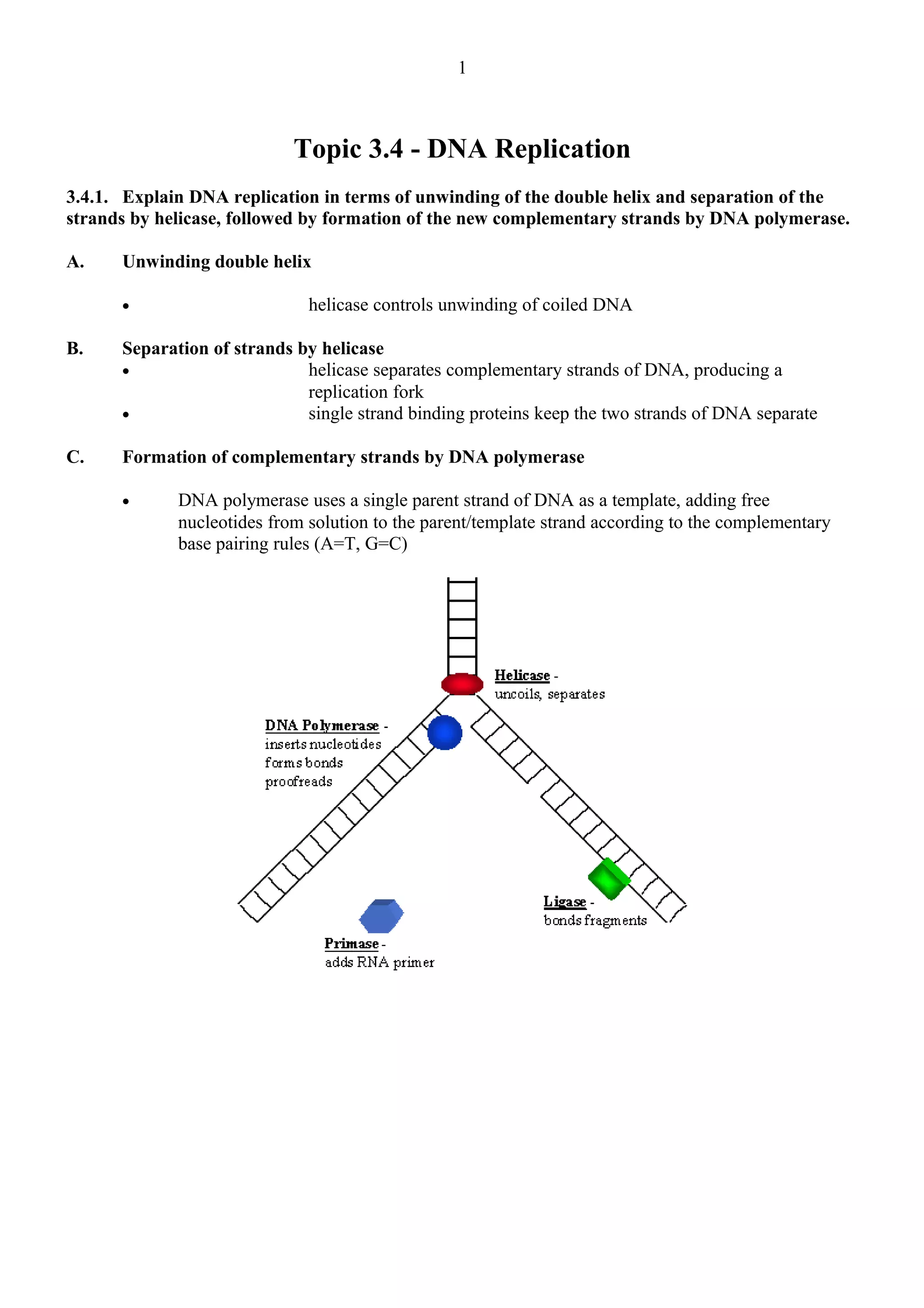
3.4.1. Explain DNA replication in terms of unwinding of the double helix and separation of the
strands by helicase, followed by formation of the new complementary strands by DNA polymerase.
A. Unwinding double helix
• helicase controls unwinding of coiled DNA
B. Separation of strands by helicase
• helicase separates complementary strands of DNA, producing a
replication fork
• single strand binding proteins keep the two strands of DNA separate
C. Formation of complementary strands by DNA polymerase
• DNA polymerase uses a single parent strand of DNA as a template, adding free
nucleotides from solution to the parent/template strand according to the complementary
base pairing rules (A=T, G=C)
1
3.4.2. Explain the significance of complementary base pairing in the conservation of the base
sequence of DNA.
• DNA polymerase uses a single parent strand of DNA as a template, adding free
nucleotides from solution to the parent/template strand according to the complementary
base pairing rules (A=T, G=C)
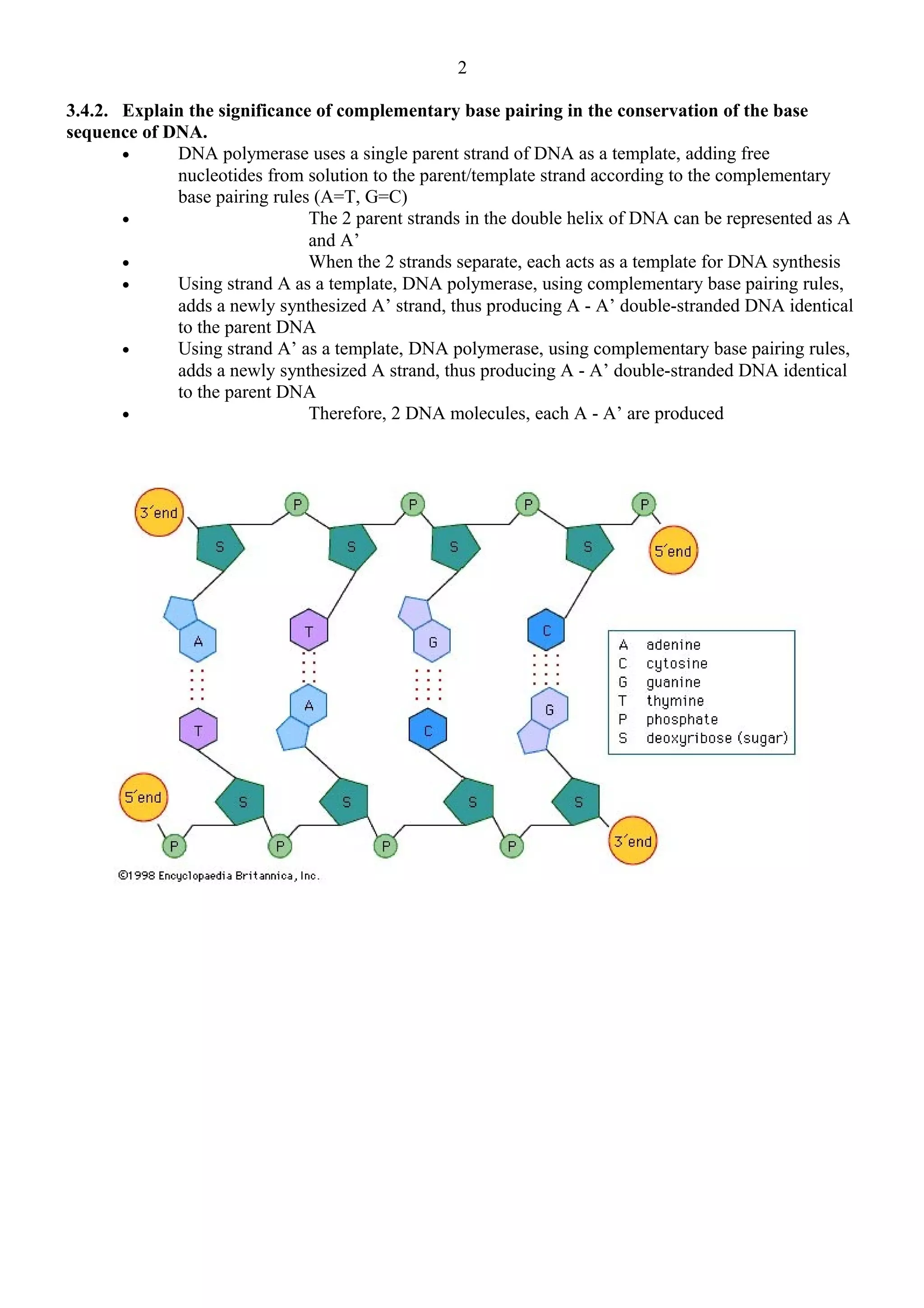
• The 2 parent strands in the double helix of DNA can be represented as A
and A’
• When the 2 strands separate, each acts as a template for DNA synthesis
• Using strand A as a template, DNA polymerase, using complementary base pairing rules,
adds a newly synthesized A’ strand, thus producing A - A’ double-stranded DNA identical
to the parent DNA
• Using strand A’ as a template, DNA polymerase, using complementary base pairing rules,
adds a newly synthesized A strand, thus producing A - A’ double-stranded DNA identical
to the parent DNA
• Therefore, 2 DNA molecules, each A - A’ are produced
2
3.4.3. State that DNA replication is semi-conservative.
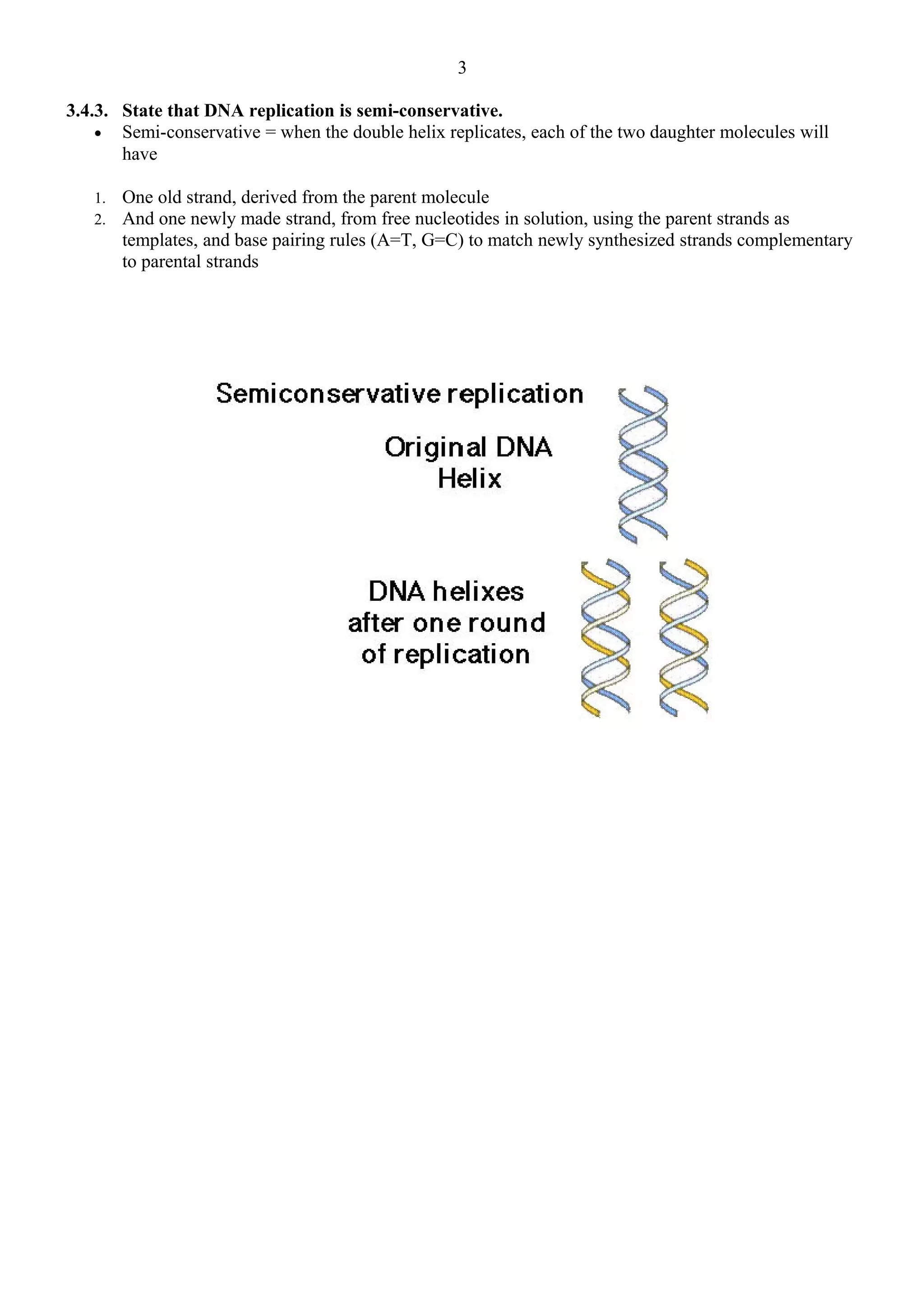
• Semi-conservative = when the double helix replicates, each of the two daughter molecules will
have
1. One old strand, derived from the parent molecule
2. And one newly made strand, from free nucleotides in solution, using the parent strands as
templates, and base pairing rules (A=T, G=C) to match newly synthesized strands complementary
to parental strands
3

3.4 dna replication notes

  • 1.
    Topic 3.4 -DNA Replication 3.4.1. Explain DNA replication in terms of unwinding of the double helix and separation of the strands by helicase, followed by formation of the new complementary strands by DNA polymerase. A. Unwinding double helix • helicase controls unwinding of coiled DNA B. Separation of strands by helicase • helicase separates complementary strands of DNA, producing a replication fork • single strand binding proteins keep the two strands of DNA separate C. Formation of complementary strands by DNA polymerase • DNA polymerase uses a single parent strand of DNA as a template, adding free nucleotides from solution to the parent/template strand according to the complementary base pairing rules (A=T, G=C) 1
  • 2.
    3.4.2. Explain thesignificance of complementary base pairing in the conservation of the base sequence of DNA. • DNA polymerase uses a single parent strand of DNA as a template, adding free nucleotides from solution to the parent/template strand according to the complementary base pairing rules (A=T, G=C) • The 2 parent strands in the double helix of DNA can be represented as A and A’ • When the 2 strands separate, each acts as a template for DNA synthesis • Using strand A as a template, DNA polymerase, using complementary base pairing rules, adds a newly synthesized A’ strand, thus producing A - A’ double-stranded DNA identical to the parent DNA • Using strand A’ as a template, DNA polymerase, using complementary base pairing rules, adds a newly synthesized A strand, thus producing A - A’ double-stranded DNA identical to the parent DNA • Therefore, 2 DNA molecules, each A - A’ are produced 2
  • 3.
    3.4.3. State thatDNA replication is semi-conservative. • Semi-conservative = when the double helix replicates, each of the two daughter molecules will have 1. One old strand, derived from the parent molecule 2. And one newly made strand, from free nucleotides in solution, using the parent strands as templates, and base pairing rules (A=T, G=C) to match newly synthesized strands complementary to parental strands 3