Downloaded 97 times
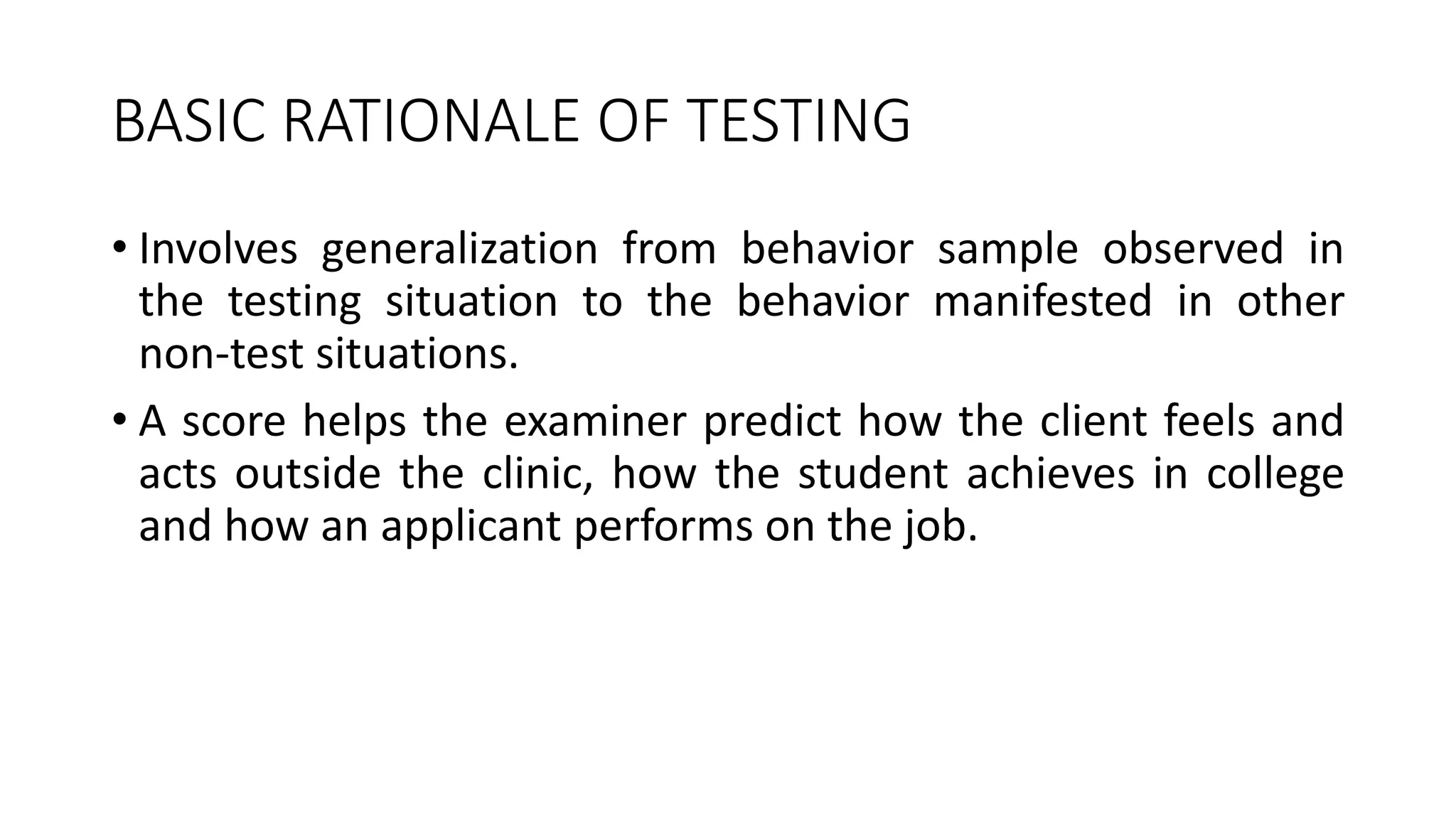
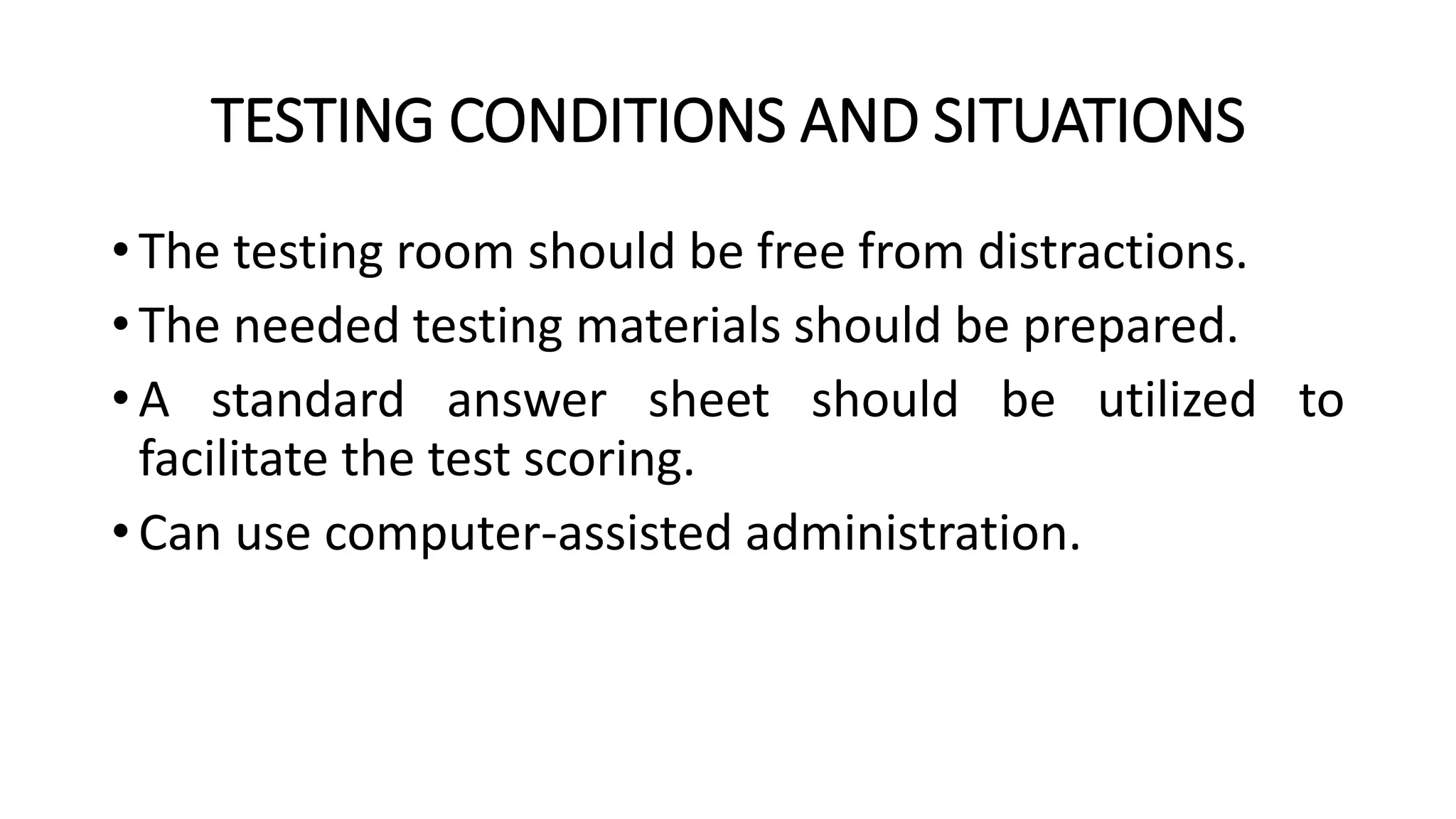
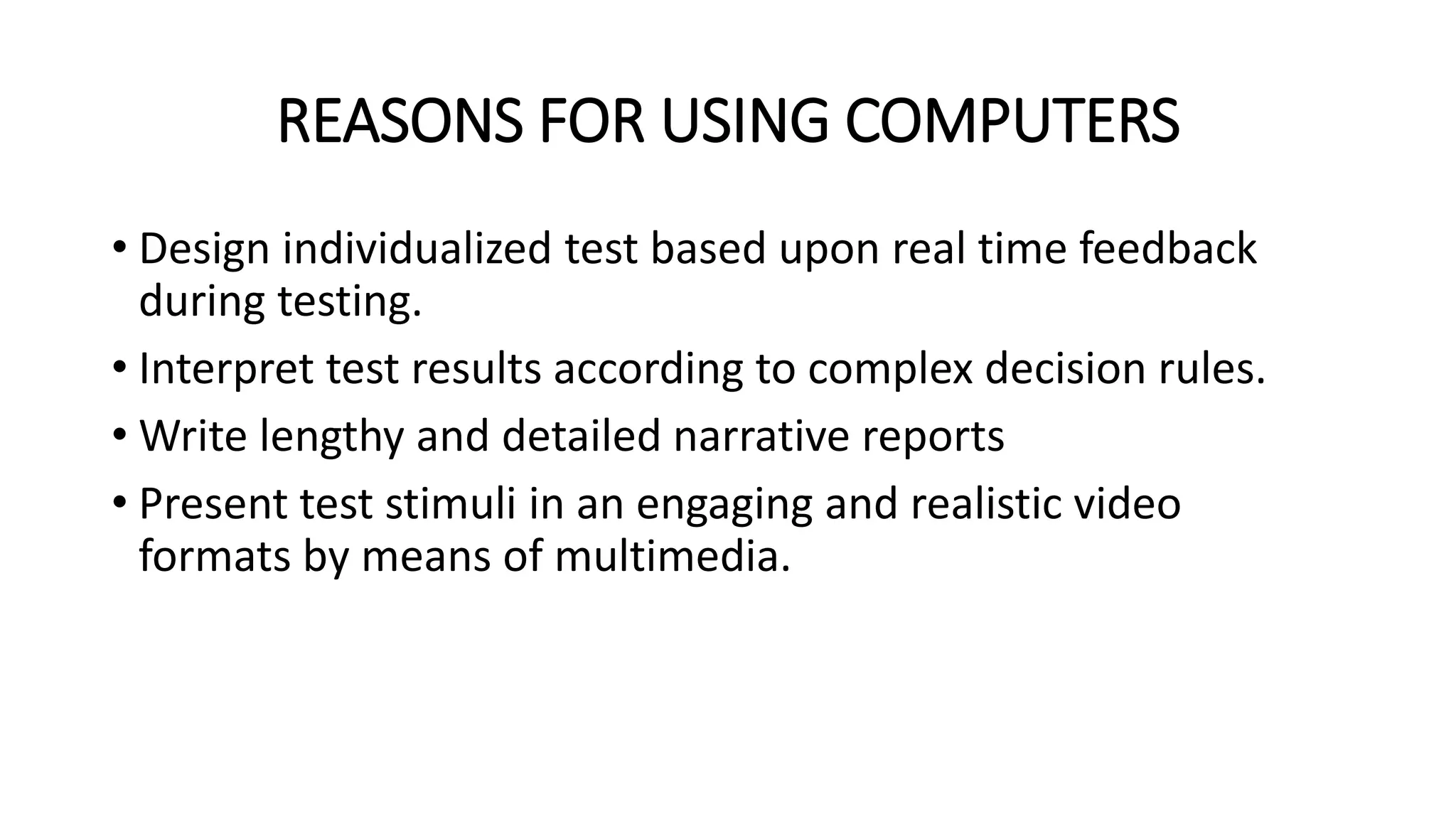
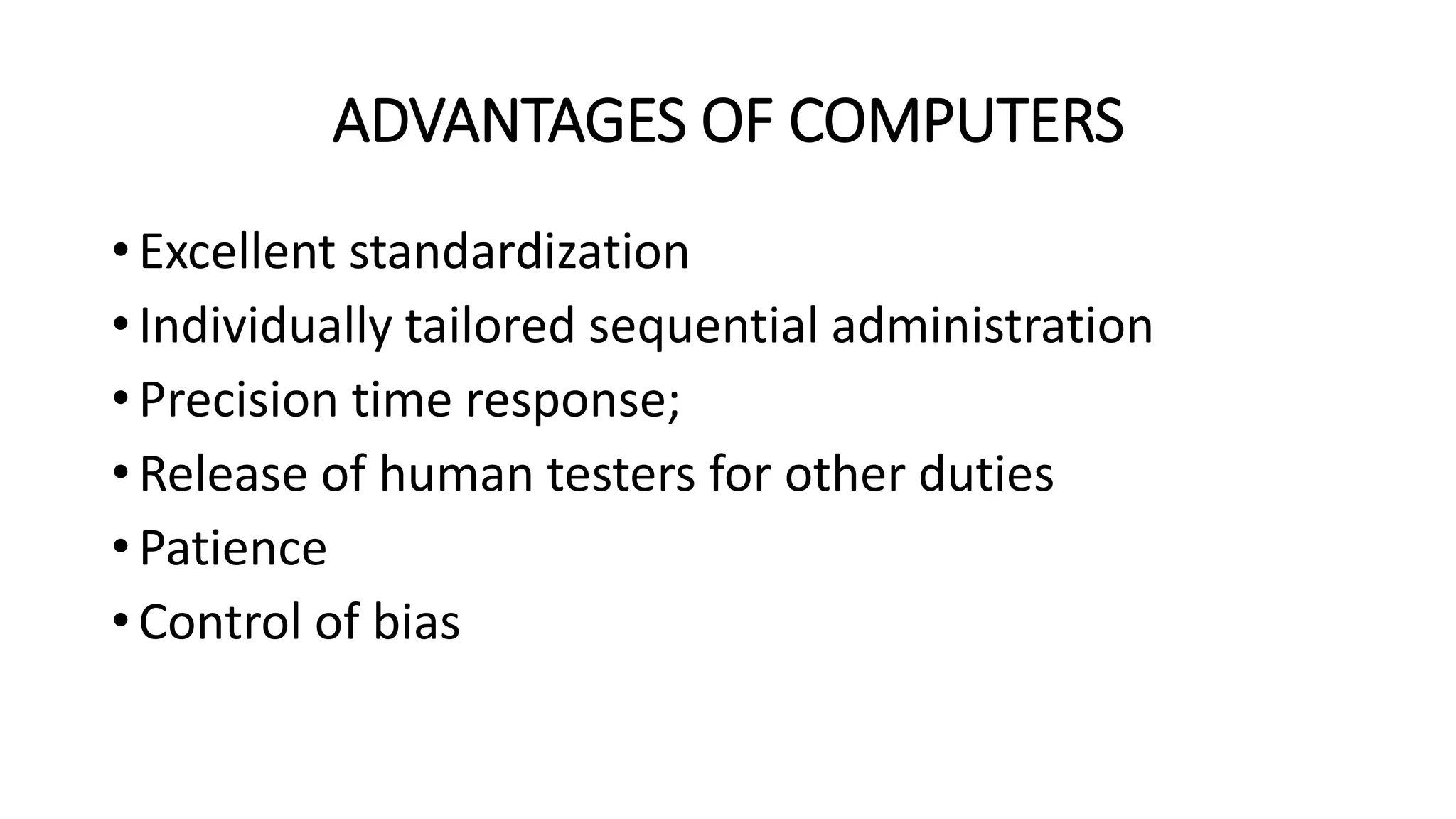
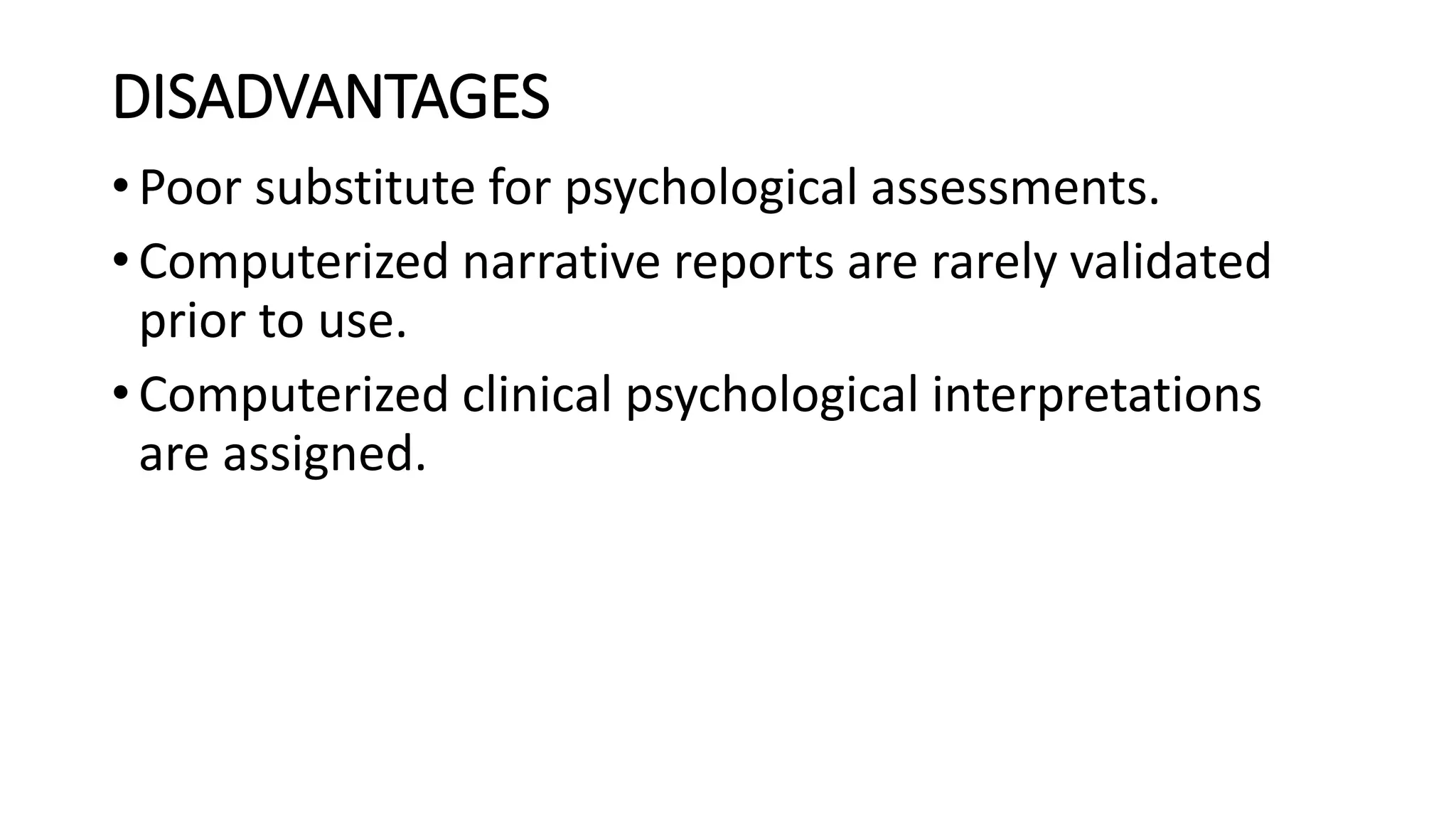
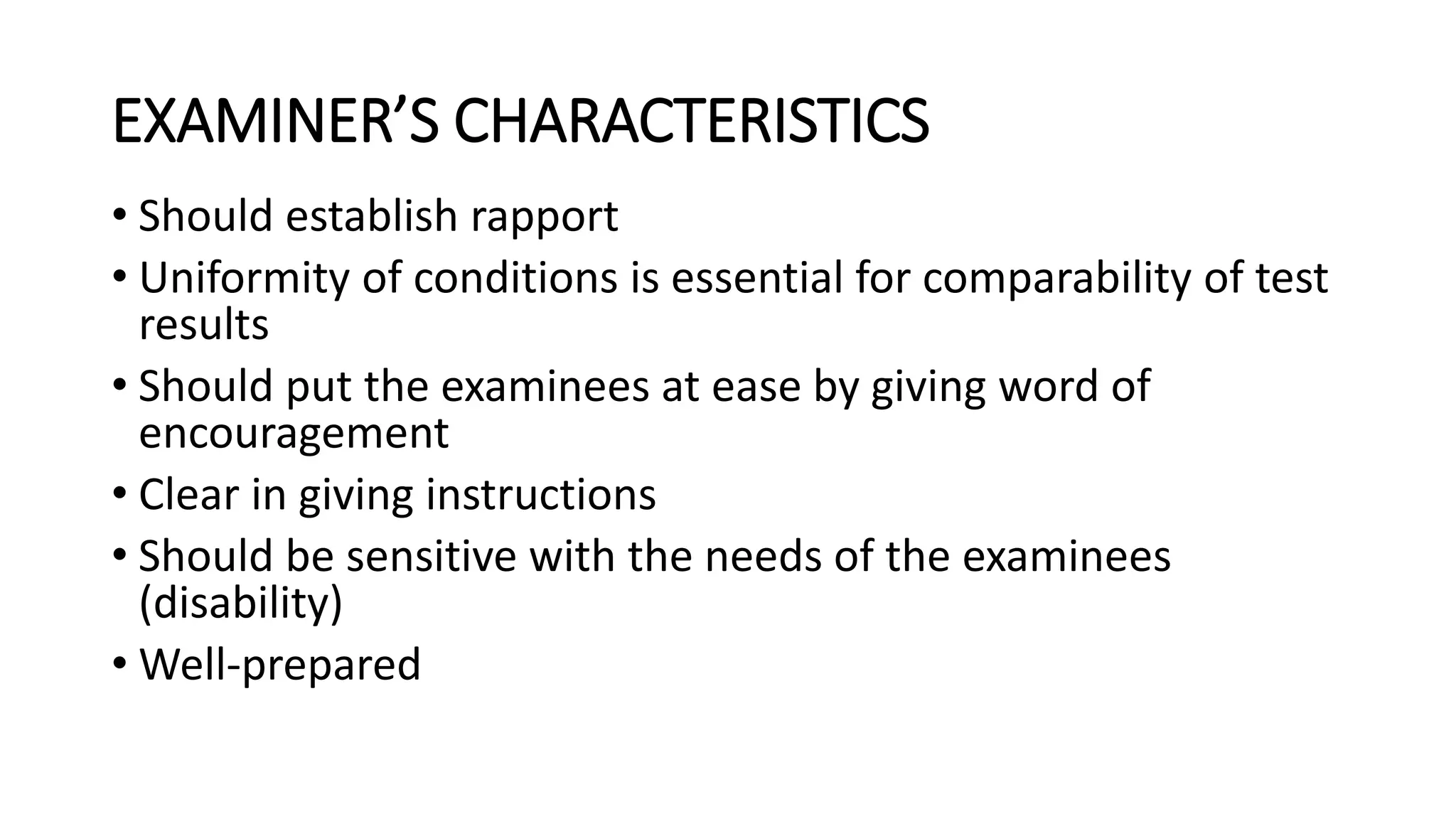
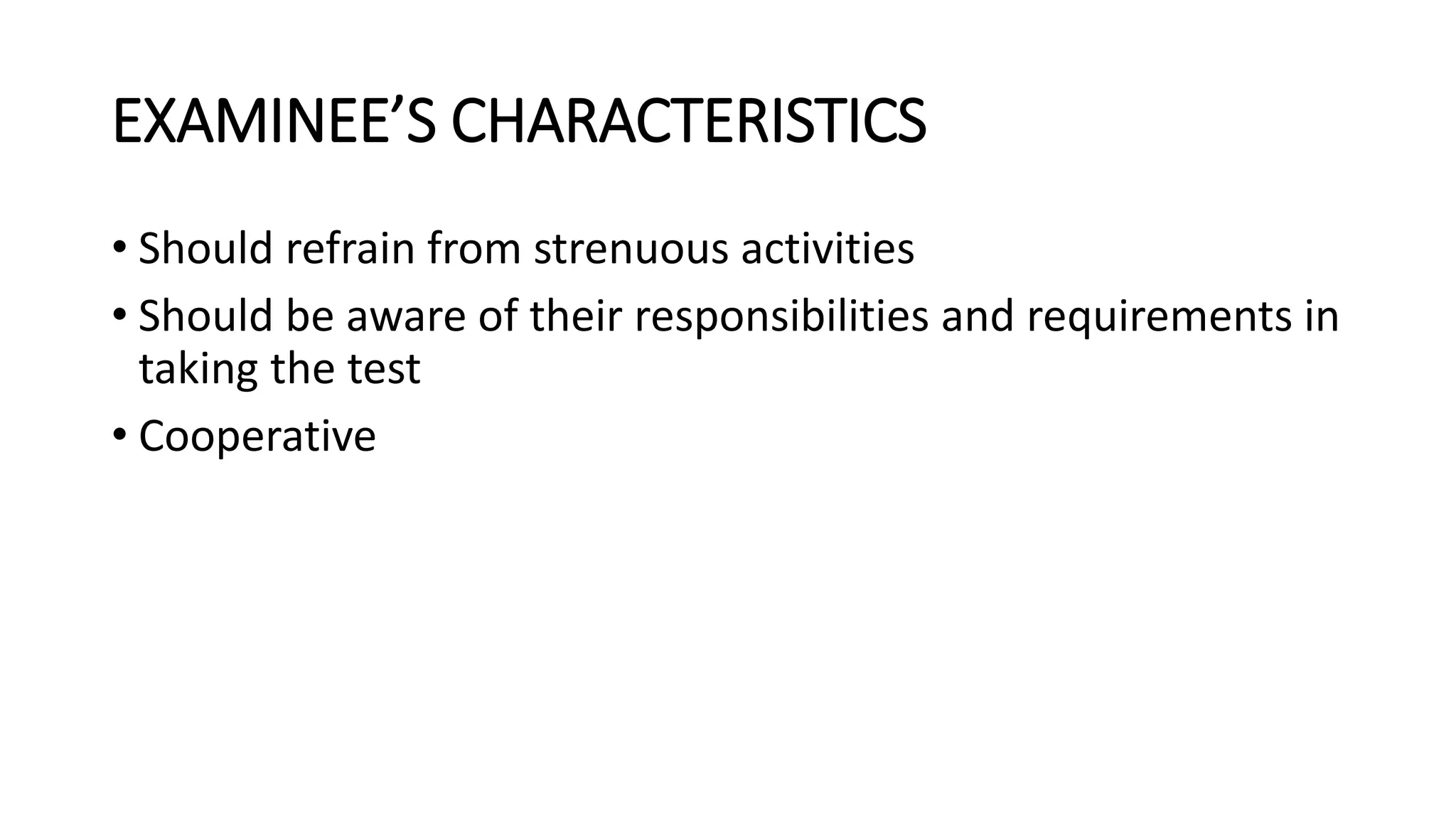
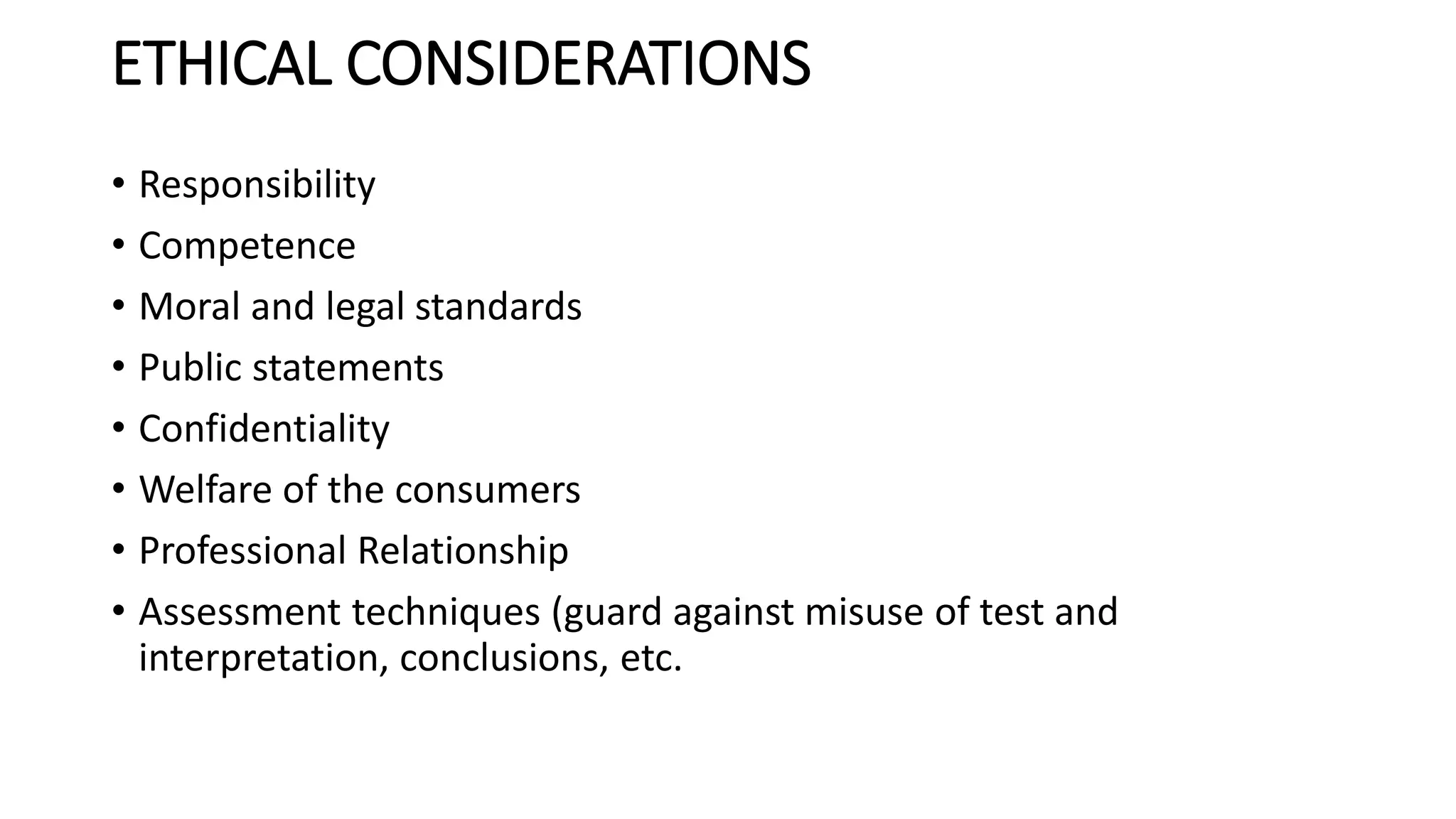

The document discusses test administration and ethical principles. It outlines the rationale for testing as generalizing behavior from a testing sample to predict behavior in non-test situations. It also discusses ideal testing conditions including a distraction-free room, prepared materials, and standardized answer sheets. The use of computers for test administration is described for designing individualized tests, interpreting results, generating reports, and presenting multimedia stimuli. While computers provide standardization, individualized administration, and precision, they are a poor substitute for psychological assessments and computer-generated reports and interpretations are rarely validated. The document stresses the importance of examiner and examinee characteristics and considerations like competence, confidentiality, and guarding against misuse when conducting assessments.


![Norms[1]](https://cdn.slidesharecdn.com/ss_thumbnails/norms1-110821093015-phpapp01-thumbnail.jpg?width=640&height=640&fit=bounds)


![Ethics[1]](https://cdn.slidesharecdn.com/ss_thumbnails/ethics1-110821092828-phpapp01-thumbnail.jpg?width=640&height=640&fit=bounds)


