

Common Factors Approach
to Counselling and Psychotherapy
2007
Forrest James and Chris Lobsinger
We are fundamentally the same
but culturally influenced.
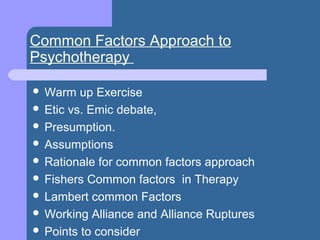
Common Factors Approach to
Psychotherapy
 Warm up Exercise
 Etic vs. Emic debate,
 Presumption.
 Assumptions
 Rationale for common factors approach
 Fishers Common factors in Therapy
 Lambert common Factors
 Working Alliance and Alliance Ruptures
 Points to consider
Warm Up Exercise
 In small groups
 Two stories each
 One about a time when cultural information was
helpful to you in your work.
 One where cultural information was unhelpful to you
in your work.
 Discuss in the large group
Etic vs. Emic debate
 Etic: approaches to counselling and
psychology cultural generalisable or
universal.
 Emic: Approaches to counselling and
psychology are designed to be culturally
specific relative.
The Old Presumption
 That the efficacy of a particular approach to therapy
is due to the unique aspects of that therapy.
 Psychoanalytic - Interpretations
 CBT – Modifications of cognitions
 EMDR- Eye movements
 Narrative therapy- Externalization
 Gestalt- Empty chair
The New Assumption
The common factors found in
conventional psychotherapy
and in healing across cultures
can serve as a framework for
multicultural counselling.
The New Rationale
The curative properties of a
given psychotherapy lie not in
its unique components but in
common components shared
by all psychotherapies.
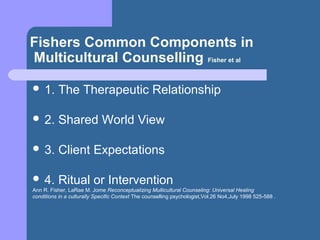
Fishers Common Components in
Multicultural Counselling Fisher et al
 1. The Therapeutic Relationship
 2. Shared World View
 3. Client Expectations
 4. Ritual or Intervention
Ann R. Fisher, LaRae M. Jome Reconceptualizing Multicultural Counseling: Universal Healing
conditions in a culturally Specific Context The counselling psychologist,Vol.26 No4,July 1998 525-588 .
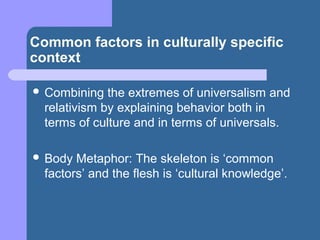
Common factors in culturally specific
context
 Combining the extremes of universalism and
relativism by explaining behavior both in
terms of culture and in terms of universals.
 Body Metaphor: The skeleton is ‘common
factors’ and the flesh is ‘cultural knowledge’.
Lamberts Common Factors
Lambert,M.J.&Bergan,A.E.1994 The effectiveness of psychotherapy. In A.E.Bergin & S.L.
Garfield (eds) Handbook of psychotherapy and behavior change (pp.143-189)new York:
Wiley
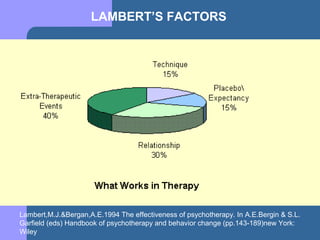
LAMBERT’S FACTORS
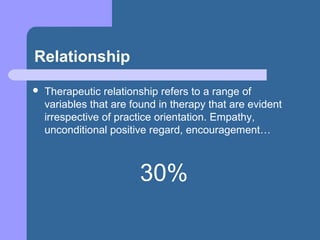
Relationship
 Therapeutic relationship refers to a range of
variables that are found in therapy that are evident
irrespective of practice orientation. Empathy,
unconditional positive regard, encouragement…
30%
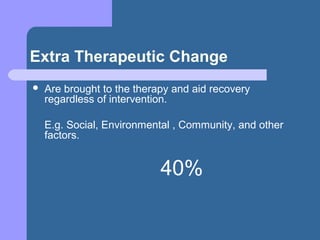
Extra Therapeutic Change
 Are brought to the therapy and aid recovery
regardless of intervention.
E.g. Social, Environmental , Community, and other
factors.
40%
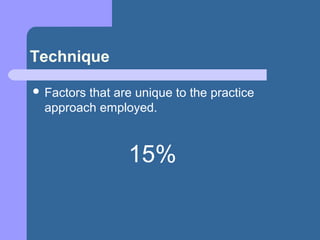
Technique
 Factors that are unique to the practice
approach employed.
15%
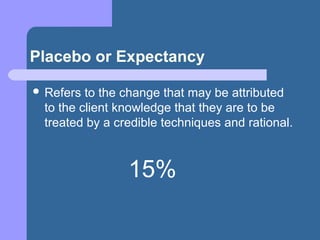
Placebo or Expectancy
 Refers to the change that may be attributed
to the client knowledge that they are to be
treated by a credible techniques and rational.
15%
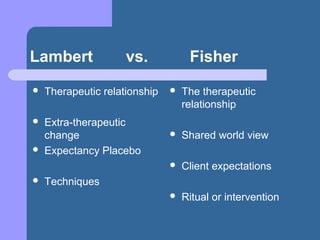
Lambert vs. Fisher
 Therapeutic relationship
 Extra-therapeutic
change
 Expectancy Placebo
 Techniques
 The therapeutic
relationship
 Shared world view
 Client expectations
 Ritual or intervention
Heuristic
(Pertaining to how something is discovered)
How can each of the common
factors be addressed given this
person’s culture and context?
The Therapeutic Relationship
Ethnically match clients (where possible)
The client needs to have confidence in the
therapist’s competence (own your expertise and that of
your culture/training?)
Client must feel that the therapist
genuinely cares
Giving the client a ‘gift’? ( symbolic, educative,)
Use of disclosure?
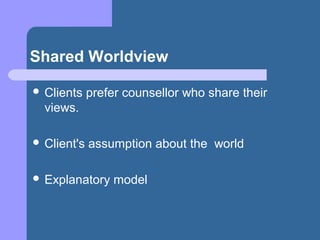
Shared Worldview
 Clients prefer counsellor who share their
views.
 Client's assumption about the world
 Explanatory model
Client Expectations
Increase expectation that
counseling will bring relief.
Expertise and credibility?
‘Gift giving’ (symbolic or educative)
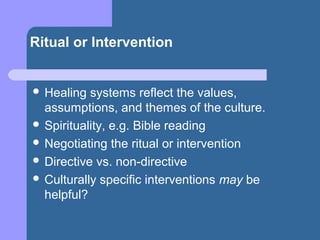
Ritual or Intervention
 Healing systems reflect the values,
assumptions, and themes of the culture.
 Spirituality, e.g. Bible reading
 Negotiating the ritual or intervention
 Directive vs. non-directive
 Culturally specific interventions may be
helpful?
Working Alliance (3 Dimensions)
1. Bond – the relational aspect of the alliance; sense of
connection, understanding, respect, caring and trust.
– Absolutely necessary but not sufficient
2. Goals – overall purpose direction and specific
changes sought.
3. Tasks – the respective roles and responsibilities of
the client and therapist in working toward these goals
(within and outside the session)
 Bordin 1979
“Good working alliance is the best indictor of positive outcome in
counselling”
Alliance Ruptures
 Ruptures are inevitable
 ‘Tear and Repair’ rule:
– Capacity to negotiate and repair ruptures is an
essential therapeutic task – some would say the
primary therapeutic task
(Safran and Muran 2000)
 Identifying rupture markers is indispensable
for this task.
Alliance Ruptures
 Ruptures are marked by subtle shifts in the client’s
affect and behavior and can be divided into:
1. Withdrawal markers – characterized by indirect
communication of negative feelings, surface
compliance, distancing, and avoidance because the
client is partially disengaging with from the therapist,
one’s feelings, or part of the therapy process.
– Withdrawals may be more difficult to identify than
confrontations due to the indirect nature of the
communication from the client and because they may not
evoke a strong reaction in the therapist.
Alliance Ruptures
2. Confrontation markers – characterized by
overt expressions of negative feelings toward
the therapist and overt expression of
disagreements about the goals and tasks of
therapy.
NB – Specific training on Alliance Ruptures will
be part of next quarterly training.
Points to Consider
 Use of culturally specific information can be helpful
or harmful.
 Stereotypes are natural but inadequate
 Culture is not always right.
 Behavior is meaningless outside of cultural context
Points to consider
 Expert insider vs. Interested outsider
 Uncertainty is the hallmark of cross-cultural work
 Cross-cultural work is not a special branch of
counselling only a more aware approach which takes
less for granted.
EXCERCISE
 In group of three take turns discussing.
 Each person consider a case where one of
fishers factors could have been used to
better effect? And How you might have done
this.
References
Ann R. Fisher, LaRae M. Jome Reconceptualizing Multicultural
Counseling: Universal Healing
conditions in a culturally Specific Context The counselling
psychologist,Vol.26 No4,July 1998 525-588
Lambert,M.J.&Bergan,A.E.1994 The effectiveness of psychotherapy. In
A.E.Bergin & S.L. Garfield (eds) Handbook of psychotherapy and
behavior change (pp.143-189)new York: Wiley
Mark A. Hubble Barry L. Duncan Scott D. Miller, The Heart and Soul of
Change, What works in
Therapy Copywright 1999

Common factors approach

  • 1.
    Common Factors Approach toCounselling and Psychotherapy 2007 Forrest James and Chris Lobsinger
  • 2.
    We are fundamentallythe same but culturally influenced.
  • 3.
    Common Factors Approachto Psychotherapy  Warm up Exercise  Etic vs. Emic debate,  Presumption.  Assumptions  Rationale for common factors approach  Fishers Common factors in Therapy  Lambert common Factors  Working Alliance and Alliance Ruptures  Points to consider
  • 4.
    Warm Up Exercise In small groups  Two stories each  One about a time when cultural information was helpful to you in your work.  One where cultural information was unhelpful to you in your work.  Discuss in the large group
  • 5.
    Etic vs. Emicdebate  Etic: approaches to counselling and psychology cultural generalisable or universal.  Emic: Approaches to counselling and psychology are designed to be culturally specific relative.
  • 6.
    The Old Presumption That the efficacy of a particular approach to therapy is due to the unique aspects of that therapy.  Psychoanalytic - Interpretations  CBT – Modifications of cognitions  EMDR- Eye movements  Narrative therapy- Externalization  Gestalt- Empty chair
  • 7.
    The New Assumption Thecommon factors found in conventional psychotherapy and in healing across cultures can serve as a framework for multicultural counselling.
  • 8.
    The New Rationale Thecurative properties of a given psychotherapy lie not in its unique components but in common components shared by all psychotherapies.
  • 9.
    Fishers Common Componentsin Multicultural Counselling Fisher et al  1. The Therapeutic Relationship  2. Shared World View  3. Client Expectations  4. Ritual or Intervention Ann R. Fisher, LaRae M. Jome Reconceptualizing Multicultural Counseling: Universal Healing conditions in a culturally Specific Context The counselling psychologist,Vol.26 No4,July 1998 525-588 .
  • 10.
    Common factors inculturally specific context  Combining the extremes of universalism and relativism by explaining behavior both in terms of culture and in terms of universals.  Body Metaphor: The skeleton is ‘common factors’ and the flesh is ‘cultural knowledge’.
  • 11.
    Lamberts Common Factors Lambert,M.J.&Bergan,A.E.1994The effectiveness of psychotherapy. In A.E.Bergin & S.L. Garfield (eds) Handbook of psychotherapy and behavior change (pp.143-189)new York: Wiley LAMBERT’S FACTORS
  • 12.
    Relationship  Therapeutic relationshiprefers to a range of variables that are found in therapy that are evident irrespective of practice orientation. Empathy, unconditional positive regard, encouragement… 30%
  • 13.
    Extra Therapeutic Change Are brought to the therapy and aid recovery regardless of intervention. E.g. Social, Environmental , Community, and other factors. 40%
  • 14.
    Technique  Factors thatare unique to the practice approach employed. 15%
  • 15.
    Placebo or Expectancy Refers to the change that may be attributed to the client knowledge that they are to be treated by a credible techniques and rational. 15%
  • 16.
    Lambert vs. Fisher Therapeutic relationship  Extra-therapeutic change  Expectancy Placebo  Techniques  The therapeutic relationship  Shared world view  Client expectations  Ritual or intervention
  • 17.
    Heuristic (Pertaining to howsomething is discovered) How can each of the common factors be addressed given this person’s culture and context?
  • 18.
    The Therapeutic Relationship Ethnicallymatch clients (where possible) The client needs to have confidence in the therapist’s competence (own your expertise and that of your culture/training?) Client must feel that the therapist genuinely cares Giving the client a ‘gift’? ( symbolic, educative,) Use of disclosure?
  • 19.
    Shared Worldview  Clientsprefer counsellor who share their views.  Client's assumption about the world  Explanatory model
  • 20.
    Client Expectations Increase expectationthat counseling will bring relief. Expertise and credibility? ‘Gift giving’ (symbolic or educative)
  • 21.
    Ritual or Intervention Healing systems reflect the values, assumptions, and themes of the culture.  Spirituality, e.g. Bible reading  Negotiating the ritual or intervention  Directive vs. non-directive  Culturally specific interventions may be helpful?
  • 22.
    Working Alliance (3Dimensions) 1. Bond – the relational aspect of the alliance; sense of connection, understanding, respect, caring and trust. – Absolutely necessary but not sufficient 2. Goals – overall purpose direction and specific changes sought. 3. Tasks – the respective roles and responsibilities of the client and therapist in working toward these goals (within and outside the session)  Bordin 1979 “Good working alliance is the best indictor of positive outcome in counselling”
  • 23.
    Alliance Ruptures  Rupturesare inevitable  ‘Tear and Repair’ rule: – Capacity to negotiate and repair ruptures is an essential therapeutic task – some would say the primary therapeutic task (Safran and Muran 2000)  Identifying rupture markers is indispensable for this task.
  • 24.
    Alliance Ruptures  Rupturesare marked by subtle shifts in the client’s affect and behavior and can be divided into: 1. Withdrawal markers – characterized by indirect communication of negative feelings, surface compliance, distancing, and avoidance because the client is partially disengaging with from the therapist, one’s feelings, or part of the therapy process. – Withdrawals may be more difficult to identify than confrontations due to the indirect nature of the communication from the client and because they may not evoke a strong reaction in the therapist.
  • 25.
    Alliance Ruptures 2. Confrontationmarkers – characterized by overt expressions of negative feelings toward the therapist and overt expression of disagreements about the goals and tasks of therapy. NB – Specific training on Alliance Ruptures will be part of next quarterly training.
  • 26.
    Points to Consider Use of culturally specific information can be helpful or harmful.  Stereotypes are natural but inadequate  Culture is not always right.  Behavior is meaningless outside of cultural context
  • 27.
    Points to consider Expert insider vs. Interested outsider  Uncertainty is the hallmark of cross-cultural work  Cross-cultural work is not a special branch of counselling only a more aware approach which takes less for granted.
  • 28.
    EXCERCISE  In groupof three take turns discussing.  Each person consider a case where one of fishers factors could have been used to better effect? And How you might have done this.
  • 29.
    References Ann R. Fisher,LaRae M. Jome Reconceptualizing Multicultural Counseling: Universal Healing conditions in a culturally Specific Context The counselling psychologist,Vol.26 No4,July 1998 525-588 Lambert,M.J.&Bergan,A.E.1994 The effectiveness of psychotherapy. In A.E.Bergin & S.L. Garfield (eds) Handbook of psychotherapy and behavior change (pp.143-189)new York: Wiley Mark A. Hubble Barry L. Duncan Scott D. Miller, The Heart and Soul of Change, What works in Therapy Copywright 1999