•


    Motivational Interviewing:
    Who’s Driving the Change?


               Sara Beth Martin, RN, MPH
                  September 19, 2012
Objectives:
   Discuss the general principles of
    Motivational Interviewing.
   Identify communication skills used in
    Motivational Interviewing.
   Identify opportunities for the use of
    Motivational Interviewing in home
    visitation.
What is Motivational
            Interviewing?

   “If you treat an individual as he is, he will stay
    as he is, but if you treat him as if he were
    what he ought to be and could be, he will
    become what he ought to be and could be.” –
    Johann Wolfgang Von Goethe

   http://www.youtube
    .com/watch?v=cj1BDPBE6Wk&feature=player_
    detailpage
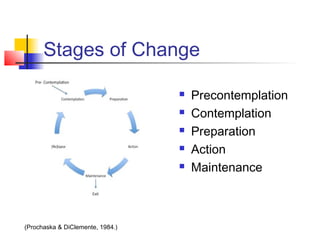
Stages of Change

                                     Precontemplation
                                     Contemplation
                                     Preparation
                                     Action
                                     Maintenance


(Prochaska & DiClemente, 1984.)
The Four General Principles
    of Motivational Interviewing
   Express empathy

   Develop discrepancy

   Roll with resistance

   Support self-efficacy
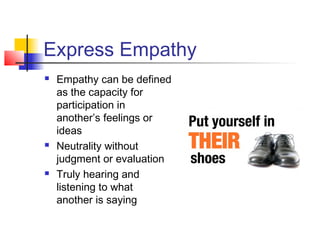
Express Empathy
   Empathy can be defined
    as the capacity for
    participation in
    another’s feelings or
    ideas
   Neutrality without
    judgment or evaluation
   Truly hearing and
    listening to what
    another is saying
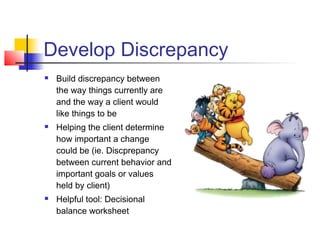
Develop Discrepancy
   Build discrepancy between
    the way things currently are
    and the way a client would
    like things to be
   Helping the client determine
    how important a change
    could be (ie. Discprepancy
    between current behavior and
    important goals or values
    held by client)
   Helpful tool: Decisional
    balance worksheet
Roll With Resistance
   Rolling means
    getting out of the
    way and not
    engaging in it
   Rather than arguing
    against resistance,
    rolling with it and it is
    likely reduced
Support Self-Efficacy
                   One’s belief in his or
                    her ability to carry
                    out a specific act or
                    behavior
                   Critical in MI, as this
                    attitude can make or
                    break an effort for
                    change
                   Assessment of
                    readiness to change
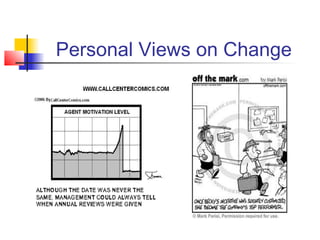
Personal Views on Change
Skills Used in Motivational
                   Interviewing

   Open-ended questions

   Affirmations

   Reflective listening

   Summarizing

   Eliciting change talk
Open-ended Questions
   Open vs. closed
   Allows client to take
    control of the
    direction of the reply
   Active participation
    of client in
    discussion
   Open and
    collaborative tone
Affirmations
                  Genuine, direct
                   statements of
                   support
                  Usually directed at
                   something specific
                   and change-oriented
                  Demonstrate
                   understanding and
                   appreciation
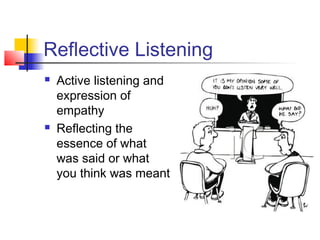
Reflective Listening
   Active listening and
    expression of
    empathy
   Reflecting the
    essence of what
    was said or what
    you think was meant
Summarizing
   Communicates that
    you have followed
    what the client
    shared
   Structure session
    and keep on track
   Emphasize certain
    elements of what
    was said
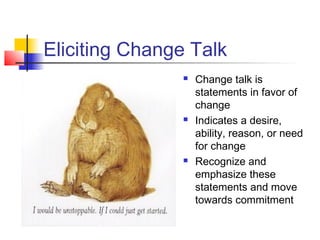
Eliciting Change Talk
                  Change talk is
                   statements in favor of
                   change
                  Indicates a desire,
                   ability, reason, or need
                   for change
                  Recognize and
                   emphasize these
                   statements and move
                   towards commitment
Behavioral Rehearsal
   “Motivation is a fire from within. If
    someone else tries to light that fire
    under you, chances are it will burn very
    briefly.” Stephen R. Covey

   Let’s practice how to apply these skills
    to our work in home visitation.
Behavior Rehearsal and
               Debrief

   Debriefing Questions:
       How did it feel to be interviewed with these
        techniques?
       What examples of the principles and
        methods of MI were used?
       Which techniques seemed to work best?
        What was the most challenging aspect?
Summary and Application
   Although these skills may appear simple, they
    are not always easy to use.
   Mastery requires considerable practice.
   How might you incorporate these into your
    practice to help move your families in the
    direction of positive change?
References
   Boston University School of Public Health. Building Blocks to Peer Success:
    Motivational Interviewing Skills, 2012. Web. 5 Aug 2012.

   Miller, William R and Rollnick, Stephen. Motivational Interviewing Preparing
    People for Change. 2nd ed. New York: Guilford, 2002. Print.
 
   Miller, William R. "Motivational Interviewing William Miller Video Clip." 06 April
    2009. Online video clip. YouTube. Accessed on 6 August 2012.

   NIDA-SAMHSA. Motivational Interviewing Assessment: Supervisory Tools for
    Enhancing Proficiency, 2006. Web. 2 Aug 2012.
   Rollnick, Stephen, Miller, William R, and Butler, Christopher C. Motivational
    Interviewing in Health Care. New York: Guilford, 2008. Print.

   United States Department of Agriculture. WIC Works Resource System:
    Motivational Interviewing, 2012. Web. 6 Aug 2012.

Motivational Interviewing: Who's Driving the Change?

  • 1.
    Motivational Interviewing: Who’s Driving the Change? Sara Beth Martin, RN, MPH September 19, 2012
  • 2.
    Objectives:  Discuss the general principles of Motivational Interviewing.  Identify communication skills used in Motivational Interviewing.  Identify opportunities for the use of Motivational Interviewing in home visitation.
  • 3.
    What is Motivational Interviewing?  “If you treat an individual as he is, he will stay as he is, but if you treat him as if he were what he ought to be and could be, he will become what he ought to be and could be.” – Johann Wolfgang Von Goethe  http://www.youtube .com/watch?v=cj1BDPBE6Wk&feature=player_ detailpage
  • 4.
    Stages of Change  Precontemplation  Contemplation  Preparation  Action  Maintenance (Prochaska & DiClemente, 1984.)
  • 5.
    The Four GeneralPrinciples of Motivational Interviewing  Express empathy  Develop discrepancy  Roll with resistance  Support self-efficacy
  • 6.
    Express Empathy  Empathy can be defined as the capacity for participation in another’s feelings or ideas  Neutrality without judgment or evaluation  Truly hearing and listening to what another is saying
  • 7.
    Develop Discrepancy  Build discrepancy between the way things currently are and the way a client would like things to be  Helping the client determine how important a change could be (ie. Discprepancy between current behavior and important goals or values held by client)  Helpful tool: Decisional balance worksheet
  • 8.
    Roll With Resistance  Rolling means getting out of the way and not engaging in it  Rather than arguing against resistance, rolling with it and it is likely reduced
  • 9.
    Support Self-Efficacy  One’s belief in his or her ability to carry out a specific act or behavior  Critical in MI, as this attitude can make or break an effort for change  Assessment of readiness to change
  • 10.
  • 11.
    Skills Used inMotivational Interviewing  Open-ended questions  Affirmations  Reflective listening  Summarizing  Eliciting change talk
  • 12.
    Open-ended Questions  Open vs. closed  Allows client to take control of the direction of the reply  Active participation of client in discussion  Open and collaborative tone
  • 13.
    Affirmations  Genuine, direct statements of support  Usually directed at something specific and change-oriented  Demonstrate understanding and appreciation
  • 14.
    Reflective Listening  Active listening and expression of empathy  Reflecting the essence of what was said or what you think was meant
  • 15.
    Summarizing  Communicates that you have followed what the client shared  Structure session and keep on track  Emphasize certain elements of what was said
  • 16.
    Eliciting Change Talk  Change talk is statements in favor of change  Indicates a desire, ability, reason, or need for change  Recognize and emphasize these statements and move towards commitment
  • 17.
    Behavioral Rehearsal  “Motivation is a fire from within. If someone else tries to light that fire under you, chances are it will burn very briefly.” Stephen R. Covey  Let’s practice how to apply these skills to our work in home visitation.
  • 18.
    Behavior Rehearsal and Debrief  Debriefing Questions:  How did it feel to be interviewed with these techniques?  What examples of the principles and methods of MI were used?  Which techniques seemed to work best? What was the most challenging aspect?
  • 19.
    Summary and Application  Although these skills may appear simple, they are not always easy to use.  Mastery requires considerable practice.  How might you incorporate these into your practice to help move your families in the direction of positive change?
  • 20.
    References  Boston University School of Public Health. Building Blocks to Peer Success: Motivational Interviewing Skills, 2012. Web. 5 Aug 2012.  Miller, William R and Rollnick, Stephen. Motivational Interviewing Preparing People for Change. 2nd ed. New York: Guilford, 2002. Print.    Miller, William R. "Motivational Interviewing William Miller Video Clip." 06 April 2009. Online video clip. YouTube. Accessed on 6 August 2012.  NIDA-SAMHSA. Motivational Interviewing Assessment: Supervisory Tools for Enhancing Proficiency, 2006. Web. 2 Aug 2012.  Rollnick, Stephen, Miller, William R, and Butler, Christopher C. Motivational Interviewing in Health Care. New York: Guilford, 2008. Print.  United States Department of Agriculture. WIC Works Resource System: Motivational Interviewing, 2012. Web. 6 Aug 2012.