Working with Adults with FASD
to Prevent FASD
Wissick & Rife, October 2017
 Sounds easy right, no alcohol for 9 months.
 Problems
 Studies are misquoted in the media – recent reports
about little evidence regarding effects of occasional
drink was interpreted as it’s ok to have an
occasional drink
 Physicians still tell patients it is ok to have a drink
 Mothers who did drink can have a healthy child
 Why take the risk?
Preventing FASD
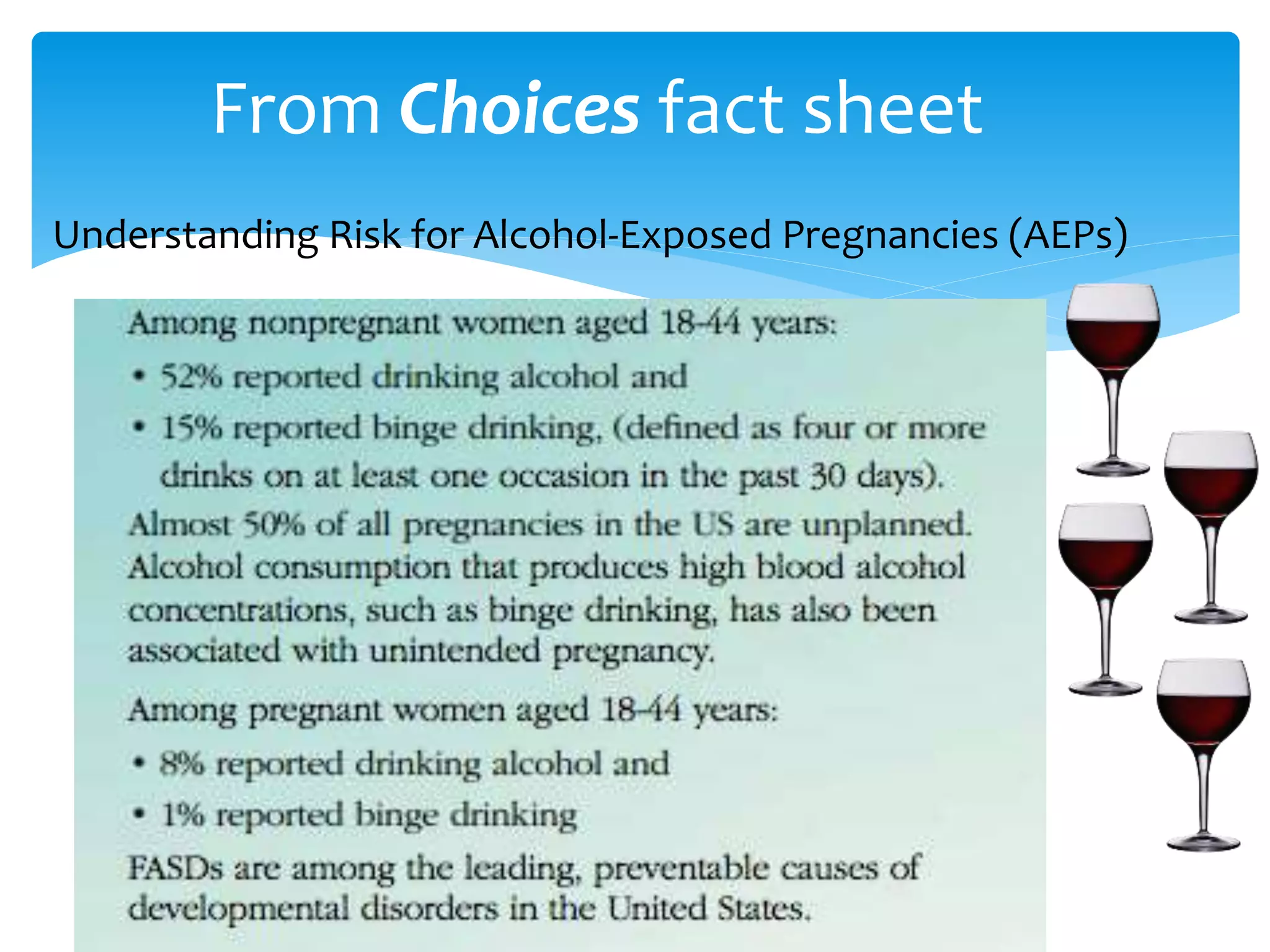
From Choices fact sheet
Understanding Risk for Alcohol-Exposed Pregnancies (AEPs)
 Reactive attachment disorder
 ADHD
 Oppositional defiant
 BiPolar Disorder NOS
 Cognitive Disorder NOS
 Depressive Disorder NOS
 Personality Disorder, Mixed with Borderline
Antisocial and Schizotypal features
 Conduct Disorder, Disruptive Behavior
FASD- collect Diagnoses
can be difficult clients
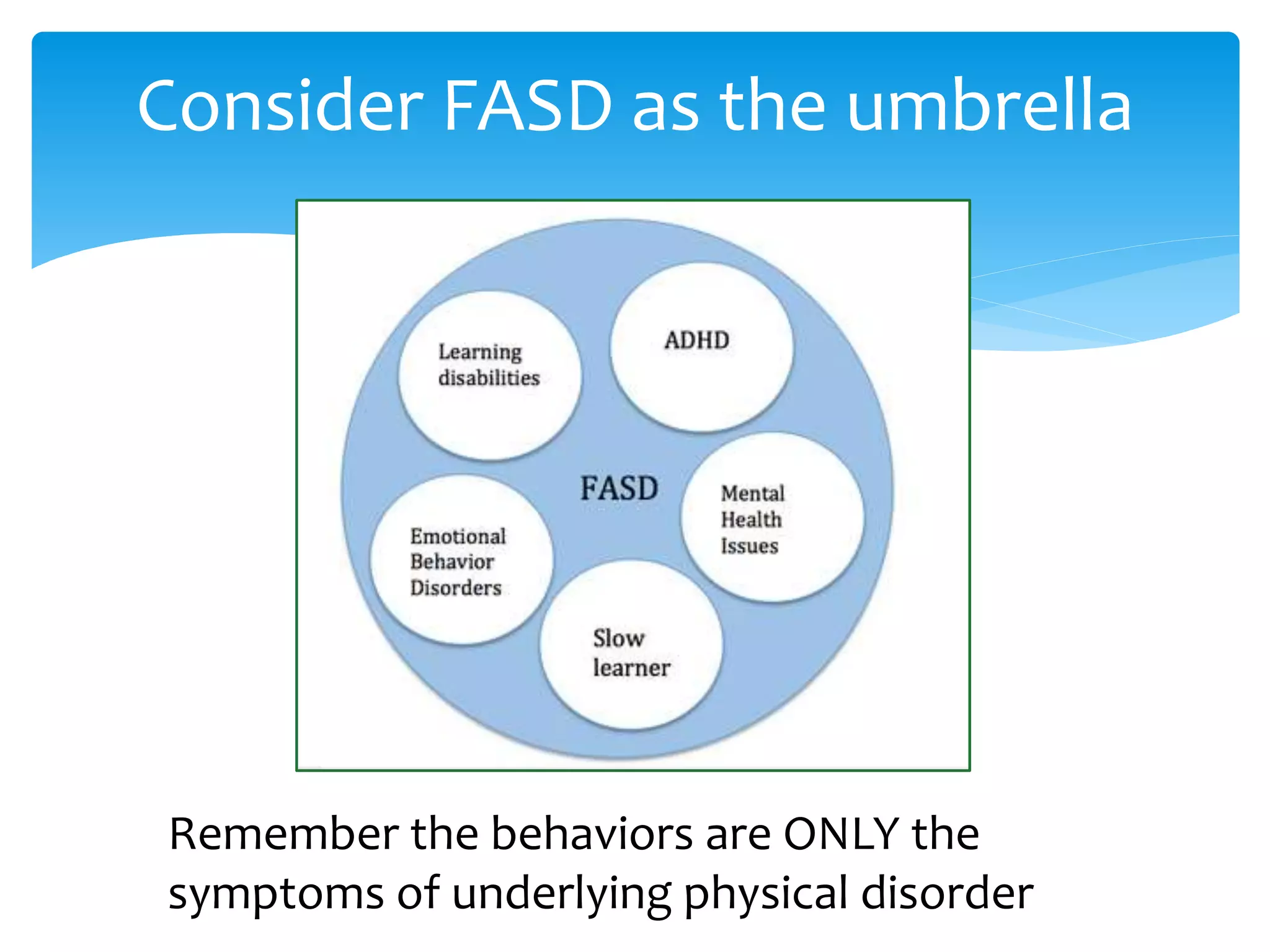
Consider FASD as the umbrella
Remember the behaviors are ONLY the
symptoms of underlying physical disorder
 Show significant cognitive, behavioral,
health, and learning disabilities,
 Problems with memory and attention,
 Lack cause and effect reasoning,
 Act impulsively, and
 Have receptive language and adaptive
functioning difficulties
 Rarely diagnosed as an adult
Regardless of Label lifelong difficulties
 Important for tailoring treatment and future
prevention
 Are labeled as neglectful, uncaring or sabotaging
 Might end up repeating behaviors – multiple
pregnancies
 Have children removed from their care
 Fail to follow through-- multiple directions
 Lose parental rights
FASD Screening for Caregivers
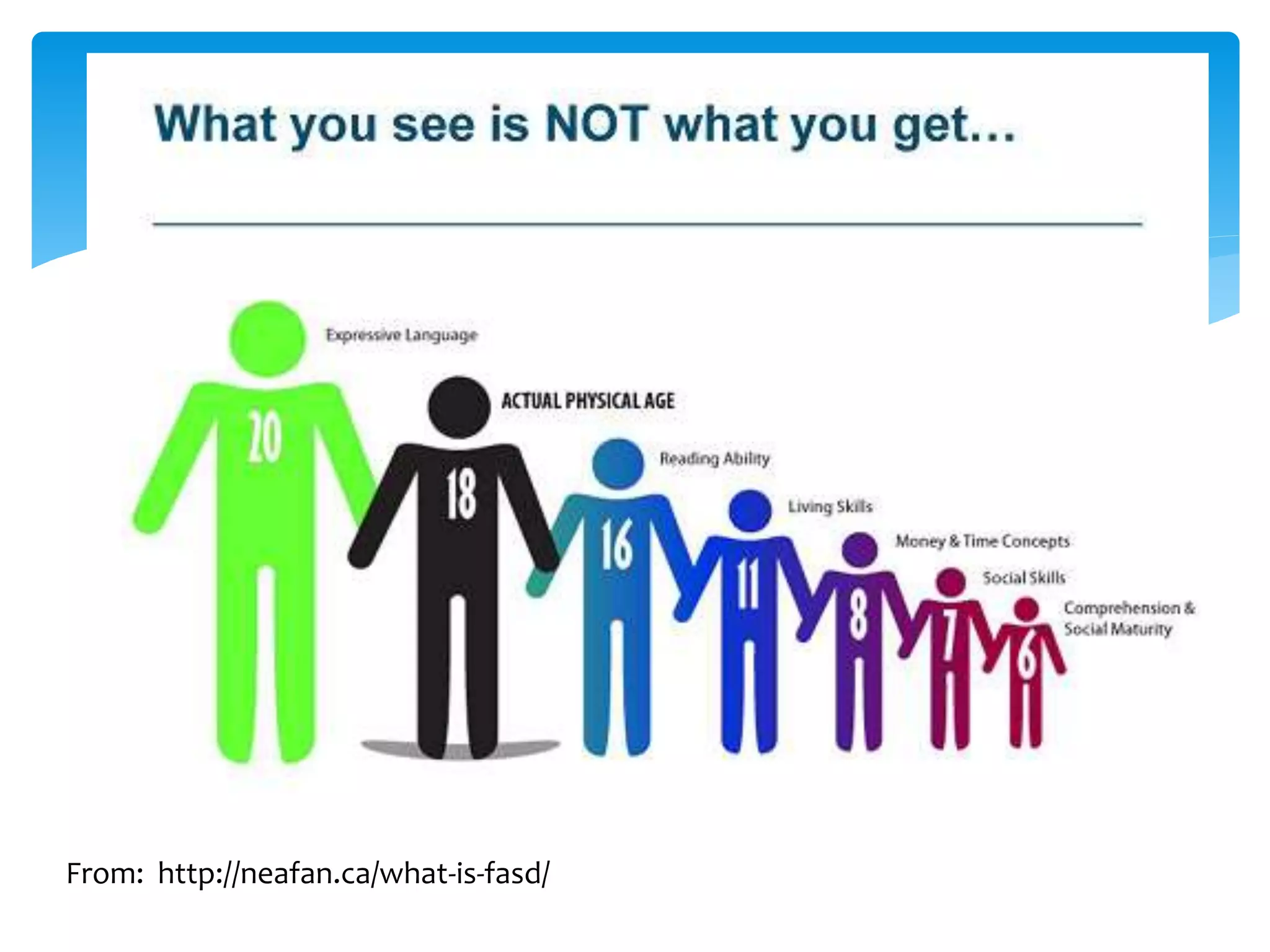
From: http://neafan.ca/what-is-fasd/
Be aware of FASD
Person centered approach
Focus on strengths
Principles of working with FASD
 CHOICES- CDC funded program for non-pregnant
women at risk
 Screening and Brief Intervention
 Parent-Child Assistance Program – a 3 year case
management model
 ACOG Toolkit
 American Academy of Pediatrics toolkit
 Association of Reproductive Health Professionals
Available tools for Prevention
 Rutman, D. (2016). Becoming FASD Informed:
Strengthening Practice and Programs Working with
Women with FASD. Substance Abuse: Research and
Treatment, 10(Suppl 1), 13–20.
http://doi.org/10.4137/SART.S34543
 Gelb, K. & Rutman, D. (2011). Substance Using Women
with FASD and FASD Prevention: A Literature Review on
Promising Approaches in Substance Use Treatment and
Care for Women with FASD. Victoria, BC: University of
Victoria
Substance Using Women with FASD
and FASD Prevention
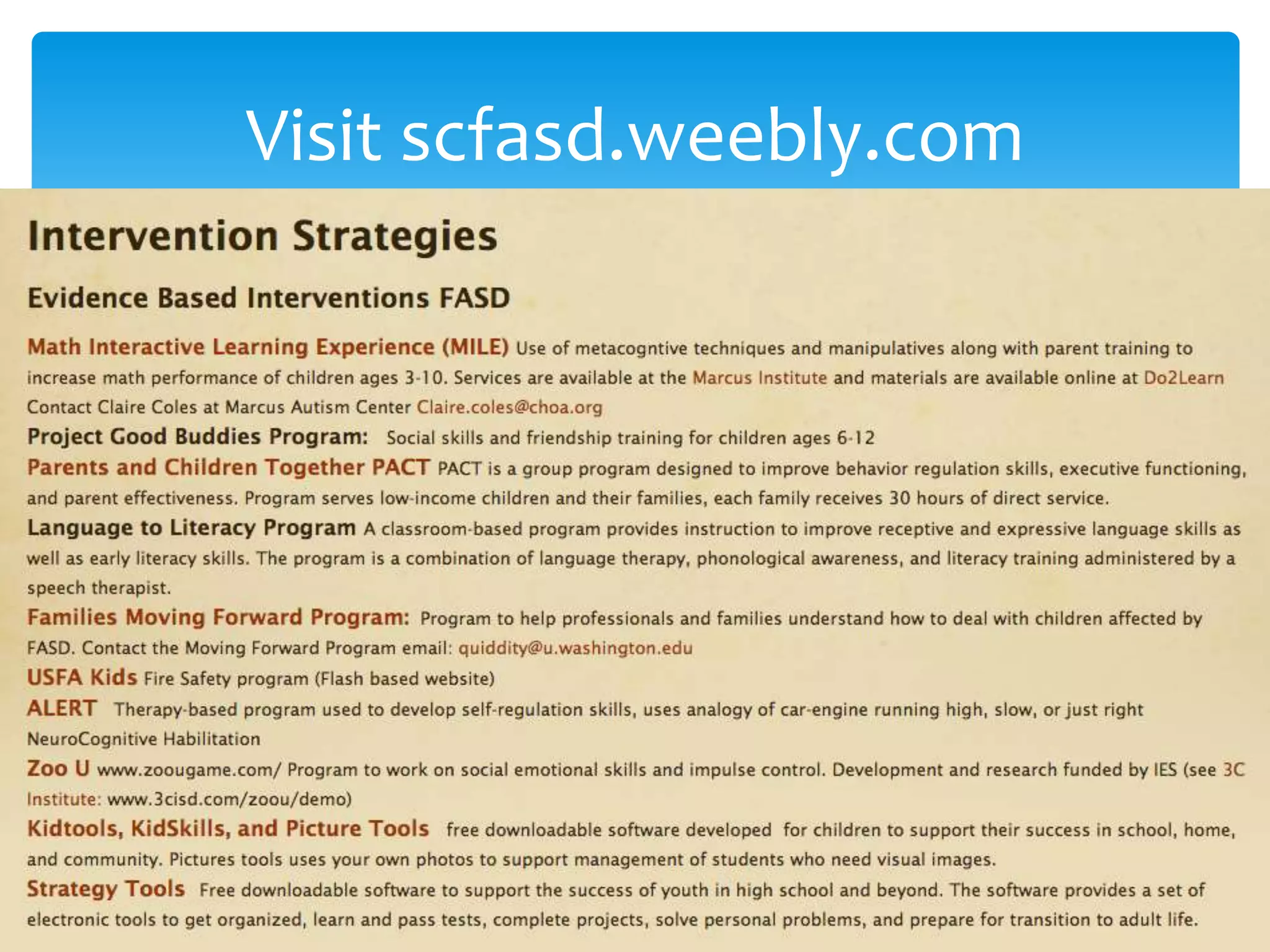
Visit scfasd.weebly.com
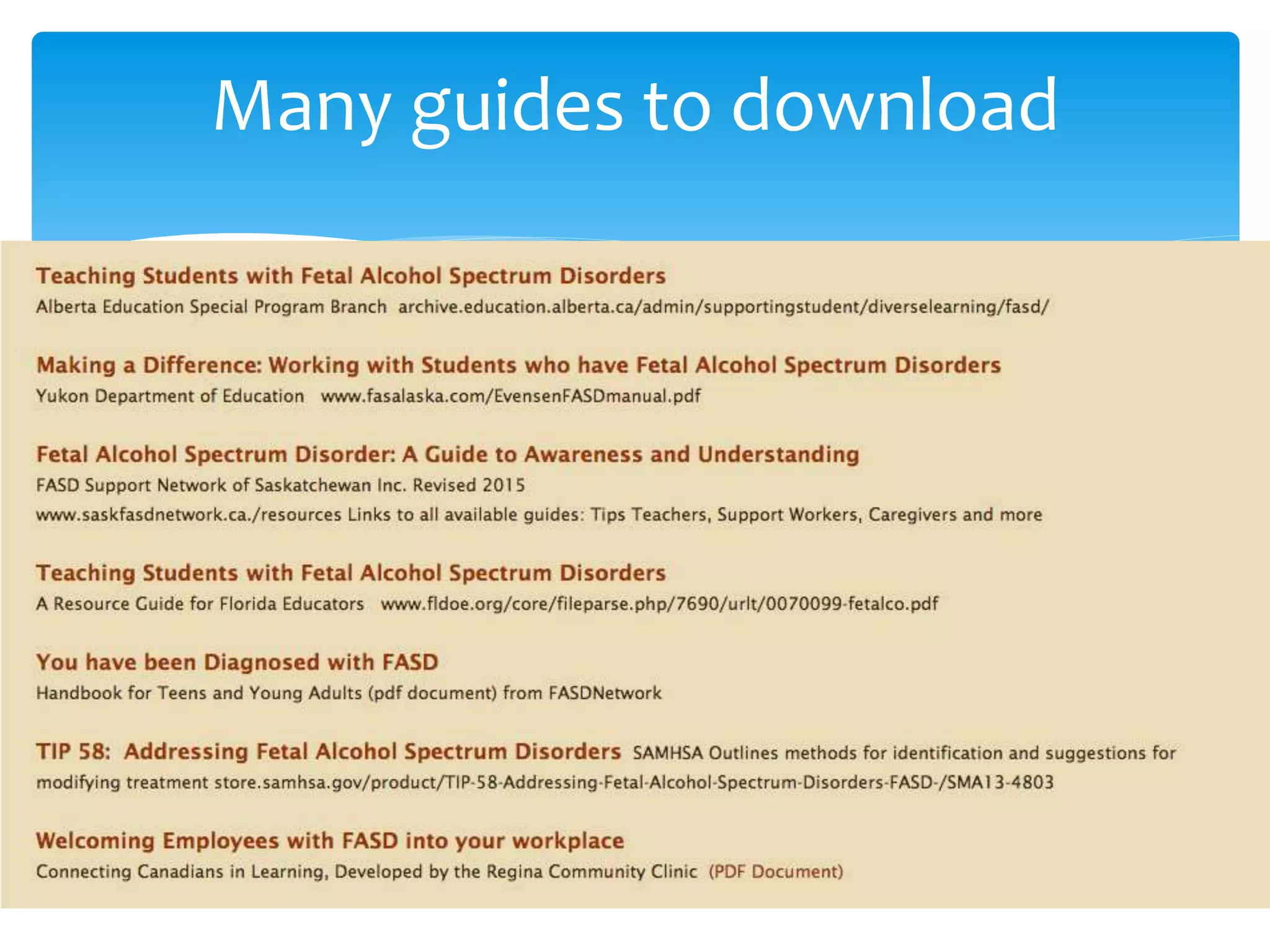
Many guides to download
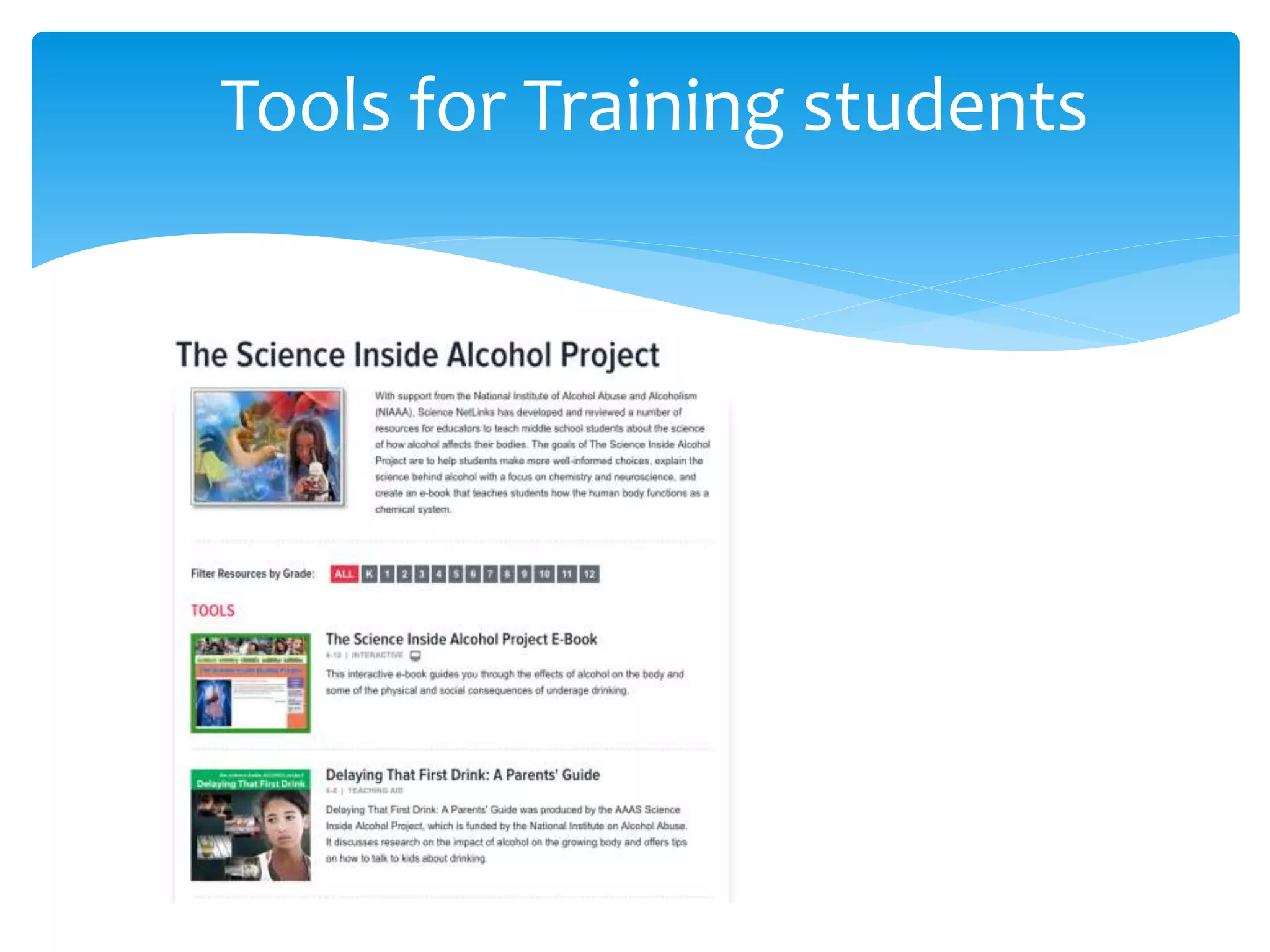
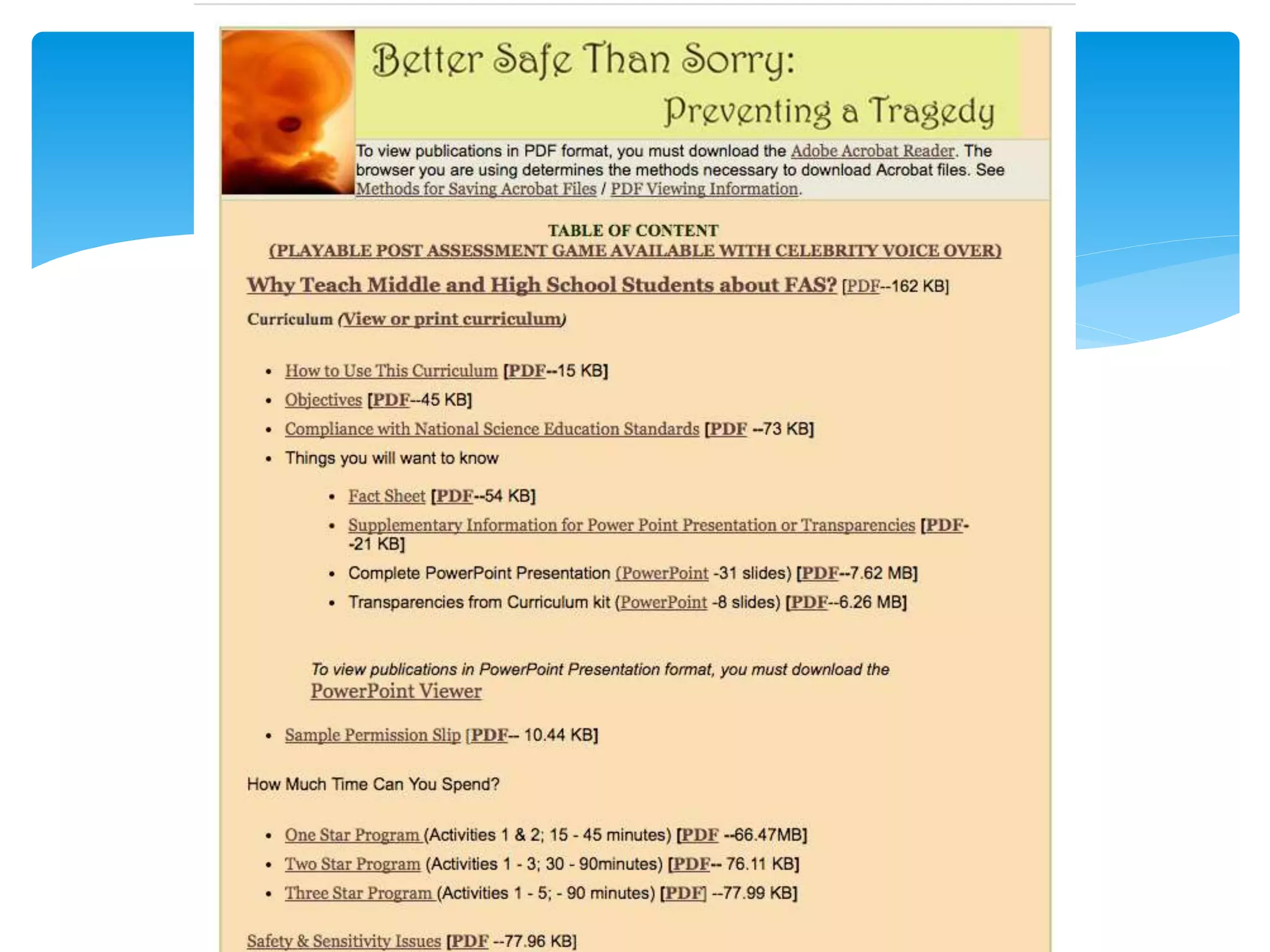
Tools for Training students
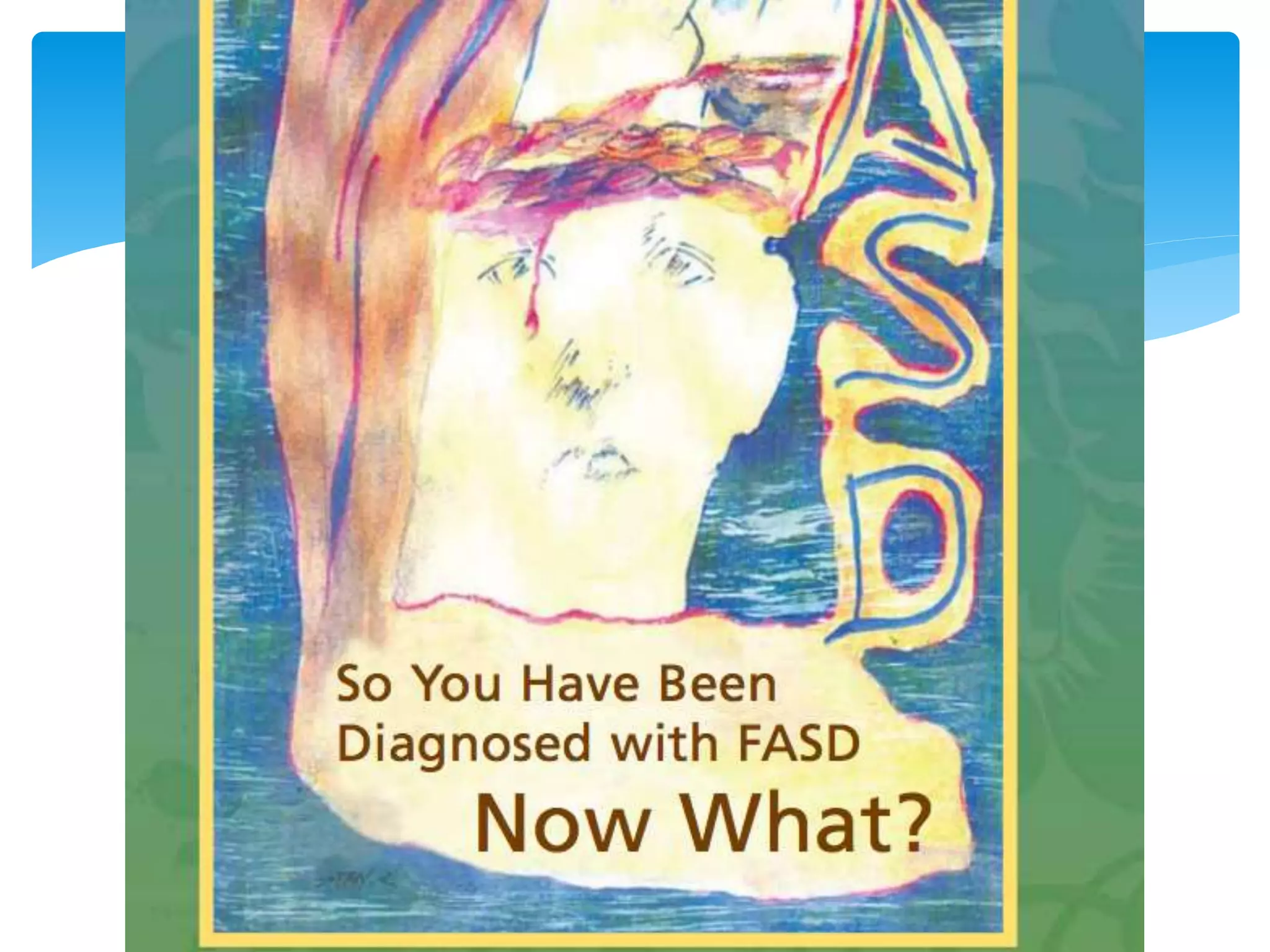
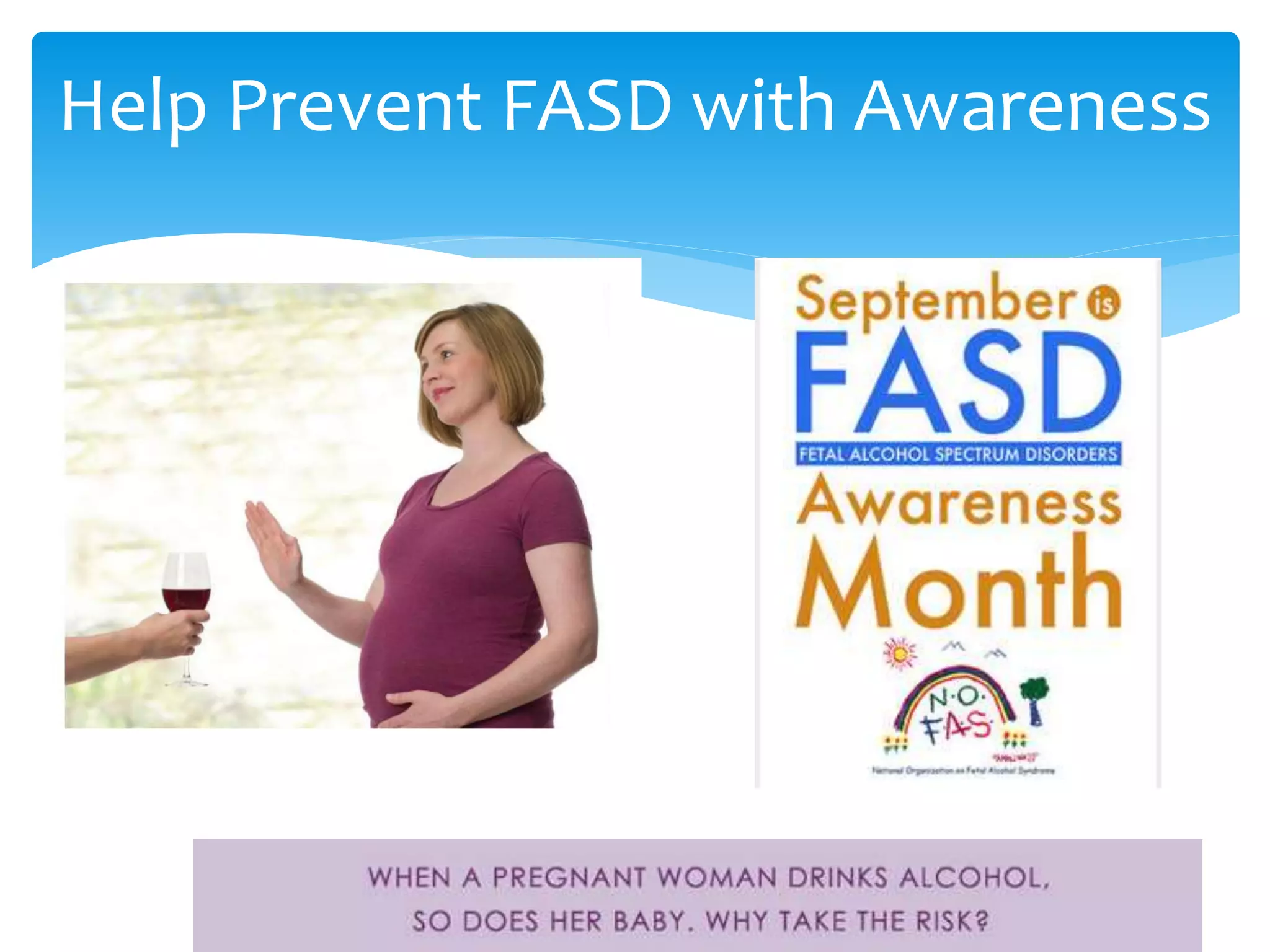
Help Prevent FASD with Awareness

Working with Adults with FASD to Prevent FASD

  • 1.
    Working with Adultswith FASD to Prevent FASD Wissick & Rife, October 2017
  • 2.
     Sounds easyright, no alcohol for 9 months.  Problems  Studies are misquoted in the media – recent reports about little evidence regarding effects of occasional drink was interpreted as it’s ok to have an occasional drink  Physicians still tell patients it is ok to have a drink  Mothers who did drink can have a healthy child  Why take the risk? Preventing FASD
  • 3.
    From Choices factsheet Understanding Risk for Alcohol-Exposed Pregnancies (AEPs)
  • 4.
     Reactive attachmentdisorder  ADHD  Oppositional defiant  BiPolar Disorder NOS  Cognitive Disorder NOS  Depressive Disorder NOS  Personality Disorder, Mixed with Borderline Antisocial and Schizotypal features  Conduct Disorder, Disruptive Behavior FASD- collect Diagnoses can be difficult clients
  • 5.
    Consider FASD asthe umbrella Remember the behaviors are ONLY the symptoms of underlying physical disorder
  • 6.
     Show significantcognitive, behavioral, health, and learning disabilities,  Problems with memory and attention,  Lack cause and effect reasoning,  Act impulsively, and  Have receptive language and adaptive functioning difficulties  Rarely diagnosed as an adult Regardless of Label lifelong difficulties
  • 7.
     Important fortailoring treatment and future prevention  Are labeled as neglectful, uncaring or sabotaging  Might end up repeating behaviors – multiple pregnancies  Have children removed from their care  Fail to follow through-- multiple directions  Lose parental rights FASD Screening for Caregivers
  • 8.
  • 9.
    Be aware ofFASD Person centered approach Focus on strengths Principles of working with FASD
  • 10.
     CHOICES- CDCfunded program for non-pregnant women at risk  Screening and Brief Intervention  Parent-Child Assistance Program – a 3 year case management model  ACOG Toolkit  American Academy of Pediatrics toolkit  Association of Reproductive Health Professionals Available tools for Prevention
  • 11.
     Rutman, D.(2016). Becoming FASD Informed: Strengthening Practice and Programs Working with Women with FASD. Substance Abuse: Research and Treatment, 10(Suppl 1), 13–20. http://doi.org/10.4137/SART.S34543  Gelb, K. & Rutman, D. (2011). Substance Using Women with FASD and FASD Prevention: A Literature Review on Promising Approaches in Substance Use Treatment and Care for Women with FASD. Victoria, BC: University of Victoria Substance Using Women with FASD and FASD Prevention
  • 12.
  • 13.
  • 15.
  • 17.
    Help Prevent FASDwith Awareness