
Relapse Prevention
HATEM ABD AL-RAHMAN
An Overview of
Cognitive behavioural therapy
CBT is a TALKING THERAPY that can help to
MANAGE problems by changing the way of
THINKING and BEHAVING
National Health Service
(NHS)
UK
Cognitive behavioural therapy
CBT is based on the theory that most
EMOTIONAL and BEHAVIORAL reactions are
LEARNED and that new ways of reacting and
behaving can be LEARNED
Center for Substance Abuse Treatment (CSAT)
Substance Abuse: Clinical Issues in Intensive Outpatient Treatment
Treatment Improvement Protocol (TIP) Series 47
Relapse Prevention
RP is a COGNITIVE BEHAVIORAL APPROACH with
the goal of IDENTIFYING and ADDRESSING HIGH-
RISK SITUATIONS for relapse, and ASSISTING
individuals in MAINTAINING desired behavioral
CHANGES
Dennis C. Daley ■ G. Alan Marlatt ■ Antoine Douaihy
Lowinson and Ruiz’s Substance Abuse
A comprehensive textbook.—5th ed.
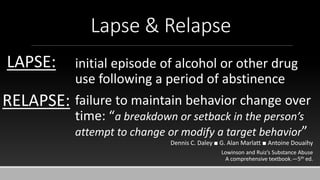
Lapse & Relapse
initial episode of alcohol or other drug
use following a period of abstinence
failure to maintain behavior change over
time: “a breakdown or setback in the person’s
attempt to change or modify a target behavior”
Dennis C. Daley ■ G. Alan Marlatt ■ Antoine Douaihy
Lowinson and Ruiz’s Substance Abuse
A comprehensive textbook.—5th ed.
LAPSE:
RELAPSE:
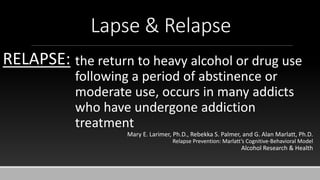
Lapse & Relapse
the return to heavy alcohol or drug use
following a period of abstinence or
moderate use, occurs in many addicts
who have undergone addiction
treatment
Mary E. Larimer, Ph.D., Rebekka S. Palmer, and G. Alan Marlatt, Ph.D.
Relapse Prevention: Marlatt’s Cognitive-Behavioral Model
Alcohol Research & Health
RELAPSE:
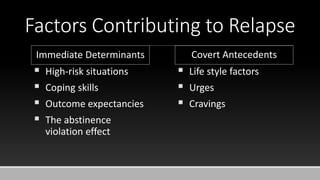
Factors Contributing to Relapse
 High-risk situations
 Coping skills
 Outcome expectancies
 The abstinence
violation effect
Immediate Determinants Covert Antecedents
 Life style factors
 Urges
 Cravings
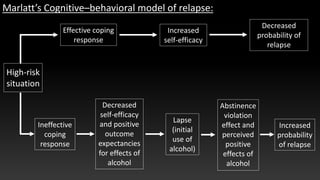
High-risk
situation
Effective coping
response
Increased
self-efficacy
Decreased
probability of
relapse
Ineffective
coping
response
Decreased
self-efficacy
and positive
outcome
expectancies
for effects of
alcohol
Lapse
(initial
use of
alcohol)
Abstinence
violation
effect and
perceived
positive
effects of
alcohol
Increased
probability
of relapse
Marlatt’s Cognitive–behavioral model of relapse:
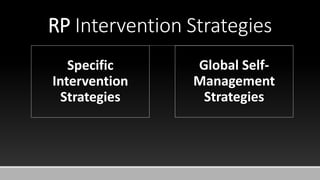
RP Intervention Strategies
Specific
Intervention
Strategies
Global Self-
Management
Strategies
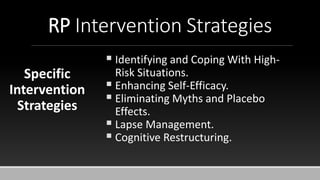
RP Intervention Strategies
Specific
Intervention
Strategies
 Identifying and Coping With High-
Risk Situations.
 Enhancing Self-Efficacy.
 Eliminating Myths and Placebo
Effects.
 Lapse Management.
 Cognitive Restructuring.
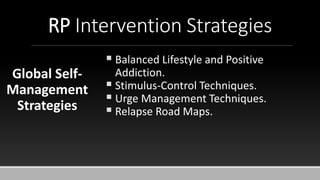
RP Intervention Strategies
Global Self-
Management
Strategies
 Balanced Lifestyle and Positive
Addiction.
 Stimulus-Control Techniques.
 Urge Management Techniques.
 Relapse Road Maps.
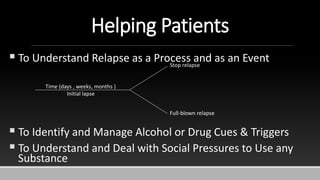
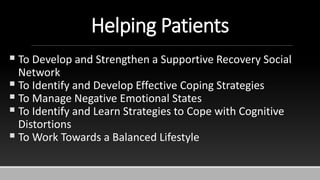
Helping Patients
 To Understand Relapse as a Process and as an Event
 To Identify and Manage Alcohol or Drug Cues & Triggers
 To Understand and Deal with Social Pressures to Use any
Substance
Time (days , weeks, months )
Initial lapse
Stop relapse
Full-blown relapse
Helping Patients
 To Develop and Strengthen a Supportive Recovery Social
Network
 To Identify and Develop Effective Coping Strategies
 To Manage Negative Emotional States
 To Identify and Learn Strategies to Cope with Cognitive
Distortions
 To Work Towards a Balanced Lifestyle
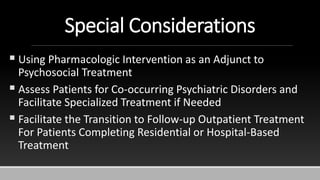
Special Considerations
 Using Pharmacologic Intervention as an Adjunct to
Psychosocial Treatment
 Assess Patients for Co-occurring Psychiatric Disorders and
Facilitate Specialized Treatment if Needed
 Facilitate the Transition to Follow-up Outpatient Treatment
For Patients Completing Residential or Hospital-Based
Treatment
THANK YOU FOR YOUR TIME
HATEM ABD AL-RAHMAN

Relapse prevention: an Overview

  • 1.
    Relapse Prevention HATEM ABDAL-RAHMAN An Overview of
  • 2.
    Cognitive behavioural therapy CBTis a TALKING THERAPY that can help to MANAGE problems by changing the way of THINKING and BEHAVING National Health Service (NHS) UK
  • 3.
    Cognitive behavioural therapy CBTis based on the theory that most EMOTIONAL and BEHAVIORAL reactions are LEARNED and that new ways of reacting and behaving can be LEARNED Center for Substance Abuse Treatment (CSAT) Substance Abuse: Clinical Issues in Intensive Outpatient Treatment Treatment Improvement Protocol (TIP) Series 47
  • 4.
    Relapse Prevention RP isa COGNITIVE BEHAVIORAL APPROACH with the goal of IDENTIFYING and ADDRESSING HIGH- RISK SITUATIONS for relapse, and ASSISTING individuals in MAINTAINING desired behavioral CHANGES Dennis C. Daley ■ G. Alan Marlatt ■ Antoine Douaihy Lowinson and Ruiz’s Substance Abuse A comprehensive textbook.—5th ed.
  • 5.
    Lapse & Relapse initialepisode of alcohol or other drug use following a period of abstinence failure to maintain behavior change over time: “a breakdown or setback in the person’s attempt to change or modify a target behavior” Dennis C. Daley ■ G. Alan Marlatt ■ Antoine Douaihy Lowinson and Ruiz’s Substance Abuse A comprehensive textbook.—5th ed. LAPSE: RELAPSE:
  • 6.
    Lapse & Relapse thereturn to heavy alcohol or drug use following a period of abstinence or moderate use, occurs in many addicts who have undergone addiction treatment Mary E. Larimer, Ph.D., Rebekka S. Palmer, and G. Alan Marlatt, Ph.D. Relapse Prevention: Marlatt’s Cognitive-Behavioral Model Alcohol Research & Health RELAPSE:
  • 7.
    Factors Contributing toRelapse  High-risk situations  Coping skills  Outcome expectancies  The abstinence violation effect Immediate Determinants Covert Antecedents  Life style factors  Urges  Cravings
  • 8.
    High-risk situation Effective coping response Increased self-efficacy Decreased probability of relapse Ineffective coping response Decreased self-efficacy andpositive outcome expectancies for effects of alcohol Lapse (initial use of alcohol) Abstinence violation effect and perceived positive effects of alcohol Increased probability of relapse Marlatt’s Cognitive–behavioral model of relapse:
  • 9.
  • 10.
    RP Intervention Strategies Specific Intervention Strategies Identifying and Coping With High- Risk Situations.  Enhancing Self-Efficacy.  Eliminating Myths and Placebo Effects.  Lapse Management.  Cognitive Restructuring.
  • 11.
    RP Intervention Strategies GlobalSelf- Management Strategies  Balanced Lifestyle and Positive Addiction.  Stimulus-Control Techniques.  Urge Management Techniques.  Relapse Road Maps.
  • 12.
    Helping Patients  ToUnderstand Relapse as a Process and as an Event  To Identify and Manage Alcohol or Drug Cues & Triggers  To Understand and Deal with Social Pressures to Use any Substance Time (days , weeks, months ) Initial lapse Stop relapse Full-blown relapse
  • 13.
    Helping Patients  ToDevelop and Strengthen a Supportive Recovery Social Network  To Identify and Develop Effective Coping Strategies  To Manage Negative Emotional States  To Identify and Learn Strategies to Cope with Cognitive Distortions  To Work Towards a Balanced Lifestyle
  • 14.
    Special Considerations  UsingPharmacologic Intervention as an Adjunct to Psychosocial Treatment  Assess Patients for Co-occurring Psychiatric Disorders and Facilitate Specialized Treatment if Needed  Facilitate the Transition to Follow-up Outpatient Treatment For Patients Completing Residential or Hospital-Based Treatment
  • 15.
    THANK YOU FORYOUR TIME HATEM ABD AL-RAHMAN