
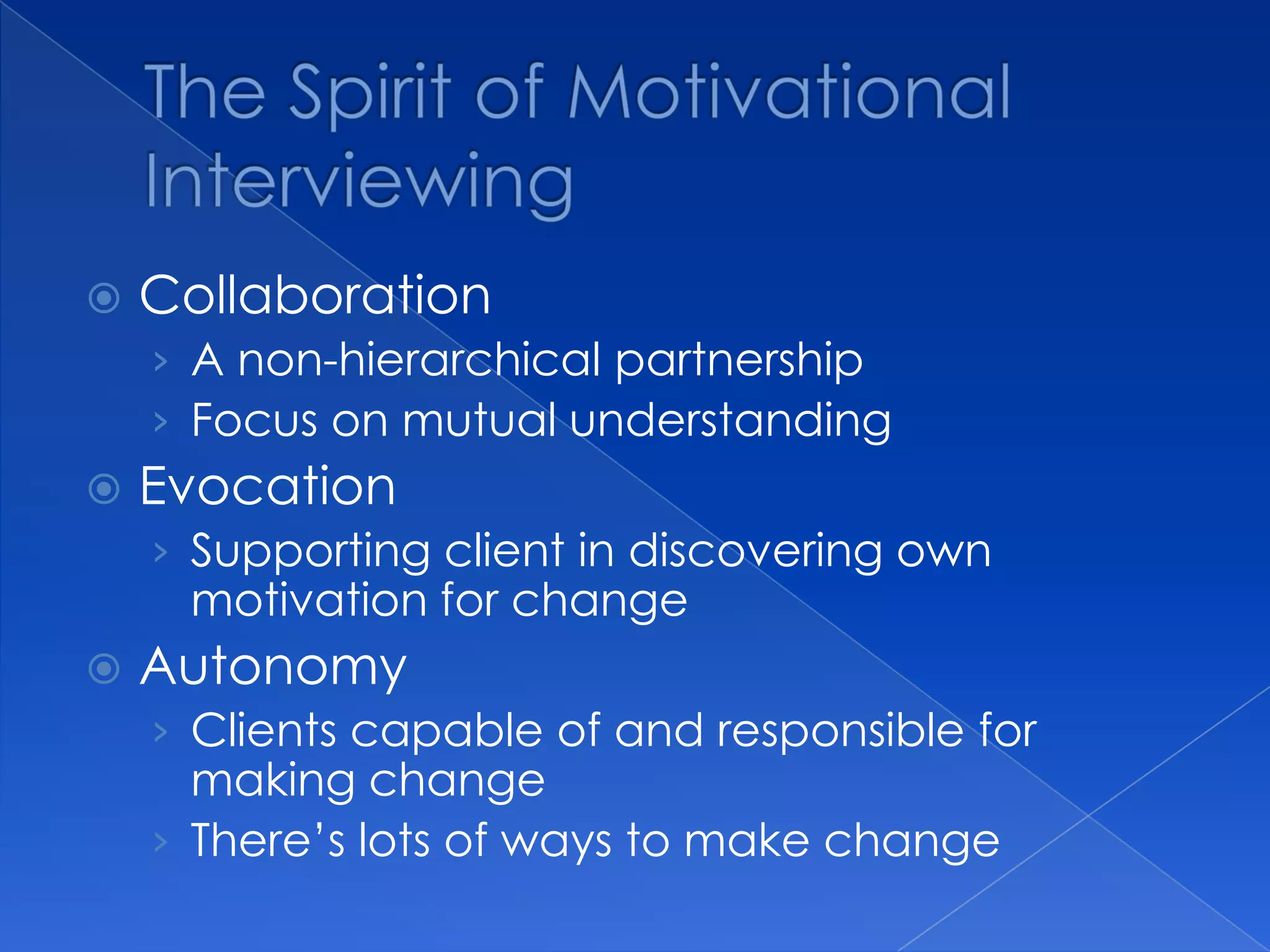

 Collaboration
› A non-hierarchical partnership
› Focus on mutual understanding
 Evocation
› Supporting client in discovering own
motivation for change
 Autonomy
› Clients capable of and responsible for
making change
› There’s lots of ways to make change
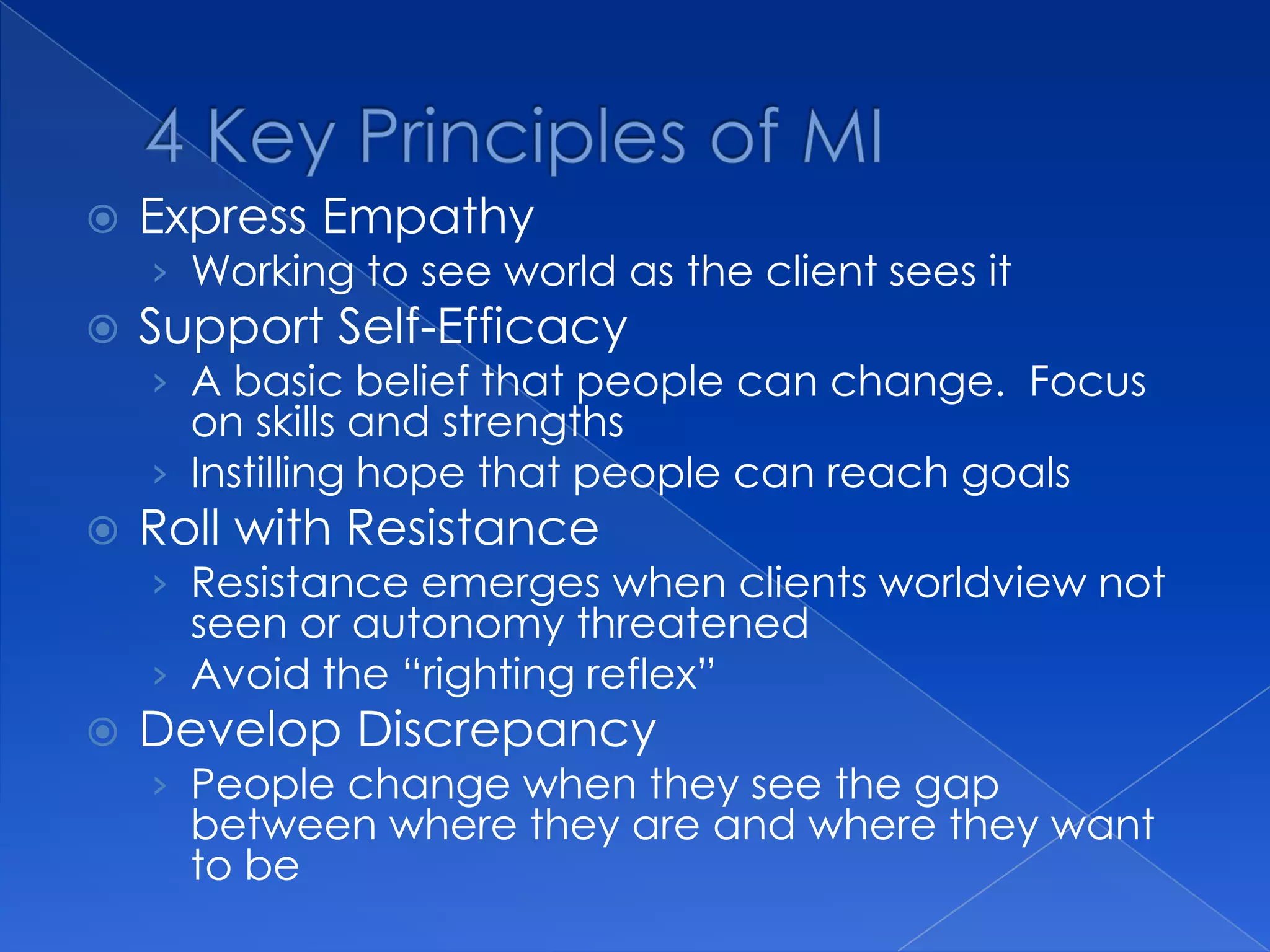
 Express Empathy
› Working to see world as the client sees it
 Support Self-Efficacy
› A basic belief that people can change. Focus
on skills and strengths
› Instilling hope that people can reach goals
 Roll with Resistance
› Resistance emerges when clients worldview not
seen or autonomy threatened
› Avoid the “righting reflex”
 Develop Discrepancy
› People change when they see the gap
between where they are and where they want
to be
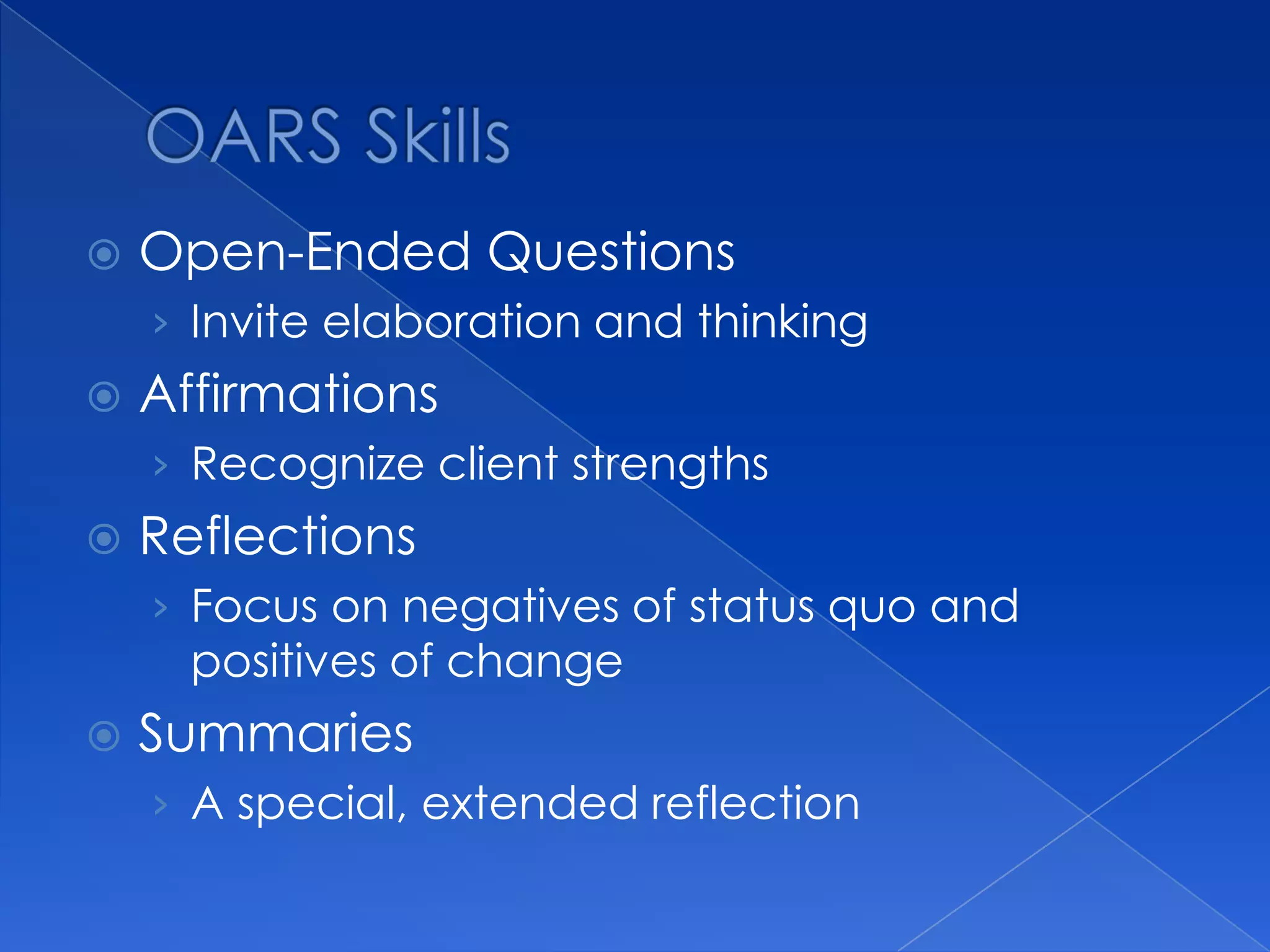
 Open-Ended Questions
› Invite elaboration and thinking
 Affirmations
› Recognize client strengths
 Reflections
› Focus on negatives of status quo and
positives of change
 Summaries
› A special, extended reflection
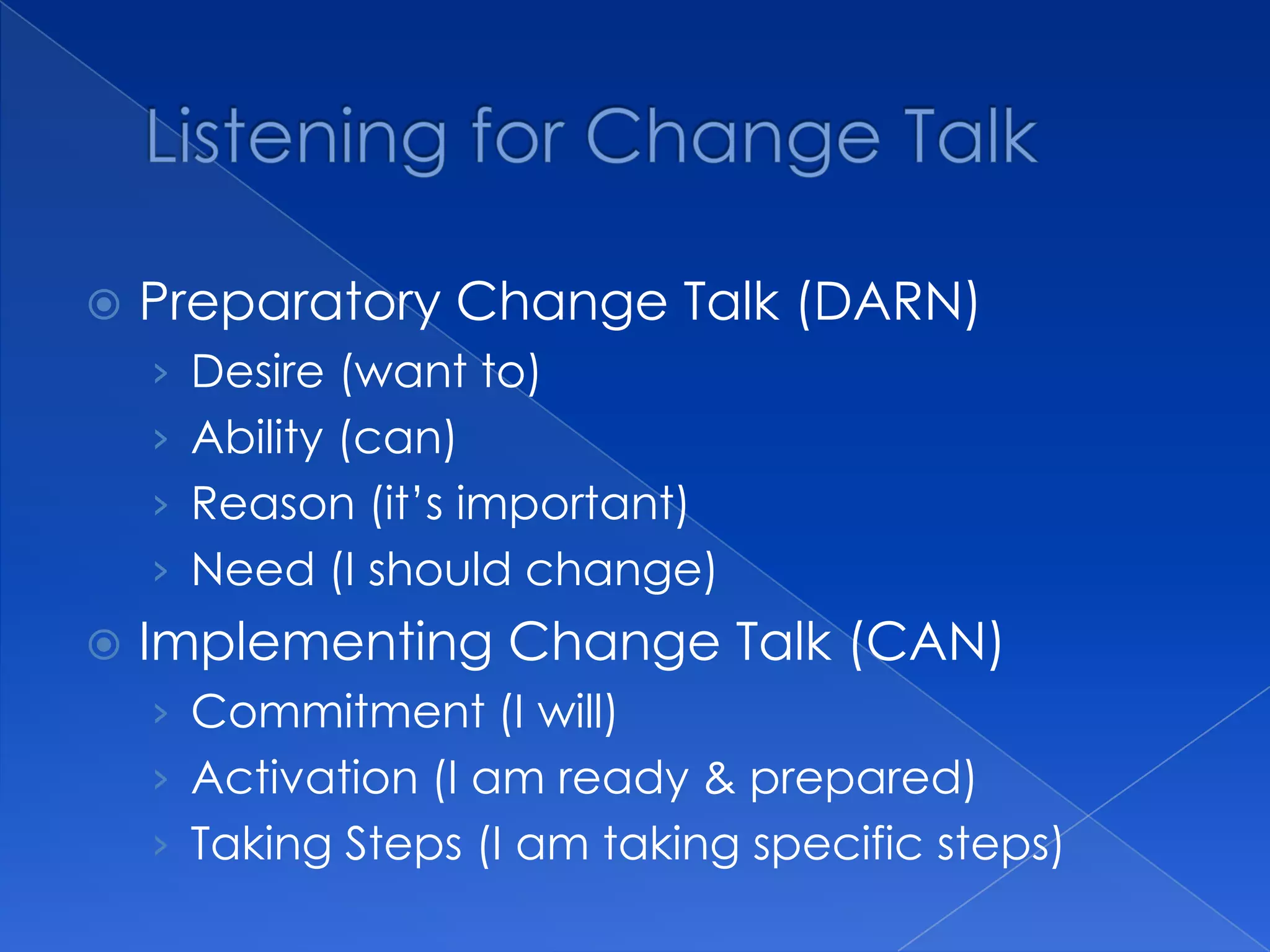
 Preparatory Change Talk (DARN)
› Desire (want to)
› Ability (can)
› Reason (it’s important)
› Need (I should change)
 Implementing Change Talk (CAN)
› Commitment (I will)
› Activation (I am ready & prepared)
› Taking Steps (I am taking specific steps)
 For each vignette, lets consider:
› Potential barriers to the spirit and principles
of motivational interviewing
› Ideas for overcoming these barriers
› Signs of change talk
› How you might implement the MI skills
 Susie is a 23 year old single mother who is
referred to you for court ordered therapy
by DHS. Her 4 year old daughter is
currently in foster care and Susie has just
completed one month of inpatient drug
and alcohol treatment. In order to
regain custody of her daughter, she must
complete counseling, submit to random
UAs, enroll her daughter in child care
and pass regular home visits.
 Fred is a 22 year old student athlete on
the honor roll who comes to see you at
the counseling center reporting vague
complaints of being “out of control” and
having panic attacks. After a few
sessions, he discloses that he has been
using Ritalin he buys from a friend to help
with his concentration and maintaining
weight for wrestling. He has not told
anyone about his substance use.
 Susan is a 69 year old woman who
comes to see you in a primary care
mental health clinic. Her A1C levels are
significantly elevated and medical
records indicate she is not refilling her
medications on a consistent basis. She
reports that she is feeling fatigued and
tearful and that the only thing which
brings her joy is time with her
grandchildren.
 Jason comes to see you regarding his
alcohol use. He states that he does not
see his drinking as a problem, but that his
wife “made him come.” He reports
currently drinking 2-3 drinks/night and
“partying” more on weekends.
 Richard and Marlene come to see you
for family counseling. They report that
they need help “fixing” their son Jacob.
Jacob is 15 and is frequently breaking
curfew and speaking rudely to his
parents. They report that they are
currently managing this behavior by
“giving him the what for.”
 Someone you’d love to change!
 How could you apply the principles of
motivational interviewing – both in
technique and in spirit?
 www.motivationalinterview.org

Motivational interviewing in psychology

  • 2.
     Collaboration › Anon-hierarchical partnership › Focus on mutual understanding  Evocation › Supporting client in discovering own motivation for change  Autonomy › Clients capable of and responsible for making change › There’s lots of ways to make change
  • 3.
     Express Empathy ›Working to see world as the client sees it  Support Self-Efficacy › A basic belief that people can change. Focus on skills and strengths › Instilling hope that people can reach goals  Roll with Resistance › Resistance emerges when clients worldview not seen or autonomy threatened › Avoid the “righting reflex”  Develop Discrepancy › People change when they see the gap between where they are and where they want to be
  • 4.
     Open-Ended Questions ›Invite elaboration and thinking  Affirmations › Recognize client strengths  Reflections › Focus on negatives of status quo and positives of change  Summaries › A special, extended reflection
  • 5.
     Preparatory ChangeTalk (DARN) › Desire (want to) › Ability (can) › Reason (it’s important) › Need (I should change)  Implementing Change Talk (CAN) › Commitment (I will) › Activation (I am ready & prepared) › Taking Steps (I am taking specific steps)
  • 6.
     For eachvignette, lets consider: › Potential barriers to the spirit and principles of motivational interviewing › Ideas for overcoming these barriers › Signs of change talk › How you might implement the MI skills
  • 7.
     Susie isa 23 year old single mother who is referred to you for court ordered therapy by DHS. Her 4 year old daughter is currently in foster care and Susie has just completed one month of inpatient drug and alcohol treatment. In order to regain custody of her daughter, she must complete counseling, submit to random UAs, enroll her daughter in child care and pass regular home visits.
  • 8.
     Fred isa 22 year old student athlete on the honor roll who comes to see you at the counseling center reporting vague complaints of being “out of control” and having panic attacks. After a few sessions, he discloses that he has been using Ritalin he buys from a friend to help with his concentration and maintaining weight for wrestling. He has not told anyone about his substance use.
  • 9.
     Susan isa 69 year old woman who comes to see you in a primary care mental health clinic. Her A1C levels are significantly elevated and medical records indicate she is not refilling her medications on a consistent basis. She reports that she is feeling fatigued and tearful and that the only thing which brings her joy is time with her grandchildren.
  • 10.
     Jason comesto see you regarding his alcohol use. He states that he does not see his drinking as a problem, but that his wife “made him come.” He reports currently drinking 2-3 drinks/night and “partying” more on weekends.
  • 11.
     Richard andMarlene come to see you for family counseling. They report that they need help “fixing” their son Jacob. Jacob is 15 and is frequently breaking curfew and speaking rudely to his parents. They report that they are currently managing this behavior by “giving him the what for.”
  • 12.
     Someone you’dlove to change!  How could you apply the principles of motivational interviewing – both in technique and in spirit?
  • 13.