An Innovative Planning Framework:
Building Collective Impact
Deborah Daro. Chapin Hall, University of Chicago
Objectives
• Present an overview of our planning framework – how is
this process different?
• Outline the plan’s key elements and operational principles.
• Summarize the “parent voice” as obtained through a
statewide parent survey and targeted focus groups.
• Outline next steps both the Children’s Trust and local
communities can take to create an integrated, but flexible,
approach to developing an effective child maltreatment
prevention plan.
Challenges in Prevention Planning
• The tendency and preference to support a broad array of
interventions, each addressing a unique causal contributor
to maltreatment.
• The absence of common assessment strategies and
outcomes for measuring collective impact.
• An inability to manage implementation challenges in ways
that insure quality, maximize efficiency, and allow
communities to creatively use their strengths to address
their unique needs and challenges.
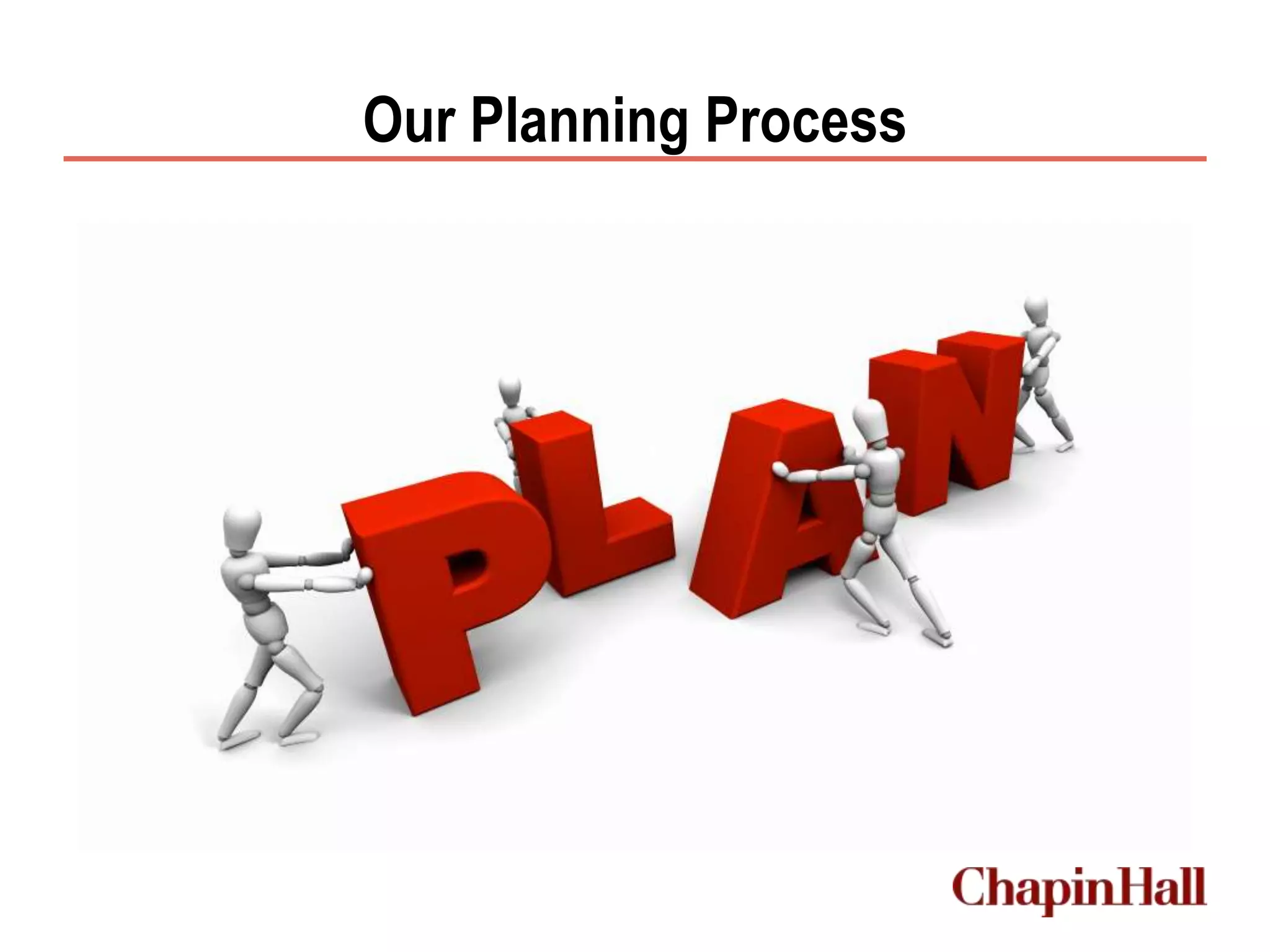
Our Planning Process
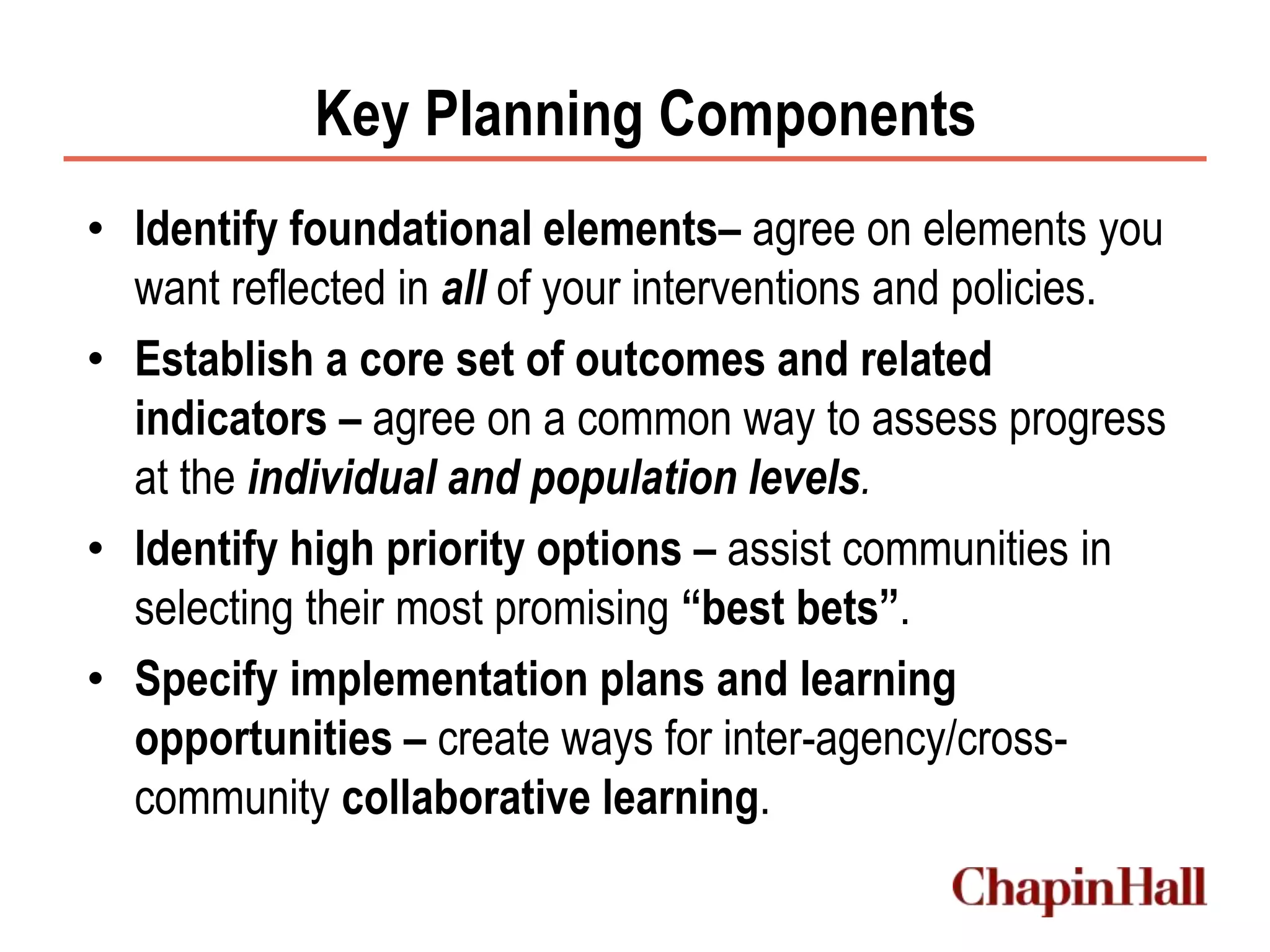
How is This Approach Different?
• Helps states identify efficiencies by realigning current
investments and encouraging the use of shared resources.
• Identifies a set of shared outcomes across interventions
and agencies to better focus efforts and engage new
partners.
• Identifies a limited number of promising new action
strategies to complement current efforts.
• Assists local communities in tailoring the framework to fit
their specific strengths and needs.
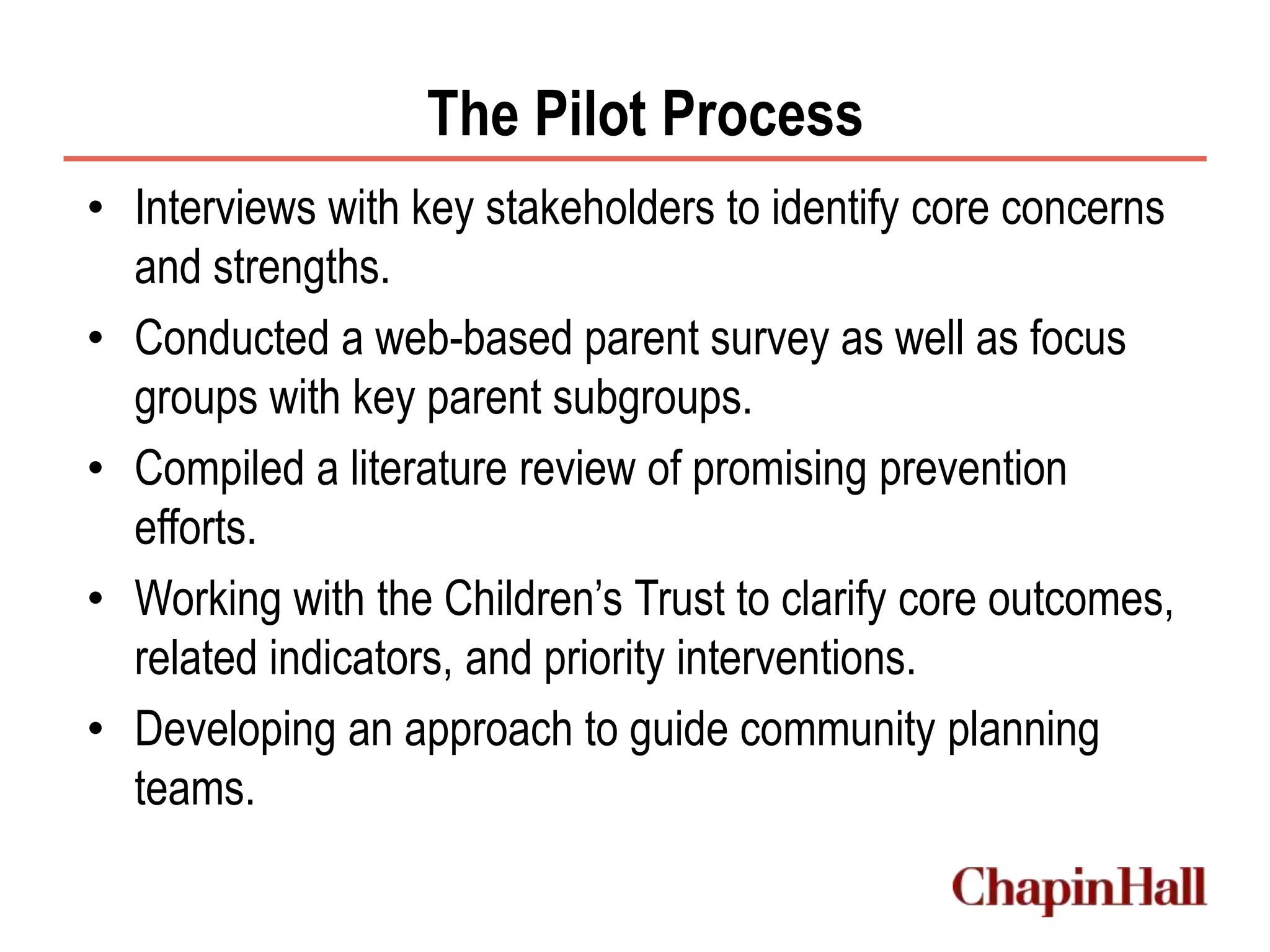
Key Planning Components
• Identify foundational elements– agree on elements you
want reflected in all of your interventions and policies.
• Establish a core set of outcomes and related
indicators – agree on a common way to assess progress
at the individual and population levels.
• Identify high priority options – assist communities in
selecting their most promising “best bets”.
• Specify implementation plans and learning
opportunities – create ways for inter-agency/cross-
community collaborative learning.
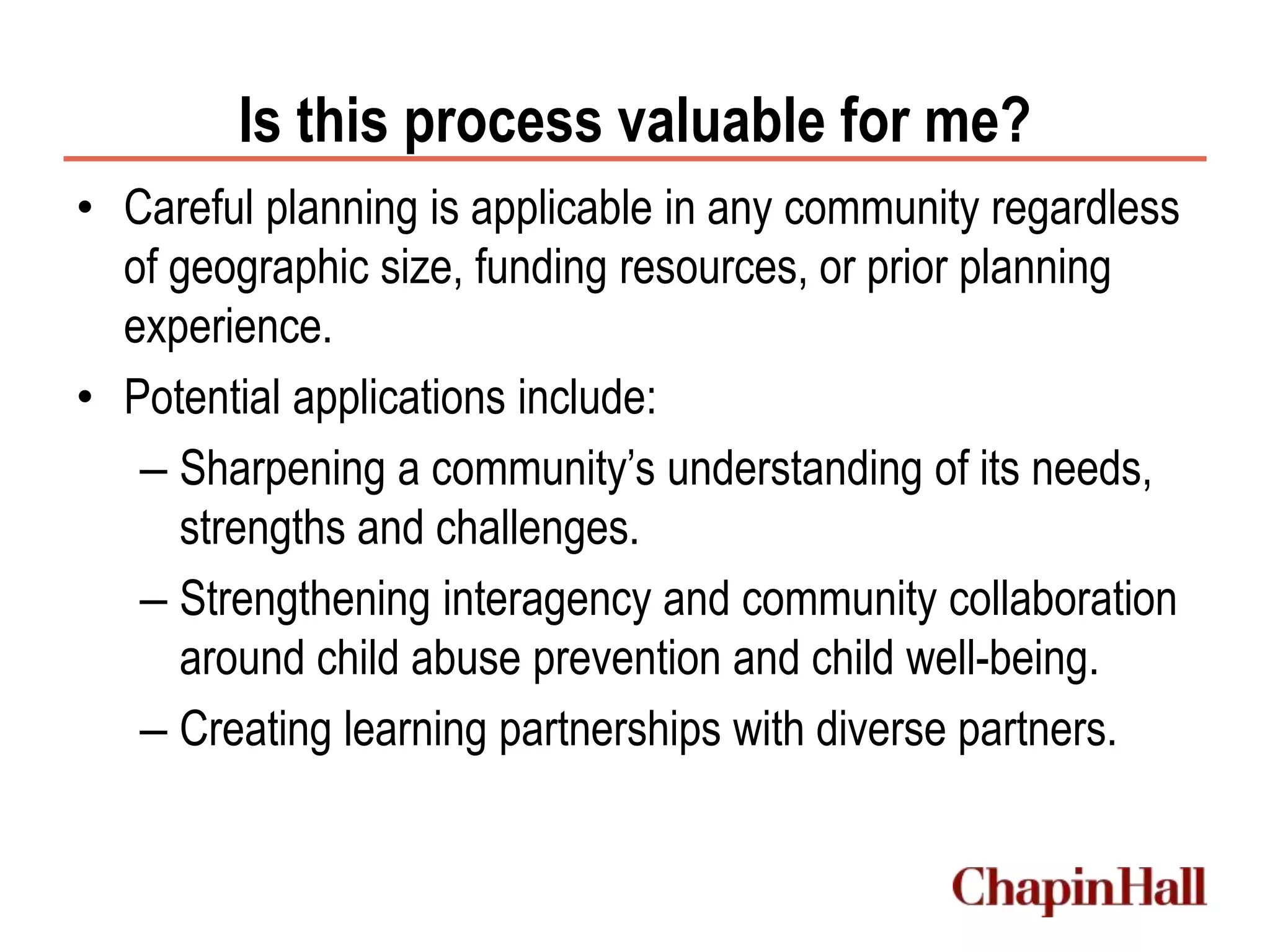
The Pilot Process
• Interviews with key stakeholders to identify core concerns
and strengths.
• Conducted a web-based parent survey as well as focus
groups with key parent subgroups.
• Compiled a literature review of promising prevention
efforts.
• Working with the Children’s Trust to clarify core outcomes,
related indicators, and priority interventions.
• Developing an approach to guide community planning
teams.
Is this process valuable for me?
• Careful planning is applicable in any community regardless
of geographic size, funding resources, or prior planning
experience.
• Potential applications include:
– Sharpening a community’s understanding of its needs,
strengths and challenges.
– Strengthening interagency and community collaboration
around child abuse prevention and child well-being.
– Creating learning partnerships with diverse partners.
Initial Learnings
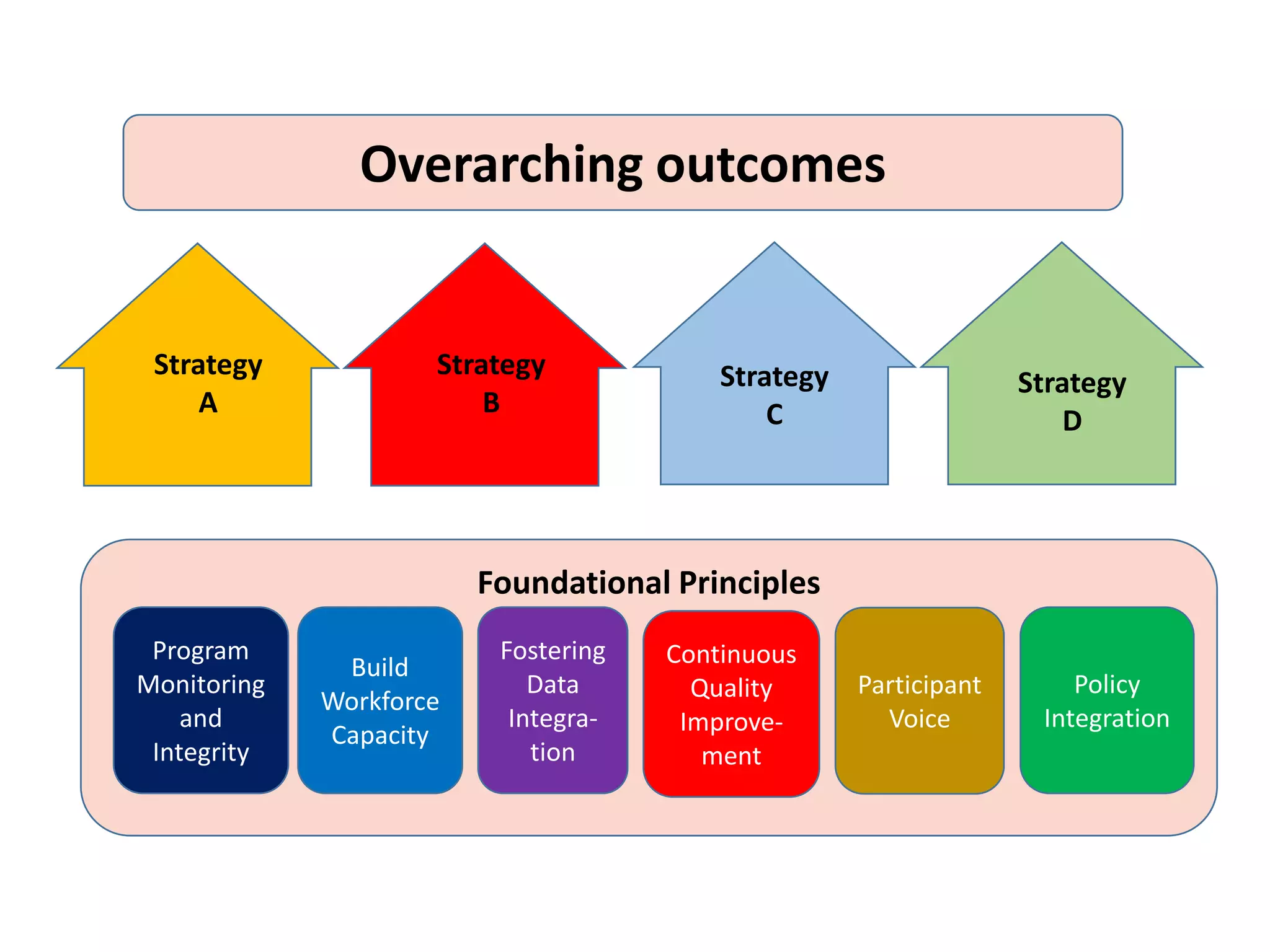
Overarching outcomes
Foundational Principles
Program
Monitoring
and
Integrity
Build
Workforce
Capacity
Fostering
Data
Integra-
tion
Continuous
Quality
Improve-
ment
Participant
Voice
Policy
Integration
Strategy
A
Strategy
B
Strategy
C
Strategy
D
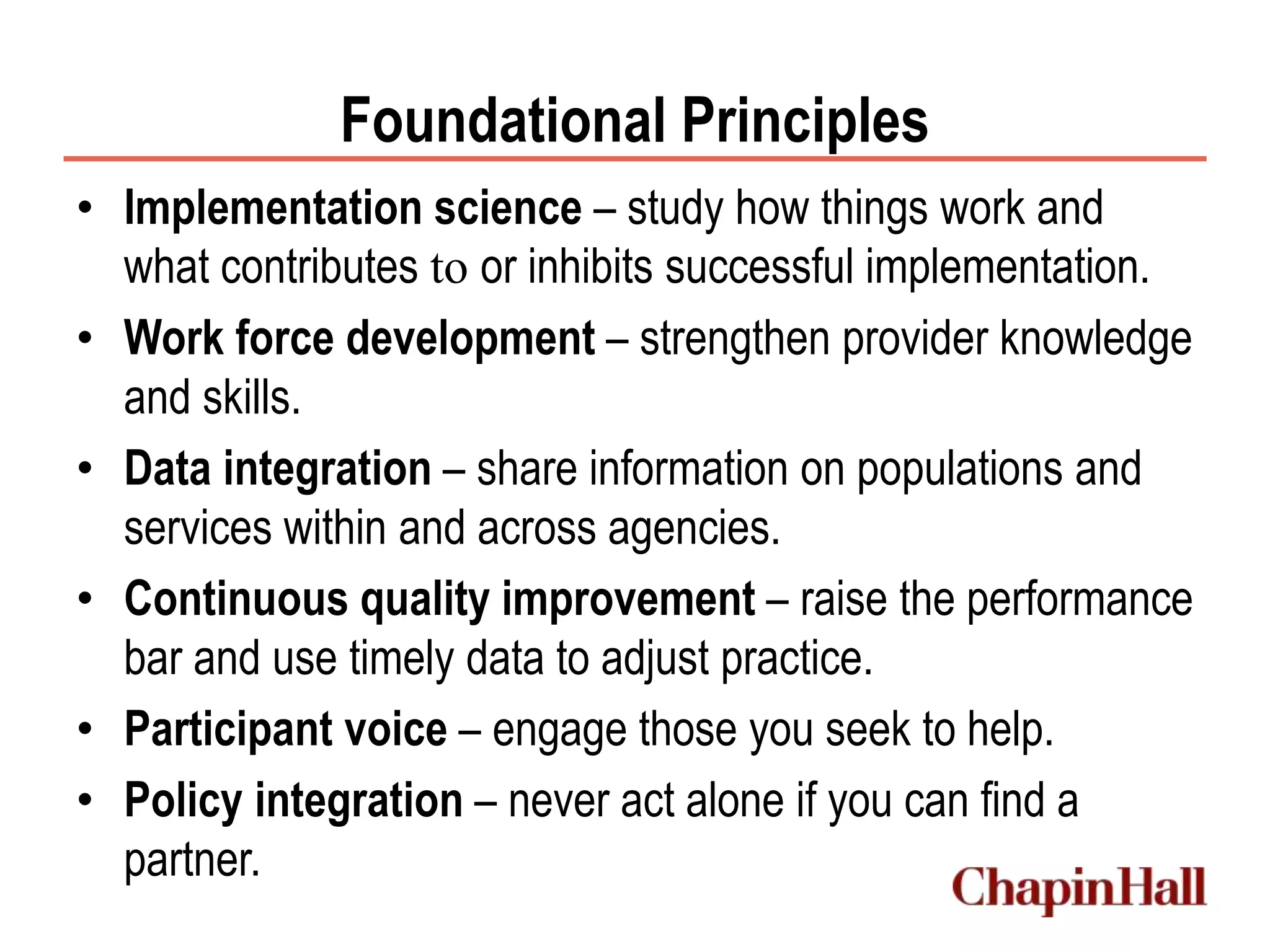
Foundational Principles
• Implementation science – study how things work and
what contributes to or inhibits successful implementation.
• Work force development – strengthen provider knowledge
and skills.
• Data integration – share information on populations and
services within and across agencies.
• Continuous quality improvement – raise the performance
bar and use timely data to adjust practice.
• Participant voice – engage those you seek to help.
• Policy integration – never act alone if you can find a
partner.
Foundational Principles
Program
Monitoring
and
Integrity
Build
Workforce
Capacity
Fostering
Data
Integra-
tion
Continuous
Quality
Improve-
ment
Participant
Voice
Policy
Integration
Strategy
A
Strategy
B
Strategy
C
Strategy
D
Child
Well-Being &
Achievement
Caregiver
Well-Being &
Achievement
Consistent
High Quality
Caregiving
Safe
Supportive
Neighborhoods
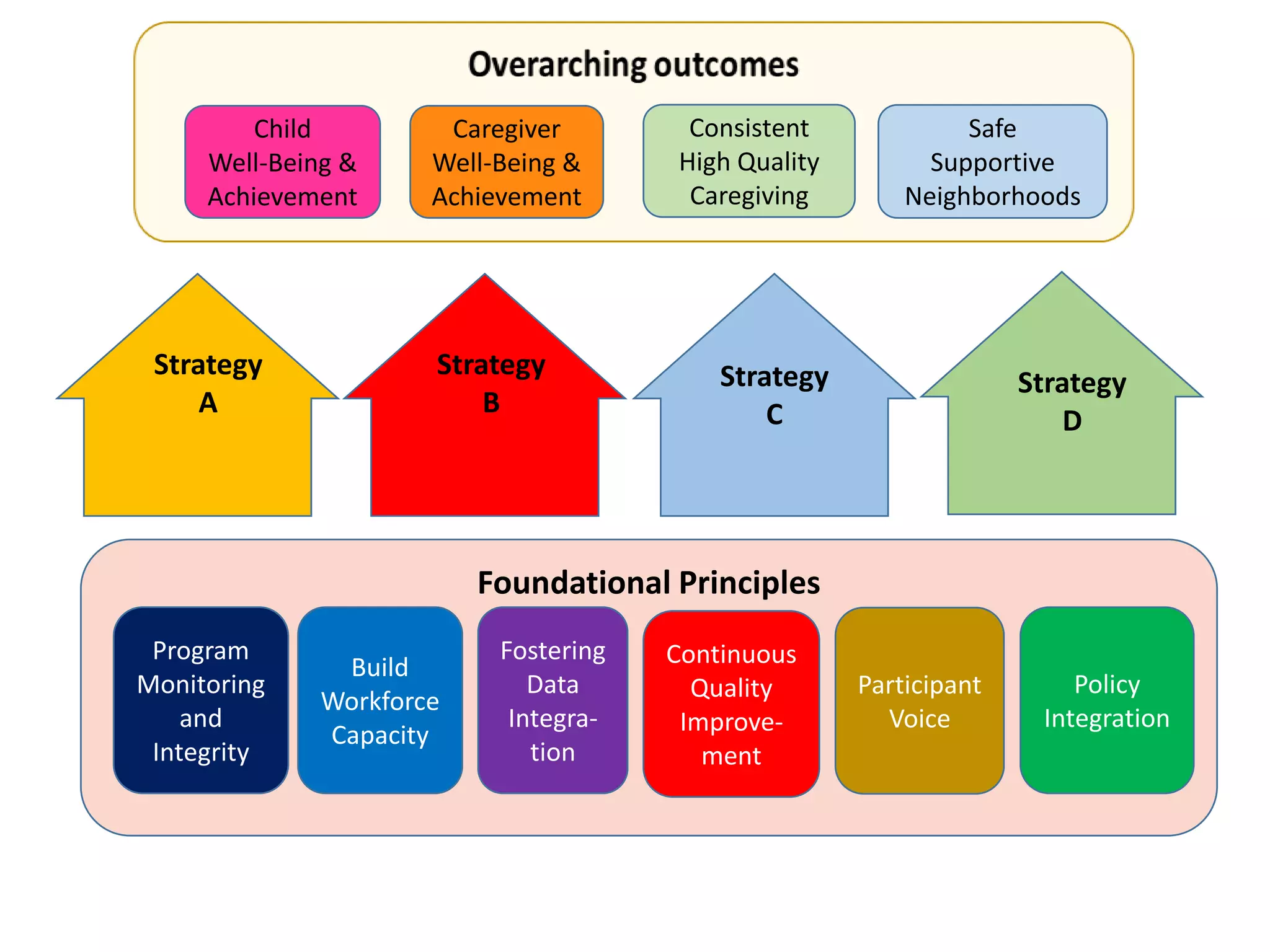
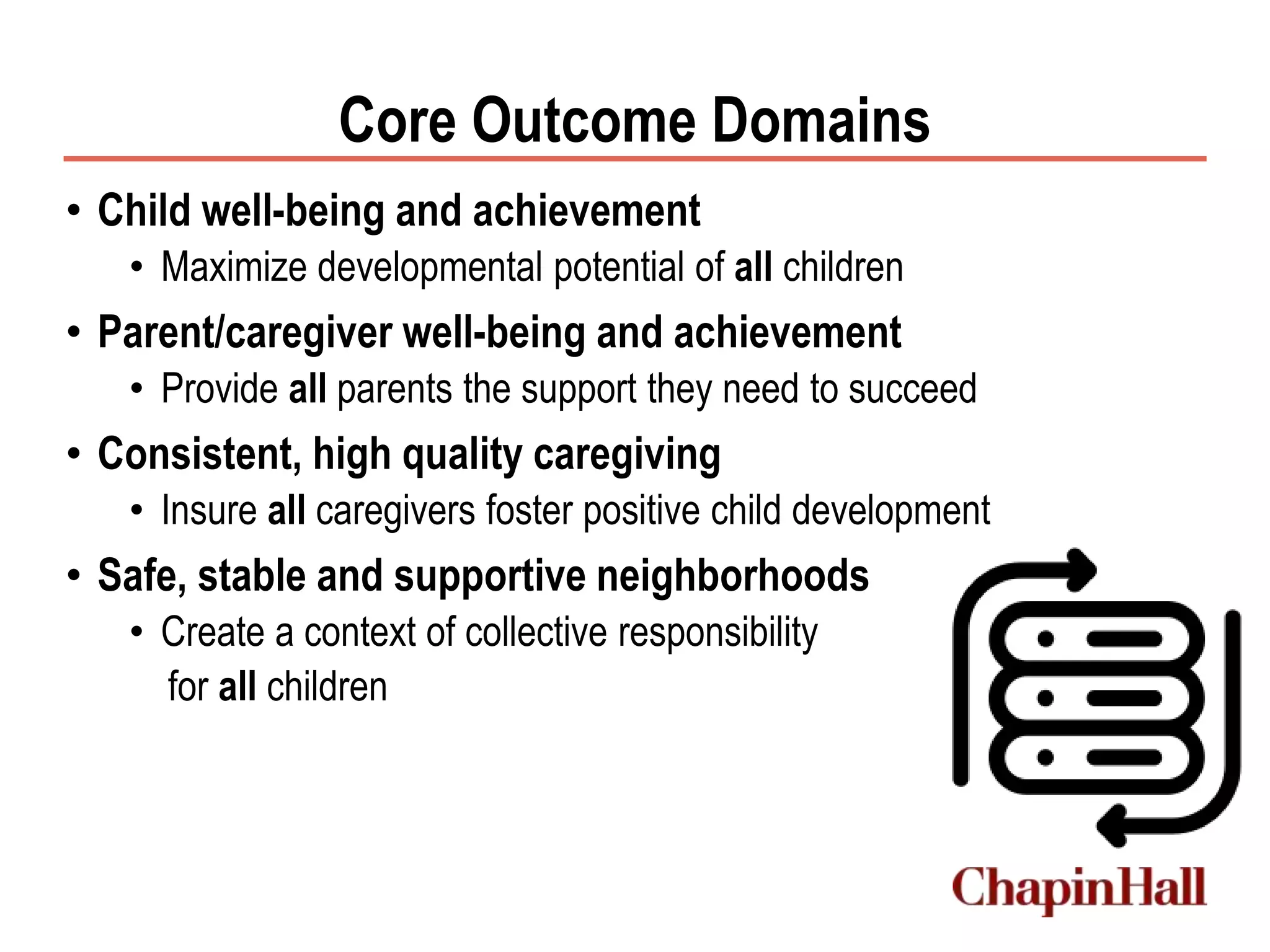
Core Outcome Domains
• Child well-being and achievement
• Maximize developmental potential of all children
• Parent/caregiver well-being and achievement
• Provide all parents the support they need to succeed
• Consistent, high quality caregiving
• Insure all caregivers foster positive child development
• Safe, stable and supportive neighborhoods
• Create a context of collective responsibility
for all children
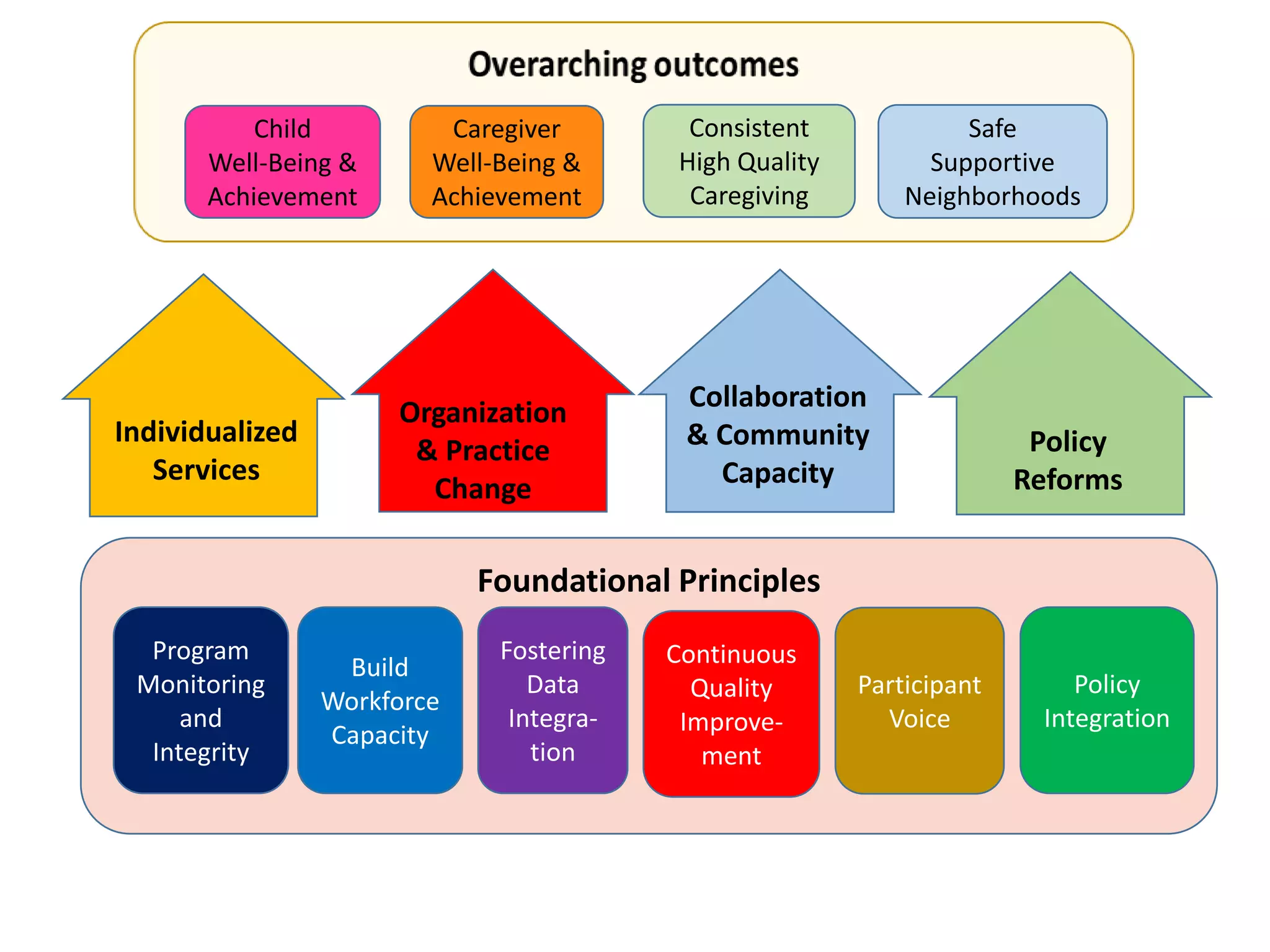
Foundational Principles
Program
Monitoring
and
Integrity
Build
Workforce
Capacity
Fostering
Data
Integra-
tion
Continuous
Quality
Improve-
ment
Participant
Voice
Policy
Integration
Individualized
Services
Organization
& Practice
Change
Collaboration
& Community
Capacity
Policy
Reforms
Child
Well-Being &
Achievement
Caregiver
Well-Being &
Achievement
Consistent
High Quality
Caregiving
Safe
Supportive
Neighborhoods
Intervention Pathways
• Strengthen individual children and parents using universal
and targeted efforts.
• Improve organizational culture and professional practice to
support evidence-based models and practice.
• Foster service collaboration and community efficacy through
integrated care models.
• Policy and legislative reform around concrete
supports, eligibility and flexible funding.
Securing Parent Input and Voice
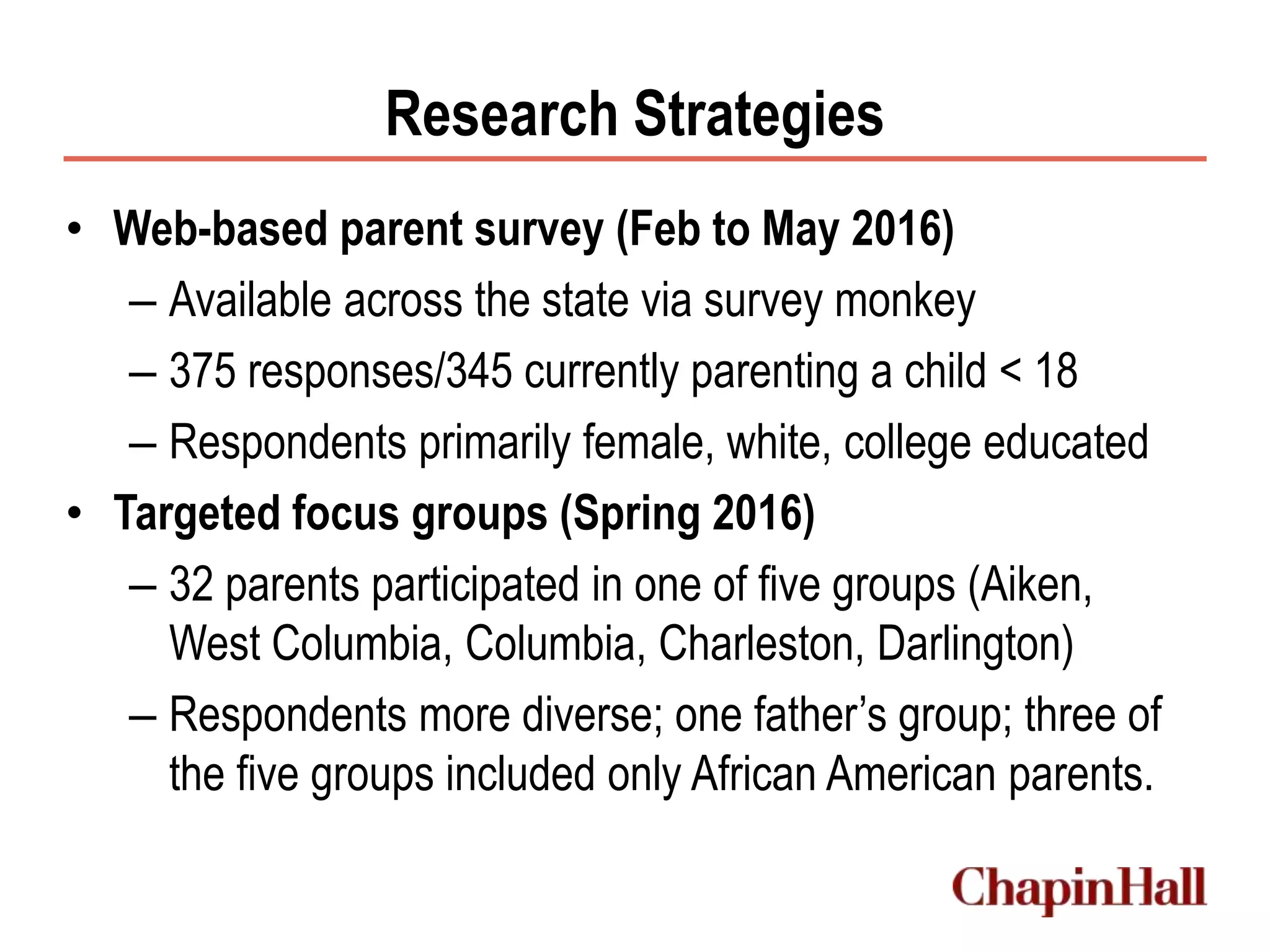
Research Strategies
• Web-based parent survey (Feb to May 2016)
– Available across the state via survey monkey
– 375 responses/345 currently parenting a child < 18
– Respondents primarily female, white, college educated
• Targeted focus groups (Spring 2016)
– 32 parents participated in one of five groups (Aiken,
West Columbia, Columbia, Charleston, Darlington)
– Respondents more diverse; one father’s group; three of
the five groups included only African American parents.
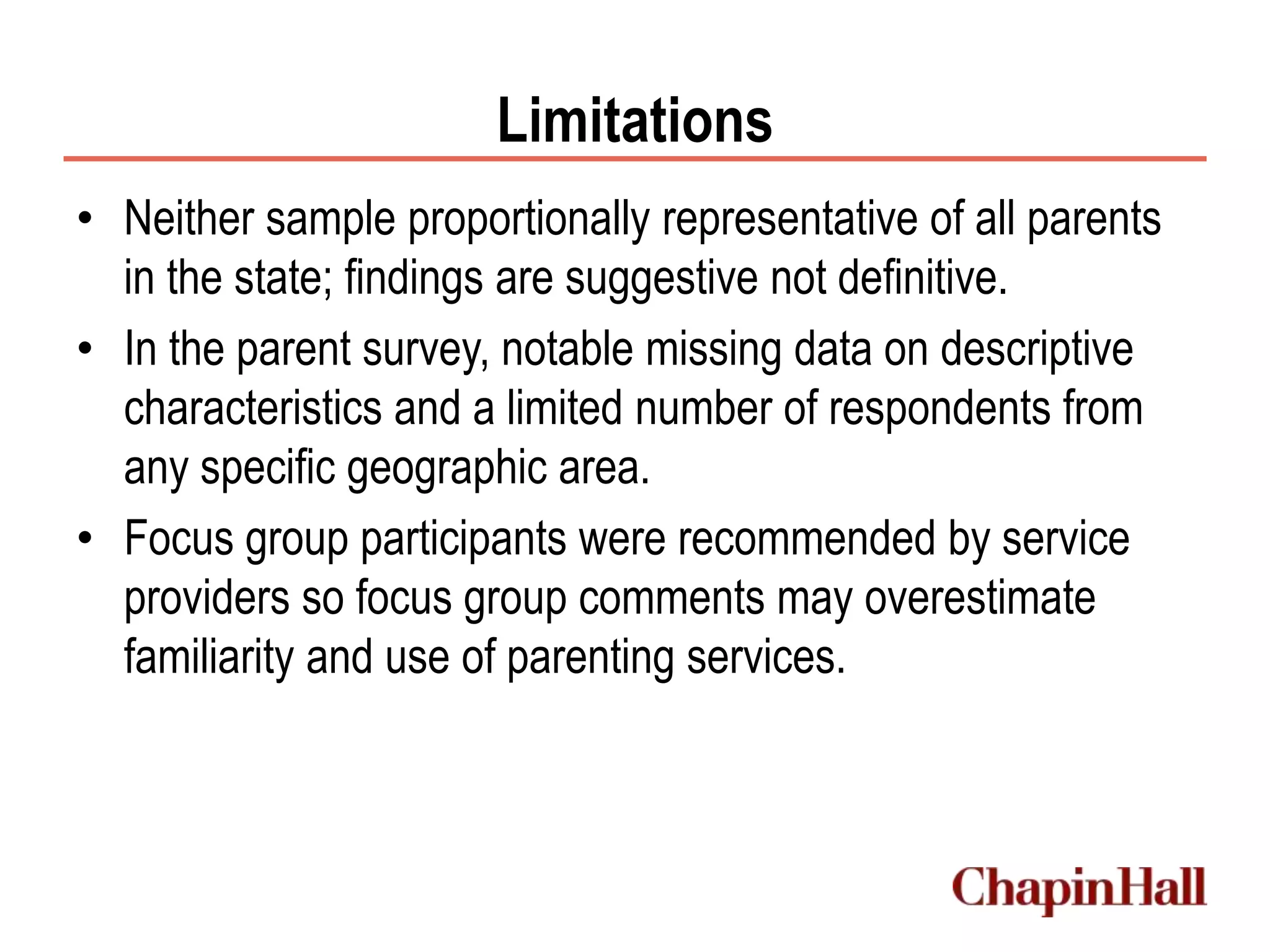
Limitations
• Neither sample proportionally representative of all parents
in the state; findings are suggestive not definitive.
• In the parent survey, notable missing data on descriptive
characteristics and a limited number of respondents from
any specific geographic area.
• Focus group participants were recommended by service
providers so focus group comments may overestimate
familiarity and use of parenting services.
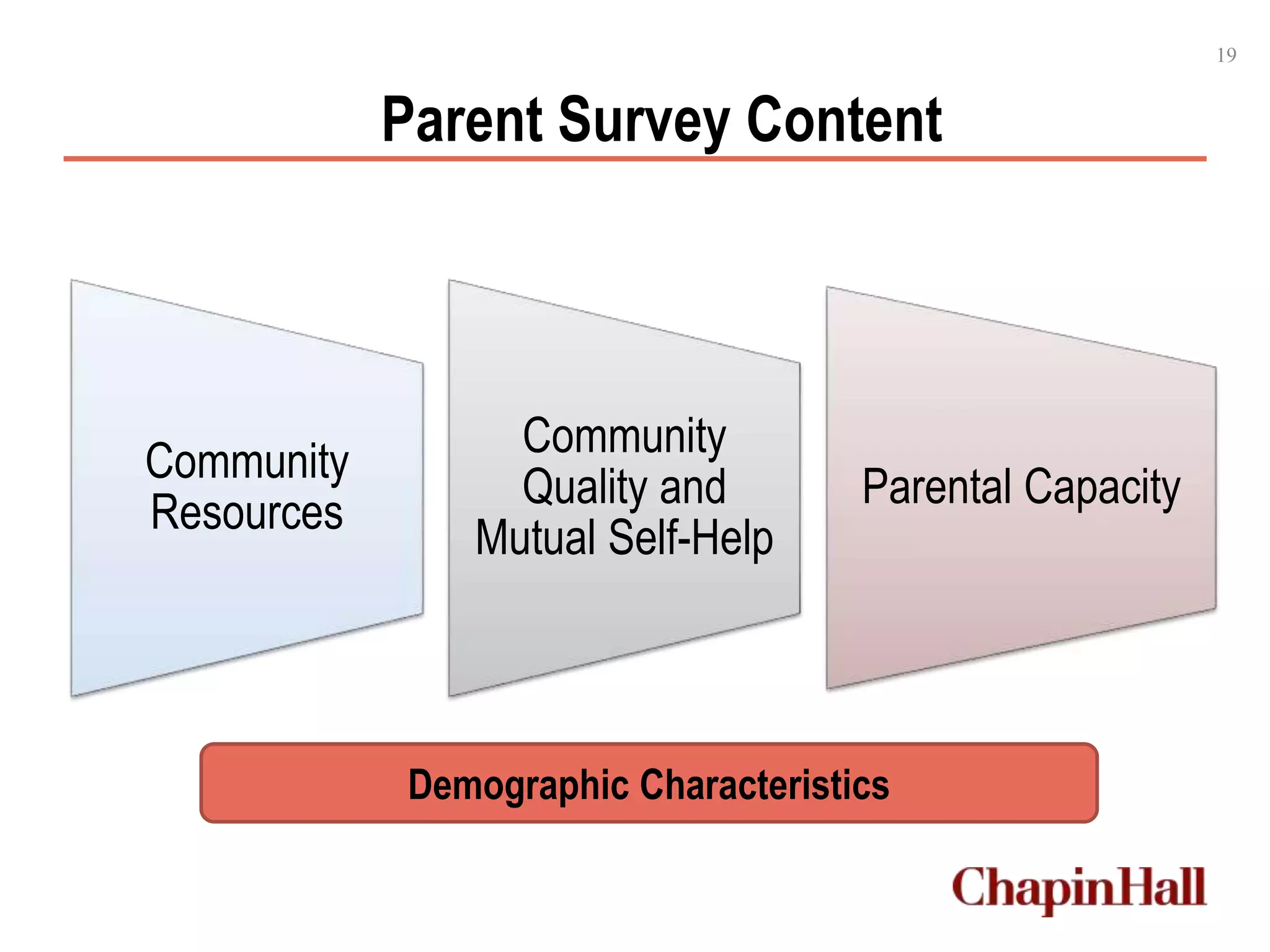
Parent Survey Content
Community
Resources
Community
Quality and
Mutual Self-Help
Parental Capacity
19
Demographic Characteristics
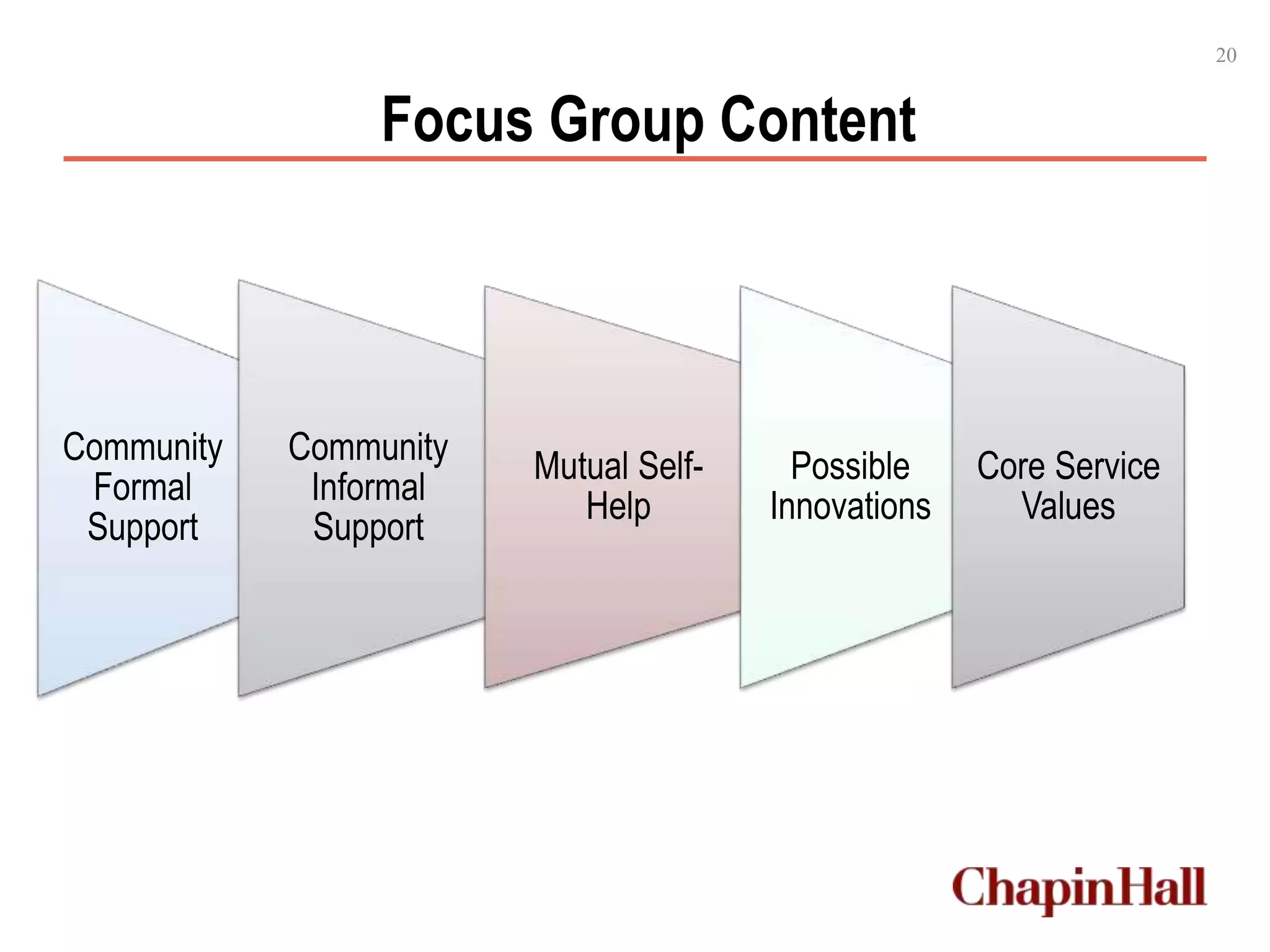
Focus Group Content
Community
Formal
Support
Community
Informal
Support
Mutual Self-
Help
Possible
Innovations
Core Service
Values
20
Key Survey Findings
• Respondents are aware of diverse service options but often
fail to utilize parenting programs such as home visiting,
parent education groups, and family resource centers.
• Health care services and libraries are the most frequently
accessed resources by all parent groups.
• Non-white and less educated respondents are familiar with
fewer services but more likely to use these services.
• Affordable, high quality child care is a consistent need.
Key Survey Findings
• Respondents more likely to offer help to friends and
neighbors than to ask for help; this is less true in minority
communities.
• Most parents report they can meet their child’s basic needs
and enjoy time with family members.
• But parenting is a challenge – 15% report losing control
when disciplining their children; one-quarter report children
act out just to “upset them”.
Implications
• Build parent support into systems found in all communities
such as health care providers and libraries.
• Address gaps in child care availability, cost, and quality.
• Create consistent messaging around supporting parents in
reaching out and asking for help when needed and in
offering support when asked.
• Continue to provide opportunities for parents to learn about
child development and appropriate discipline options.
Key Focus Group Findings
• Parents want support – they identified a range of concerns
from basic needs (food, child care, housing) to parent
education.
• Parents want to be involved – they appreciate being asked
their opinions about “what works” and what does not.
• Parents want services that fit the level of need – they want
to “grow their skills” not just get a “quick fix”.
• Parents often viewed child welfare as “unfair”.
High Priority Program Values
• Parents want service providers to be:
– genuine, caring, and nonjudgmental
– relationship builders
– experienced
• Parents want more accessible services in key areas:
– basic support/food assistance
– parenting classes
– children’s activities/afterschool programs
Implications
• Novel resource sharing and services are needed for rural,
isolated communities.
• Libraries appear to be a particularly beloved resource, with a
lot of potential for expansion.
• Concerns about distrust and judgment need to be
addressed in order to increase the use of informal supports.
• Parents want access to professionals and expert help not
just a “friend or peer to talk with”.
• Local communities require local responses.
Framework Roll-Out
Next Steps
• Additional planning work at the State level
– Clarify shared outcomes and identify appropriate indicators at the
population and participant level.
– Identify promising strategies to achieve priority outcomes.
• Building community capacity
– Identify local “planning team”.
– Reflect on foundational values in light of local realities.
– Assess scope of local services and identify gaps.
– Secure parent input.
– Identify one or two high priority investments.

An Innovative Planning Framework: Building Collective Impact

  • 1.
    An Innovative PlanningFramework: Building Collective Impact Deborah Daro. Chapin Hall, University of Chicago
  • 2.
    Objectives • Present anoverview of our planning framework – how is this process different? • Outline the plan’s key elements and operational principles. • Summarize the “parent voice” as obtained through a statewide parent survey and targeted focus groups. • Outline next steps both the Children’s Trust and local communities can take to create an integrated, but flexible, approach to developing an effective child maltreatment prevention plan.
  • 3.
    Challenges in PreventionPlanning • The tendency and preference to support a broad array of interventions, each addressing a unique causal contributor to maltreatment. • The absence of common assessment strategies and outcomes for measuring collective impact. • An inability to manage implementation challenges in ways that insure quality, maximize efficiency, and allow communities to creatively use their strengths to address their unique needs and challenges.
  • 4.
  • 5.
    How is ThisApproach Different? • Helps states identify efficiencies by realigning current investments and encouraging the use of shared resources. • Identifies a set of shared outcomes across interventions and agencies to better focus efforts and engage new partners. • Identifies a limited number of promising new action strategies to complement current efforts. • Assists local communities in tailoring the framework to fit their specific strengths and needs.
  • 6.
    Key Planning Components •Identify foundational elements– agree on elements you want reflected in all of your interventions and policies. • Establish a core set of outcomes and related indicators – agree on a common way to assess progress at the individual and population levels. • Identify high priority options – assist communities in selecting their most promising “best bets”. • Specify implementation plans and learning opportunities – create ways for inter-agency/cross- community collaborative learning.
  • 7.
    The Pilot Process •Interviews with key stakeholders to identify core concerns and strengths. • Conducted a web-based parent survey as well as focus groups with key parent subgroups. • Compiled a literature review of promising prevention efforts. • Working with the Children’s Trust to clarify core outcomes, related indicators, and priority interventions. • Developing an approach to guide community planning teams.
  • 8.
    Is this processvaluable for me? • Careful planning is applicable in any community regardless of geographic size, funding resources, or prior planning experience. • Potential applications include: – Sharpening a community’s understanding of its needs, strengths and challenges. – Strengthening interagency and community collaboration around child abuse prevention and child well-being. – Creating learning partnerships with diverse partners.
  • 9.
  • 10.
  • 11.
    Foundational Principles • Implementationscience – study how things work and what contributes to or inhibits successful implementation. • Work force development – strengthen provider knowledge and skills. • Data integration – share information on populations and services within and across agencies. • Continuous quality improvement – raise the performance bar and use timely data to adjust practice. • Participant voice – engage those you seek to help. • Policy integration – never act alone if you can find a partner.
  • 12.
  • 13.
    Core Outcome Domains •Child well-being and achievement • Maximize developmental potential of all children • Parent/caregiver well-being and achievement • Provide all parents the support they need to succeed • Consistent, high quality caregiving • Insure all caregivers foster positive child development • Safe, stable and supportive neighborhoods • Create a context of collective responsibility for all children
  • 14.
  • 15.
    Intervention Pathways • Strengthenindividual children and parents using universal and targeted efforts. • Improve organizational culture and professional practice to support evidence-based models and practice. • Foster service collaboration and community efficacy through integrated care models. • Policy and legislative reform around concrete supports, eligibility and flexible funding.
  • 16.
  • 17.
    Research Strategies • Web-basedparent survey (Feb to May 2016) – Available across the state via survey monkey – 375 responses/345 currently parenting a child < 18 – Respondents primarily female, white, college educated • Targeted focus groups (Spring 2016) – 32 parents participated in one of five groups (Aiken, West Columbia, Columbia, Charleston, Darlington) – Respondents more diverse; one father’s group; three of the five groups included only African American parents.
  • 18.
    Limitations • Neither sampleproportionally representative of all parents in the state; findings are suggestive not definitive. • In the parent survey, notable missing data on descriptive characteristics and a limited number of respondents from any specific geographic area. • Focus group participants were recommended by service providers so focus group comments may overestimate familiarity and use of parenting services.
  • 19.
    Parent Survey Content Community Resources Community Qualityand Mutual Self-Help Parental Capacity 19 Demographic Characteristics
  • 20.
    Focus Group Content Community Formal Support Community Informal Support MutualSelf- Help Possible Innovations Core Service Values 20
  • 21.
    Key Survey Findings •Respondents are aware of diverse service options but often fail to utilize parenting programs such as home visiting, parent education groups, and family resource centers. • Health care services and libraries are the most frequently accessed resources by all parent groups. • Non-white and less educated respondents are familiar with fewer services but more likely to use these services. • Affordable, high quality child care is a consistent need.
  • 22.
    Key Survey Findings •Respondents more likely to offer help to friends and neighbors than to ask for help; this is less true in minority communities. • Most parents report they can meet their child’s basic needs and enjoy time with family members. • But parenting is a challenge – 15% report losing control when disciplining their children; one-quarter report children act out just to “upset them”.
  • 23.
    Implications • Build parentsupport into systems found in all communities such as health care providers and libraries. • Address gaps in child care availability, cost, and quality. • Create consistent messaging around supporting parents in reaching out and asking for help when needed and in offering support when asked. • Continue to provide opportunities for parents to learn about child development and appropriate discipline options.
  • 24.
    Key Focus GroupFindings • Parents want support – they identified a range of concerns from basic needs (food, child care, housing) to parent education. • Parents want to be involved – they appreciate being asked their opinions about “what works” and what does not. • Parents want services that fit the level of need – they want to “grow their skills” not just get a “quick fix”. • Parents often viewed child welfare as “unfair”.
  • 25.
    High Priority ProgramValues • Parents want service providers to be: – genuine, caring, and nonjudgmental – relationship builders – experienced • Parents want more accessible services in key areas: – basic support/food assistance – parenting classes – children’s activities/afterschool programs
  • 26.
    Implications • Novel resourcesharing and services are needed for rural, isolated communities. • Libraries appear to be a particularly beloved resource, with a lot of potential for expansion. • Concerns about distrust and judgment need to be addressed in order to increase the use of informal supports. • Parents want access to professionals and expert help not just a “friend or peer to talk with”. • Local communities require local responses.
  • 27.
  • 28.
    Next Steps • Additionalplanning work at the State level – Clarify shared outcomes and identify appropriate indicators at the population and participant level. – Identify promising strategies to achieve priority outcomes. • Building community capacity – Identify local “planning team”. – Reflect on foundational values in light of local realities. – Assess scope of local services and identify gaps. – Secure parent input. – Identify one or two high priority investments.

Editor's Notes

  • #14 Primary prevention, as discussed earlier, can measureable, positive impacts for agencies working primarily in the treatment end. Within each of these domains, the next set is selecting specific indicators. In doing this, we will want to follow certain criteria: Conceptually defensible Available at the state and county level, if possible to allow you to examine progress across communities. Regularly reported allowing you to track change over time. Structured in a way that will allow you to look at inequity across subgroups of families or clusters of communities (generally thought of as participant level indicators) Represent an important areas of change in which policy makers and the general public want to see progress.
  • #16 Primary prevention, as discussed earlier, can measureable, positive impacts for agencies working primarily in the treatment end. Within each of these domains, the next set is selecting specific indicators. In doing this, we will want to follow certain criteria: Conceptually defensible Available at the state and county level, if possible to allow you to examine progress across communities. Regularly reported allowing you to track change over time. Structured in a way that will allow you to look at inequity across subgroups of families or clusters of communities (generally thought of as participant level indicators) Represent an important areas of change in which policy makers and the general public want to see progress.
  • #21 The focus groups, which are available to you electronically?/by handout Were constructed to address these three general areas…