CLINICAL FEATURES OF MALARIA febrile illness characterized by fever and related symptoms
Clinical Manifestations are related to cycle of events in relation to RBC
The first symptoms of malaria after the pre-patent period are called the  primary attack.  Usually  atypical (starts getting relapse of symptoms at regular intervals of 48-72 hours)   short term relapses (recrudescences).     long term relapses  (after a gap of 20-60 days or more) due to the  reactivation  of the hypnozoites in the liver in case of vivax and ovale malaria.  In falciparum and malariae infections, recrudescences can occur due to  persistent infection  in the blood.
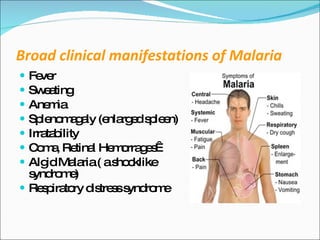
Broad clinical manifestations of Malaria Fever  Sweating  Anemia  Splenomagaly (enlarged spleen)  Irratability  Coma, Retinal Hemorrages   Algid Malaria ( a shocklike syndrome)  Respiratory distress syndrome
 
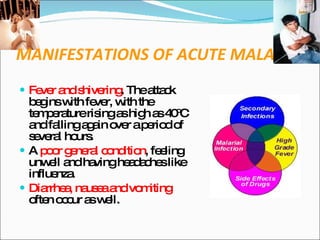
MANIFESTATIONS OF ACUTE MALARIA  Fever and shivering . The attack begins with fever, with the temperature rising as high as 40ºC and falling again over a period of several hours. A  poor general condition , feeling unwell and having headaches like influenza. Diarrhea, nausea and vomiting  often occur as well.
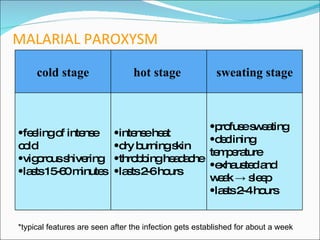
MALARIAL PAROXYSM *typical features are seen after the infection gets established for about a week cold stage hot stage  sweating stage feeling of intense cold vigorous shivering lasts 15-60 minutes intense heat dry burning skin throbbing headache lasts 2-6 hours profuse sweating declining temperature exhausted and weak -> sleep lasts 2-4 hours
PATTERN OF FEVER The fever paroxysm corresponds to the period of infected erythrocyte rupture and merozoite invasion.
ATYPICAL FEATURES Atypical fever Headache Body ache, back ache and joint pains Dizziness, vertigo Altered behaviour, acute psychosis Altered sensorium Convulsions, coma Cough Breathlessness Chest pain Acute abdomen Weakness Vomiting and diarrhoea Jaundice Pallor Puffiness of lids
SEVERE MALARIA CEREBRAL MALARIA SEVERE ANAEMIA ACUTE RENAL FAILURE PULMONARY OEDEMA OR ARDS CIRCULATORY COLLAPSE OR SHOCK SPONTANEOUS BLEEDING GENERALIZED CONVULSIONS METABOLIC ACIDOSIS HYPOGLCEMIA BLACK WATER FEVER
Cerebral Malaria Coma diffuse symmetric encephalopathy Unusual focal neurological signs Primitive reflexes absent Retinal haemorrhage with puillary dilatations Hemiplegia, CP Blindness, deafness Impaired cognition and learning
Anemia
Acute renal failure
Metabolic acidosis
Hypotension
Pulmonary edema
Hypoglycemia  MULTIFACTORIAL Parasite utilises the glucose  Associated with hyperlactatemia Due to hepatic failure gluconeogenesis and glcogenolyis are affected  Quinine – pancreatic beta cell stimulation
 
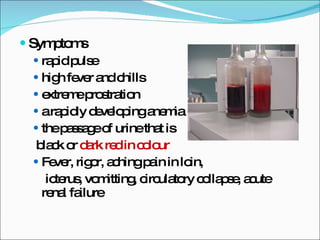
Black water fever due to intravascular hemolysis at schizogony period Predisposing factors quinine cold exposure fatigue trauma pregnancy parturition
Effects  Methaemoglobuminaemia Hyperbilirubinaemia Haemoglobinuria Pigments Oxyhaemoglobin Methaemoglobin Bilirubin Methaemalbumin
Symptoms rapid pulse high fever and chills extreme prostration a rapidly developing anemia the passage of urine that is  black or  dark red in colour Fever, rigor, aching pain in loin,  icterus, vomitting, circulatory collapse, acute renal failure
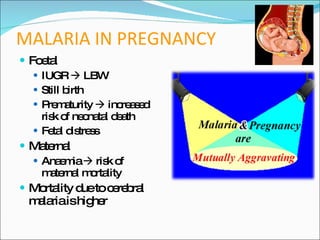
MALARIA IN PREGNANCY Foetal IUGR    LBW Still birth Prematurity    increased risk of neonatal death Fetal distress Maternal Anaemia    risk of maternal mortality Mortality due to cerebral malaria is higher
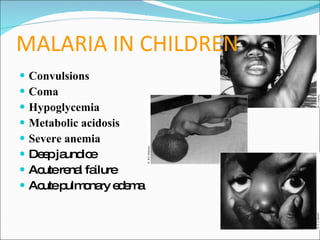
MALARIA IN CHILDREN Convulsions Coma Hypoglycemia Metabolic acidosis Severe anemia Deep jaundice Acute renal failure Acute pulmonary edema
 

3 Malaria Clinical Features

  • 1.
    CLINICAL FEATURES OFMALARIA febrile illness characterized by fever and related symptoms
  • 2.
    Clinical Manifestations arerelated to cycle of events in relation to RBC
  • 3.
    The first symptomsof malaria after the pre-patent period are called the  primary attack.  Usually atypical (starts getting relapse of symptoms at regular intervals of 48-72 hours)   short term relapses (recrudescences).     long term relapses  (after a gap of 20-60 days or more) due to the reactivation of the hypnozoites in the liver in case of vivax and ovale malaria. In falciparum and malariae infections, recrudescences can occur due to persistent infection in the blood.
  • 4.
    Broad clinical manifestationsof Malaria Fever Sweating Anemia Splenomagaly (enlarged spleen) Irratability Coma, Retinal Hemorrages  Algid Malaria ( a shocklike syndrome) Respiratory distress syndrome
  • 5.
  • 6.
    MANIFESTATIONS OF ACUTEMALARIA Fever and shivering . The attack begins with fever, with the temperature rising as high as 40ºC and falling again over a period of several hours. A poor general condition , feeling unwell and having headaches like influenza. Diarrhea, nausea and vomiting often occur as well.
  • 7.
    MALARIAL PAROXYSM *typicalfeatures are seen after the infection gets established for about a week cold stage hot stage sweating stage feeling of intense cold vigorous shivering lasts 15-60 minutes intense heat dry burning skin throbbing headache lasts 2-6 hours profuse sweating declining temperature exhausted and weak -> sleep lasts 2-4 hours
  • 8.
    PATTERN OF FEVERThe fever paroxysm corresponds to the period of infected erythrocyte rupture and merozoite invasion.
  • 9.
    ATYPICAL FEATURES Atypicalfever Headache Body ache, back ache and joint pains Dizziness, vertigo Altered behaviour, acute psychosis Altered sensorium Convulsions, coma Cough Breathlessness Chest pain Acute abdomen Weakness Vomiting and diarrhoea Jaundice Pallor Puffiness of lids
  • 10.
    SEVERE MALARIA CEREBRALMALARIA SEVERE ANAEMIA ACUTE RENAL FAILURE PULMONARY OEDEMA OR ARDS CIRCULATORY COLLAPSE OR SHOCK SPONTANEOUS BLEEDING GENERALIZED CONVULSIONS METABOLIC ACIDOSIS HYPOGLCEMIA BLACK WATER FEVER
  • 11.
    Cerebral Malaria Comadiffuse symmetric encephalopathy Unusual focal neurological signs Primitive reflexes absent Retinal haemorrhage with puillary dilatations Hemiplegia, CP Blindness, deafness Impaired cognition and learning
  • 12.
  • 13.
  • 14.
  • 15.
  • 16.
  • 17.
    Hypoglycemia MULTIFACTORIALParasite utilises the glucose Associated with hyperlactatemia Due to hepatic failure gluconeogenesis and glcogenolyis are affected Quinine – pancreatic beta cell stimulation
  • 18.
  • 19.
    Black water feverdue to intravascular hemolysis at schizogony period Predisposing factors quinine cold exposure fatigue trauma pregnancy parturition
  • 20.
    Effects MethaemoglobuminaemiaHyperbilirubinaemia Haemoglobinuria Pigments Oxyhaemoglobin Methaemoglobin Bilirubin Methaemalbumin
  • 21.
    Symptoms rapid pulsehigh fever and chills extreme prostration a rapidly developing anemia the passage of urine that is black or dark red in colour Fever, rigor, aching pain in loin, icterus, vomitting, circulatory collapse, acute renal failure
  • 22.
    MALARIA IN PREGNANCYFoetal IUGR  LBW Still birth Prematurity  increased risk of neonatal death Fetal distress Maternal Anaemia  risk of maternal mortality Mortality due to cerebral malaria is higher
  • 23.
    MALARIA IN CHILDRENConvulsions Coma Hypoglycemia Metabolic acidosis Severe anemia Deep jaundice Acute renal failure Acute pulmonary edema
  • 24.