MALARIA
NURUL HIDAYU | NASHRIQ AIMAN | AUDI ADIBAH
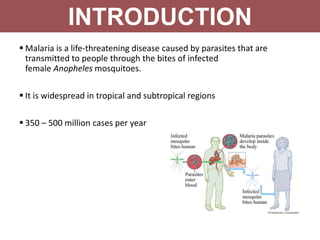
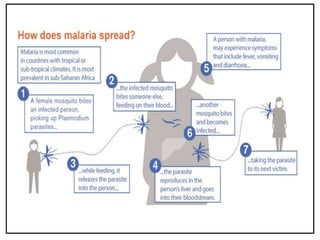
 Malaria is a life-threatening disease caused by parasites that are
transmitted to people through the bites of infected
female Anopheles mosquitoes.
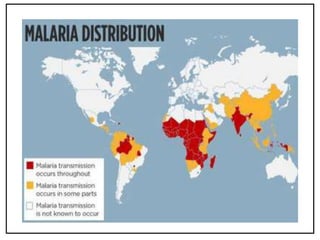
 It is widespread in tropical and subtropical regions
 350 – 500 million cases per year
INTRODUCTION
Parasite :
I. P. vivax
II. P. falciparum
III. P. malariae
IV. P. ovale
ETIOLOGY
Vectors :
INCUBATION PERIOD
 P. falciparum: 9 – 14 days
 P. vivax: 12-17 days
 P. ovale: 16 – 18 days
 P. malariae: 18 – 40 days
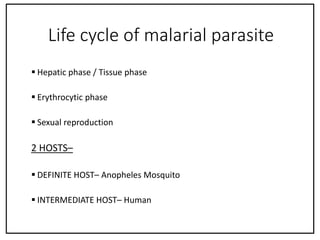
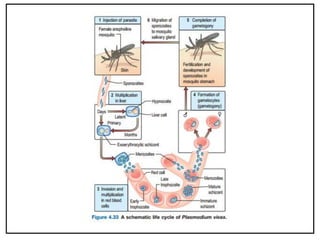
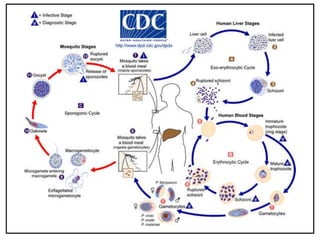
Life cycle of malarial parasite
 Hepatic phase / Tissue phase
 Erythrocytic phase
 Sexual reproduction
2 HOSTS–
 DEFINITE HOST– Anopheles Mosquito
 INTERMEDIATE HOST– Human
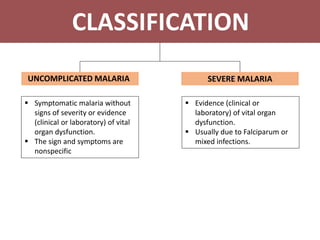
CLASSIFICATION
UNCOMPLICATED MALARIA SEVERE MALARIA
 Symptomatic malaria without
signs of severity or evidence
(clinical or laboratory) of vital
organ dysfunction.
 The sign and symptoms are
nonspecific
 Evidence (clinical or
laboratory) of vital organ
dysfunction.
 Usually due to Falciparum or
mixed infections.
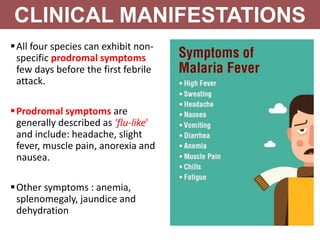
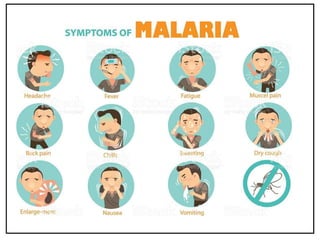
All four species can exhibit non-
specific prodromal symptoms
few days before the first febrile
attack.
Prodromal symptoms are
generally described as 'flu-like'
and include: headache, slight
fever, muscle pain, anorexia and
nausea.
Other symptoms : anemia,
splenomegaly, jaundice and
dehydration
CLINICAL MANIFESTATIONS
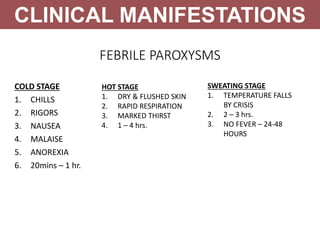
FEBRILE PAROXYSMS
COLD STAGE
1. CHILLS
2. RIGORS
3. NAUSEA
4. MALAISE
5. ANOREXIA
6. 20mins – 1 hr.
HOT STAGE
1. DRY & FLUSHED SKIN
2. RAPID RESPIRATION
3. MARKED THIRST
4. 1 – 4 hrs.
SWEATING STAGE
1. TEMPERATURE FALLS
BY CRISIS
2. 2 – 3 hrs.
3. NO FEVER – 24-48
HOURS
CLINICAL MANIFESTATIONS
DIFFERENTIAL DIAGNOSIS
1. Dengue
2. Typhoid fever
3. Leptospirosis
4. Septicemia
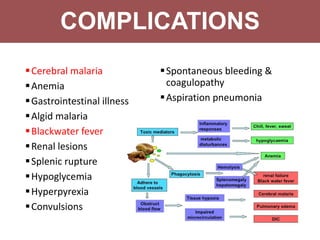
COMPLICATIONS
Cerebral malaria
Anemia
Gastrointestinal illness
Algid malaria
Blackwater fever
Renal lesions
Splenic rupture
Hypoglycemia
Hyperpyrexia
Convulsions
Spontaneous bleeding &
coagulopathy
Aspiration pneumonia
COMPLICATIONS
CEREBRAL
MALARIA
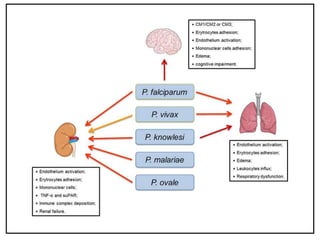
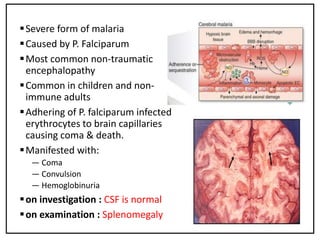
Severe form of malaria
Caused by P. Falciparum
Most common non-traumatic
encephalopathy
Common in children and non-
immune adults
Adhering of P. falciparum infected
erythrocytes to brain capillaries
causing coma & death.
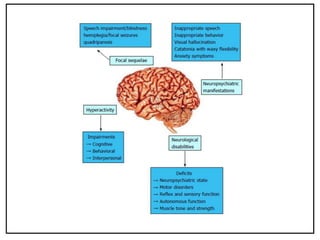
Manifested with:
— Coma
— Convulsion
— Hemoglobinuria
on investigation : CSF is normal
on examination : Splenomegaly
BLACKWATER
FEVER
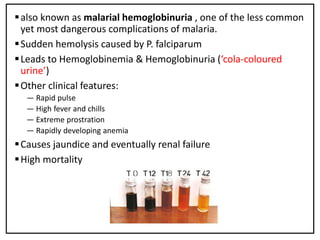
also known as malarial hemoglobinuria , one of the less common
yet most dangerous complications of malaria.
Sudden hemolysis caused by P. falciparum
Leads to Hemoglobinemia & Hemoglobinuria (‘cola-coloured
urine’)
Other clinical features:
— Rapid pulse
— High fever and chills
— Extreme prostration
— Rapidly developing anemia
Causes jaundice and eventually renal failure
High mortality
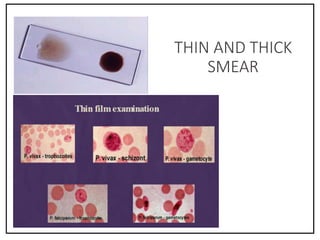
1. Blood Film Examination for Malaria Parasite (BFMP)
• Thick blood film : detection of even low levels of parasitaemia
• Thin blood film : to identify parasite morphology
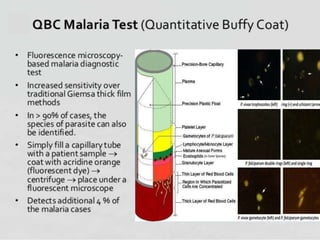
2. Quantitative Buffy coat test
• It involves staining of the centrifuged & compressed red cell layer with acridine
orange & its examination under UV light source
3. Rapid diagnostic tests
• Detects malarial antigens (PfHRP2/PMA/pLDH) from asexual &/or sexual forms
of the parasite.
4. Polymerase chain reaction:-
• specific test for detecting all species of malaria
INVESTIGATIONS
5. Other investigations:
Complete blood counts
Blood levels of glucose
Renal Profile
Urine Analysis
Liver Function Test
Other’s rapid test to rule out dengue or leptospirosis
THIN AND THICK
SMEAR
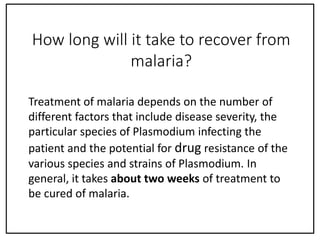
Treatment of malaria depends on the number of
different factors that include disease severity, the
particular species of Plasmodium infecting the
patient and the potential for drug resistance of the
various species and strains of Plasmodium. In
general, it takes about two weeks of treatment to
be cured of malaria.
How long will it take to recover from
malaria?
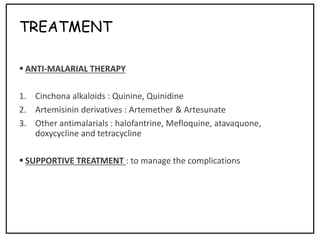
TREATMENT
 ANTI-MALARIAL THERAPY
1. Cinchona alkaloids : Quinine, Quinidine
2. Artemisinin derivatives : Artemether & Artesunate
3. Other antimalarials : halofantrine, Mefloquine, atavaquone,
doxycycline and tetracycline
 SUPPORTIVE TREATMENT : to manage the complications
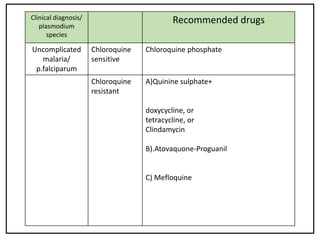
Clinical diagnosis/
plasmodium
species
Recommended drugs
Uncomplicated
malaria/
p.falciparum
Chloroquine
sensitive
Chloroquine phosphate
Chloroquine
resistant
A)Quinine sulphate+
doxycycline, or
tetracycline, or
Clindamycin
B).Atovaquone-Proguanil
C) Mefloquine
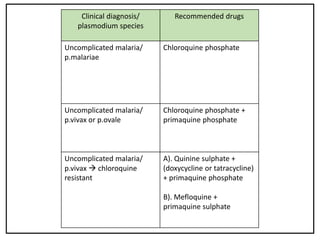
Clinical diagnosis/
plasmodium species
Recommended drugs
Uncomplicated malaria/
p.malariae
Chloroquine phosphate
Uncomplicated malaria/
p.vivax or p.ovale
Chloroquine phosphate +
primaquine phosphate
Uncomplicated malaria/
p.vivax  chloroquine
resistant
A). Quinine sulphate +
(doxycycline or tatracycline)
+ primaquine phosphate
B). Mefloquine +
primaquine sulphate
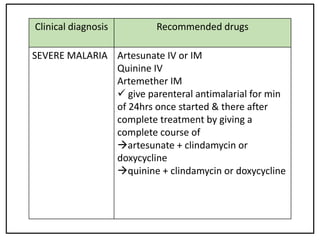
Clinical diagnosis Recommended drugs
SEVERE MALARIA Artesunate IV or IM
Quinine IV
Artemether IM
 give parenteral antimalarial for min
of 24hrs once started & there after
complete treatment by giving a
complete course of
artesunate + clindamycin or
doxycycline
quinine + clindamycin or doxycycline
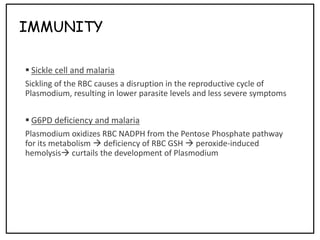
IMMUNITY
 Sickle cell and malaria
Sickling of the RBC causes a disruption in the reproductive cycle of
Plasmodium, resulting in lower parasite levels and less severe symptoms
 G6PD deficiency and malaria
Plasmodium oxidizes RBC NADPH from the Pentose Phosphate pathway
for its metabolism  deficiency of RBC GSH  peroxide-induced
hemolysis curtails the development of Plasmodium
Malaria
Malaria

Malaria

  • 1.
    MALARIA NURUL HIDAYU |NASHRIQ AIMAN | AUDI ADIBAH
  • 2.
     Malaria isa life-threatening disease caused by parasites that are transmitted to people through the bites of infected female Anopheles mosquitoes.  It is widespread in tropical and subtropical regions  350 – 500 million cases per year INTRODUCTION
  • 4.
    Parasite : I. P.vivax II. P. falciparum III. P. malariae IV. P. ovale ETIOLOGY Vectors : INCUBATION PERIOD  P. falciparum: 9 – 14 days  P. vivax: 12-17 days  P. ovale: 16 – 18 days  P. malariae: 18 – 40 days
  • 5.
    Life cycle ofmalarial parasite  Hepatic phase / Tissue phase  Erythrocytic phase  Sexual reproduction 2 HOSTS–  DEFINITE HOST– Anopheles Mosquito  INTERMEDIATE HOST– Human
  • 9.
    CLASSIFICATION UNCOMPLICATED MALARIA SEVEREMALARIA  Symptomatic malaria without signs of severity or evidence (clinical or laboratory) of vital organ dysfunction.  The sign and symptoms are nonspecific  Evidence (clinical or laboratory) of vital organ dysfunction.  Usually due to Falciparum or mixed infections.
  • 10.
    All four speciescan exhibit non- specific prodromal symptoms few days before the first febrile attack. Prodromal symptoms are generally described as 'flu-like' and include: headache, slight fever, muscle pain, anorexia and nausea. Other symptoms : anemia, splenomegaly, jaundice and dehydration CLINICAL MANIFESTATIONS
  • 11.
    FEBRILE PAROXYSMS COLD STAGE 1.CHILLS 2. RIGORS 3. NAUSEA 4. MALAISE 5. ANOREXIA 6. 20mins – 1 hr. HOT STAGE 1. DRY & FLUSHED SKIN 2. RAPID RESPIRATION 3. MARKED THIRST 4. 1 – 4 hrs. SWEATING STAGE 1. TEMPERATURE FALLS BY CRISIS 2. 2 – 3 hrs. 3. NO FEVER – 24-48 HOURS CLINICAL MANIFESTATIONS
  • 13.
    DIFFERENTIAL DIAGNOSIS 1. Dengue 2.Typhoid fever 3. Leptospirosis 4. Septicemia
  • 14.
    COMPLICATIONS Cerebral malaria Anemia Gastrointestinal illness Algidmalaria Blackwater fever Renal lesions Splenic rupture Hypoglycemia Hyperpyrexia Convulsions Spontaneous bleeding & coagulopathy Aspiration pneumonia COMPLICATIONS
  • 16.
  • 17.
    Severe form ofmalaria Caused by P. Falciparum Most common non-traumatic encephalopathy Common in children and non- immune adults Adhering of P. falciparum infected erythrocytes to brain capillaries causing coma & death. Manifested with: — Coma — Convulsion — Hemoglobinuria on investigation : CSF is normal on examination : Splenomegaly
  • 19.
  • 20.
    also known asmalarial hemoglobinuria , one of the less common yet most dangerous complications of malaria. Sudden hemolysis caused by P. falciparum Leads to Hemoglobinemia & Hemoglobinuria (‘cola-coloured urine’) Other clinical features: — Rapid pulse — High fever and chills — Extreme prostration — Rapidly developing anemia Causes jaundice and eventually renal failure High mortality
  • 21.
    1. Blood FilmExamination for Malaria Parasite (BFMP) • Thick blood film : detection of even low levels of parasitaemia • Thin blood film : to identify parasite morphology 2. Quantitative Buffy coat test • It involves staining of the centrifuged & compressed red cell layer with acridine orange & its examination under UV light source 3. Rapid diagnostic tests • Detects malarial antigens (PfHRP2/PMA/pLDH) from asexual &/or sexual forms of the parasite. 4. Polymerase chain reaction:- • specific test for detecting all species of malaria INVESTIGATIONS
  • 22.
    5. Other investigations: Completeblood counts Blood levels of glucose Renal Profile Urine Analysis Liver Function Test Other’s rapid test to rule out dengue or leptospirosis
  • 24.
  • 25.
    Treatment of malariadepends on the number of different factors that include disease severity, the particular species of Plasmodium infecting the patient and the potential for drug resistance of the various species and strains of Plasmodium. In general, it takes about two weeks of treatment to be cured of malaria. How long will it take to recover from malaria?
  • 26.
    TREATMENT  ANTI-MALARIAL THERAPY 1.Cinchona alkaloids : Quinine, Quinidine 2. Artemisinin derivatives : Artemether & Artesunate 3. Other antimalarials : halofantrine, Mefloquine, atavaquone, doxycycline and tetracycline  SUPPORTIVE TREATMENT : to manage the complications
  • 27.
    Clinical diagnosis/ plasmodium species Recommended drugs Uncomplicated malaria/ p.falciparum Chloroquine sensitive Chloroquinephosphate Chloroquine resistant A)Quinine sulphate+ doxycycline, or tetracycline, or Clindamycin B).Atovaquone-Proguanil C) Mefloquine
  • 28.
    Clinical diagnosis/ plasmodium species Recommendeddrugs Uncomplicated malaria/ p.malariae Chloroquine phosphate Uncomplicated malaria/ p.vivax or p.ovale Chloroquine phosphate + primaquine phosphate Uncomplicated malaria/ p.vivax  chloroquine resistant A). Quinine sulphate + (doxycycline or tatracycline) + primaquine phosphate B). Mefloquine + primaquine sulphate
  • 29.
    Clinical diagnosis Recommendeddrugs SEVERE MALARIA Artesunate IV or IM Quinine IV Artemether IM  give parenteral antimalarial for min of 24hrs once started & there after complete treatment by giving a complete course of artesunate + clindamycin or doxycycline quinine + clindamycin or doxycycline
  • 30.
    IMMUNITY  Sickle celland malaria Sickling of the RBC causes a disruption in the reproductive cycle of Plasmodium, resulting in lower parasite levels and less severe symptoms  G6PD deficiency and malaria Plasmodium oxidizes RBC NADPH from the Pentose Phosphate pathway for its metabolism  deficiency of RBC GSH  peroxide-induced hemolysis curtails the development of Plasmodium

Editor's Notes

  • #27 Drug resistance : Resistance is now common against all classes of antimalarial drugs apart from artemisinins. Chloroquine resistance has spread to nearly all areas of the world where falciparum malaria is transmitted