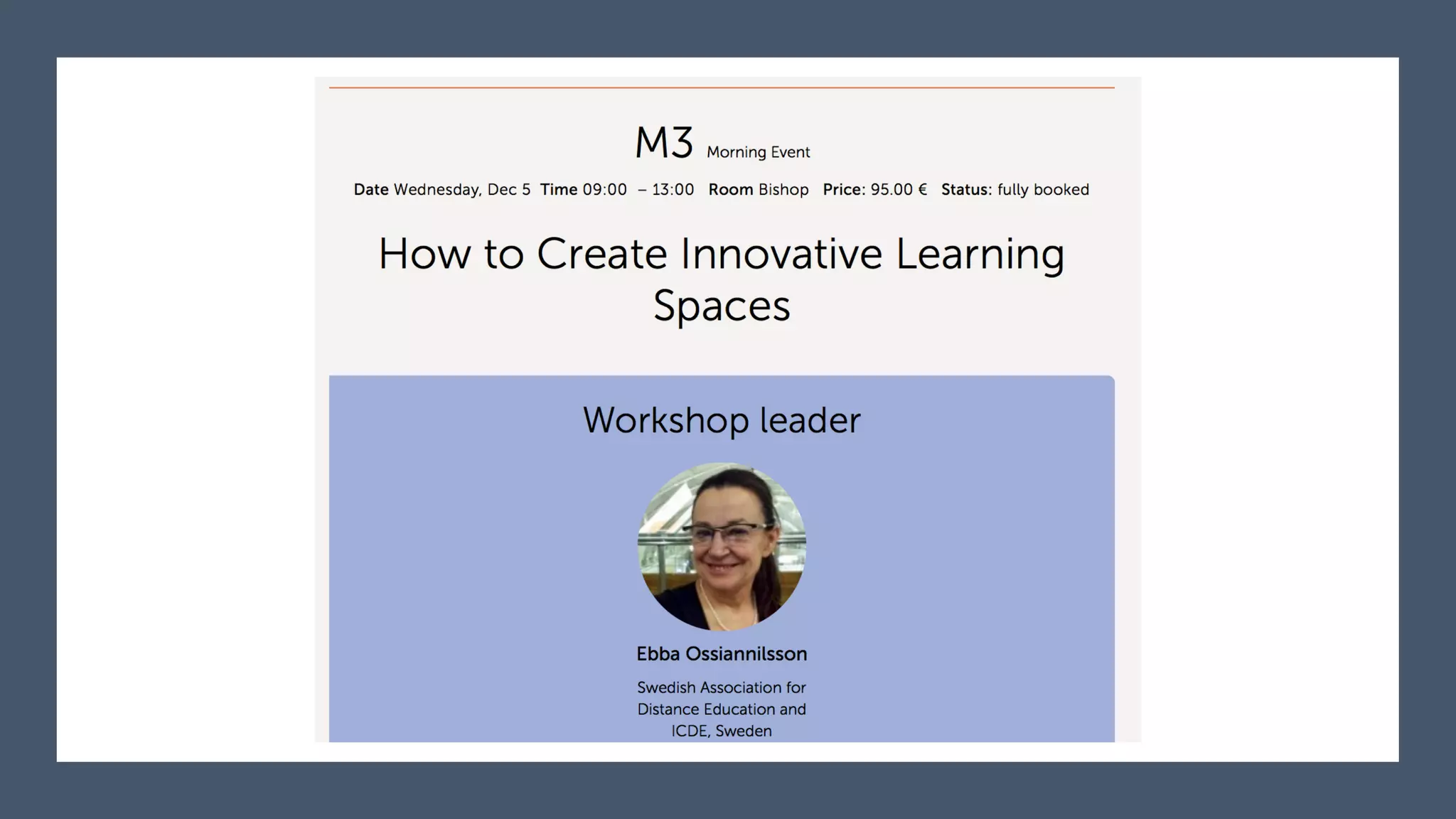
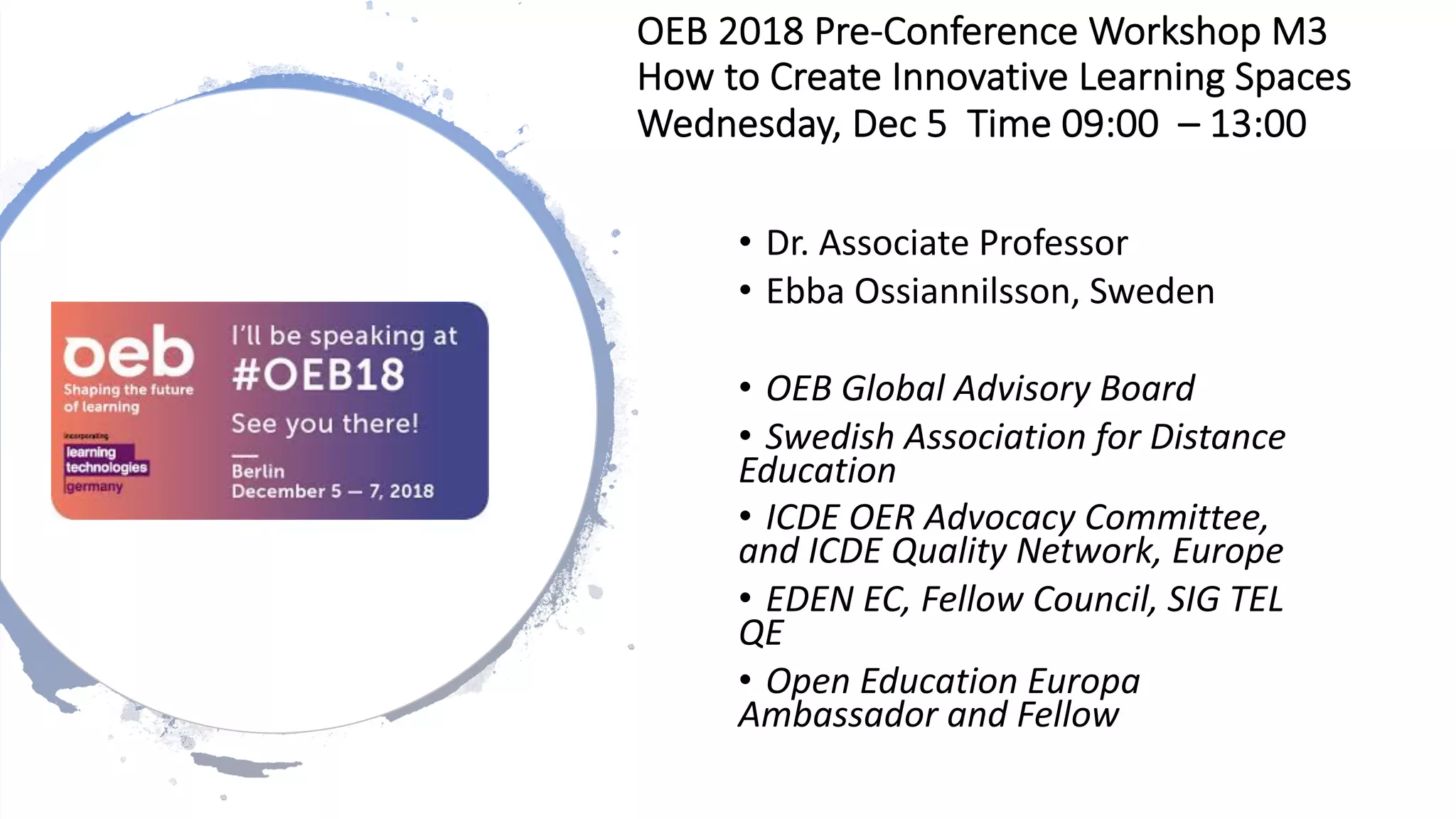
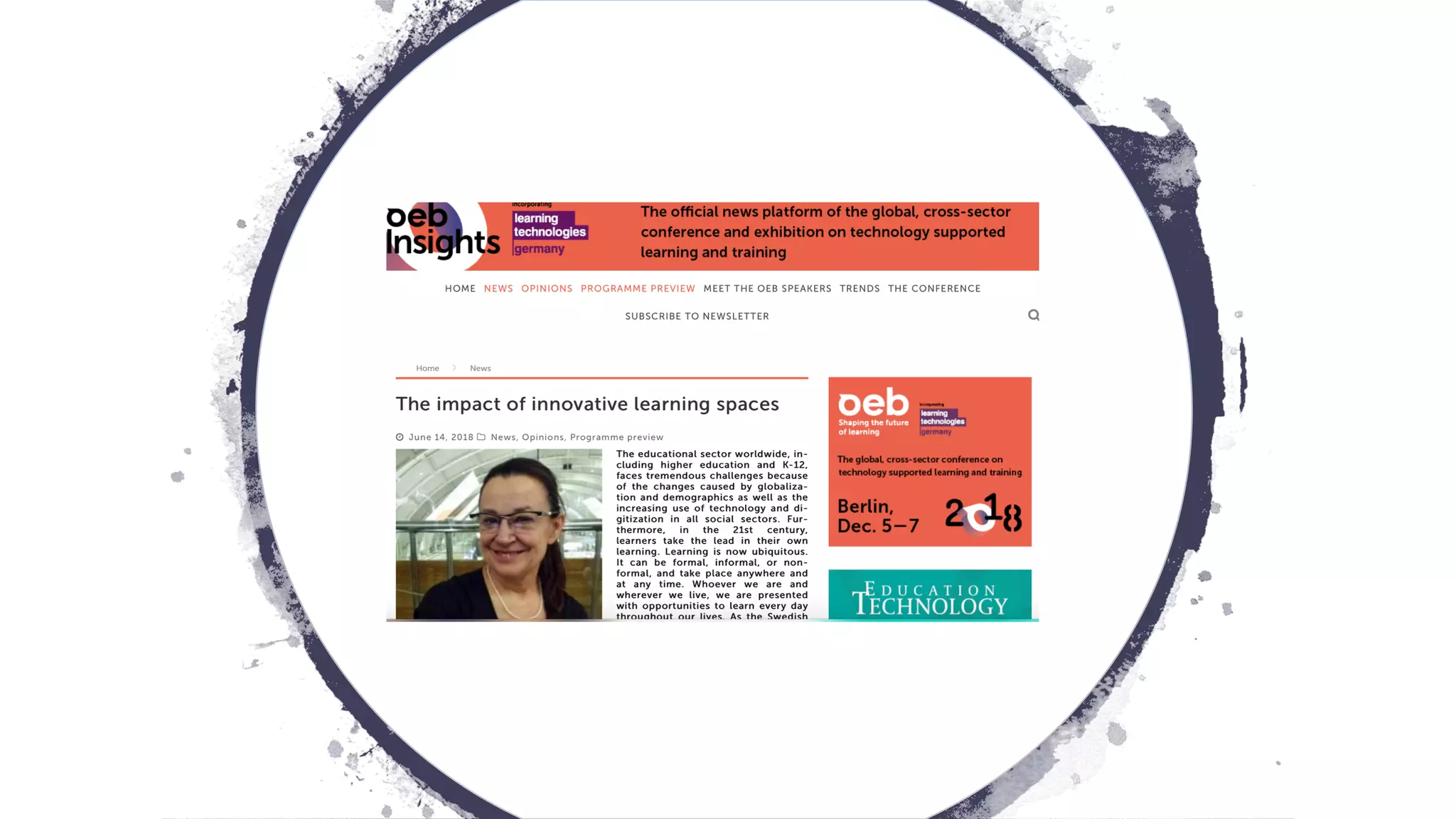
OEB 2018 Pre-Conference Workshop M3
How to Create Innovative Learning Spaces
Wednesday, Dec 5 Time 09:00 – 13:00
• Dr. Associate Professor
• Ebba Ossiannilsson, Sweden
• OEB Global Advisory Board
• Swedish Association for Distance
Education
• ICDE OER Advocacy Committee,
and ICDE Quality Network, Europe
• EDEN EC, Fellow Council, SIG TEL
QE
• Open Education Europa
Ambassador and Fellow
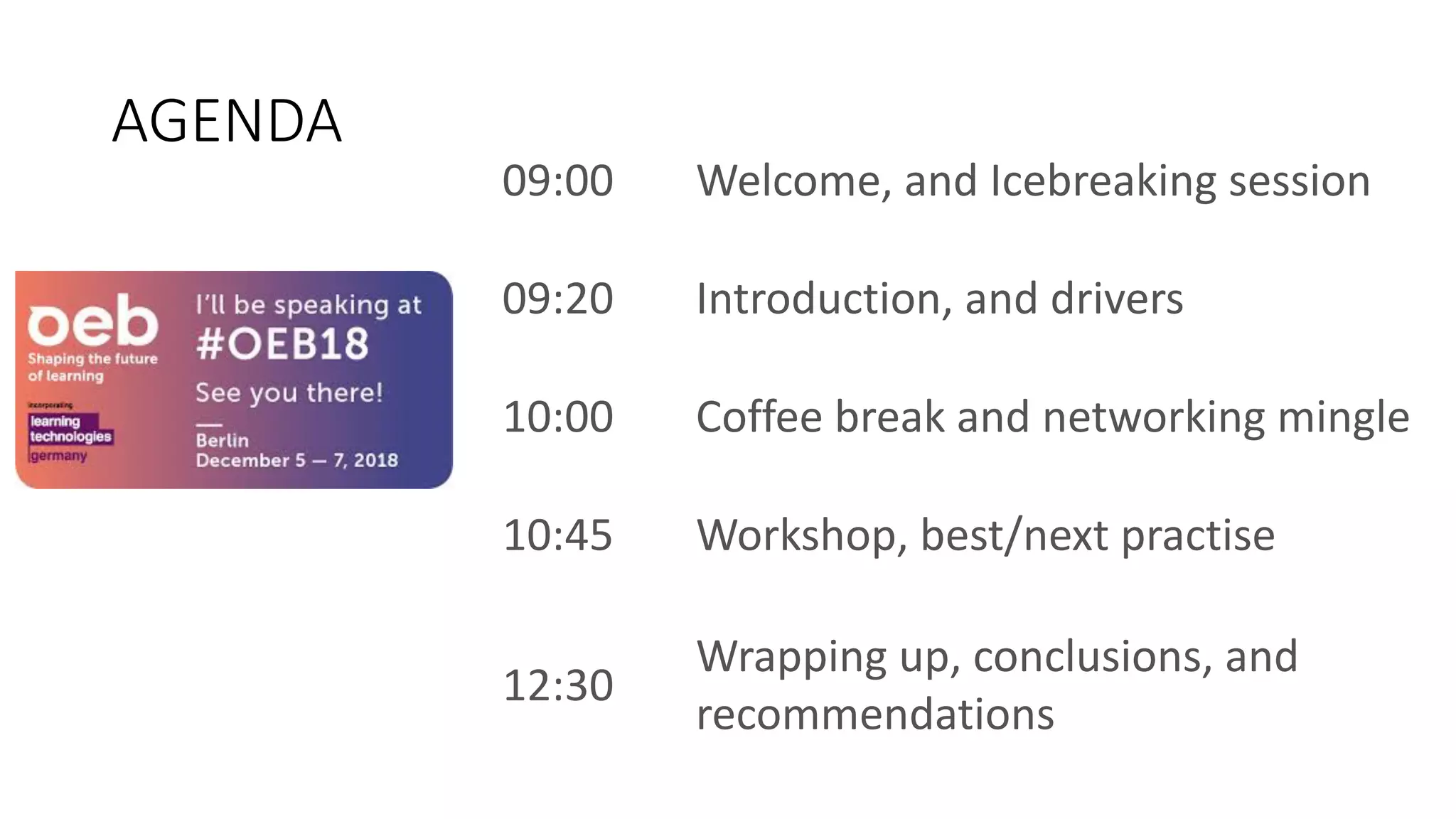
AGENDA
09:00 Welcome, and Icebreaking session
09:20 Introduction, and drivers
10:00 Coffee break and networking mingle
10:45 Workshop, best/next practise
12:30
Wrapping up, conclusions, and
recommendations
In short, we will focus on how
we can create and cultivate a
true culture of innovative
learning spaces at the micro,
meso, and macro levels.
INTRODUCTION INNOVATIVE
LEARNING SPACES
With the rapid advancements in economy, technology and society
in general, that occurred in the last decades of the 20th Century,
the demands on the educational system increased in a number of
ways for the 21st century.
Critical thinking, collaboration, innovation, Information and
Communication Technologies (ICT), digital literacy, adaptiveness,
are some of the basic skills that students and citizens of today and
of tomorrow are asked to possess in order not only to fill the
industry demands but also to survive and function in society.
INNOVATIVE
LEARNING
SPACES
Learning is ubiquitous, as it
takes place in all means, at all
time and everywhere.
Learning today can take many
forms, such as formal, informal
and non-normal and take
place anywhere and anytime.
Whoever we are, wherever we
live we are presented with
opportunities to learn every
day of our life.
Humans are learning
throughout life, as life is
learning humans throughout.
Just for me,
and just in time
learning
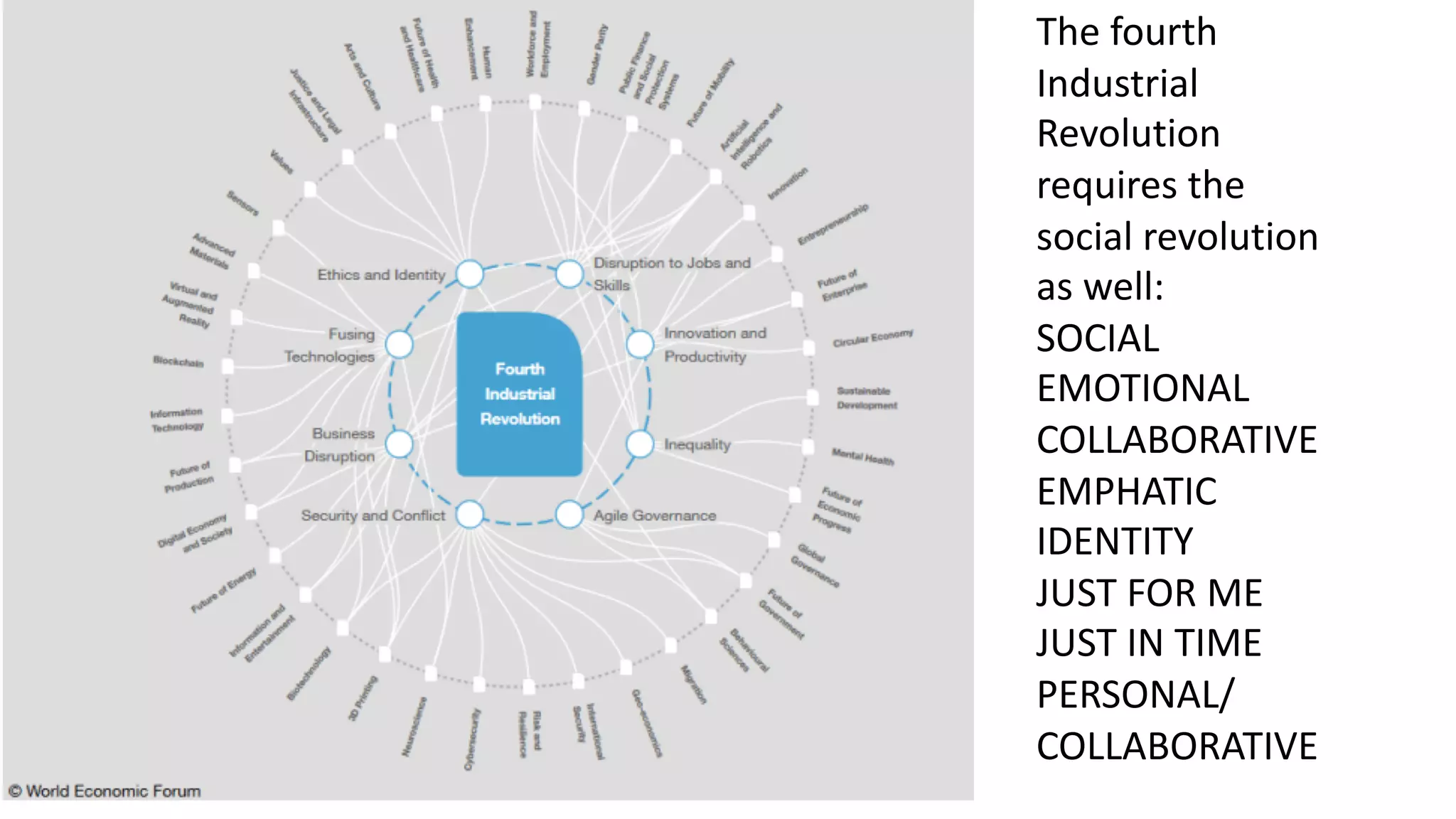
The fourth
Industrial
Revolution
requires the
social revolution
as well:
SOCIAL
EMOTIONAL
COLLABORATIVE
EMPHATIC
IDENTITY
JUST FOR ME
JUST IN TIME
PERSONAL/
COLLABORATIVE
INNOVATIVE
LEARNING
SPACES
Space as a change agent?
How can learning spaces change
teaching approaches?
Learners expectations
Learners satisfaction, engagement,
success
Impact on motivation and outcome
Leadership and management?
Learning spaces of the next generation?
Learning spaces and evolving
pedagogical approaches?
MICRO, MESO AND MACRO LEVEL
NMC2018NMC2018
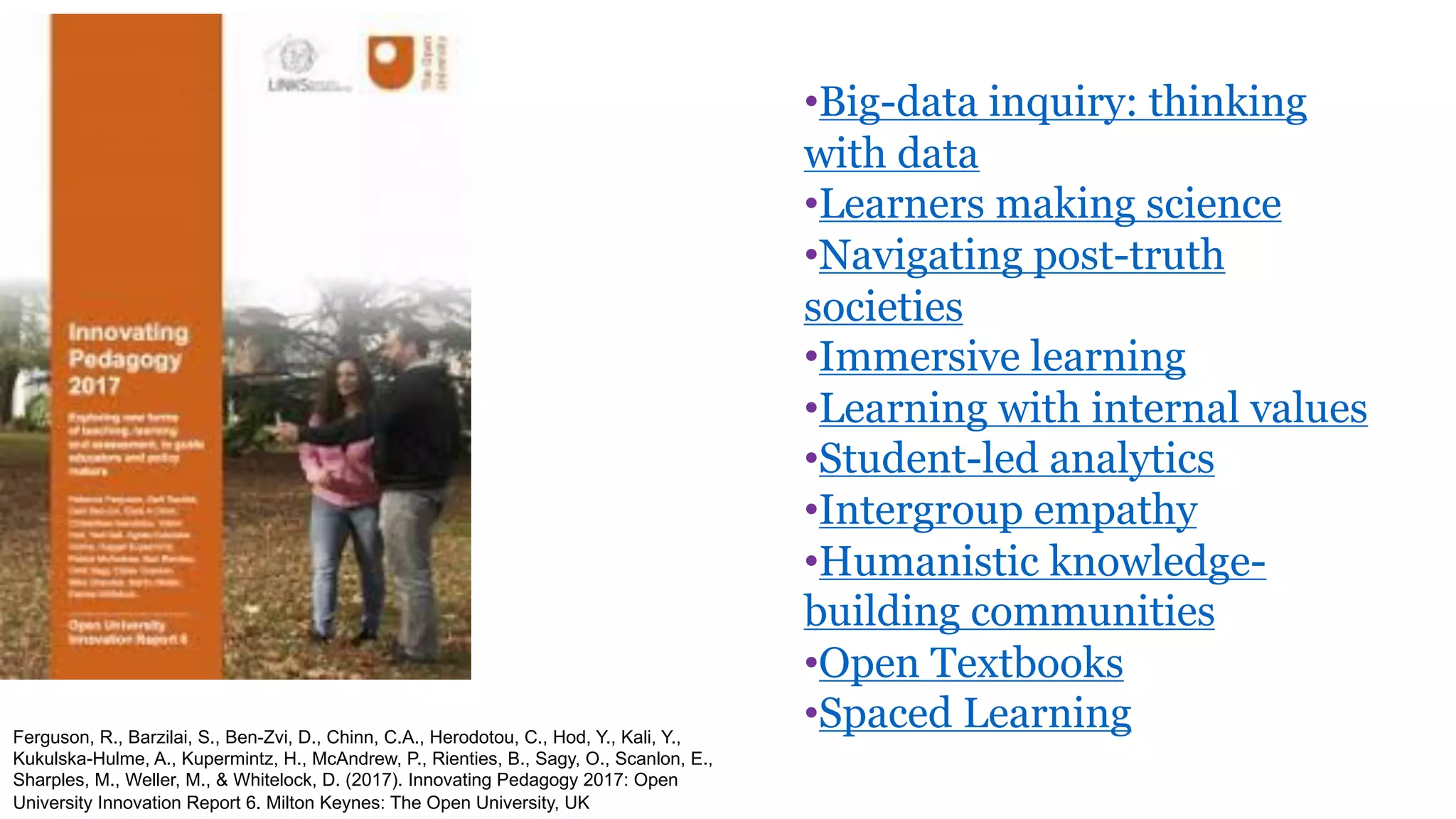
Ferguson, R., Barzilai, S., Ben-Zvi, D., Chinn, C.A., Herodotou, C., Hod, Y., Kali, Y.,
Kukulska-Hulme, A., Kupermintz, H., McAndrew, P., Rienties, B., Sagy, O., Scanlon, E.,
Sharples, M., Weller, M., & Whitelock, D. (2017). Innovating Pedagogy 2017: Open
University Innovation Report 6. Milton Keynes: The Open University, UK
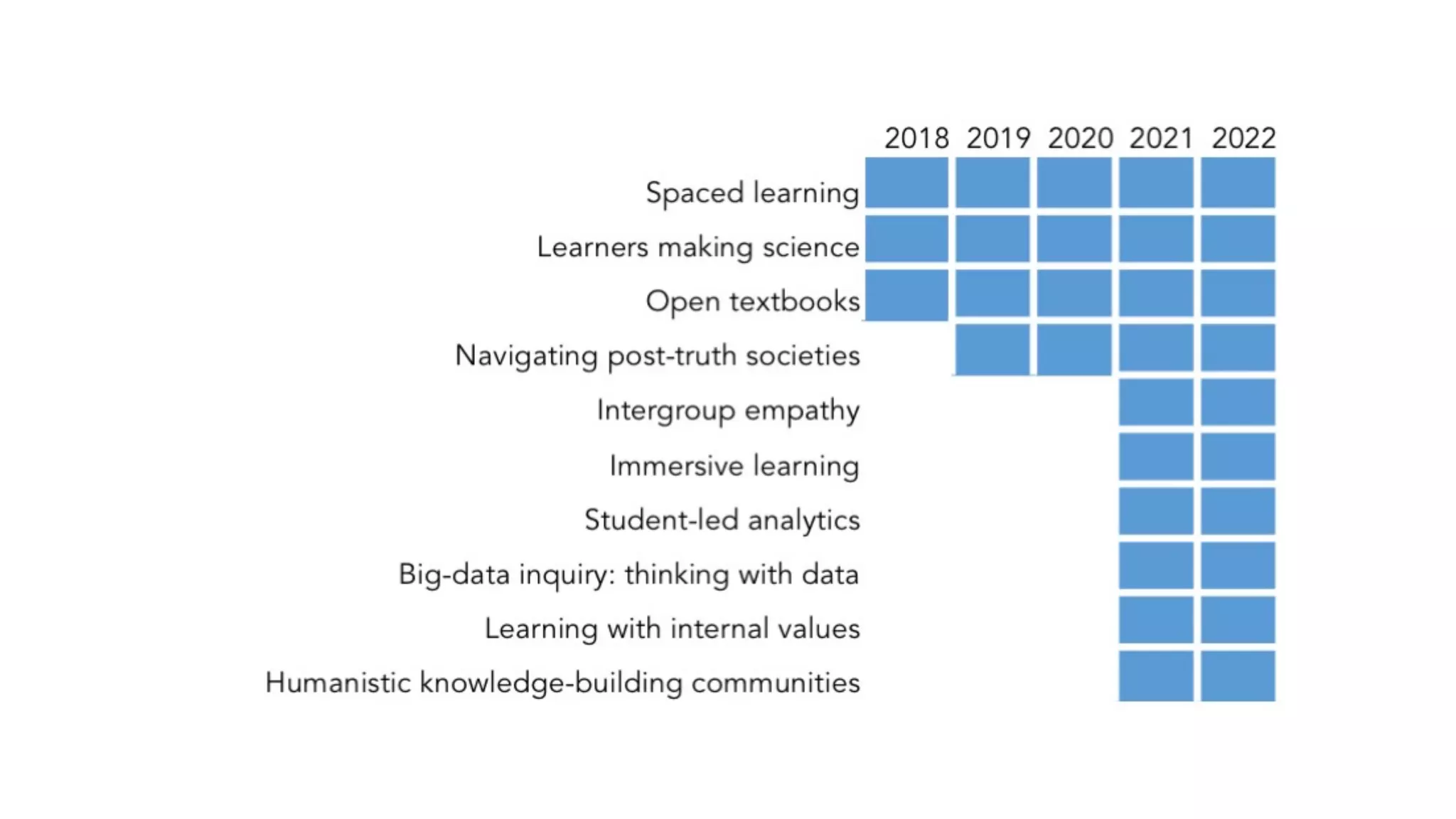
•Big-data inquiry: thinking
with data
•Learners making science
•Navigating post-truth
societies
•Immersive learning
•Learning with internal values
•Student-led analytics
•Intergroup empathy
•Humanistic knowledge-
building communities
•Open Textbooks
•Spaced Learning
INNOVATIVE
LEARNING SPACES
Space, whether physical or virtual, can have
a significant impact on learning. Innovative
learning spaces focuses on how learner
expectations influence such spaces, the
principles and activities that facilitate
learning, and the role of technology from
the perspective of those who created
learning environments: academics, faculty,
learning technologists, librarians, and
administrators. Information technology has
brought unique capabilities to learning
spaces, whether stimulating greater
interaction through the use of collaborative
tools, videoconferencing with international
experts, or opening virtual worlds for
exploration.
Together space, technology, and pedagogy
empower learner success.
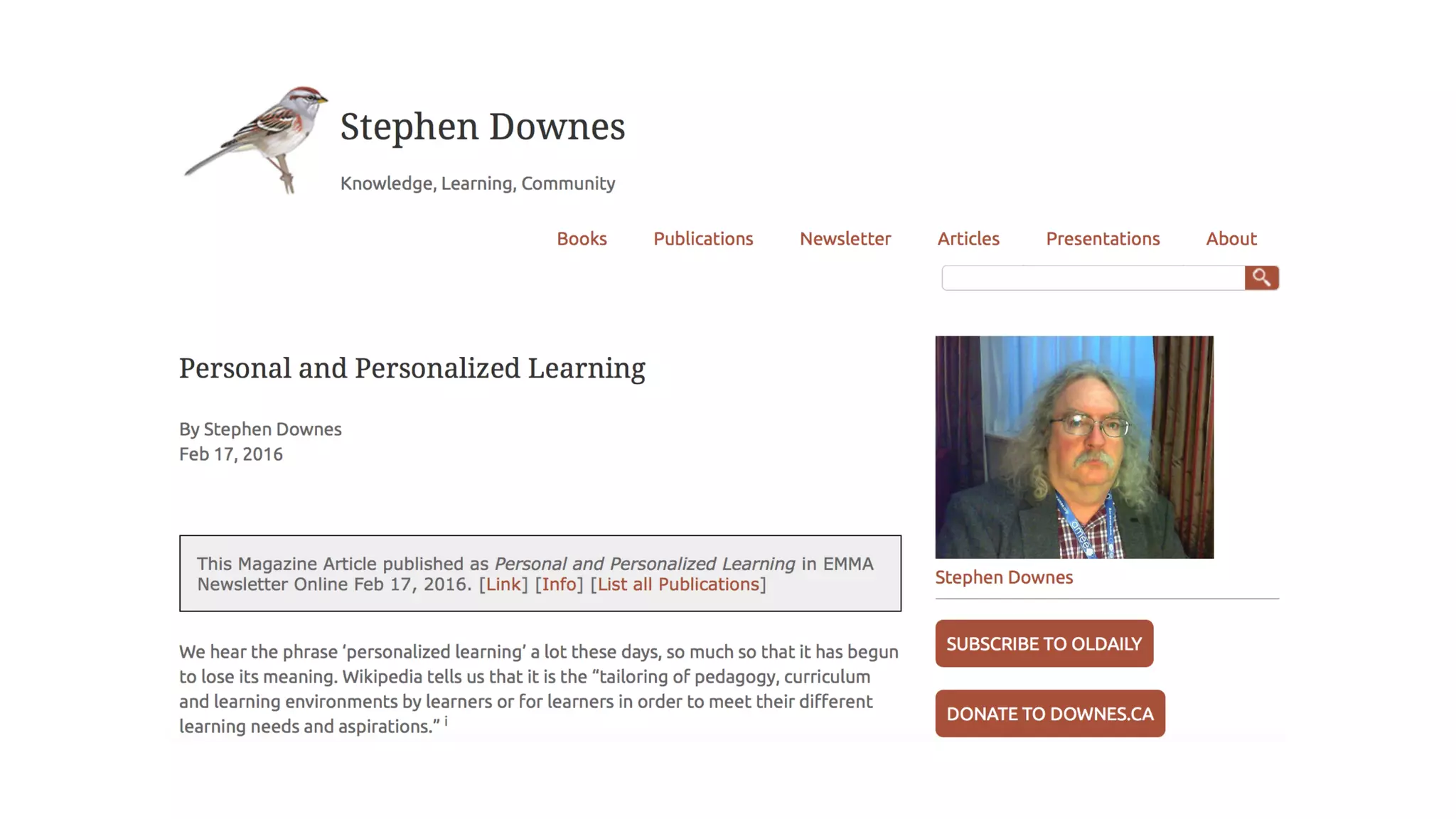
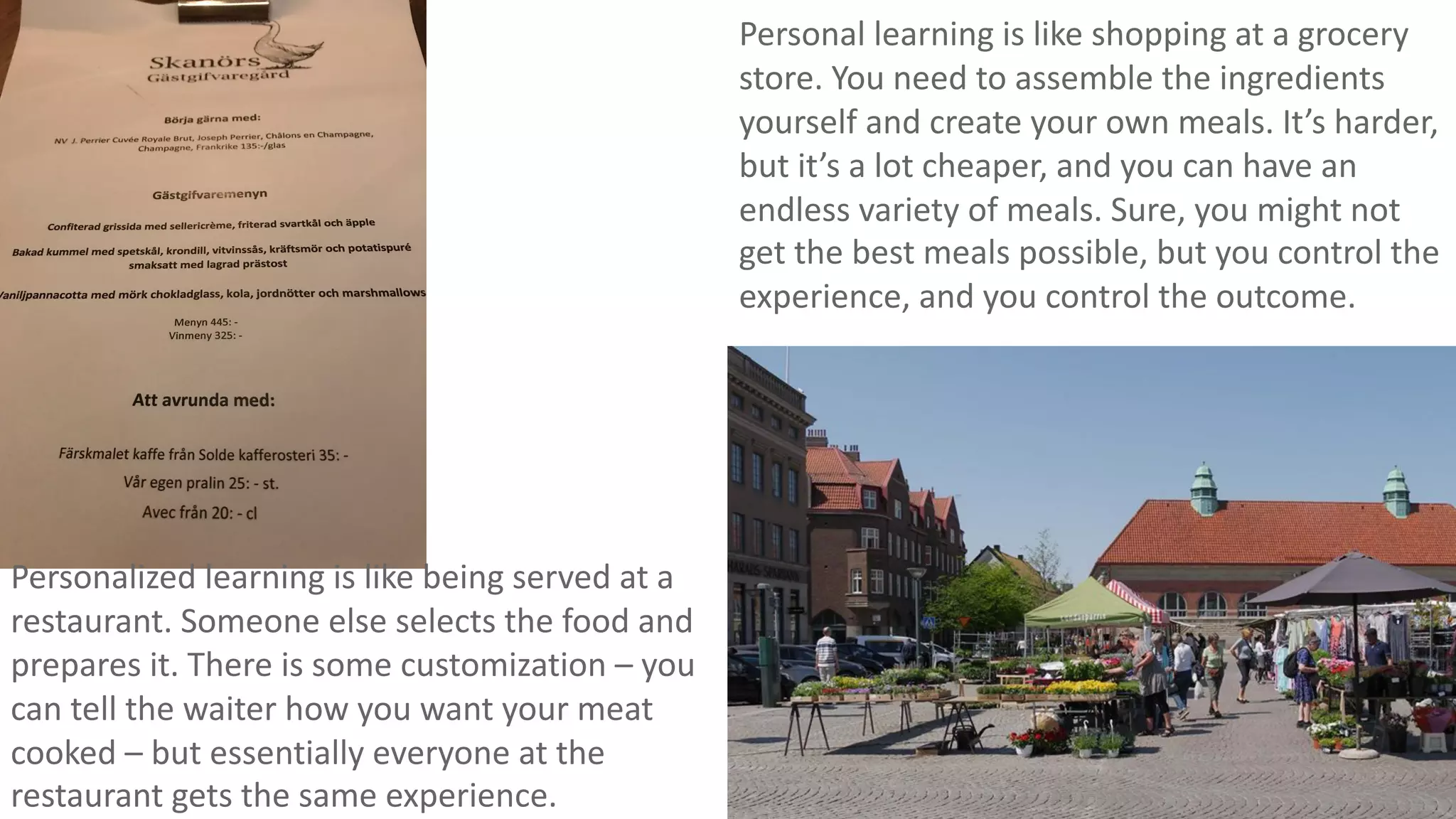
Personal learning is like shopping at a grocery
store. You need to assemble the ingredients
yourself and create your own meals. It’s harder,
but it’s a lot cheaper, and you can have an
endless variety of meals. Sure, you might not
get the best meals possible, but you control the
experience, and you control the outcome.
Personalized learning is like being served at a
restaurant. Someone else selects the food and
prepares it. There is some customization – you
can tell the waiter how you want your meat
cooked – but essentially everyone at the
restaurant gets the same experience.
From Interaction to Crossaction - new
designs for teaching and learning in a
networked world
Read more: https://www.isa-
jahnke.com/news/from-interaction-to-
crossaction/
Isa Jahnke (2015). Digital Didactical Designs - Teaching and Learning in
CrossActionSpaces.New York & London: Routledge
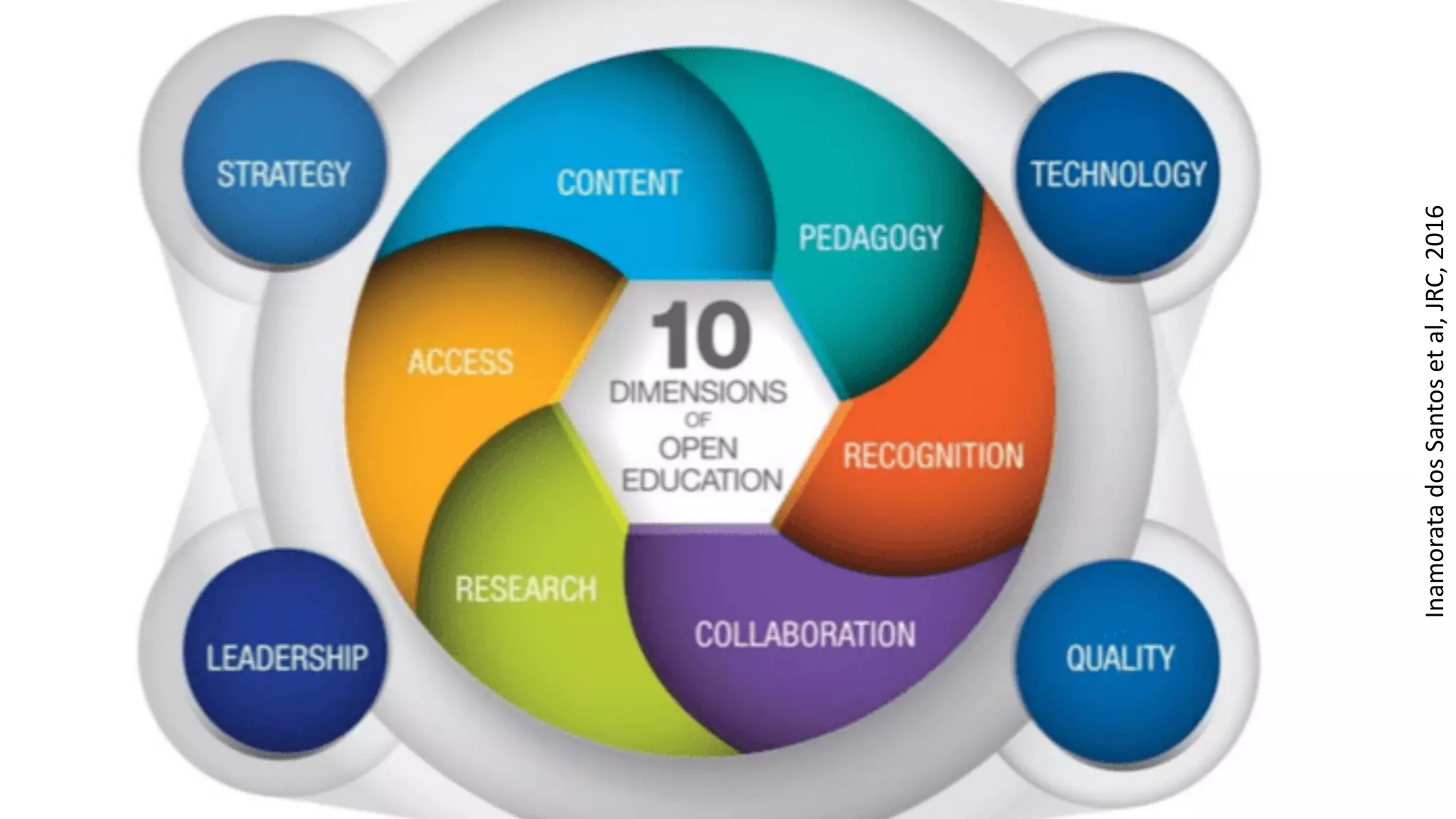
InamoratadosSantosetal,JRC,2016
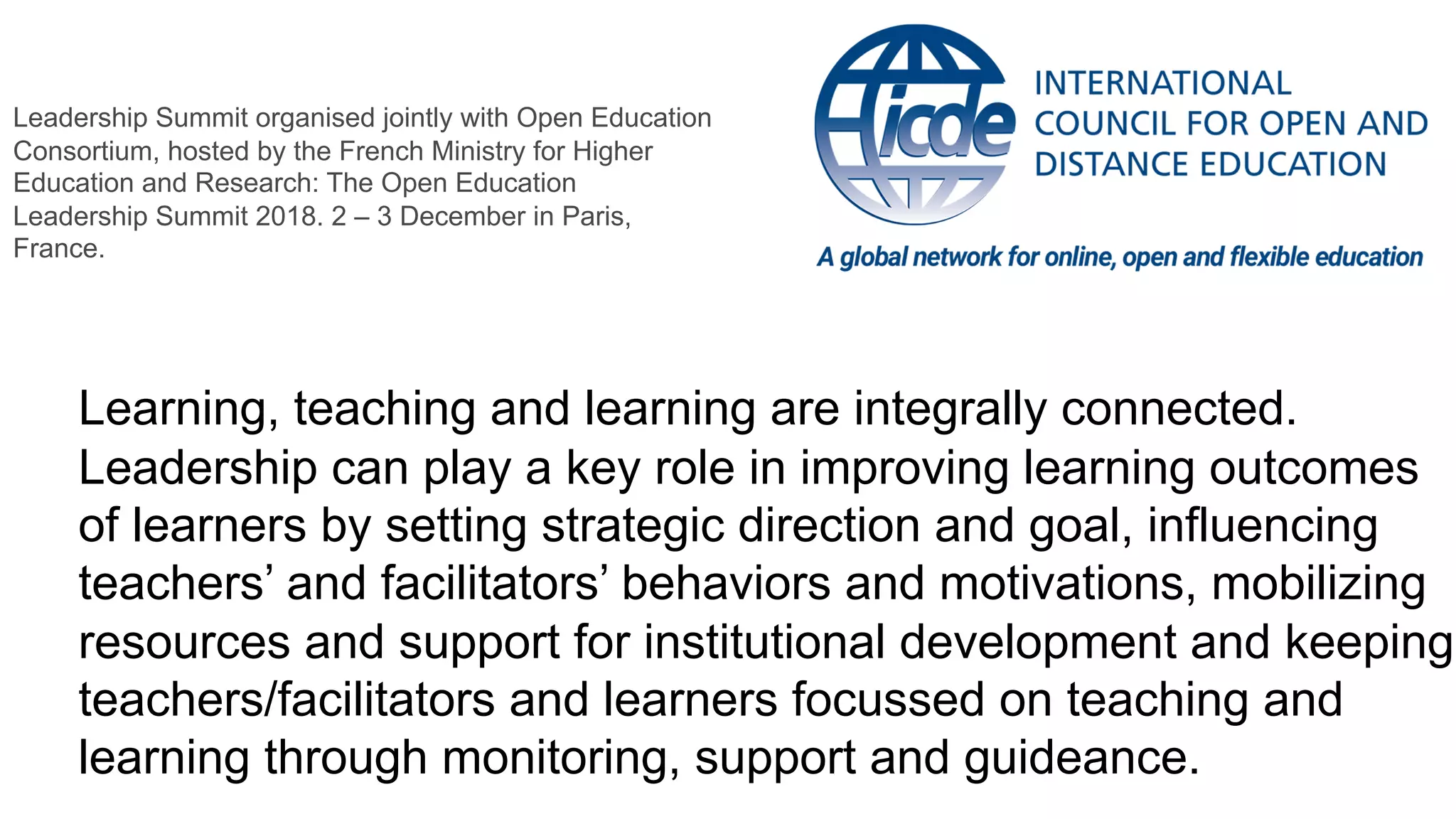
Learning, teaching and learning are integrally connected.
Leadership can play a key role in improving learning outcomes
of learners by setting strategic direction and goal, influencing
teachers’ and facilitators’ behaviors and motivations, mobilizing
resources and support for institutional development and keeping
teachers/facilitators and learners focussed on teaching and
learning through monitoring, support and guideance.
Leadership Summit organised jointly with Open Education
Consortium, hosted by the French Ministry for Higher
Education and Research: The Open Education
Leadership Summit 2018. 2 – 3 December in Paris,
France.
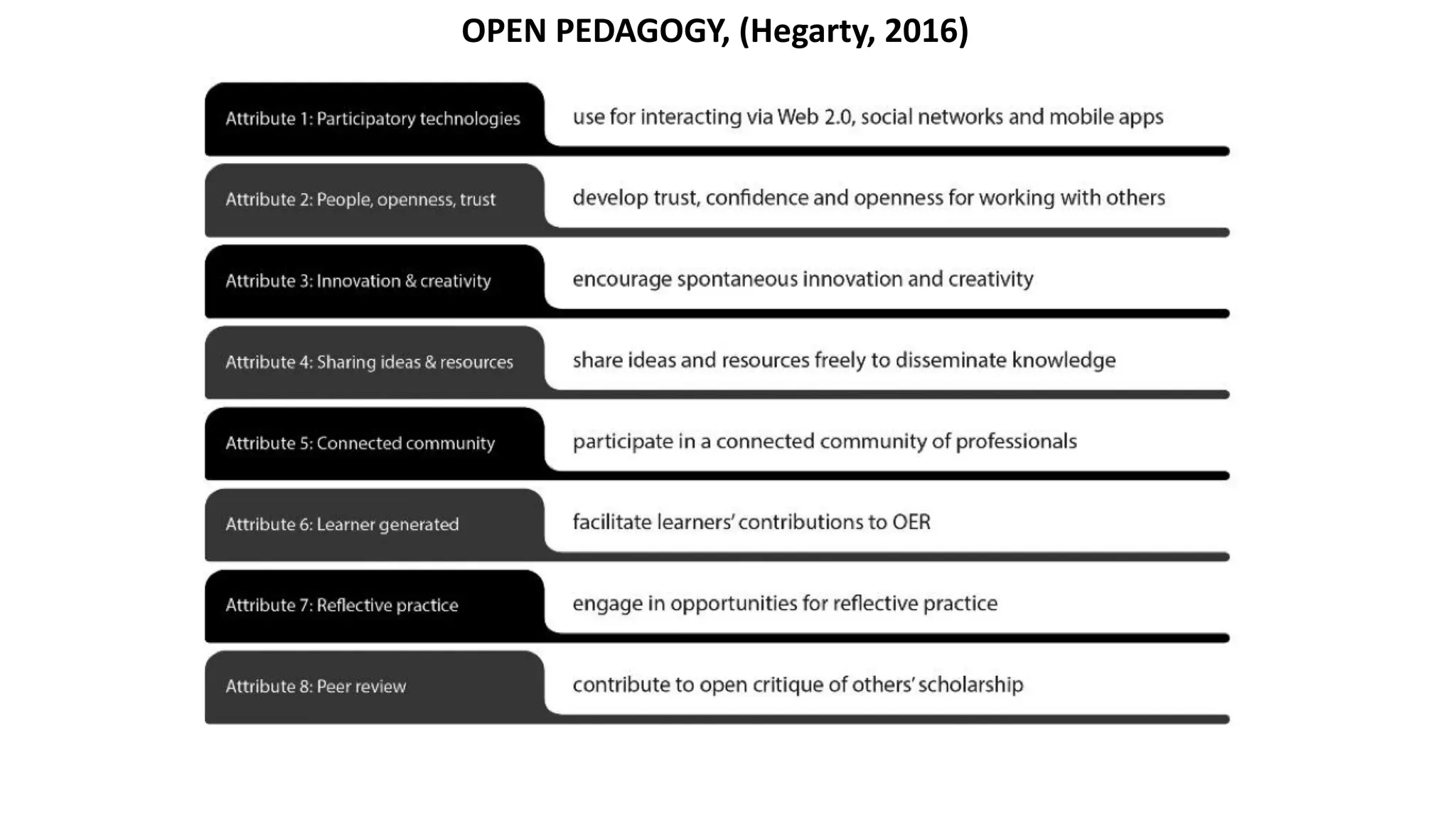
OPEN PEDAGOGY, (Hegarty, 2016)
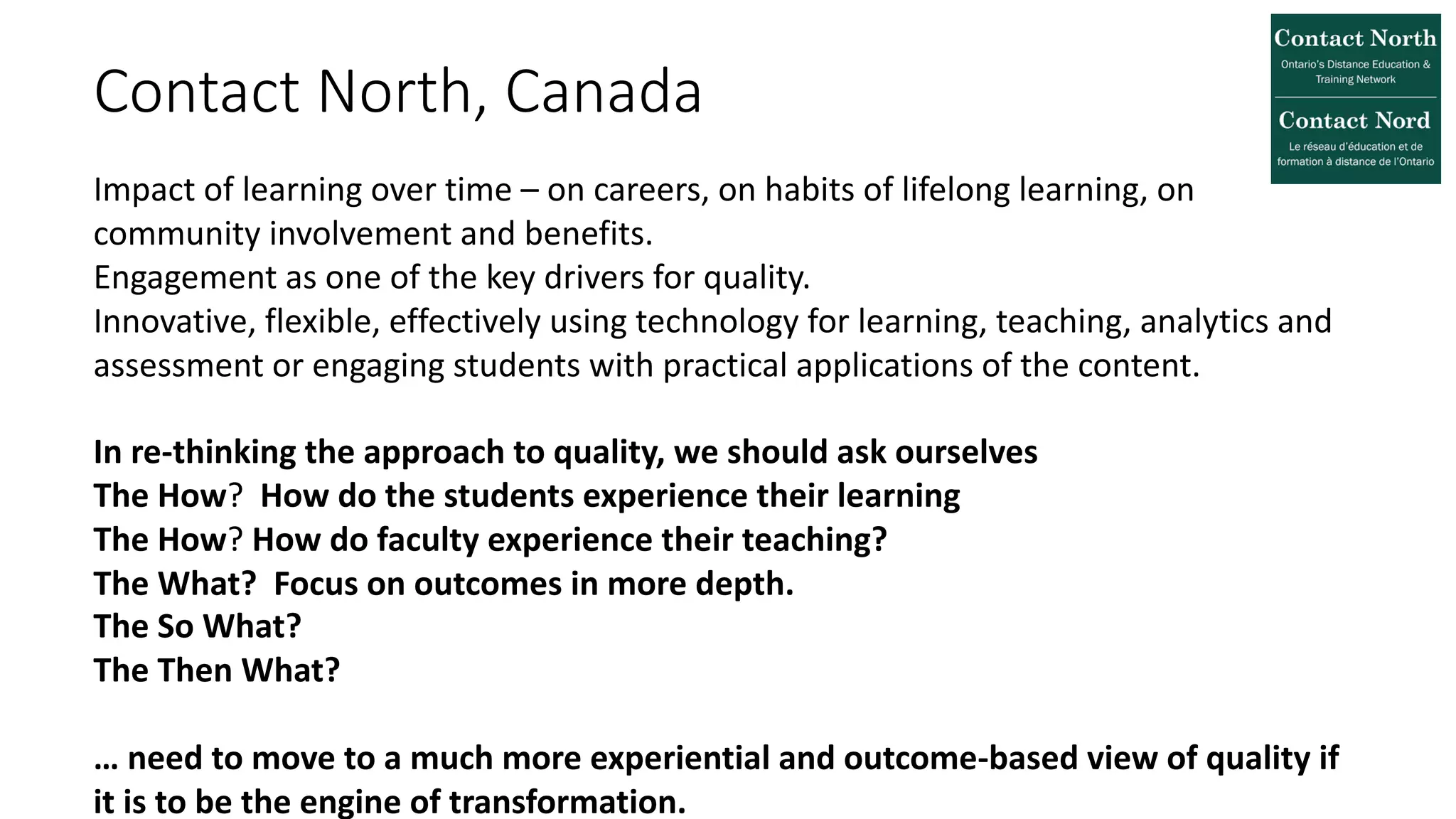
Contact North, Canada
Impact of learning over time – on careers, on habits of lifelong learning, on
community involvement and benefits.
Engagement as one of the key drivers for quality.
Innovative, flexible, effectively using technology for learning, teaching, analytics and
assessment or engaging students with practical applications of the content.
In re-thinking the approach to quality, we should ask ourselves
The How? How do the students experience their learning
The How? How do faculty experience their teaching?
The What? Focus on outcomes in more depth.
The So What?
The Then What?
… need to move to a much more experiential and outcome-based view of quality if
it is to be the engine of transformation.
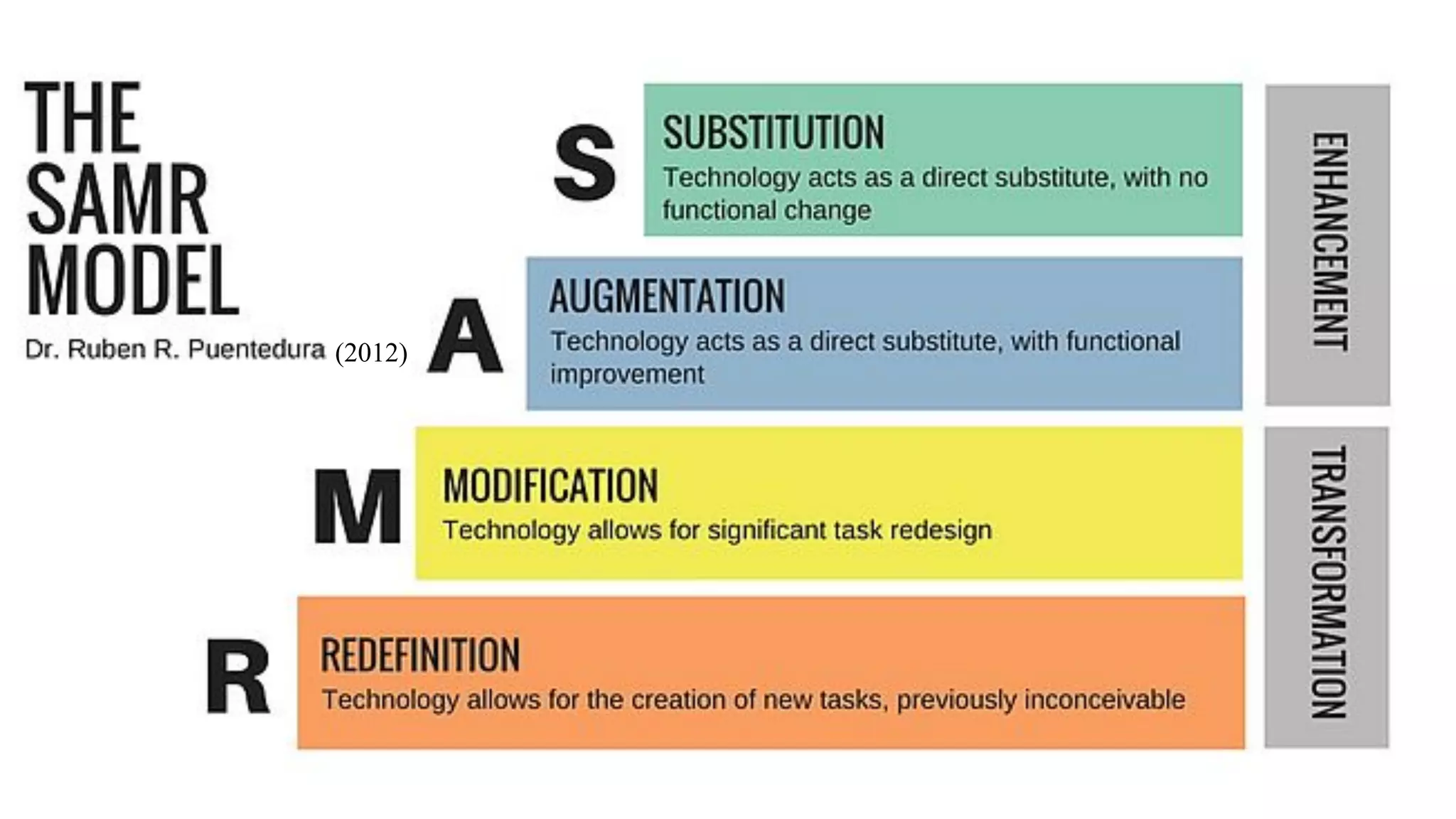
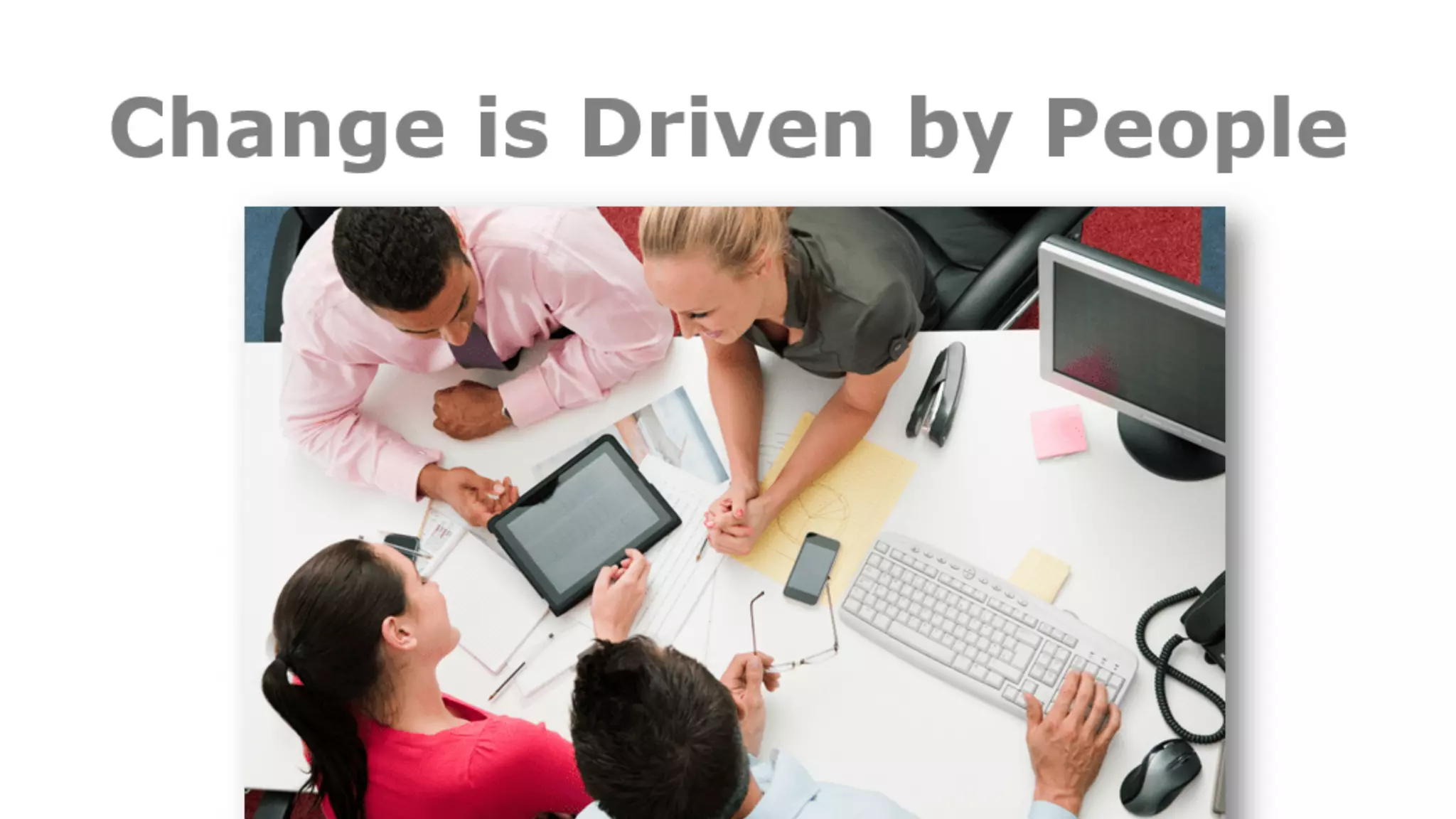
(2012)
INNOVATIVE
LEARNING
SPACES
Space as a change agent?
How can learning spaces change
teaching approaches?
Learners expectations
Learners satisfaction, engagement,
success
Impact on motivation and outcome
Leadership and management?
Learning spaces of the next generation?
Learning spaces and evolving
pedagogical approaches?
MICRO, MESO AND MACRO LEVEL
Roadmap ILS
• Assets
• People and community
• Operations and
sustainability
• Benefits and value
propositions
What I can give
What I want to recieve
https://padlet.com/ebba_ossiannil1/q9eryeooy1mz
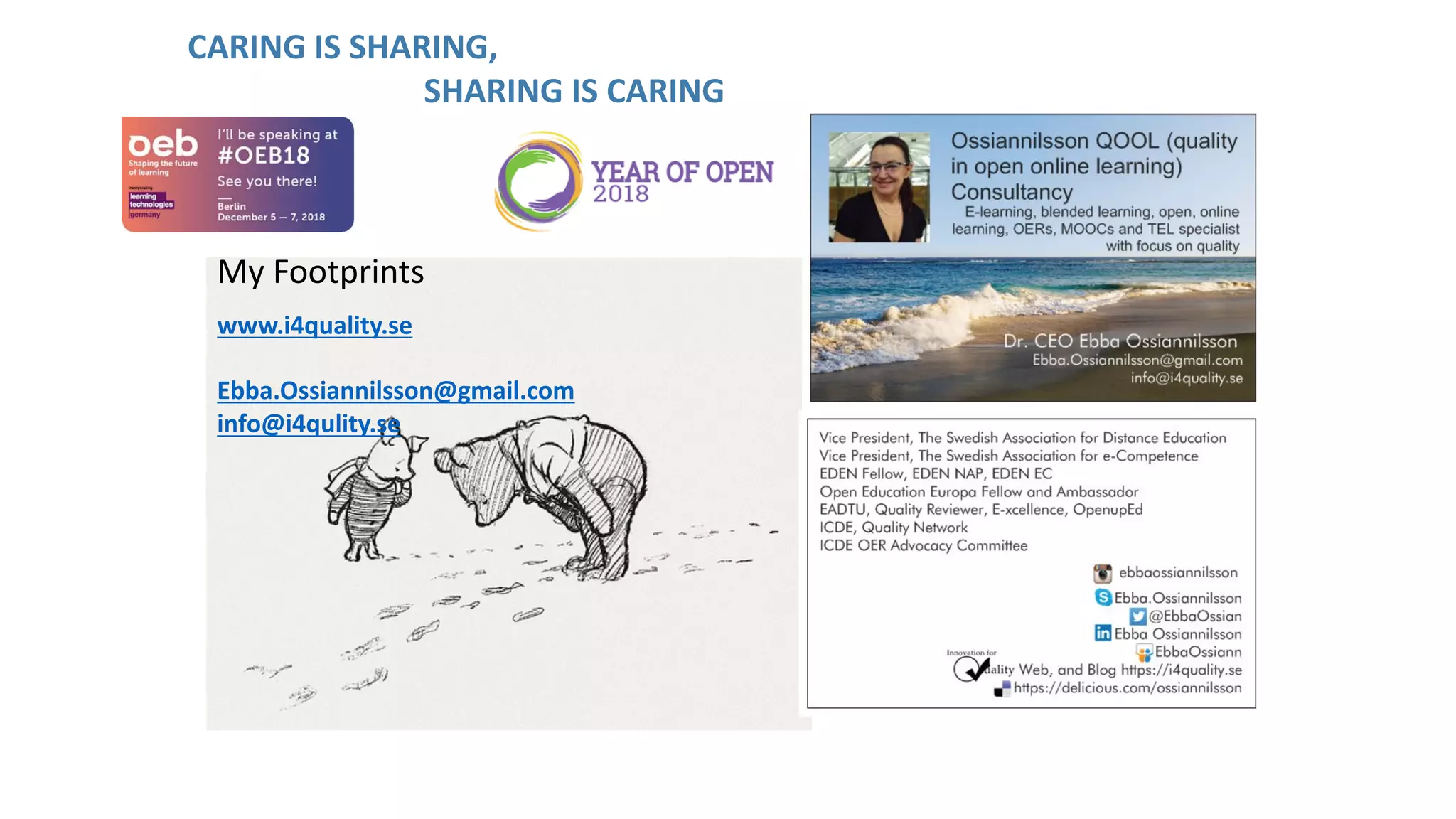
CARING IS SHARING,
SHARING IS CARING
My Footprints
www.i4quality.se
Ebba.Ossiannilsson@gmail.com
info@i4qulity.se

Ossiannilsson oeb18 how to create innovative learning spaces

  • 2.
    OEB 2018 Pre-ConferenceWorkshop M3 How to Create Innovative Learning Spaces Wednesday, Dec 5 Time 09:00 – 13:00 • Dr. Associate Professor • Ebba Ossiannilsson, Sweden • OEB Global Advisory Board • Swedish Association for Distance Education • ICDE OER Advocacy Committee, and ICDE Quality Network, Europe • EDEN EC, Fellow Council, SIG TEL QE • Open Education Europa Ambassador and Fellow
  • 4.
    AGENDA 09:00 Welcome, andIcebreaking session 09:20 Introduction, and drivers 10:00 Coffee break and networking mingle 10:45 Workshop, best/next practise 12:30 Wrapping up, conclusions, and recommendations
  • 5.
    In short, wewill focus on how we can create and cultivate a true culture of innovative learning spaces at the micro, meso, and macro levels.
  • 6.
    INTRODUCTION INNOVATIVE LEARNING SPACES Withthe rapid advancements in economy, technology and society in general, that occurred in the last decades of the 20th Century, the demands on the educational system increased in a number of ways for the 21st century. Critical thinking, collaboration, innovation, Information and Communication Technologies (ICT), digital literacy, adaptiveness, are some of the basic skills that students and citizens of today and of tomorrow are asked to possess in order not only to fill the industry demands but also to survive and function in society.
  • 7.
    INNOVATIVE LEARNING SPACES Learning is ubiquitous,as it takes place in all means, at all time and everywhere. Learning today can take many forms, such as formal, informal and non-normal and take place anywhere and anytime. Whoever we are, wherever we live we are presented with opportunities to learn every day of our life. Humans are learning throughout life, as life is learning humans throughout.
  • 8.
    Just for me, andjust in time learning
  • 10.
    The fourth Industrial Revolution requires the socialrevolution as well: SOCIAL EMOTIONAL COLLABORATIVE EMPHATIC IDENTITY JUST FOR ME JUST IN TIME PERSONAL/ COLLABORATIVE
  • 12.
    INNOVATIVE LEARNING SPACES Space as achange agent? How can learning spaces change teaching approaches? Learners expectations Learners satisfaction, engagement, success Impact on motivation and outcome Leadership and management? Learning spaces of the next generation? Learning spaces and evolving pedagogical approaches? MICRO, MESO AND MACRO LEVEL
  • 15.
  • 17.
    Ferguson, R., Barzilai,S., Ben-Zvi, D., Chinn, C.A., Herodotou, C., Hod, Y., Kali, Y., Kukulska-Hulme, A., Kupermintz, H., McAndrew, P., Rienties, B., Sagy, O., Scanlon, E., Sharples, M., Weller, M., & Whitelock, D. (2017). Innovating Pedagogy 2017: Open University Innovation Report 6. Milton Keynes: The Open University, UK •Big-data inquiry: thinking with data •Learners making science •Navigating post-truth societies •Immersive learning •Learning with internal values •Student-led analytics •Intergroup empathy •Humanistic knowledge- building communities •Open Textbooks •Spaced Learning
  • 18.
    INNOVATIVE LEARNING SPACES Space, whetherphysical or virtual, can have a significant impact on learning. Innovative learning spaces focuses on how learner expectations influence such spaces, the principles and activities that facilitate learning, and the role of technology from the perspective of those who created learning environments: academics, faculty, learning technologists, librarians, and administrators. Information technology has brought unique capabilities to learning spaces, whether stimulating greater interaction through the use of collaborative tools, videoconferencing with international experts, or opening virtual worlds for exploration. Together space, technology, and pedagogy empower learner success.
  • 22.
    Personal learning islike shopping at a grocery store. You need to assemble the ingredients yourself and create your own meals. It’s harder, but it’s a lot cheaper, and you can have an endless variety of meals. Sure, you might not get the best meals possible, but you control the experience, and you control the outcome. Personalized learning is like being served at a restaurant. Someone else selects the food and prepares it. There is some customization – you can tell the waiter how you want your meat cooked – but essentially everyone at the restaurant gets the same experience.
  • 23.
    From Interaction toCrossaction - new designs for teaching and learning in a networked world Read more: https://www.isa- jahnke.com/news/from-interaction-to- crossaction/ Isa Jahnke (2015). Digital Didactical Designs - Teaching and Learning in CrossActionSpaces.New York & London: Routledge
  • 27.
  • 28.
    Learning, teaching andlearning are integrally connected. Leadership can play a key role in improving learning outcomes of learners by setting strategic direction and goal, influencing teachers’ and facilitators’ behaviors and motivations, mobilizing resources and support for institutional development and keeping teachers/facilitators and learners focussed on teaching and learning through monitoring, support and guideance. Leadership Summit organised jointly with Open Education Consortium, hosted by the French Ministry for Higher Education and Research: The Open Education Leadership Summit 2018. 2 – 3 December in Paris, France.
  • 29.
  • 31.
    Contact North, Canada Impactof learning over time – on careers, on habits of lifelong learning, on community involvement and benefits. Engagement as one of the key drivers for quality. Innovative, flexible, effectively using technology for learning, teaching, analytics and assessment or engaging students with practical applications of the content. In re-thinking the approach to quality, we should ask ourselves The How? How do the students experience their learning The How? How do faculty experience their teaching? The What? Focus on outcomes in more depth. The So What? The Then What? … need to move to a much more experiential and outcome-based view of quality if it is to be the engine of transformation.
  • 32.
  • 34.
    INNOVATIVE LEARNING SPACES Space as achange agent? How can learning spaces change teaching approaches? Learners expectations Learners satisfaction, engagement, success Impact on motivation and outcome Leadership and management? Learning spaces of the next generation? Learning spaces and evolving pedagogical approaches? MICRO, MESO AND MACRO LEVEL
  • 35.
    Roadmap ILS • Assets •People and community • Operations and sustainability • Benefits and value propositions What I can give What I want to recieve
  • 37.
  • 38.
    CARING IS SHARING, SHARINGIS CARING My Footprints www.i4quality.se Ebba.Ossiannilsson@gmail.com info@i4qulity.se