

Prepared by: Abdul Khaliq
Listen and practice
What is this called in English? (singular)
What are these called in English? ( plural )
B Group work Choose four things. Put them on
a desk. Then ask about the name and spelling
of each thing.
6
Prepared by: Abdul Khaliq
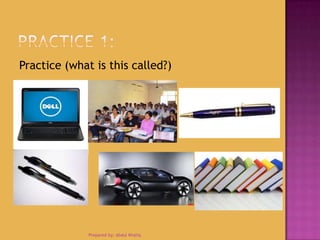
Practice (what is this called?)
Prepared by: Abdul Khaliq
7
Prepared by: Abdul Khaliq
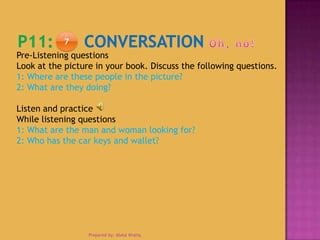
Pre-Listening questions
Look at the picture in your book. Discuss the following questions.
1: Where are these people in the picture?
2: What are they doing?
Listen and practice
While listening questions
1: What are the man and woman looking for?
2: Who has the car keys and wallet?
Yes/No and Where question with be
To be verbs: are those which are used to show state or being in the
sentences.
Note: Question which are made by To be verbs are called Yes/no questions
To be verb consist in: Am, Is, Are, Was, Were
 I am I am a teacher.
 You are You are student.
 We are We are cooks.
 They are They are in India.
 He is He is a Singer.
 She is She is a doctor .
 It is It is a young baby.
8
Prepared by: Abdul Khaliq
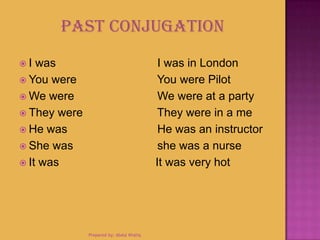
Past Conjugation
 I was I was in London
 You were You were Pilot
 We were We were at a party
 They were They were in a me
 He was He was an instructor
 She was she was a nurse
 It was It was very hot
Prepared by: Abdul Khaliq
Contraction
 I’m I’m a teacher.
 He’s He’s a teacher.
 She’s She’s a nurse.
 It’s It’s a dog.
 You’re You’re a pilot.
 We’re We’re students
 They’re They’re cooks
Prepared by: Abdul Khaliq
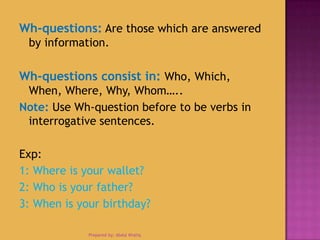
Wh-questions: Are those which are answered
by information.
Wh-questions consist in: Who, Which,
When, Where, Why, Whom…..
Note: Use Wh-question before to be verbs in
interrogative sentences.
Exp:
1: Where is your wallet?
2: Who is your father?
3: When is your birthday?
Prepared by: Abdul Khaliq
P11: A Complete these conversations. Then
practice with a partner.
B Group work Put three of your things in a
bag. Then Choose three different things. Find
the owner of each thing.
A: Is this you pen, Yuko?
B: No, It’s not.
A: Is this your pen, Sergio?
C: Let me see. Yes, it is.
Prepared by: Abdul Khaliq
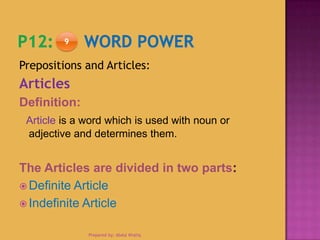
Prepositions and Articles:
Articles
Definition:
Article is a word which is used with noun or
adjective and determines them.
The Articles are divided in two parts:
 Definite Article
 Indefinite Article
9
Prepared by: Abdul Khaliq
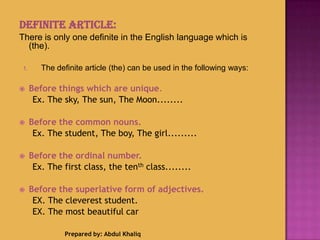
Definite Article:
There is only one definite in the English language which is
(the).
1. The definite article (the) can be used in the following ways:
 Before things which are unique.
Ex. The sky, The sun, The Moon........
 Before the common nouns.
Ex. The student, The boy, The girl.........
 Before the ordinal number.
Ex. The first class, the tenth class........
 Before the superlative form of adjectives.
EX. The cleverest student.
EX. The most beautiful car
Prepared by: Abdul Khaliq
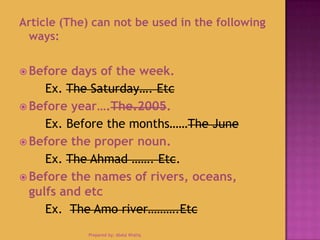
Article (The) can not be used in the following
ways:
 Before days of the week.
Ex. The Saturday…. Etc
 Before year….The.2005.
Ex. Before the months……The June
 Before the proper noun.
Ex. The Ahmad ……. Etc.
 Before the names of rivers, oceans,
gulfs and etc
Ex. The Amo river……….Etc
Prepared by: Abdul Khaliq
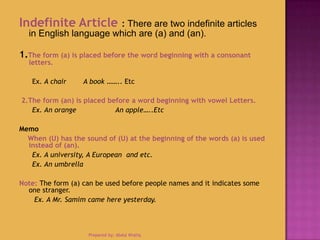
Indefinite Article : There are two indefinite articles
in English language which are (a) and (an).
1.The form (a) is placed before the word beginning with a consonant
letters.
Ex. A chair A book …….. Etc
2.The form (an) is placed before a word beginning with vowel Letters.
Ex. An orange An apple…..Etc
Memo
When (U) has the sound of (U) at the beginning of the words (a) is used
instead of (an).
Ex. A university, A European and etc.
Ex. An umbrella
Note: The form (a) can be used before people names and it indicates some
one stranger.
Ex. A Mr. Samim came here yesterday.
Prepared by: Abdul Khaliq
Preposition: Is a word which is used to show
the relationship between persons, places and
things in the sentences.
on
In Ahmad is in the class
Under The ball is under the desk
at
Of
to
Prepared by: Abdul Khaliq
P12: A Listen and practice
Where are the keys?
The keys are in the box.
B complete these sentences. Then listen and check
your answers.
C Pair work Ask and answer questions about the
pictures in part B.
A: Where are the books?
B: They’re in the book bag.
Listening Kate’s things
Listen. Where are Kate’s things? Match the things
with their locations.
10
Prepared by: Abdul Khaliq
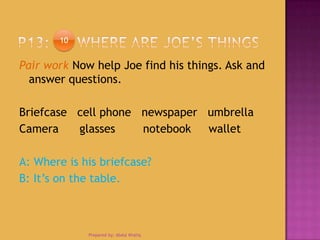
Pair work Now help Joe find his things. Ask and
answer questions.
Briefcase cell phone newspaper umbrella
Camera glasses notebook wallet
A: Where is his briefcase?
B: It’s on the table.
10
Prepared by: Abdul Khaliq

Pre-intermediate, Interchange, Unit 2 presentation

  • 1.
  • 2.
    Listen and practice Whatis this called in English? (singular) What are these called in English? ( plural ) B Group work Choose four things. Put them on a desk. Then ask about the name and spelling of each thing. 6 Prepared by: Abdul Khaliq
  • 3.
    Practice (what isthis called?) Prepared by: Abdul Khaliq
  • 4.
    7 Prepared by: AbdulKhaliq Pre-Listening questions Look at the picture in your book. Discuss the following questions. 1: Where are these people in the picture? 2: What are they doing? Listen and practice While listening questions 1: What are the man and woman looking for? 2: Who has the car keys and wallet?
  • 5.
    Yes/No and Wherequestion with be To be verbs: are those which are used to show state or being in the sentences. Note: Question which are made by To be verbs are called Yes/no questions To be verb consist in: Am, Is, Are, Was, Were  I am I am a teacher.  You are You are student.  We are We are cooks.  They are They are in India.  He is He is a Singer.  She is She is a doctor .  It is It is a young baby. 8 Prepared by: Abdul Khaliq
  • 6.
    Past Conjugation  Iwas I was in London  You were You were Pilot  We were We were at a party  They were They were in a me  He was He was an instructor  She was she was a nurse  It was It was very hot Prepared by: Abdul Khaliq
  • 7.
    Contraction  I’m I’ma teacher.  He’s He’s a teacher.  She’s She’s a nurse.  It’s It’s a dog.  You’re You’re a pilot.  We’re We’re students  They’re They’re cooks Prepared by: Abdul Khaliq
  • 8.
    Wh-questions: Are thosewhich are answered by information. Wh-questions consist in: Who, Which, When, Where, Why, Whom….. Note: Use Wh-question before to be verbs in interrogative sentences. Exp: 1: Where is your wallet? 2: Who is your father? 3: When is your birthday? Prepared by: Abdul Khaliq
  • 9.
    P11: A Completethese conversations. Then practice with a partner. B Group work Put three of your things in a bag. Then Choose three different things. Find the owner of each thing. A: Is this you pen, Yuko? B: No, It’s not. A: Is this your pen, Sergio? C: Let me see. Yes, it is. Prepared by: Abdul Khaliq
  • 10.
    Prepositions and Articles: Articles Definition: Articleis a word which is used with noun or adjective and determines them. The Articles are divided in two parts:  Definite Article  Indefinite Article 9 Prepared by: Abdul Khaliq
  • 11.
    Definite Article: There isonly one definite in the English language which is (the). 1. The definite article (the) can be used in the following ways:  Before things which are unique. Ex. The sky, The sun, The Moon........  Before the common nouns. Ex. The student, The boy, The girl.........  Before the ordinal number. Ex. The first class, the tenth class........  Before the superlative form of adjectives. EX. The cleverest student. EX. The most beautiful car Prepared by: Abdul Khaliq
  • 12.
    Article (The) cannot be used in the following ways:  Before days of the week. Ex. The Saturday…. Etc  Before year….The.2005. Ex. Before the months……The June  Before the proper noun. Ex. The Ahmad ……. Etc.  Before the names of rivers, oceans, gulfs and etc Ex. The Amo river……….Etc Prepared by: Abdul Khaliq
  • 13.
    Indefinite Article :There are two indefinite articles in English language which are (a) and (an). 1.The form (a) is placed before the word beginning with a consonant letters. Ex. A chair A book …….. Etc 2.The form (an) is placed before a word beginning with vowel Letters. Ex. An orange An apple…..Etc Memo When (U) has the sound of (U) at the beginning of the words (a) is used instead of (an). Ex. A university, A European and etc. Ex. An umbrella Note: The form (a) can be used before people names and it indicates some one stranger. Ex. A Mr. Samim came here yesterday. Prepared by: Abdul Khaliq
  • 14.
    Preposition: Is aword which is used to show the relationship between persons, places and things in the sentences. on In Ahmad is in the class Under The ball is under the desk at Of to Prepared by: Abdul Khaliq
  • 15.
    P12: A Listenand practice Where are the keys? The keys are in the box. B complete these sentences. Then listen and check your answers. C Pair work Ask and answer questions about the pictures in part B. A: Where are the books? B: They’re in the book bag. Listening Kate’s things Listen. Where are Kate’s things? Match the things with their locations. 10 Prepared by: Abdul Khaliq
  • 16.
    Pair work Nowhelp Joe find his things. Ask and answer questions. Briefcase cell phone newspaper umbrella Camera glasses notebook wallet A: Where is his briefcase? B: It’s on the table. 10 Prepared by: Abdul Khaliq

Editor's Notes

  • #12 Prepared by: Abdul Khaliq