Chapter 2: The ConceptualChapter 2: The Conceptual
FrameworkFramework
Intermediate Accounting, 11th Edition
Kieso, Weygandt, and Warfield
Prepared by
Jep Robertson and Renae Clark
New Mexico Sate University
Las Cruces, New Mexico
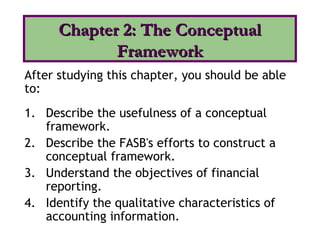
1. Describe the usefulness of a conceptual
framework.
2. Describe the FASB's efforts to construct a
conceptual framework.
3. Understand the objectives of financial
reporting.
4. Identify the qualitative characteristics of
accounting information.
After studying this chapter, you should be able
to:
Chapter 2: The ConceptualChapter 2: The Conceptual
FrameworkFramework
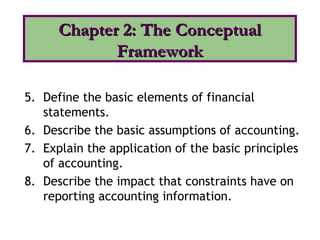
5. Define the basic elements of financial
statements.
6. Describe the basic assumptions of accounting.
7. Explain the application of the basic principles
of accounting.
8. Describe the impact that constraints have on
reporting accounting information.
Chapter 2: The ConceptualChapter 2: The Conceptual
FrameworkFramework
• The Framework was to be the
foundation for building a set of
coherent accounting standards and
rules.
• The Framework is to be a reference of
basic accounting theory for solving
emerging practical problems of
reporting.
Objectives of the ConceptualObjectives of the Conceptual
FrameworkFramework
• The FASB has issued seven Statements of
Financial Accounting Concepts (SFACs) to
date (Statements 1 through 7.)
• These statements set forth major recognition
and reporting issues.
• Statement 4 pertains to reporting by non-
business entities.
• The other six statements pertain to reporting
by business enterprises.
Statements of FinancialStatements of Financial
Accounting ConceptsAccounting Concepts
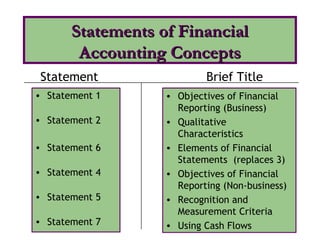
• Statement 1
• Statement 2
• Statement 6
• Statement 4
• Statement 5
• Statement 7
• Objectives of Financial
Reporting (Business)
• Qualitative
Characteristics
• Elements of Financial
Statements (replaces 3)
• Objectives of Financial
Reporting (Non-business)
• Recognition and
Measurement Criteria
• Using Cash Flows
Brief TitleStatement
Statements of FinancialStatements of Financial
Accounting ConceptsAccounting Concepts
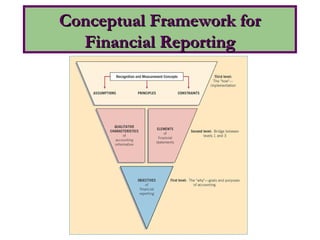
The Framework has three different
levels,comprised of:
• The first level consists of objectives.
• The second level explains financial elements
and characteristics of information.
• The third level incorporates recognition and
measurement criteria.
Overview of the ConceptualOverview of the Conceptual
FrameworkFramework
Conceptual Framework forConceptual Framework for
Financial ReportingFinancial Reporting
To provide information:
• about economic resources, the claims on
those resources and changes in them.
• that is useful to those making investment
and credit decisions.
• that is useful to present and future
investors, creditors in assessing future cash
flows.
• to individuals who reasonably understand
business and economic activities.
Basic Objectives of FinancialBasic Objectives of Financial
ReportingReporting
Hierarchy of Accounting QualitiesHierarchy of Accounting Qualities
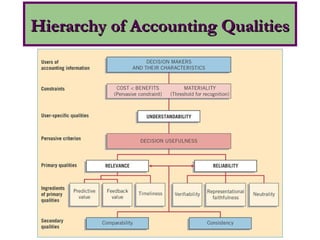
• Primary qualities of accounting information
are relevance and reliability.
• Secondary qualities are comparability and
consistency of reported information.
Qualitative Characteristics ofQualitative Characteristics of
Accounting InformationAccounting Information
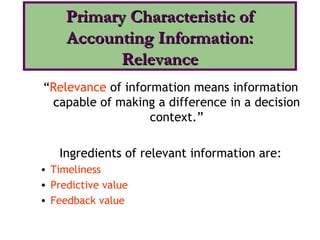
“Relevance of information means information
ccapable of making a difference in a decision
context.”
Ingredients of relevant information are:
• Timeliness
• Predictive value
• Feedback value
Primary Characteristic ofPrimary Characteristic of
Accounting Information:Accounting Information:
RelevanceRelevance
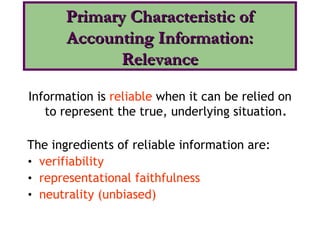
Information is reliable when it can be relied on
to represent the true, underlying situation.
The ingredients of reliable information are:
• verifiability
• representational faithfulness
• neutrality (unbiased)
Primary Characteristic ofPrimary Characteristic of
Accounting Information:Accounting Information:
RelevanceRelevance
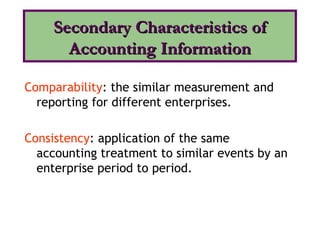
Comparability: the similar measurement and
reporting for different enterprises.
Consistency: application of the same
accounting treatment to similar events by an
enterprise period to period.
Secondary Characteristics ofSecondary Characteristics of
Accounting InformationAccounting Information
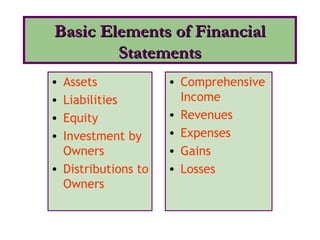
• Assets
• Liabilities
• Equity
• Investment by
Owners
• Distributions to
Owners
• Comprehensive
Income
• Revenues
• Expenses
• Gains
• Losses
Basic Elements of FinancialBasic Elements of Financial
StatementsStatements
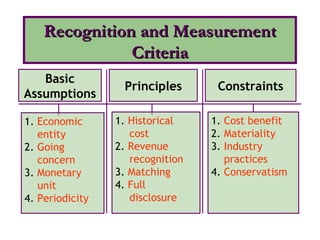
Basic
Assumptions
1. Economic
entity
2. Going
concern
3. Monetary
unit
4. Periodicity
Principles
1. Historical
cost
2. Revenue
recognition
3. Matching
4. Full
disclosure
Constraints
1. Cost benefit
2. Materiality
3. Industry
practices
4. Conservatism
Recognition and MeasurementRecognition and Measurement
CriteriaCriteria
COPYRIGHTCOPYRIGHT
Copyright © 2004 John Wiley & Sons, Inc. All rights reserved.
Reproduction or translation of this work beyond that permitted
in Section 117 of the 1976 United States Copyright Act without
the express written permission of the copyright owner is
unlawful. Request for further information should be addressed
to the Permissions Department, John Wiley & Sons, Inc. The
purchaser may make back-up copies for his/her own use only
and not for distribution or resale. The Publisher assumes no
responsibility for errors, omissions, or damages, caused by the
use of these programs or from the use of the information
contained herein.

2 the-conceptual-framework

  • 1.
    Chapter 2: TheConceptualChapter 2: The Conceptual FrameworkFramework Intermediate Accounting, 11th Edition Kieso, Weygandt, and Warfield Prepared by Jep Robertson and Renae Clark New Mexico Sate University Las Cruces, New Mexico
  • 2.
    1. Describe theusefulness of a conceptual framework. 2. Describe the FASB's efforts to construct a conceptual framework. 3. Understand the objectives of financial reporting. 4. Identify the qualitative characteristics of accounting information. After studying this chapter, you should be able to: Chapter 2: The ConceptualChapter 2: The Conceptual FrameworkFramework
  • 3.
    5. Define thebasic elements of financial statements. 6. Describe the basic assumptions of accounting. 7. Explain the application of the basic principles of accounting. 8. Describe the impact that constraints have on reporting accounting information. Chapter 2: The ConceptualChapter 2: The Conceptual FrameworkFramework
  • 4.
    • The Frameworkwas to be the foundation for building a set of coherent accounting standards and rules. • The Framework is to be a reference of basic accounting theory for solving emerging practical problems of reporting. Objectives of the ConceptualObjectives of the Conceptual FrameworkFramework
  • 5.
    • The FASBhas issued seven Statements of Financial Accounting Concepts (SFACs) to date (Statements 1 through 7.) • These statements set forth major recognition and reporting issues. • Statement 4 pertains to reporting by non- business entities. • The other six statements pertain to reporting by business enterprises. Statements of FinancialStatements of Financial Accounting ConceptsAccounting Concepts
  • 6.
    • Statement 1 •Statement 2 • Statement 6 • Statement 4 • Statement 5 • Statement 7 • Objectives of Financial Reporting (Business) • Qualitative Characteristics • Elements of Financial Statements (replaces 3) • Objectives of Financial Reporting (Non-business) • Recognition and Measurement Criteria • Using Cash Flows Brief TitleStatement Statements of FinancialStatements of Financial Accounting ConceptsAccounting Concepts
  • 7.
    The Framework hasthree different levels,comprised of: • The first level consists of objectives. • The second level explains financial elements and characteristics of information. • The third level incorporates recognition and measurement criteria. Overview of the ConceptualOverview of the Conceptual FrameworkFramework
  • 8.
    Conceptual Framework forConceptualFramework for Financial ReportingFinancial Reporting
  • 9.
    To provide information: •about economic resources, the claims on those resources and changes in them. • that is useful to those making investment and credit decisions. • that is useful to present and future investors, creditors in assessing future cash flows. • to individuals who reasonably understand business and economic activities. Basic Objectives of FinancialBasic Objectives of Financial ReportingReporting
  • 10.
    Hierarchy of AccountingQualitiesHierarchy of Accounting Qualities
  • 11.
    • Primary qualitiesof accounting information are relevance and reliability. • Secondary qualities are comparability and consistency of reported information. Qualitative Characteristics ofQualitative Characteristics of Accounting InformationAccounting Information
  • 12.
    “Relevance of informationmeans information ccapable of making a difference in a decision context.” Ingredients of relevant information are: • Timeliness • Predictive value • Feedback value Primary Characteristic ofPrimary Characteristic of Accounting Information:Accounting Information: RelevanceRelevance
  • 13.
    Information is reliablewhen it can be relied on to represent the true, underlying situation. The ingredients of reliable information are: • verifiability • representational faithfulness • neutrality (unbiased) Primary Characteristic ofPrimary Characteristic of Accounting Information:Accounting Information: RelevanceRelevance
  • 14.
    Comparability: the similarmeasurement and reporting for different enterprises. Consistency: application of the same accounting treatment to similar events by an enterprise period to period. Secondary Characteristics ofSecondary Characteristics of Accounting InformationAccounting Information
  • 15.
    • Assets • Liabilities •Equity • Investment by Owners • Distributions to Owners • Comprehensive Income • Revenues • Expenses • Gains • Losses Basic Elements of FinancialBasic Elements of Financial StatementsStatements
  • 16.
    Basic Assumptions 1. Economic entity 2. Going concern 3.Monetary unit 4. Periodicity Principles 1. Historical cost 2. Revenue recognition 3. Matching 4. Full disclosure Constraints 1. Cost benefit 2. Materiality 3. Industry practices 4. Conservatism Recognition and MeasurementRecognition and Measurement CriteriaCriteria
  • 17.
    COPYRIGHTCOPYRIGHT Copyright © 2004John Wiley & Sons, Inc. All rights reserved. Reproduction or translation of this work beyond that permitted in Section 117 of the 1976 United States Copyright Act without the express written permission of the copyright owner is unlawful. Request for further information should be addressed to the Permissions Department, John Wiley & Sons, Inc. The purchaser may make back-up copies for his/her own use only and not for distribution or resale. The Publisher assumes no responsibility for errors, omissions, or damages, caused by the use of these programs or from the use of the information contained herein.

Editor's Notes