Welcome to Our
Presentation
The topic of our presentation is
Accounting Standards
&
IFRS-2
Accounting standard
q
A principle that guides and
standardizes accounting
practices .
q
It is necessary so that financial
statement are meaningful across a
wide variety of businesses.
Accounting standard
● Without it the accounting rules and
different companies would make
comparative analysis almost impossible .
Developer of
Accounting Standards
International Federation of
Accountants (IFAC)
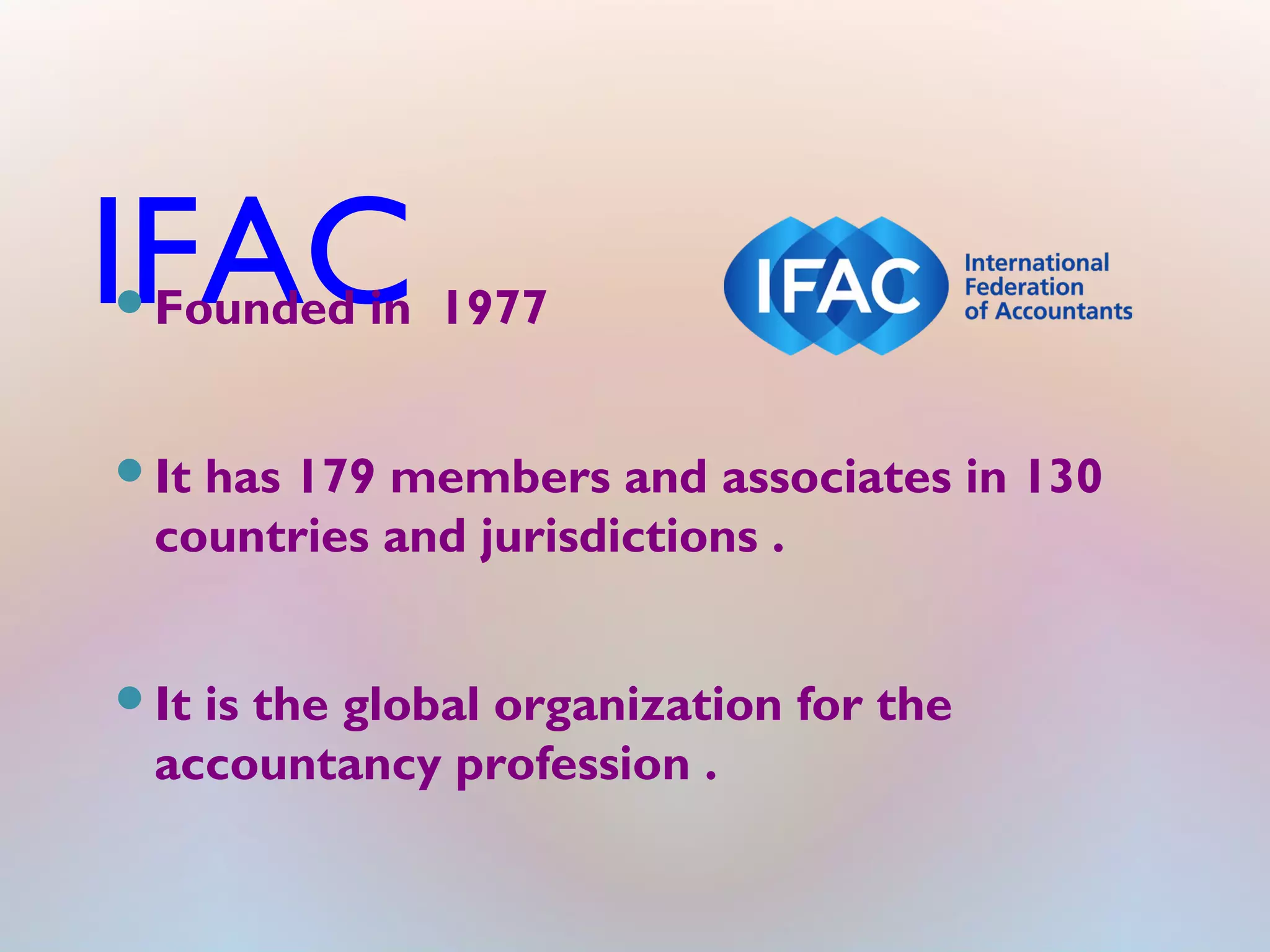
IFACFounded in 1977
It has 179 members and associates in 130
countries and jurisdictions .
It is the global organization for the
accountancy profession .
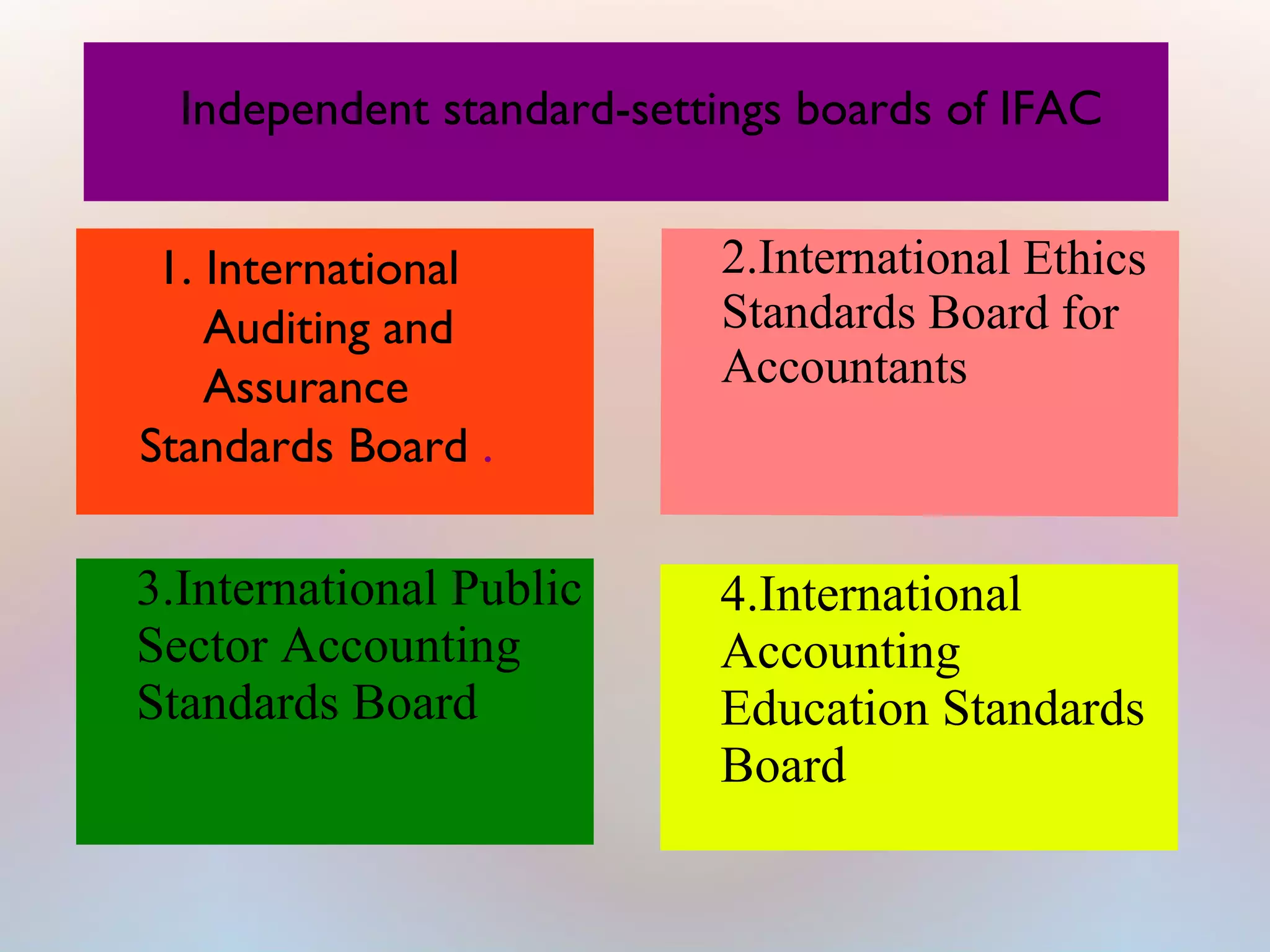
Independent standard-settings boards of IFAC
1. International
Auditing and
Assurance
Standards Board .
2.International Ethics
Standards Board for
Accountants
4.International
Accounting
Education Standards
Board
3.International Public
Sector Accounting
Standards Board
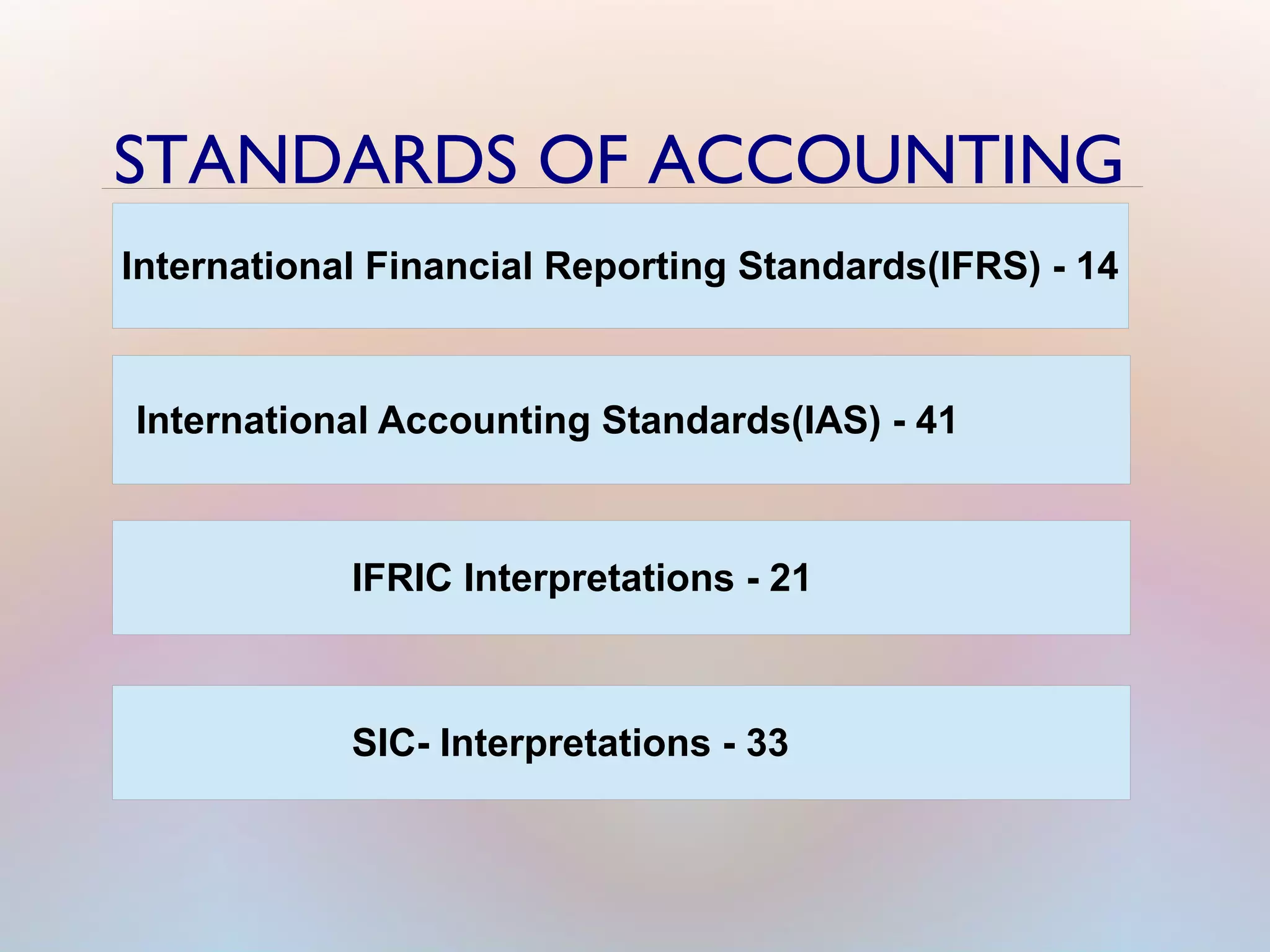
STANDARDS OF ACCOUNTING
International Financial Reporting Standards(IFRS) - 14
International Accounting Standards(IAS) - 41
IFRIC Interpretations - 21
SIC- Interpretations - 33
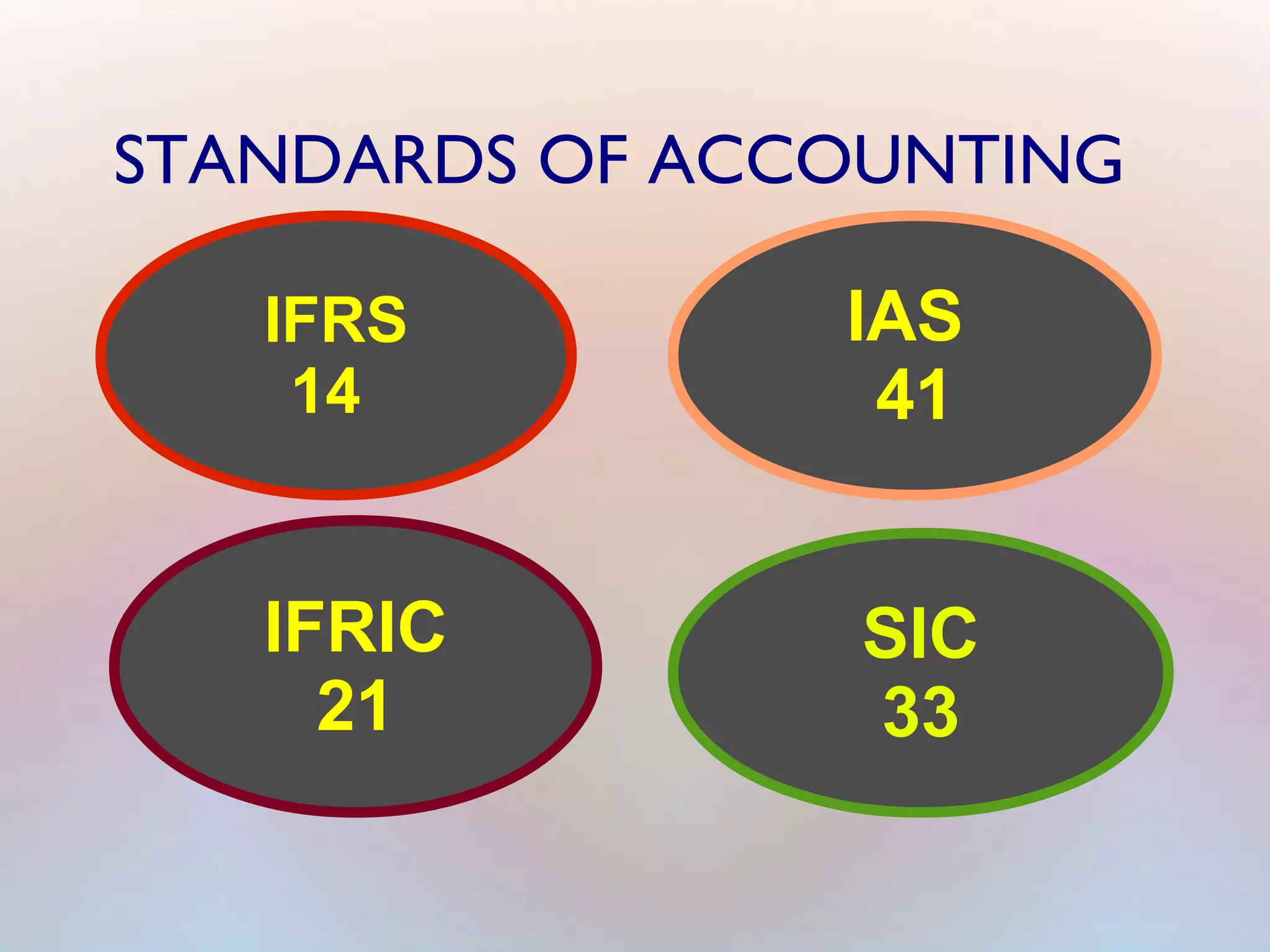
STANDARDS OF ACCOUNTING
IFRS
14
IAS
41
IFRIC
21
SIC
33
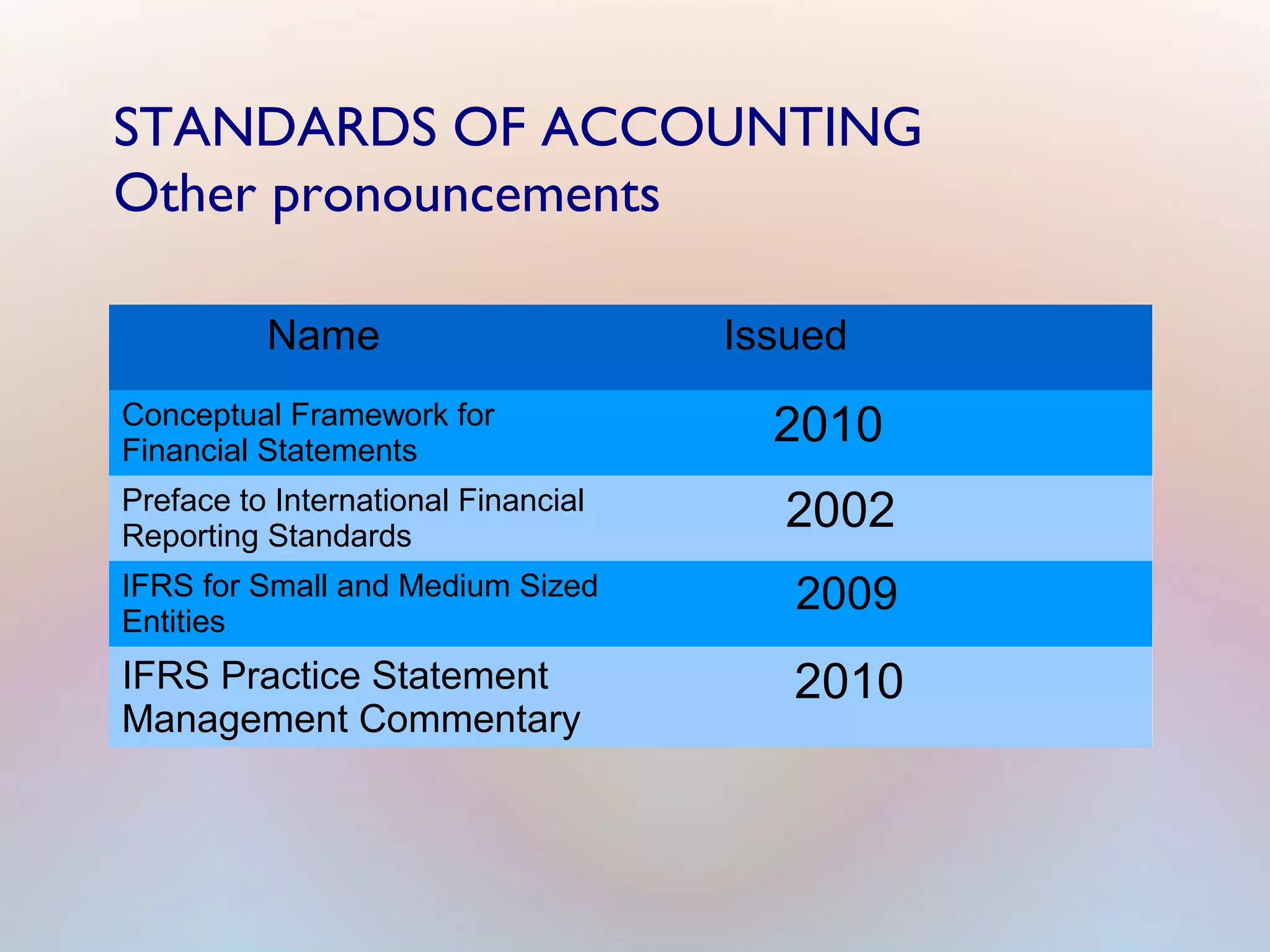
STANDARDS OF ACCOUNTING
Other pronouncements
Name Issued
Conceptual Framework for
Financial Statements
2010
Preface to International Financial
Reporting Standards
2002
IFRS for Small and Medium Sized
Entities
2009
IFRS Practice Statement
Management Commentary
2010
•
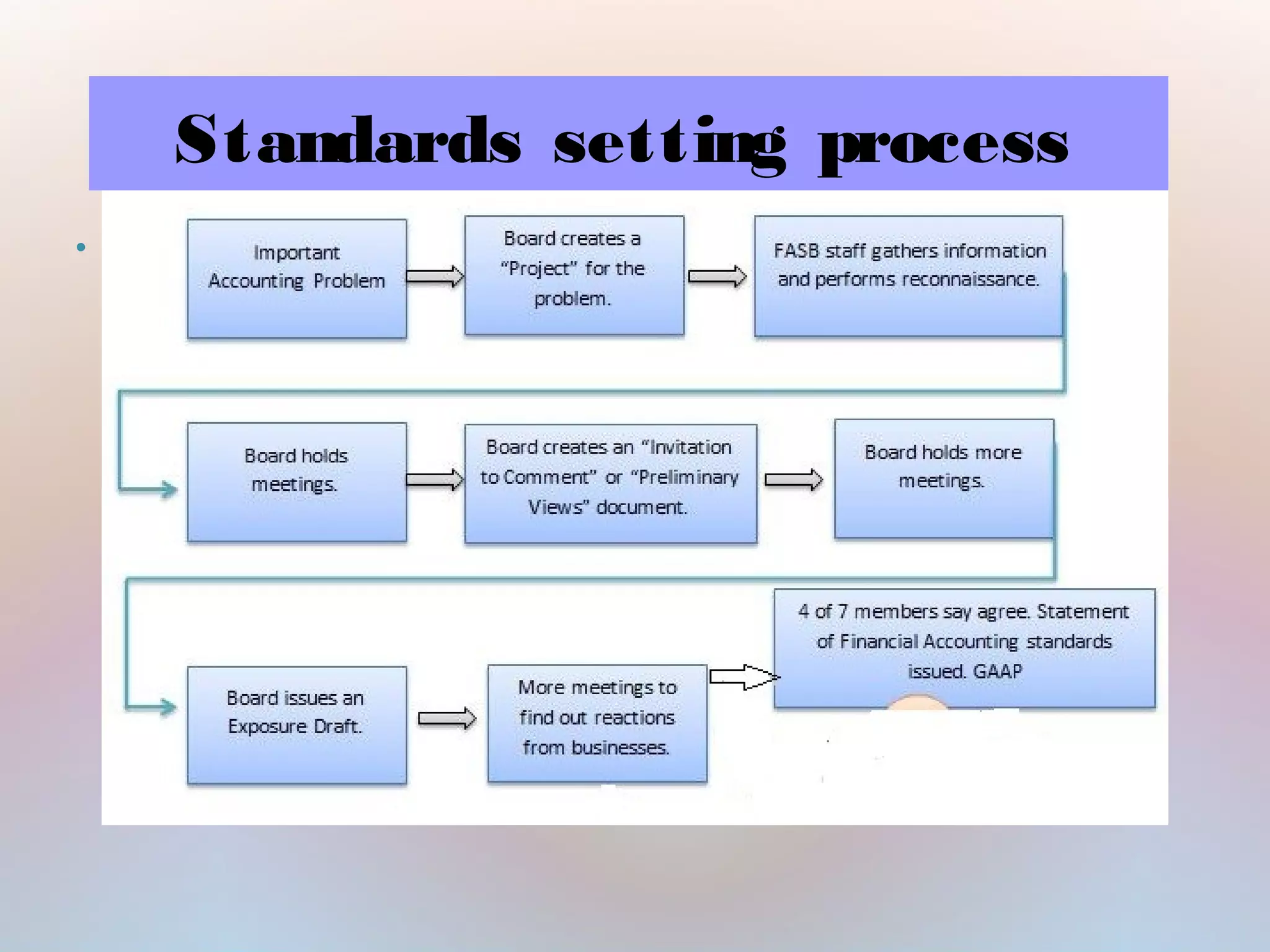
Standards setting process
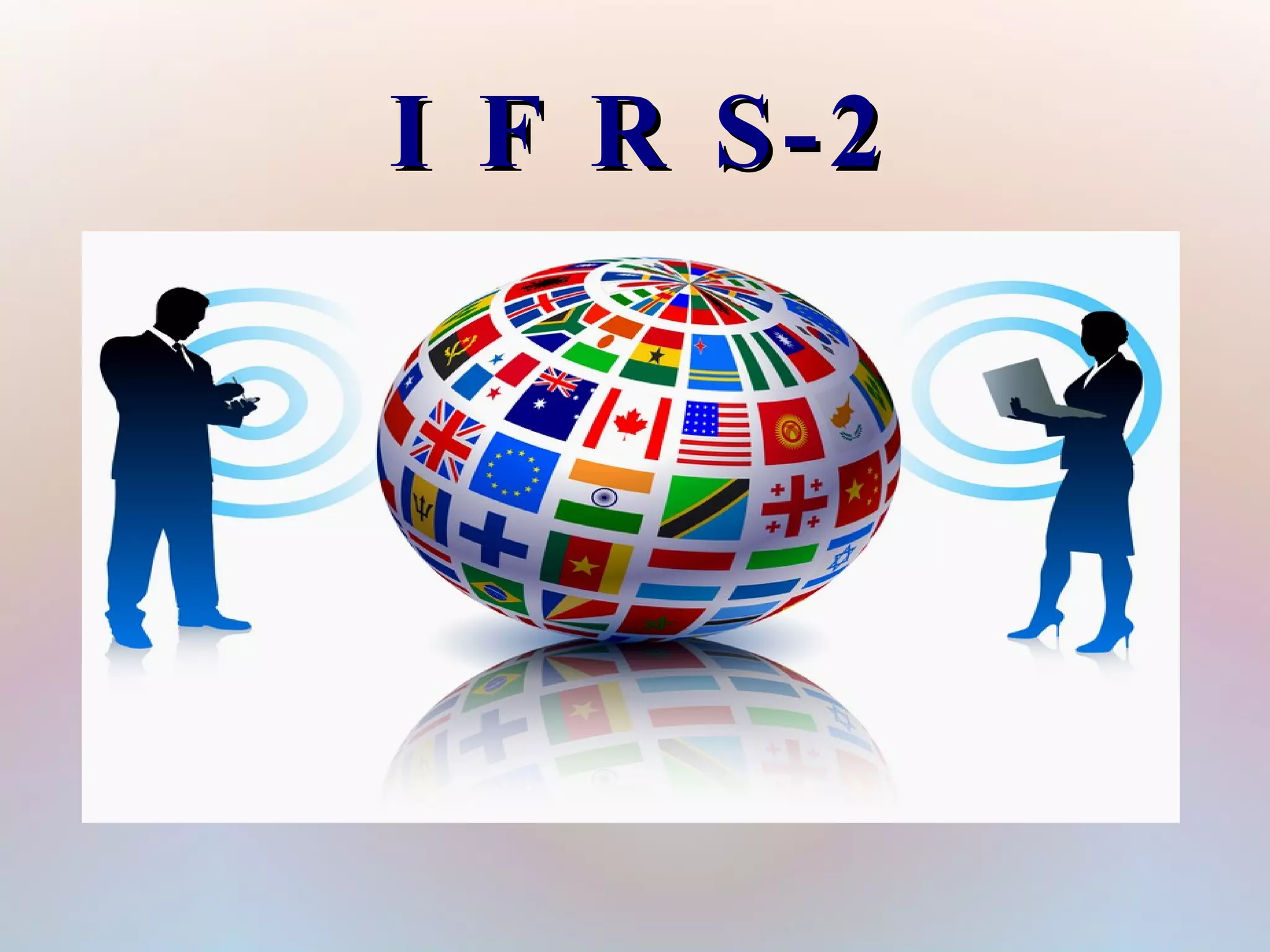
I F R S-2I F R S-2
IFRS-2
The objective of IFRS 2 is to specify the financial
reporting an entity when it undertakes a share based
payment .
IFRS 2 requires an entity to recognise share based
payment transactions in its financial statements
including transactions with employees or other parties
to be settled in cash, other assets, or equity
instruments of the entity.
IFRS 2 as issued by the IASB requires share based
payments to be treated as an expense. The amount
charged as an expense will be measured at the fair
value of goods or services received.
IFRS-2
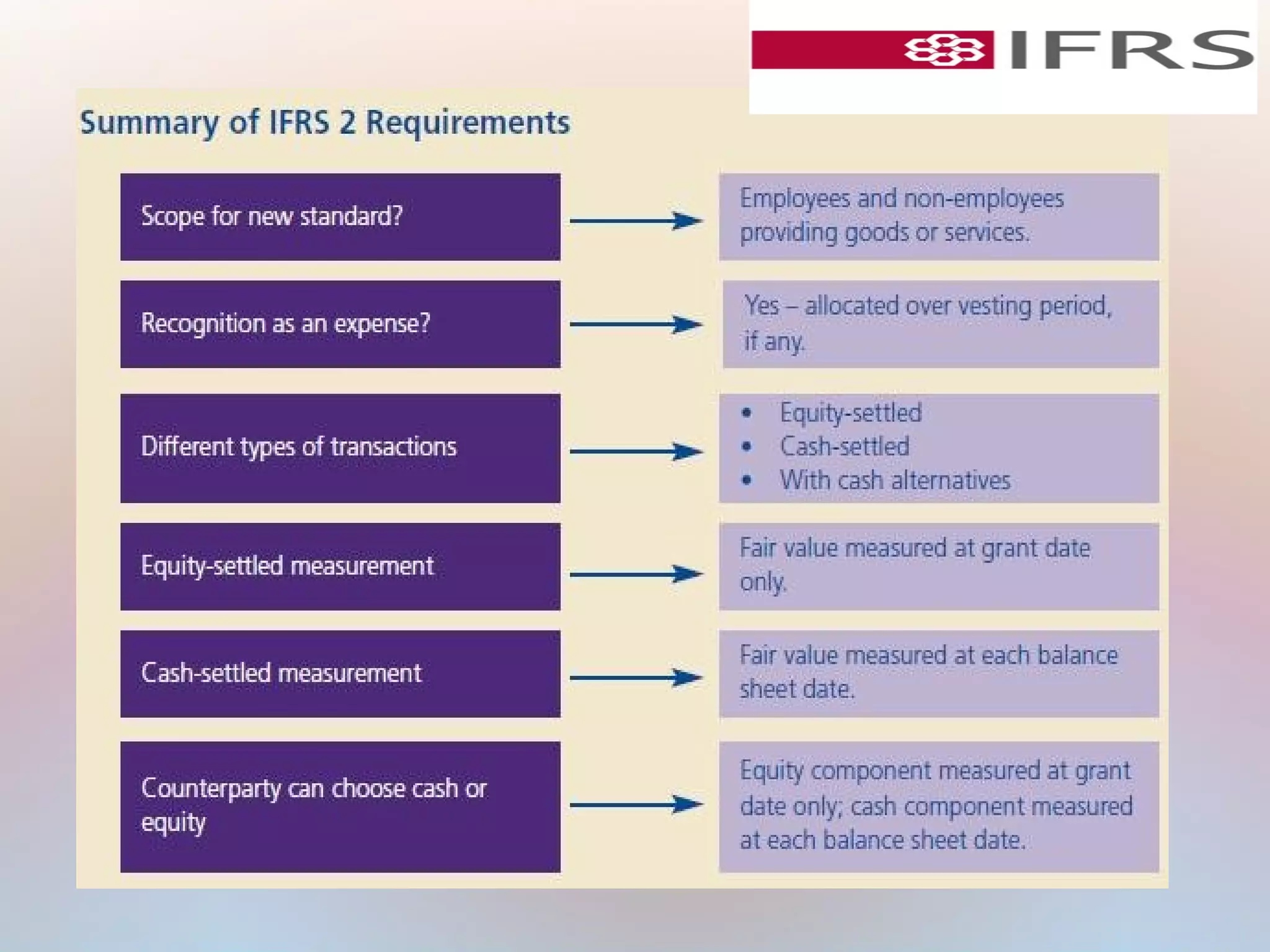
IFRS 2 sets out measurement principles and
specific requirements for 3 types of share based
transactions:-
1)Equity settled share based transactions - in
which the entity receives goods or services
as consideration for equity instruments of
the entity (including shares or share
options);
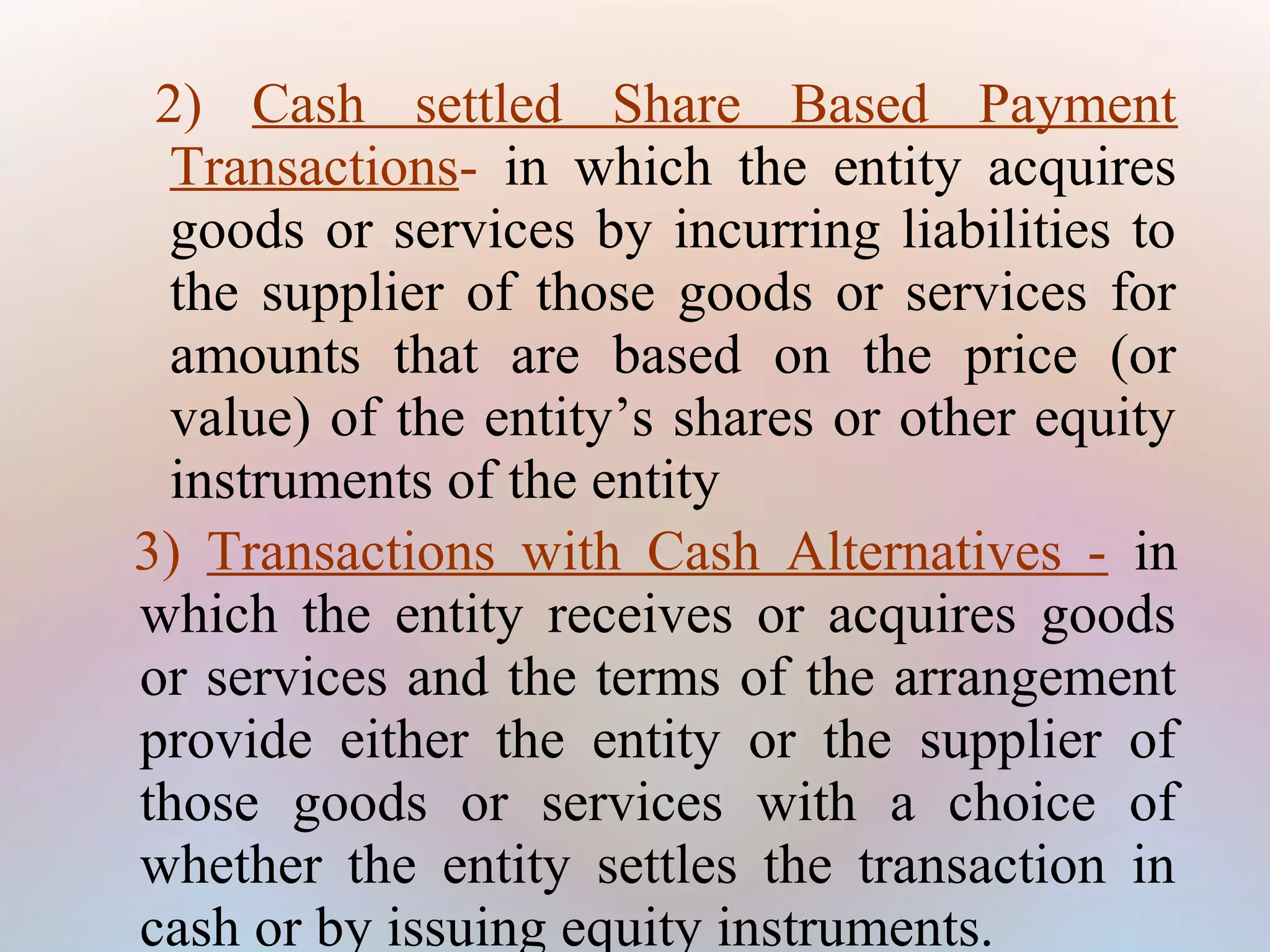
2) Cash settled Share Based Payment
Transactions- in which the entity acquires
goods or services by incurring liabilities to
the supplier of those goods or services for
amounts that are based on the price (or
value) of the entity’s shares or other equity
instruments of the entity
3) Transactions with Cash Alternatives - in
which the entity receives or acquires goods
or services and the terms of the arrangement
provide either the entity or the supplier of
those goods or services with a choice of
whether the entity settles the transaction in
cash or by issuing equity instruments.
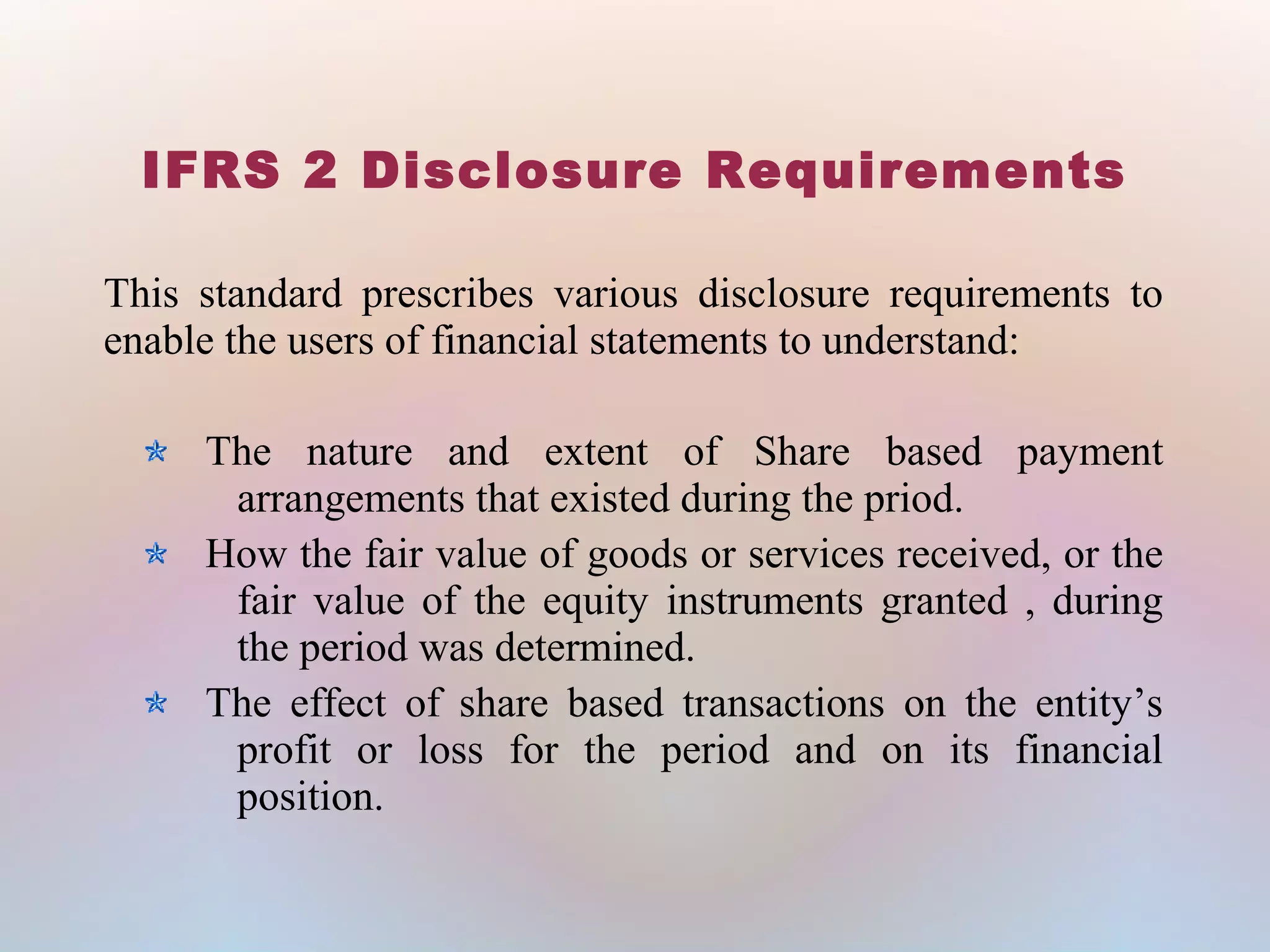
IFRS 2 Disclosure Requirements
This standard prescribes various disclosure requirements to
enable the users of financial statements to understand:
The nature and extent of Share based payment
arrangements that existed during the priod.
How the fair value of goods or services received, or the
fair value of the equity instruments granted , during
the period was determined.
The effect of share based transactions on the entity’s
profit or loss for the period and on its financial
position.
Question …...????
Reference
● http://www.ifac.org/about-ifac
● http://www.ifrs.org/IFRSs/IFRS.htm
accounting standards and ifrs 2

accounting standards and ifrs 2

  • 1.
  • 2.
    The topic ofour presentation is Accounting Standards & IFRS-2
  • 3.
    Accounting standard q A principlethat guides and standardizes accounting practices . q It is necessary so that financial statement are meaningful across a wide variety of businesses.
  • 4.
    Accounting standard ● Withoutit the accounting rules and different companies would make comparative analysis almost impossible .
  • 5.
  • 6.
  • 7.
    IFACFounded in 1977 Ithas 179 members and associates in 130 countries and jurisdictions . It is the global organization for the accountancy profession .
  • 8.
    Independent standard-settings boardsof IFAC 1. International Auditing and Assurance Standards Board . 2.International Ethics Standards Board for Accountants 4.International Accounting Education Standards Board 3.International Public Sector Accounting Standards Board
  • 9.
  • 10.
    STANDARDS OF ACCOUNTING InternationalFinancial Reporting Standards(IFRS) - 14 International Accounting Standards(IAS) - 41 IFRIC Interpretations - 21 SIC- Interpretations - 33
  • 11.
  • 12.
    STANDARDS OF ACCOUNTING Otherpronouncements Name Issued Conceptual Framework for Financial Statements 2010 Preface to International Financial Reporting Standards 2002 IFRS for Small and Medium Sized Entities 2009 IFRS Practice Statement Management Commentary 2010
  • 14.
  • 15.
    I F RS-2I F R S-2
  • 16.
    IFRS-2 The objective ofIFRS 2 is to specify the financial reporting an entity when it undertakes a share based payment . IFRS 2 requires an entity to recognise share based payment transactions in its financial statements including transactions with employees or other parties to be settled in cash, other assets, or equity instruments of the entity. IFRS 2 as issued by the IASB requires share based payments to be treated as an expense. The amount charged as an expense will be measured at the fair value of goods or services received.
  • 17.
    IFRS-2 IFRS 2 setsout measurement principles and specific requirements for 3 types of share based transactions:- 1)Equity settled share based transactions - in which the entity receives goods or services as consideration for equity instruments of the entity (including shares or share options);
  • 18.
    2) Cash settledShare Based Payment Transactions- in which the entity acquires goods or services by incurring liabilities to the supplier of those goods or services for amounts that are based on the price (or value) of the entity’s shares or other equity instruments of the entity 3) Transactions with Cash Alternatives - in which the entity receives or acquires goods or services and the terms of the arrangement provide either the entity or the supplier of those goods or services with a choice of whether the entity settles the transaction in cash or by issuing equity instruments.
  • 20.
    IFRS 2 DisclosureRequirements This standard prescribes various disclosure requirements to enable the users of financial statements to understand: The nature and extent of Share based payment arrangements that existed during the priod. How the fair value of goods or services received, or the fair value of the equity instruments granted , during the period was determined. The effect of share based transactions on the entity’s profit or loss for the period and on its financial position.
  • 21.
  • 22.