Prokaryotes versus
Eukaryotes
Cell morphology, structure,
and function
Chicken
egg
Human red
blood cell
Large
protozoan
(Euglena)Chloroplasts
Flea
Typical bacteria
and archaea
Diameter
of DNA
VirusesProteins
Ribosomes
Amino
acids
Atoms
Scanning tunneling microscope
(STM) 0.01 nm–10 nm
Scanning electron microscope (SEM)
0.4 nm–1 mm
Transmission electron microscope (TEM)
0.078 nm–100 µm
Atomic force
microscope (AFM)
1 nm–10 nm
Compound light microscope (LM)
200 nm–10 mm
Unaided human eye
200 µm–
Mitochondrion
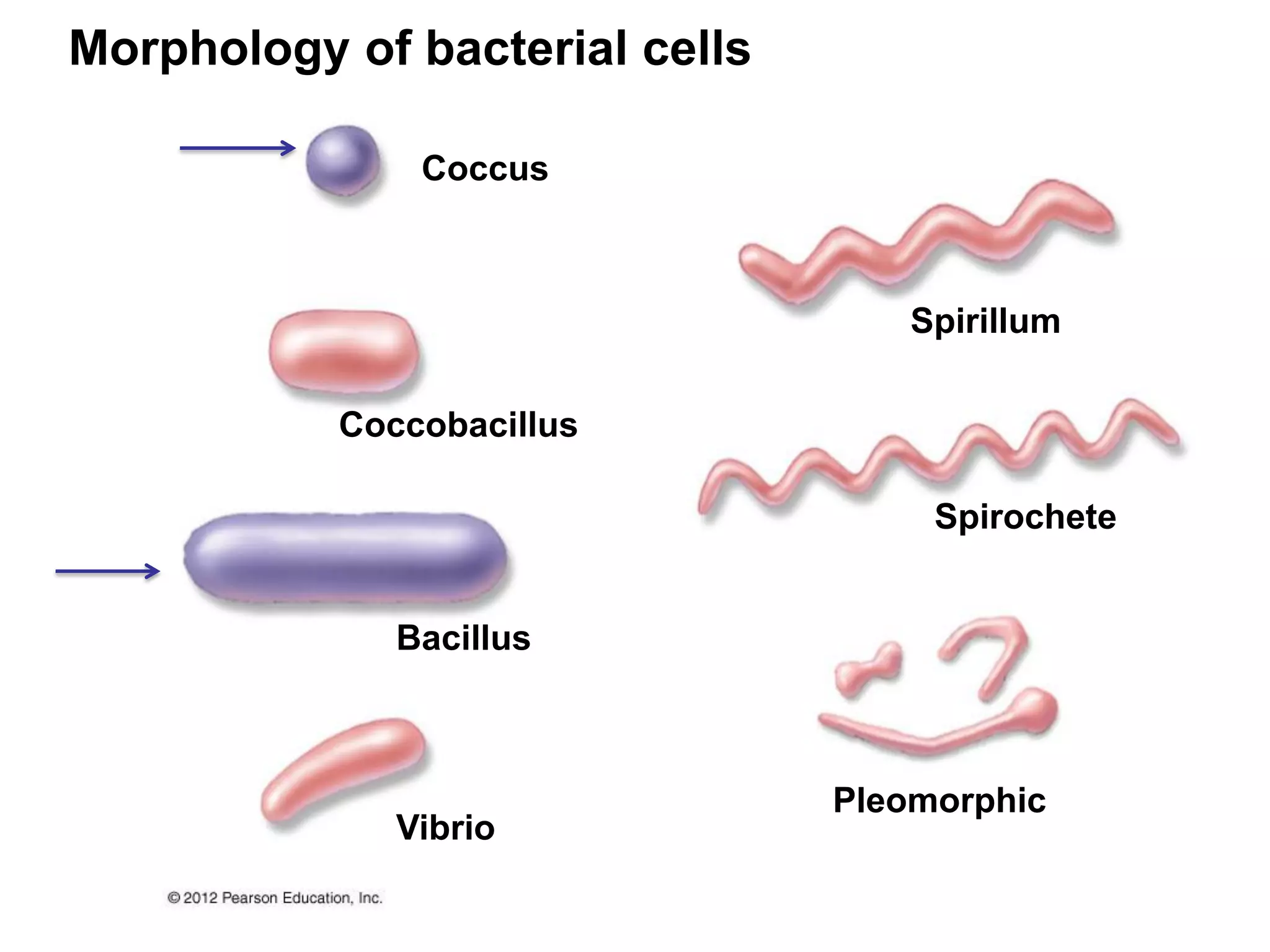
Coccus
Coccobacillus
Bacillus
Vibrio
Spirillum
Spirochete
Pleomorphic
Morphology of bacterial cells
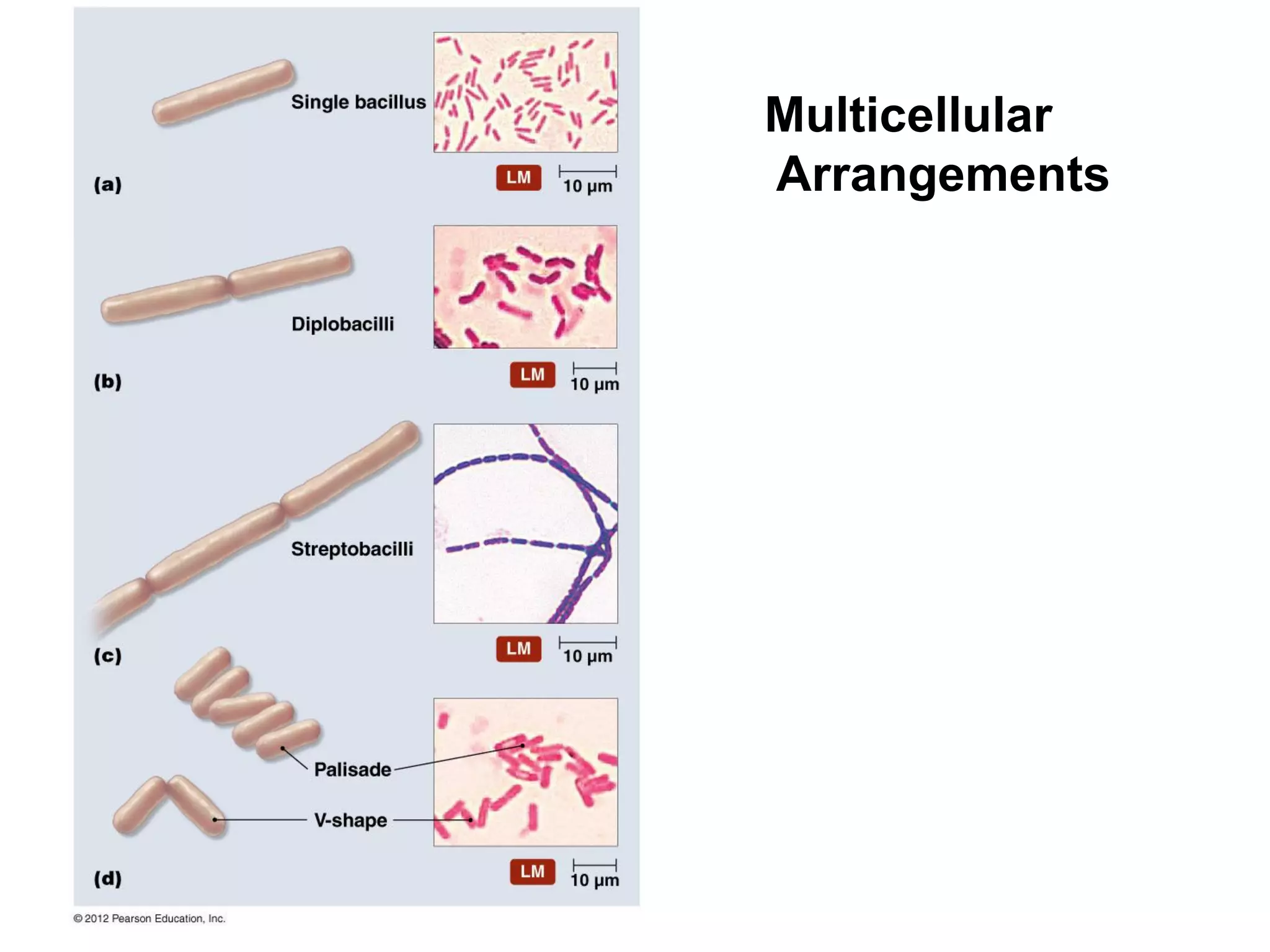
Multicellular
Arrangements
Multicellular
Arrangements
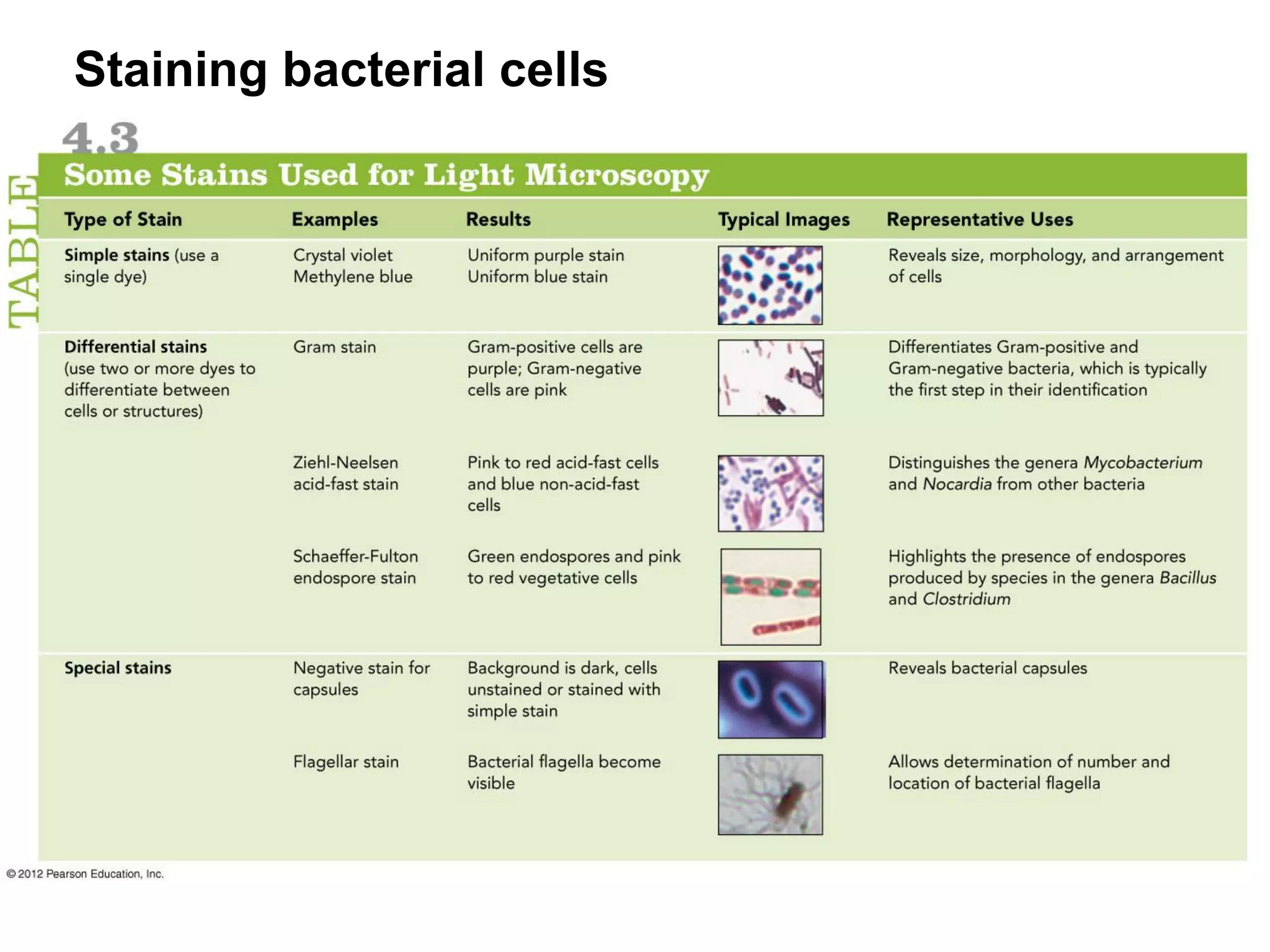
Staining bacterial cells
Staining bacterial cells: simple stain
One dye is used: crystal violet
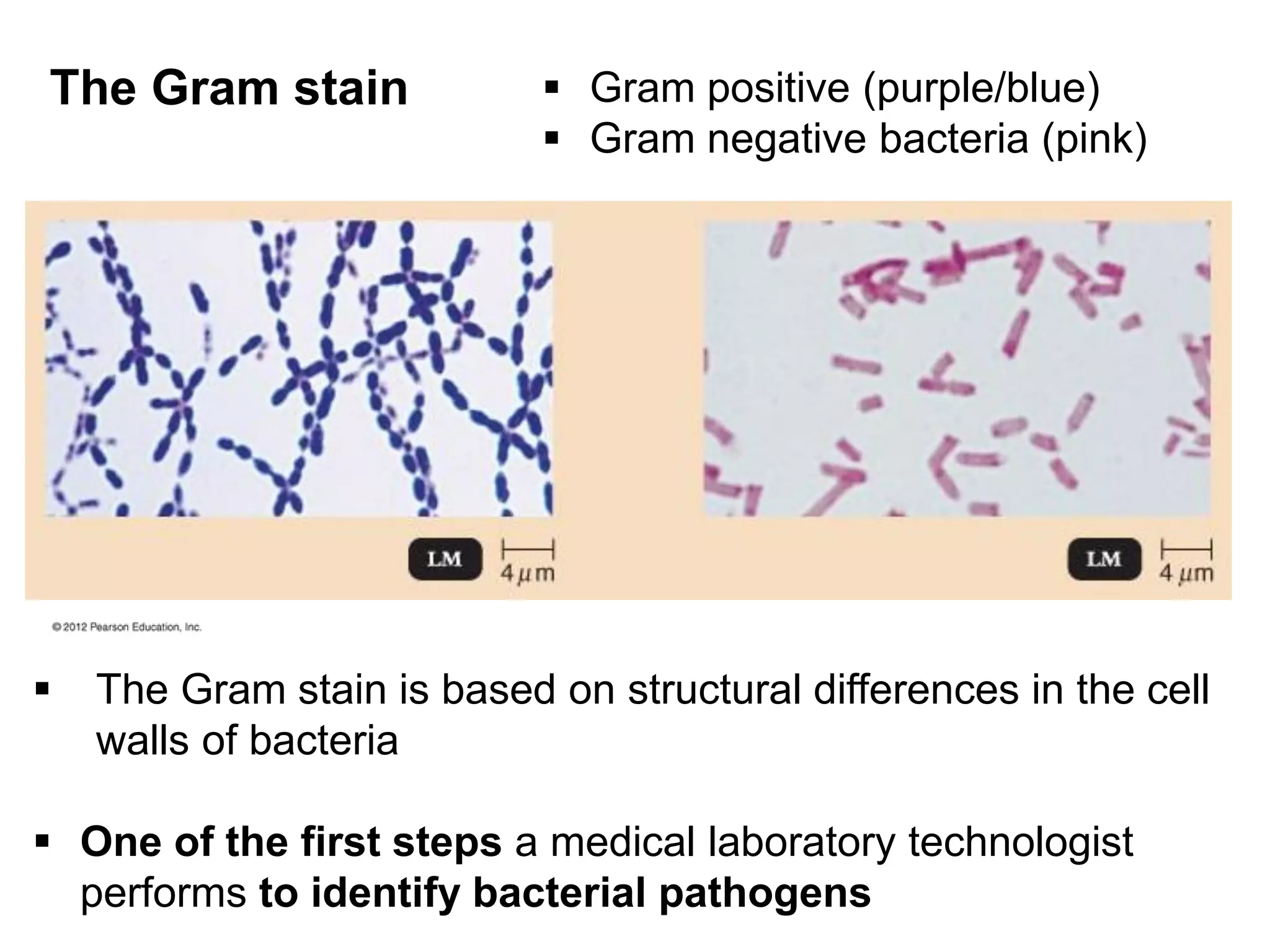
The Gram stain
 The Gram stain is based on structural differences in the cell
walls of bacteria
 One of the first steps a medical laboratory technologist
performs to identify bacterial pathogens
 Gram positive (purple/blue)
 Gram negative bacteria (pink)
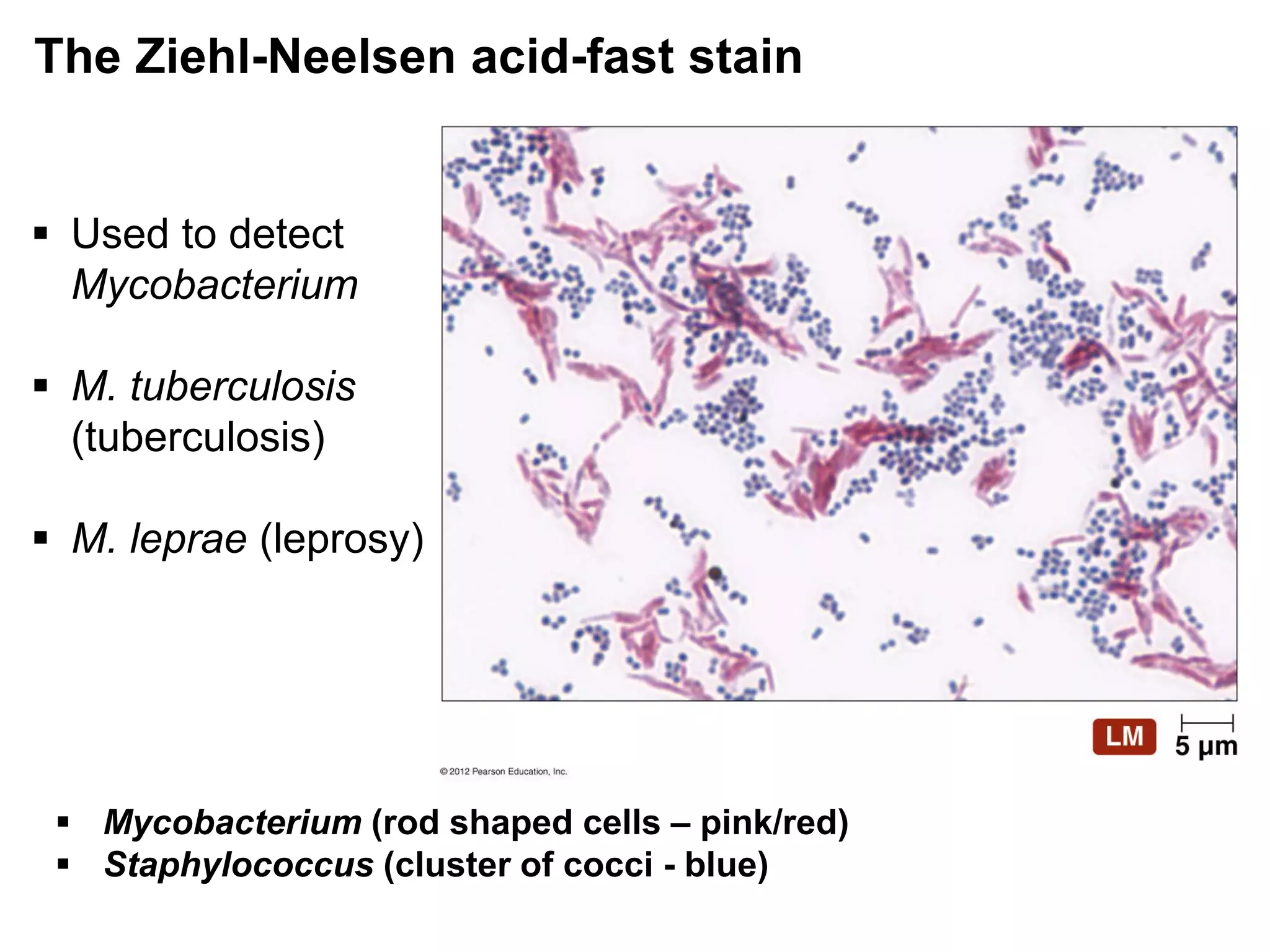
The Ziehl-Neelsen acid-fast stain
 Mycobacterium (rod shaped cells – pink/red)
 Staphylococcus (cluster of cocci - blue)
 Used to detect
Mycobacterium
 M. tuberculosis
(tuberculosis)
 M. leprae (leprosy)
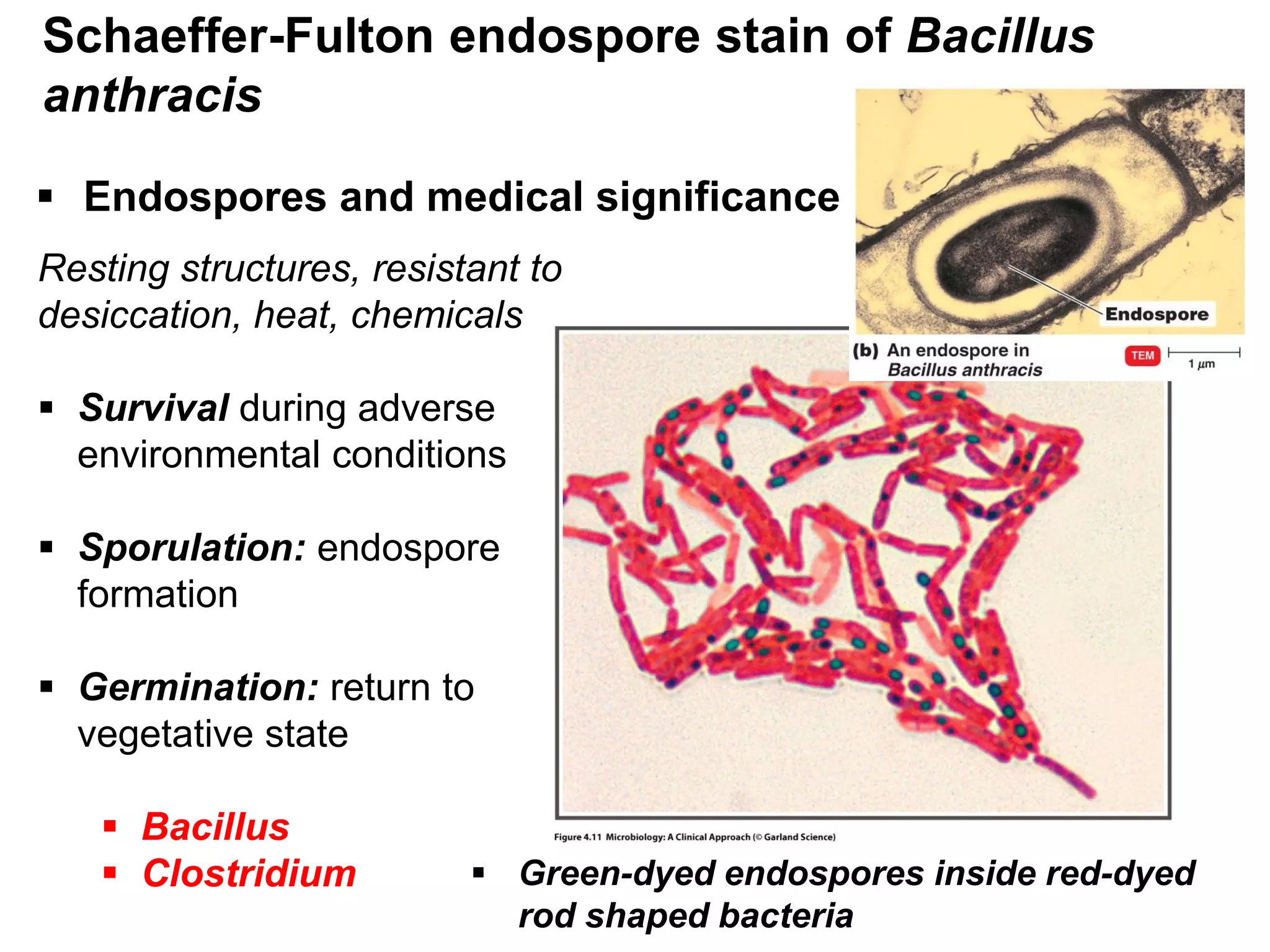
Schaeffer-Fulton endospore stain of Bacillus
anthracis
Resting structures, resistant to
desiccation, heat, chemicals
 Survival during adverse
environmental conditions
 Sporulation: endospore
formation
 Germination: return to
vegetative state
 Bacillus
 Clostridium  Green-dyed endospores inside red-dyed
rod shaped bacteria
 Endospores and medical significance
Negative stain of Klebsiella pneumoniae to detect
the capsule
Background
stain
Bacterium
Capsule
 Eosin, nigrosin or india ink can be used to stain the background
 Crystal violet to stain bacterial cells
Flagellar stain of Proteus vulgaris
Flagella Presence
 Number
 Arrangement
on the cell
 Help identify
pathogens
 Dyes are used to build up layers on flagella to make them visible
when using an optical microscope
Streptococcus
pneumoniae causes
pneumonia and
meningitis
S. pneumoniae grown from
a blood culture
Apply your knowledge to understand ….
 This arrangement is also seen in Neisseria gonorrhoeae, which causes
the sexually transmitted disease called gonorrhea
Streptococcus
pyogenes and strep
throat
A sputum smear showing
the typical arrangement
in chains of cocci
Apply your knowledge to understand …..
Sputum sample from a
patient with staphylococcal
pneumonia
Methicillin resistant Staphylococcus
aureus (MRSA)
Apply your knowledge to understand …..
Bacterial cells
 Within a bacterial cell there is the cytoplasm: a fluid
component surrounded by an envelope called the plasma
membrane
 Nucleoid
 Bacterial chromosome
 Ribosomes
 Synthesis of proteins
 Inclusions
 Reserve of polysaccharides, lipids, nitrogen, phosphate
 Plasmids (Not always present)
 Extrachromosomal genetic elements
Inclusions
Nucleoid
Ribosomes
Plasmid
Figure 4.14b
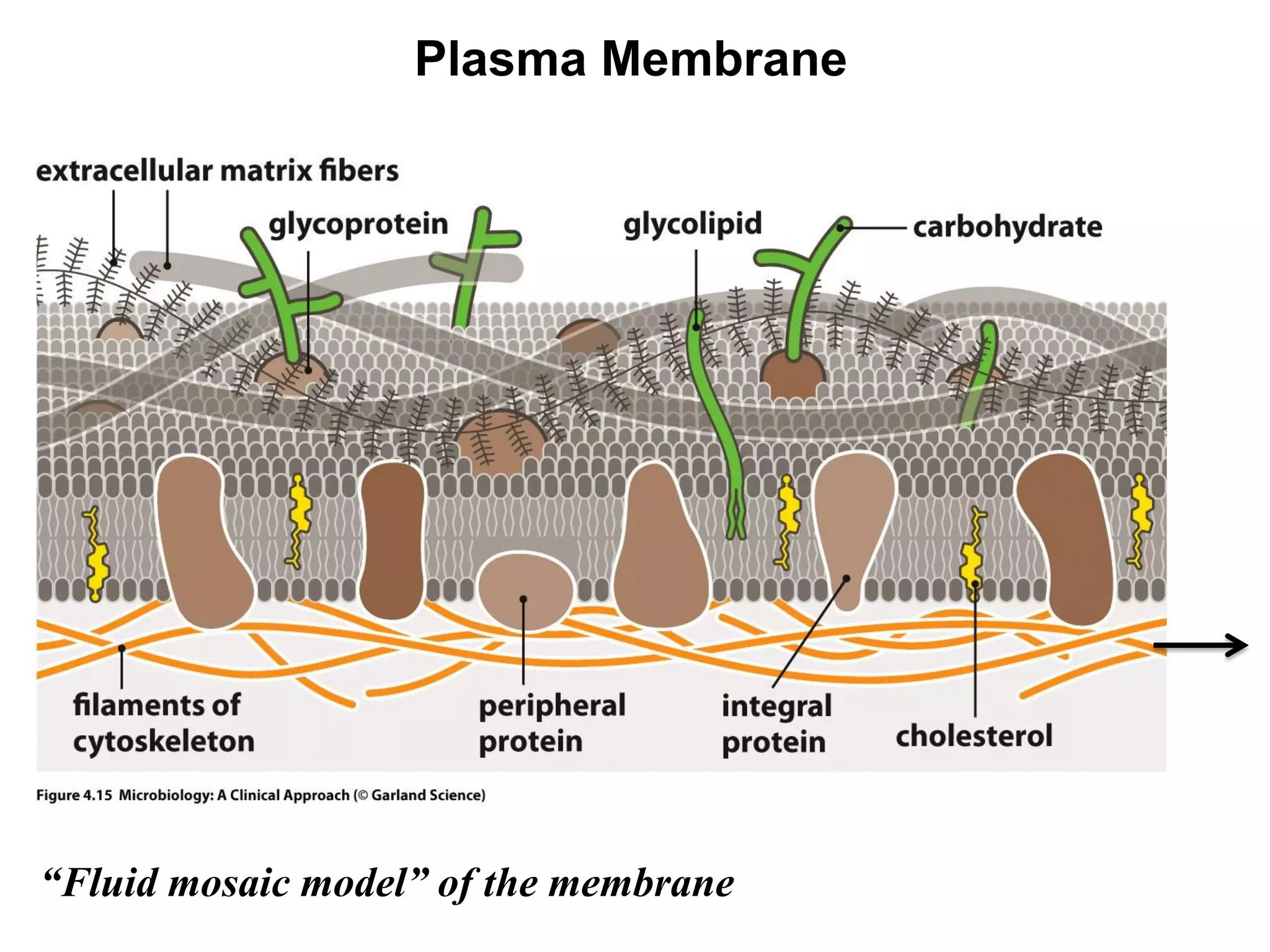
The Plasma Membrane
 Phospholipid bilayer
 Integral proteins
 Peripheral proteins
 Proteins carry out several functions including transport across the
plasma membrane
Thick peptidoglycan found
on the outer side of the
plasma membrane
 Gram-positive
bacteria
Thin peptidoglycan found in
the periplasmic space
 Gram-negative
bacteria
The cell wall provides structure, shape, and
protects the cell from osmotic lysis
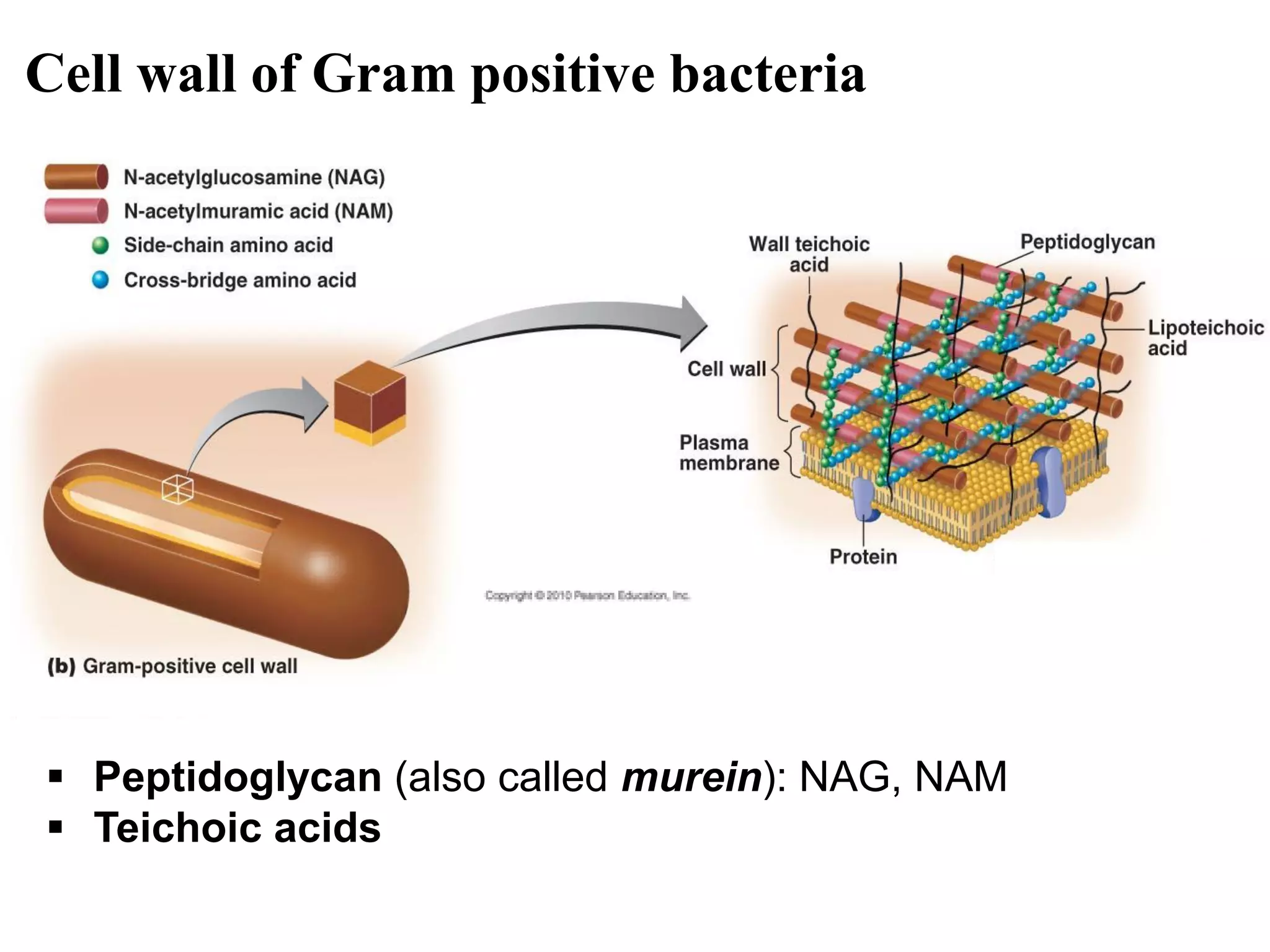
Cell wall of Gram positive bacteria
 Peptidoglycan (also called murein): NAG, NAM
 Teichoic acids
Cell wall of Gram negative bacteria
LPS (lipopolysaccharide)
 Lipid A is an endotoxin
 O polysaccharide functions as an antigen (E. coli O157:H7)
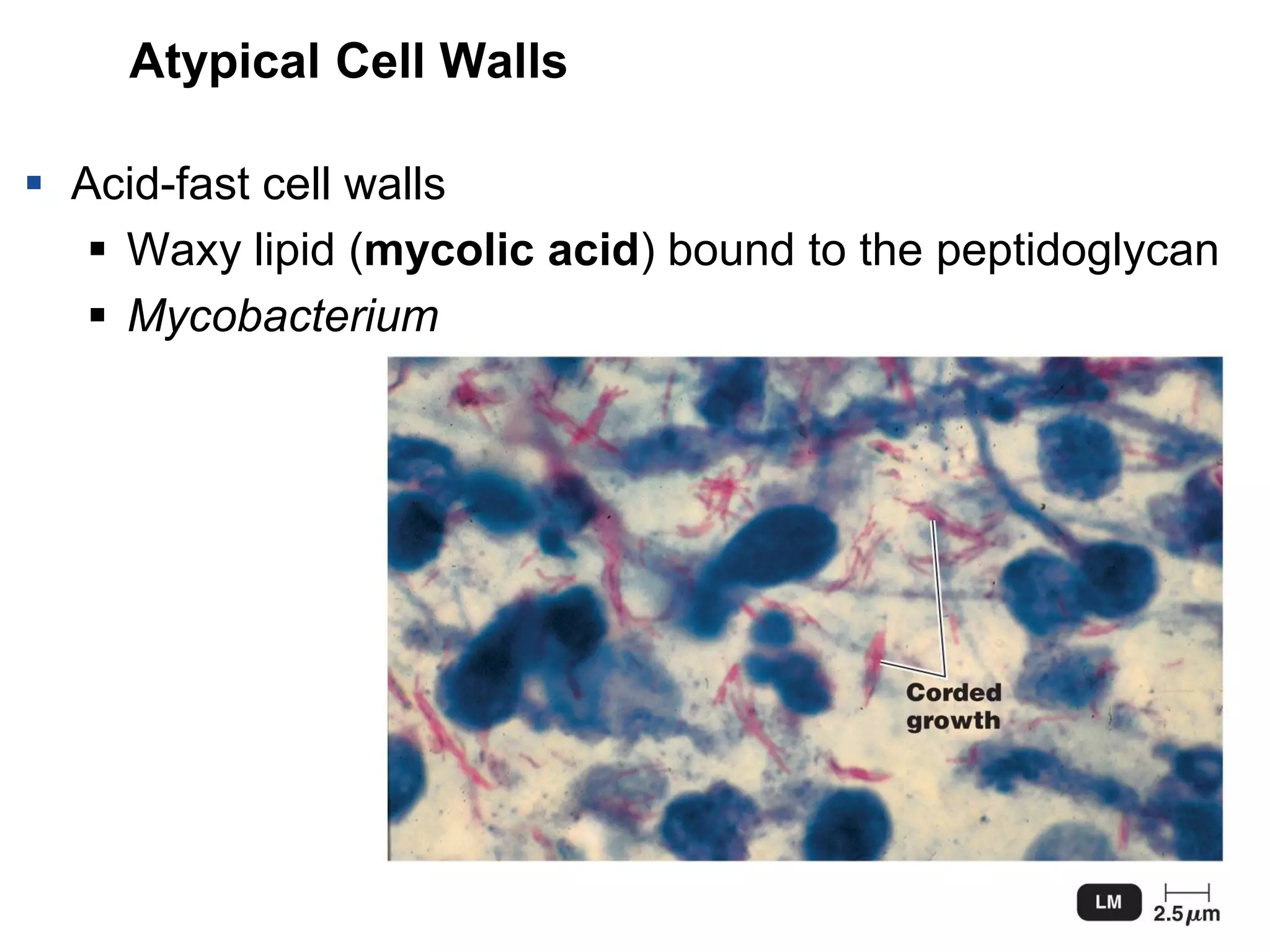
Atypical Cell Walls
 Acid-fast cell walls
 Waxy lipid (mycolic acid) bound to the peptidoglycan
 Mycobacterium
Glycocalyx: Capsule or Slime layer
• Capsule: Organized and firmly attached to the cell wall
• Slime layer: Unorganized and loosely attached to the cell wall
 Protects from desiccation
 Confers adherence
capability
 Allows pathogens to
escape or survive
phagocytosis
 Sticky substance surrounding the outside of the bacterial cell
 Made of polysaccharides, polypeptides, or both
 Streptococcus pneumoniae, Klebsiella pneumoniae, Bacillus
anthracis
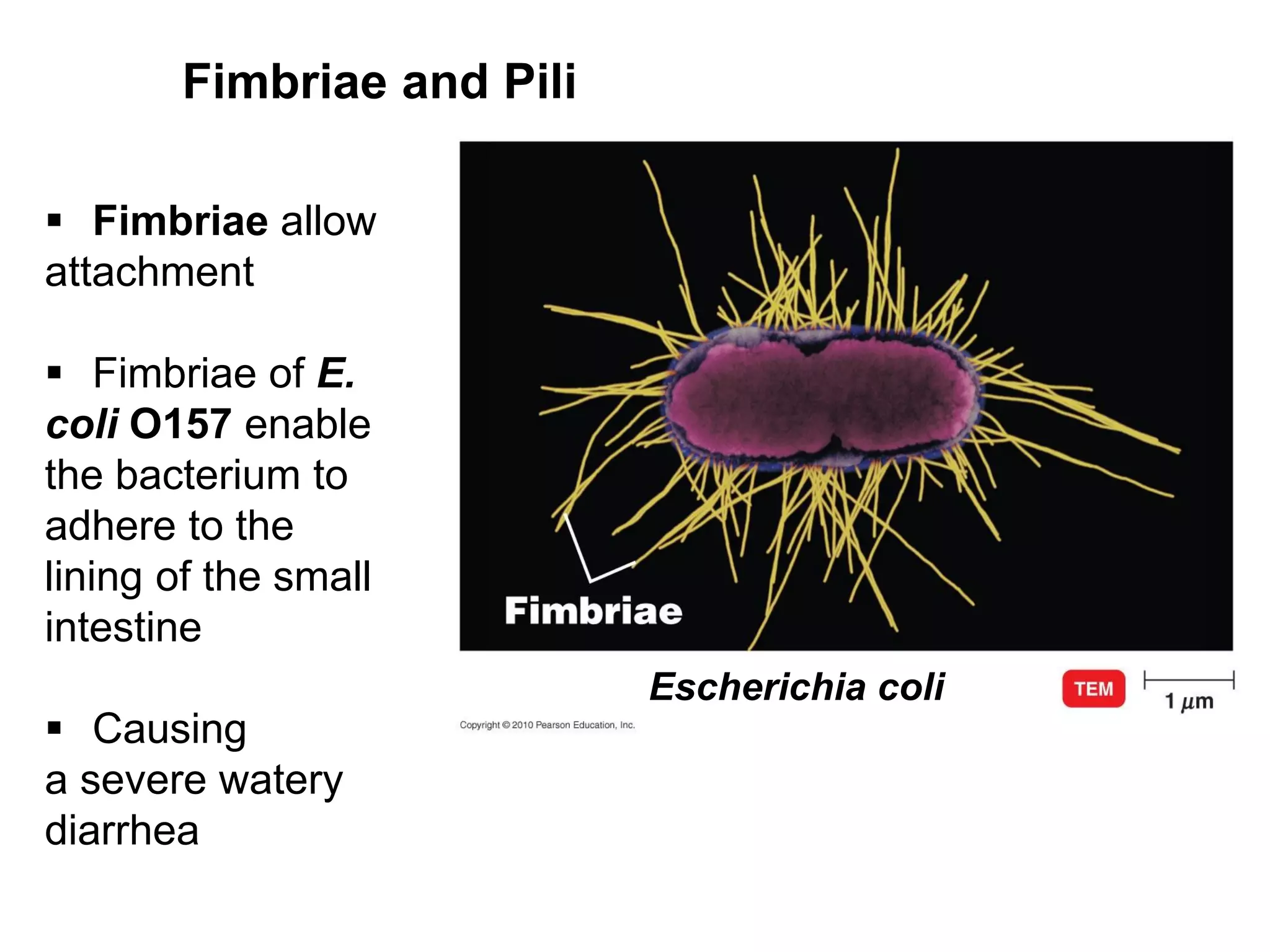
Fimbriae and Pili
Escherichia coli
 Fimbriae allow
attachment
 Fimbriae of E.
coli O157 enable
the bacterium to
adhere to the
lining of the small
intestine
 Causing
a severe watery
diarrhea
 Proteus species
are involved in
nosocomial
urinary tract
infections
Proteus vulgaris
 Fimbriae
 Flagella
 Neisseria gonorrhoeae, the pathogen colonizes the mucous
membrane of the reproductive tract by attaching with fimbriae
Fimbriae and Pili
 Pili are involved in motility
and genetic exchange in the
process of conjugation
 Through conjugation bacteria
acquire new capabilities
 Toxin production
 Resistance to antibiotics
Flagella (locomotion)
 Composed of filament, hook, and basal body, which anchors
the flagellum to the cell wall/membrane(s)
 Motile cells move toward or away from stimuli (taxis)
 Flagellar proteins are H antigens (E. coli O157:H7)
Arrangements of bacterial flagella
 Flagella allow movement, which in turn can allow escape from
host defense
 Axial filaments are
flagellum-like structures
found in spirochetes
 Causes the bacterial cell
to rotate like a corkscrew
(corkscrew motion)
Treponema pallidum (syphilis)
Axial filaments
Comparative analysis between prokaryotic
and eukaryotic cells
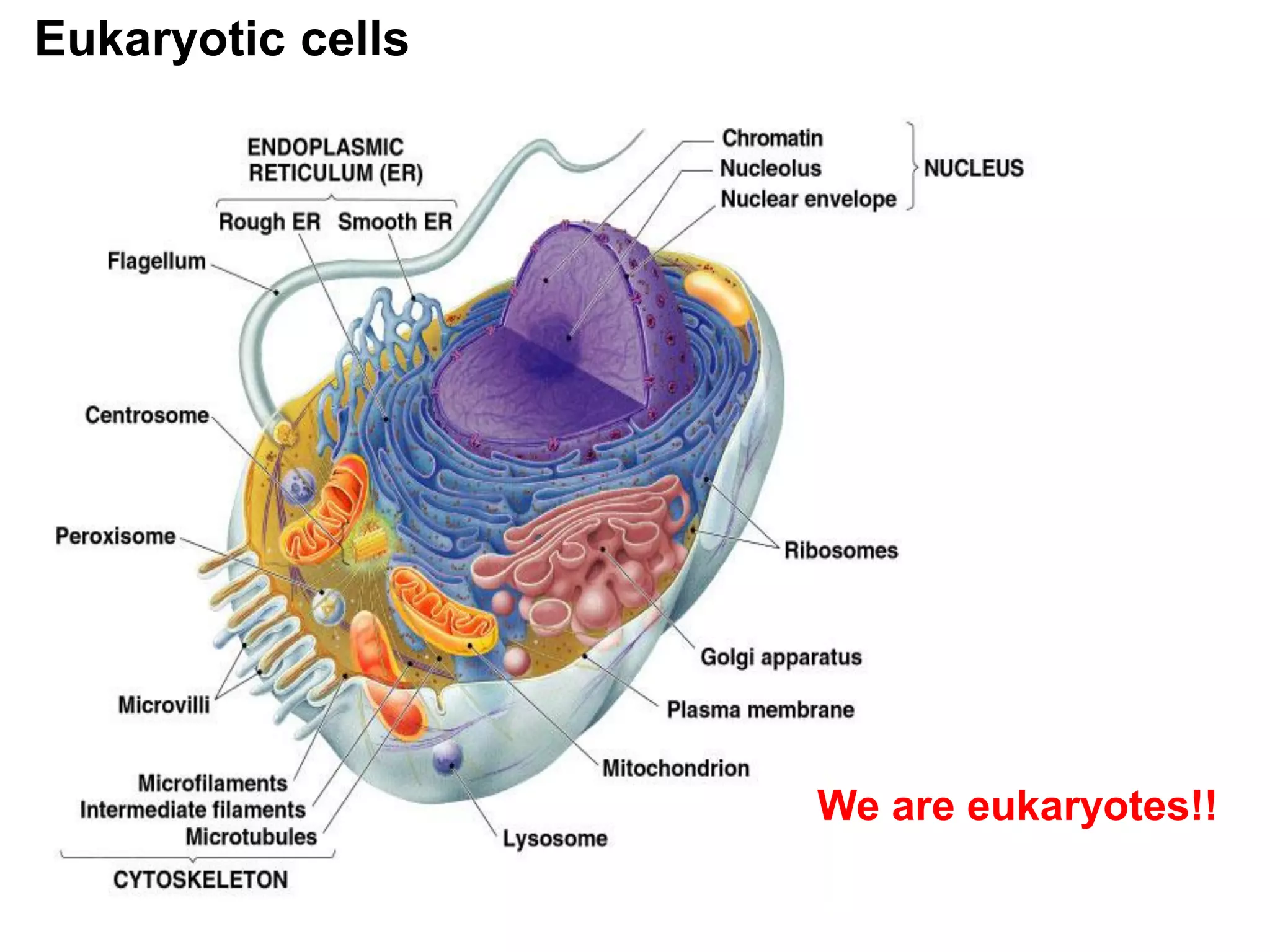
Eukaryotic cells
We are eukaryotes!!
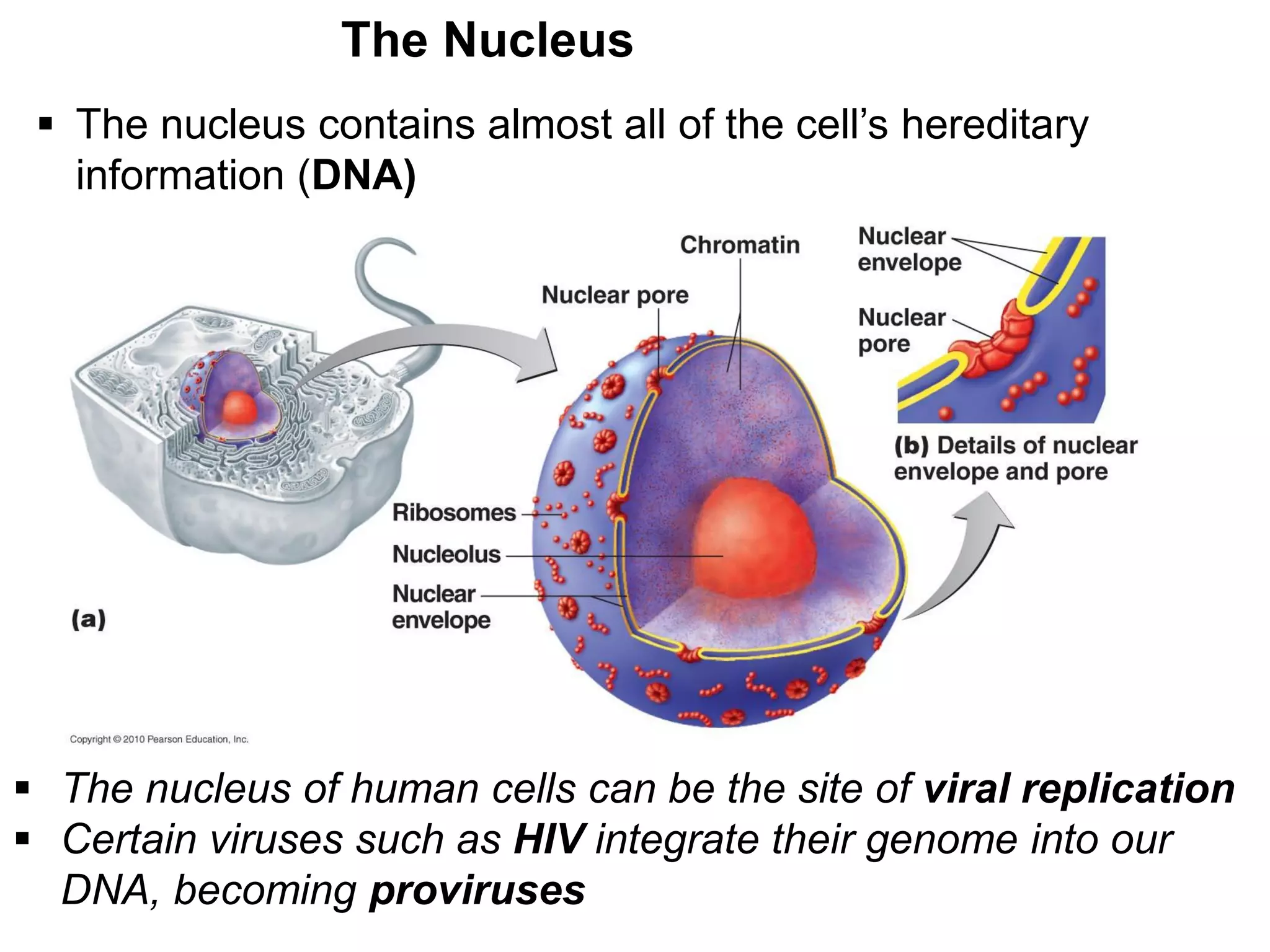
The Nucleus
 The nucleus contains almost all of the cell’s hereditary
information (DNA)
 The nucleus of human cells can be the site of viral replication
 Certain viruses such as HIV integrate their genome into our
DNA, becoming proviruses
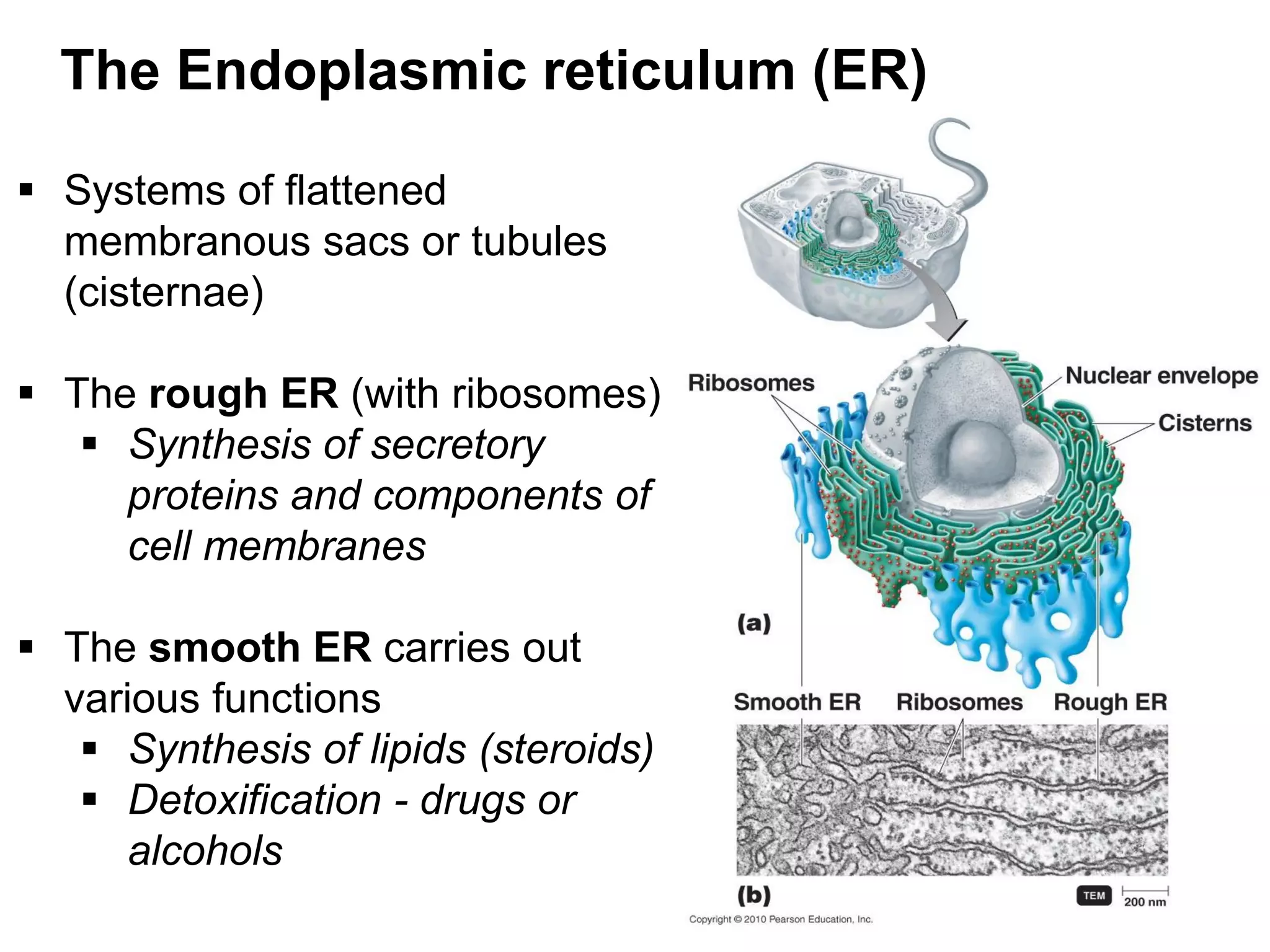
The Endoplasmic reticulum (ER)
 Systems of flattened
membranous sacs or tubules
(cisternae)
 The rough ER (with ribosomes)
 Synthesis of secretory
proteins and components of
cell membranes
 The smooth ER carries out
various functions
 Synthesis of lipids (steroids)
 Detoxification - drugs or
alcohols
Ribosomes
 Ribosomes are the intracellular site of protein synthesis
 Eukaryotic ribosomes (80S) differ from those of bacteria
(70S) - though both types are made of proteins and
ribosomal RNA
 Bacterial ribosomes
are the target of
antibiotics
The Golgi apparatus
 Modifies, sorts, and ships proteins from the ER, including
those secreted by the cells
 Produces lysosomes
The Golgi Apparatus
 Lysosomes are filled
with digestive
enzymes that break
down various
molecules
 Intracellular digestion
of macromolecules in
animal cells
 Lysosomes are
involved in
phagocytosis
Lysosomes
Details of the figure will not be
part of the exam!
Peroxisomes
 Oxidize organic substances (amino acids, fatty acids, toxic
substances such as alcohol)
 Contain catalase, an enzyme that converts H2O2 (by-
product of the oxidation reactions) into H2O and O2
Mitochondria
 Sites of cellular
respiration, a metabolic
process by which cells
form ATP
 Mitochondria contain
DNA and ribosomes
(similar to those of
bacteria)
 Mitochondria evolved
from bacteria
Plasma Membrane
“Fluid mosaic model” of the membrane
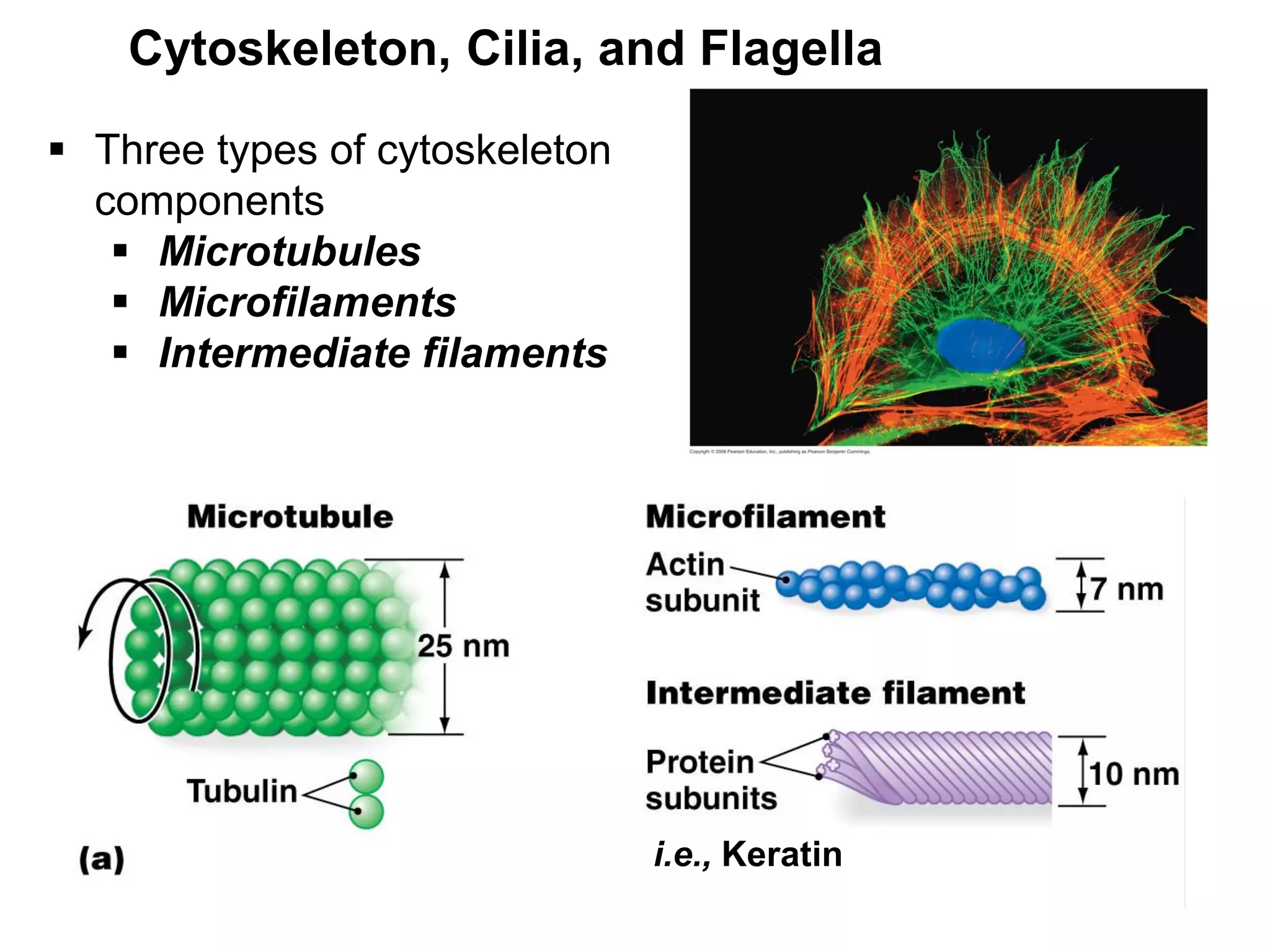
 Three types of cytoskeleton
components
 Microtubules
 Microfilaments
 Intermediate filaments
Cytoskeleton, Cilia, and Flagella
i.e., Keratin
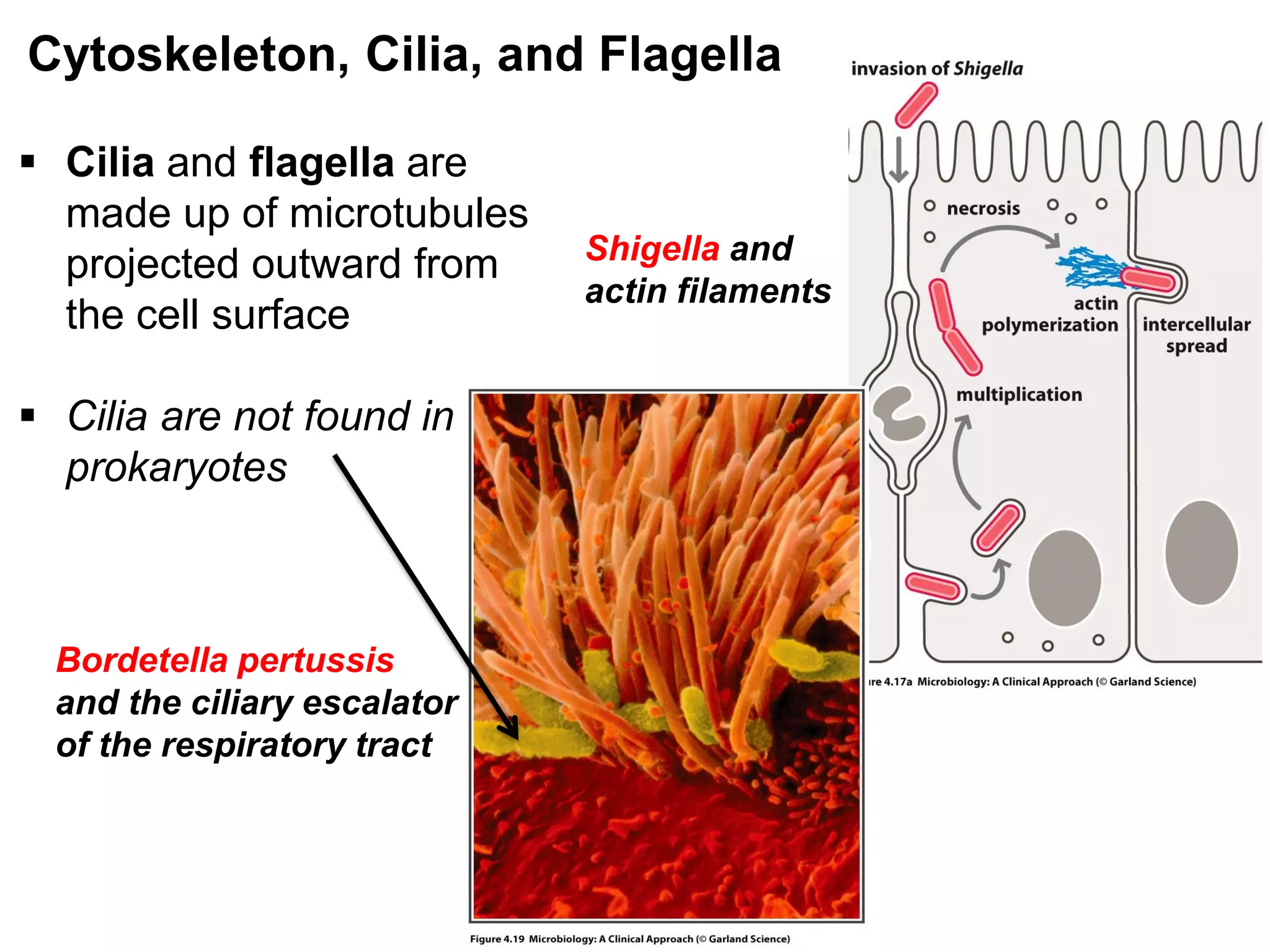
Shigella and
actin filaments
Bordetella pertussis
and the ciliary escalator
of the respiratory tract
 Cilia and flagella are
made up of microtubules
projected outward from
the cell surface
 Cilia are not found in
prokaryotes
Cytoskeleton, Cilia, and Flagella
Endocytosis and Exocytosis
 Endocytosis, a process by which eukaryotic cells take in the
“material” through formation of vesicles
 Endocytosis includes
 Phagocytosis
 Pinocytosis
 Exocytosis involves moving “material” out of the cell which
is also done through the formation of vesicles
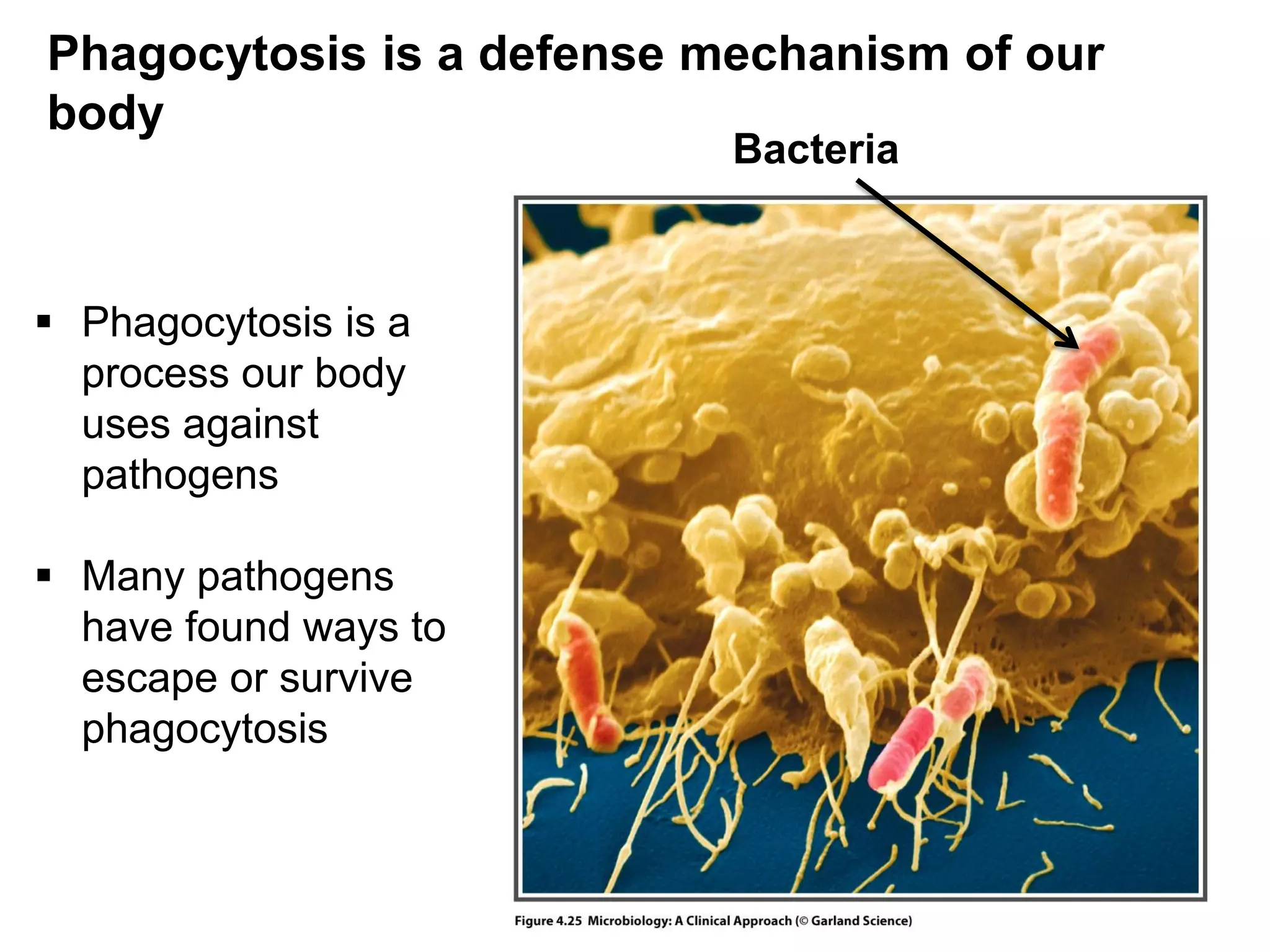
Phagocytosis is a defense mechanism of our
body
 Phagocytosis is a
process our body
uses against
pathogens
 Many pathogens
have found ways to
escape or survive
phagocytosis
Bacteria
A human cell (blue)
engulfing a yeast cell
(green)
Keep in mind that eukaryotic organisms you will study
include
Filamentous fungi
Yeasts
Protozoa
Helminths

2 bio265 prokaryotes vs eukaryotes_dr di bonaventura

  • 1.
  • 2.
    Chicken egg Human red blood cell Large protozoan (Euglena)Chloroplasts Flea Typicalbacteria and archaea Diameter of DNA VirusesProteins Ribosomes Amino acids Atoms Scanning tunneling microscope (STM) 0.01 nm–10 nm Scanning electron microscope (SEM) 0.4 nm–1 mm Transmission electron microscope (TEM) 0.078 nm–100 µm Atomic force microscope (AFM) 1 nm–10 nm Compound light microscope (LM) 200 nm–10 mm Unaided human eye 200 µm– Mitochondrion
  • 3.
  • 4.
  • 5.
  • 6.
  • 7.
    Staining bacterial cells:simple stain One dye is used: crystal violet
  • 8.
    The Gram stain The Gram stain is based on structural differences in the cell walls of bacteria  One of the first steps a medical laboratory technologist performs to identify bacterial pathogens  Gram positive (purple/blue)  Gram negative bacteria (pink)
  • 9.
    The Ziehl-Neelsen acid-faststain  Mycobacterium (rod shaped cells – pink/red)  Staphylococcus (cluster of cocci - blue)  Used to detect Mycobacterium  M. tuberculosis (tuberculosis)  M. leprae (leprosy)
  • 10.
    Schaeffer-Fulton endospore stainof Bacillus anthracis Resting structures, resistant to desiccation, heat, chemicals  Survival during adverse environmental conditions  Sporulation: endospore formation  Germination: return to vegetative state  Bacillus  Clostridium  Green-dyed endospores inside red-dyed rod shaped bacteria  Endospores and medical significance
  • 11.
    Negative stain ofKlebsiella pneumoniae to detect the capsule Background stain Bacterium Capsule  Eosin, nigrosin or india ink can be used to stain the background  Crystal violet to stain bacterial cells
  • 12.
    Flagellar stain ofProteus vulgaris Flagella Presence  Number  Arrangement on the cell  Help identify pathogens  Dyes are used to build up layers on flagella to make them visible when using an optical microscope
  • 13.
    Streptococcus pneumoniae causes pneumonia and meningitis S.pneumoniae grown from a blood culture Apply your knowledge to understand ….  This arrangement is also seen in Neisseria gonorrhoeae, which causes the sexually transmitted disease called gonorrhea
  • 14.
    Streptococcus pyogenes and strep throat Asputum smear showing the typical arrangement in chains of cocci Apply your knowledge to understand …..
  • 15.
    Sputum sample froma patient with staphylococcal pneumonia Methicillin resistant Staphylococcus aureus (MRSA) Apply your knowledge to understand …..
  • 16.
    Bacterial cells  Withina bacterial cell there is the cytoplasm: a fluid component surrounded by an envelope called the plasma membrane  Nucleoid  Bacterial chromosome  Ribosomes  Synthesis of proteins  Inclusions  Reserve of polysaccharides, lipids, nitrogen, phosphate  Plasmids (Not always present)  Extrachromosomal genetic elements Inclusions Nucleoid Ribosomes Plasmid
  • 17.
    Figure 4.14b The PlasmaMembrane  Phospholipid bilayer  Integral proteins  Peripheral proteins  Proteins carry out several functions including transport across the plasma membrane
  • 18.
    Thick peptidoglycan found onthe outer side of the plasma membrane  Gram-positive bacteria Thin peptidoglycan found in the periplasmic space  Gram-negative bacteria The cell wall provides structure, shape, and protects the cell from osmotic lysis
  • 19.
    Cell wall ofGram positive bacteria  Peptidoglycan (also called murein): NAG, NAM  Teichoic acids
  • 20.
    Cell wall ofGram negative bacteria LPS (lipopolysaccharide)  Lipid A is an endotoxin  O polysaccharide functions as an antigen (E. coli O157:H7)
  • 21.
    Atypical Cell Walls Acid-fast cell walls  Waxy lipid (mycolic acid) bound to the peptidoglycan  Mycobacterium
  • 22.
    Glycocalyx: Capsule orSlime layer • Capsule: Organized and firmly attached to the cell wall • Slime layer: Unorganized and loosely attached to the cell wall  Protects from desiccation  Confers adherence capability  Allows pathogens to escape or survive phagocytosis  Sticky substance surrounding the outside of the bacterial cell  Made of polysaccharides, polypeptides, or both  Streptococcus pneumoniae, Klebsiella pneumoniae, Bacillus anthracis
  • 23.
    Fimbriae and Pili Escherichiacoli  Fimbriae allow attachment  Fimbriae of E. coli O157 enable the bacterium to adhere to the lining of the small intestine  Causing a severe watery diarrhea
  • 24.
     Proteus species areinvolved in nosocomial urinary tract infections Proteus vulgaris  Fimbriae  Flagella  Neisseria gonorrhoeae, the pathogen colonizes the mucous membrane of the reproductive tract by attaching with fimbriae
  • 25.
    Fimbriae and Pili Pili are involved in motility and genetic exchange in the process of conjugation  Through conjugation bacteria acquire new capabilities  Toxin production  Resistance to antibiotics
  • 26.
    Flagella (locomotion)  Composedof filament, hook, and basal body, which anchors the flagellum to the cell wall/membrane(s)  Motile cells move toward or away from stimuli (taxis)  Flagellar proteins are H antigens (E. coli O157:H7)
  • 27.
    Arrangements of bacterialflagella  Flagella allow movement, which in turn can allow escape from host defense
  • 28.
     Axial filamentsare flagellum-like structures found in spirochetes  Causes the bacterial cell to rotate like a corkscrew (corkscrew motion) Treponema pallidum (syphilis) Axial filaments
  • 30.
    Comparative analysis betweenprokaryotic and eukaryotic cells
  • 31.
  • 32.
    The Nucleus  Thenucleus contains almost all of the cell’s hereditary information (DNA)  The nucleus of human cells can be the site of viral replication  Certain viruses such as HIV integrate their genome into our DNA, becoming proviruses
  • 33.
    The Endoplasmic reticulum(ER)  Systems of flattened membranous sacs or tubules (cisternae)  The rough ER (with ribosomes)  Synthesis of secretory proteins and components of cell membranes  The smooth ER carries out various functions  Synthesis of lipids (steroids)  Detoxification - drugs or alcohols
  • 34.
    Ribosomes  Ribosomes arethe intracellular site of protein synthesis  Eukaryotic ribosomes (80S) differ from those of bacteria (70S) - though both types are made of proteins and ribosomal RNA  Bacterial ribosomes are the target of antibiotics
  • 35.
    The Golgi apparatus Modifies, sorts, and ships proteins from the ER, including those secreted by the cells  Produces lysosomes The Golgi Apparatus
  • 36.
     Lysosomes arefilled with digestive enzymes that break down various molecules  Intracellular digestion of macromolecules in animal cells  Lysosomes are involved in phagocytosis Lysosomes Details of the figure will not be part of the exam!
  • 37.
    Peroxisomes  Oxidize organicsubstances (amino acids, fatty acids, toxic substances such as alcohol)  Contain catalase, an enzyme that converts H2O2 (by- product of the oxidation reactions) into H2O and O2
  • 38.
    Mitochondria  Sites ofcellular respiration, a metabolic process by which cells form ATP  Mitochondria contain DNA and ribosomes (similar to those of bacteria)  Mitochondria evolved from bacteria
  • 39.
    Plasma Membrane “Fluid mosaicmodel” of the membrane
  • 40.
     Three typesof cytoskeleton components  Microtubules  Microfilaments  Intermediate filaments Cytoskeleton, Cilia, and Flagella i.e., Keratin
  • 41.
    Shigella and actin filaments Bordetellapertussis and the ciliary escalator of the respiratory tract  Cilia and flagella are made up of microtubules projected outward from the cell surface  Cilia are not found in prokaryotes Cytoskeleton, Cilia, and Flagella
  • 42.
    Endocytosis and Exocytosis Endocytosis, a process by which eukaryotic cells take in the “material” through formation of vesicles  Endocytosis includes  Phagocytosis  Pinocytosis  Exocytosis involves moving “material” out of the cell which is also done through the formation of vesicles
  • 43.
    Phagocytosis is adefense mechanism of our body  Phagocytosis is a process our body uses against pathogens  Many pathogens have found ways to escape or survive phagocytosis Bacteria
  • 44.
    A human cell(blue) engulfing a yeast cell (green)
  • 45.
    Keep in mindthat eukaryotic organisms you will study include Filamentous fungi Yeasts Protozoa Helminths