Selected fungi,
parasitic helminths, and protozoa
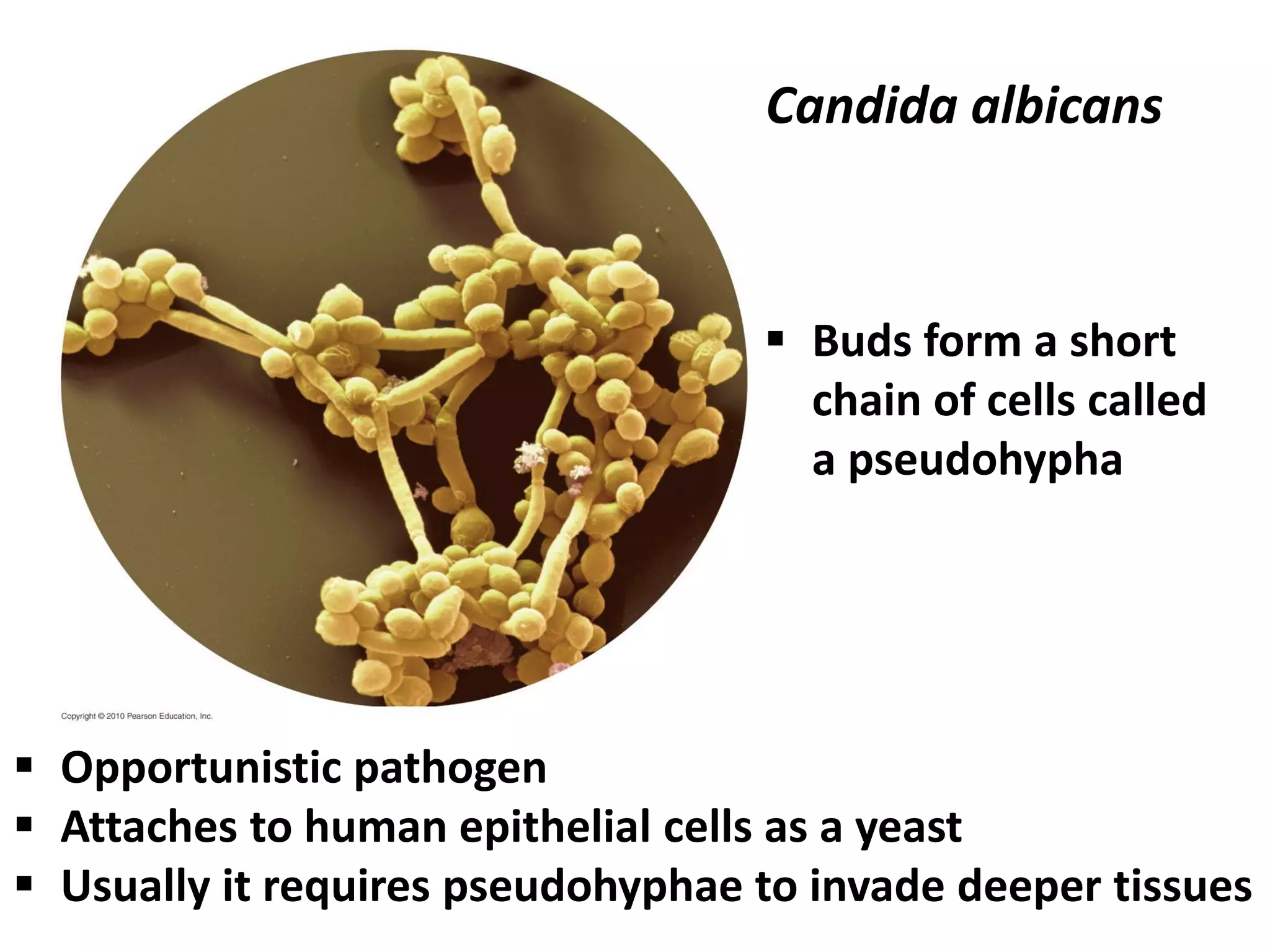
 Opportunistic pathogen
 Attaches to human epithelial cells as a yeast
 Usually it requires pseudohyphae to invade deeper tissues
 Buds form a short
chain of cells called
a pseudohypha
Candida albicans
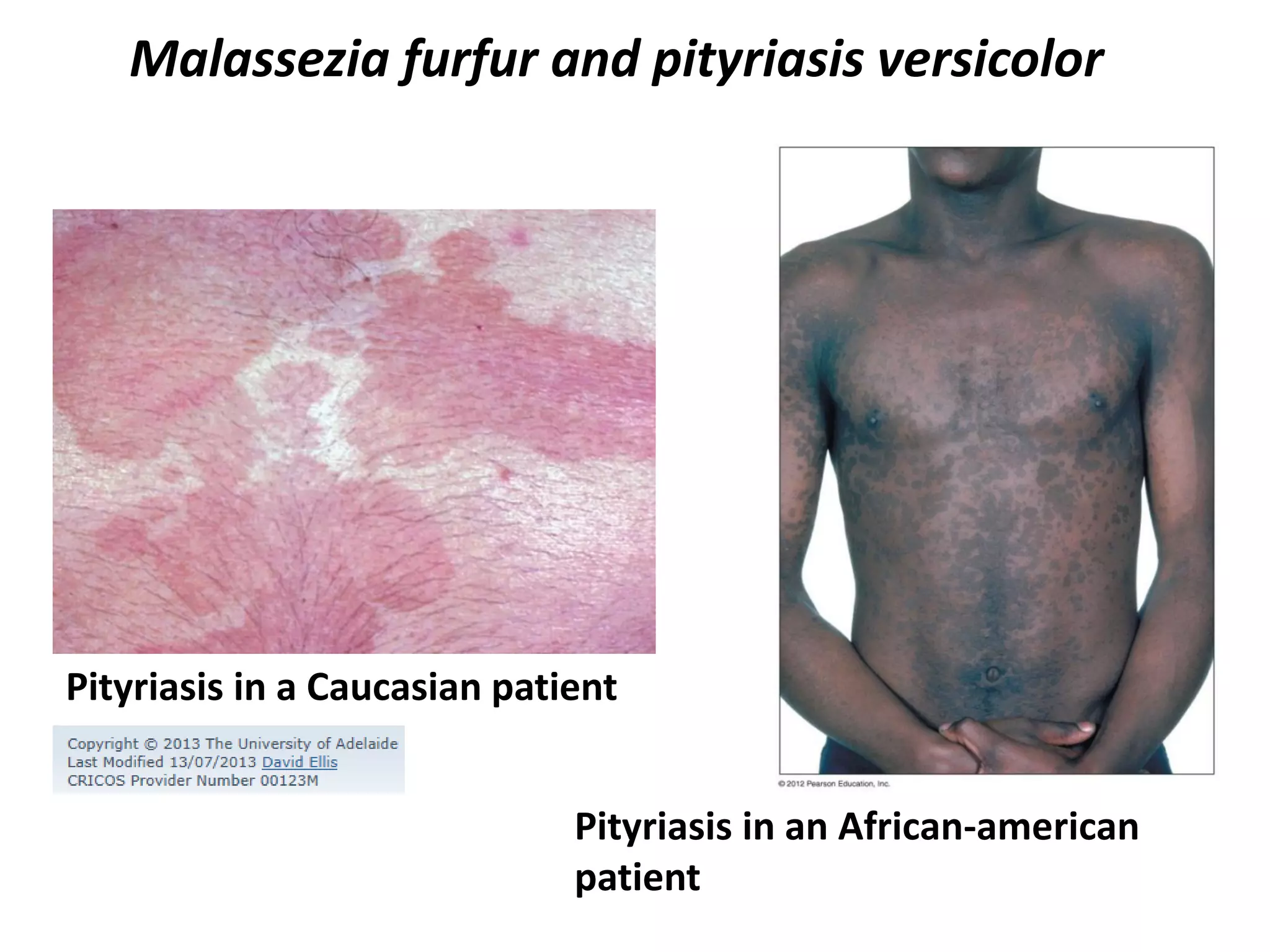
Pityriasis in a Caucasian patient
Pityriasis in an African-american
patient
Malassezia furfur and pityriasis versicolor
 10% KOH,
glycerol, and
Parker ink
solution
 Diagnostic: Stained skin scrapings from patients reveal
thick-walled, round yeast cells that reproduce by budding,
and hyphae
 Encapsulated yeast
 Inhalation of dried,
contaminated
droppings
(pigeon/chicken)
 Cryptococcal
meningitis
Cryptococcus
neoformans
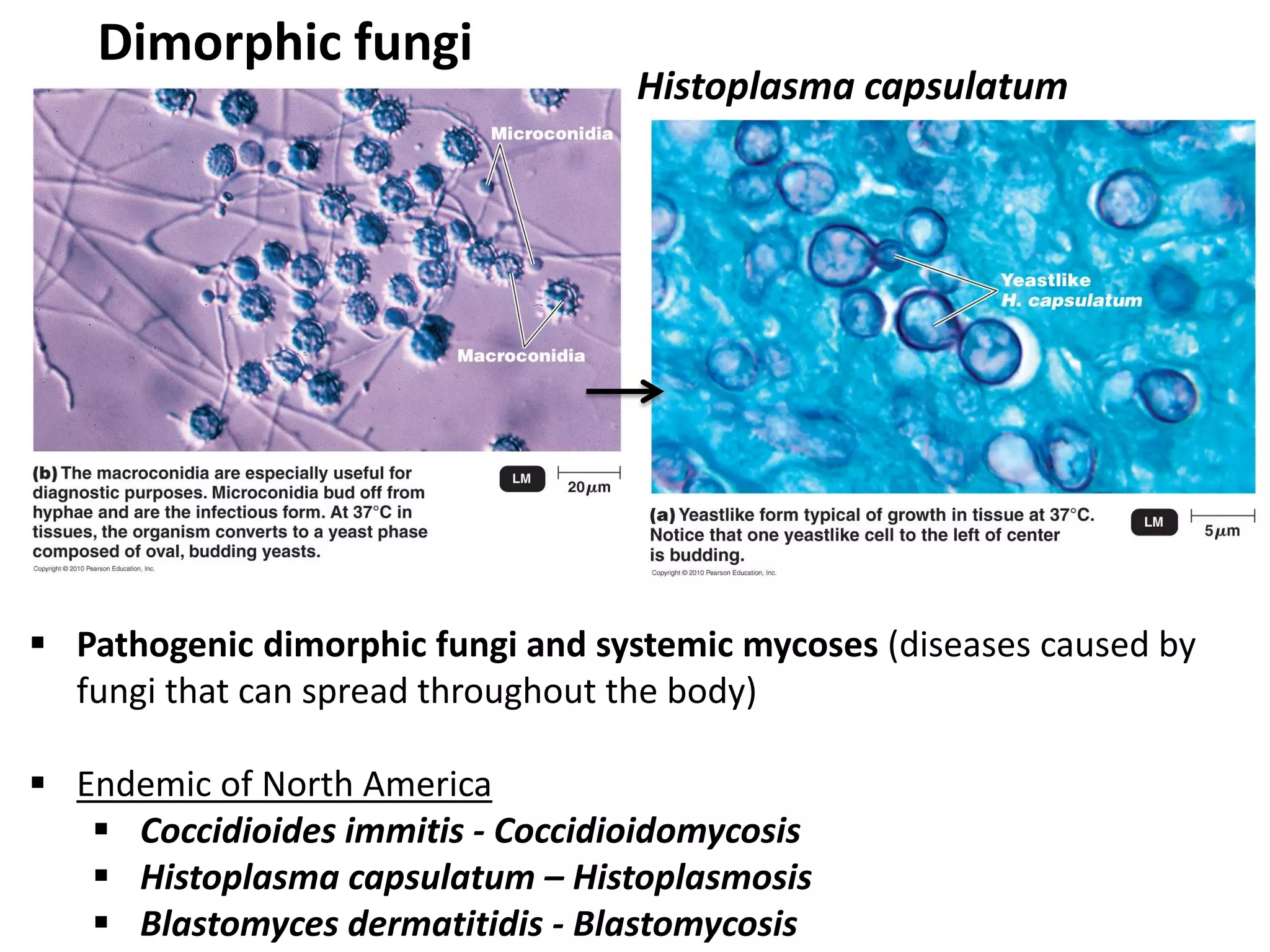
Dimorphic fungi
Histoplasma capsulatum
 Pathogenic dimorphic fungi and systemic mycoses (diseases caused by
fungi that can spread throughout the body)
 Endemic of North America
 Coccidioides immitis - Coccidioidomycosis
 Histoplasma capsulatum – Histoplasmosis
 Blastomyces dermatitidis - Blastomycosis
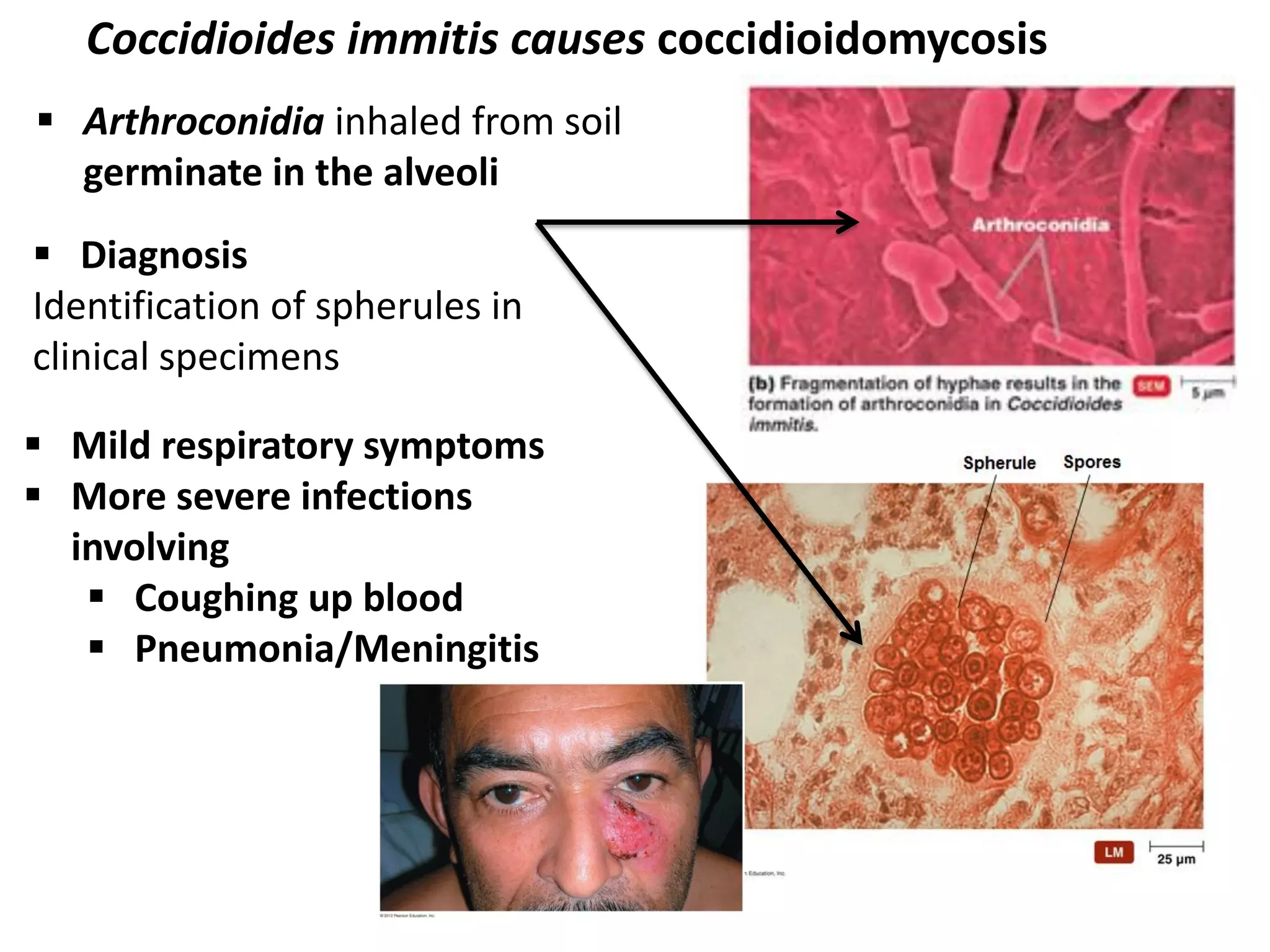
 Arthroconidia inhaled from soil
germinate in the alveoli
Coccidioides immitis causes coccidioidomycosis
 Diagnosis
Identification of spherules in
clinical specimens
 Mild respiratory symptoms
 More severe infections
involving
 Coughing up blood
 Pneumonia/Meningitis
Schistosoma mansoni
Blood fluke
 Flukes are given names
according to the tissue of
the definitive host in which
the adults lives
 Lung fluke
 Liver fluke
 Blood fluke
 Cause progressive damage
to tissues and organs
Trematodes
Schistosoma mansoni
Egg
 Eggs lodge in
tissues causing
damage to several
organs
Tapeworms - Cestodes
 Taenia saginata
 Taenia solium
 Ingestion of
undercooked measly
meat or
 Eggs that leads to
cysticercosis in
humans
 Diagnosis in clinical specimens
 Proglottids
 Eggs
Proglottid
Egg
Taenia species
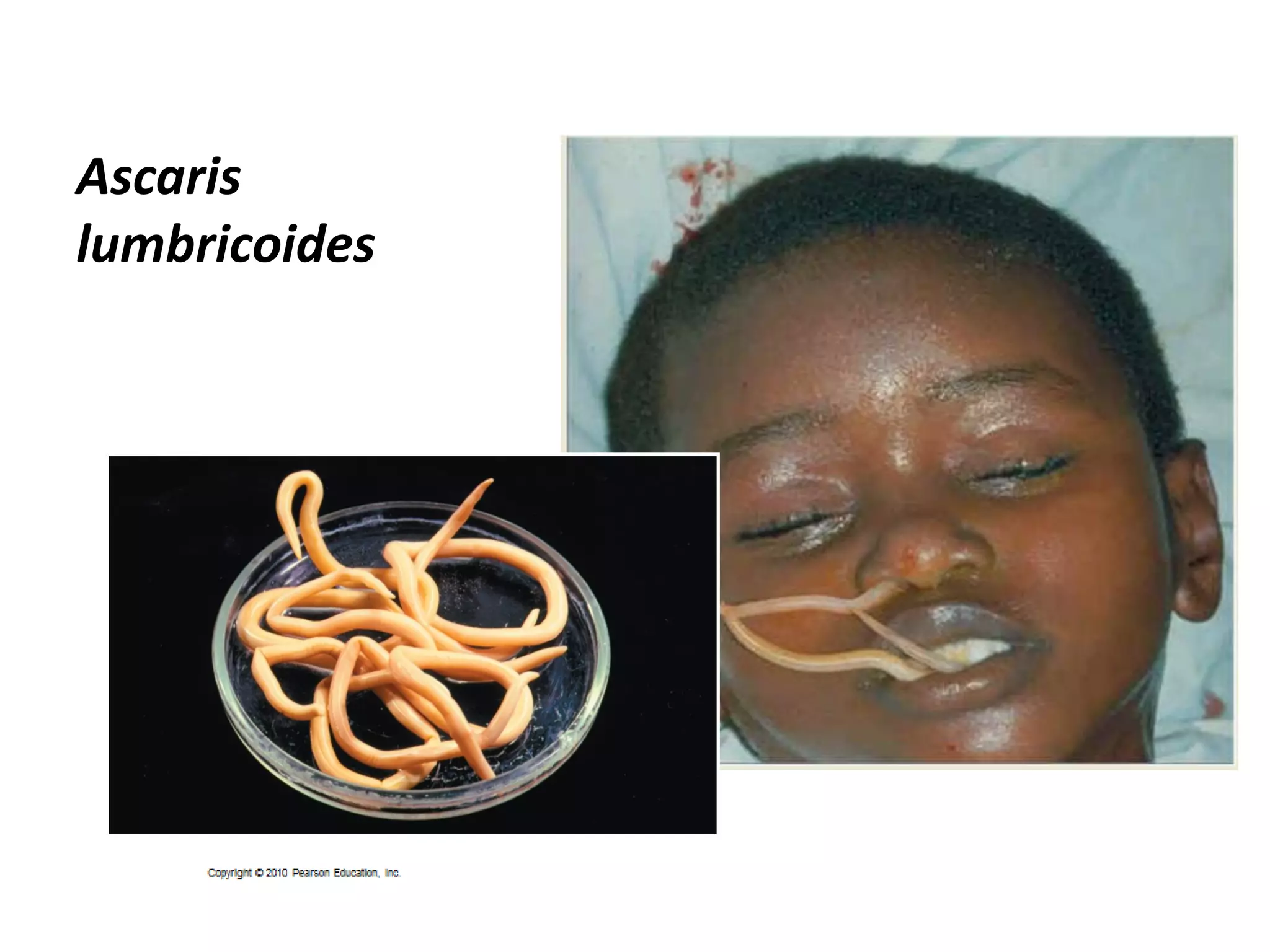
Ascaris lumbricoides
Nematode-round worm
 Infects over one billion people worldwide
 Small intestine
 Feeds on partially digested foods
 Eggs excreted with feces can survive for long periods
Ascaris
lumbricoides
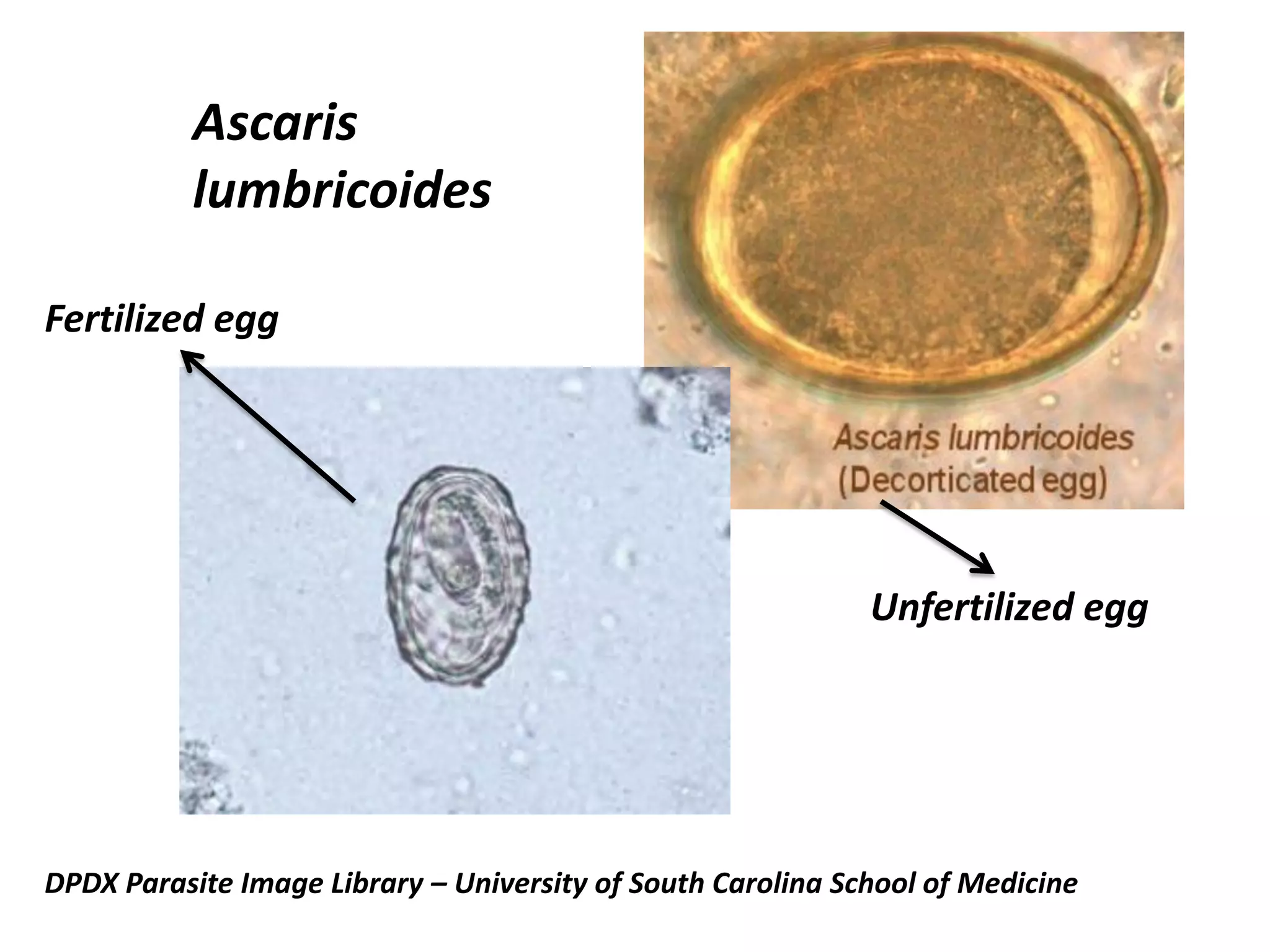
Ascaris
lumbricoides
Unfertilized egg
Fertilized egg
DPDX Parasite Image Library – University of South Carolina School of Medicine
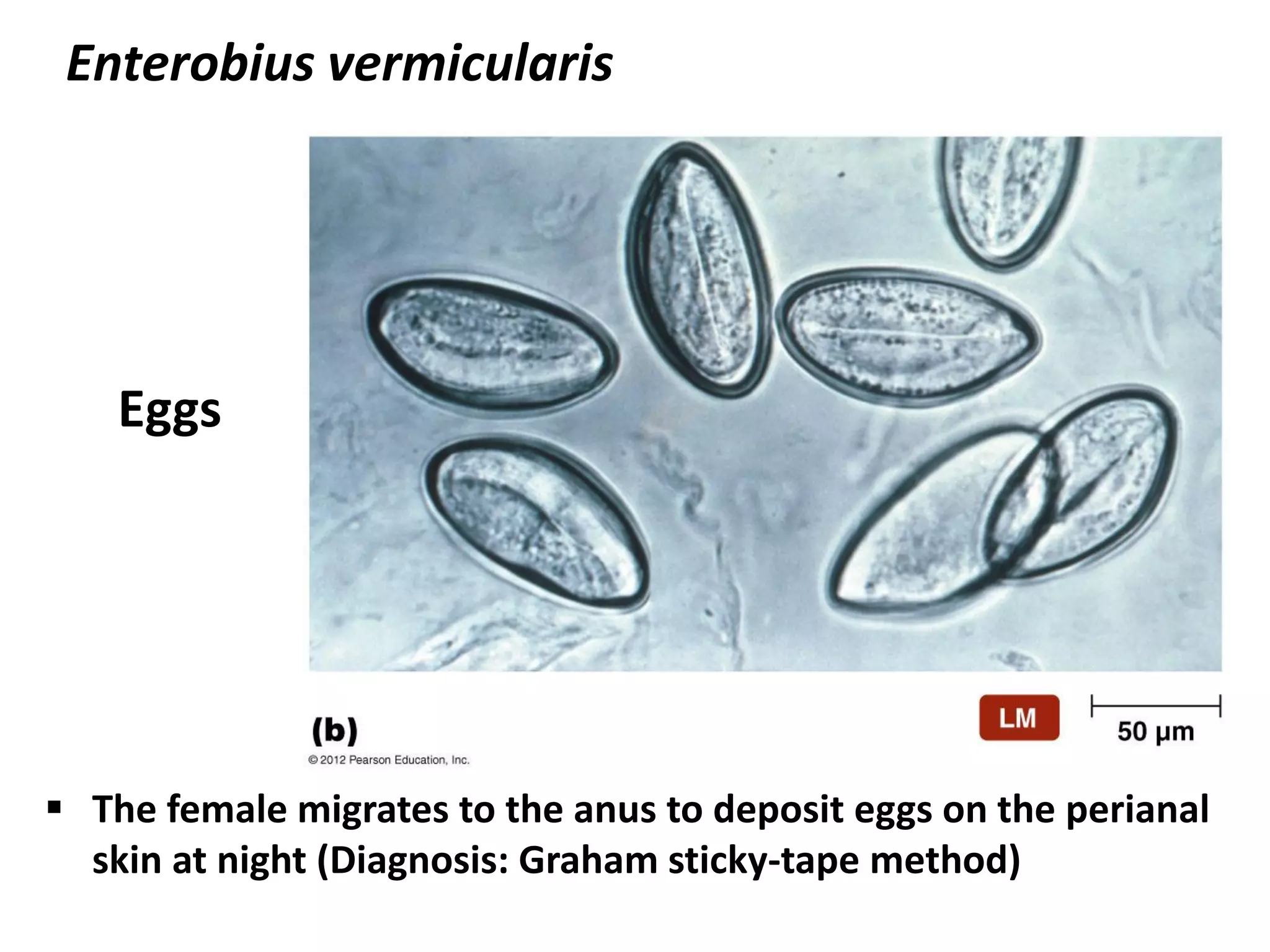
Enterobius vermicularis (nematode)
Pinworm
Eggs infective for humans
Enterobius vermicularis
Eggs
 The female migrates to the anus to deposit eggs on the perianal
skin at night (Diagnosis: Graham sticky-tape method)
Hookworms (nematode)
 Necator americanus
 Ancylostoma duodenale
 Larvae infective for humans by penetrating the
host’s skin
 Live in the small intestine of humans
 Feed on blood and tissue leading to anemia
Ancylostoma duodenale
Necator americanus
 Clinical specimen:
Feces/Eggs
Fertilized egg
Trichinella spiralis
Larva
Cysts within muscles
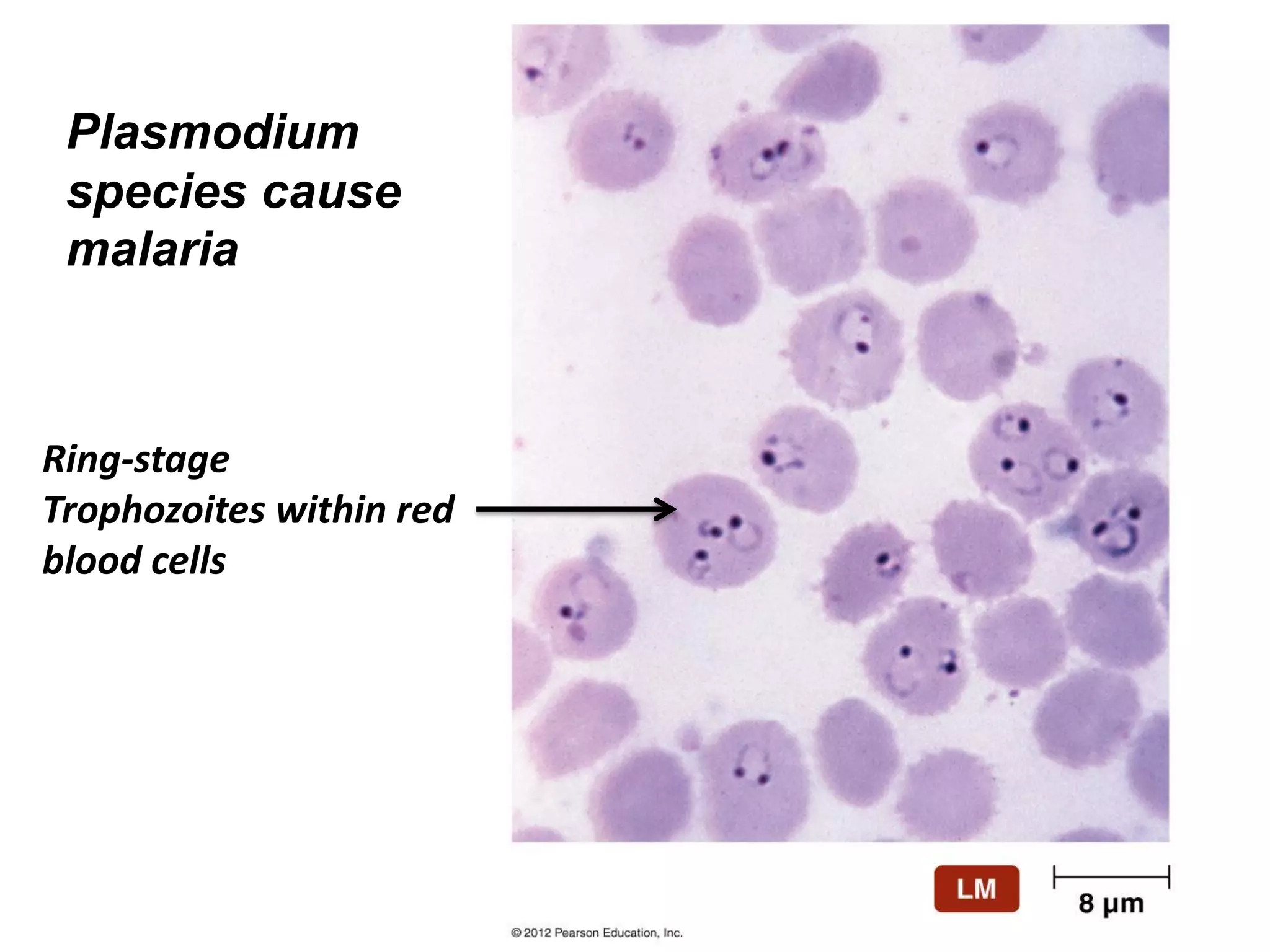
Plasmodium
species cause
malaria
Ring-stage
Trophozoites within red
blood cells
Giardia intestinalis
Trophozoites
 Adheres to small intestine causing diarrhea
 Trophozoite is the feeding/growing stage
 Cyst is the survival stage
Diagnosis: identification of
cysts in feces
 Pathogenic amoeba
 Human intestine,
causes amebic
dysentery
 Ingestion of cysts
excreted in the feces
of infected person
 Presence of ingested red blood
cells is diagnostic of Entamoeba
Trypanosoma cruzi causes the Chagas’ disease
 Bloodsucking “kissing bug”
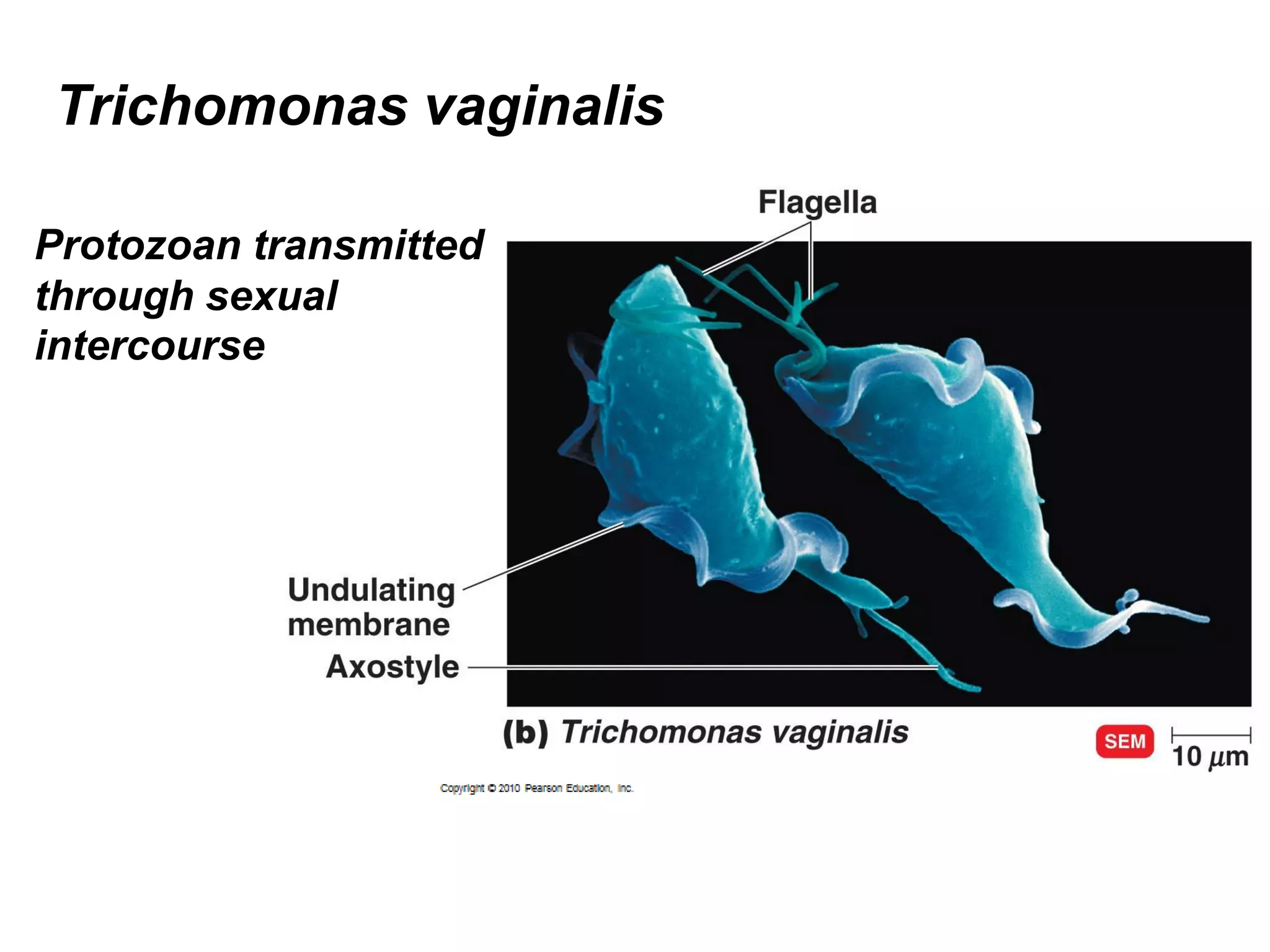
Trichomonas vaginalis
Protozoan transmitted
through sexual
intercourse
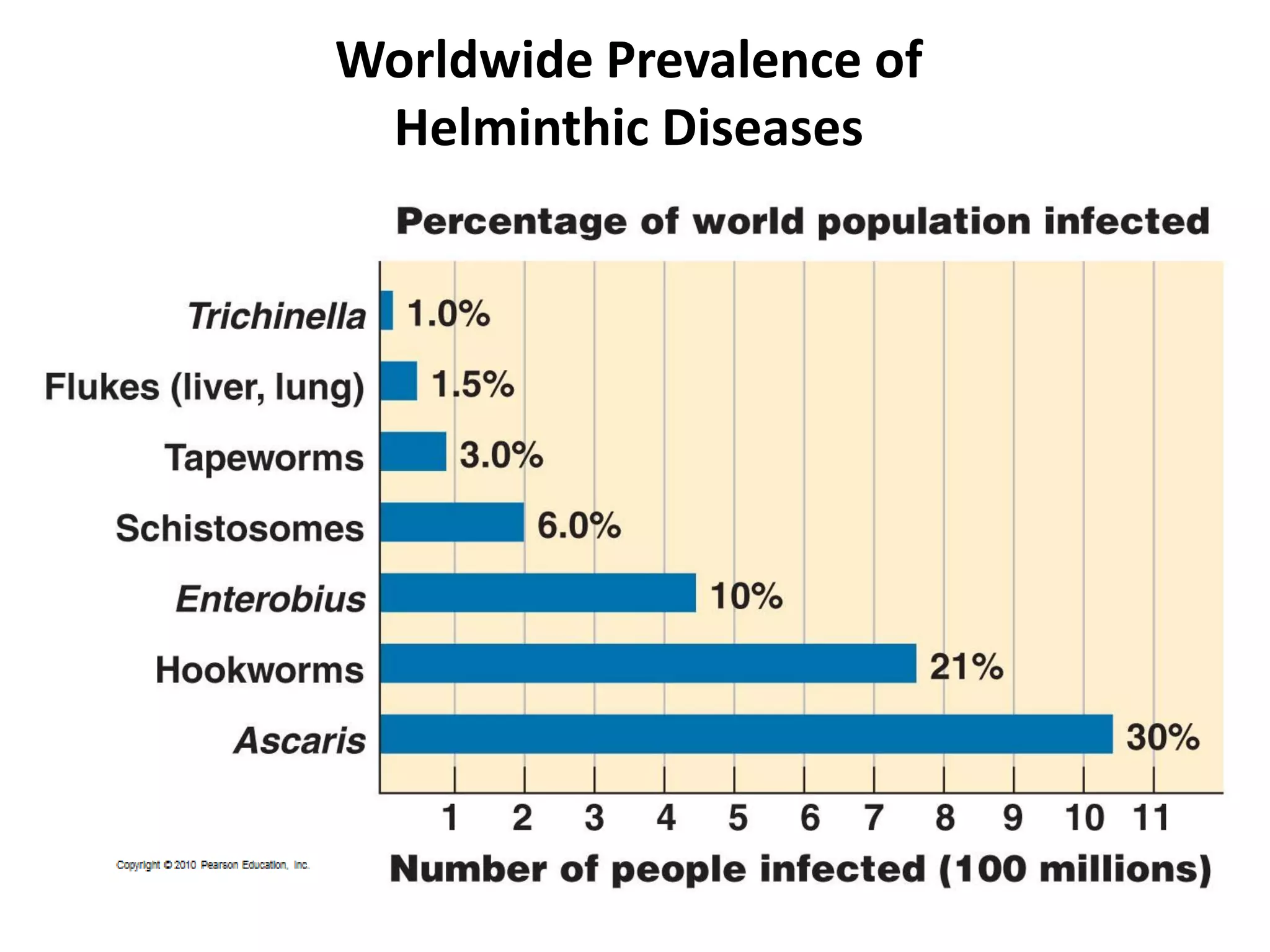
Worldwide Prevalence of
Helminthic Diseases

Lab parasites sections 1 xbc-!xcs