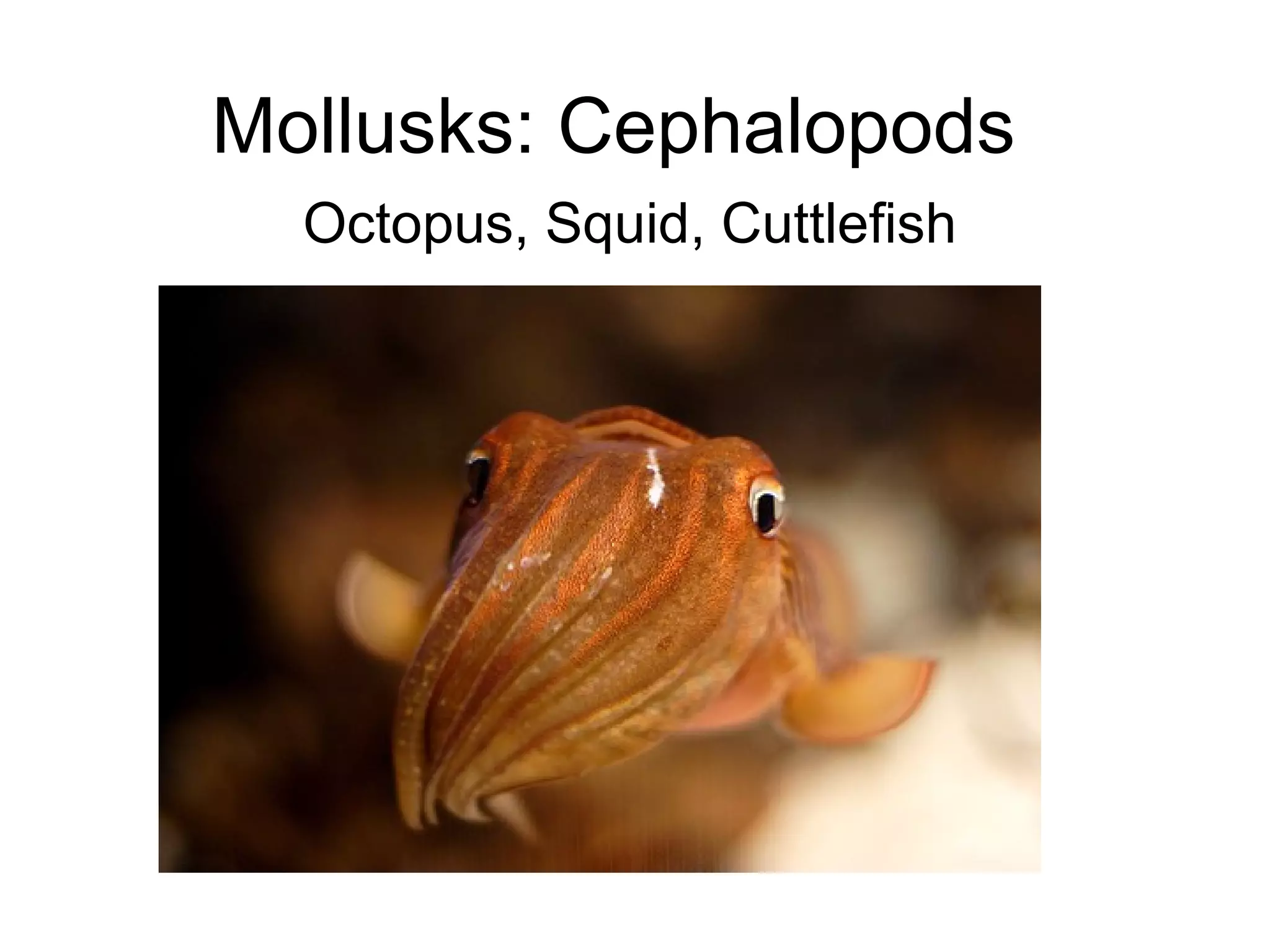
Mollusks: Cephalopods  Octopus, Squid, Cuttlefish
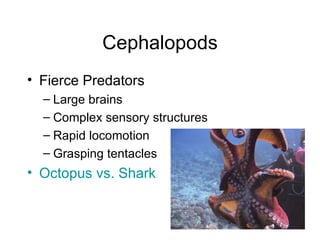
Cephalopods Fierce Predators  Large brains  Complex sensory structures  Rapid locomotion  Grasping tentacles Octopus  vs . Shark
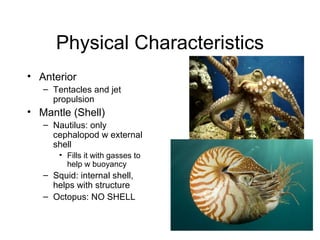
Physical Characteristics Anterior Tentacles and jet propulsion  Mantle (Shell)  Nautilus: only cephalopod w external shell  Fills it with gasses to help w buoyancy  Squid: internal shell, helps with structure  Octopus: NO SHELL
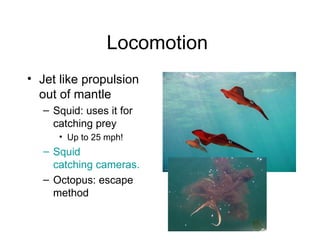
Locomotion  Jet like propulsion out of mantle  Squid: uses it for catching prey  Up to 25 mph!  Squid   catching cameras.  Octopus: escape method
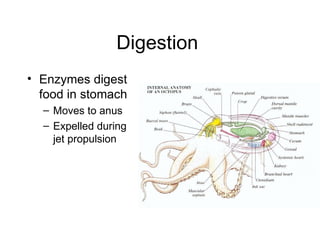
Digestion  Enzymes digest food in stomach Moves to anus Expelled during  jet propulsion
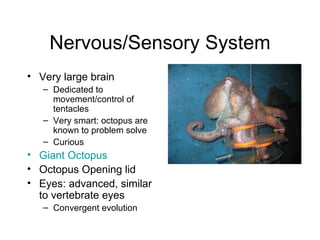
Nervous/Sensory System Very large brain  Dedicated to movement/control of tentacles  Very smart: octopus are known to problem solve  Curious  Giant Octopus Octopus Opening lid  Eyes: advanced, similar to vertebrate eyes  Convergent evolution
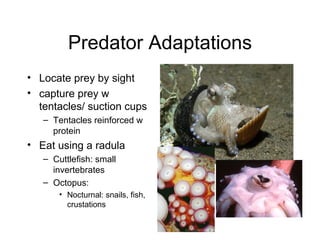
Predator Adaptations Locate prey by sight capture prey w tentacles/ suction cups  Tentacles reinforced w protein Eat using a radula  Cuttlefish: small invertebrates  Octopus: Nocturnal: snails, fish, crustations
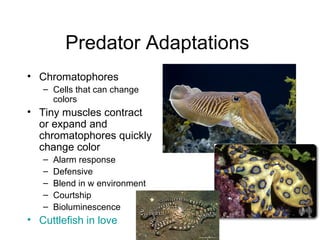
Predator Adaptations  Chromatophores  Cells that can change colors  Tiny muscles contract or expand and chromatophores quickly change color Alarm response Defensive  Blend in w environment Courtship  Bioluminescence  Cuttlefish in love

2 9-12

  • 1.
    Mollusks: Cephalopods Octopus, Squid, Cuttlefish
  • 2.
    Cephalopods Fierce Predators Large brains Complex sensory structures Rapid locomotion Grasping tentacles Octopus vs . Shark
  • 3.
    Physical Characteristics AnteriorTentacles and jet propulsion Mantle (Shell) Nautilus: only cephalopod w external shell Fills it with gasses to help w buoyancy Squid: internal shell, helps with structure Octopus: NO SHELL
  • 4.
    Locomotion Jetlike propulsion out of mantle Squid: uses it for catching prey Up to 25 mph! Squid catching cameras. Octopus: escape method
  • 5.
    Digestion Enzymesdigest food in stomach Moves to anus Expelled during jet propulsion
  • 6.
    Nervous/Sensory System Verylarge brain Dedicated to movement/control of tentacles Very smart: octopus are known to problem solve Curious Giant Octopus Octopus Opening lid Eyes: advanced, similar to vertebrate eyes Convergent evolution
  • 7.
    Predator Adaptations Locateprey by sight capture prey w tentacles/ suction cups Tentacles reinforced w protein Eat using a radula Cuttlefish: small invertebrates Octopus: Nocturnal: snails, fish, crustations
  • 8.
    Predator Adaptations Chromatophores Cells that can change colors Tiny muscles contract or expand and chromatophores quickly change color Alarm response Defensive Blend in w environment Courtship Bioluminescence Cuttlefish in love