Animal Like Protists  Phylum Sarcomastigophora  Phylum Apicompleza Phylum Ciliophora
Protists  Over 38,000 species of protists!  Members of the original life forms on earth! About 1.5 billion years ago!  Some protists are plant like, some are animal like  Protozoa: animal like protists  Many have symbiotic relationships:  Parasitism  Scientists who study only protists: protozoologists
Protozoa  Protozoa  Unicellular, plasmic organization  BUT THAT DOES NOT MEAN THEY ARE SIMPLE  Individuals or colonies
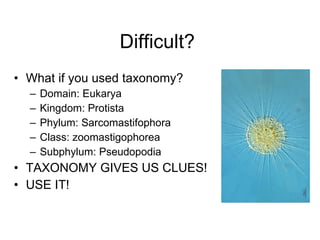
Describe the characteristics of the species:  Actinospharium
Difficult?  What if you used taxonomy?  Domain: Eukarya  Kingdom: Protista  Phylum: Sarcomastifophora  Class: zoomastigophorea Subphylum: Pseudopodia  TAXONOMY GIVES US CLUES!  USE IT!
Phylum Sarcomastigophors  Largest protozoan phylum.  All protozoa in this phylum:  Unicellular or colonial  Locomotion by flagella, pseudopodia, or both  Autotrophic, saprozoic, heterotrophic  Single type of nucleus  Sexual or asexual reproduction
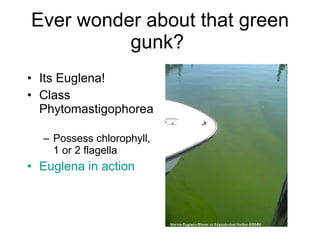
Ever wonder about that green gunk?  Its Euglena!  Class Phytomastigophorea  Possess chlorophyll, 1 or 2 flagella  Euglena in action
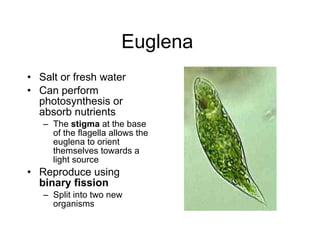
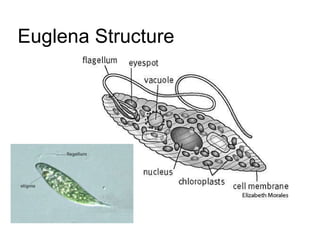
Euglena  Salt or fresh water  Can perform photosynthesis or absorb nutrients  The  stigma  at the base of the flagella allows the euglena to orient themselves towards a light source  Reproduce using  binary fission Split into two new organisms
Euglena Structure
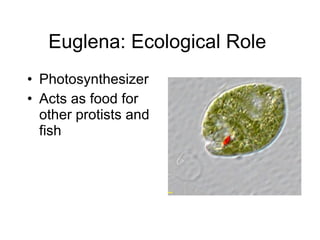
Euglena: Ecological Role  Photosynthesizer  Acts as food for other protists and fish
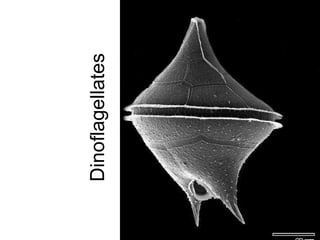
Dinoflagellates
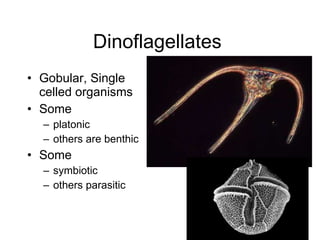
Dinoflagellates  Gobular, Single celled organisms  Some platonic  others are benthic  Some  symbiotic  others parasitic
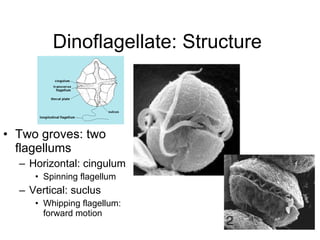
Dinoflagellate: Structure  Two groves: two flagellums  Horizontal: cingulum Spinning flagellum  Vertical: suclus Whipping flagellum: forward motion
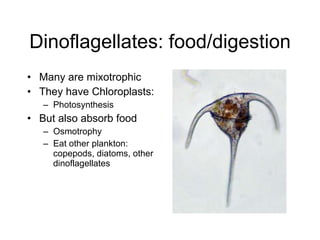
Dinoflagellates: food/digestion Many are mixotrophic  They have Chloroplasts:  Photosynthesis  But also absorb food  Osmotrophy  Eat other plankton: copepods, diatoms, other dinoflagellates
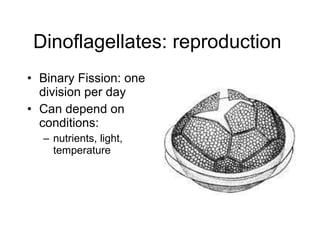
Dinoflagellates: reproduction  Binary Fission: one division per day  Can depend on conditions:  nutrients, light, temperature
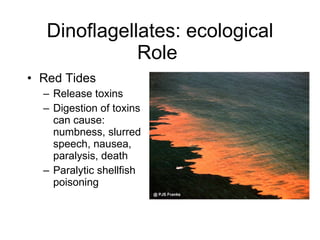
Dinoflagellates: ecological Role  Red Tides Release toxins Digestion of toxins can cause: numbness, slurred speech, nausea, paralysis, death  Paralytic shellfish poisoning
Foraminiferans
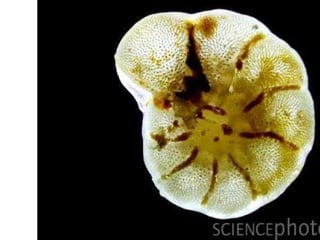
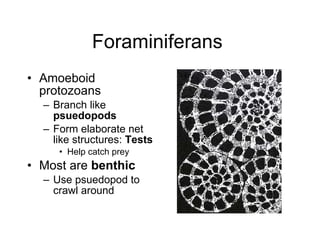
Foraminiferans  Amoeboid protozoans  Branch like  psuedopods   Form elaborate net like structures:  Tests   Help catch prey  Most are  benthic   Use psuedopod to crawl around
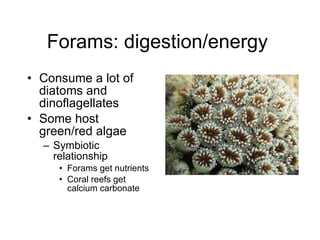
Forams: digestion/energy  Consume a lot of diatoms and dinoflagellates  Some host green/red algae  Symbiotic relationship  Forams get nutrients  Coral reefs get calcium carbonate
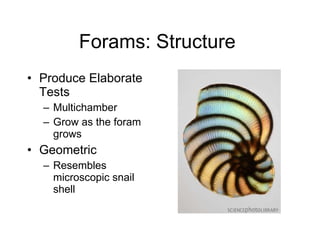
Forams: Structure  Produce Elaborate Tests Multichamber Grow as the foram grows  Geometric Resembles microscopic snail shell
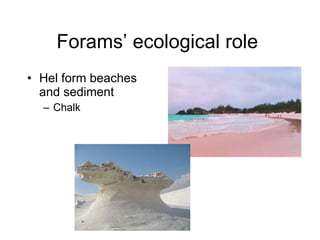
Forams’ ecological role  Hel form beaches and sediment  Chalk
Phylum Apicomplexa
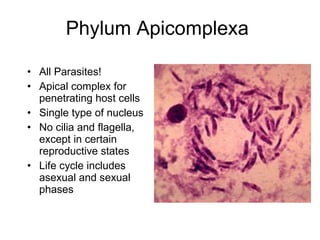
Phylum Apicomplexa  All Parasites!  Apical complex for penetrating host cells  Single type of nucleus  No cilia and flagella, except in certain reproductive states  Life cycle includes asexual and sexual phases
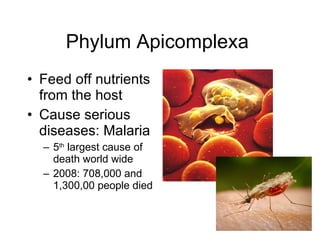
Phylum Apicomplexa  Feed off nutrients from the host  Cause serious diseases: Malaria  5 th  largest cause of death world wide  2008: 708,000 and 1,300,00 people died
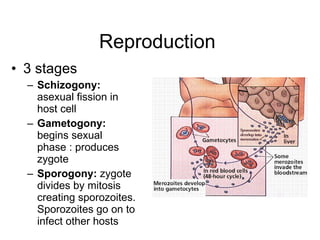
Reproduction  3 stages  Schizogony:  asexual fission in host cell Gametogony:  begins sexual phase : produces zygote  Sporogony:  zygote divides by mitosis creating sporozoites. Sporozoites go on to infect other hosts
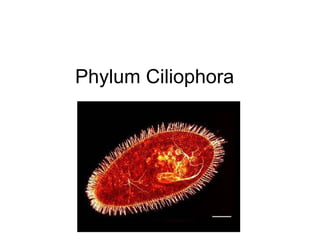
Phylum Ciliophora
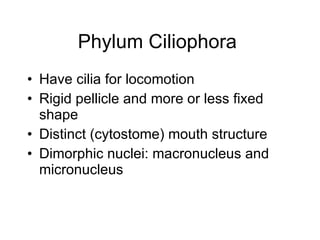
Phylum Ciliophora  Have cilia for locomotion  Rigid pellicle and more or less fixed shape  Distinct (cytostome) mouth structure  Dimorphic nuclei: macronucleus and micronucleus
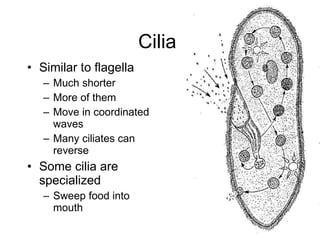
Cilia  Similar to flagella Much shorter  More of them  Move in coordinated waves  Many ciliates can reverse  Some cilia are specialized  Sweep food into mouth
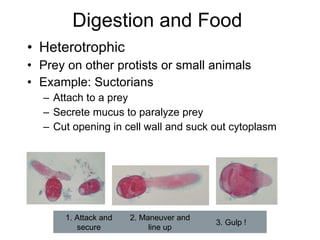
Digestion and Food  Heterotrophic  Prey on other protists or small animals  Example: Suctorians  Attach to a prey Secrete mucus to paralyze prey  Cut opening in cell wall and suck out cytoplasm                                                                                                                  1. Attack and secure 2. Maneuver and line up 3. Gulp !
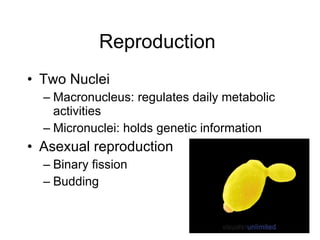
Reproduction  Two Nuclei Macronucleus: regulates daily metabolic activities  Micronuclei: holds genetic information  Asexual reproduction  Binary fission Budding
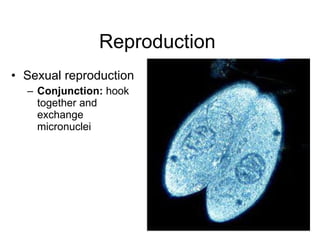
Reproduction  Sexual reproduction  Conjunction:  hook together and exchange micronuclei
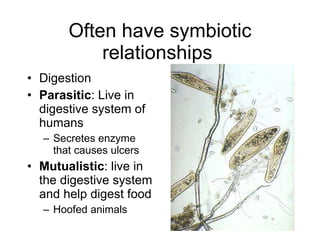
Often have symbiotic relationships  Digestion  Parasitic : Live in digestive system of humans  Secretes enzyme that causes ulcers  Mutualistic : live in the digestive system and help digest food  Hoofed animals

1 26-12

  • 1.
    Animal Like Protists Phylum Sarcomastigophora Phylum Apicompleza Phylum Ciliophora
  • 2.
    Protists Over38,000 species of protists! Members of the original life forms on earth! About 1.5 billion years ago! Some protists are plant like, some are animal like Protozoa: animal like protists Many have symbiotic relationships: Parasitism Scientists who study only protists: protozoologists
  • 3.
    Protozoa Protozoa Unicellular, plasmic organization BUT THAT DOES NOT MEAN THEY ARE SIMPLE Individuals or colonies
  • 4.
    Describe the characteristicsof the species: Actinospharium
  • 5.
    Difficult? Whatif you used taxonomy? Domain: Eukarya Kingdom: Protista Phylum: Sarcomastifophora Class: zoomastigophorea Subphylum: Pseudopodia TAXONOMY GIVES US CLUES! USE IT!
  • 6.
    Phylum Sarcomastigophors Largest protozoan phylum. All protozoa in this phylum: Unicellular or colonial Locomotion by flagella, pseudopodia, or both Autotrophic, saprozoic, heterotrophic Single type of nucleus Sexual or asexual reproduction
  • 7.
    Ever wonder aboutthat green gunk? Its Euglena! Class Phytomastigophorea Possess chlorophyll, 1 or 2 flagella Euglena in action
  • 8.
    Euglena Saltor fresh water Can perform photosynthesis or absorb nutrients The stigma at the base of the flagella allows the euglena to orient themselves towards a light source Reproduce using binary fission Split into two new organisms
  • 9.
  • 10.
    Euglena: Ecological Role Photosynthesizer Acts as food for other protists and fish
  • 11.
  • 12.
    Dinoflagellates Gobular,Single celled organisms Some platonic others are benthic Some symbiotic others parasitic
  • 13.
    Dinoflagellate: Structure Two groves: two flagellums Horizontal: cingulum Spinning flagellum Vertical: suclus Whipping flagellum: forward motion
  • 14.
    Dinoflagellates: food/digestion Manyare mixotrophic They have Chloroplasts: Photosynthesis But also absorb food Osmotrophy Eat other plankton: copepods, diatoms, other dinoflagellates
  • 15.
    Dinoflagellates: reproduction Binary Fission: one division per day Can depend on conditions: nutrients, light, temperature
  • 16.
    Dinoflagellates: ecological Role Red Tides Release toxins Digestion of toxins can cause: numbness, slurred speech, nausea, paralysis, death Paralytic shellfish poisoning
  • 17.
  • 18.
    Foraminiferans Amoeboidprotozoans Branch like psuedopods Form elaborate net like structures: Tests Help catch prey Most are benthic Use psuedopod to crawl around
  • 19.
    Forams: digestion/energy Consume a lot of diatoms and dinoflagellates Some host green/red algae Symbiotic relationship Forams get nutrients Coral reefs get calcium carbonate
  • 20.
    Forams: Structure Produce Elaborate Tests Multichamber Grow as the foram grows Geometric Resembles microscopic snail shell
  • 21.
    Forams’ ecological role Hel form beaches and sediment Chalk
  • 22.
  • 23.
    Phylum Apicomplexa All Parasites! Apical complex for penetrating host cells Single type of nucleus No cilia and flagella, except in certain reproductive states Life cycle includes asexual and sexual phases
  • 24.
    Phylum Apicomplexa Feed off nutrients from the host Cause serious diseases: Malaria 5 th largest cause of death world wide 2008: 708,000 and 1,300,00 people died
  • 25.
    Reproduction 3stages Schizogony: asexual fission in host cell Gametogony: begins sexual phase : produces zygote Sporogony: zygote divides by mitosis creating sporozoites. Sporozoites go on to infect other hosts
  • 26.
  • 27.
    Phylum Ciliophora Have cilia for locomotion Rigid pellicle and more or less fixed shape Distinct (cytostome) mouth structure Dimorphic nuclei: macronucleus and micronucleus
  • 28.
    Cilia Similarto flagella Much shorter More of them Move in coordinated waves Many ciliates can reverse Some cilia are specialized Sweep food into mouth
  • 29.
    Digestion and Food Heterotrophic Prey on other protists or small animals Example: Suctorians Attach to a prey Secrete mucus to paralyze prey Cut opening in cell wall and suck out cytoplasm                                                                                                                1. Attack and secure 2. Maneuver and line up 3. Gulp !
  • 30.
    Reproduction TwoNuclei Macronucleus: regulates daily metabolic activities Micronuclei: holds genetic information Asexual reproduction Binary fission Budding
  • 31.
    Reproduction Sexualreproduction Conjunction: hook together and exchange micronuclei
  • 32.
    Often have symbioticrelationships Digestion Parasitic : Live in digestive system of humans Secretes enzyme that causes ulcers Mutualistic : live in the digestive system and help digest food Hoofed animals