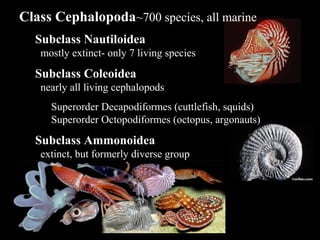


Class Cephalopoda~700 species, all marine
Subclass Nautiloidea
mostly extinct- only 7 living species
Subclass Coleoidea
nearly all living cephalopods
Superorder Decapodiformes (cuttlefish, squids)
Superorder Octopodiformes (octopus, argonauts)
Subclass Ammonoidea
extinct, but formerly diverse group
Class Cephalopoda
jet propulsion- opening to mantle cavity is modified into
hyponome (ventral funnel or siphon) that can direct water
expelled from the mantle cavity.
Foot modified into arms and/or tentacles, which in one
subclass (Coleoidea) usually bear suckers.
Radula plus beak, venom glands
Closed circulatory system
Highly developed sensory, locomotory, and behavioral
abilities. Intelligence?
Among the largest invertebrates- giant squid exceeds 20
meters (including the tentacles)
Phylum Mollusca
Class Cephalopoda
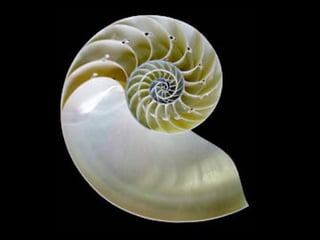
Subclass Nautiloidea Nautilus
Subclass Ammonoidea ammonites- all extinct
Subclass Coleoidea
Order Sepioidea cuttlefishes
Order Teuthioidea squids
Order Octopoda octopods
Order Belemnoidea belemnoids- all extinct
Class Cephalopoda
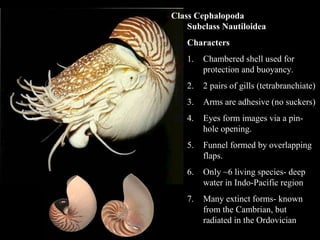
Subclass Nautiloidea
Characters
1. Chambered shell used for
protection and buoyancy.
2. 2 pairs of gills (tetrabranchiate)
3. Arms are adhesive (no suckers)
4. Eyes form images via a pin-
hole opening.
5. Funnel formed by overlapping
flaps.
6. Only ~6 living species- deep
water in Indo-Pacific region
7. Many extinct forms- known
from the Cambrian, but
radiated in the Ordovician
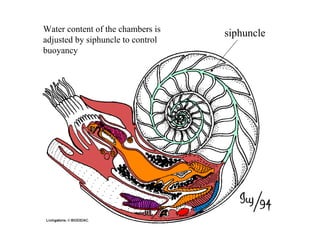
siphuncleWater content of the chambers is
adjusted by siphuncle to control
buoyancy
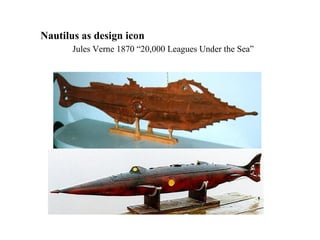
Nautilus as design icon
Jules Verne 1870 “20,000 Leagues Under the Sea”
Nautilus as design icon
Nautilus exercise equipment uses a log spiral cam
Nautilus habits
• Generalized predator/scavengers
• tropical waters where slopes of coral reefs
descend into deep waters.
• Daily vertical movements up to 1500 feet-
ascending at night to feed.
• http://www.youtube.com/watch?
v=QMFqV4SJLWg
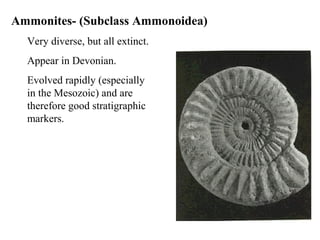
Ammonites- (Subclass Ammonoidea)
Very diverse, but all extinct.
Appear in Devonian.
Evolved rapidly (especially
in the Mesozoic) and are
therefore good stratigraphic
markers.
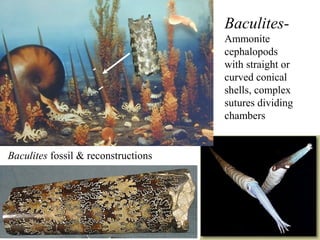
Baculites fossil & reconstructions
Baculites-
Ammonite
cephalopods
with straight or
curved conical
shells, complex
sutures dividing
chambers
Ammonites, Reconstructed
Ammonites, a group of cephalopods with external shells that went extinct
roughly 65 million years ago, were among the most abundant marine
invertebrates in Earth's history. Their position in the food web is not well
understood.
In the 1-7-11 issue of Science, researchers used 3D X-ray tomography to
reconstruct the mouthparts of fossil specimens of the ammonite Baculites
(http://video.sciencemag.org/VideoLab/736437601001/1). The
researchers postulate that these ammonites likely fed on plankton and note that
ammonites went extinct at the end of the Cretaceous, as there was an abrupt
decline in several groups of plankton around the same time period.
Another possibility is that larval ammonites were planktonic and were affected
by whatever knocked down planktonic organisms at that time
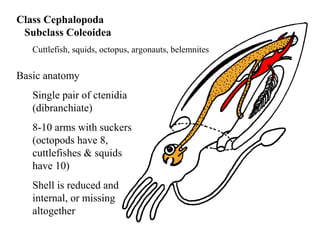
Class Cephalopoda
Subclass Coleoidea
Cuttlefish, squids, octopus, argonauts, belemnites
Basic anatomy
Single pair of ctenidia
(dibranchiate)
8-10 arms with suckers
(octopods have 8,
cuttlefishes & squids
have 10)
Shell is reduced and
internal, or missing
altogether
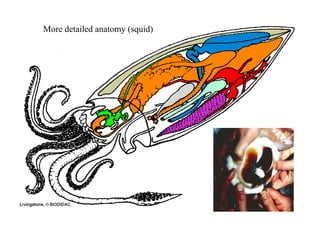
More detailed anatomy (squid)
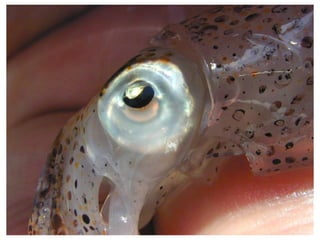
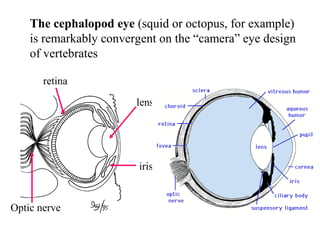
The cephalopod eye (squid or octopus, for example)
is remarkably convergent on the “camera” eye design
of vertebrates
lens
iris
Optic nerve
retina
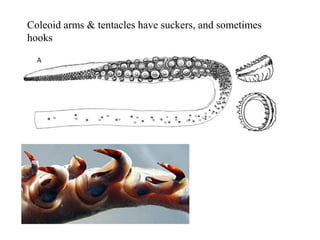
Coleoid arms & tentacles have suckers, and sometimes
hooks
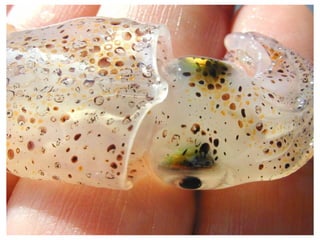
Chromatophores
• Organs that control color at body surface.
• Elastic saccule containing pigment granules
• 15-25 radial muscles surround the sacculus.
When these contract, they expand the
sacculus and make the coloured pigment
granules visible.
• Direct connections to nervous system
• http://www.youtube.com/watch?v=2x-8v1mxpR0
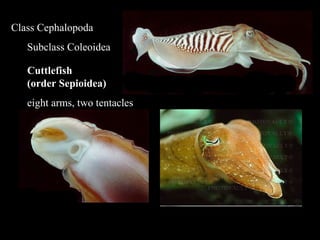
Class Cephalopoda
Subclass Coleoidea
Cuttlefish
(order Sepioidea)
eight arms, two tentacles
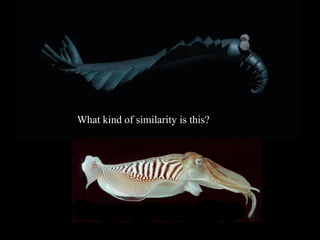
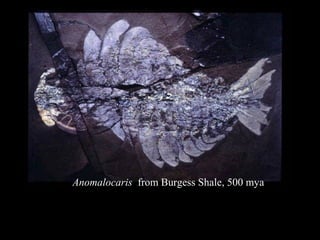
What kind of similarity is this?
Anomalocaris from Burgess Shale, 500 mya
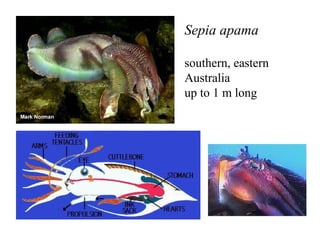
Sepia apama
southern, eastern
Australia
up to 1 m long
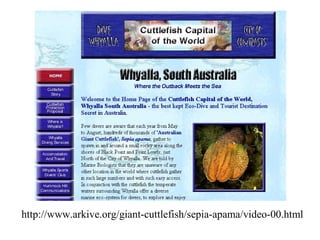
http://www.arkive.org/giant-cuttlefish/sepia-apama/video-00.html
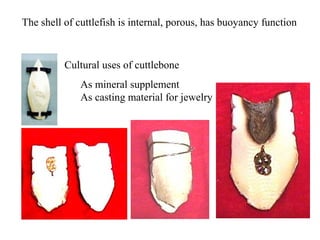
Cultural uses of cuttlebone
As mineral supplement
As casting material for jewelry
The shell of cuttlefish is internal, porous, has buoyancy function
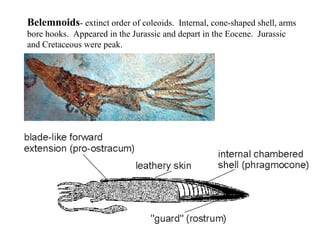
Belemnoids- extinct order of coleoids. Internal, cone-shaped shell, arms
bore hooks. Appeared in the Jurassic and depart in the Eocene. Jurassic
and Cretaceous were peak.
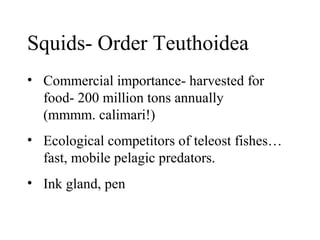
Squids- Order Teuthoidea
• Commercial importance- harvested for
food- 200 million tons annually
(mmmm. calimari!)
• Ecological competitors of teleost fishes…
fast, mobile pelagic predators.
• Ink gland, pen
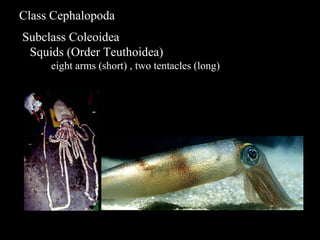
Class Cephalopoda
Subclass Coleoidea
Squids (Order Teuthoidea)
eight arms (short) , two tentacles (long)
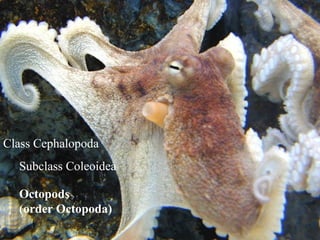
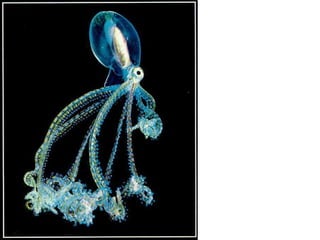
Octopods- Order Octopoda
• Most specialized for benthic habitat but
some are pelagic
(nearly all squids are pelagic)
• Mainly crevice and hole-dwellers
• Shell is absent, tentacles are absent, leaving
eight arms.
Class Cephalopoda
Subclass Coleoidea
Octopods
(order Octopoda)
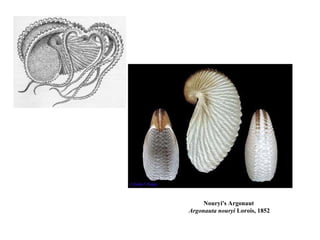
Nouryi's Argonaut
Argonauta nouryi Lorois, 1852
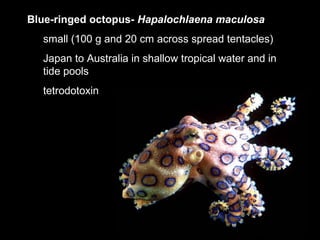
Blue-ringed octopus- Hapalochlaena maculosa
small (100 g and 20 cm across spread tentacles)
Japan to Australia in shallow tropical water and in
tide pools
tetrodotoxin
"INVERTEBRATE"   mollusca-3

"INVERTEBRATE" mollusca-3

  • 1.
    Class Cephalopoda~700 species,all marine Subclass Nautiloidea mostly extinct- only 7 living species Subclass Coleoidea nearly all living cephalopods Superorder Decapodiformes (cuttlefish, squids) Superorder Octopodiformes (octopus, argonauts) Subclass Ammonoidea extinct, but formerly diverse group
  • 2.
    Class Cephalopoda jet propulsion-opening to mantle cavity is modified into hyponome (ventral funnel or siphon) that can direct water expelled from the mantle cavity. Foot modified into arms and/or tentacles, which in one subclass (Coleoidea) usually bear suckers. Radula plus beak, venom glands Closed circulatory system Highly developed sensory, locomotory, and behavioral abilities. Intelligence? Among the largest invertebrates- giant squid exceeds 20 meters (including the tentacles)
  • 3.
    Phylum Mollusca Class Cephalopoda SubclassNautiloidea Nautilus Subclass Ammonoidea ammonites- all extinct Subclass Coleoidea Order Sepioidea cuttlefishes Order Teuthioidea squids Order Octopoda octopods Order Belemnoidea belemnoids- all extinct
  • 4.
    Class Cephalopoda Subclass Nautiloidea Characters 1.Chambered shell used for protection and buoyancy. 2. 2 pairs of gills (tetrabranchiate) 3. Arms are adhesive (no suckers) 4. Eyes form images via a pin- hole opening. 5. Funnel formed by overlapping flaps. 6. Only ~6 living species- deep water in Indo-Pacific region 7. Many extinct forms- known from the Cambrian, but radiated in the Ordovician
  • 6.
    siphuncleWater content ofthe chambers is adjusted by siphuncle to control buoyancy
  • 7.
    Nautilus as designicon Jules Verne 1870 “20,000 Leagues Under the Sea”
  • 8.
    Nautilus as designicon Nautilus exercise equipment uses a log spiral cam
  • 9.
    Nautilus habits • Generalizedpredator/scavengers • tropical waters where slopes of coral reefs descend into deep waters. • Daily vertical movements up to 1500 feet- ascending at night to feed. • http://www.youtube.com/watch? v=QMFqV4SJLWg
  • 10.
    Ammonites- (Subclass Ammonoidea) Verydiverse, but all extinct. Appear in Devonian. Evolved rapidly (especially in the Mesozoic) and are therefore good stratigraphic markers.
  • 11.
    Baculites fossil &reconstructions Baculites- Ammonite cephalopods with straight or curved conical shells, complex sutures dividing chambers
  • 12.
    Ammonites, Reconstructed Ammonites, agroup of cephalopods with external shells that went extinct roughly 65 million years ago, were among the most abundant marine invertebrates in Earth's history. Their position in the food web is not well understood. In the 1-7-11 issue of Science, researchers used 3D X-ray tomography to reconstruct the mouthparts of fossil specimens of the ammonite Baculites (http://video.sciencemag.org/VideoLab/736437601001/1). The researchers postulate that these ammonites likely fed on plankton and note that ammonites went extinct at the end of the Cretaceous, as there was an abrupt decline in several groups of plankton around the same time period. Another possibility is that larval ammonites were planktonic and were affected by whatever knocked down planktonic organisms at that time
  • 13.
    Class Cephalopoda Subclass Coleoidea Cuttlefish,squids, octopus, argonauts, belemnites Basic anatomy Single pair of ctenidia (dibranchiate) 8-10 arms with suckers (octopods have 8, cuttlefishes & squids have 10) Shell is reduced and internal, or missing altogether
  • 14.
  • 16.
    The cephalopod eye(squid or octopus, for example) is remarkably convergent on the “camera” eye design of vertebrates lens iris Optic nerve retina
  • 17.
    Coleoid arms &tentacles have suckers, and sometimes hooks
  • 18.
    Chromatophores • Organs thatcontrol color at body surface. • Elastic saccule containing pigment granules • 15-25 radial muscles surround the sacculus. When these contract, they expand the sacculus and make the coloured pigment granules visible. • Direct connections to nervous system • http://www.youtube.com/watch?v=2x-8v1mxpR0
  • 20.
    Class Cephalopoda Subclass Coleoidea Cuttlefish (orderSepioidea) eight arms, two tentacles
  • 21.
    What kind ofsimilarity is this?
  • 22.
  • 23.
  • 24.
  • 25.
    Cultural uses ofcuttlebone As mineral supplement As casting material for jewelry The shell of cuttlefish is internal, porous, has buoyancy function
  • 26.
    Belemnoids- extinct orderof coleoids. Internal, cone-shaped shell, arms bore hooks. Appeared in the Jurassic and depart in the Eocene. Jurassic and Cretaceous were peak.
  • 27.
    Squids- Order Teuthoidea •Commercial importance- harvested for food- 200 million tons annually (mmmm. calimari!) • Ecological competitors of teleost fishes… fast, mobile pelagic predators. • Ink gland, pen
  • 28.
    Class Cephalopoda Subclass Coleoidea Squids(Order Teuthoidea) eight arms (short) , two tentacles (long)
  • 29.
    Octopods- Order Octopoda •Most specialized for benthic habitat but some are pelagic (nearly all squids are pelagic) • Mainly crevice and hole-dwellers • Shell is absent, tentacles are absent, leaving eight arms.
  • 30.
  • 32.
  • 33.
    Blue-ringed octopus- Hapalochlaenamaculosa small (100 g and 20 cm across spread tentacles) Japan to Australia in shallow tropical water and in tide pools tetrodotoxin