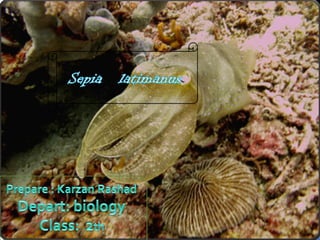
•      Cuttlefish (Sepia latimanus) | :
    the common name is cuttlefish.
    Cuttlefish belong to the class
    cephalopoda. are widespread in the
    south and east China Sea, found in
    the Indonesia south to
    northwestern, and south to northern
    Australia. Typically live in warm and
    temperature shore waters, they eat
    chrimp, crap, small fishes. Cuttlefish
    have soft body. they are reproduce
    by sexually and lay eggs that hatch
    writhen a few weeks to months.
    Have large Brian-to-body ratio of
    invertebrates(2),(4).
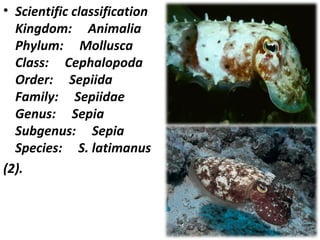
• Scientific classification
  Kingdom: Animalia
  Phylum: Mollusca
  Class: Cephalopoda
  Order: Sepiida
  Family: Sepiidae
  Genus: Sepia
  Subgenus: Sepia
  Species: S. latimanus
(2).
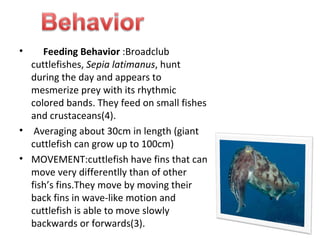
•    Feeding Behavior :Broadclub
  cuttlefishes, Sepia latimanus, hunt
  during the day and appears to
  mesmerize prey with its rhythmic
  colored bands. They feed on small fishes
  and crustaceans(4).
• Averaging about 30cm in length (giant
  cuttlefish can grow up to 100cm)
• MOVEMENT:cuttlefish have fins that can
  move very differentlly than of other
  fish’s fins.They move by moving their
  back fins in wave-like motion and
  cuttlefish is able to move slowly
  backwards or forwards(3).
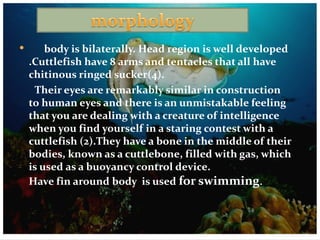
       body is bilaterally. Head region is well developed
    .Cuttlefish have 8 arms and tentacles that all have
    chitinous ringed sucker(4).
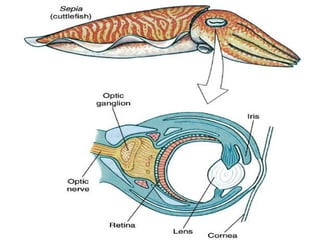
     Their eyes are remarkably similar in construction
    to human eyes and there is an unmistakable feeling
    that you are dealing with a creature of intelligence
    when you find yourself in a staring contest with a
    cuttlefish (2).They have a bone in the middle of their
    bodies, known as a cuttlebone, filled with gas, which
    is used as a buoyancy control device.
    Have fin around body is used for swimming.
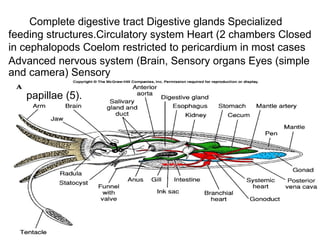
Complete digestive tract Digestive glands Specialized
feeding structures.Circulatory system Heart (2 chambers Closed
in cephalopods Coelom restricted to pericardium in most cases
Advanced nervous system (Brain, Sensory organs Eyes (simple
and camera) Sensory

   papillae (5).
Reproduction
    Sepia latimanus mates in
shallow water between January
and May. This species mates
head-to-head and the male
places spermatophores on the
female's buccal membrane near
her mouth. The eggs harden after
they are laid. Their eggs hatch in
38 to 40 days. During the
breeding season, males establish
a territory, defending a coral
head where females lay eggs
after mating(2).
Lay eggs in water until hitch is become out side
small animal like parent but small in size. After that
became adult.
Reference

1-Life-sea.blogyspot.com

cuttle fish

  • 2.
    Cuttlefish (Sepia latimanus) | : the common name is cuttlefish. Cuttlefish belong to the class cephalopoda. are widespread in the south and east China Sea, found in the Indonesia south to northwestern, and south to northern Australia. Typically live in warm and temperature shore waters, they eat chrimp, crap, small fishes. Cuttlefish have soft body. they are reproduce by sexually and lay eggs that hatch writhen a few weeks to months. Have large Brian-to-body ratio of invertebrates(2),(4).
  • 3.
    • Scientific classification Kingdom: Animalia Phylum: Mollusca Class: Cephalopoda Order: Sepiida Family: Sepiidae Genus: Sepia Subgenus: Sepia Species: S. latimanus (2).
  • 4.
    Feeding Behavior :Broadclub cuttlefishes, Sepia latimanus, hunt during the day and appears to mesmerize prey with its rhythmic colored bands. They feed on small fishes and crustaceans(4). • Averaging about 30cm in length (giant cuttlefish can grow up to 100cm) • MOVEMENT:cuttlefish have fins that can move very differentlly than of other fish’s fins.They move by moving their back fins in wave-like motion and cuttlefish is able to move slowly backwards or forwards(3).
  • 5.
    body is bilaterally. Head region is well developed .Cuttlefish have 8 arms and tentacles that all have chitinous ringed sucker(4). Their eyes are remarkably similar in construction to human eyes and there is an unmistakable feeling that you are dealing with a creature of intelligence when you find yourself in a staring contest with a cuttlefish (2).They have a bone in the middle of their bodies, known as a cuttlebone, filled with gas, which is used as a buoyancy control device. Have fin around body is used for swimming.
  • 8.
    Complete digestive tractDigestive glands Specialized feeding structures.Circulatory system Heart (2 chambers Closed in cephalopods Coelom restricted to pericardium in most cases Advanced nervous system (Brain, Sensory organs Eyes (simple and camera) Sensory papillae (5).
  • 10.
    Reproduction Sepia latimanus mates in shallow water between January and May. This species mates head-to-head and the male places spermatophores on the female's buccal membrane near her mouth. The eggs harden after they are laid. Their eggs hatch in 38 to 40 days. During the breeding season, males establish a territory, defending a coral head where females lay eggs after mating(2).
  • 11.
    Lay eggs inwater until hitch is become out side small animal like parent but small in size. After that became adult.
  • 12.

Editor's Notes