WORMS!!!!! Phylum Platyhelminthes Phylum Nemertea Phylum Nematoda Phylum Annelida
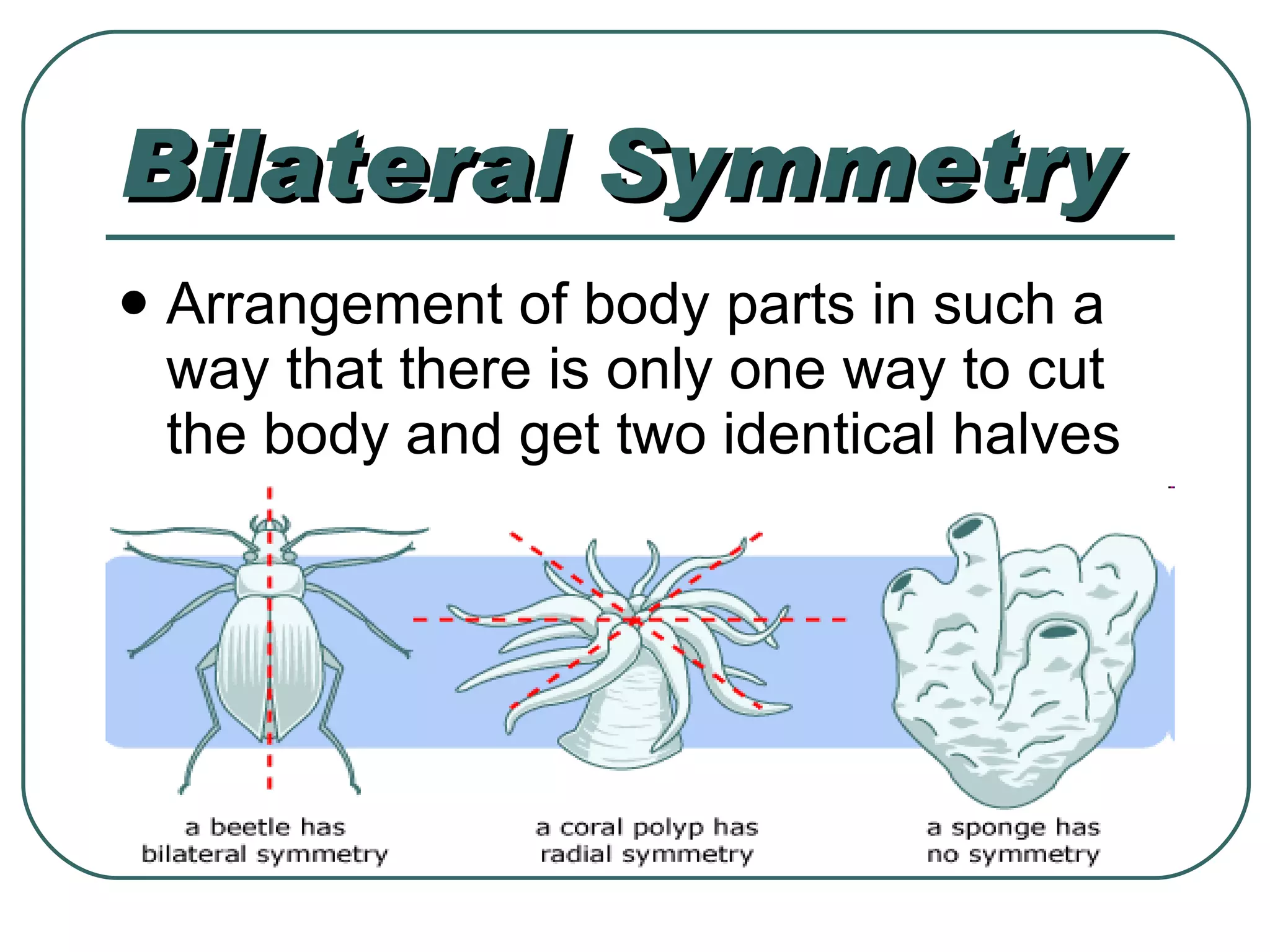
Bilateral Symmetry Arrangement of body parts in such a way that there is only one way to cut the body and get two identical halves
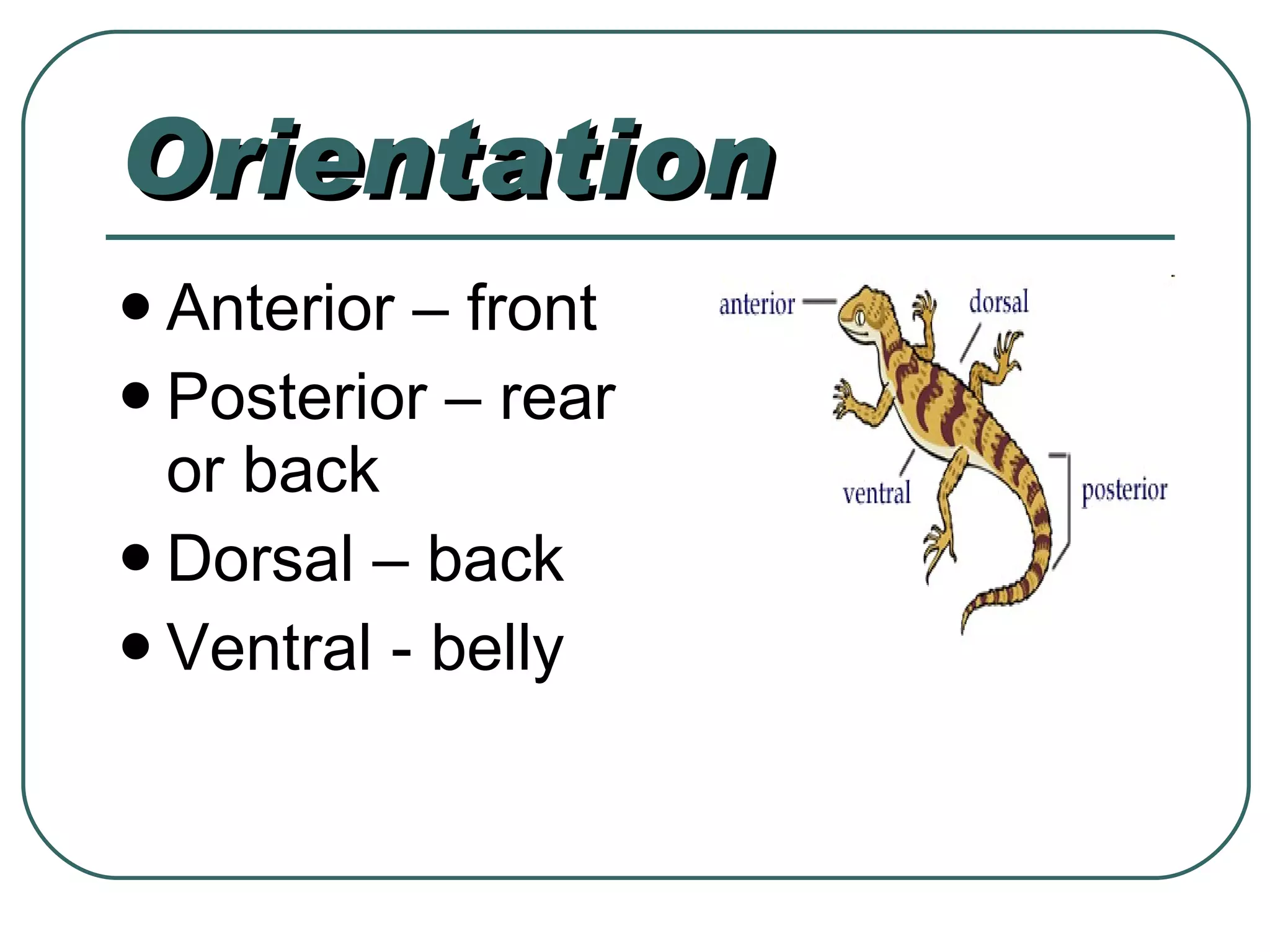
Orientation Anterior – front Posterior – rear or back Dorsal – back Ventral - belly
Bilateral Charact. Bilateral symmetry allows for the following: A head with a brain More active pursuit of prey Body has specialized tissues and organs More sophisticated behaviors
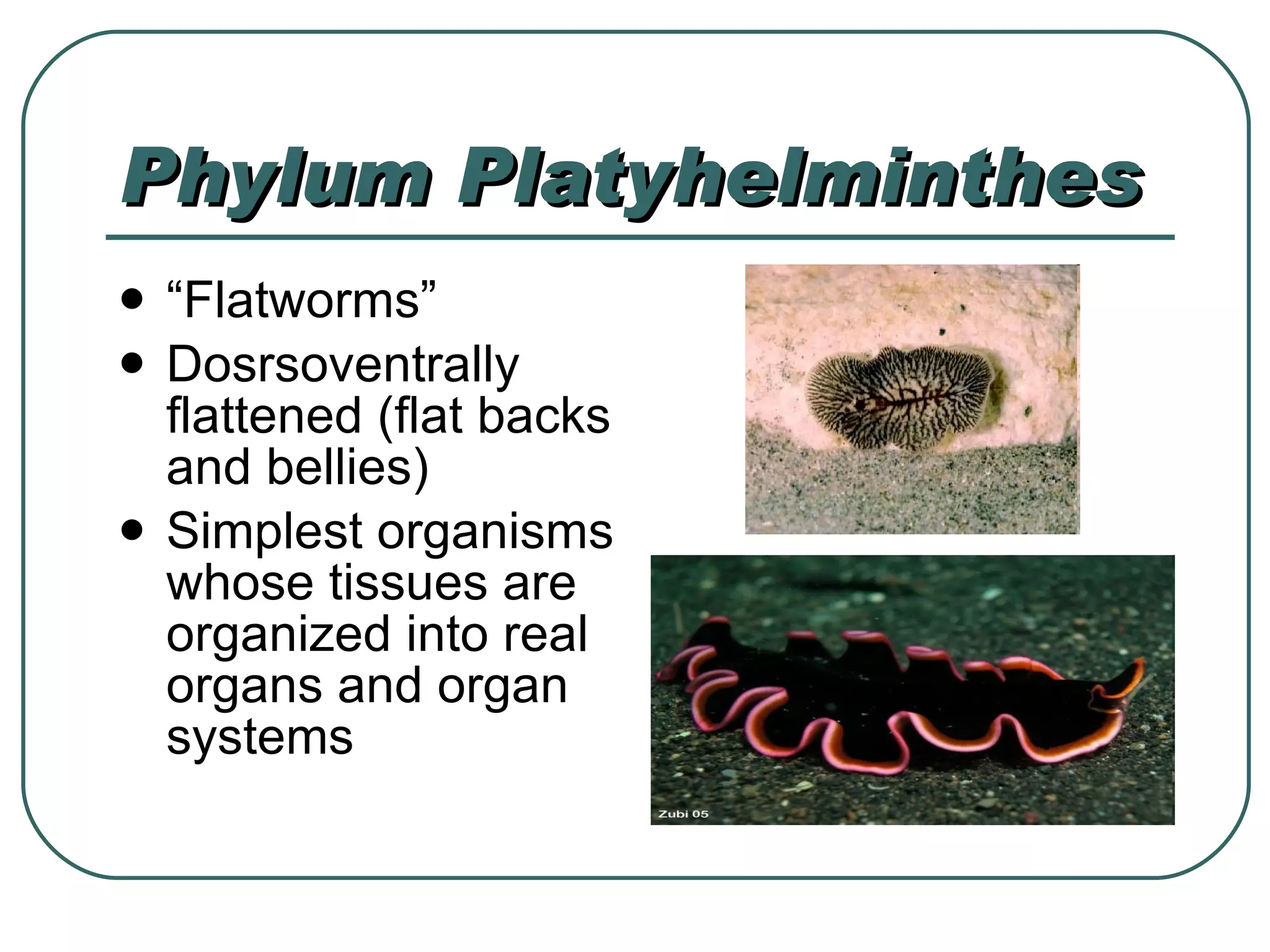
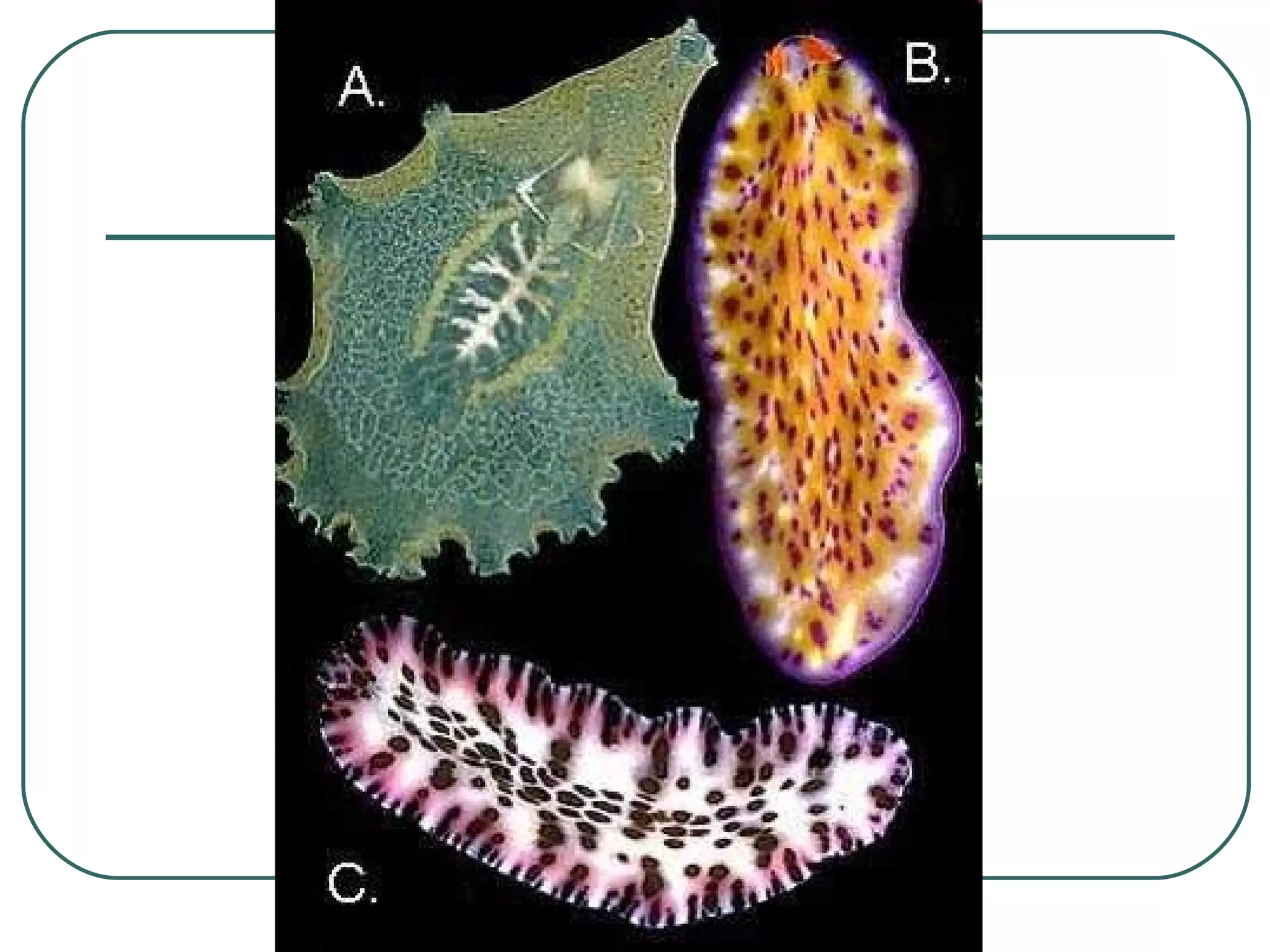
Phylum Platyhelminthes “ Flatworms” Dosrsoventrally flattened (flat backs and bellies) Simplest organisms whose tissues are organized into real organs and organ systems
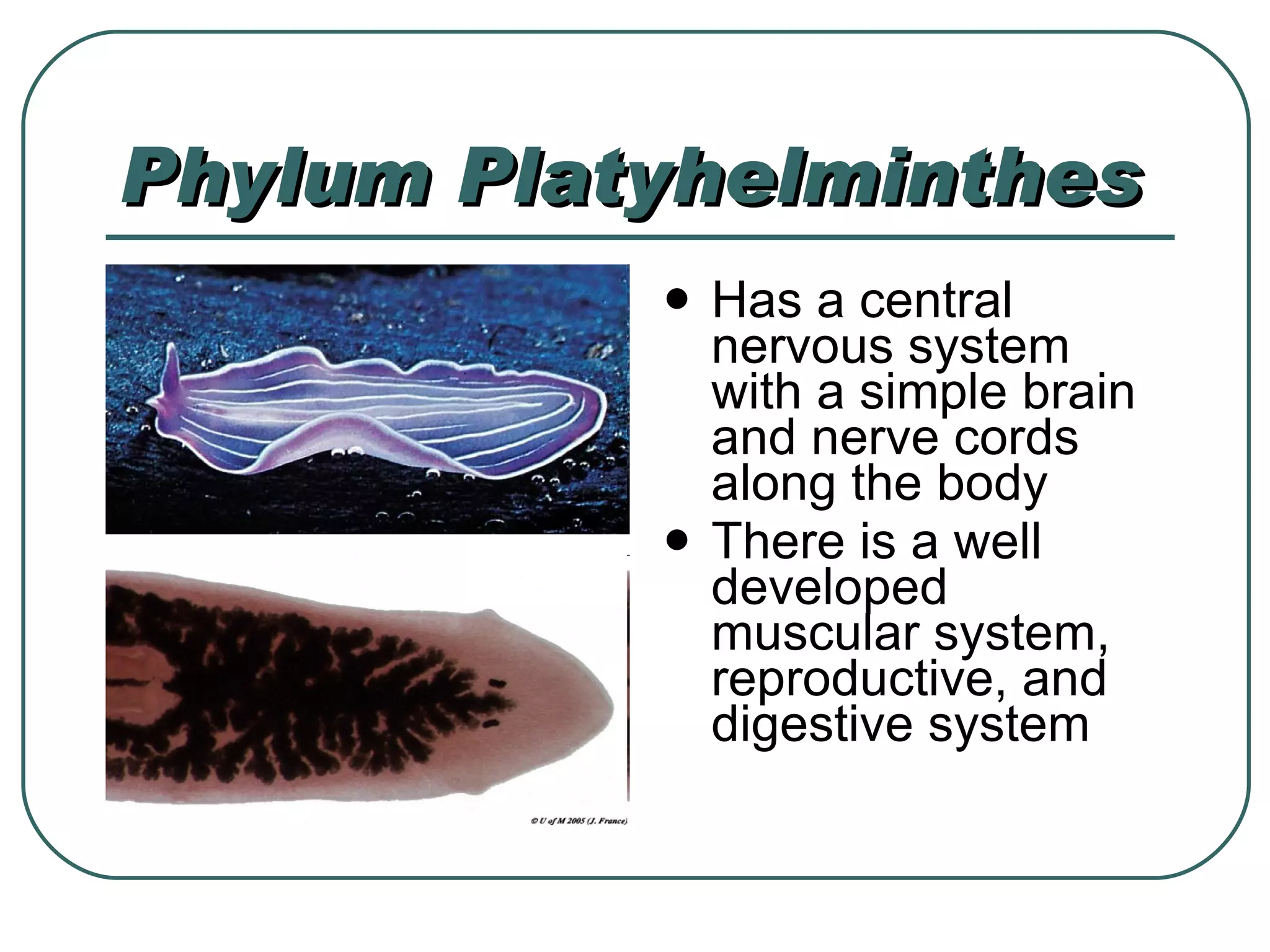
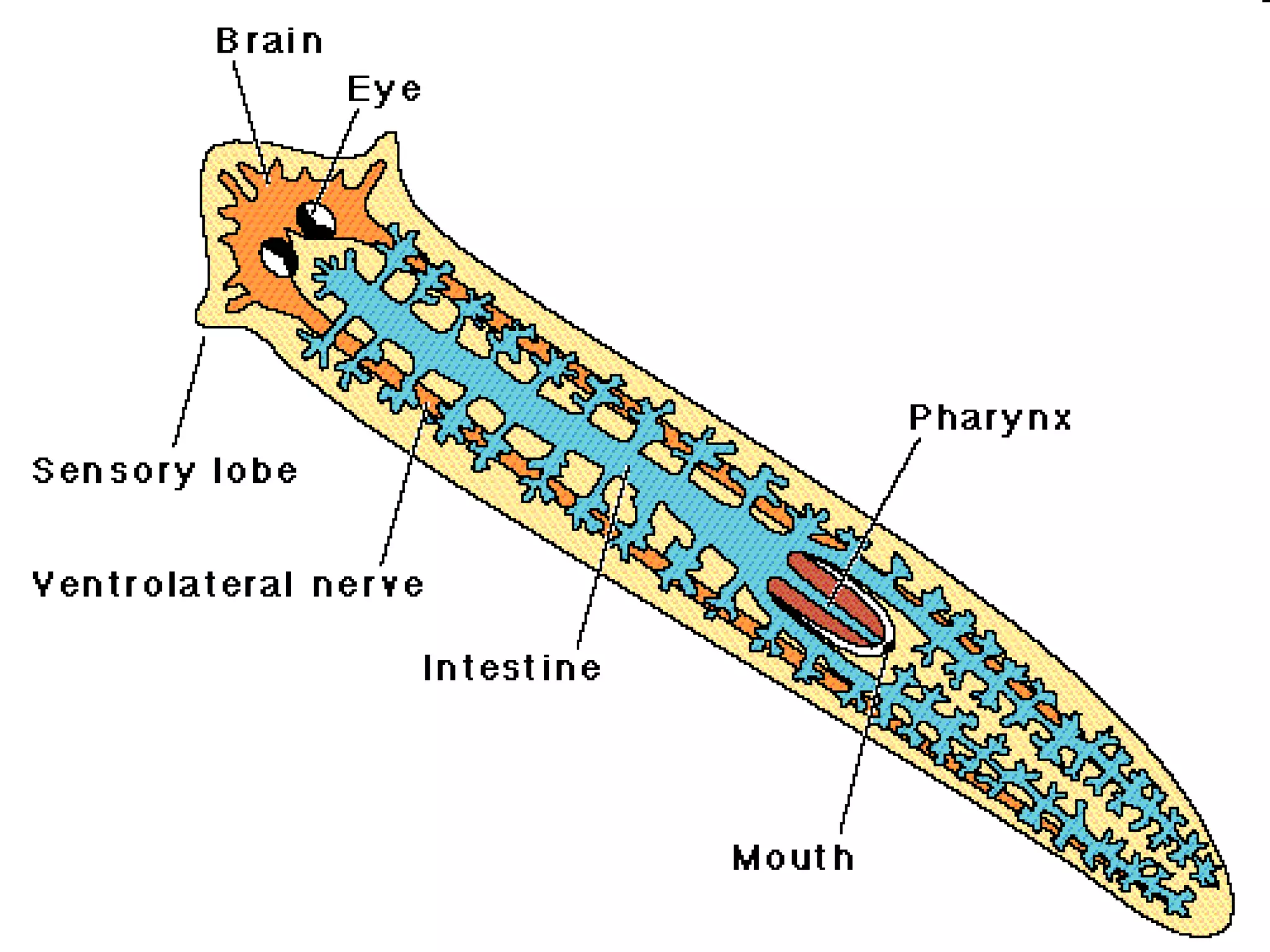
Phylum Platyhelminthes Has a central nervous system with a simple brain and nerve cords along the body There is a well developed muscular system, reproductive, and digestive system
 
 
Phylum Platyhelminthes a) Can be carnivorous b) Can live inside or on the surface of organisms c) Parasites such as flukes and tapeworms
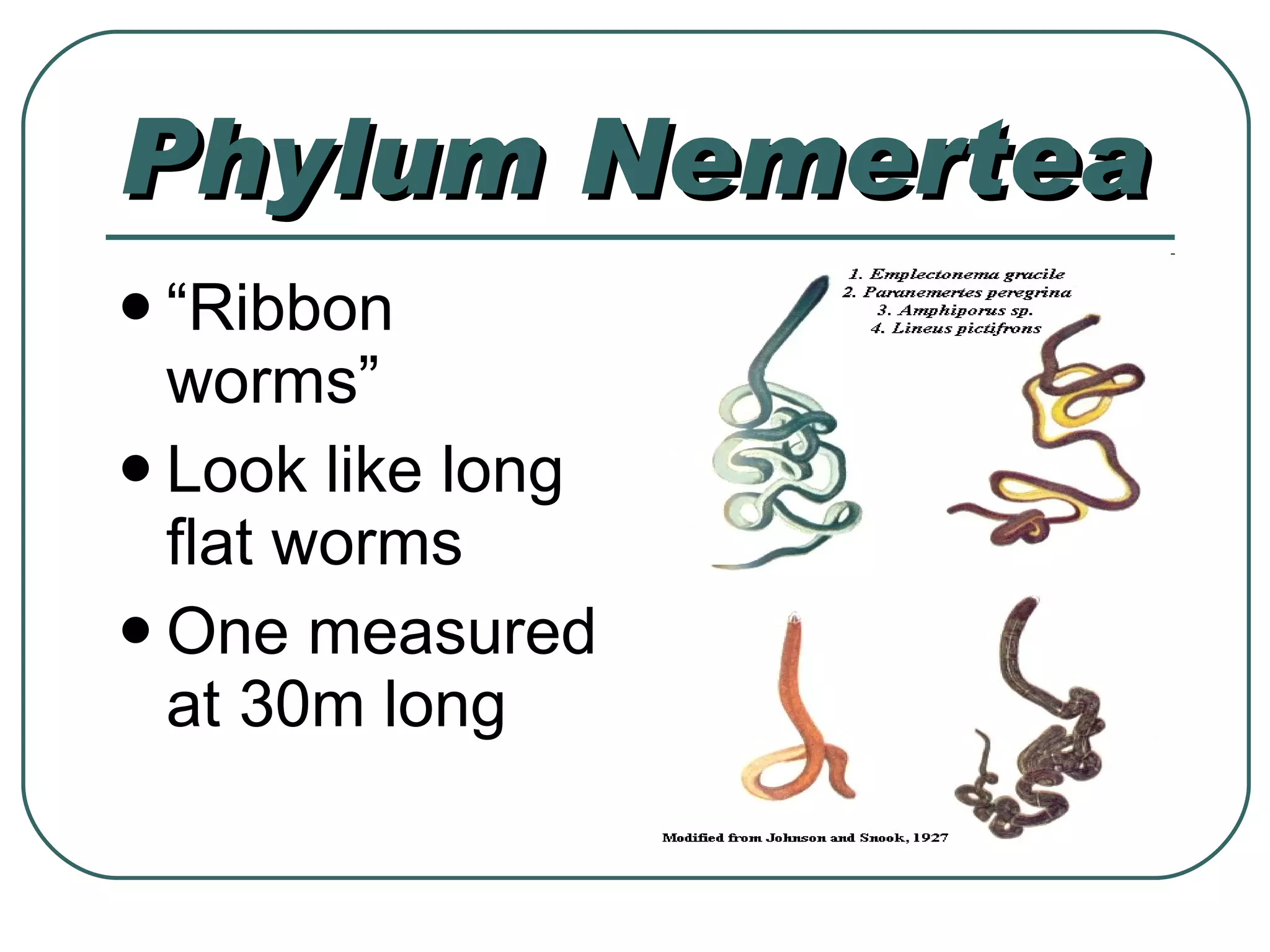
Phylum Nemertea “ Ribbon worms” Look like long flat worms One measured at 30m long
Phylum Nemertea Defining characteristics: Complete digestive tract: mouth, gut, anus Presence of a circulatory system Most distinctive feature is a probiscus All predators that feed on worms and crustaceans
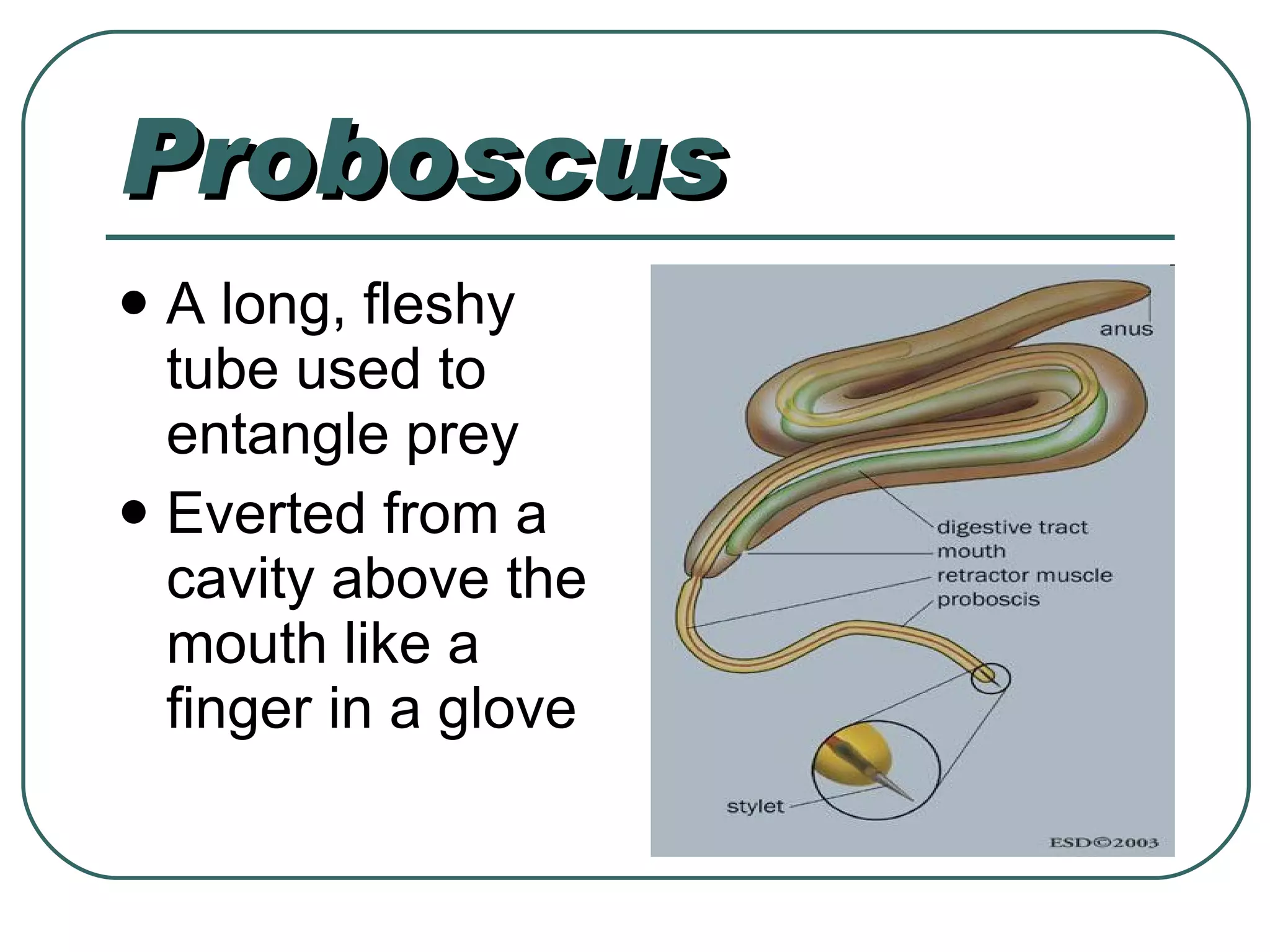
Proboscus A long, fleshy tube used to entangle prey Everted from a cavity above the mouth like a finger in a glove
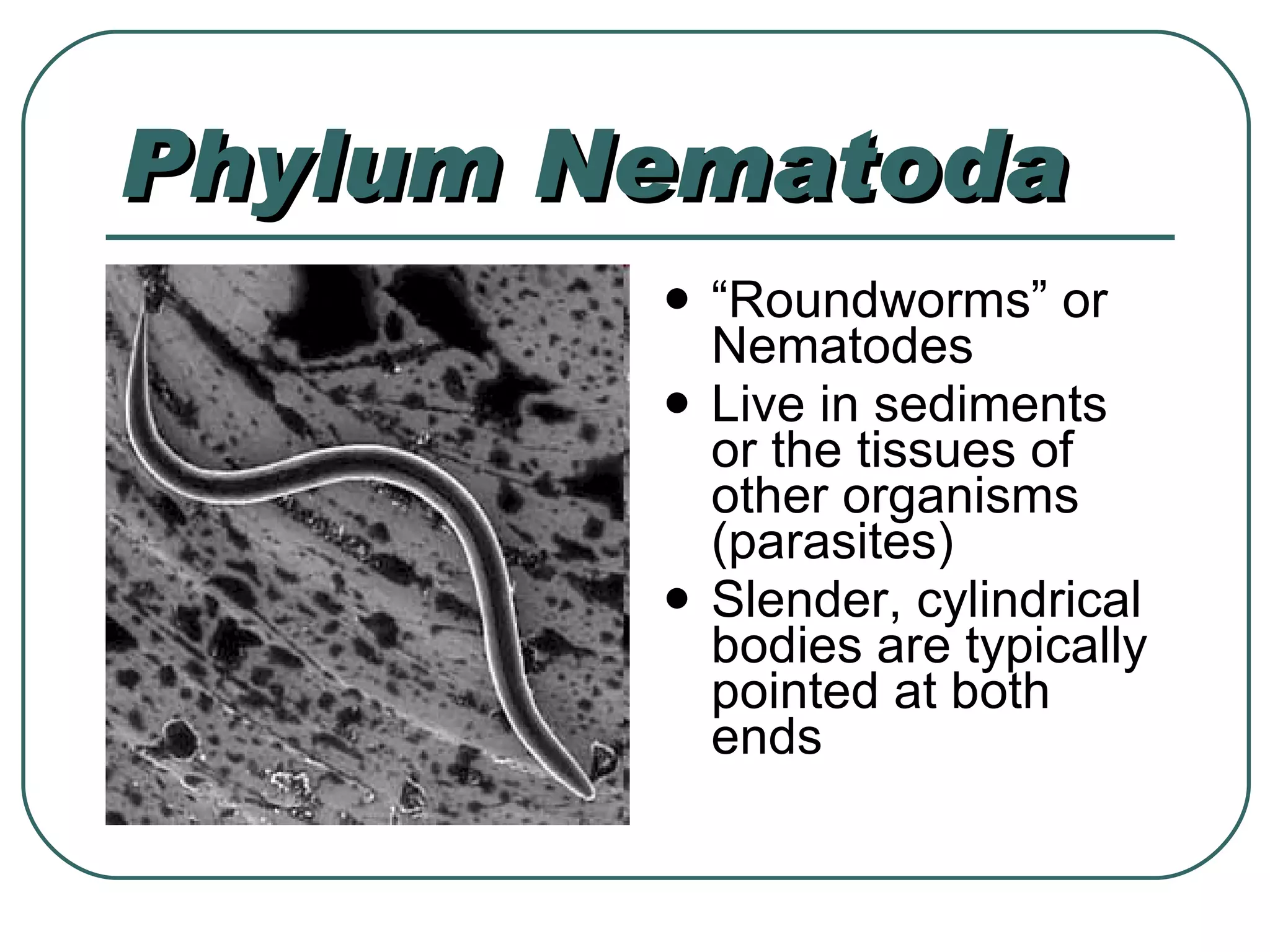
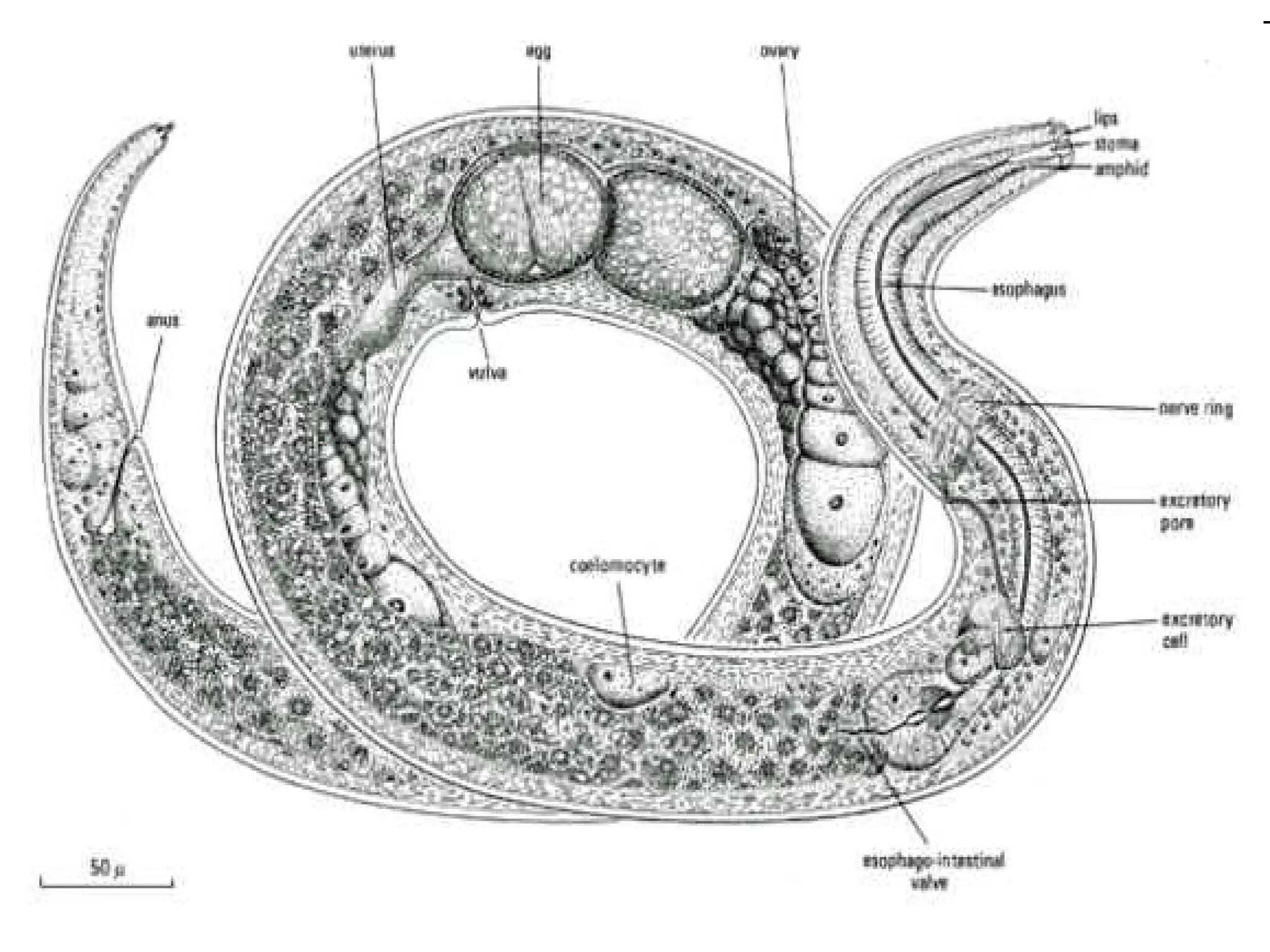
Phylum Nematoda “ Roundworms” or Nematodes Live in sediments or the tissues of other organisms (parasites) Slender, cylindrical bodies are typically pointed at both ends
Phylum Nematoda Hydrostatic skeleton that provides support and locomotion Larva can be found in raw fish which is in turn ingested by humans
 
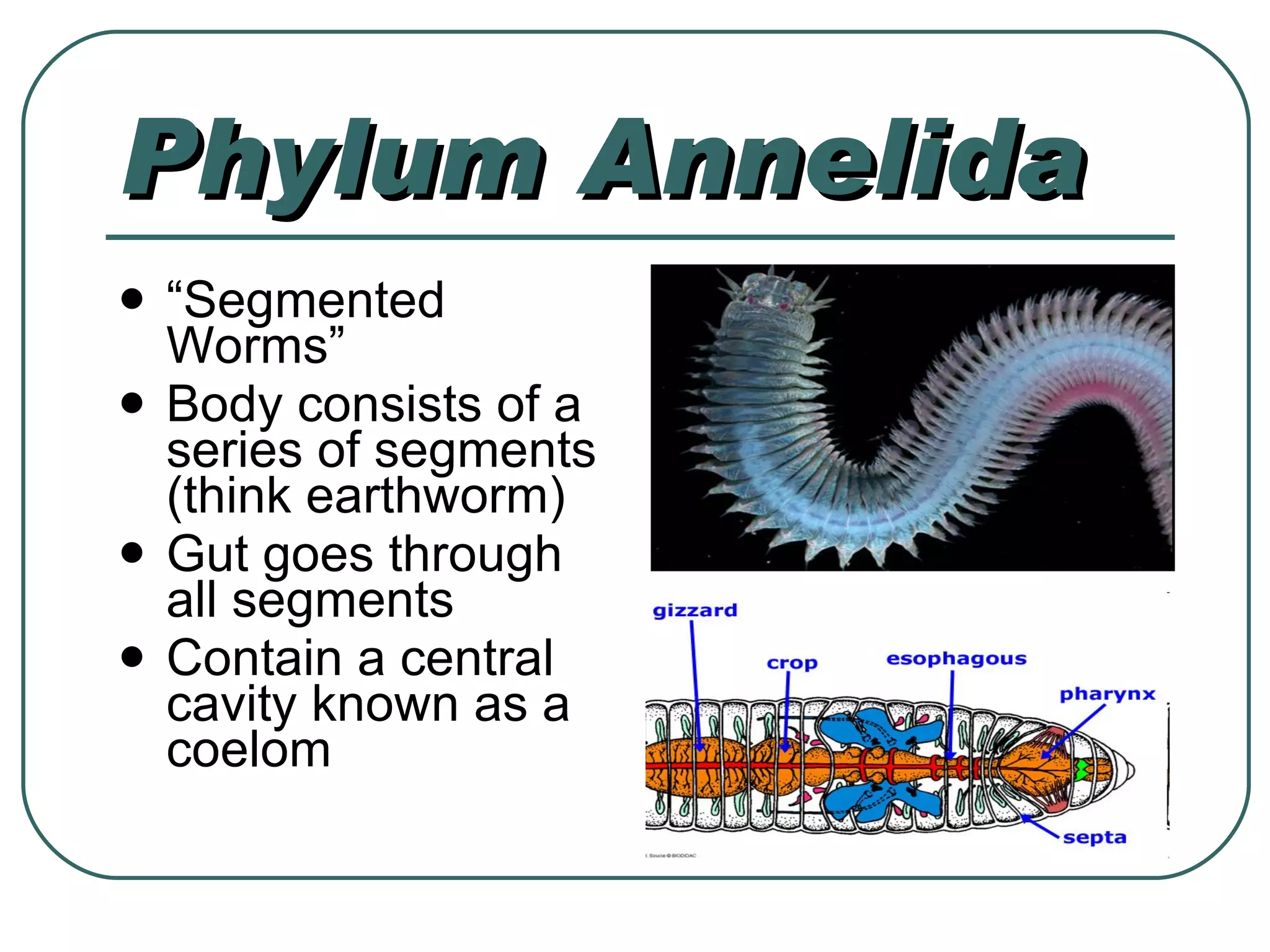
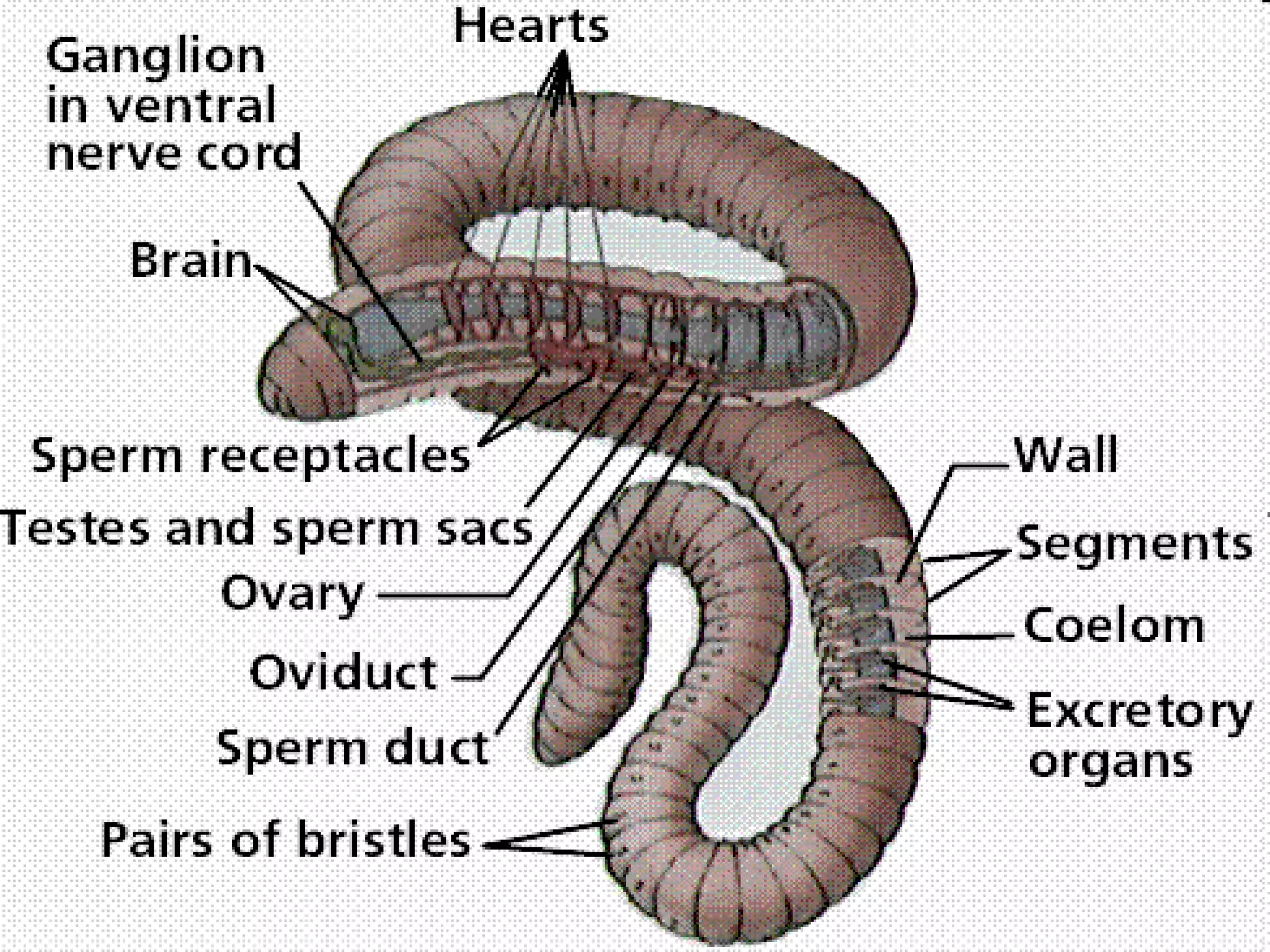
Phylum Annelida “ Segmented Worms” Body consists of a series of segments (think earthworm) Gut goes through all segments Contain a central cavity known as a coelom
Phylum Annelida Closed circulatory system – blood always stays in blood vessels Typically burrowers Includes Leeches
 

11. Worm Phyla Notes

  • 1.
    WORMS!!!!! Phylum PlatyhelminthesPhylum Nemertea Phylum Nematoda Phylum Annelida
  • 2.
    Bilateral Symmetry Arrangementof body parts in such a way that there is only one way to cut the body and get two identical halves
  • 3.
    Orientation Anterior –front Posterior – rear or back Dorsal – back Ventral - belly
  • 4.
    Bilateral Charact. Bilateralsymmetry allows for the following: A head with a brain More active pursuit of prey Body has specialized tissues and organs More sophisticated behaviors
  • 5.
    Phylum Platyhelminthes “Flatworms” Dosrsoventrally flattened (flat backs and bellies) Simplest organisms whose tissues are organized into real organs and organ systems
  • 6.
    Phylum Platyhelminthes Hasa central nervous system with a simple brain and nerve cords along the body There is a well developed muscular system, reproductive, and digestive system
  • 7.
  • 8.
  • 9.
    Phylum Platyhelminthes a)Can be carnivorous b) Can live inside or on the surface of organisms c) Parasites such as flukes and tapeworms
  • 10.
    Phylum Nemertea “Ribbon worms” Look like long flat worms One measured at 30m long
  • 11.
    Phylum Nemertea Definingcharacteristics: Complete digestive tract: mouth, gut, anus Presence of a circulatory system Most distinctive feature is a probiscus All predators that feed on worms and crustaceans
  • 12.
    Proboscus A long,fleshy tube used to entangle prey Everted from a cavity above the mouth like a finger in a glove
  • 13.
    Phylum Nematoda “Roundworms” or Nematodes Live in sediments or the tissues of other organisms (parasites) Slender, cylindrical bodies are typically pointed at both ends
  • 14.
    Phylum Nematoda Hydrostaticskeleton that provides support and locomotion Larva can be found in raw fish which is in turn ingested by humans
  • 15.
  • 16.
    Phylum Annelida “Segmented Worms” Body consists of a series of segments (think earthworm) Gut goes through all segments Contain a central cavity known as a coelom
  • 17.
    Phylum Annelida Closedcirculatory system – blood always stays in blood vessels Typically burrowers Includes Leeches
  • 18.