



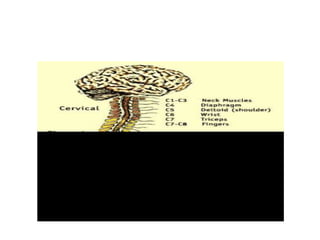




A spinal injury can be very serious if it results in paralysis or damage to the spinal cord. For example, a broken neck that severs the connection between the brain and parts of the body below the injury site can cause quadriplegia.
RABIESRabies is aninfection caused by the rabies virus. This virus attacks the brain, causing severe inflammation (encephalitis) and death. A person or animal can become infected with the rabies virus in one of a few ways, including: Bites
Bites from arabid animal (an animal with rabies) are the most common way in which rabies transmission occurs. Non-bite exposure and human-to-human exposure are both rare.
9.
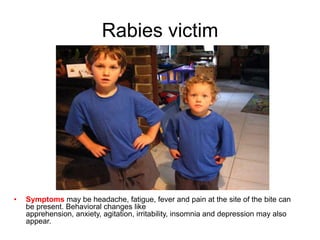
Rabies victimSymptoms maybe headache, fatigue, fever and pain at the site of the bite can be present. Behavioral changes like apprehension, anxiety, agitation, irritability, insomnia and depression may also appear.
10.
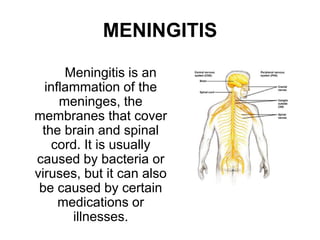
MENINGITIS Meningitis is aninflammation of the meninges, the membranes that cover the brain and spinal cord. It is usually caused by bacteria or viruses, but it can also be caused by certain medications or illnesses.
11.
Causes: Many of thebacteria and viruses that cause meningitis are fairly common and are typically associated with other routine illnesses. Bacteria and viruses that infect the skin, urinary system, gastrointestinal or respiratory tract can spread by the bloodstream to the meninges through cerebrospinal fluid, the fluid that circulates in and around the spinal cord.
12.
Symptoms:The first symptomsof bacterial or viral meningitis can come on quickly or surface several days after a child has had a cold and runny nose, diarrhea and vomiting, or other signs of an infection. Common symptoms include:feverlethargy (decreased consciousness)irritabilityheadachephotophobia (eye sensitivity to light)stiff neckskin rashesseizures
13.
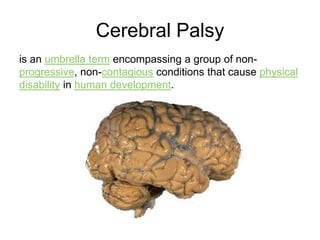
Cerebral Palsyis anumbrella term encompassing a group of non-progressive, non-contagious conditions that cause physical disability in human development.
15.
Causes:• Infection DuringPregnancy – rubella, cytomegalovirus, and toxoplasmosis can cause severe damage to the nervous system of the fetus and result in cerebral palsy.• Jaundice – severe jaundice can result in brain damage• Rh Incompatibility – can cause jaundice This is a condition where the mother's immune system attacks the fetus• Oxygen Shortage – a shortage of oxygen during birth can cause brain damage to the child.• Stroke – a stroke in the fetus can occur if the mother suffers from coagulation disorders• Toxicity – drug or alcohol use can result in brain damage• Bleeding – bleeding in the brain of the infant after birth can cause brain damage• Kidney/Urinary Tract Infections – can also lead to brain damage
16.
Symptoms: CHARACTERISED BY THEFOLLOWING:abnormal muscle tone, posture (i.e. slouching over while sitting), reflexes, or motor development and coordination.
17.
There can bejoint and bone deformities and contractures (permanently fixed, tight muscles and joints).
18.
The classical symptomsare spasticity, spasms, other involuntary movements (e.g. facial gestures), unsteady gait, problems with balance, and/or soft tissue findings consisting largely of decreased muscle mass.
19.
Scissor walking (wherethe knees come in and cross) and toe walking are common among people with CP who are able to walk, but taken on the whole, CP symptomatology is very diverse.
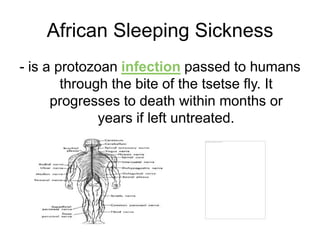
African Sleeping Sickness-is a protozoan infection passed to humans through the bite of the tsetse fly. It progresses to death within months or years if left untreated.
24.
Encephalitis - isswelling and irritation (inflammation) of the brain. Inflammation changes the normal blood flow in the brain.
26.
Symptoms:Symptoms of encephalitiscan be mild or very serious. Confusion.A fever.A headache (which can be very painful).A stiff neck and back.Light hurting your eyes.Nausea and vomiting.Lack of energy.Drowsiness.Seizures.Tremors.Personality changes.Memory loss.Hallucinations (seeing or hearing things that aren't there).
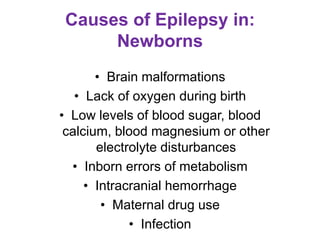
Causes of Epilepsyin:Newborns Brain malformationsLack of oxygen during birthLow levels of blood sugar, blood calcium, blood magnesium or other electrolyte disturbancesInborn errors of metabolismIntracranial hemorrhageMaternal drug useInfection
34.
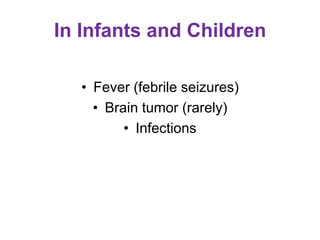
In Infants andChildrenFever (febrile seizures)Brain tumor (rarely)Infections
35.
Children and AdultsCongenital conditions (Down’s syndrome; Angelman’s syndrome; tuberous sclerosis and neurofibromatosis)Genetic factorsProgressive brain disease (rare)Head trauma