1. Microcornea
2. Megalocornea
3. Sclerocornea
4. Cornea plana
5. Keratectasia
CONGENITAL CORNEAL ANOMALIES
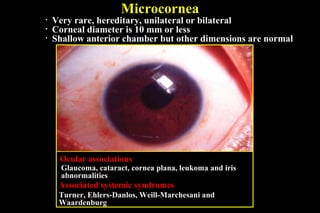
Microcornea
• Very rare, hereditary, unilateral or bilateral
• Corneal diameter is 10 mm or less
• Shallow anterior chamber but other dimensions are normal
Associated systemic syndromes
Turner, Ehlers-Danlos, Weill-Marchesani and
Waardenburg
Ocular associations
Glaucoma, cataract, cornea plana, leukoma and iris
abnormalities
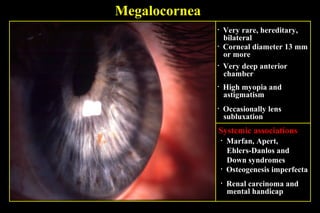
Megalocornea
• Renal carcinoma and
mental handicap
Systemic associations
• Marfan, Apert,
Ehlers-Danlos and
Down syndromes
• Osteogenesis imperfecta
• Very rare, hereditary,
bilateral
• Corneal diameter 13 mm
or more
• Very deep anterior
chamber
• High myopia and
astigmatism
• Occasionally lens
subluxation
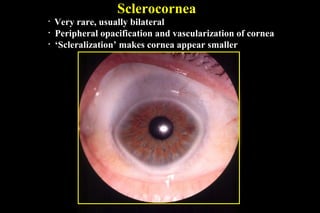
Sclerocornea
• Very rare, usually bilateral
• Peripheral opacification and vascularization of cornea
• ‘Scleralization’ makes cornea appear smaller
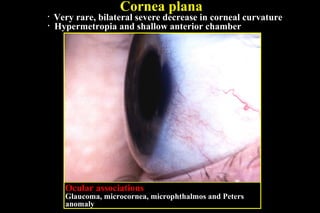
Cornea plana
• Very rare, bilateral severe decrease in corneal curvature
• Hypermetropia and shallow anterior chamber
Ocular associations
Glaucoma, microcornea, microphthalmos and Peters
anomaly
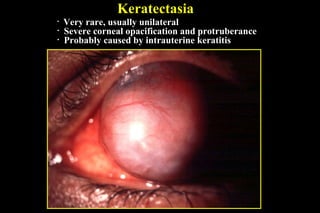
Keratectasia
• Very rare, usually unilateral
• Severe corneal opacification and protruberance
• Probably caused by intrauterine keratitis
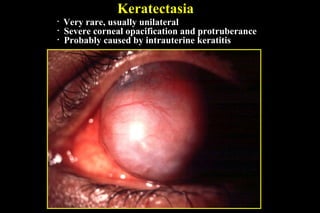
Keratectasia
• Very rare, usually unilateral
• Severe corneal opacification and protruberance
• Probably caused by intrauterine keratitis

19 congen corneal anoms

  • 1.
    1. Microcornea 2. Megalocornea 3.Sclerocornea 4. Cornea plana 5. Keratectasia CONGENITAL CORNEAL ANOMALIES
  • 2.
    Microcornea • Very rare,hereditary, unilateral or bilateral • Corneal diameter is 10 mm or less • Shallow anterior chamber but other dimensions are normal Associated systemic syndromes Turner, Ehlers-Danlos, Weill-Marchesani and Waardenburg Ocular associations Glaucoma, cataract, cornea plana, leukoma and iris abnormalities
  • 3.
    Megalocornea • Renal carcinomaand mental handicap Systemic associations • Marfan, Apert, Ehlers-Danlos and Down syndromes • Osteogenesis imperfecta • Very rare, hereditary, bilateral • Corneal diameter 13 mm or more • Very deep anterior chamber • High myopia and astigmatism • Occasionally lens subluxation
  • 4.
    Sclerocornea • Very rare,usually bilateral • Peripheral opacification and vascularization of cornea • ‘Scleralization’ makes cornea appear smaller
  • 5.
    Cornea plana • Veryrare, bilateral severe decrease in corneal curvature • Hypermetropia and shallow anterior chamber Ocular associations Glaucoma, microcornea, microphthalmos and Peters anomaly
  • 6.
    Keratectasia • Very rare,usually unilateral • Severe corneal opacification and protruberance • Probably caused by intrauterine keratitis
  • 7.
    Keratectasia • Very rare,usually unilateral • Severe corneal opacification and protruberance • Probably caused by intrauterine keratitis