Dr. Walied A. Elsaigh
welsaigh@ksu.edu.sa
Asst. Prof. of Civil Engineering
Rajab - 1435H
CE 435
Railway Engineering
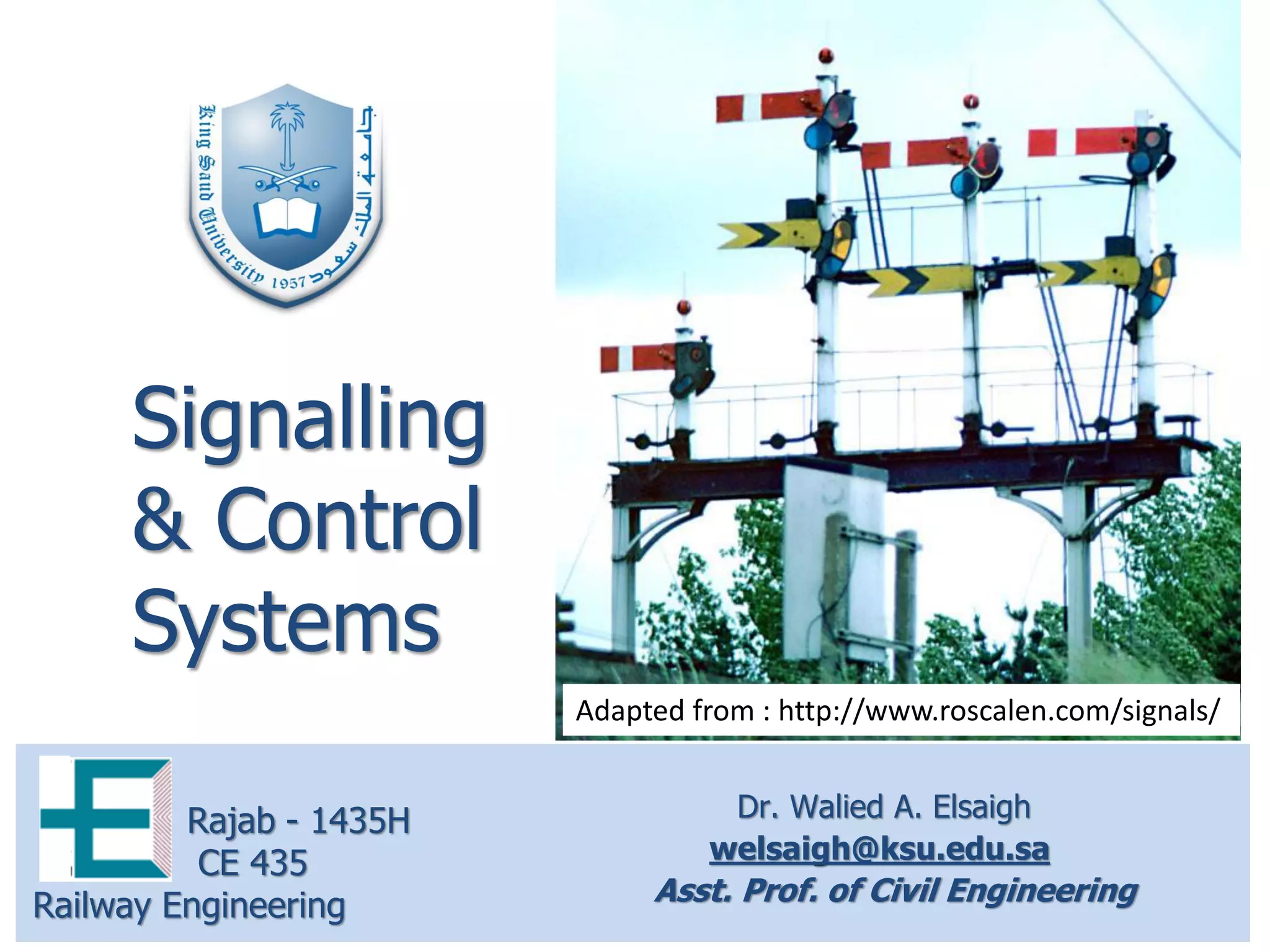
Signalling
& Control
Systems
Adapted from : http://www.roscalen.com/signals/
Textbook
Pages 20.1-20.25
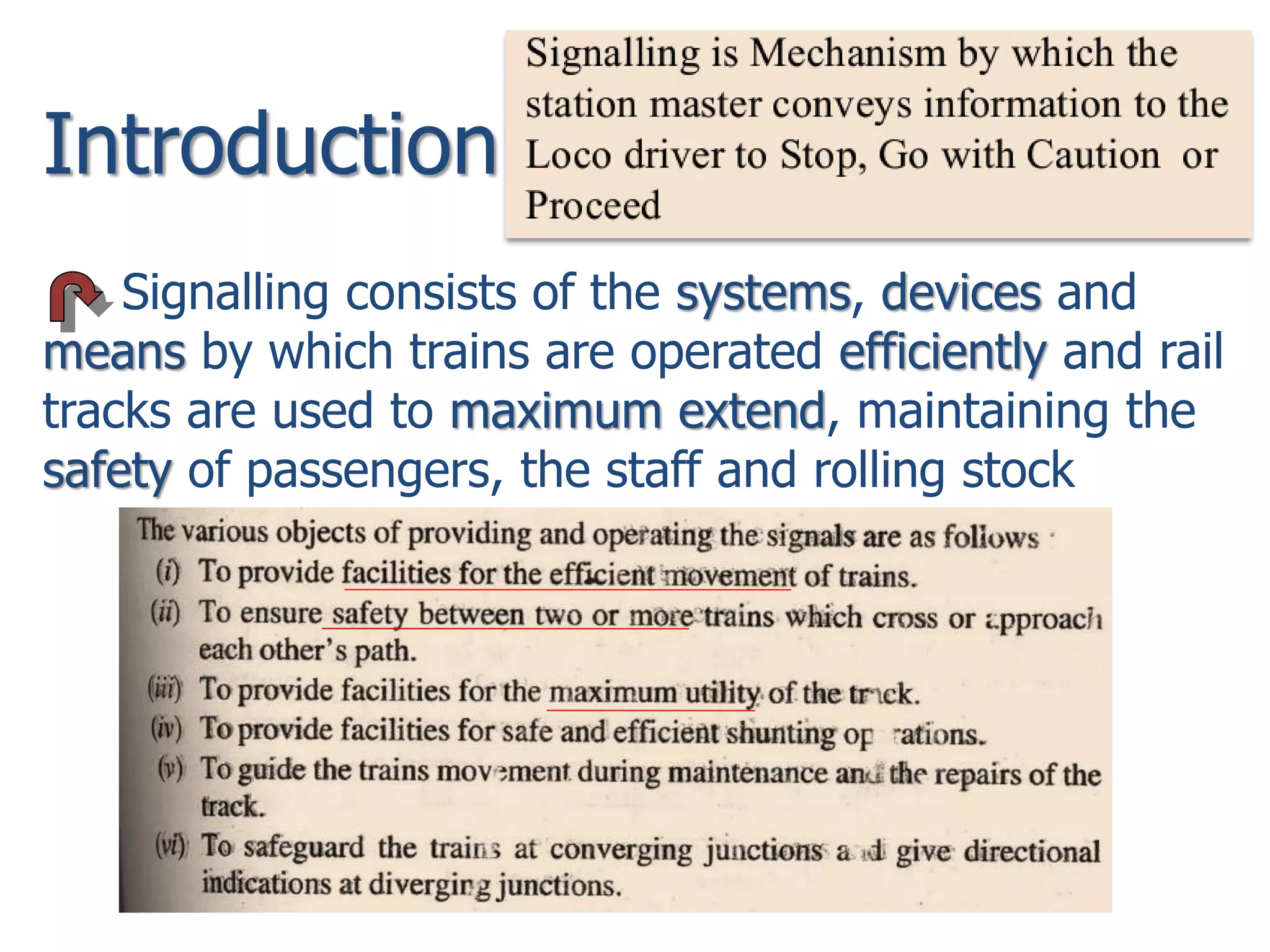
Introduction
Signalling consists of the systems, devices and
means by which trains are operated efficiently and rail
tracks are used to maximum extend, maintaining the
safety of passengers, the staff and rolling stock
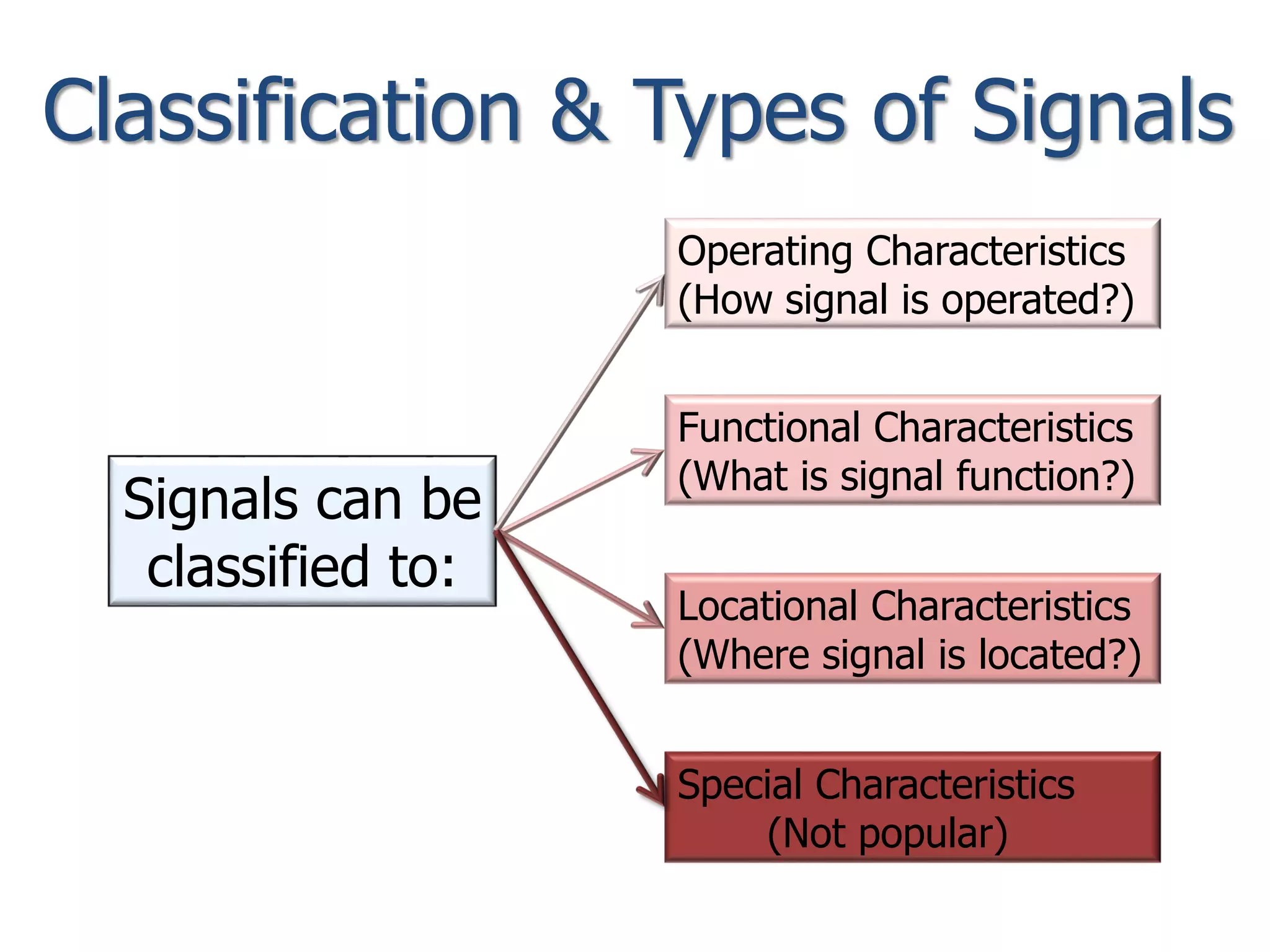
Classification & Types of Signals
Signals can be
classified to:
Operating Characteristics
(How signal is operated?)
Functional Characteristics
(What is signal function?)
Locational Characteristics
(Where signal is located?)
Special Characteristics
(Not popular)
Classification &
Types of Signals
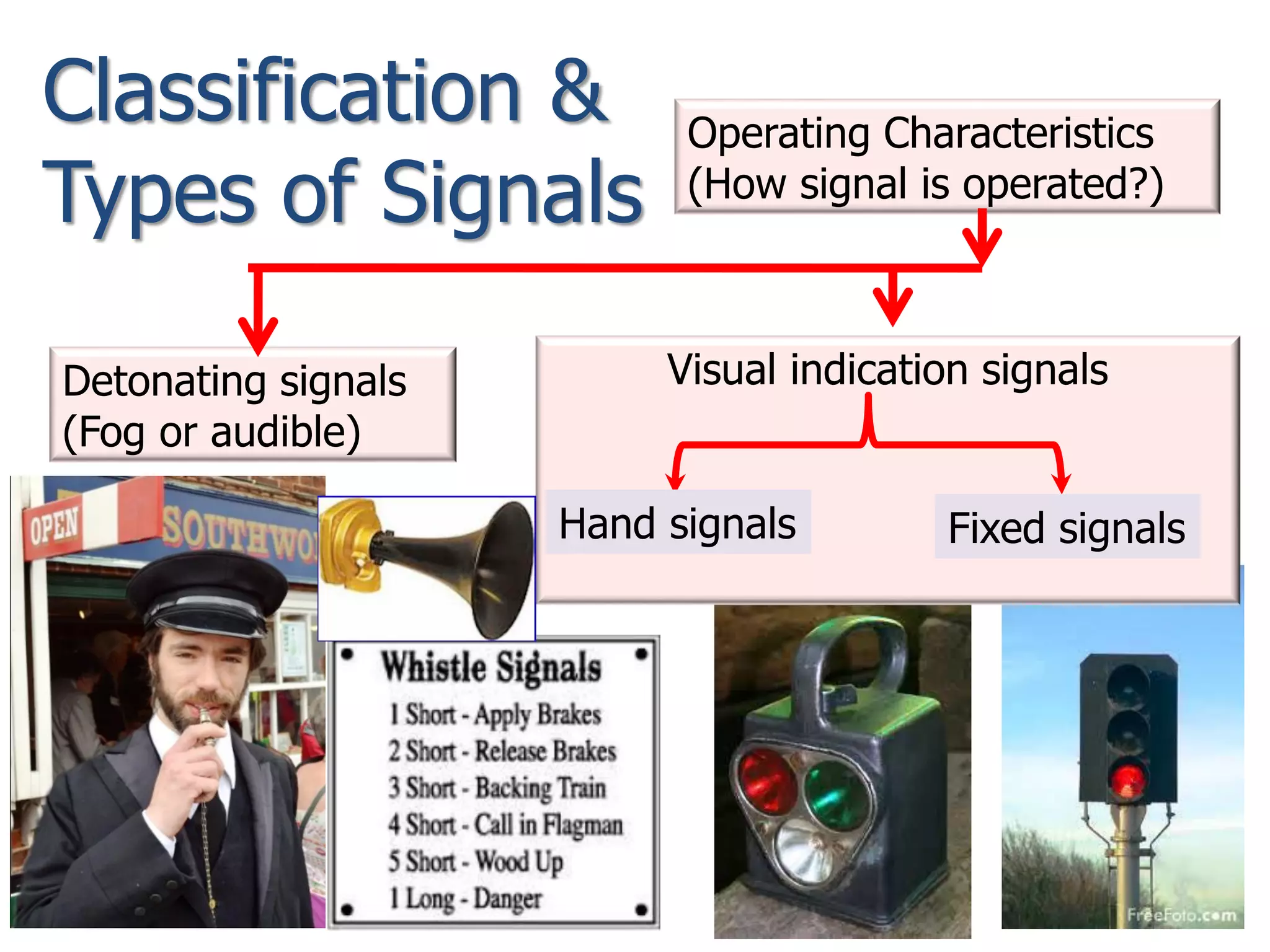
Operating Characteristics
(How signal is operated?)
Detonating signals
(Fog or audible)
Visual indication signals
Hand signals Fixed signals
Classification &
Types of Signals
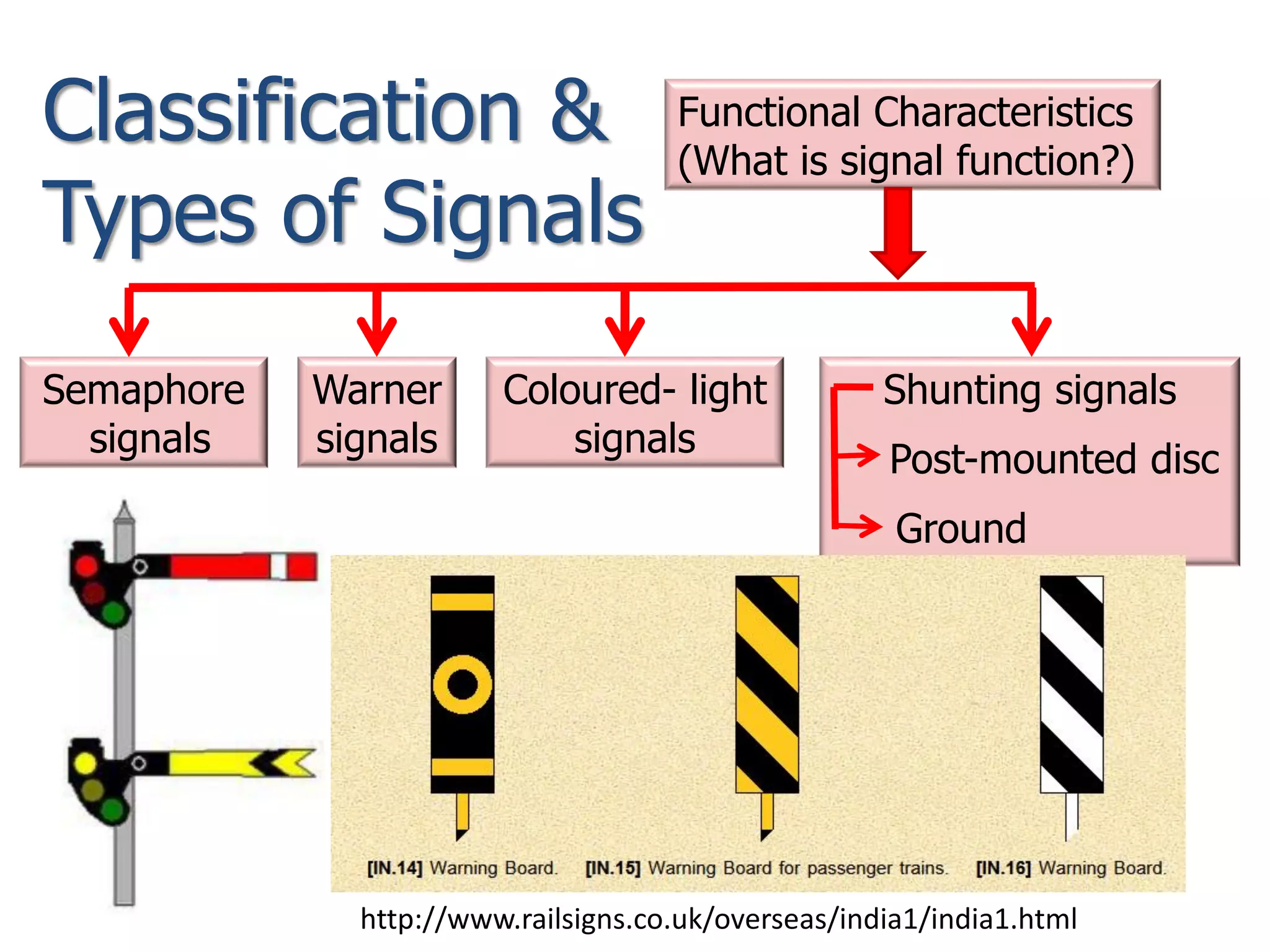
Functional Characteristics
(What is signal function?)
Semaphore
signals
Warner
signals
Coloured- light
signals
Shunting signals
Post-mounted disc
Ground
http://www.railsigns.co.uk/overseas/india1/india1.html
Classification &
Types of Signals
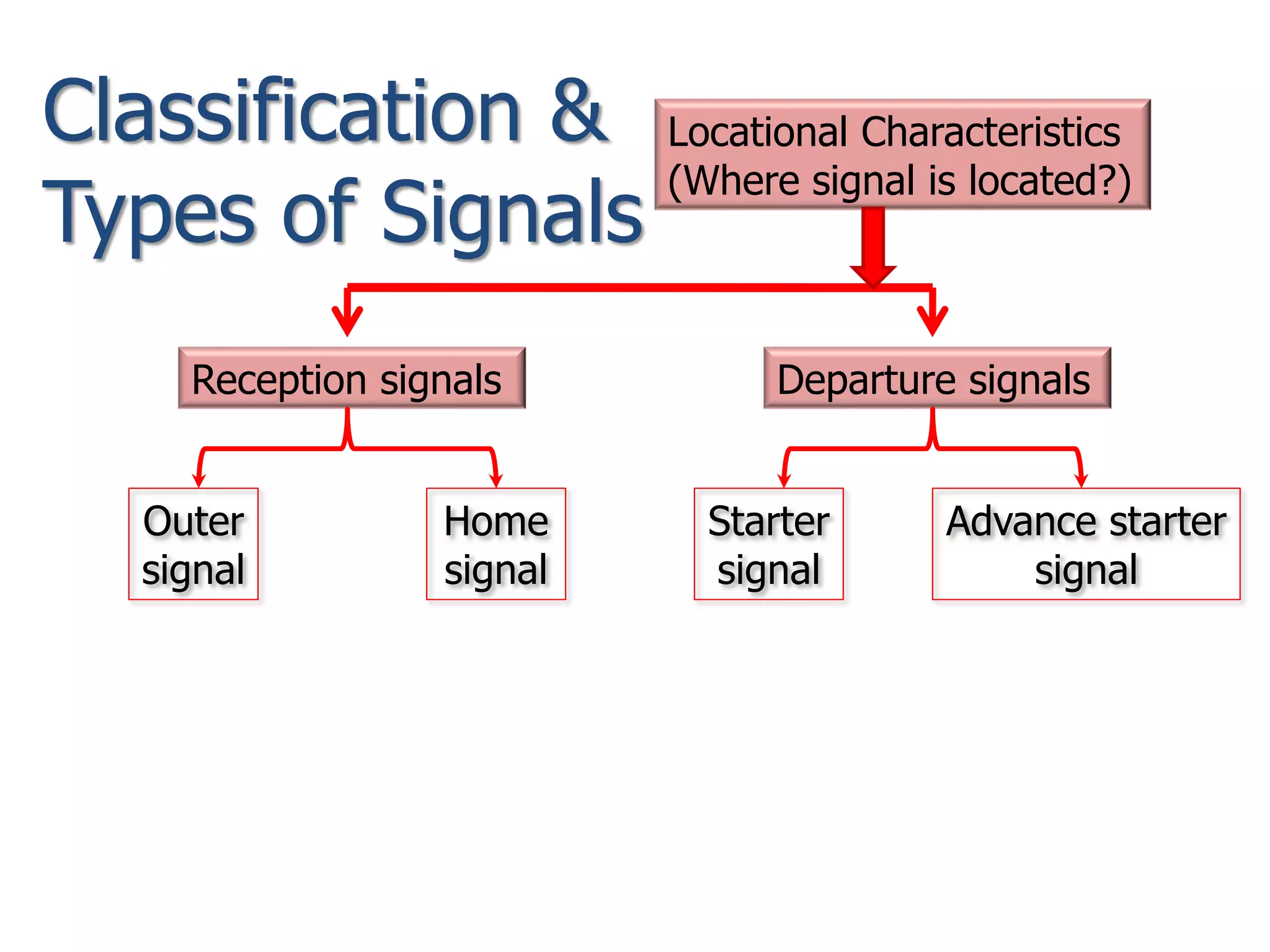
Locational Characteristics
(Where signal is located?)
Reception signals
Outer
signal
Home
signal
Departure signals
Starter
signal
Advance starter
signal
Classification &
Types of Signals
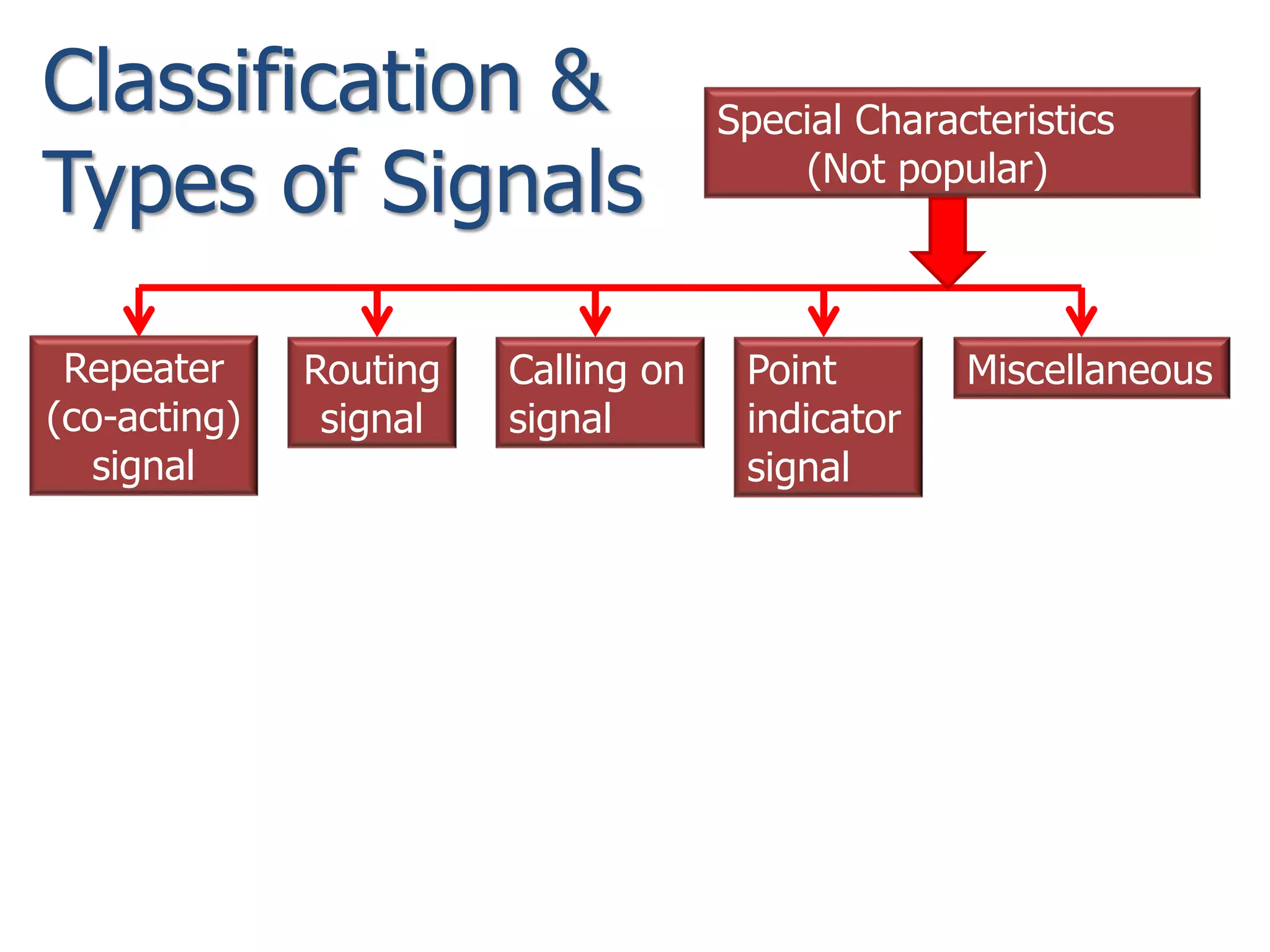
Special Characteristics
(Not popular)
Repeater
(co-acting)
signal
Routing
signal
Calling on
signal
Point
indicator
signal
Miscellaneous
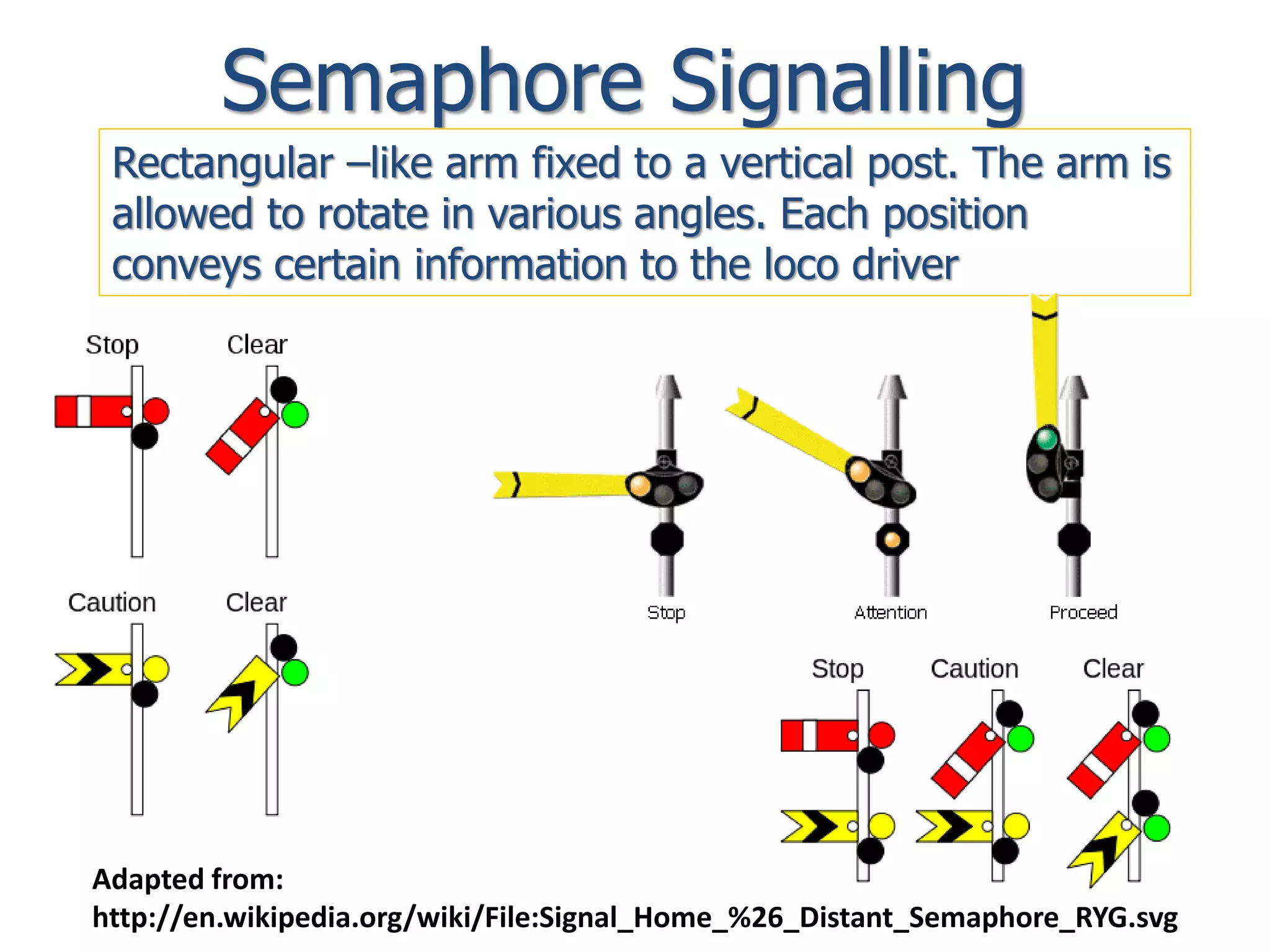
Semaphore Signalling
Rectangular –like arm fixed to a vertical post. The arm is
allowed to rotate in various angles. Each position
conveys certain information to the loco driver
Adapted from:
http://en.wikipedia.org/wiki/File:Signal_Home_%26_Distant_Semaphore_RYG.svg
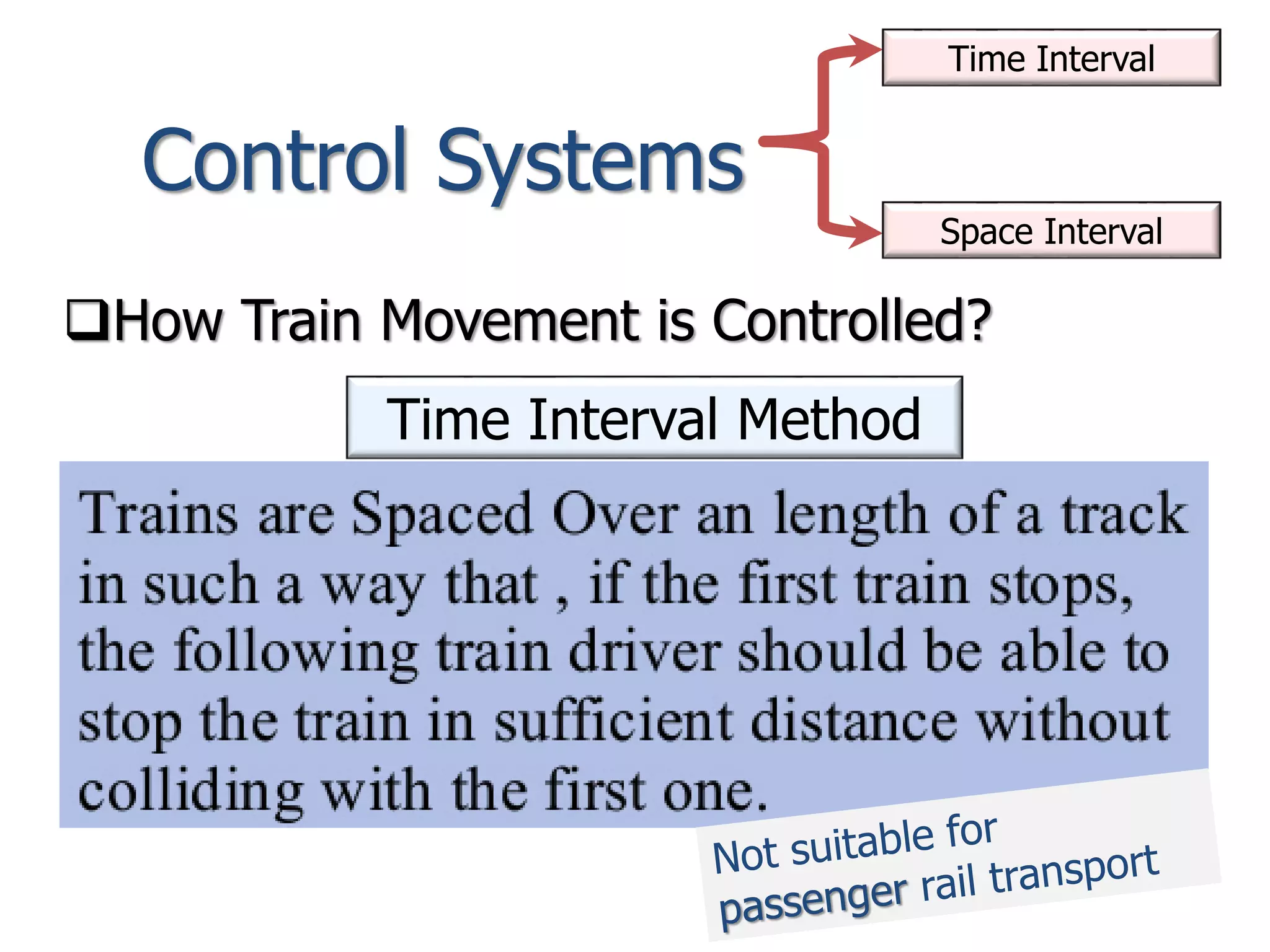
Control Systems
Time Interval Method
Time Interval
Space Interval
How Train Movement is Controlled?
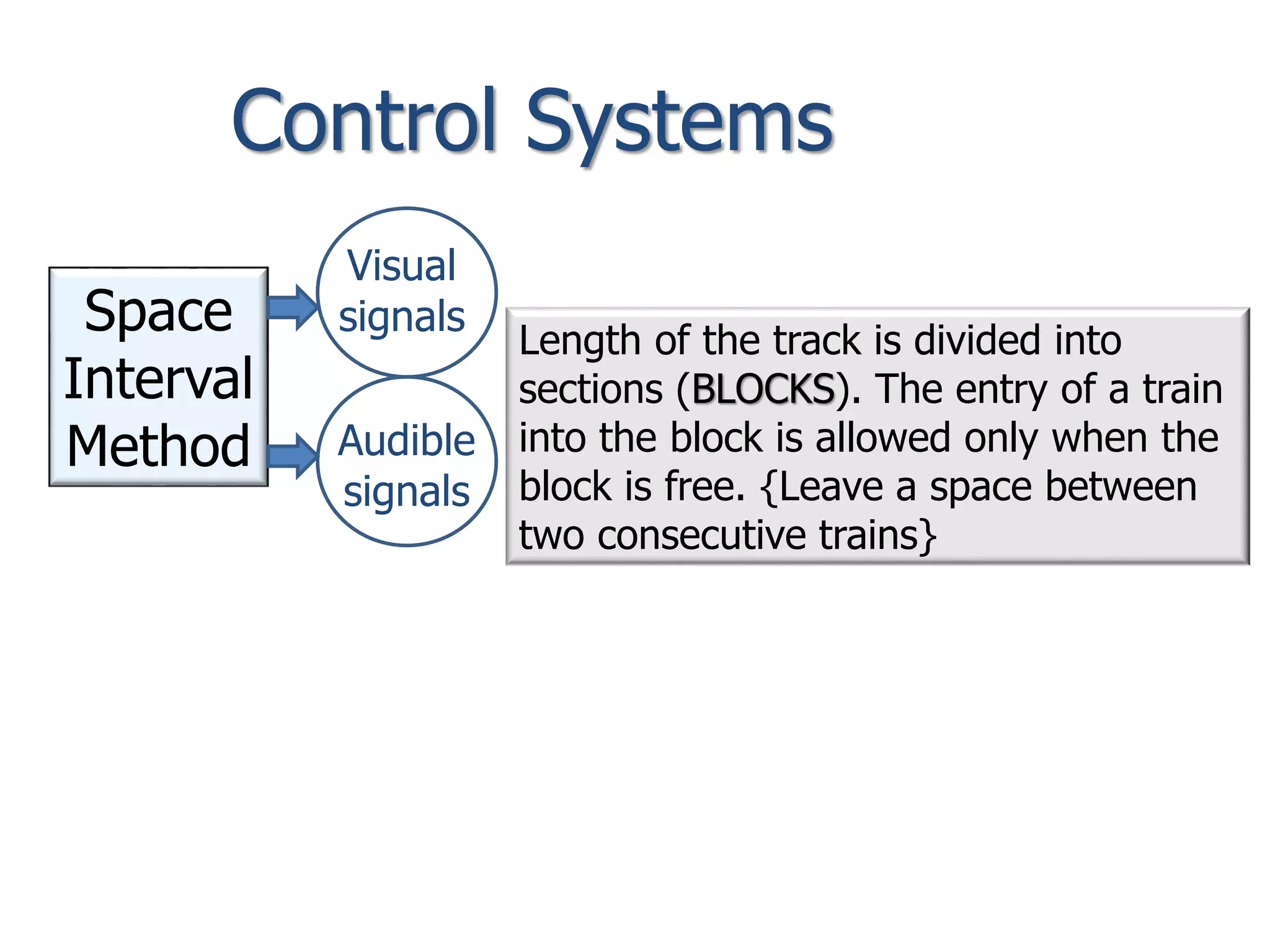
Control Systems
Space
Interval
Method
Length of the track is divided into
sections (BLOCKS). The entry of a train
into the block is allowed only when the
block is free. {Leave a space between
two consecutive trains}
Visual
signals
Audible
signals

14 Signalling and Control Systems (Railway Engineering Lectures هندسة السكك الحديدية & Dr. Walied A. Elsaigh)

  • 1.
    Dr. Walied A.Elsaigh welsaigh@ksu.edu.sa Asst. Prof. of Civil Engineering Rajab - 1435H CE 435 Railway Engineering Signalling & Control Systems Adapted from : http://www.roscalen.com/signals/
  • 2.
  • 3.
    Introduction Signalling consists ofthe systems, devices and means by which trains are operated efficiently and rail tracks are used to maximum extend, maintaining the safety of passengers, the staff and rolling stock
  • 4.
    Classification & Typesof Signals Signals can be classified to: Operating Characteristics (How signal is operated?) Functional Characteristics (What is signal function?) Locational Characteristics (Where signal is located?) Special Characteristics (Not popular)
  • 5.
    Classification & Types ofSignals Operating Characteristics (How signal is operated?) Detonating signals (Fog or audible) Visual indication signals Hand signals Fixed signals
  • 6.
    Classification & Types ofSignals Functional Characteristics (What is signal function?) Semaphore signals Warner signals Coloured- light signals Shunting signals Post-mounted disc Ground http://www.railsigns.co.uk/overseas/india1/india1.html
  • 7.
    Classification & Types ofSignals Locational Characteristics (Where signal is located?) Reception signals Outer signal Home signal Departure signals Starter signal Advance starter signal
  • 8.
    Classification & Types ofSignals Special Characteristics (Not popular) Repeater (co-acting) signal Routing signal Calling on signal Point indicator signal Miscellaneous
  • 9.
    Semaphore Signalling Rectangular –likearm fixed to a vertical post. The arm is allowed to rotate in various angles. Each position conveys certain information to the loco driver Adapted from: http://en.wikipedia.org/wiki/File:Signal_Home_%26_Distant_Semaphore_RYG.svg
  • 10.
    Control Systems Time IntervalMethod Time Interval Space Interval How Train Movement is Controlled?
  • 11.
    Control Systems Space Interval Method Length ofthe track is divided into sections (BLOCKS). The entry of a train into the block is allowed only when the block is free. {Leave a space between two consecutive trains} Visual signals Audible signals